
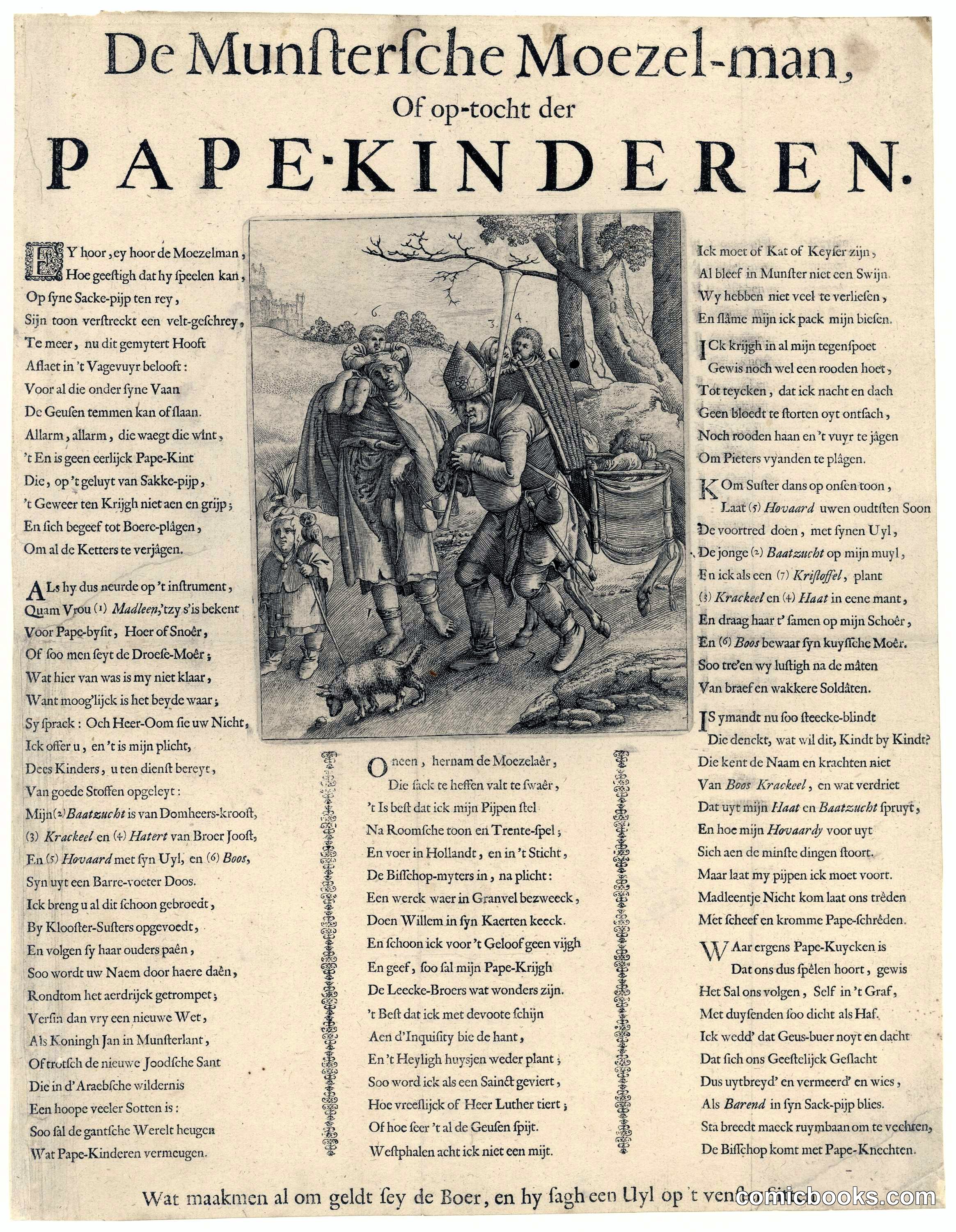
This Dutch woodcut satirizes the Bishop of Münster through crude caricature and vernacular verse. The central scene depicts grotesque figures—a bloated ecclesiastic and distorted attendants—engaged in absurd ritual around a barrel, mocking Catholic clergy and their material excess during the Dutch-Spanish conflicts. The crude woodblock technique, with its bold lines and exaggerated anatomy, typifies popular political prints of the Northern European Reformation and Counter-Reformation. Such broadsheets circulated widely among common readers, combining visual ridicule with densely printed satirical poetry in the native language. This tradition—uniting scatological humor, ethnic and class mockery, and religious polemic—established conventions later inherited by 18th-century caricaturists and ultimately modern comics: the grotesque body as political weapon, sequential visual narrative paired with text, and mass production for popular consumption.
About this artifact
- Date
- 1672
- Rights
- Public domain — free to view, share, and reuse.
- Restoration
- Digitally restored and hosted by ComicBooks.com · high-resolution version available.
Part of our mission to preserve and restore the public-domain heritage of the medium.