
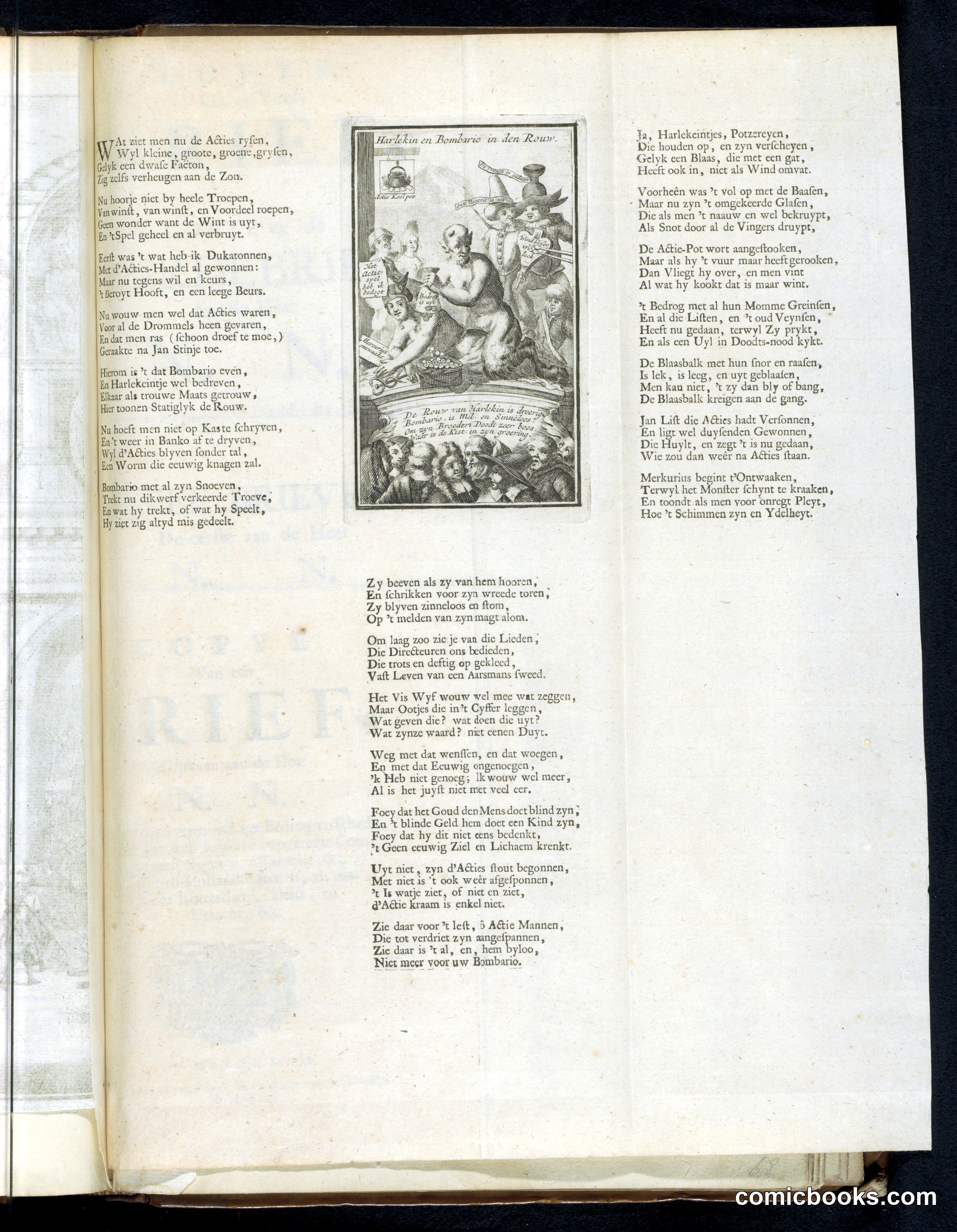
This Dutch woodcut depicts Mercury—messenger god and patron of commerce—rousing from sleep as allegorical figures of trade and prosperity surround him. The print belongs to the Northern European tradition of political-moral prints that preceded modern cartooning: allegorical scenes with layered meanings addressing economic or social conditions. The composition echoes Dutch Golden Age emblem books and later would inform 18th-century satirists like Hogarth and Rowlandson, who similarly combined narrative scenes, symbolic figures, and verbal commentary to critique or celebrate contemporary affairs. Though less overtly caricatural than later Georgian prints, this work shares their method: using visual wit and classical reference to engage viewers in topical debate. Such woodcuts circulated as broadsheets, establishing print satire as popular political speech.
About this artifact
- Date
- 1720
- Rights
- Public domain — free to view, share, and reuse.
- Restoration
- Digitally restored and hosted by ComicBooks.com.
Part of our mission to preserve and restore the public-domain heritage of the medium.