
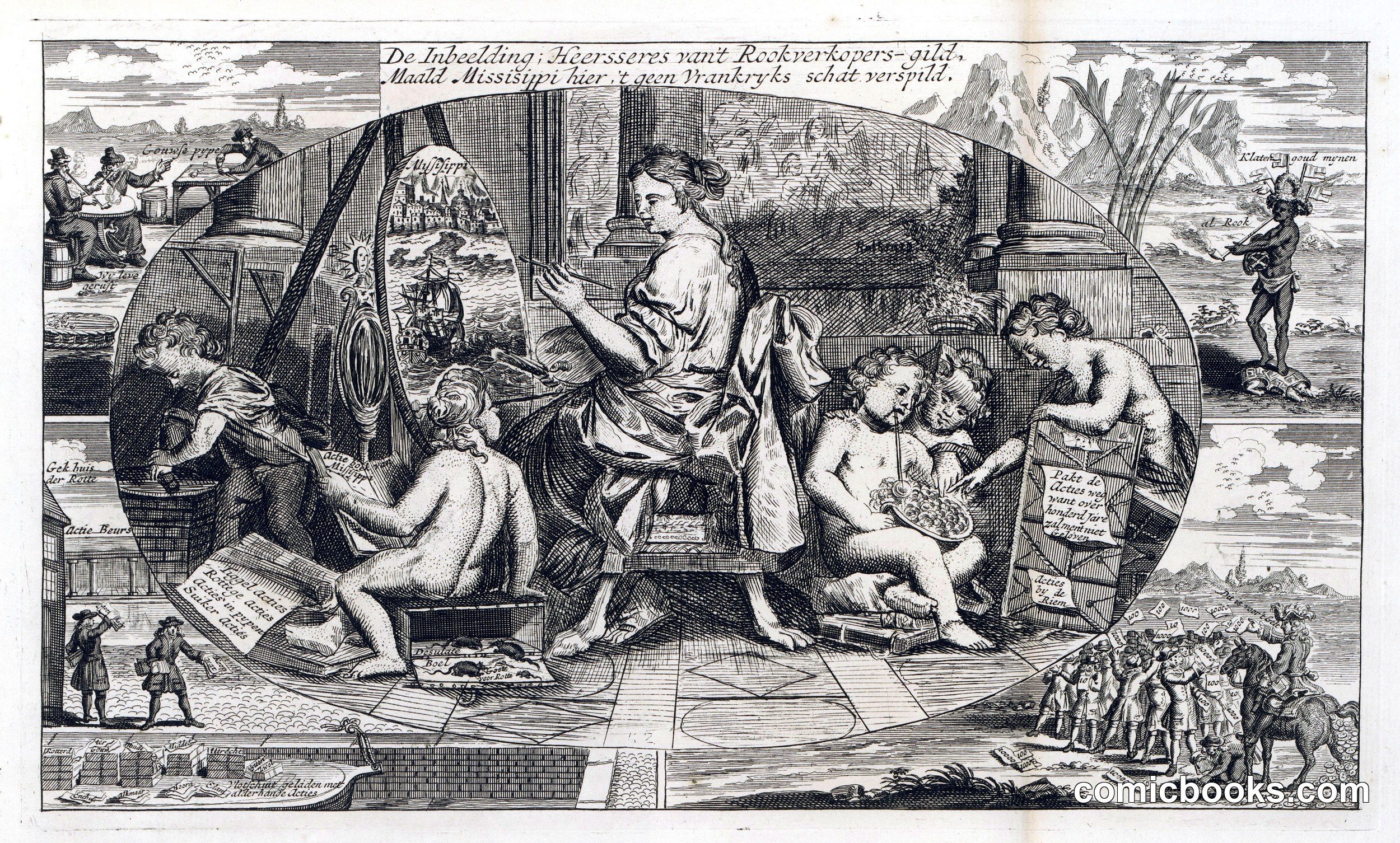
This Dutch engraving satirizes the Mississippi Company scheme, a financial bubble that ruined thousands of investors. An allegorical female figure instructs cherubs in the art of deception while investors examine worthless documents. The composition—with its theatrical space, emblematic characters, and moral instruction through visual excess—exemplifies early 18th-century political print satire. The print belongs to a Northern European tradition of didactic caricature that preceded Hogarth's narrative sequences. Through crowded detail, exaggerated gestures, and symbolic props, the artist exposes how financial fraud exploits human greed. This tradition of combining moral critique with popular imagery would evolve into the satirical prints of Gillray and Rowlandson, establishing visual language foundations for modern cartooning.
About this artifact
- Date
- 1720
- Rights
- Public domain — free to view, share, and reuse.
- Restoration
- Digitally restored and hosted by ComicBooks.com · high-resolution version available.
Part of our mission to preserve and restore the public-domain heritage of the medium.