
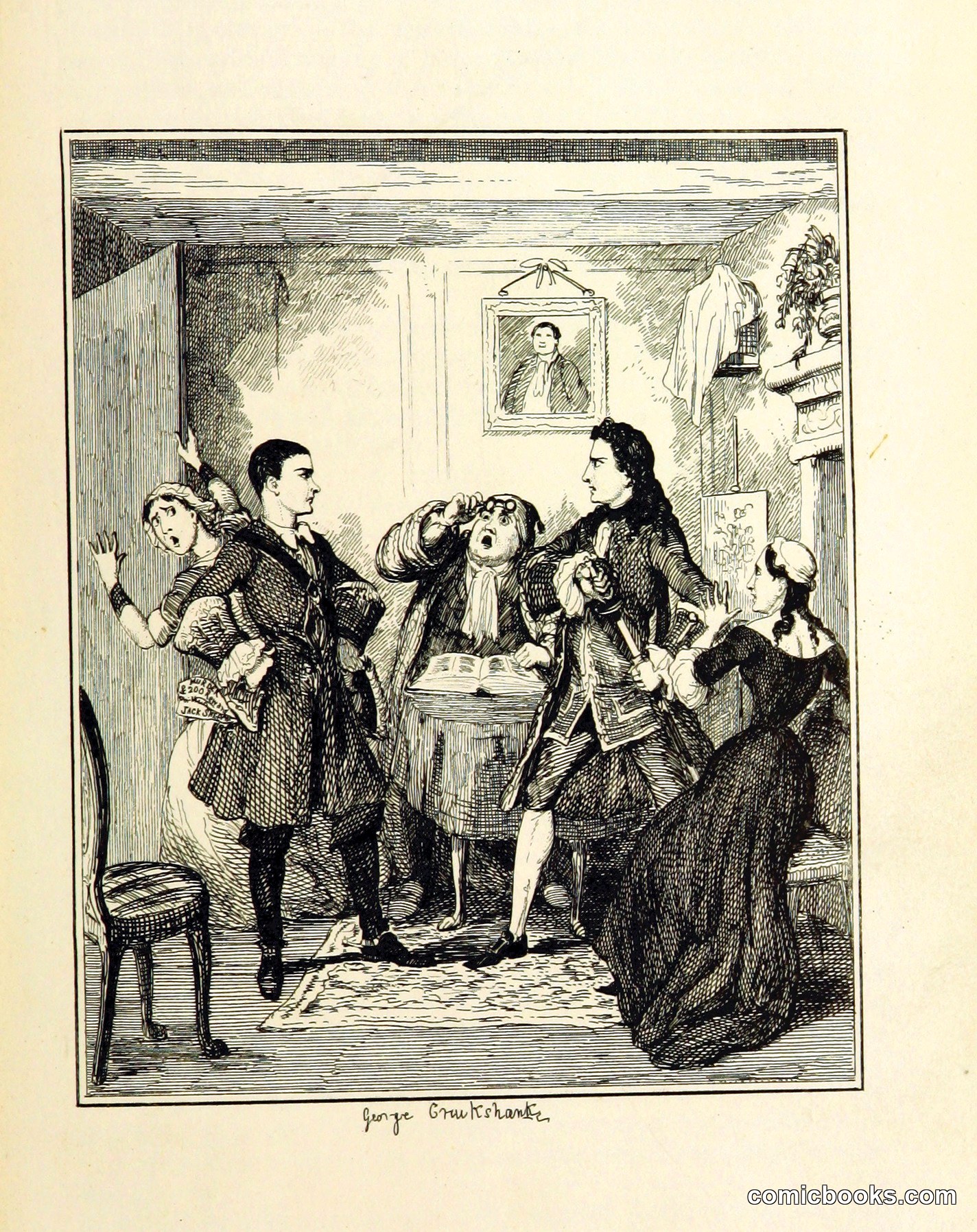
George Cruikshank's wood-engraved illustration captures a charged domestic confrontation: four figures—two men in Georgian coat and breeches, two women in period dress—react with theatrical alarm to a central figure whose open mouth and raised spectacles signal discovery or accusation. A framed portrait hangs on the wall behind them. Cruikshank worked in a tradition running directly from Hogarth's morality sequences through Rowlandson's grotesque comedy: expressive faces pushed toward caricature, bodies twisted for maximum narrative legibility. His illustrations for Ainsworth's Jack Sheppard (1839 serialization, reprinted here 1854) helped popularize the 'Newgate novel,' romanticizing working-class criminals for middle-class readers—a class anxiety the period rarely examined honestly. That tension between moral warning and criminal glamour is precisely the engine driving popular sequential narrative toward the penny dreadful and, eventually, the comic book.
About this artifact
- Date
- 1854
- Rights
- Public domain — free to view, share, and reuse.
- Restoration
- Digitally restored and hosted by ComicBooks.com.
Part of our mission to preserve and restore the public-domain heritage of the medium.