
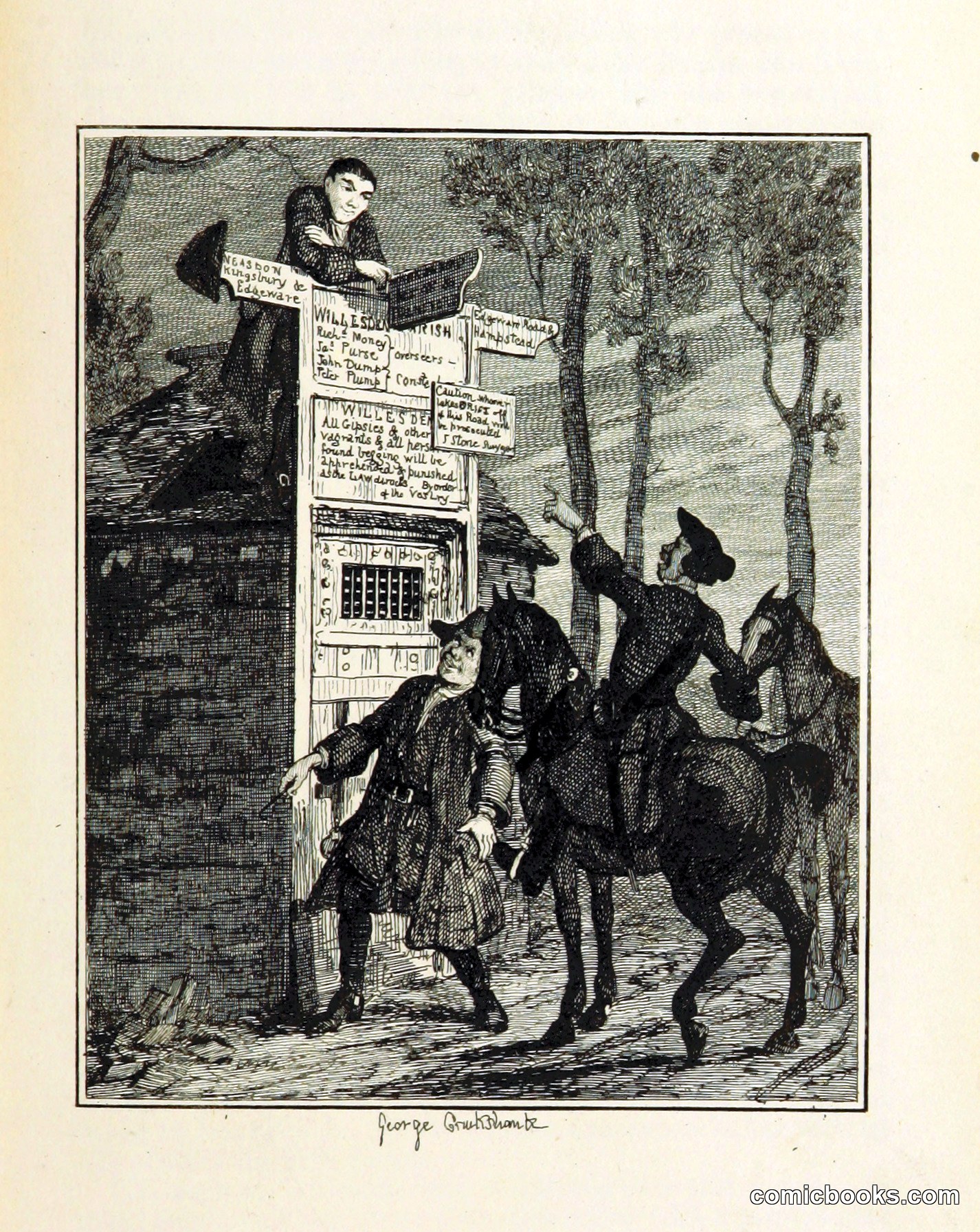
George Cruikshank's wood-engraved plate from the 1854 edition of Jack Sheppard catches a moment of roguish theatre: a man perches atop a parish noticeboard crammed with real Willesden vestry notices — poor-rate overseers, warnings against vagrants — while mounted highwaymen below gesture upward in mock consultation. The scene lampoons parish officialdom as backdrop to criminal swagger, the signpost's dense typography doing comic work that pure image cannot. Cruikshank's line, dense and cross-hatched, descended directly from Hogarth's moral series and Gillray's caricature prints; his figures carry the broad physiognomy and class-coded costume of that Georgian tradition. This visual storytelling across sequential plates — character, incident, punchline — is among the clearest ancestors of the comic strip format.
About this artifact
- Date
- 1854
- Rights
- Public domain — free to view, share, and reuse.
- Restoration
- Digitally restored and hosted by ComicBooks.com.
Part of our mission to preserve and restore the public-domain heritage of the medium.