
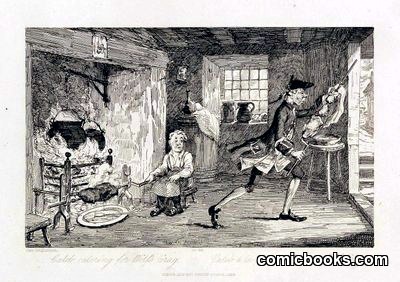
George Cruikshank's etching captures a tumultuous kitchen interior: a stout, aproned cook brandishes a pan while a dandyish gentleman recoils toward a cluttered table, papers flying, a fire roaring at left. The figures are rendered in Cruikshank's characteristic compressed energy — swelling bodies, exaggerated posture, faces caught mid-grimace. Illustrating Walter Scott's Gothic novel, the scene translates literary melodrama into the visual language Cruikshank inherited from Rowlandson and Gillray: working-class figures physically broad and comic against a socially refined intruder rendered equally ridiculous. The class condescension is the humor's engine, wholly standard for the period. This tradition of sequential, captioned illustration — single plates telling a story through figure, gesture, and setting — fed directly into the comic strip formats that emerged later in the nineteenth century.
About this artifact
- Creator
- Cruikshank, George
- Date
- 1836
- Rights
- Public domain — free to view, share, and reuse.
- Restoration
- Digitally restored and hosted by ComicBooks.com.
Part of our mission to preserve and restore the public-domain heritage of the medium.