
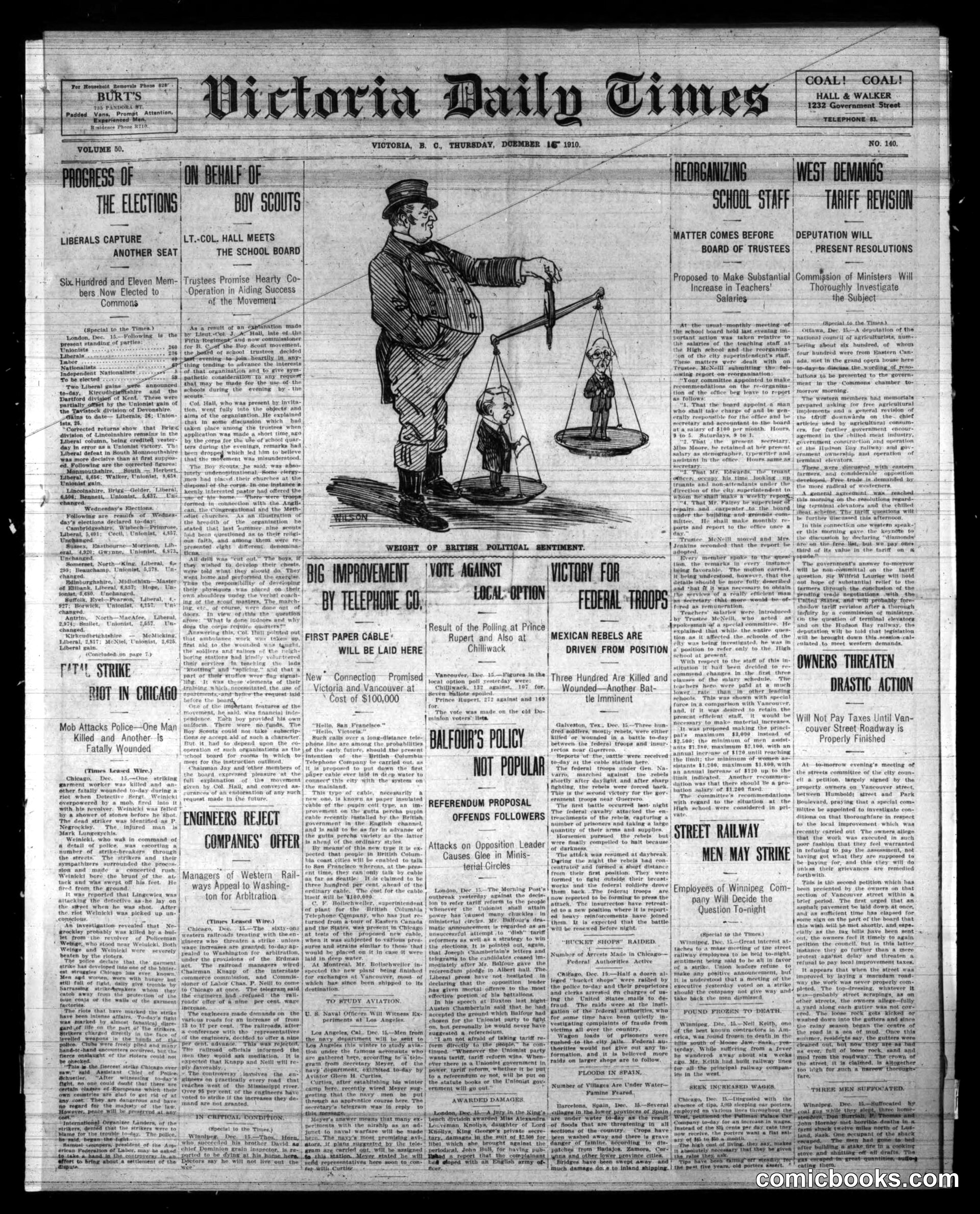
This newspaper page from British Columbia shows the visual language that defined early comics: a central cartoon illustration dominates the page, surrounded by text columns. By 1910, daily papers across North America had begun featuring single-panel and sequential comic art, establishing conventions—distinct frames, expressive linework, satirical or humorous subjects—that would define the medium. The artist uses bold ink and cross-hatching typical of the era's wood-block and letterpress printing. These newspaper strips and Sunday pages were the true origin of comic books; publishers would later collect them into bound volumes, creating the first comic books by the 1930s. The strip format became the template for all sequential art that followed.
About this artifact
- Date
- December 15, 1910
- Rights
- Public domain — free to view, share, and reuse.
- Restoration
- Digitally restored and hosted by ComicBooks.com.
Part of our mission to preserve and restore the public-domain heritage of the medium.