
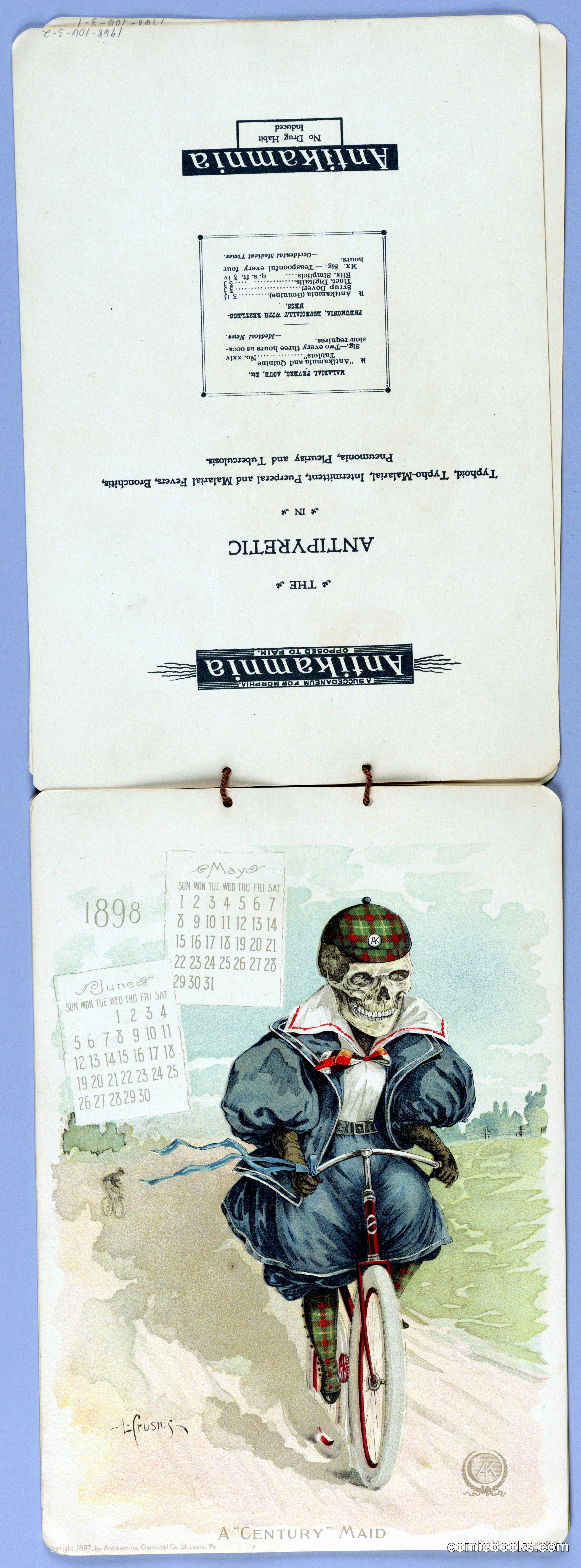
Louis Crusius's calendar illustration depicts a skeleton cyclist in period costume—puffed sleeves, helmet, and riding attire—pedaling along a rural road. The image demonstrates the commercial art tradition of the 1890s, when illustrated calendars served as promotional items for patent medicines and consumer goods. Antikamnia, a popular pain remedy, distributed these calendars nationwide. Crusius's skeleton figure reflects the era's taste for memento mori imagery and macabre humor in advertising. The work exemplifies how commercial illustration shaped visual culture before the comic strip proper emerged in newspapers, establishing conventions of character design and sequential visual narrative that would define early twentieth-century comics.
About this artifact
- Creator
- Louis Crusius
- Date
- 1897–1898
- Rights
- Public domain — free to view, share, and reuse.
- Restoration
- Digitally restored and hosted by ComicBooks.com · high-resolution version available.
Part of our mission to preserve and restore the public-domain heritage of the medium.