
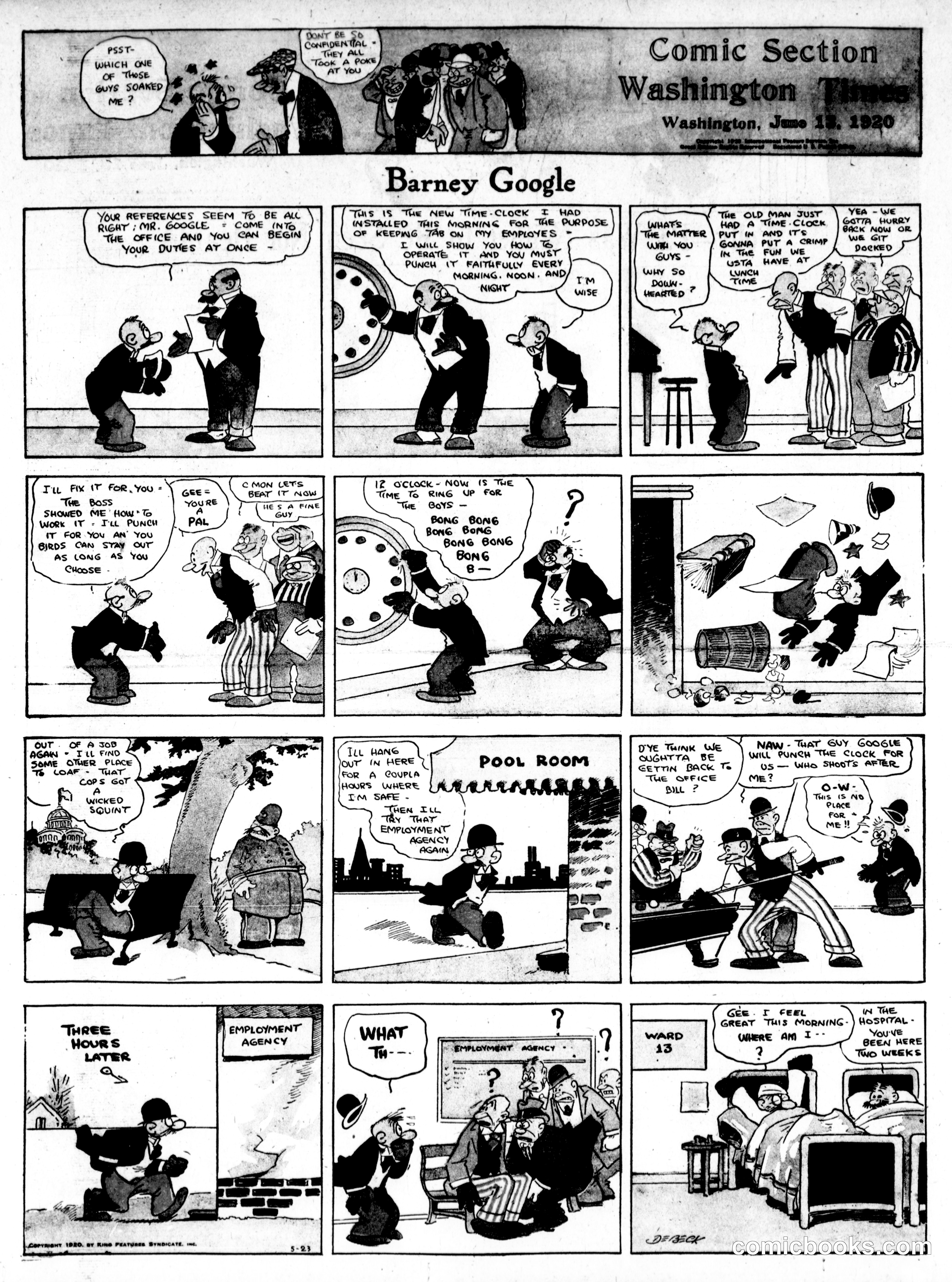
Barney Google follows a diminutive protagonist through domestic and urban mishaps, from clock-setting confusion to pool-hall brawls to hospital recovery. The strip demonstrates the visual language that defined newspaper comics: sequential panels with speech balloons, exaggerated proportions for comedic effect, and recurring character types. Created by Billy DeBeck, Barney Google ran as a popular Sunday feature, establishing narrative flow across multiple episodes. The strip's reliance on slapstick timing—pratfalls, misunderstandings, physical chaos—reflects the silent-film comedy aesthetic contemporaneous with early comic-strip development. By the 1920s, newspaper comic sections like this had become standard Sunday features, creating the foundation for modern sequential art and the visual grammar that later defined comic books.
About this artifact
- Date
- Washington Times, June 13, 1920
- Rights
- Public domain — free to view, share, and reuse.
- Restoration
- Digitally restored and hosted by ComicBooks.com · high-resolution version available.
Part of our mission to preserve and restore the public-domain heritage of the medium.