
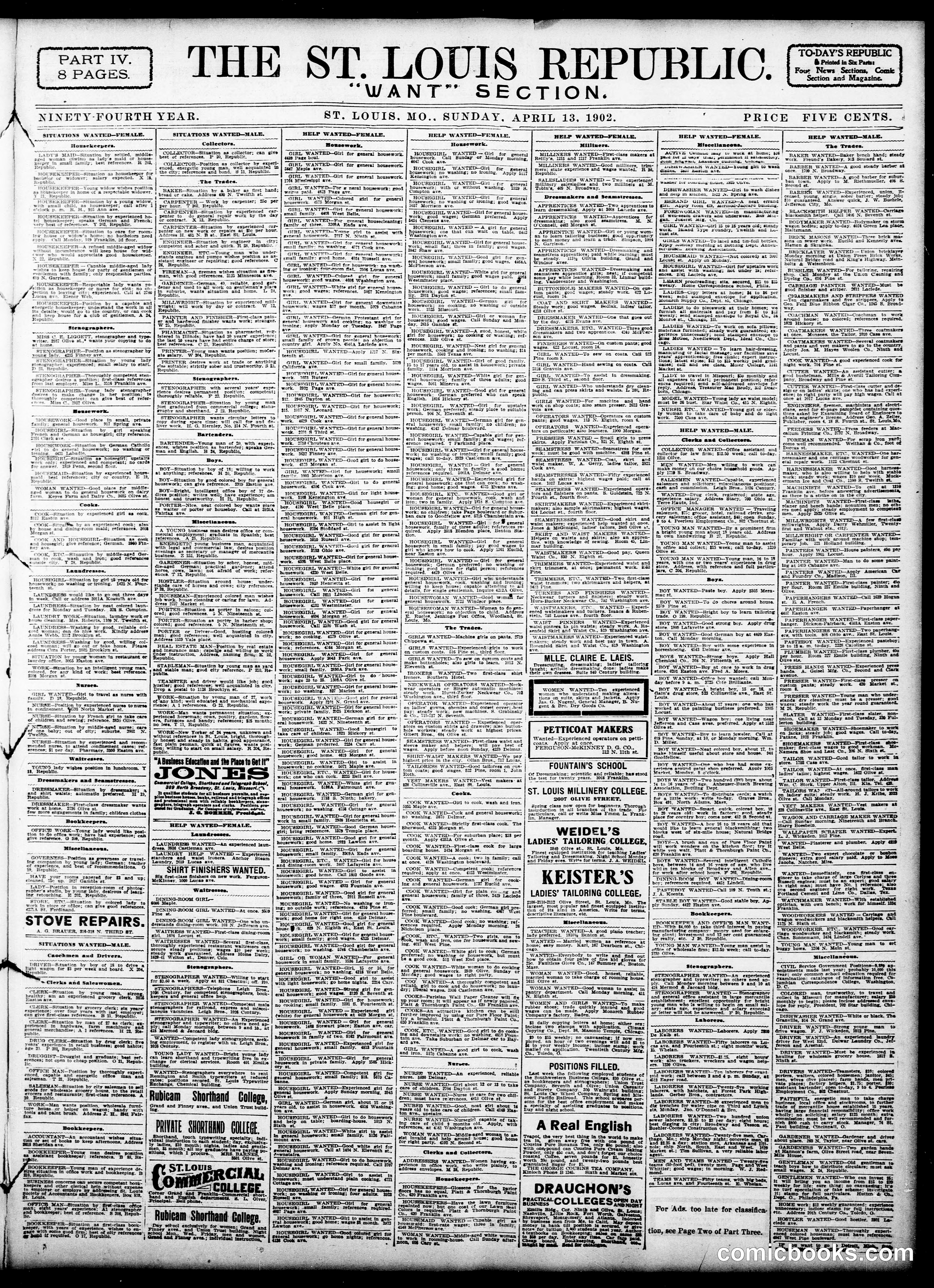
This densely packed Sunday newspaper page represents the explosive growth of comics in early 1900s America. Multiple strips share the page in a grid layout that would become standard in Sunday editions—visual storytelling compressed into sequential panels with dialogue balloons. The format emerged from newspaper competition and technological advances in color printing. By 1902, papers like the St. Louis Republic understood comics as essential circulation drivers, attracting readers across class and age groups. These pages established conventions still used today: panel borders defining temporal sequence, word balloons indicating speech, recurring characters building reader loyalty week to week. The strip format itself—narrative unfolding through images and text—became the direct ancestor of the modern comic book, born when publishers began reprinting these newspaper strips in pamphlet form within the decade.
About this artifact
- Date
- April 13, 1902
- Rights
- Public domain — free to view, share, and reuse.
- Restoration
- Digitally restored and hosted by ComicBooks.com · high-resolution version available.
Part of our mission to preserve and restore the public-domain heritage of the medium.