
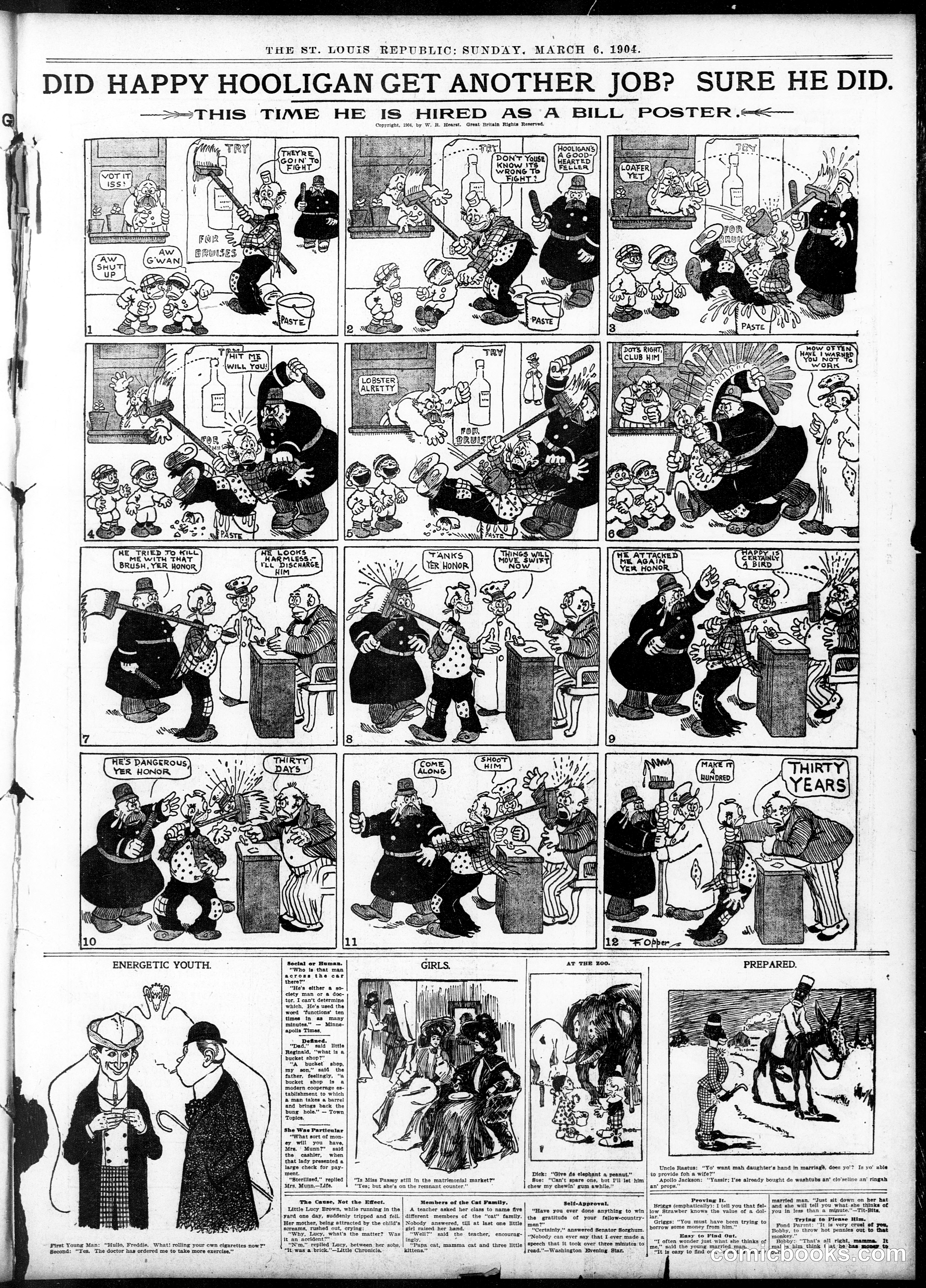
Twelve panels follow the hapless tin-canned tramp Happy Hooligan through a single comic premise: hired as a bill poster, he pastes advertisements onto everything except the intended surfaces — bystanders, policemen, a lobster — ending, as always, before a magistrate. Frederick Burr Opper's strip, syndicated from 1900, ran in Hearst papers nationwide and established the recurring-character Sunday page as commercial art form. The full-color broadsheet format seen here — multiple numbered panels, speech balloons carrying distinct voices, slapstick escalating across a grid — was the direct template for the reprint pamphlets sold at newsstands from the 1890s onward, the objects historians now call the first comic books. Opper's clean brush line, expressive silhouettes, and consistent characterization through costume made Happy Hooligan one of the most recognized figures in early American popular print.
About this artifact
- Date
- Published March 6, 1904
- Rights
- Public domain — free to view, share, and reuse.
- Restoration
- Digitally restored and hosted by ComicBooks.com · high-resolution version available.
Part of our mission to preserve and restore the public-domain heritage of the medium.