
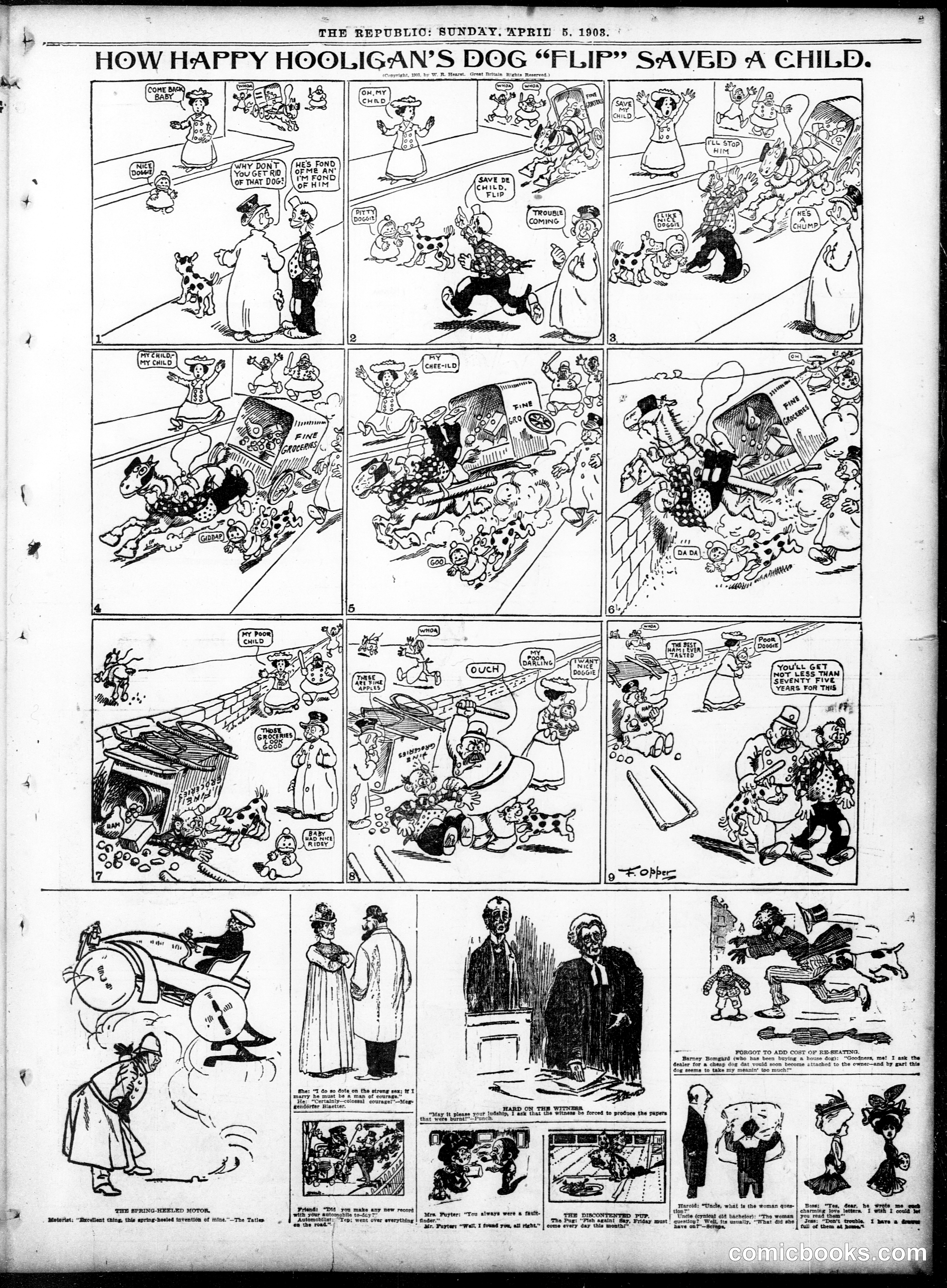
Nine panels follow the tin-canned tramp Happy Hooligan and his spotted dog Flip as they attempt to rescue a runaway child from a careening carriage. The strip moves left-to-right, top-to-bottom through escalating slapstick chaos — Hooligan causes more destruction than he prevents — before a judge sentences him to seventy-five years. Frederick Burr Opper, who signed this page, had been drawing Happy Hooligan since 1900 for William Randolph Hearst's syndicate, making Hooligan one of the first recurring comic characters with a fixed visual identity. These weekly Sunday color pages — alongside Outcault's Yellow Kid and Dirks's Katzenjammer Kids — established the grammar of sequential art: numbered panels, integrated speech balloons, and a cast audiences followed week to week, the direct ancestor of the modern comic book.
About this artifact
- Date
- Published April 5, 1903
- Rights
- Public domain — free to view, share, and reuse.
- Restoration
- Digitally restored and hosted by ComicBooks.com · high-resolution version available.
Part of our mission to preserve and restore the public-domain heritage of the medium.