
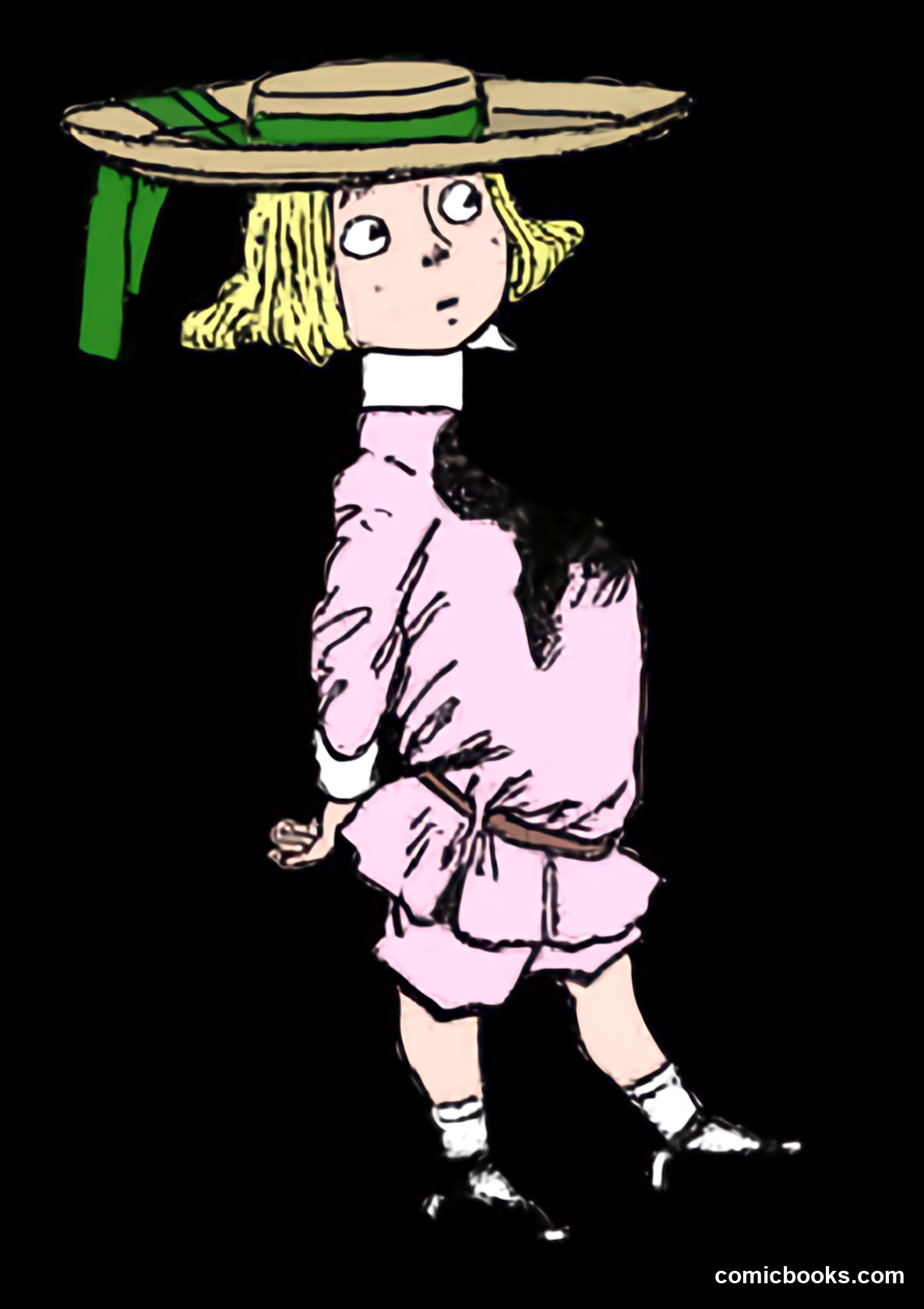
After the Yellow Kid, Richard F. Outcault created his second great sensation: Buster Brown, a mischievous, angelic-looking boy in a tidy suit, forever scheming alongside his talking bulldog, Tige, and his companion Mary Jane. Where the Yellow Kid embodied the tenement, Buster was a child of comfort — a well-dressed rascal whose Sunday antics usually ended with a comic reckoning and a mock moral.
Buster Brown's real revolution was commercial. Outcault understood, better than almost anyone of his generation, that a popular character was a property. He licensed Buster, Tige, and Mary Jane far and wide — most famously to a shoe company whose brand still carries the names today — turning a comic character into a merchandising phenomenon spanning shoes, clothing, and countless products. It was one of the earliest and most influential demonstrations that comics could generate fortunes off the page.
In doing so, Outcault mapped a business model that licensed characters would follow for the next century. The strip itself was charming and beautifully drawn, but its legacy is as much about commerce as art: proof that a drawing, given a name and a face readers loved, could become a nationwide brand.
About this artifact
- Creator
- Richard F. Outcault
- Date
- 1906
- Rights
- Public domain — free to view, share, and reuse.
- Restoration
- Digitally restored and hosted by ComicBooks.com · high-resolution version available.
Part of our mission to preserve and restore the public-domain heritage of the medium.