
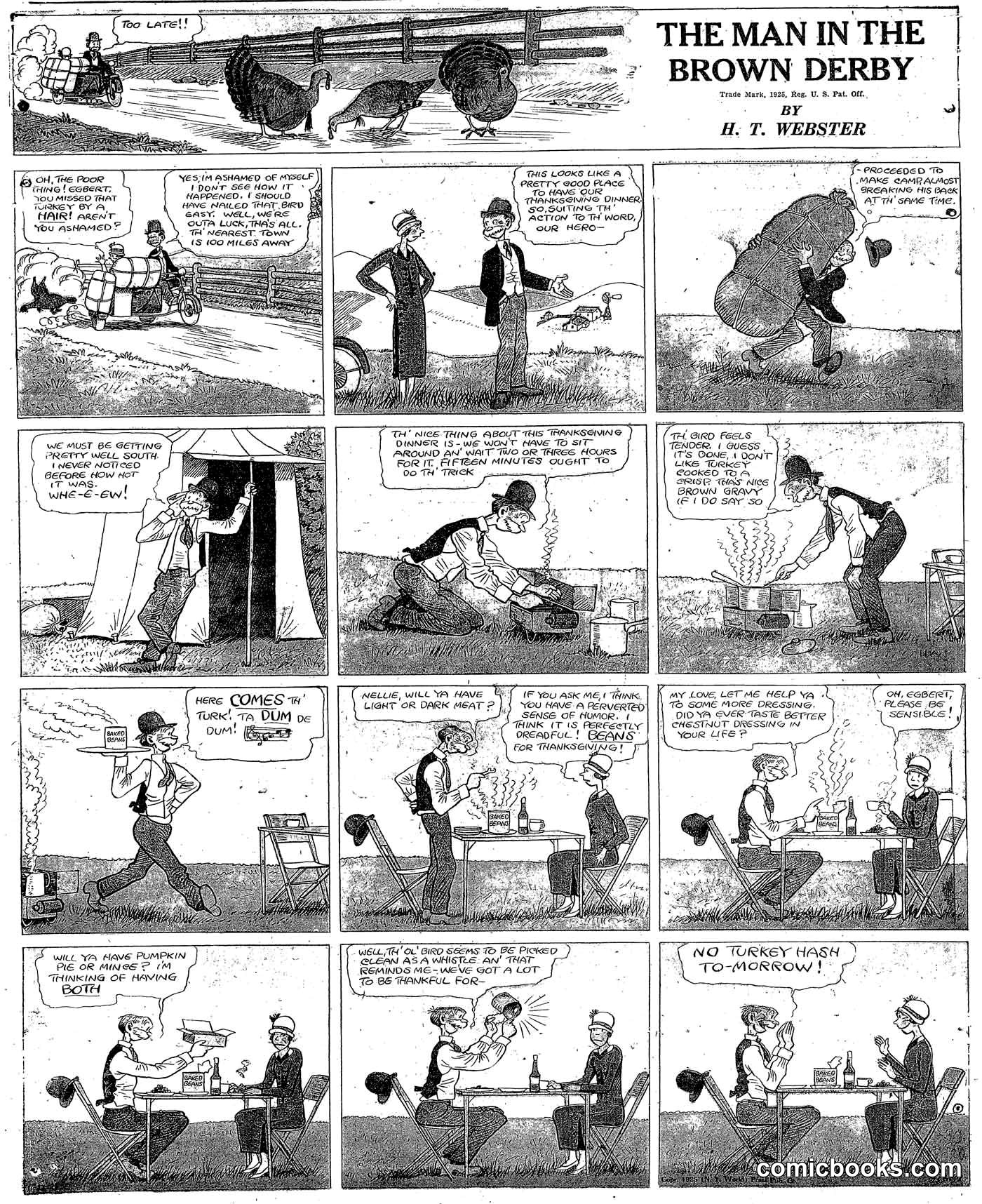
H. T. Webster's Man in the Brown Derby follows a hapless character through domestic mishaps and social awkwardness. This Sunday strip demonstrates the visual syntax that defined early newspaper comics: sequential panels advancing a narrative, speech balloons carrying dialogue and internal monologue, and sight gags built from physical comedy. Webster's clean linework and clear panel progression—six to nine frames per page—became the standard template for the Sunday funny pages. The strip's humor derives from relatable situations rendered absurd through exaggeration, a comedic strategy that relied on readers' familiarity with recurring characters and their predictable yet surprising encounters. Such strips were the direct ancestors of the comic book form that would emerge in the 1930s.
About this artifact
- Date
- November 22, 1925
- Rights
- Public domain — free to view, share, and reuse.
- Restoration
- Digitally restored and hosted by ComicBooks.com.
Part of our mission to preserve and restore the public-domain heritage of the medium.