
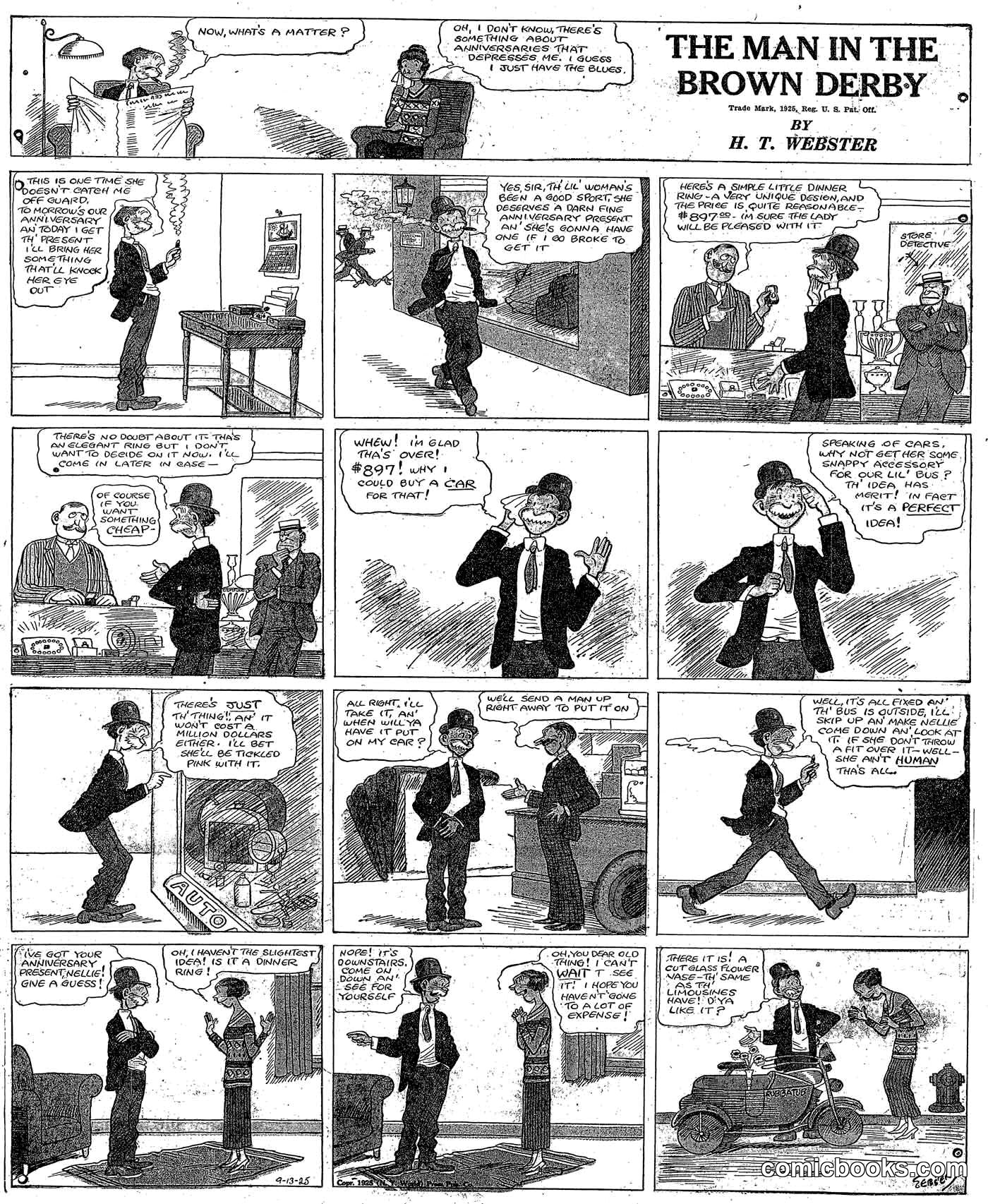
H. T. Webster's Man in the Brown Derby follows a befuddled office worker navigating urban life—lost hats, expensive repairs, romantic mishaps, and automotive troubles. The strip exemplifies 1920s newspaper comics: single recurring protagonist, episodic gags, sequential panels with speech balloons, and ink linework capturing physical comedy. Webster used the visual grammar pioneered by strip predecessors: panel borders to guide reading flow, dialogue to advance gags, and exaggerated poses for humor. Published in daily and Sunday formats, such strips functioned as proto-comics, establishing narrative structure, character development through repetition, and visual pacing that would define the medium. The everyman protagonist and domestic humor made Webster's work widely syndicated across American newspapers.
About this artifact
- Date
- September 13, 1925
- Rights
- Public domain — free to view, share, and reuse.
- Restoration
- Digitally restored and hosted by ComicBooks.com.
Part of our mission to preserve and restore the public-domain heritage of the medium.