
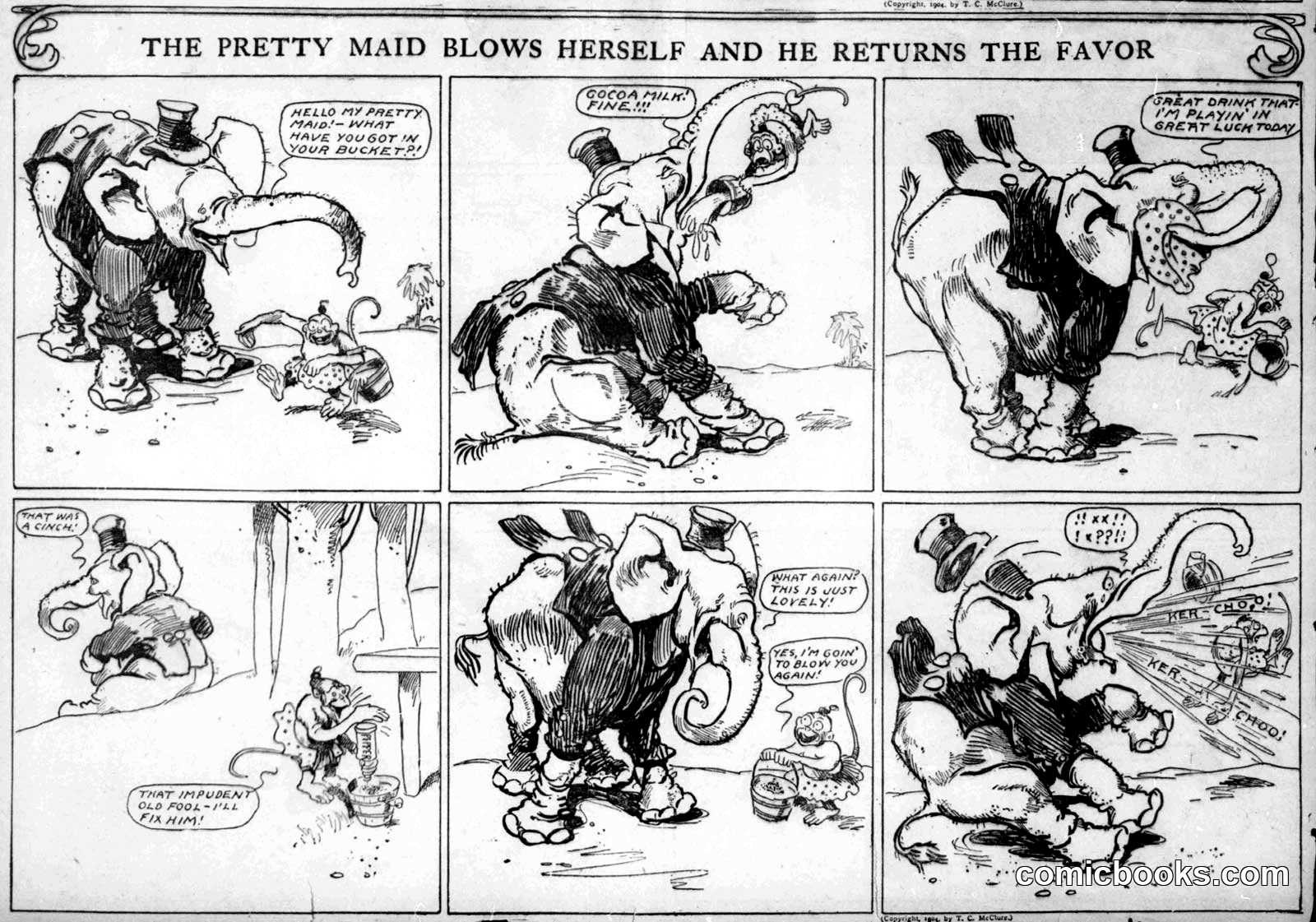
This Sunday comic strip demonstrates the visual conventions emerging in early newspaper comics: sequential panels arranged in a grid, speech balloons containing dialogue and sound effects, and recurring characters in exaggerated proportions. The narrative follows a slapstick exchange between two figures, with physical comedy and wordplay driving the gags across six panels. The artist uses bold black ink lines and expressive distortion of the human form to convey motion and absurdity—techniques drawn directly from vaudeville and theatrical traditions. By the early 1900s, newspaper comics inherited the panel structure from European sequential art while developing their own vernacular. These Sunday pages functioned as the prototype for the comic books that would emerge in the 1930s, establishing how artists could tell visual stories through arrangement, pacing, and character expression.
About this artifact
- Date
- 1904
- Rights
- Public domain — free to view, share, and reuse.
- Restoration
- Digitally restored and hosted by ComicBooks.com.
Part of our mission to preserve and restore the public-domain heritage of the medium.