
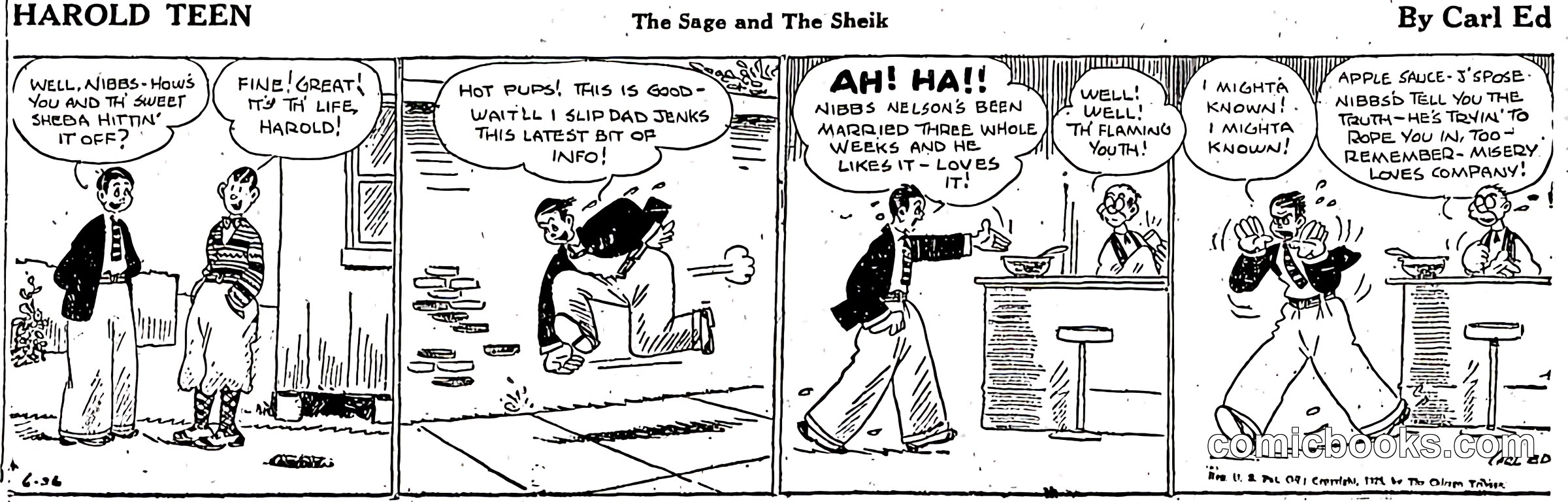
Harold Teen follows a high school boy through domestic comedy and social mishaps. In this strip, Harold's enthusiasm for hot dogs and apple sauce leads to family friction when his mother objects to his eating habits. The comic uses the visual grammar standardized by the 1920s: multiple panels advancing a narrative sequence, speech balloons carrying dialogue, and a recurring cast of recognizable characters. The strip ran in hundreds of newspapers, exemplifying how Sunday comics and dailies became the primary laboratory for sequential art innovation before comic books emerged as a distinct medium in the 1930s. The exaggerated body language and slapstick humor reflect the era's cartooning style, while the domestic setting tapped into the aspirational middle-class audience that made newspaper strips essential daily reading.
About this artifact
- Date
- June 26, 1925
- Rights
- Public domain — free to view, share, and reuse.
- Restoration
- Digitally restored and hosted by ComicBooks.com · high-resolution version available.
Part of our mission to preserve and restore the public-domain heritage of the medium.