
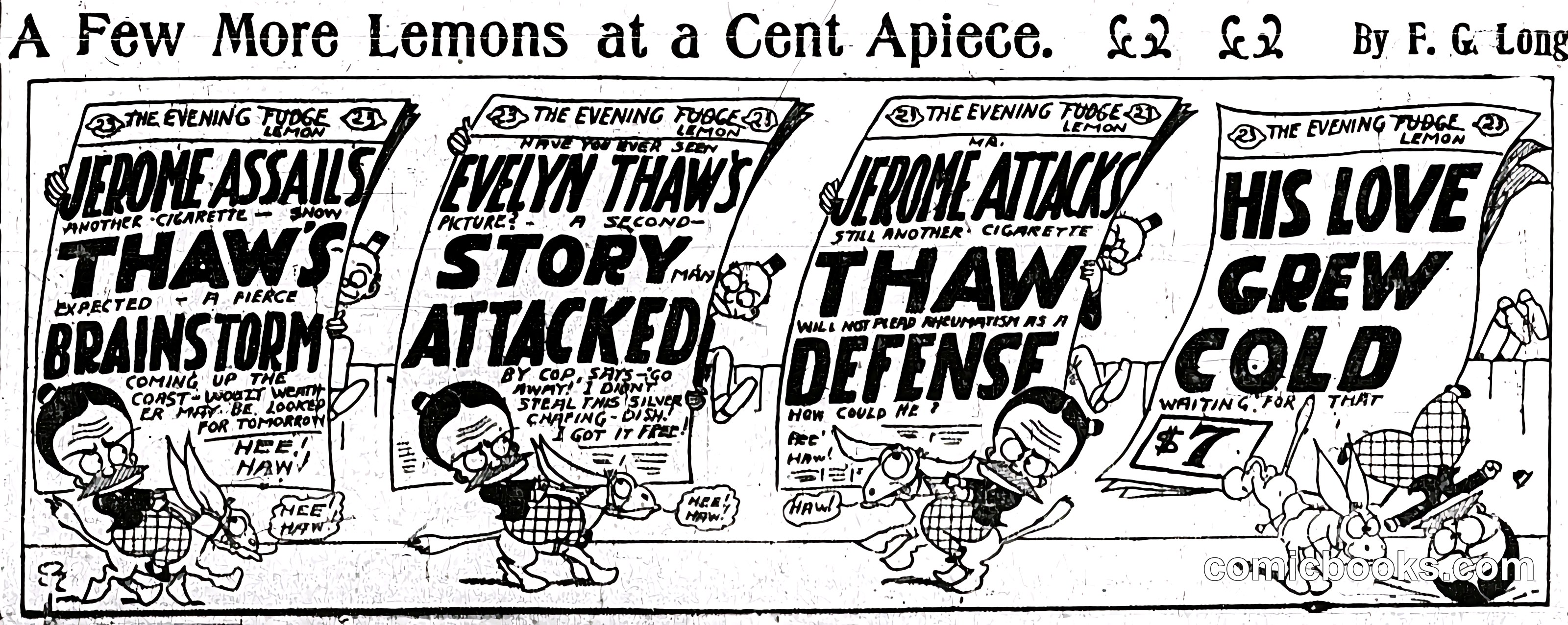
This newspaper comic strip showcases the visual conventions that shaped early comic art: four equal panels arranged horizontally, speech balloons anchoring dialogue, and a recurring character—a wide-eyed boy—in sequential situations. The gags depend on the reader's ability to follow action across panels: a child buys cigarette cards from movie theater advertisements, each panel presenting a different film title and his escalating reactions. The strip's economy of line and exaggerated expressions reflect the aesthetic of early 1900s newspaper comics, when Sunday and daily pages in broadsheets like The Evening Fudge served as the primary laboratory for developing the visual grammar that would eventually define comic books. Sequential narrative through paneled space was still novel; artists were actively inventing how to tell stories in this format.
About this artifact
- Date
- March 12, 1907
- Rights
- Public domain — free to view, share, and reuse.
- Restoration
- Digitally restored and hosted by ComicBooks.com · high-resolution version available.
Part of our mission to preserve and restore the public-domain heritage of the medium.