
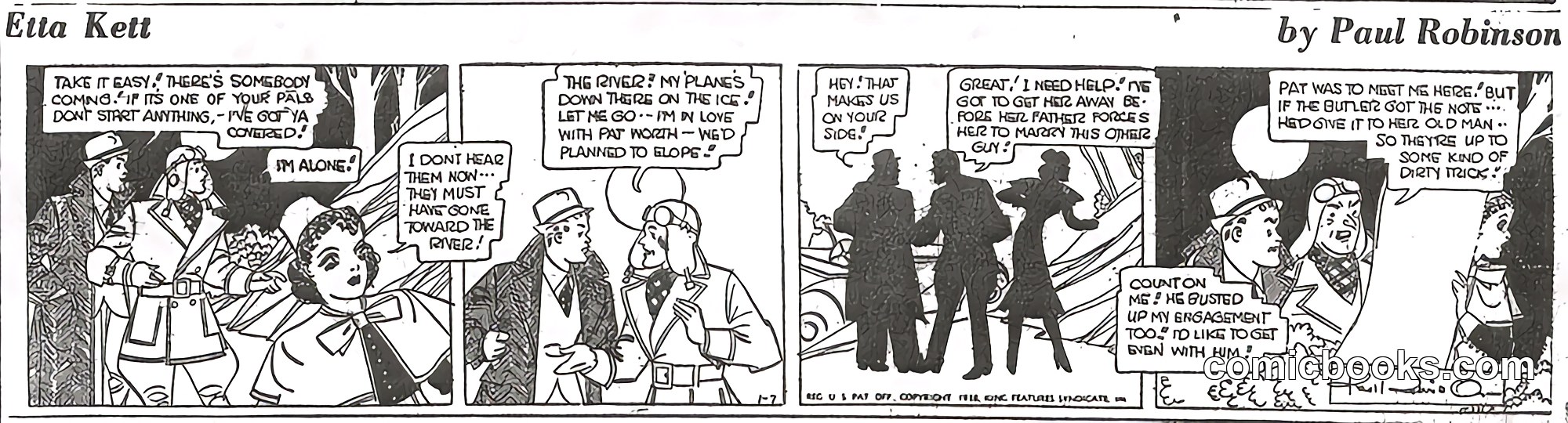
Paul Robinson's Etta Kett followed the adventures of a young flapper navigating romance, family mishaps, and social situations. The strip employs the visual vocabulary that defined newspaper comics: rectangular panels arranged in sequence, speech balloons advancing plot and gag, and recurring characters in domestic and public settings. Robinson's line work balances crisp detail with rapid clarity—essential for dailies printed at small scale. Etta Kett exemplifies how the Sunday and daily newspaper strip became the laboratory where comic art developed its grammar: sight gags, visual timing, personality-driven humor, and the panel-to-panel storytelling that would become foundational to the comic book format emerging in the late 1930s.
About this artifact
- Date
- 1930s
- Rights
- Public domain — free to view, share, and reuse.
- Restoration
- Digitally restored and hosted by ComicBooks.com.
Part of our mission to preserve and restore the public-domain heritage of the medium.