
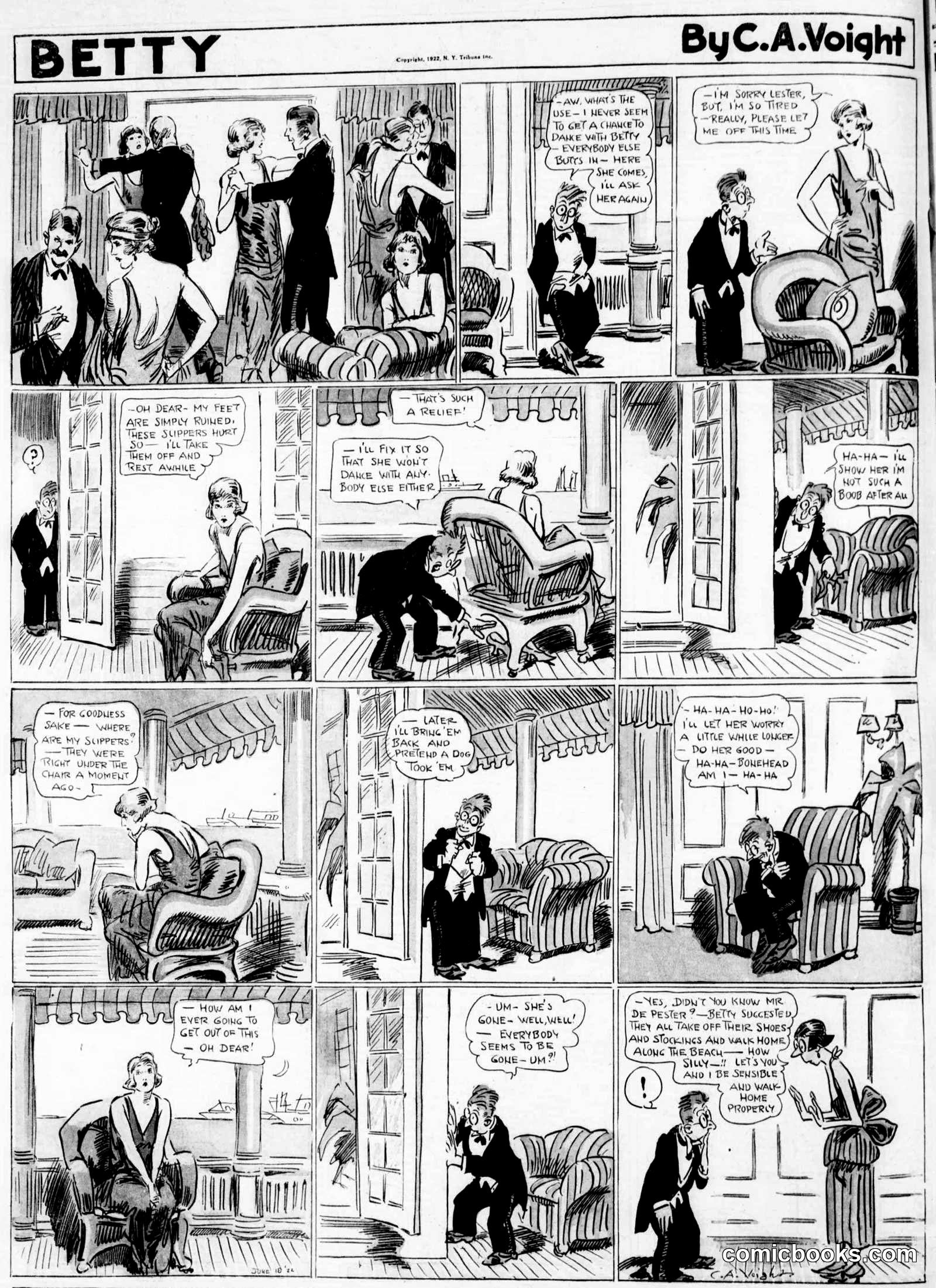
This newspaper strip follows Betty through a domestic comedy involving a malfunctioning heating system during a formal party. Voight employs the full vocabulary of early comic strip grammar: sequential panels with clear narrative progression, speech balloons carrying dialogue and interior monologue, and recurring characters in recognizable settings. The strip's humor relies on physical comedy and social embarrassment—visual gags that translated perfectly to the mass-produced Sunday pages. By the 1920s, newspaper comics had become the primary vehicle for sequential art, establishing conventions that would define the medium: panel borders, visual pacing, and character consistency across installments. Voight's work demonstrates how strips functioned as both entertainment and technical innovation, reaching millions of readers daily and establishing the visual language that would underpin comic books.
About this artifact
- Date
- 1922
- Rights
- Public domain — free to view, share, and reuse.
- Restoration
- Digitally restored and hosted by ComicBooks.com.
Part of our mission to preserve and restore the public-domain heritage of the medium.