A complete issue · 54 pages · 1935
Life — May 1935
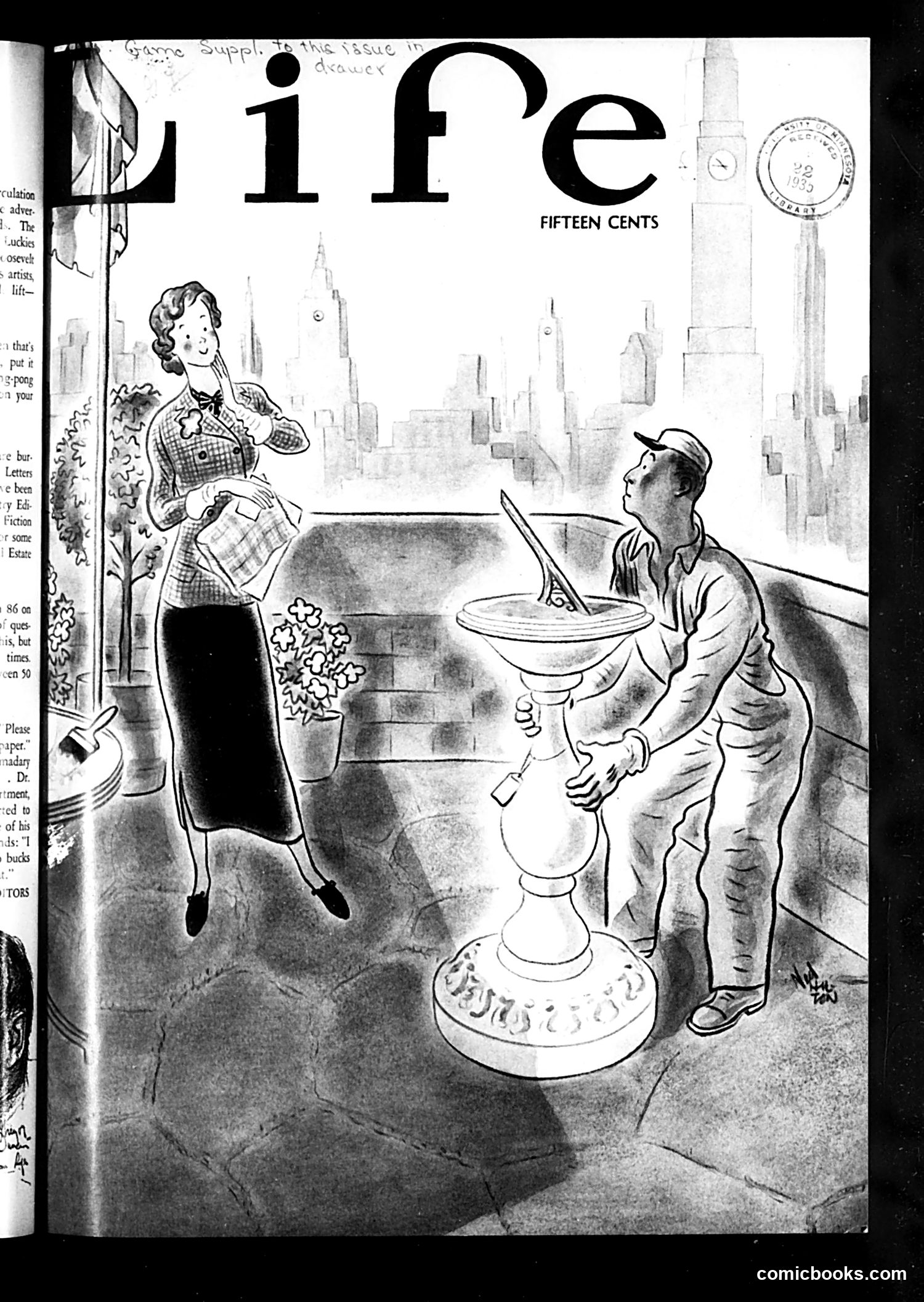
# Analysis This is a Life magazine cover (fifteen cents) featuring a cartoon about urban bird control or pest management. The scene shows a woman in 1940s-style dress observing a man on a rooftop attempting to manage what appears to be large decorative birds or bird sculptures using nets and tools. Behind them is a stylized New York City skyline. The satire likely comments on urban pigeon or bird problems in cities—a persistent nuisance requiring creative or absurd solutions. The exaggerated scale of the birds and the man's elaborate equipment suggest mockery of either overly complicated pest-control methods or the growing bird population in crowded urban areas. The woman's amused expression implies the situation is ridiculous or impractical.
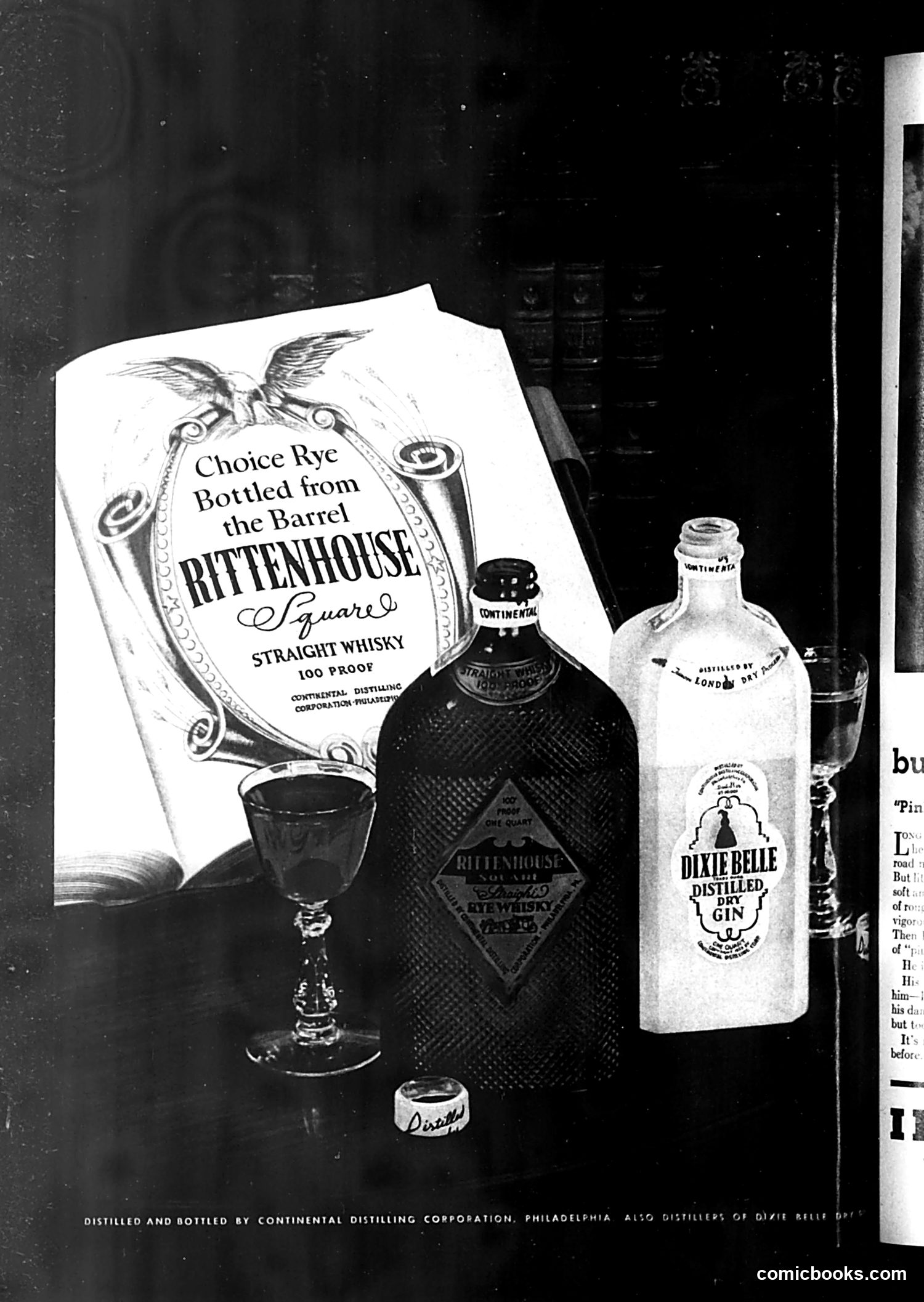
# Analysis This page is primarily **advertising content**, not political satire or editorial cartoon. It displays liquor advertisements from the Prohibition era or immediate post-Prohibition period. The visible ads feature: - **Rittenhouse Square** rye whiskey (100 proof, straight whiskey) - **Dixie Belle** distilled dry gin - Both produced by Continental Distilling Corporation, Philadelphia The advertisement emphasizes "bottled from the barrel" quality and features decorative period imagery (eagle, classical styling). This represents commercial marketing during a time when alcohol sales were either newly legalized (post-1933) or heavily restricted, making such prominent advertising significant historically. There is no political commentary or satire visible—this is straightforward product promotion in a magazine format.
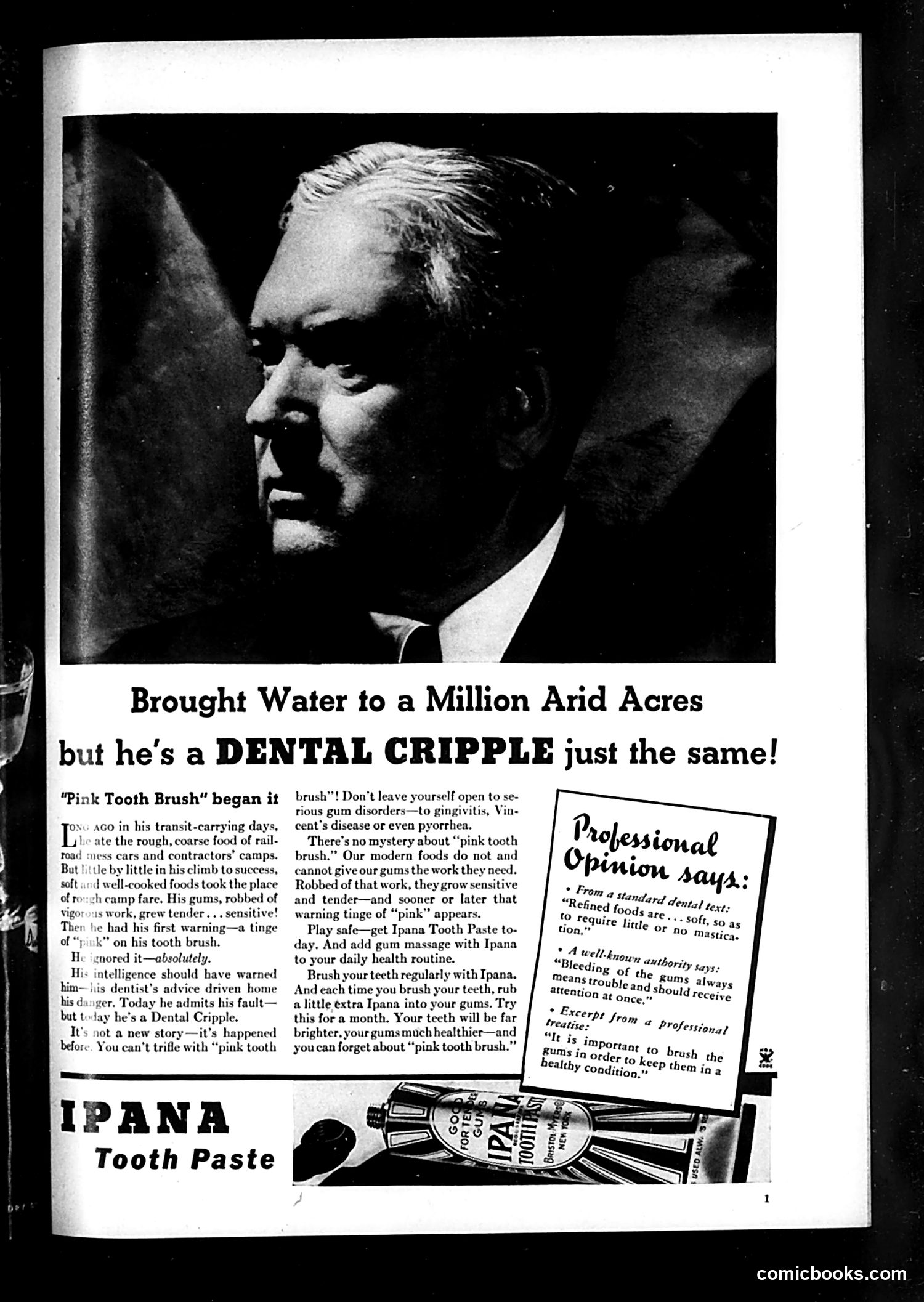
# Analysis This is primarily a **toothpaste advertisement**, not political satire. The page advertises Ipana Tooth Paste. The headline mocks an unnamed public figure (shown in profile) who achieved something grand—"Brought Water to a Million Arid Acres"—yet suffers from "a DENTAL CRIPPLE" condition, suggesting poor dental health undermines his accomplishments. The joke relies on **contrast**: major infrastructure achievement means nothing if you have bad teeth ("pink tooth brush"). The advertisement implies that regardless of professional success, dental care through Ipana products is essential to personal credibility. The "Professional Opinion" box includes endorsements from dental authorities supporting the product's gum-care claims. This reflects **vintage advertising strategy**: using humor and mild shame to sell health products by suggesting personal grooming reflects character.
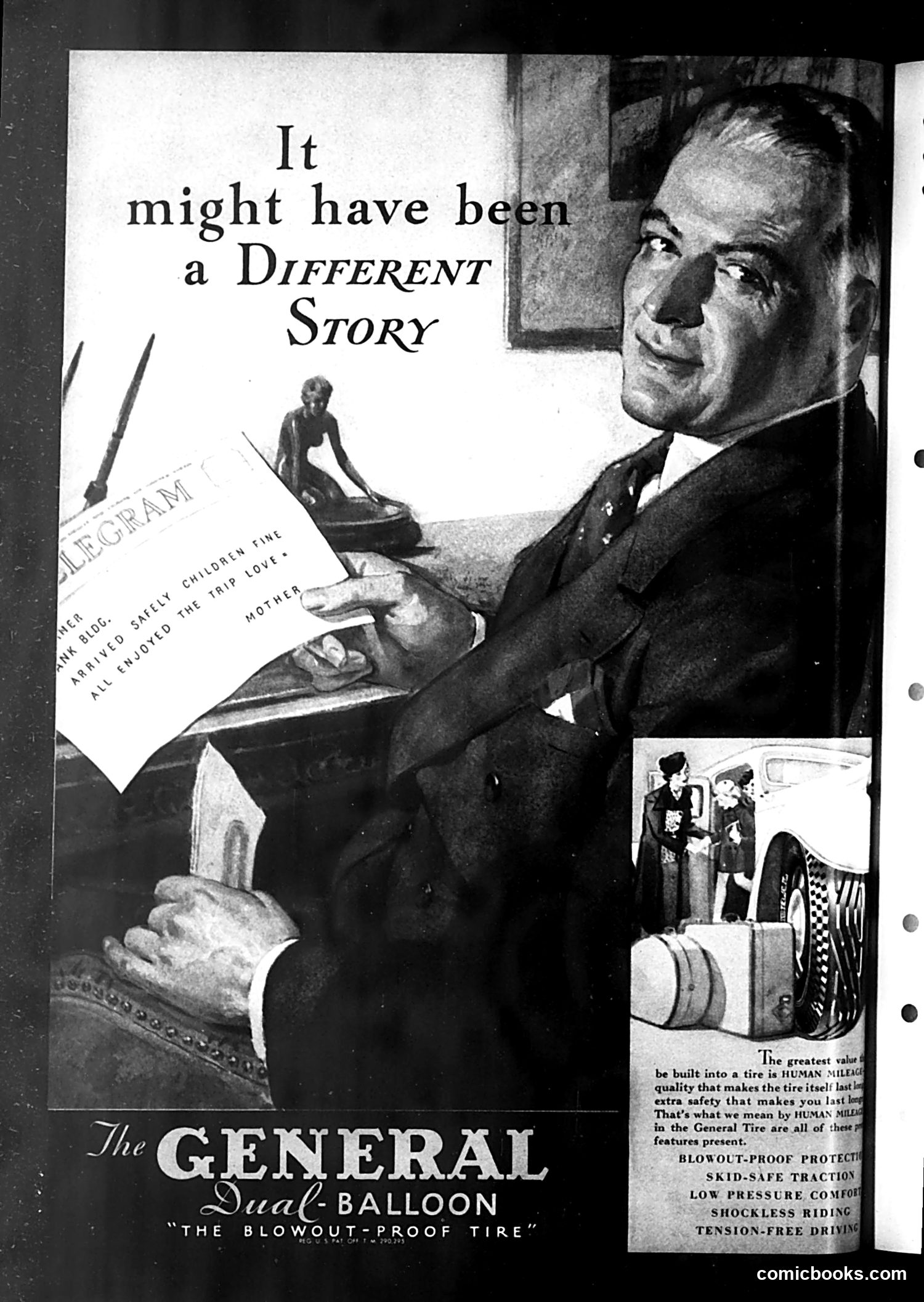
# Analysis This is primarily a **General Tire advertisement**, not political satire. The page shows a man in business attire examining a tire while holding what appears to be a film strip or promotional material. The headline "It might have been a DIFFERENT STORY" suggests that choosing General's "Dual-Balloon" tire could have changed outcomes depicted in the smaller images—including what appears to be a domestic scene and a car situation. The ad emphasizes safety features: "Blowout-Proof Protection," "Skid-Safe Traction," "Low Pressure Comfort," "Shockless Riding," and "Tension-Free Driving." This is vintage commercial advertising using a narrative hook ("different story") to promote tire quality and reliability to mid-century consumers concerned with vehicle safety.
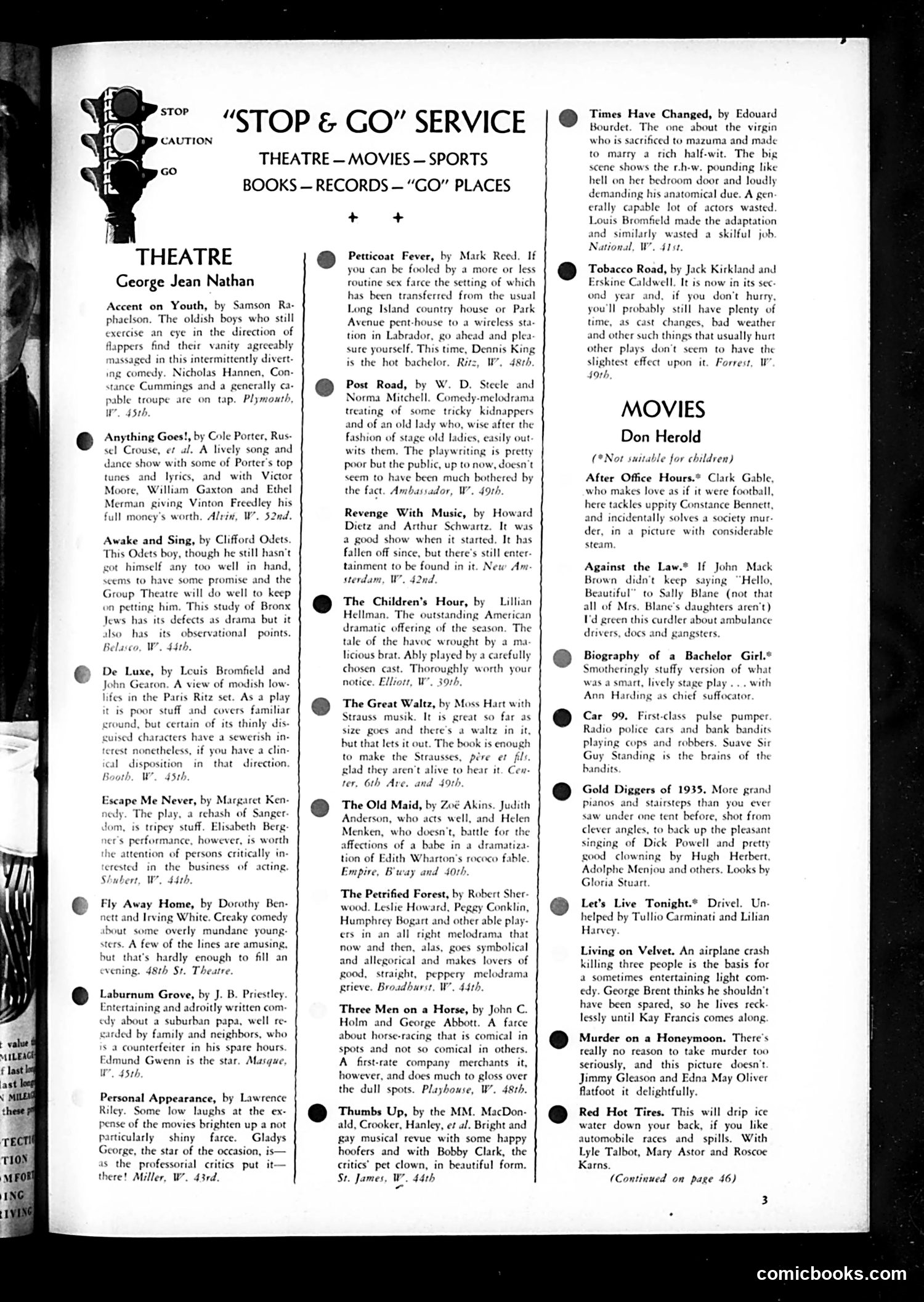
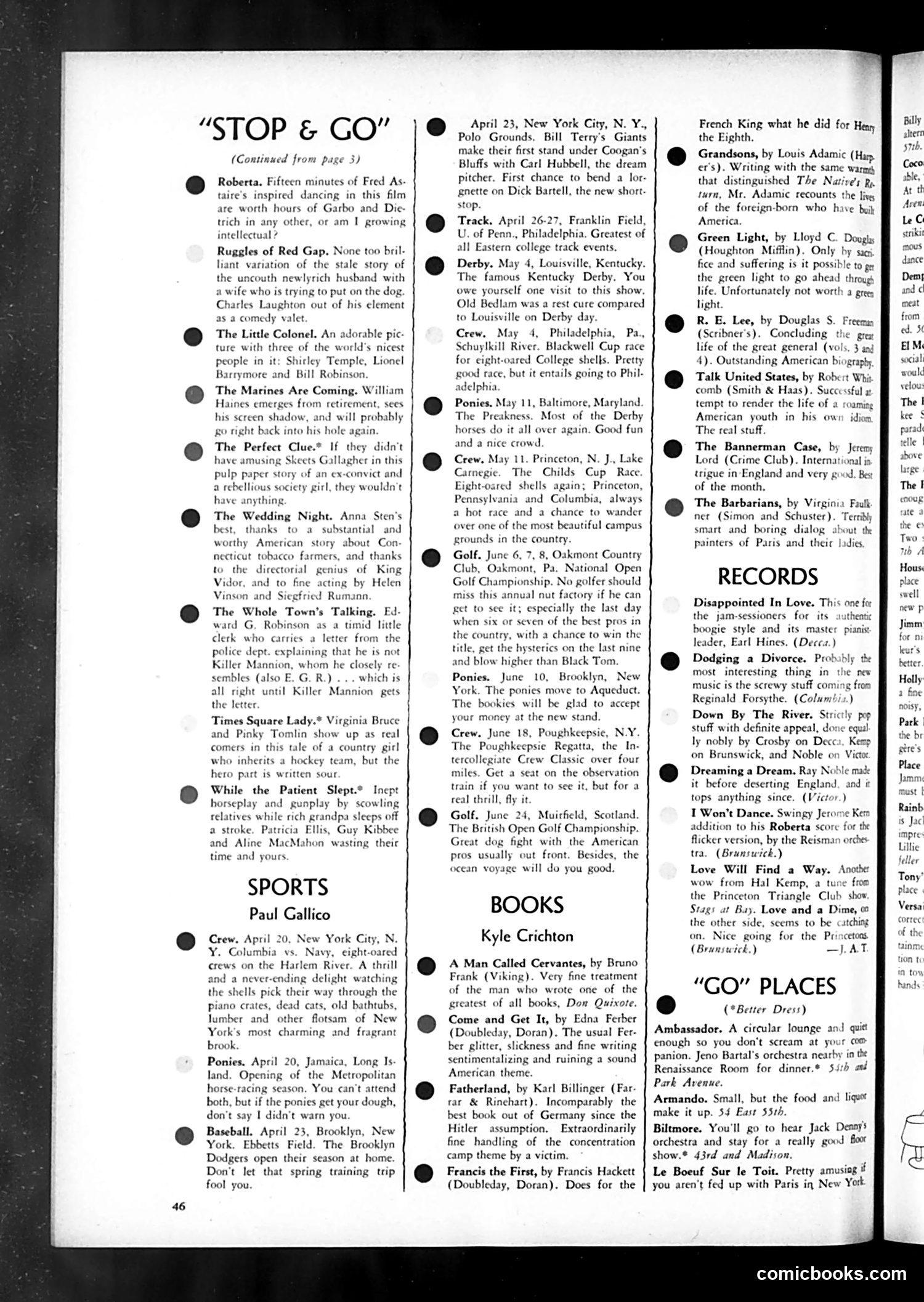
# Analysis of Life Magazine Page This page is primarily **entertainment criticism and advertising**, not political satire. The "Stop & Go Service" masthead at top (with a traffic light) is a organizational device for organizing reviews of theatre, movies, sports, books, records, and entertainment venues. The content consists of theatre and movie reviews from what appears to be the 1930s-40s era. Critics review plays like "Anything Goes?" and "De Luxe," and films like "After Office Hours" and "Against the Law." The traffic light logo functions as a visual pun—reviews are organized like traffic signals, presumably with positive/negative assessments guiding readers on what entertainment to "go" see or "stop" avoiding. This is a **structural conceit**, not political commentary. The page reflects period entertainment journalism rather than satirical cartooning.
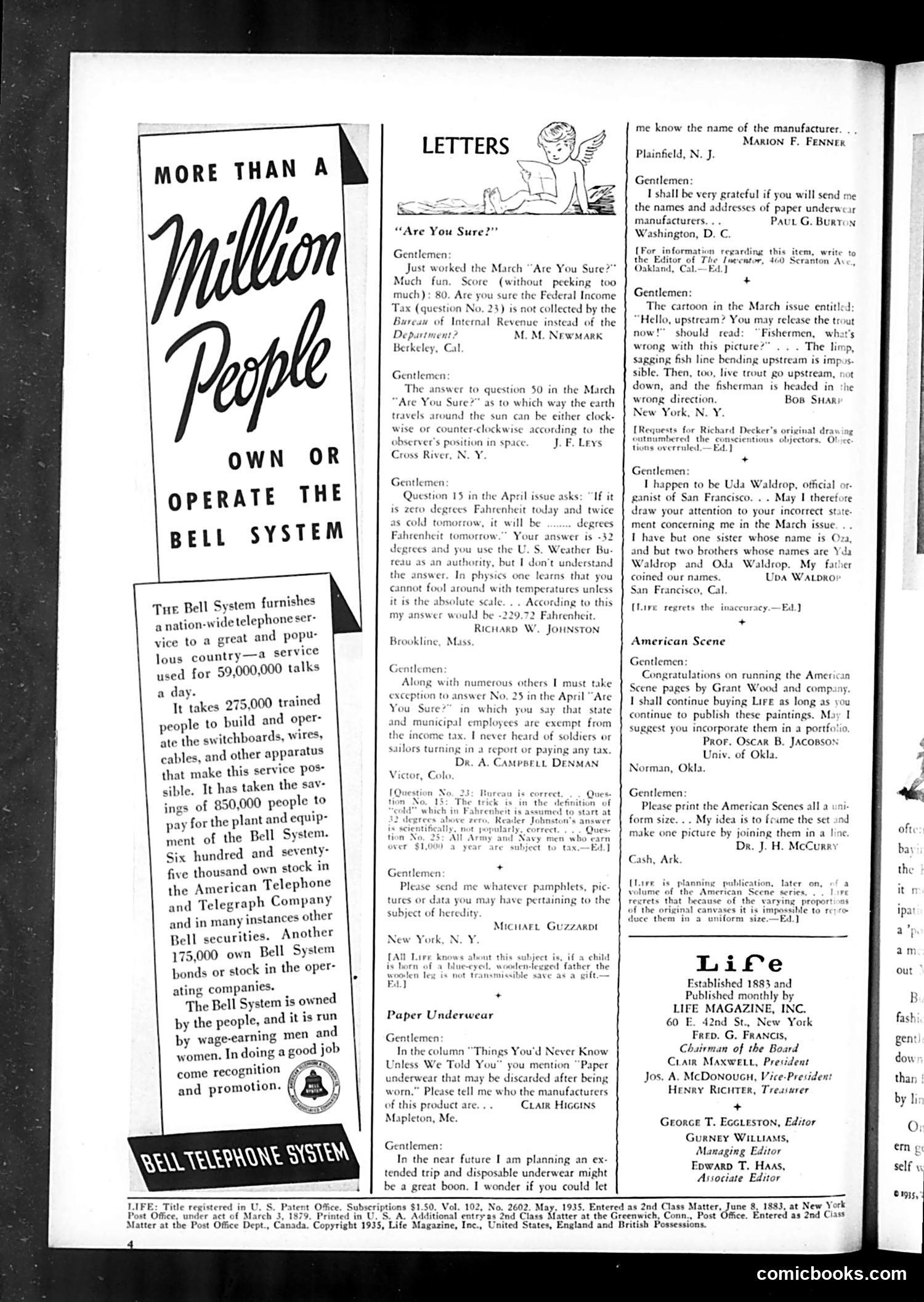
# Life Magazine Letters Page & Bell System Advertisement This page consists primarily of a **Bell Telephone System advertisement** (left side) and a **letters section** (right side). The ad claims the Bell System serves "more than a million people" and operates nationwide telephone infrastructure, employing 275,000 people. It emphasizes Bell's scale and dominance in American telecommunications. The letters section contains reader responses to previous Life magazine content, including questions about Federal Income Tax collection methods, Earth's rotation direction, temperature calculations, and debates over American Scene illustrations. The page functions as typical magazine filler—combining advertising revenue with reader engagement. Nothing here represents political satire; rather, it's straightforward commercial promotion and correspondence reflecting early 20th-century American readers' curiosity about science, taxes, and illustration techniques.
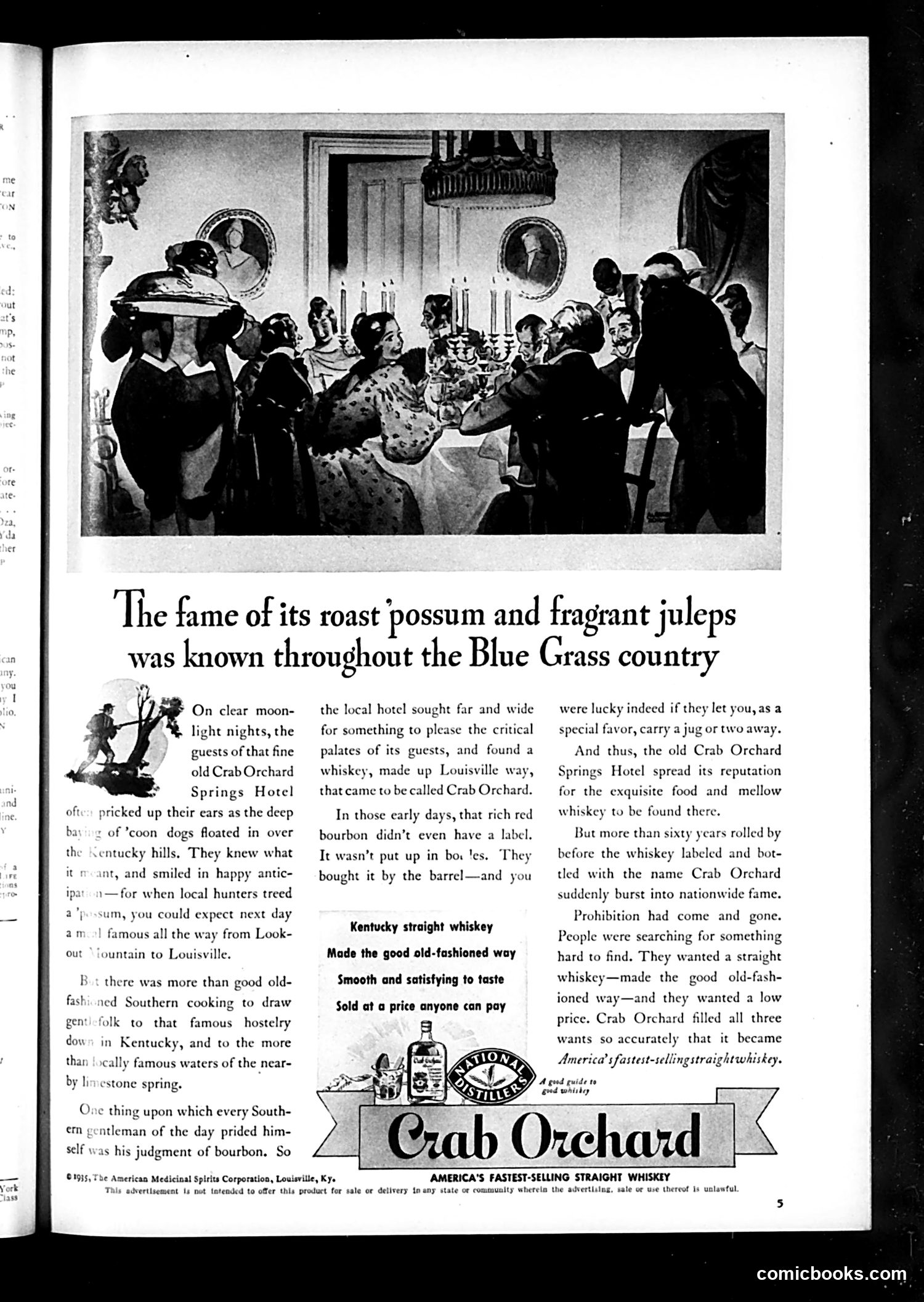
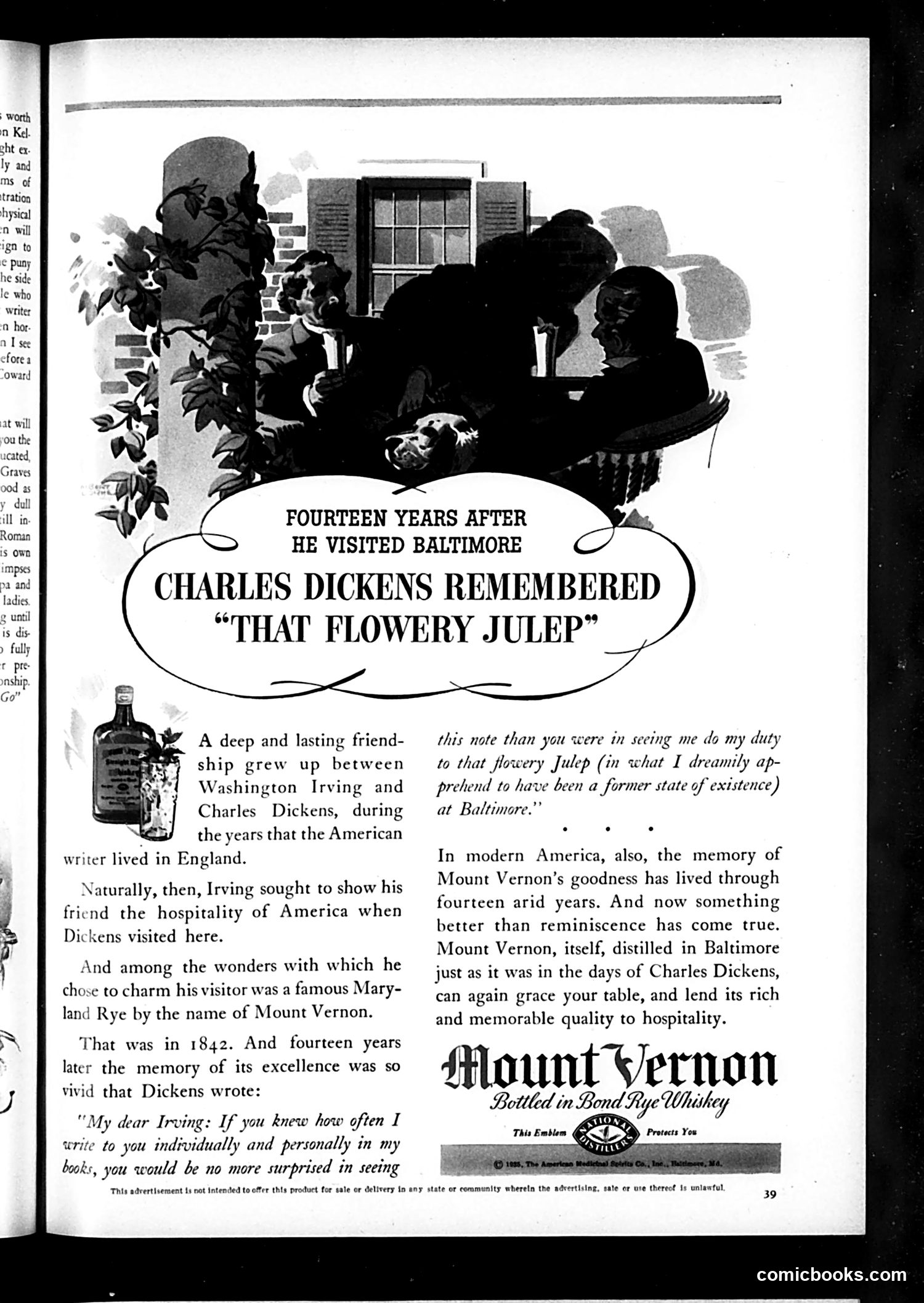
# What This Page Contains This is primarily a **Crab Orchard whiskey advertisement**, not political satire. The image shows a formal dinner party at what appears to be the Crab Orchard Springs Hotel in Kentucky. The advertisement narrative describes how the hotel's famous "roast possum and fragrant juleps" attracted Southern gentleman visitors, and how the hotel's whiskey became renowned throughout the "Blue Grass country." The text emphasizes the whiskey's appeal: it's Kentucky straight whiskey, "made the good old-fashioned way," smooth and affordable. The ad claims Crab Orchard became "America's fastest-selling straight whiskey" after gaining local fame during Prohibition (when "Prohibition had come and gone"). This is commercial advertising exploiting nostalgia for antebellum Southern hospitality and pre-Prohibition traditions.
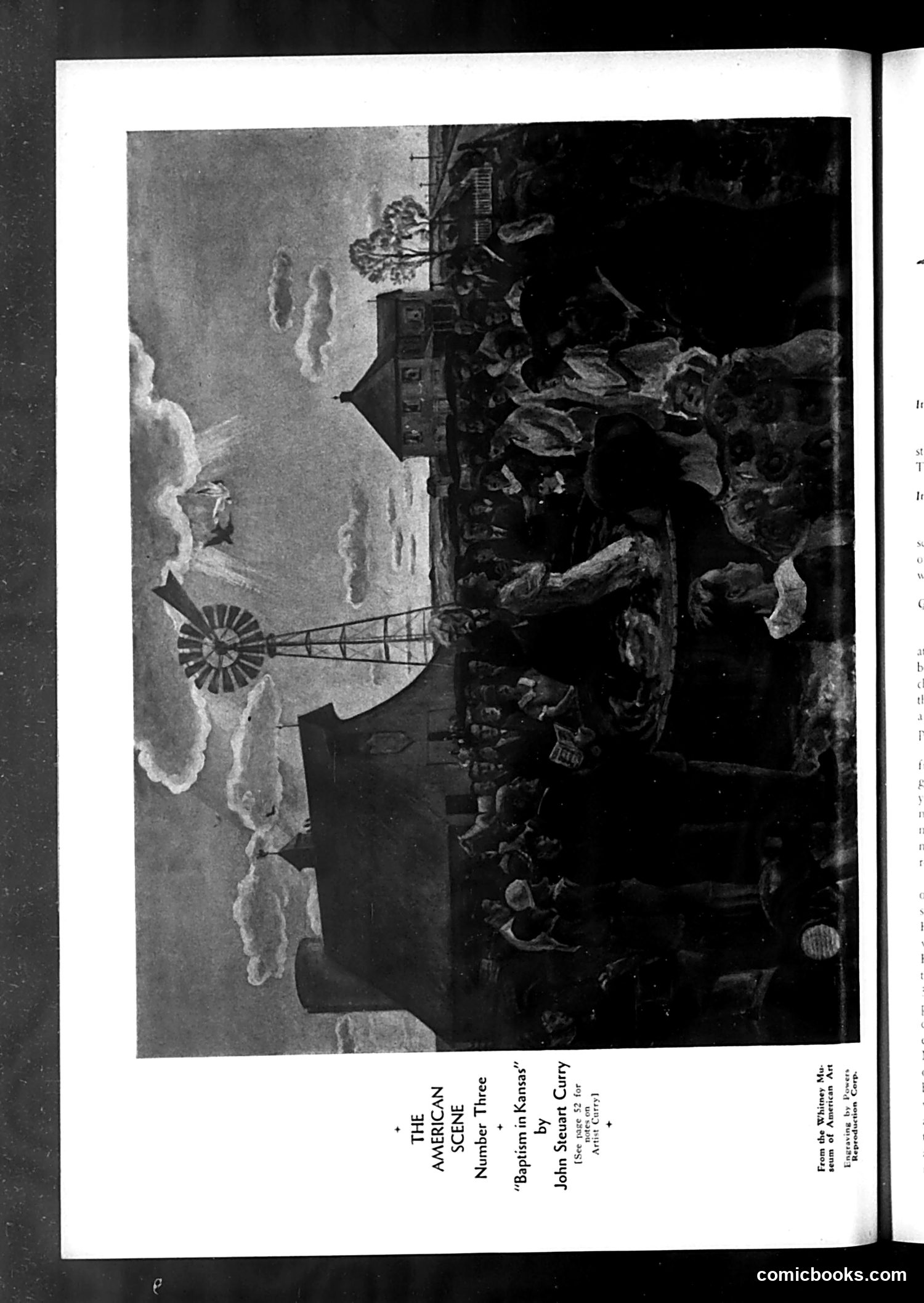
# "The American Scene" - "Boganism in Kansas" This is a satirical illustration from *Life* magazine showing a scene titled "Boganism in Kansas," created by artist John Sloan Curry. The cartoon depicts what appears to be a rural American scene with a windmill on the left and a building on the right surrounded by figures. The term "boganism" suggests mockery of rural, unsophisticated behavior or culture (likely from "bog" — a derogatory reference to rural areas). The satire targets Kansas rural life during this period, presenting it as backwards or crude compared to urban American culture. John Sloan Curry was known for depicting American regional scenes, often with social commentary embedded in his imagery. The illustration uses exaggeration and dark imagery to reinforce the satirical critique of rural Midwestern life and values.
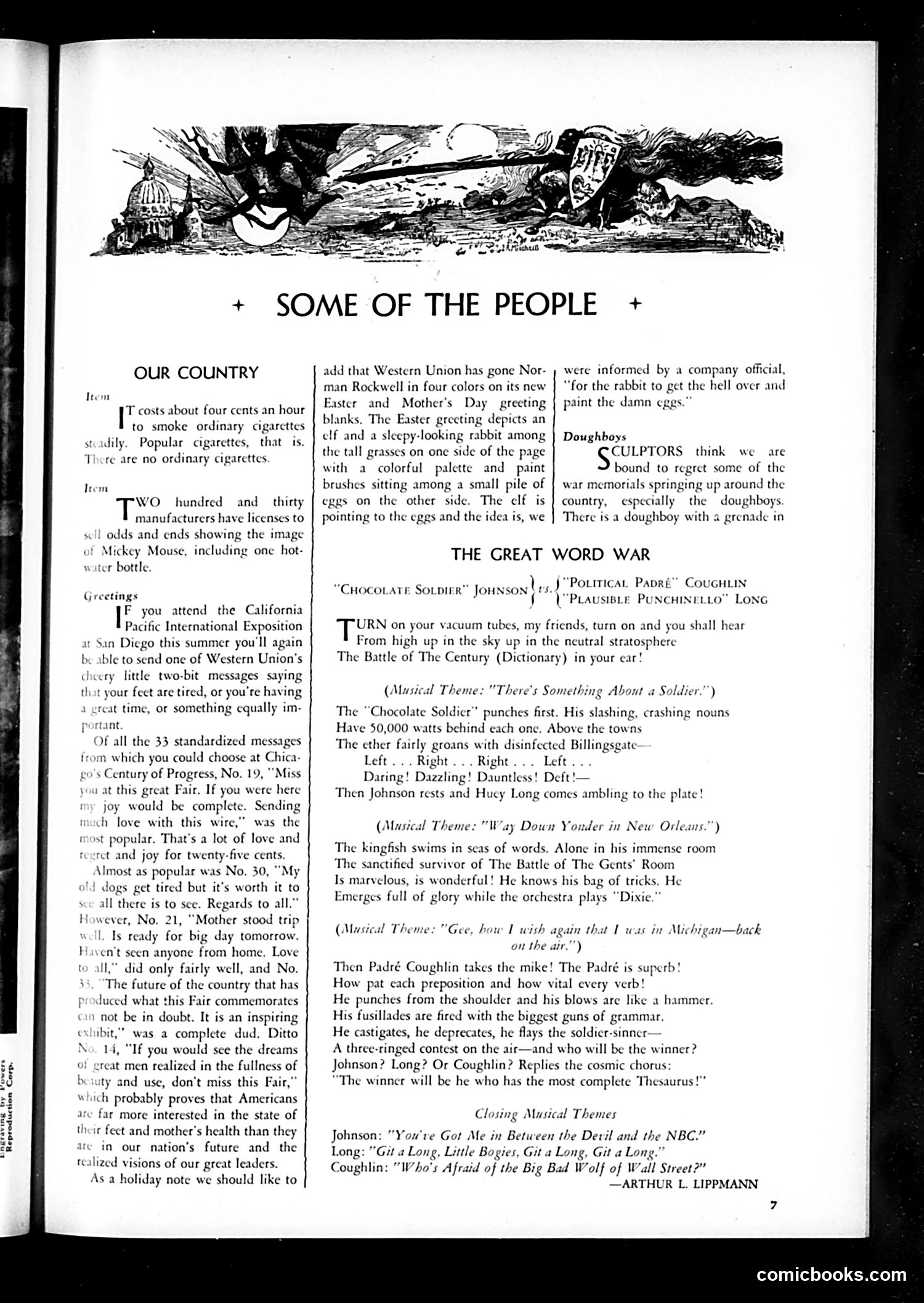
# Life Magazine Page Analysis This page satirizes American consumer culture and wartime rhetoric. The "Some of the People in Our Country" section mocks ordinary citizens' priorities—smoking cheap cigarettes, collecting Mickey Mouse merchandise, and sending standardized greeting-card messages via Western Union. The main piece, "The Great Word War," is a humorous mock-battle between columnists **"Chocolate Soldier" Johnson**, **"Political Padre" Coughlin**, and **"Plausible Punchinello" Long**. The text describes them as competing verbally with "disinfectant billinggate" and grammatical "guns," satirizing their overwrought rhetorical styles and public prominence. The satire suggests these public figures engage in empty, performative conflict while ordinary Americans occupy themselves with trivial commercial pursuits—critiquing both celebrity punditry and mass consumer distraction during what appears to be the 1930s.
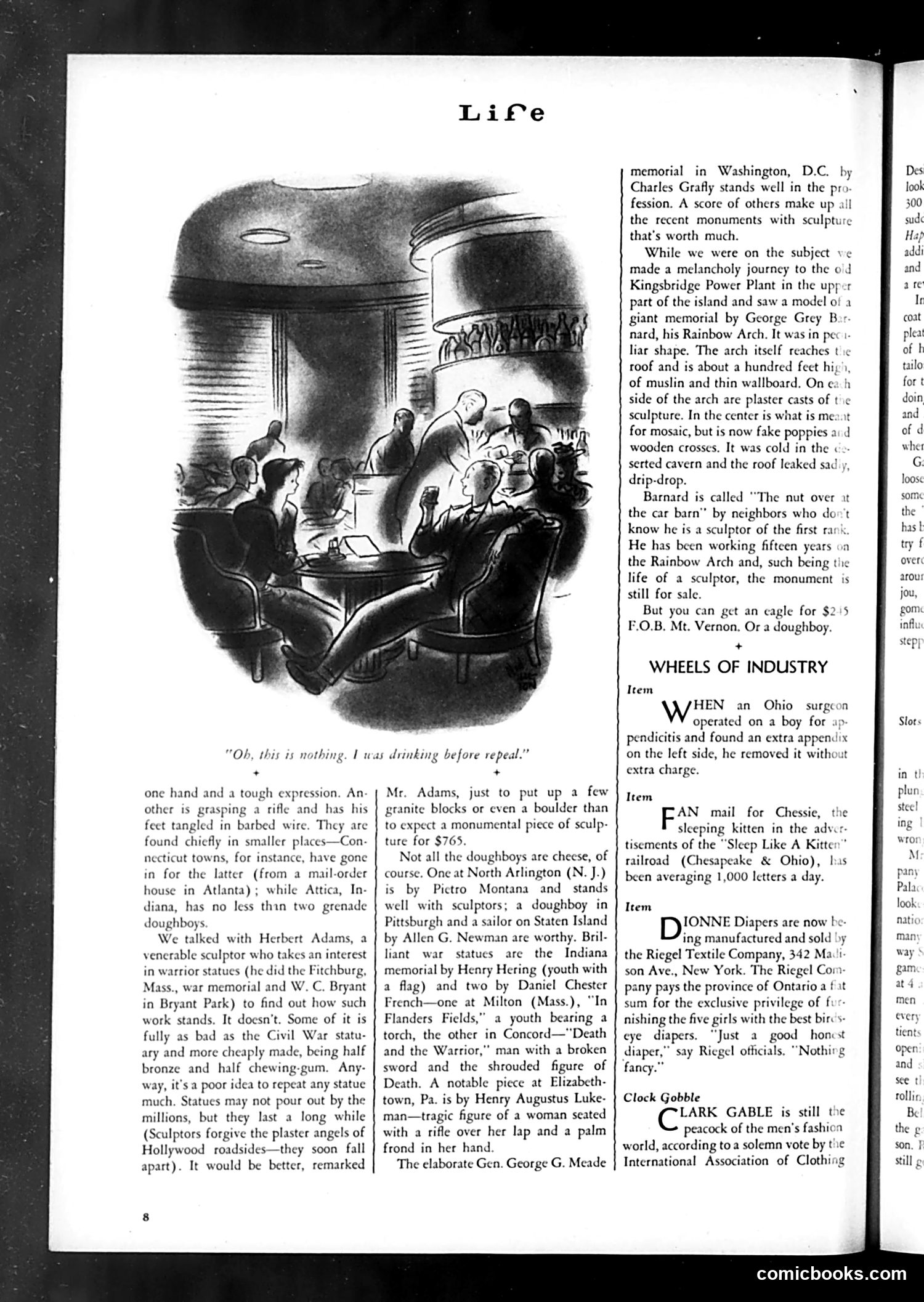
# Cartoon Analysis This cartoon depicts a casual social gathering—appears to be a dinner or restaurant scene—where one figure says to another: "Oh, this is nothing. I was drinking before repeal." The joke references **Prohibition's repeal** (1933), when alcohol became legal again in America. The speaker is boasting that he was already drinking illegally during Prohibition, suggesting he's a seasoned drinker with experience circumventing the law. The humor lies in treating illegal drinking as a badge of honor or sign of sophistication. The surrounding figures appear to be ordinary diners, establishing this as everyday social commentary on how Americans viewed Prohibition's end—with some treating pre-repeal drinking as worldly experience worth mentioning casually in polite company.
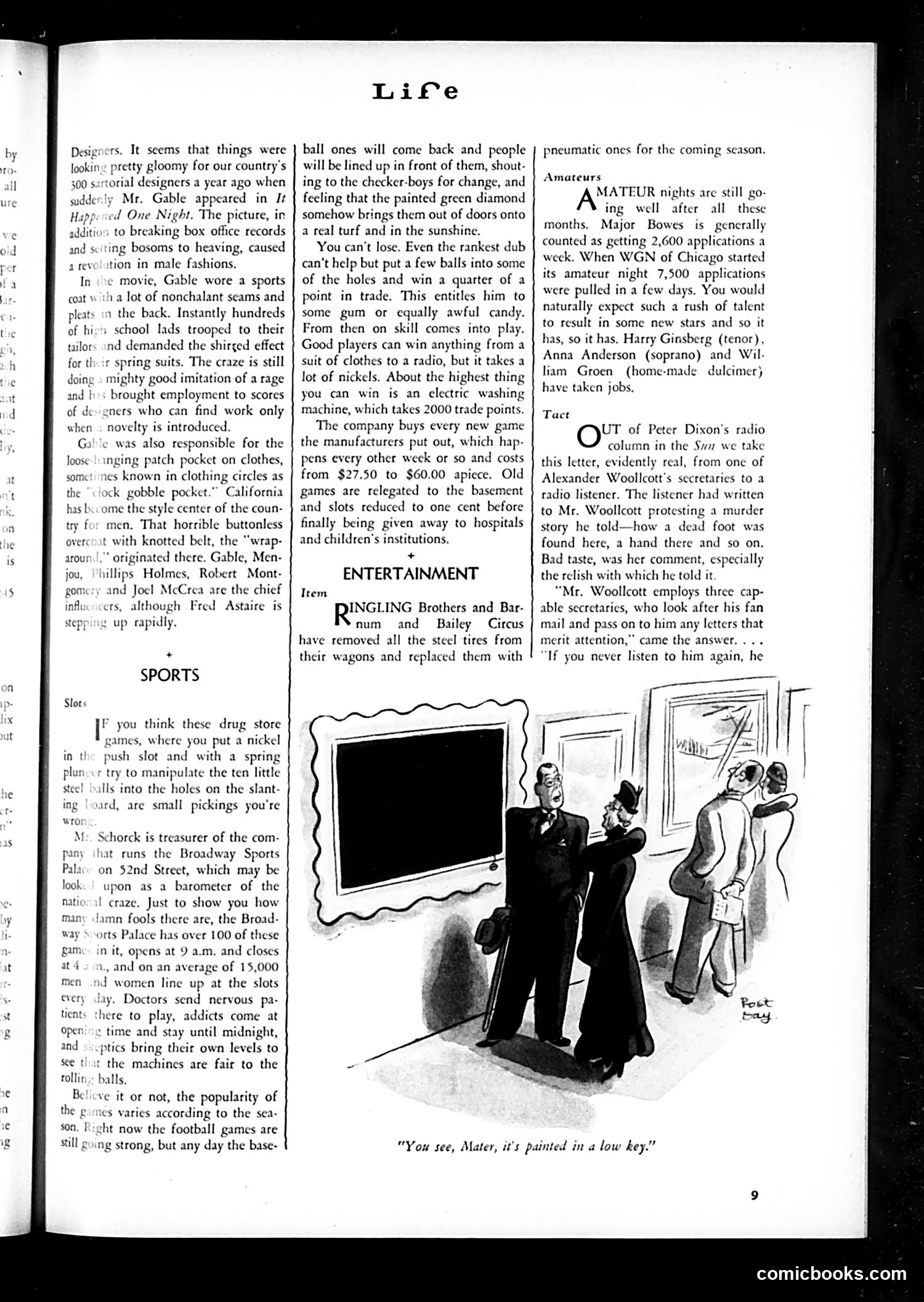
# Analysis of Life Magazine Page This page contains three sections: **Sports**, **Amateurs**, and **Entertainment**. The main cartoon depicts a man in formal attire showing what appears to be a painting to a woman, while others peer through a window or opening behind them. The caption reads: "You see, Mater, it's painted in a low key." The satire here plays on the double meaning of "low key"—referring both to artistic technique (subdued lighting/tones in painting) and to something done secretly or discreetly. The context suggests the painting itself may be scandalous or inappropriate, and the man is making a joke to his mother ("Mater") about concealing its true nature through artistic pretense. The onlookers behind suggest this is a poorly kept secret despite the claimed discretion.
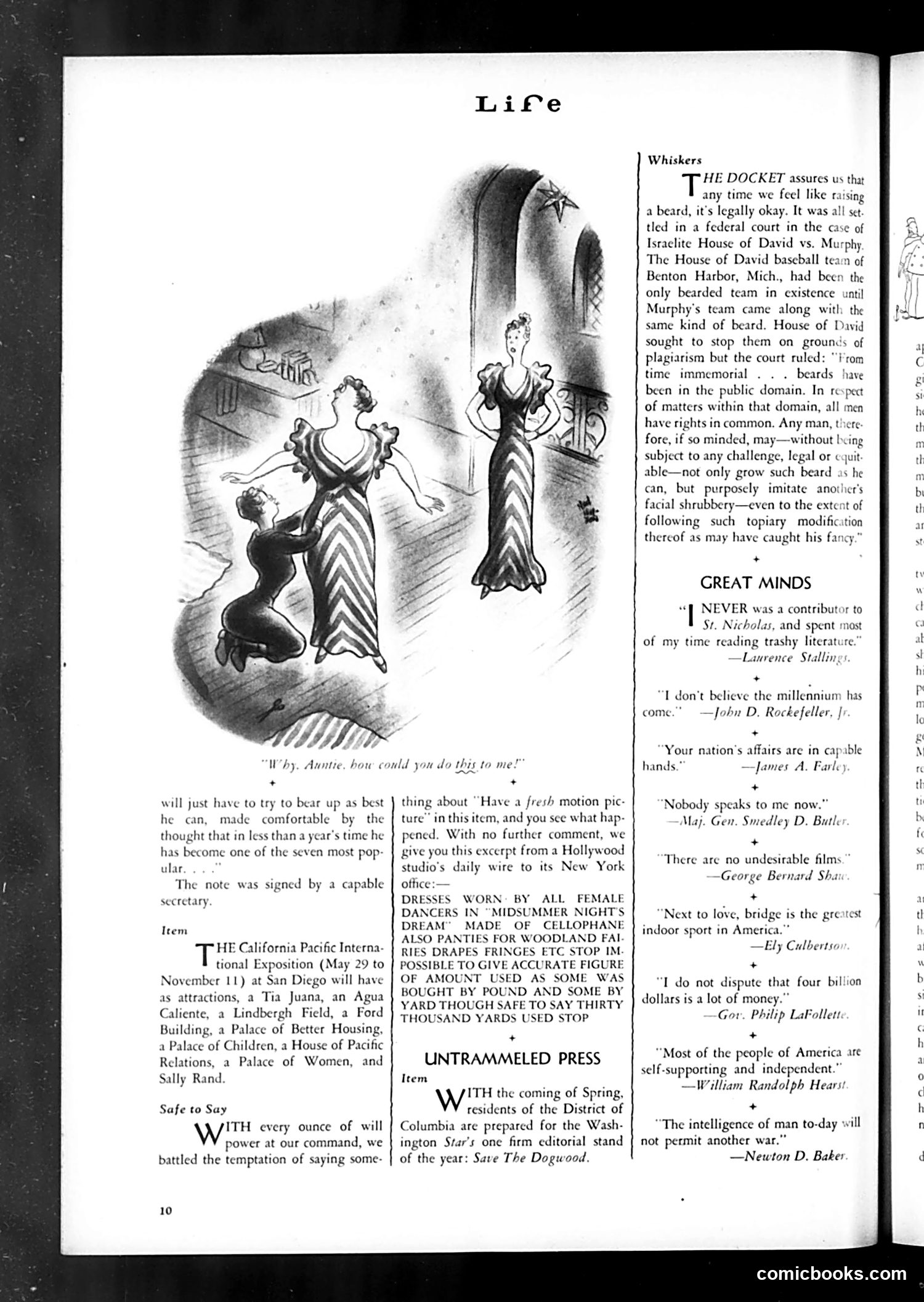
# Analysis of Life Magazine Page This page contains a cartoon and several unrelated items. The main cartoon depicts two women in an elegant interior—one reclining/posing while another stands. The caption reads "Why, Aimée, how could you do this to me?" The accompanying text discusses a Hollywood studio's wardrobe choices for female dancers in a "Midsummer Night's Dream" production, noting the impracticality of cellophane costumes and excessive yardage. The cartoon appears to satirize theatrical vanity and costume absurdity—likely mocking either the pretensions of stage productions or actresses' competitive jealousy over costume choices. Without identifying "Aimée," the specific target remains unclear, though the satire targets theatrical world vanities typical of 1920s-30s Life magazine humor. The page also includes unrelated brief items about expositions and press matters.