A complete issue · 54 pages · 1934
Life — November 1934
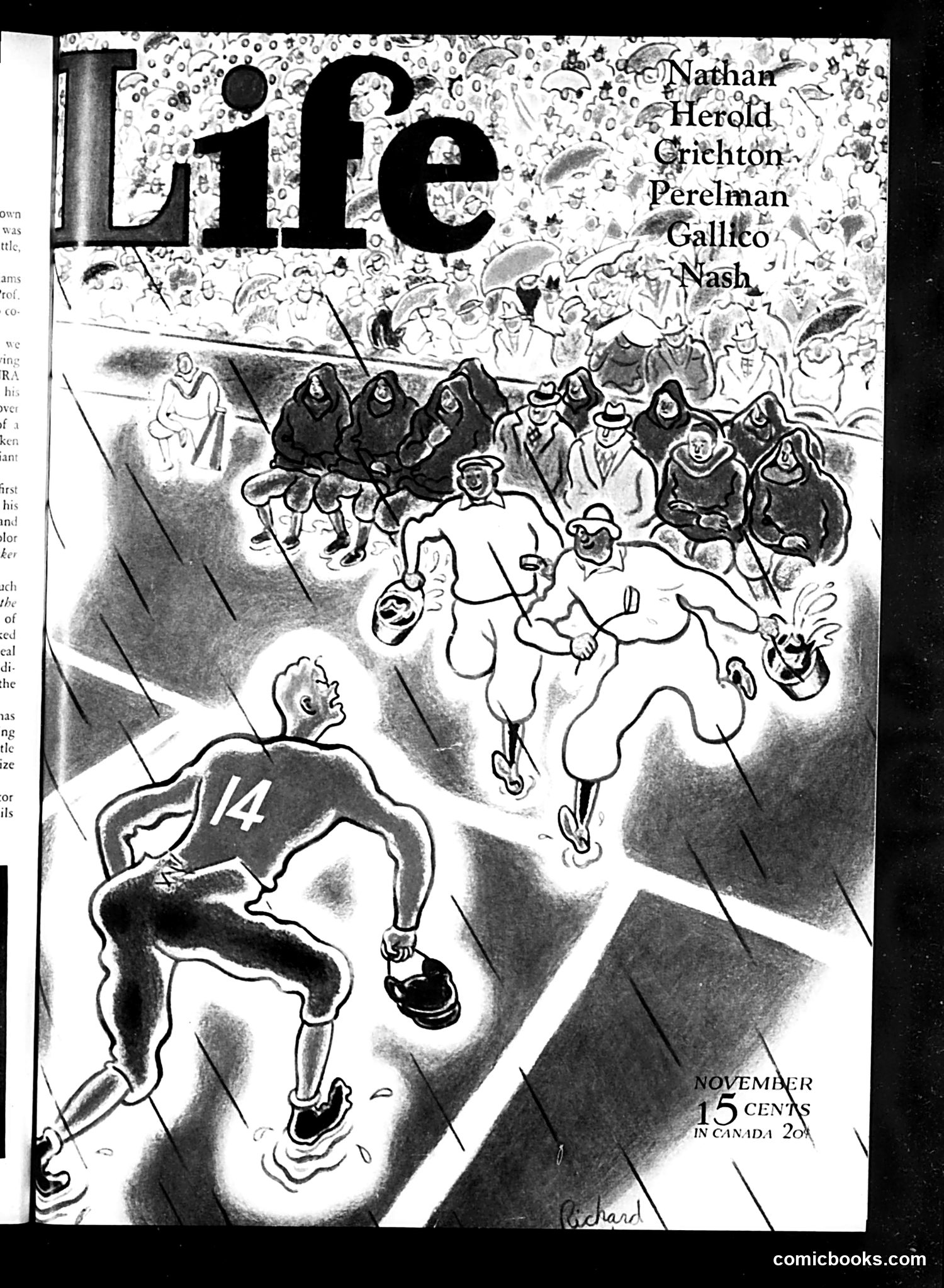
# Political Cartoon Analysis This Life magazine cover (November, 15 cents) features a satirical illustration signed by Richard. The large "Life" masthead overlays a cartoon scene depicting what appears to be a chaotic sports or competitive event, with a prominent figure wearing jersey number 14 in the foreground. The named figures at top—Nathan, Herold, Crichton, Perelman, Gallico, and Nash—likely represent contemporary writers or public figures of the era. The cartoon's crowded composition and exaggerated physical comedy suggest satirizing a specific sporting event or social spectacle, though the exact reference remains unclear without additional context. The style is typical of Life's humorous social commentary from this period.
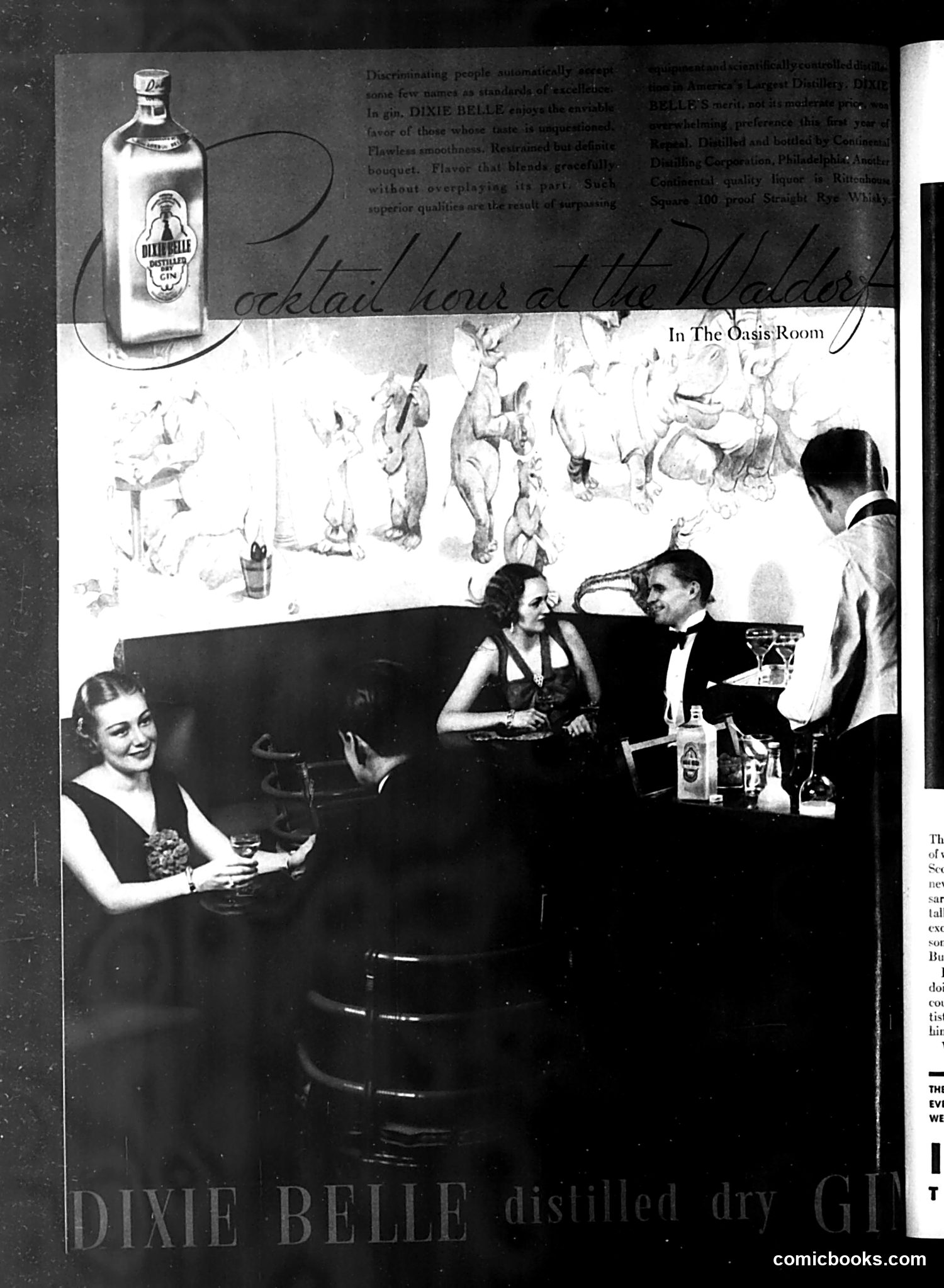
# Analysis This is a **liquor advertisement**, not political satire. It advertises Dixie Belle distilled dry gin, promoting cocktails consumed in upscale social settings during what appears to be the Prohibition era or shortly after. The ad depicts well-dressed men and women socializing in "The Oasis Room" — a nightclub or hotel lounge. The illustration shows people enjoying cocktails in sophisticated surroundings, with artwork on the walls. The Dixie Belle bottle is prominently displayed. The advertisement emphasizes the product's qualities: "Flawless smoothness" and superior flavor that "blends gracefully without ever tasting its part." This was standard luxury liquor marketing language meant to appeal to affluent consumers seeking refined drinking experiences.
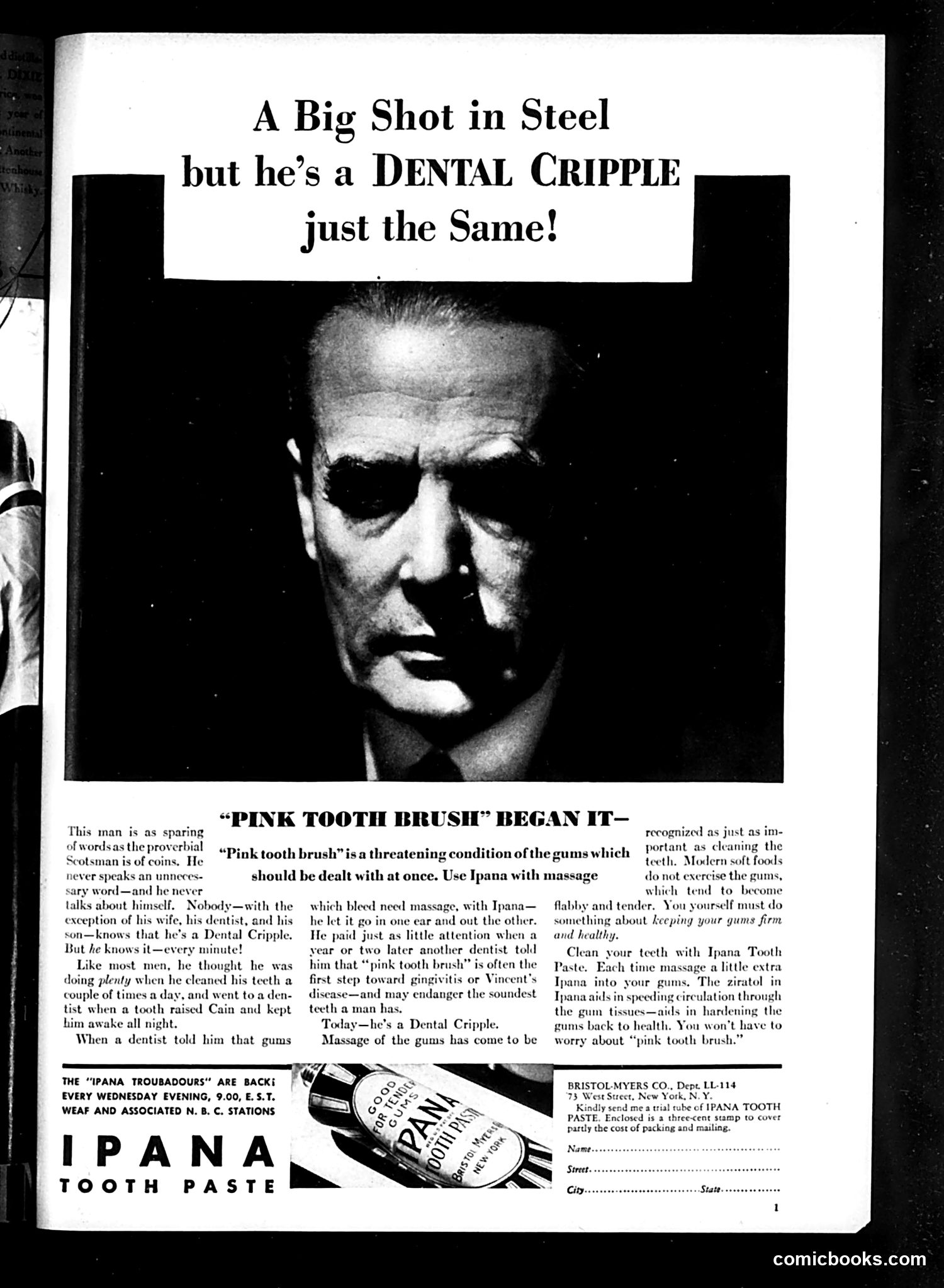
# Analysis This is primarily a **product advertisement for Ipana Tooth Paste**, not political satire. The page uses an image of a man wearing sunglasses and smoking a cigar to advertise dental care. The ad's humor plays on a contrast: the man appears tough and world-weary (described as a "Big Shot in Steel" who is "sparing of words" and "never speaks unnecessarily"), yet he has a "Dental Cripple"—suffering from "pink tooth brush," a gum disease. The joke suggests that even tough, important men need proper dental hygiene. The ad promotes using Ipana Tooth Paste with massage to treat gum problems. A coupon for a trial tube appears at bottom right. Radio programming information indicates this was part of a multimedia campaign.
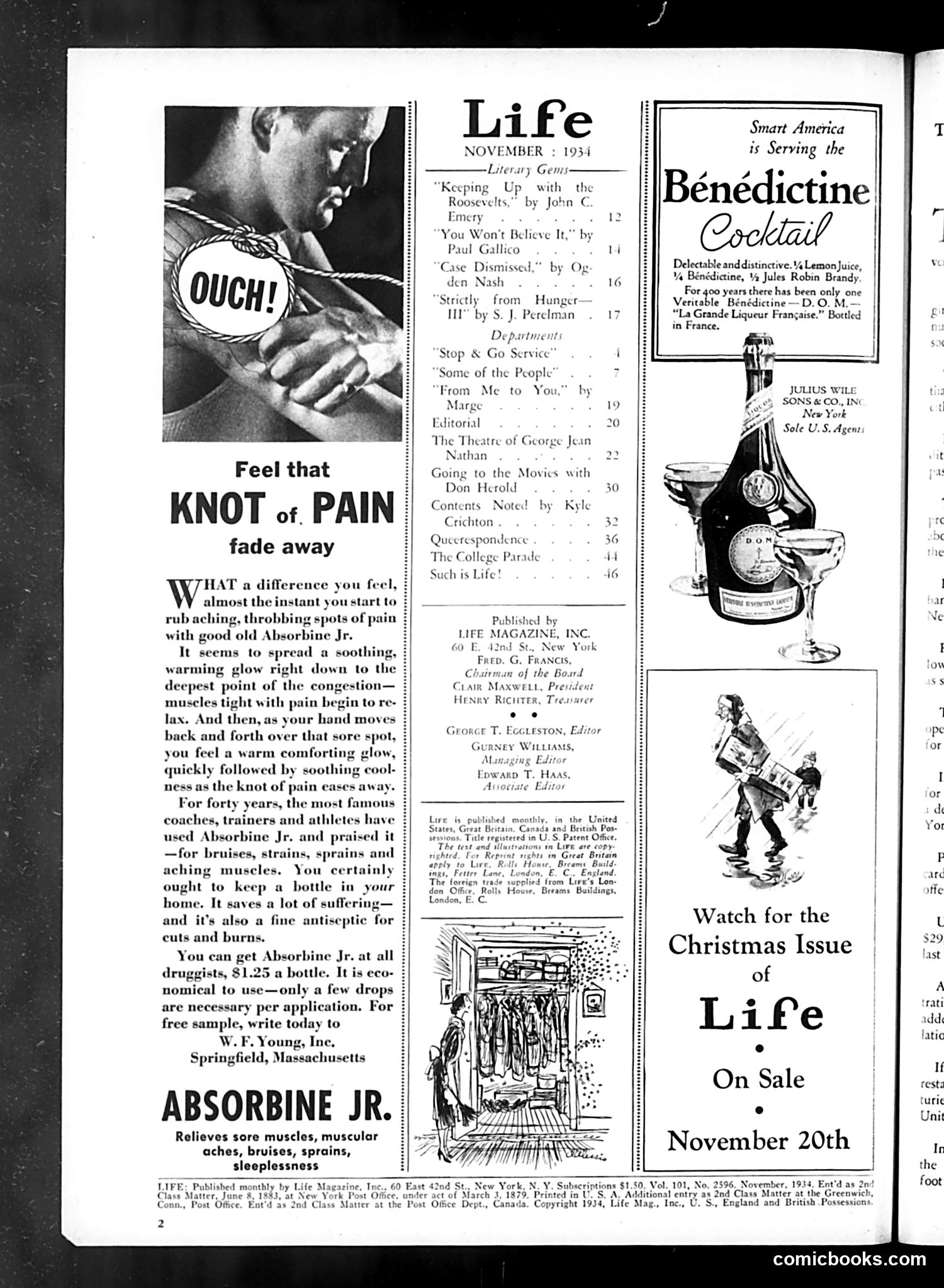
# Page Analysis: Life Magazine, November 1934 This page is primarily **advertising and contents/masthead material**, not political satire. The left side features an **Absorbine Jr. advertisement** showing a man saying "OUCH!" The ad promises that the liniment "relieves sore muscles, muscular aches, bruises, sprains, sleeplessness" — typical early-20th-century patent medicine marketing. The copy uses testimonials from "coaches, trainers and athletes." The center displays the magazine's **table of contents** for the November 1934 issue, listing articles and departments. The right side advertises **Bénédictine cocktail** and promotes Life's upcoming **Christmas Issue**, to be sold November 20th. There is **no political cartoon or satire** visible on this page — it's a standard magazine layout mixing editorial matter with commercial advertisements typical of 1934 publications.
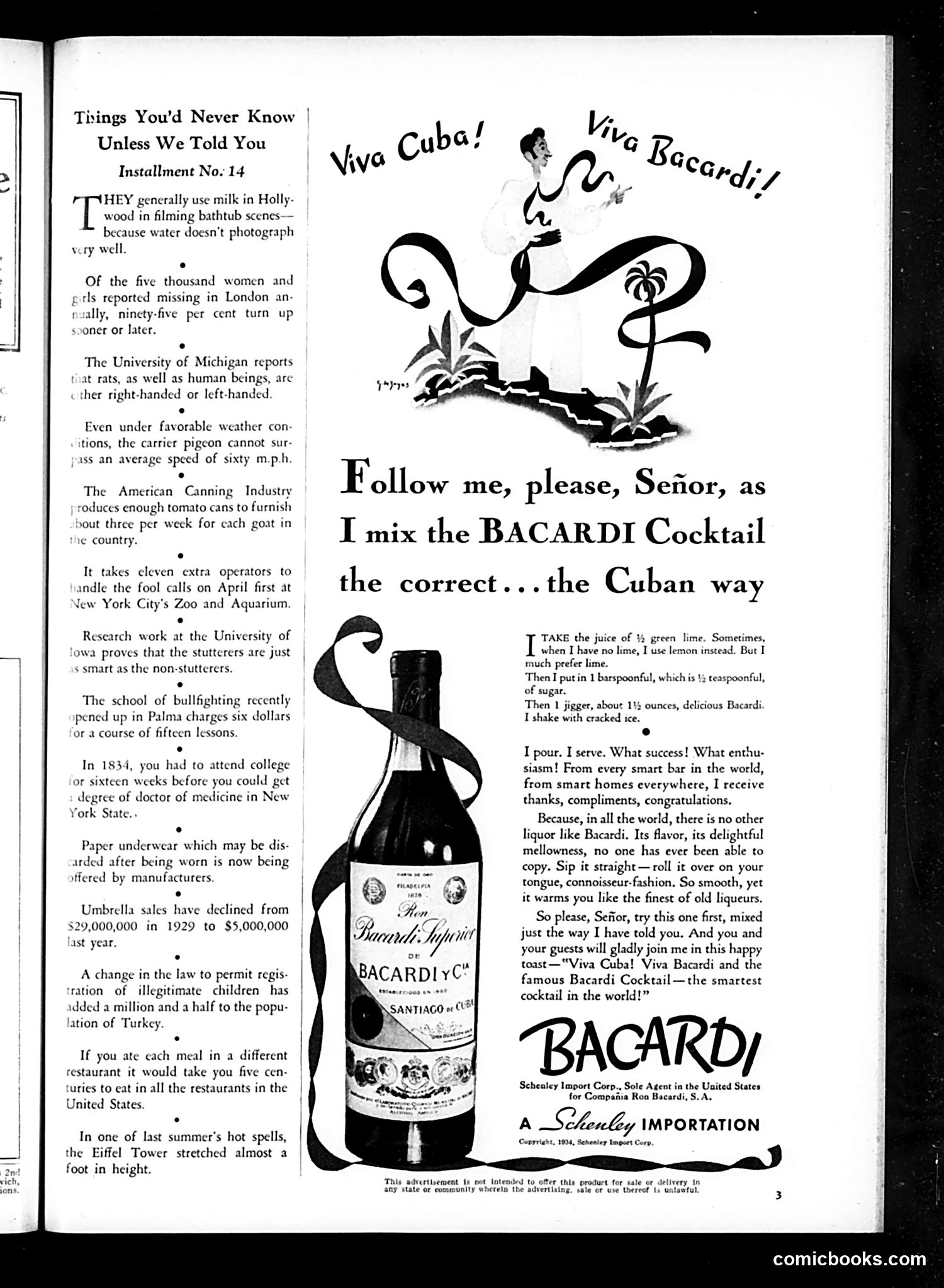
# Analysis This page is primarily a **Bacardi rum advertisement** (1934, based on the copyright notice) disguised as editorial content. The left column presents trivia facts under "Things You'd Never Know Unless We Told You"—a common advertising format of the era that provided "useful" information to seem editorially legitimate. The right side features a cartoon character (a caricatured Cuban man, labeled "Señor") demonstrating how to properly mix a Bacardi cocktail "the Cuban way." The text emphasizes Bacardi's uniqueness and sophistication, claiming no other liquor can be copied. The cartoon relies on period stereotypes—the exaggerated Cuban accent and imagery (palm tree, decorative hat)—to create "exotic" appeal. This was typical pre-WWII advertising that marketed foreign products through ethnic caricature. The advertisement exploits romantic notions of Cuba and cocktail culture to sell the product.
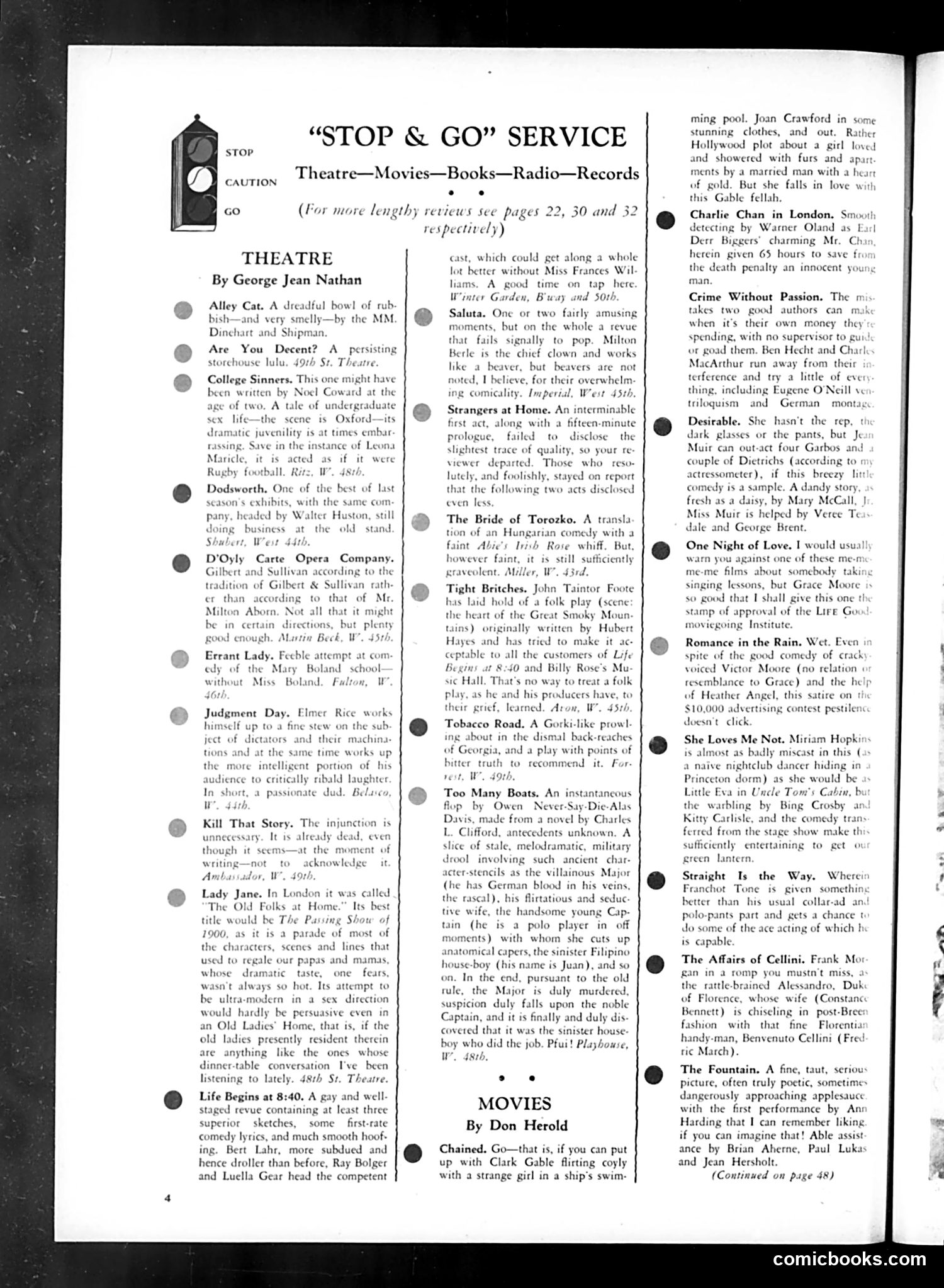
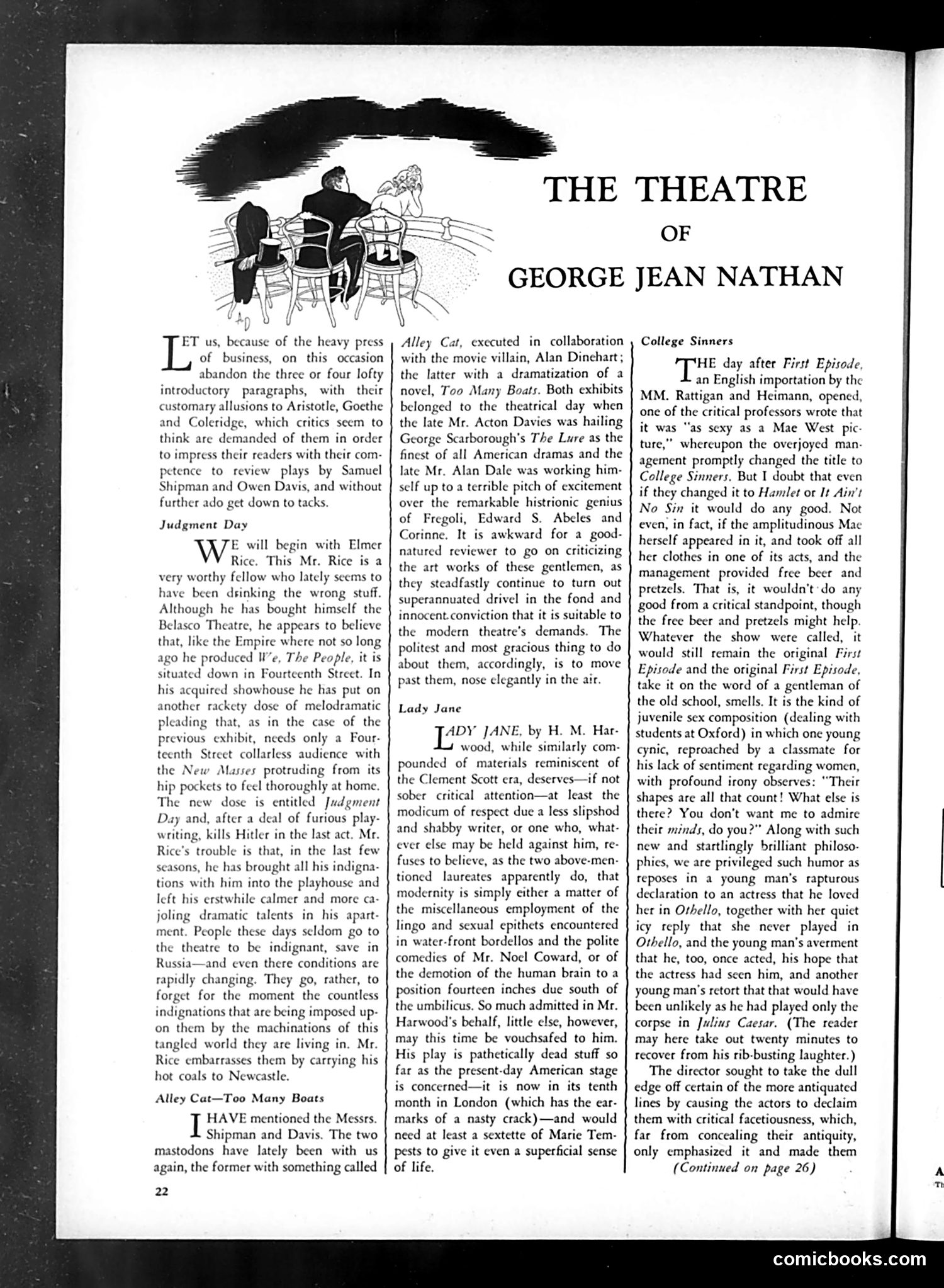
# Content Analysis This page is primarily a **"Stop & Go" entertainment review section** covering theatre, movies, books, radio, and records—not a political cartoon. The page features critical reviews of stage productions and films from what appears to be the 1930s-40s era. The distinctive element is the **traffic light icon** (stop/caution/go) used as a visual metaphor for rating entertainment: "stop" (avoid), "caution" (mixed), and "go" (recommend). Reviews cover plays like *College Sinners* and *Dodsworth*, and films including *Chained* with Clark Gable. This is entertainment criticism rather than political satire—a clever organizational system using universal traffic signals to help readers quickly assess whether productions merit their time and money.
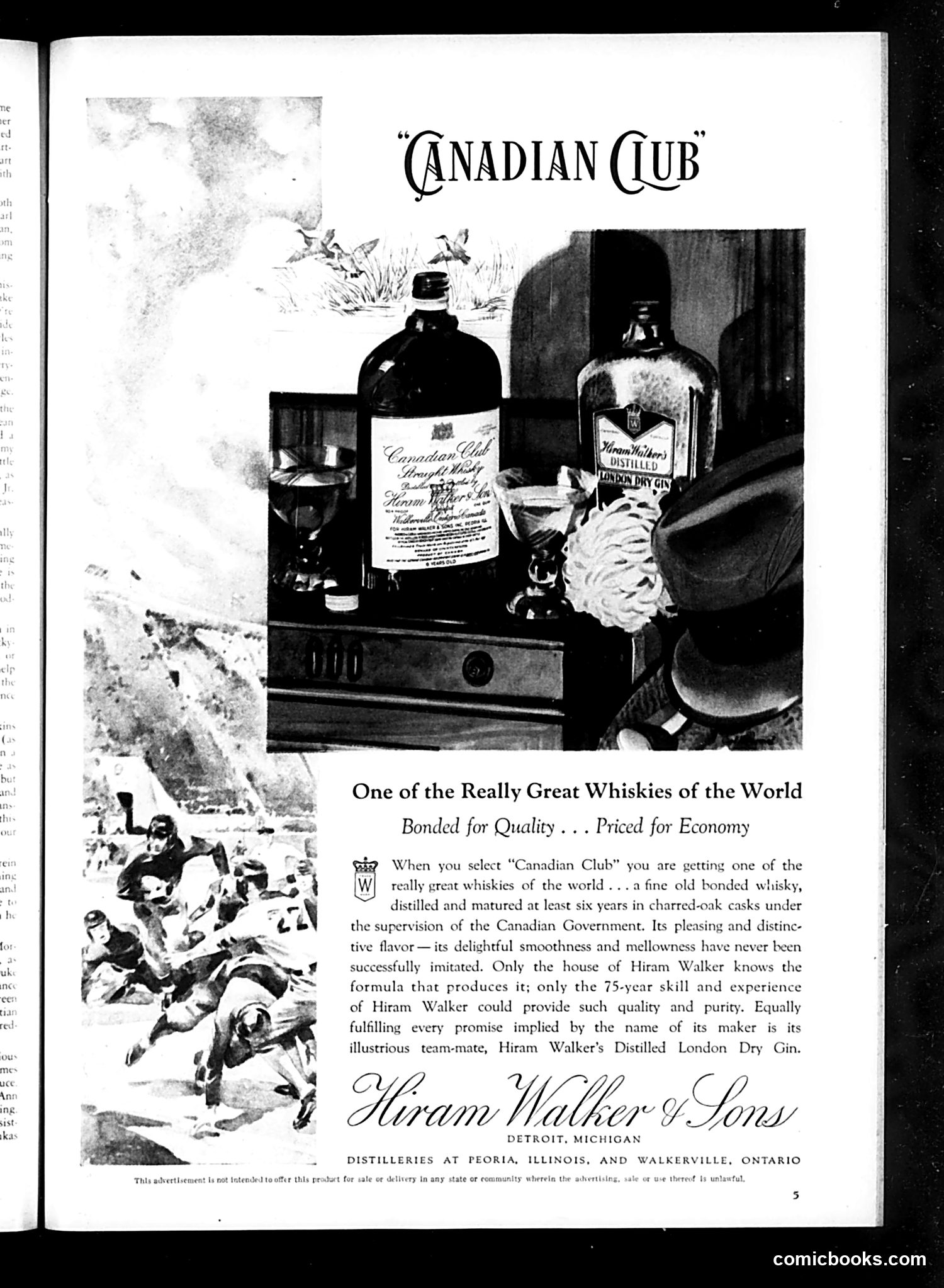
# Canadian Club Whiskey Advertisement This is a **liquor advertisement**, not political satire or cartoon content. It promotes Canadian Club whiskey as "One of the Really Great Whiskies of the World," emphasizing that it's "Bonded for Quality... Priced for Economy." The ad highlights that the whiskey is distilled and matured at least six years in charred casks under Canadian Government supervision. It credits the quality to Hiram Walker & Sons' 75-year expertise and contrasts Canadian Club with their other product, Hiram Walker's Distilled London Dry Gin. The page includes a scenic illustration of what appears to be a Canadian landscape (likely Niagara Falls area, given the context) to reinforce the Canadian origin. Distilleries were located in Peoria, Illinois and Walkerville, Ontario.
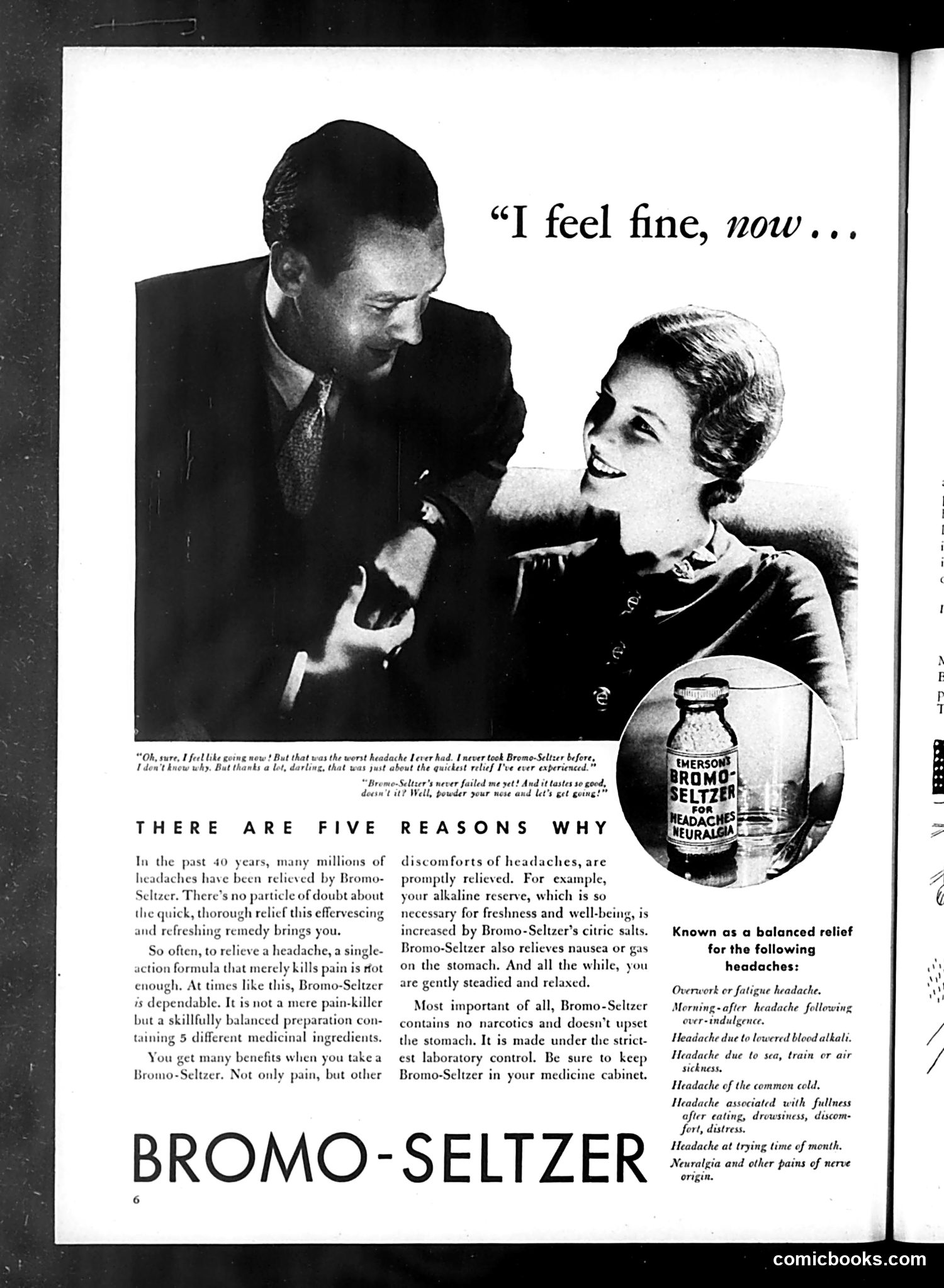
# Analysis This is a **vintage advertisement for Bromo-Seltzer**, not a political cartoon. The page shows a man and woman in conversation, with the man saying "I feel fine, *now*..." — implying he had a headache before taking the product. The ad lists "Five Reasons Why" Bromo-Seltzer relieves various headaches, including "overwork or fatigue headache," "morning-after headache," and headaches from menstruation, sea travel, and nervousness. The advertisement reflects early 20th-century marketing that casually medicalized common discomforts and normalized over-the-counter remedies for everyday ailments. The domestic, cheerful scene was typical advertising rhetoric of the era, positioning the product as essential to modern well-being.
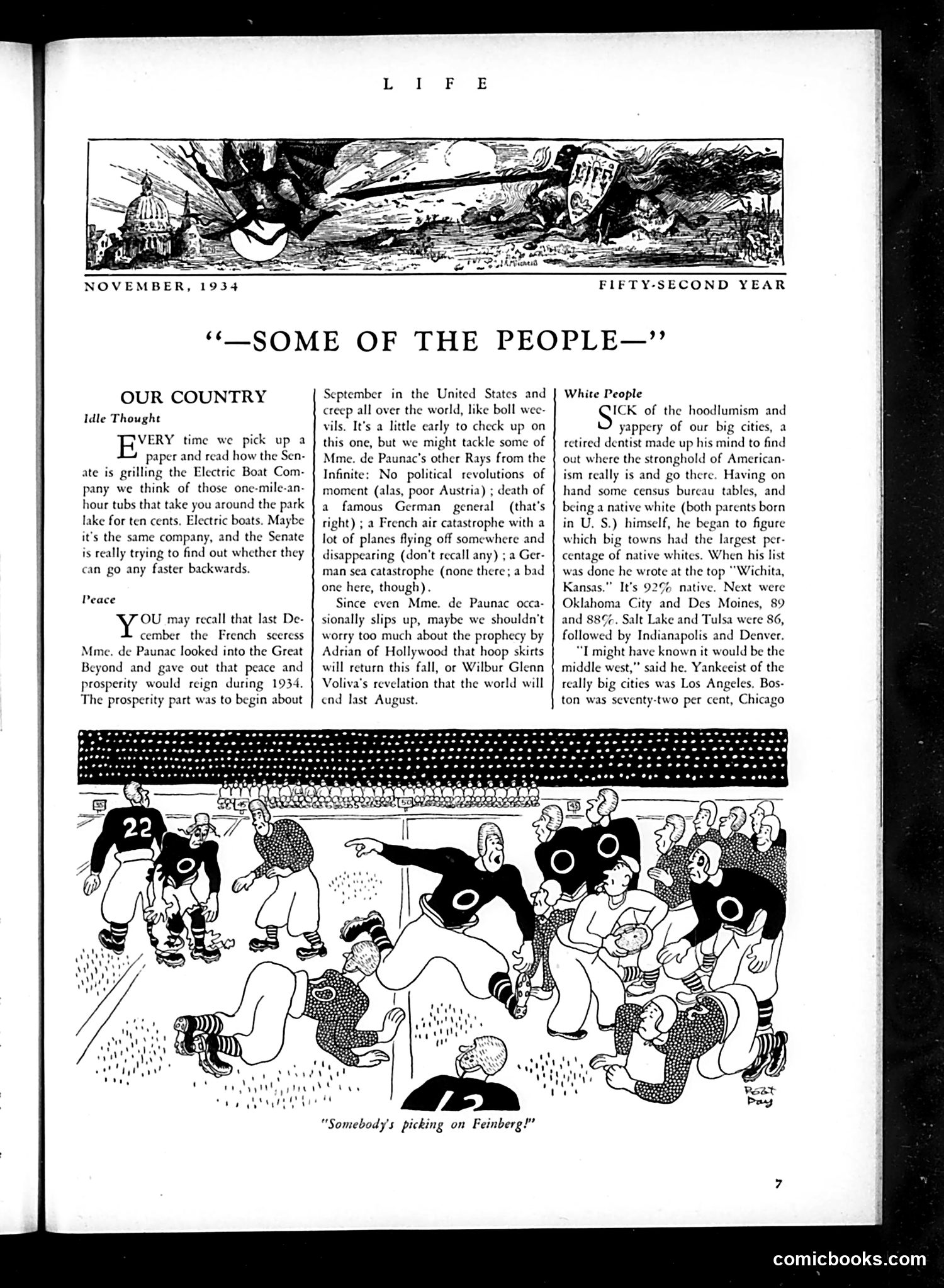
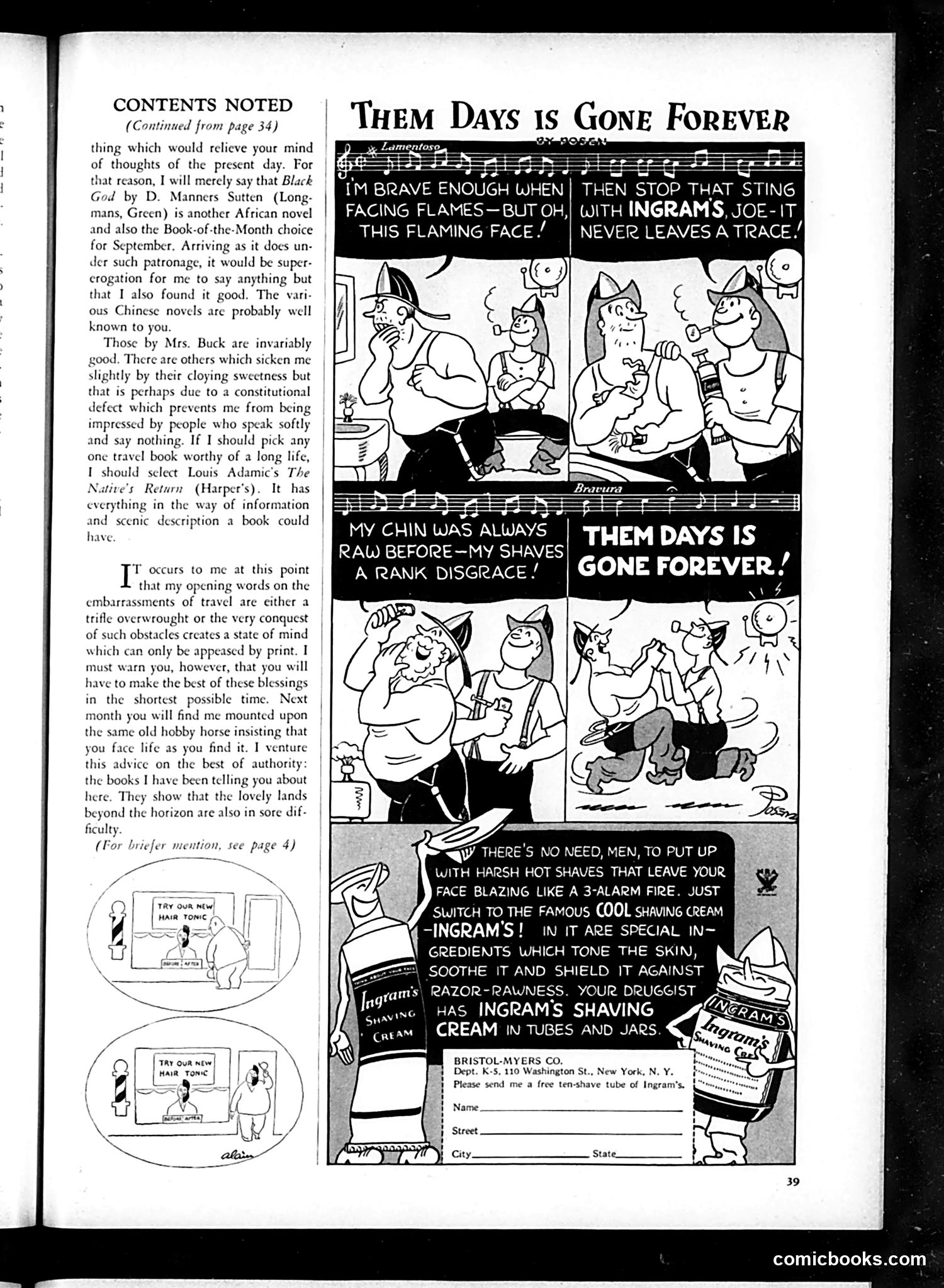
# Analysis of Life Magazine, November 1934 This page contains editorial commentary titled "Some of the People" and a sports cartoon. The main illustration, captioned "Somebody's picking on Feinberg!", depicts a chaotic football game scene with players tackling and roughhousing around a player wearing number 22. The cartoon appears to be satirizing football violence or possibly antisemitic targeting on the field (Feinberg being a Jewish surname). The players are shown aggressively mobbing around this central figure, suggesting he's being singled out for rough treatment. The text above discusses various international and domestic topics from 1934, including French political developments and American cultural observations. The overall tone is light satirical commentary on contemporary events and social conditions.
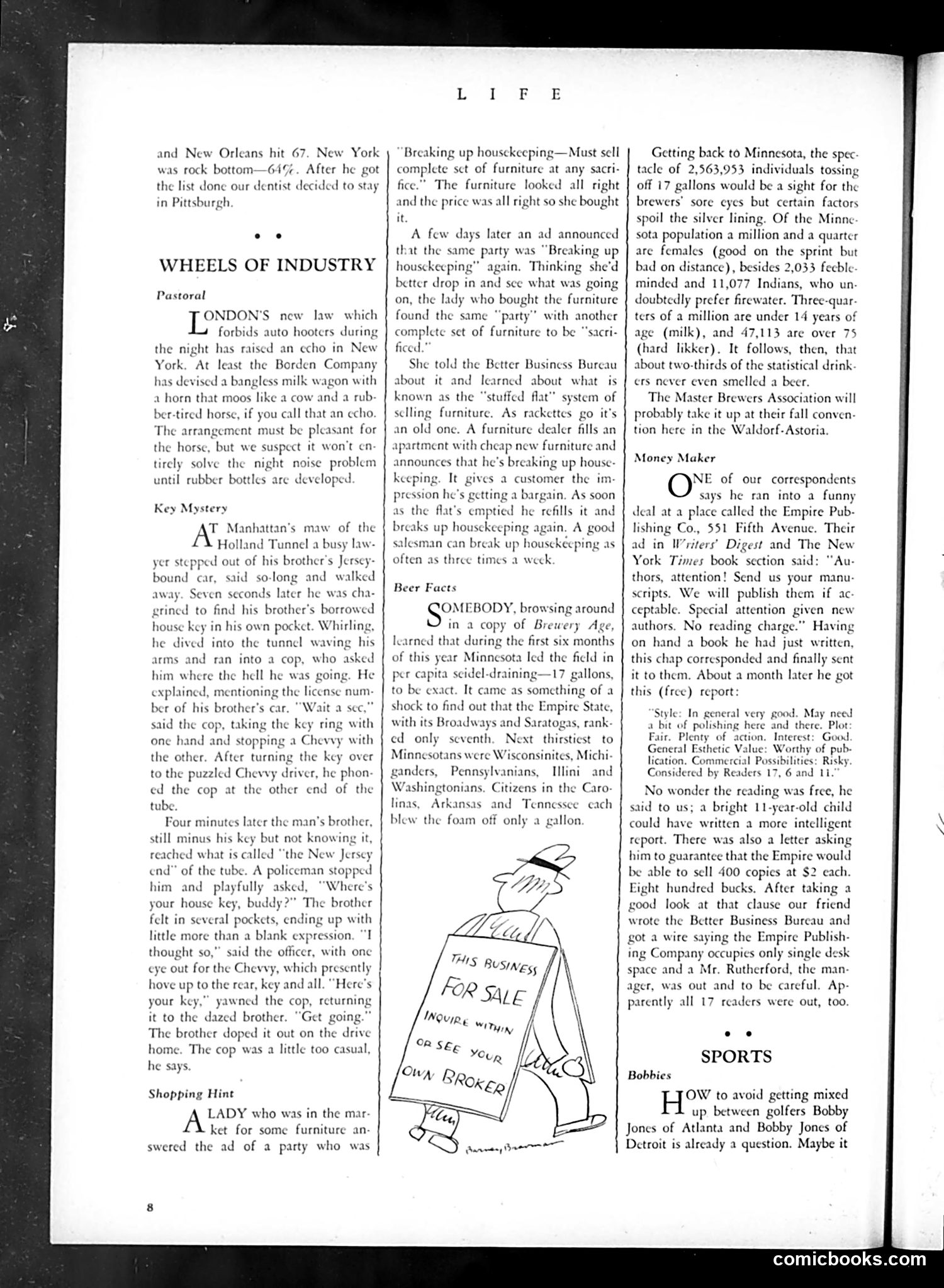
# Analysis of Life Magazine Page Content This page contains three satirical sections, each mocking contemporary business practices: **"Wheels of Industry"** ridicules London's new law banning night workers by joking that the Borden Company used moose as delivery animals, creating an "echo problem" in New York—suggesting absurd solutions to labor restrictions. **"Key Mystery"** is a humorous short story about a lawyer who loses his brother's borrowed house key in the Holland Tunnel, leading to comedic chaos involving police—satirizing urban inconvenience. **The central cartoon** depicts a figure carrying a sign advertising "THIS BUSINESS FOR SALE" to a broker, mocking the common practice of quickly buying and selling struggling businesses as get-rich-quick schemes. The sections collectively satirize 1920s-30s American business culture: labor law workarounds, urban inefficiency, and the speculative economy.
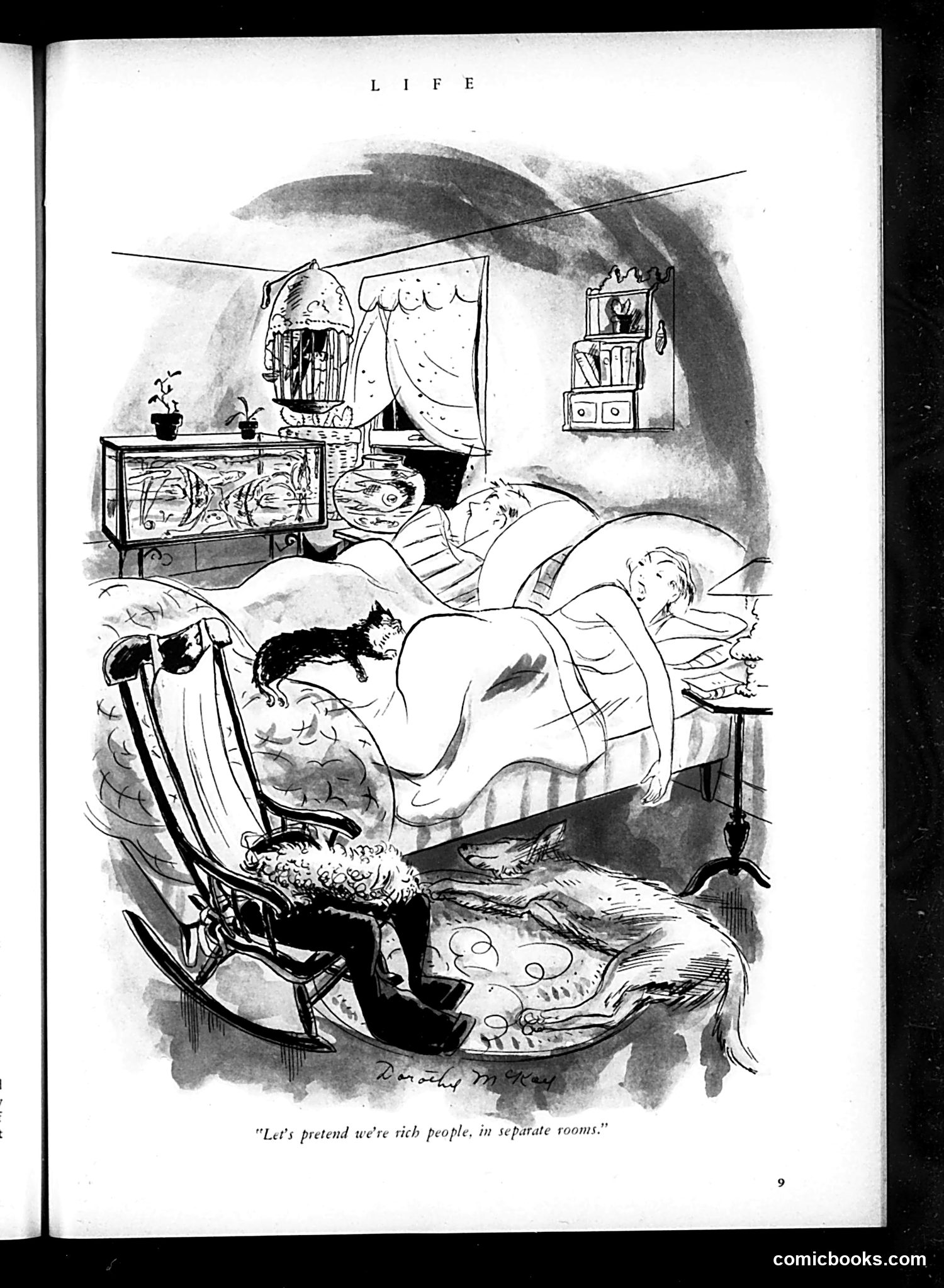
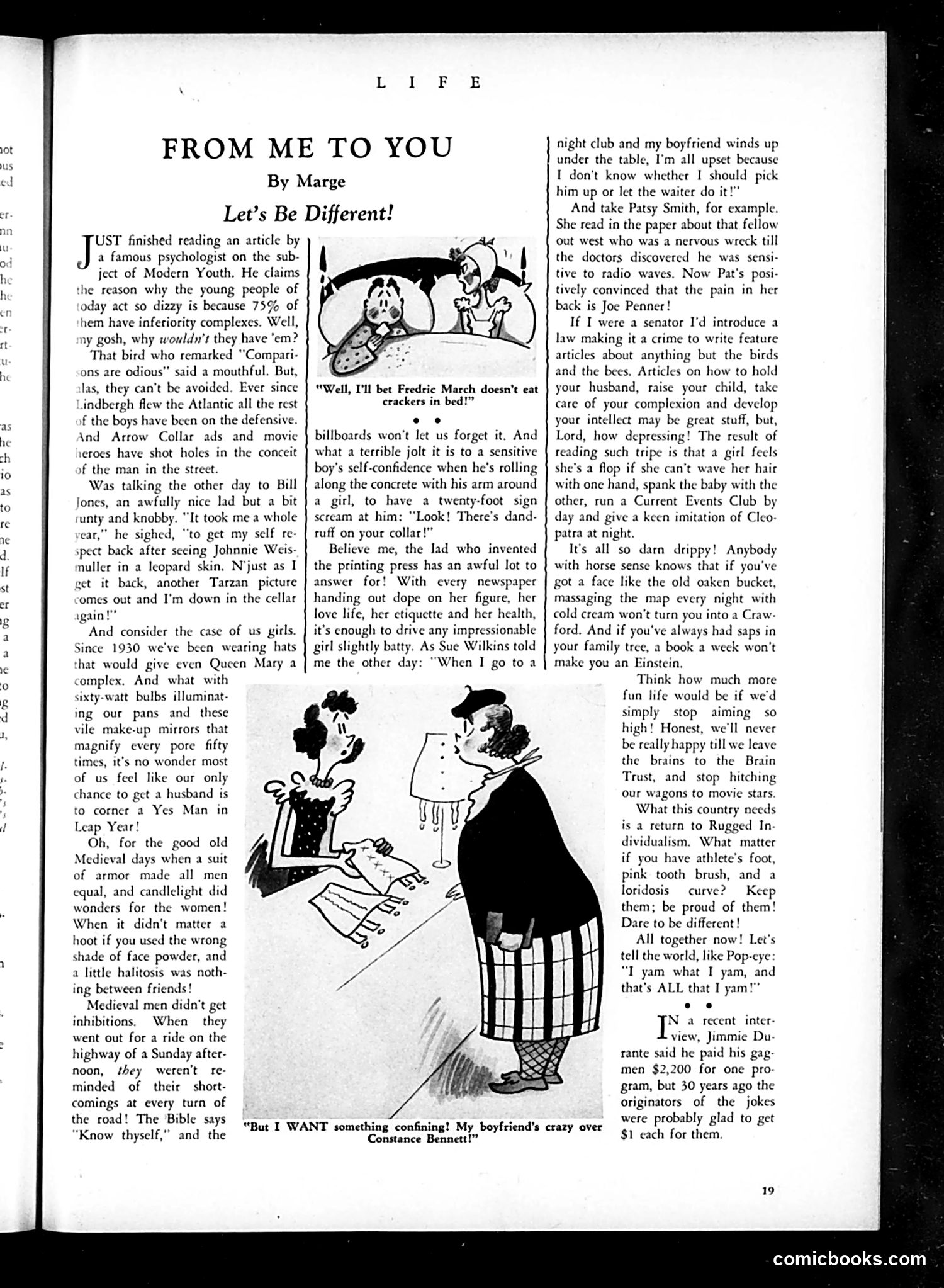
# Analysis of "Life" Magazine Cartoon This single-panel cartoon depicts a domestic bedroom scene where two people are in bed together, with a cat walking across the mattress. A man sits in a rocking chair nearby. The caption reads: "Let's pretend we're rich people, in separate rooms." The satire mocks middle-class pretension and housing constraints of the era. The joke is that wealthy people traditionally maintained separate bedrooms (a marker of affluence and social status), while working and middle-class families typically shared cramped quarters. By "pretending" to be rich while confined to one room, the couple humorously acknowledges their actual economic limitations while aspirationally imitating upper-class conventions. This reflects early-to-mid 20th century anxieties about class status and domesticity.
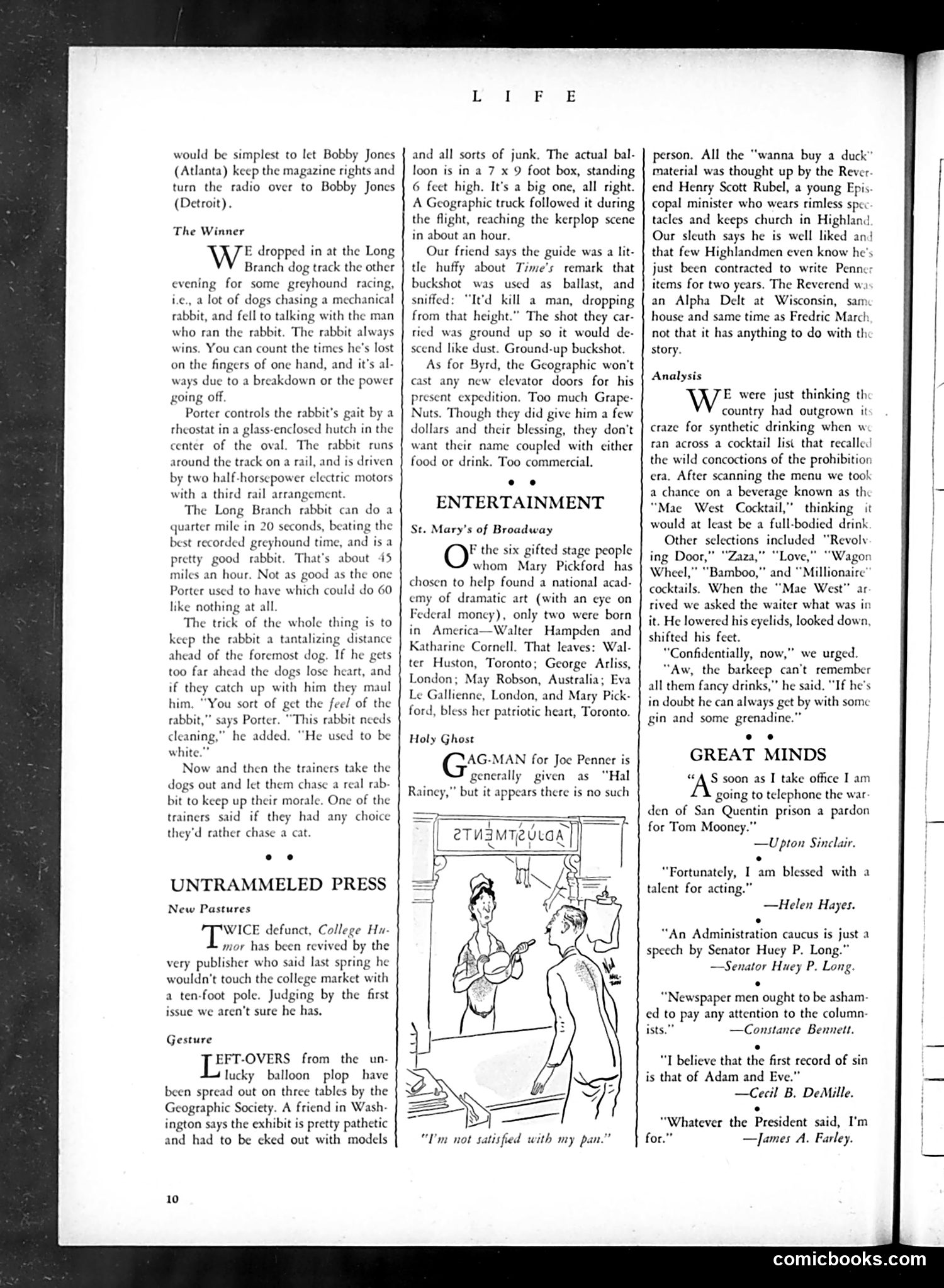
# "I'm not satisfied with my pan" This cartoon depicts two men in what appears to be a kitchen or laboratory setting. One man holds a pan while speaking the caption line to another man. The illustration is part of the "Great Minds" section, a humor column featuring witty quotes and quips. The joke plays on double meaning: "pan" likely refers both to a cooking utensil and to the theatrical/critical term "to pan" (meaning to criticize harshly). The humor comes from the absurdist juxtaposition of someone complaining about a literal cooking pan in language that mimics serious artistic criticism—a light satire on overly pretentious language or the tendency to use grandiose vocabulary for trivial complaints.