A complete issue · 51 pages · 1933
Life — October 1933
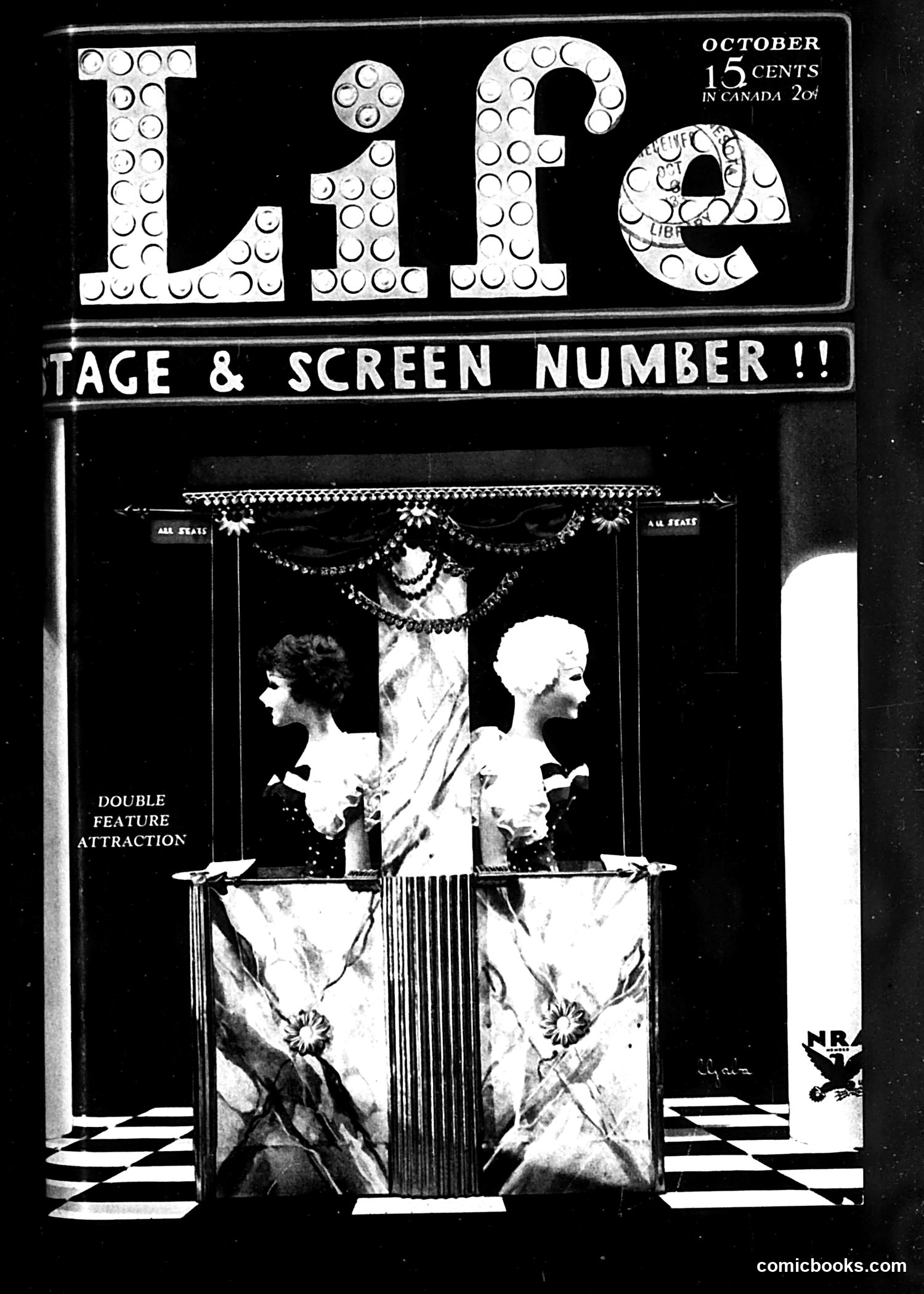
# Life Magazine October Issue Cover Analysis This is a Life magazine cover from October (price 15 cents, 20 cents in Canada), featuring theatrical stage and screen imagery. The large "LIFE" letters are filled with coin designs, likely referencing the magazine's focus on entertainment and popular culture. The central image shows an ornate theater stage set labeled "DOUBLE FEATURE ATTRACTION," depicting elegantly dressed women in 1920s-style fashion and hairstyles. The decorative Art Deco elements—including sunburst motifs, swags, and checkerboard flooring—reflect the glamorous aesthetic of contemporary stage productions. The "STAGE & SCREEN NUMBER!!" headline indicates this issue celebrates theatrical and film entertainment. This appears to be promotional coverage of popular entertainments available to American audiences during this era.
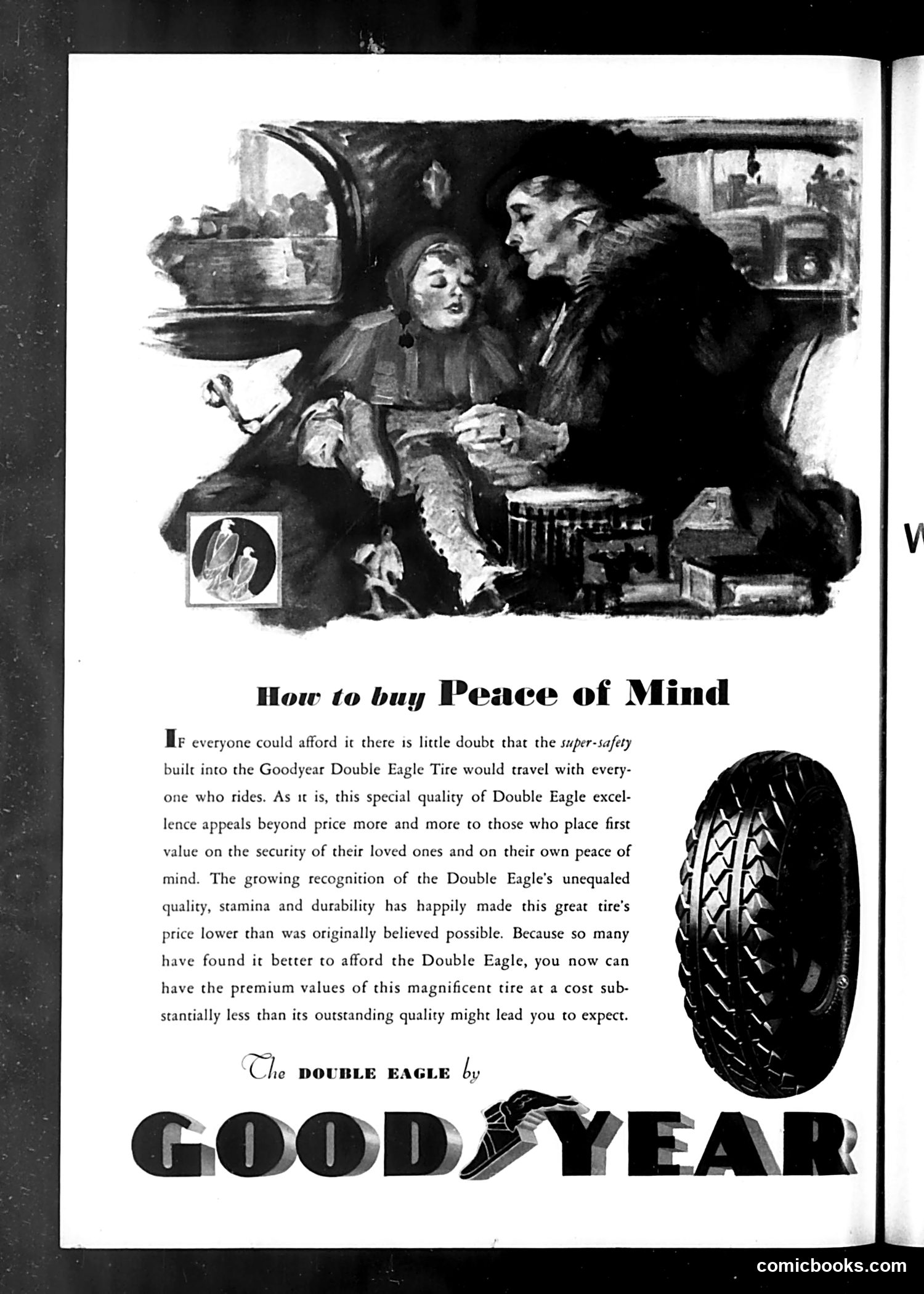
# Advertisement Analysis This is a **Goodyear tire advertisement**, not political satire or comics content. The page features an illustration of two figures in a car—a woman and man in formal attire—with the headline "How to buy Peace of Mind." The ad argues that Goodyear's Double Eagle tire offers safety and reliability that justifies its cost, appealing to buyers concerned about protecting "loved ones." The accompanying tire image and company branding dominate the lower half. The message emphasizes that while premium-priced, the Double Eagle tire has become more affordable due to increased demand, making its "superior-safety" qualities now accessible to middle-class consumers. This reflects early-to-mid 20th-century advertising strategy: linking consumer products to emotional security and family protection rather than purely functional benefits.
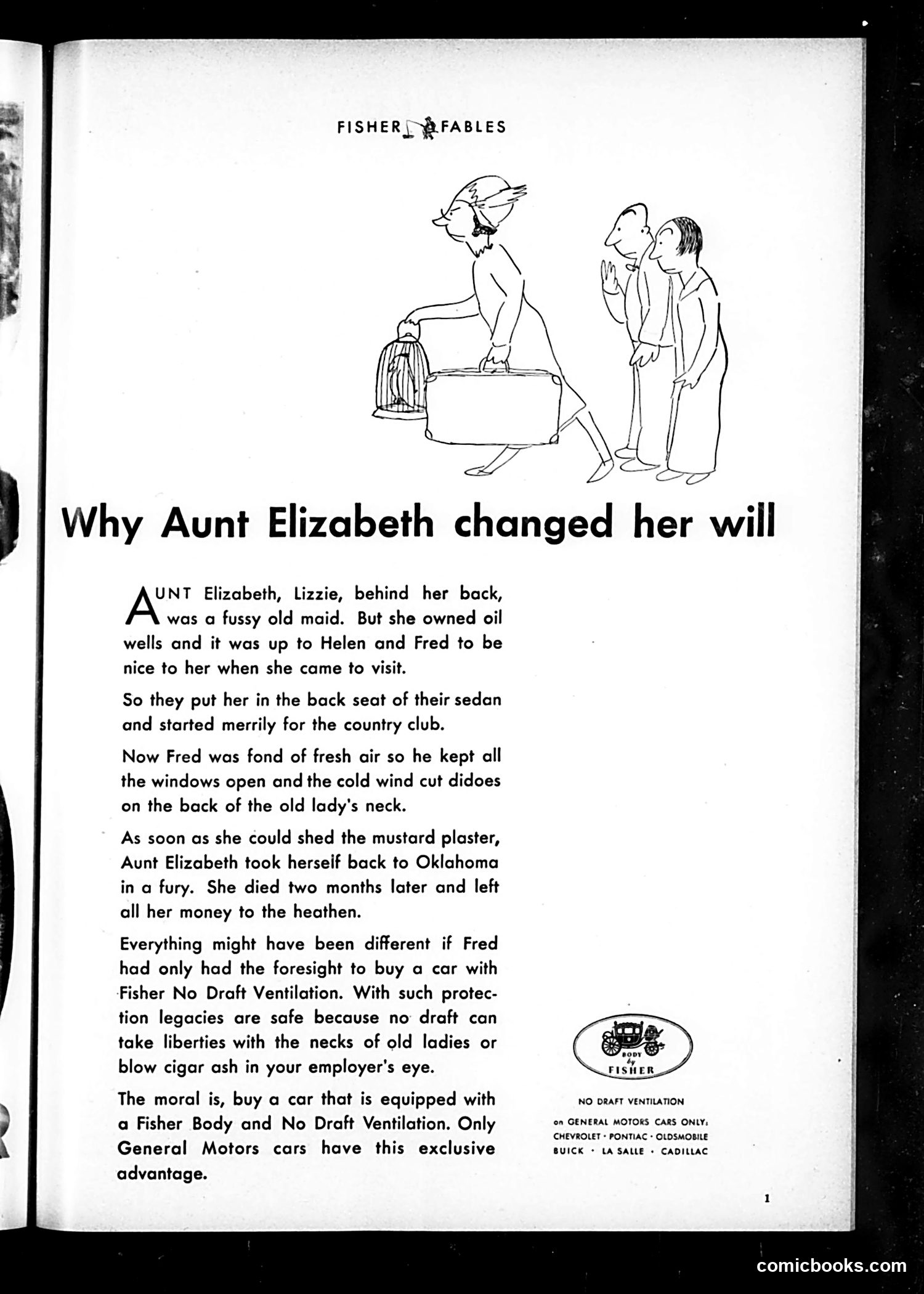
# Fisher Fables: "Why Aunt Elizabeth Changed Her Will" This is a Fisher Body advertisement disguised as satirical humor. The "fable" recounts how Aunt Elizabeth, a wealthy elderly woman with oil wells, dies after visiting her niece and nephew Helen and Fred. Fred, preferring fresh air, kept car windows open during their drive, causing a cold that led to her death—and her decision to change her will away from them. The ad's dark joke: Fred should have purchased a Fisher Body car with "No Draft Ventilation," which would have protected the aunt's health and preserved the inheritance. The satire mocks materialistic relatives while promoting General Motors' ventilation feature as a luxury that prevents drafts—and presumably, unexpected disinheritance.
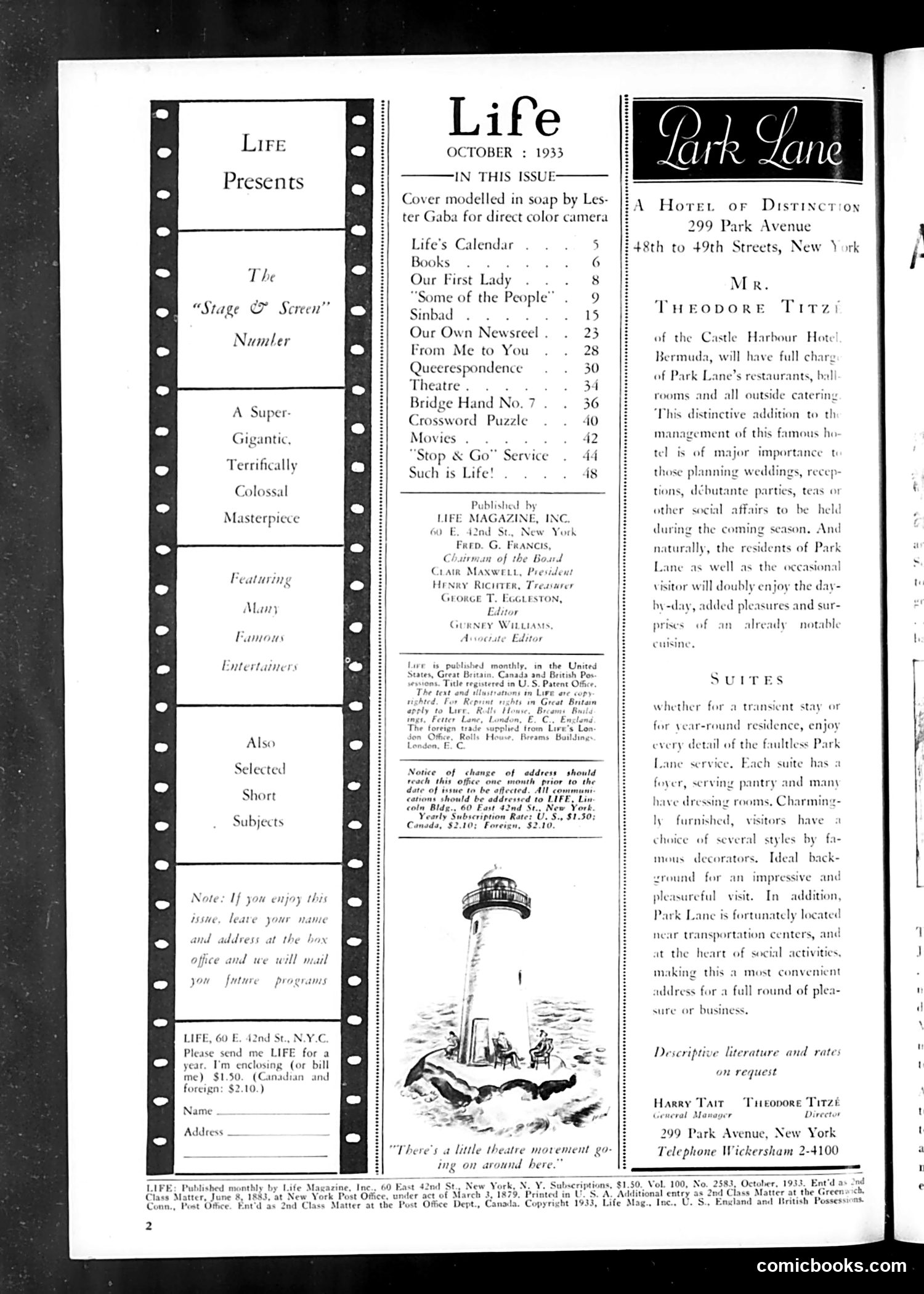
# Page Analysis This is primarily a **table of contents and advertising page** from Life magazine's October 1933 issue, not a political cartoon page. The left side lists the issue's contents, featuring a "Stage & Screen" number described as "A Super-Gigantic, Terrifically Colossal Masterpiece" with "Many Famous Entertainers." The right side advertises **Park Lane Hotel** in Manhattan, managed by Mr. Theodore Titzi. The advertisement emphasizes the hotel's suitability for social events—weddings, receptions, parties, and teas. The small illustration at bottom shows a lighthouse with people, captioned "There's a little theatre movement going on around here," though its specific satirical meaning is unclear without additional context about 1933 theater trends.
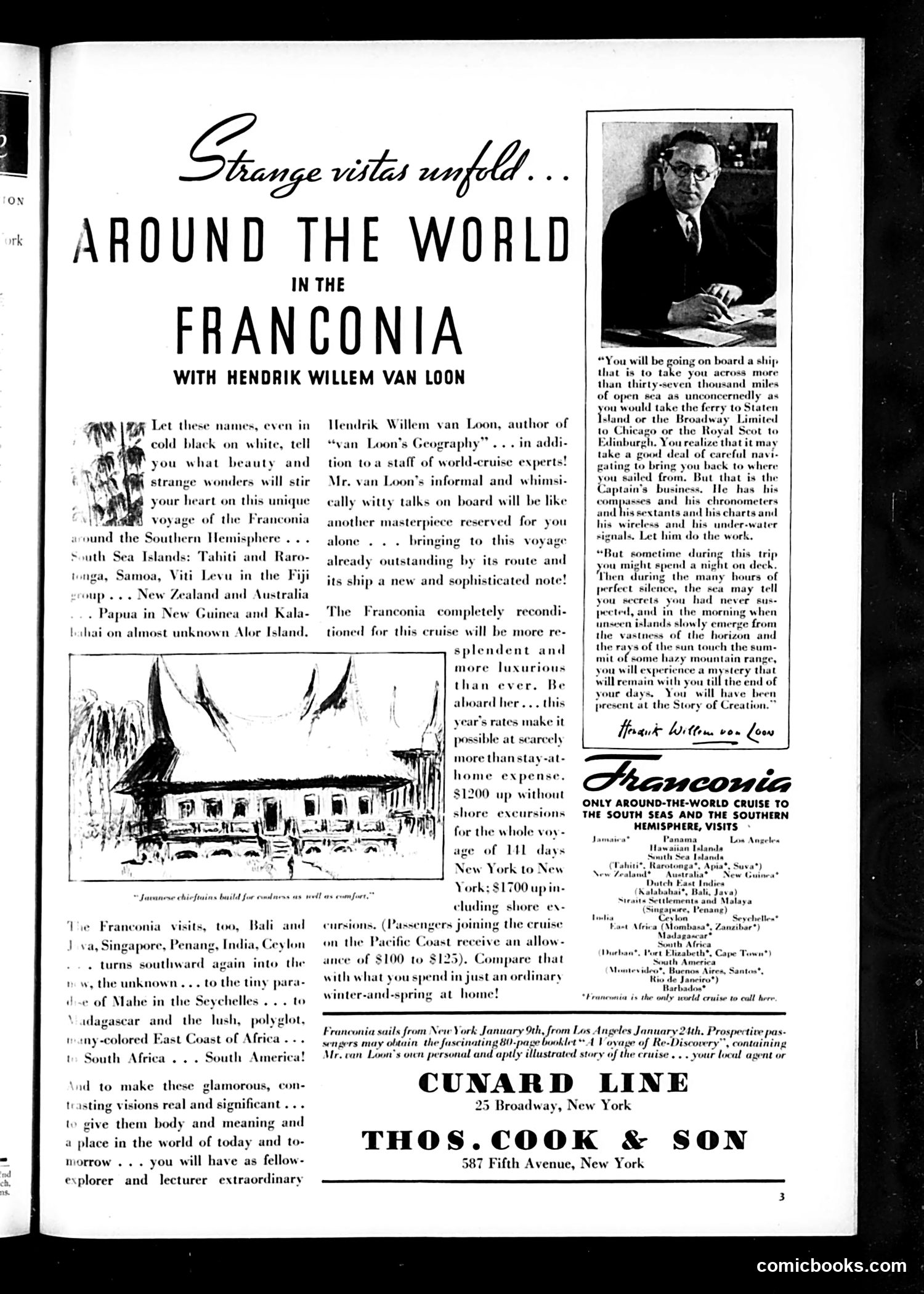
# Analysis This page is primarily **advertising** for cruise travel rather than satirical content. The main advertisement promotes the Franconia ship's "around the world" voyage with travel writer **Hendrik Willem van Loon** as guest lecturer. The layout features: - A photograph of van Loon (identifiable by caption) - A sketch of the ship - Van Loon's quoted description of the voyage's appeal - Detailed itinerary and pricing information The text emphasizes luxury travel ("splendid and glamorous") at relatively affordable rates ($1,200-$1,700). There is **no political satire** visible. This represents Life magazine's standard commercial advertising section, showcasing early 20th-century aspirational travel marketing that appealed to wealthy American readers.
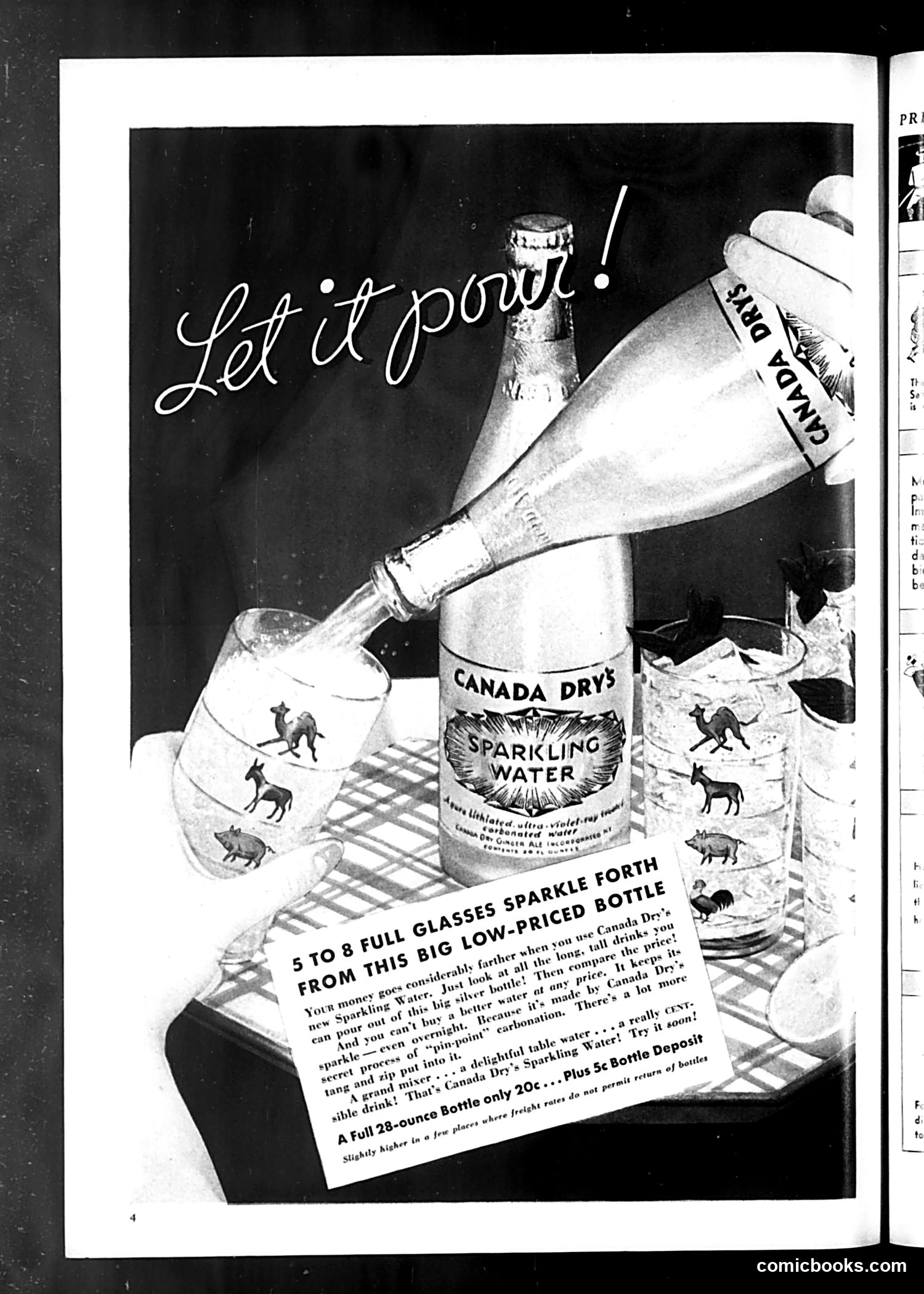
# Canada Dry's Sparkling Water Advertisement This is a **beverage advertisement**, not political satire. The page promotes Canada Dry's sparkling water with the slogan "Let it pour!" The ad emphasizes value: "5 to 8 full glasses sparkle forth from this big, low-priced bottle." It highlights the product's affordability and quantity, noting that a full 28-ounce bottle costs only 20¢ plus a 5¢ bottle deposit. The visual shows champagne-style bottles being poured into glasses decorated with a moose logo (Canada Dry's trademark). The messaging appeals to Depression-era or wartime consumers seeking economical entertainment—sparkling water presented as an affordable alternative to expensive champagne, with the glamorous presentation ("Let it pour!") compensating for the modest price point.
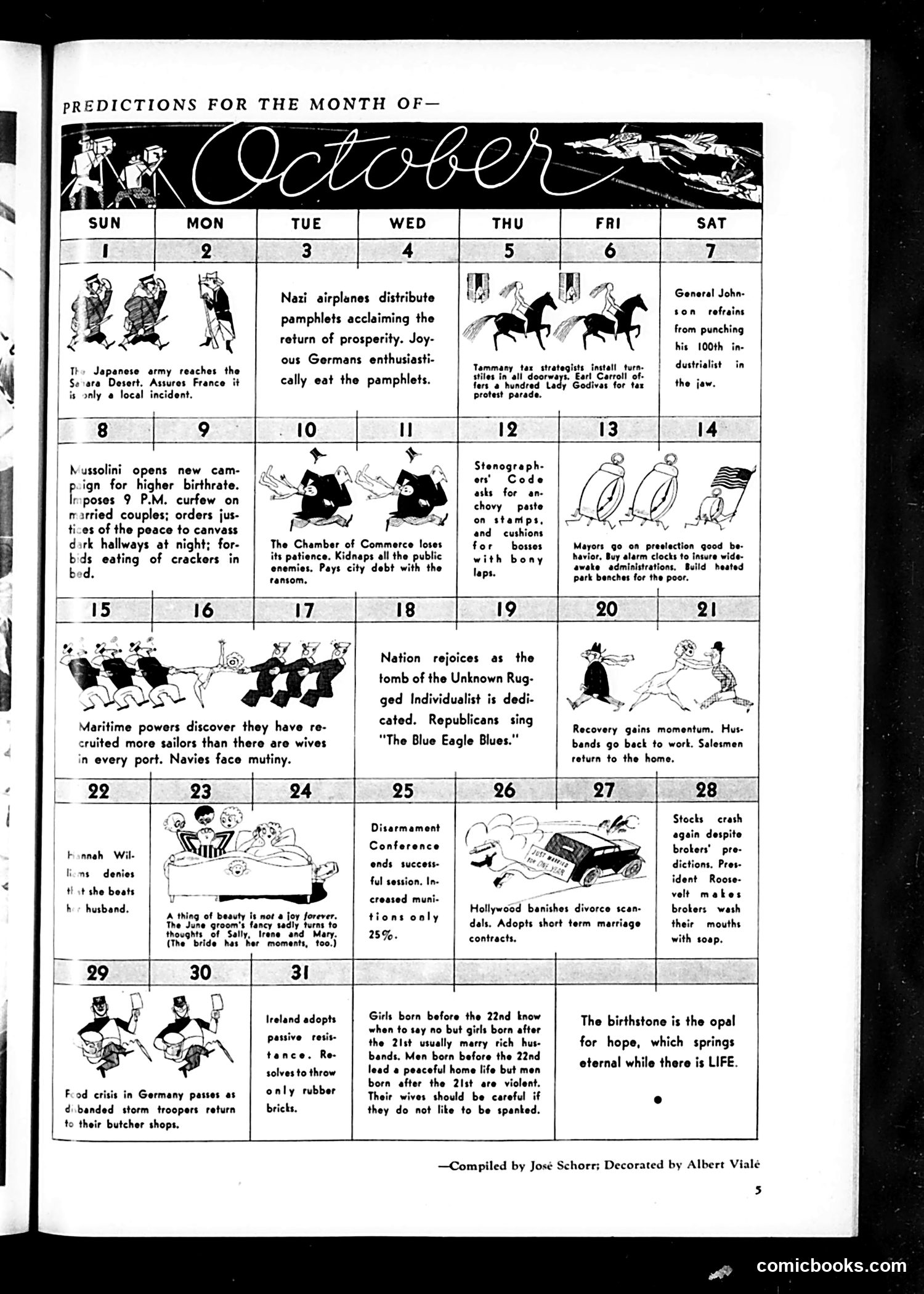
# October 1924 Predictions Calendar This is a satirical "predictions" calendar from Life magazine's October 1924 issue. Rather than serious forecasts, each date contains humorous, absurdist predictions mixing current events with ridiculous scenarios: - **Political/social references** include: Nazi pamphlets, Mussolini's campaign, the Unknown Soldier's tomb dedication, disarmament conferences, and Irish independence debates - **The humor** juxtaposes real contemporary issues with nonsense (horses eating pamphlets, stocks crashing, Hollywood divorce scandals) - **The satire** mocks both serious political developments and American popular culture obsessions simultaneously - Illustrations show exaggerated figures and slapstick situations The calendar suggests Life's editorial stance: treating current events with irreverent mockery while poking fun at American preoccupations with celebrity gossip and financial speculation.
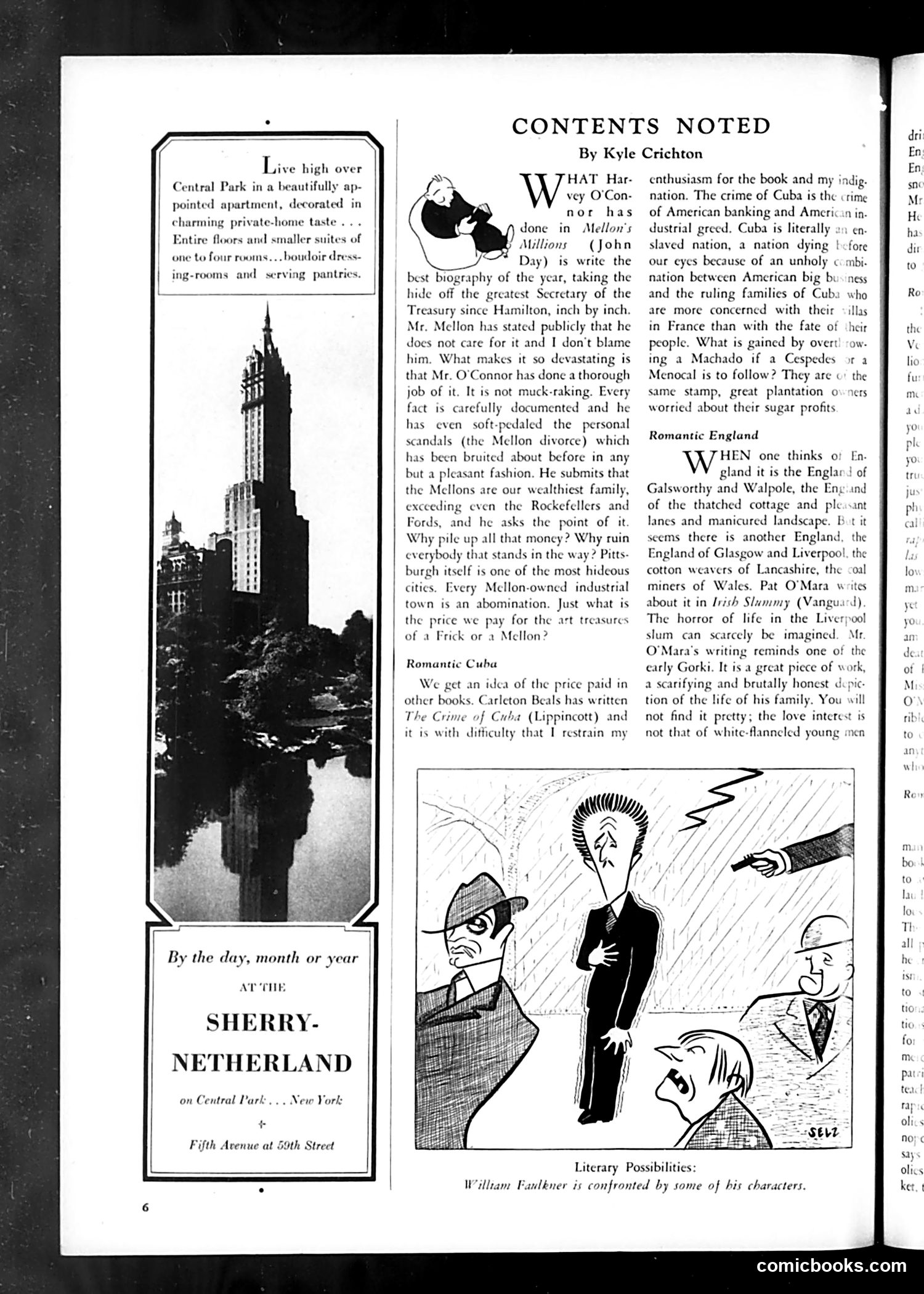
# Contents Noted by Kyle Crichton The page reviews three books. The main cartoon (bottom) illustrates "Literary Possibilities: William Faulkner is confronted by some of his characters," showing Faulkner amid grotesque, distorted figures in the rain—likely referencing his complex literary creations and challenging narrative style. The reviews discuss: - **Mellon's Millions** by John Day (biography of Treasury Secretary Mellon) - **The Crime of Cuba** by Carleton Beals, criticizing American business interests' exploitation of Cuba - **Irish Slumming** by Pat O'Mara and related works about England's industrial working class The cartoon satirizes Faulkner's reputation for creating morally ambiguous, psychologically tormented characters that seemed alien to mainstream readers.
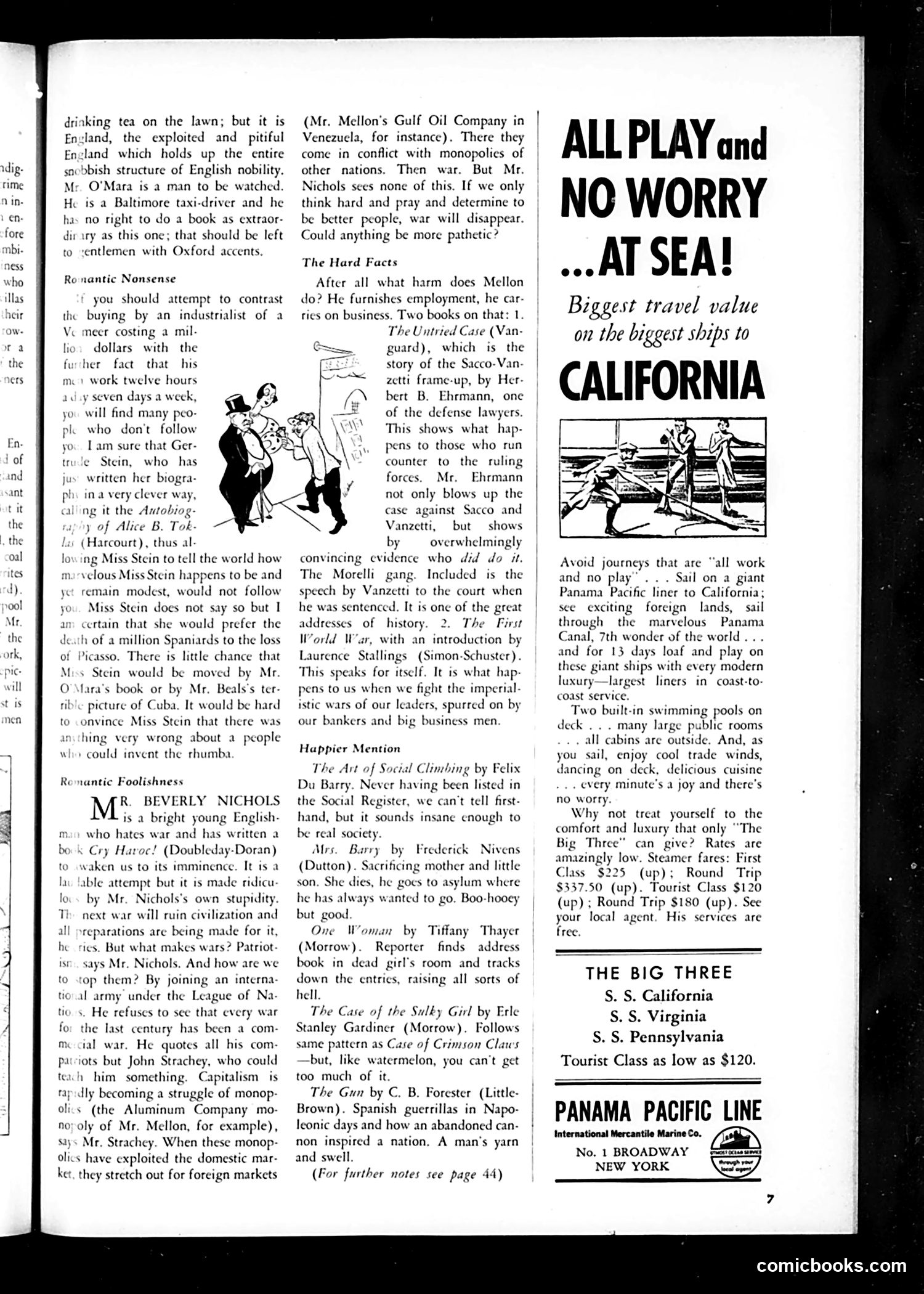
# Analysis This page is primarily **advertising and book reviews**, not satirical political content. The main advertisement (right side) promotes **ship travel to California** via the Panama Pacific Line, featuring "The Big Three" ocean liners: California, Virginia, and Pennsylvania. It emphasizes leisure amenities—swimming pools, dancing, outdoor activities—targeting affluent tourists seeking luxury vacations. The left side contains literary reviews of contemporary books, including works by Alice B. Toklas and others, discussing topics like business, social climbing, and Spanish guerrillas. There is **one small cartoon** (center-left) showing men in business attire, apparently illustrating the book *The Flooring Case of the Vanguard*, but it's unclear without additional context what specific satire it represents. The overall page reflects 1920s-30s publishing and leisure travel marketing.
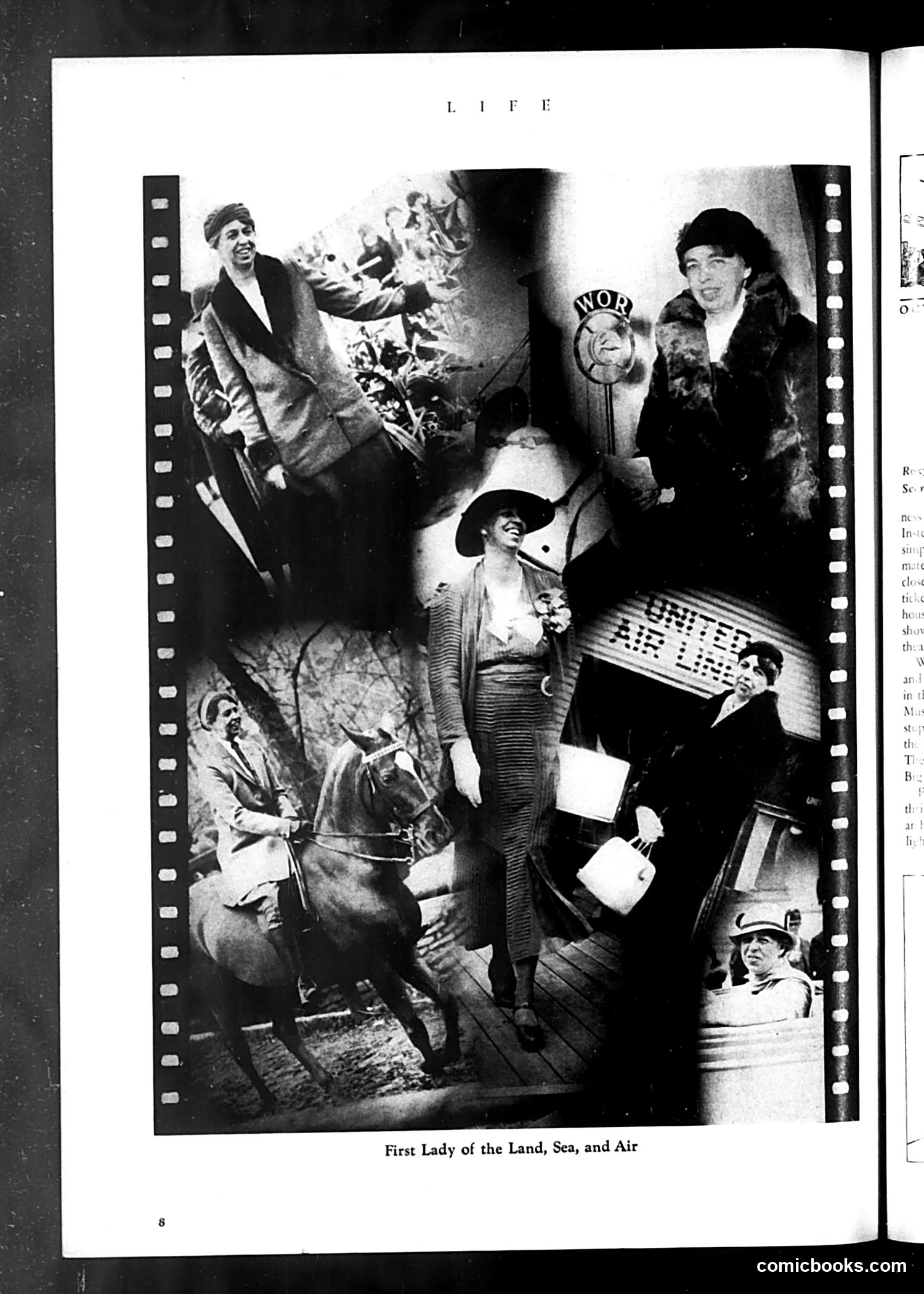
# "First Lady of the Land, Sea, and Air" This Life magazine page presents a satirical composite photograph mocking a prominent woman's ubiquitous public presence across multiple domains. The title suggests the subject holds authority or visibility in all three spheres—literally combining images showing her involvement in land (horse), sea (visible ship/maritime setting), and air (radio microphone marked "WORD") contexts. The collage format, typical of 1920s-30s Life satire, ridicules excessive public exposure and influence. Without visible identification, the specific figure remains unclear, though the "First Lady" reference suggests a president's wife or similar high-profile political woman. The WORD radio branding indicates media prominence. The overall effect mocks celebrity culture and women's expanding public roles during this era.
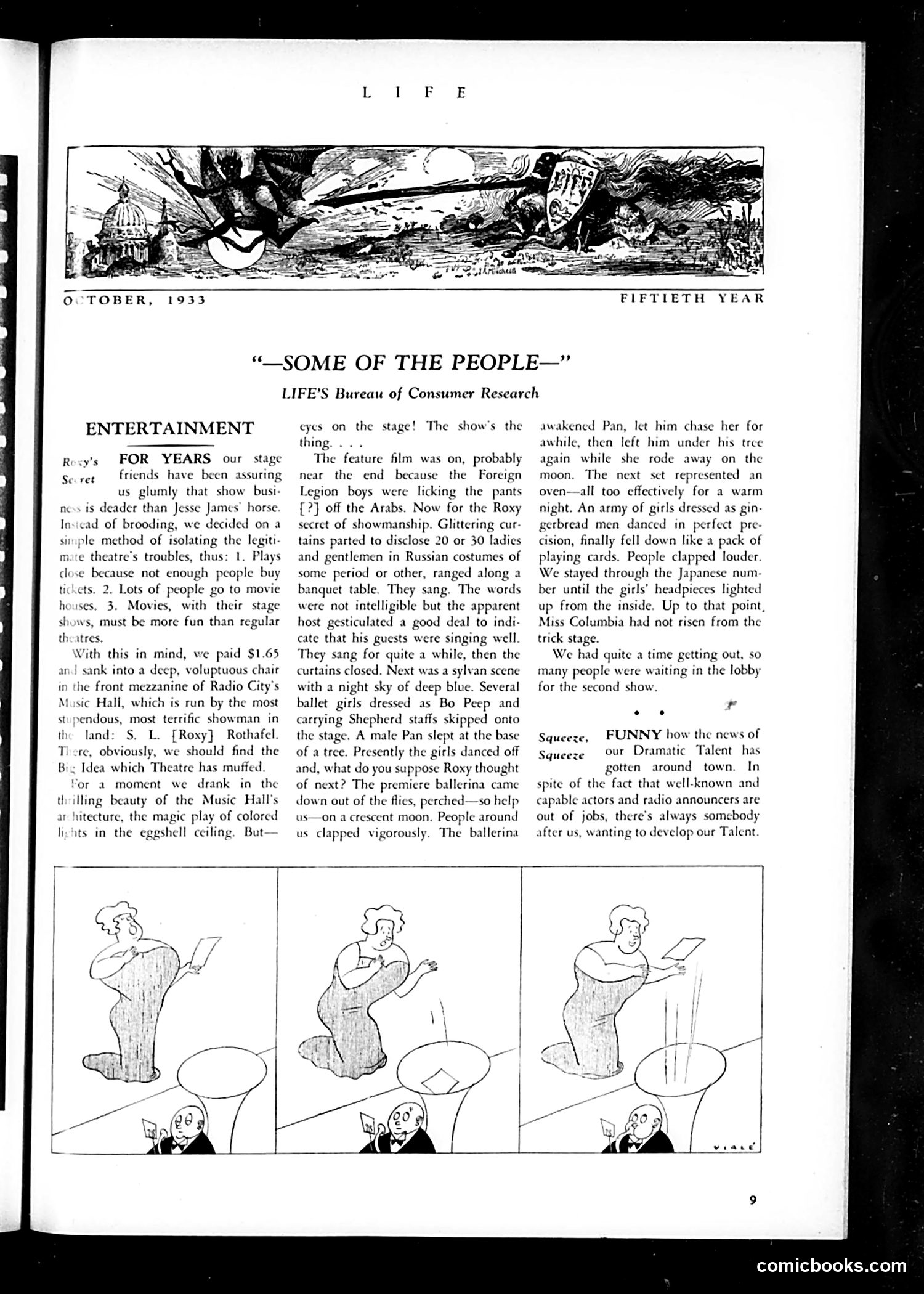
# Analysis This page from Life magazine (October 1933) contains an entertainment review and a three-panel comic strip. The text discusses a Rosy theatre production featuring a Foreign Legion show with Russian costumes, ballet dancers, and Pan mythology scenes. The comic strip below satirizes **talentless theatrical hopefuls**. It shows a woman performer repeatedly reading from a script while a seated audience member (likely an agent or producer) watches impassively across three panels. The joke appears to be about desperate, untalented entertainers pursuing show business—she keeps performing the same act, seemingly oblivious to the lack of interest. The caption notes how "the news of Dramatic Talent has gotten around town," sarcastically suggesting wannabe performers chase opportunities despite lacking genuine ability. This reflects 1930s anxieties about aspiration and unemployment during the Depression.
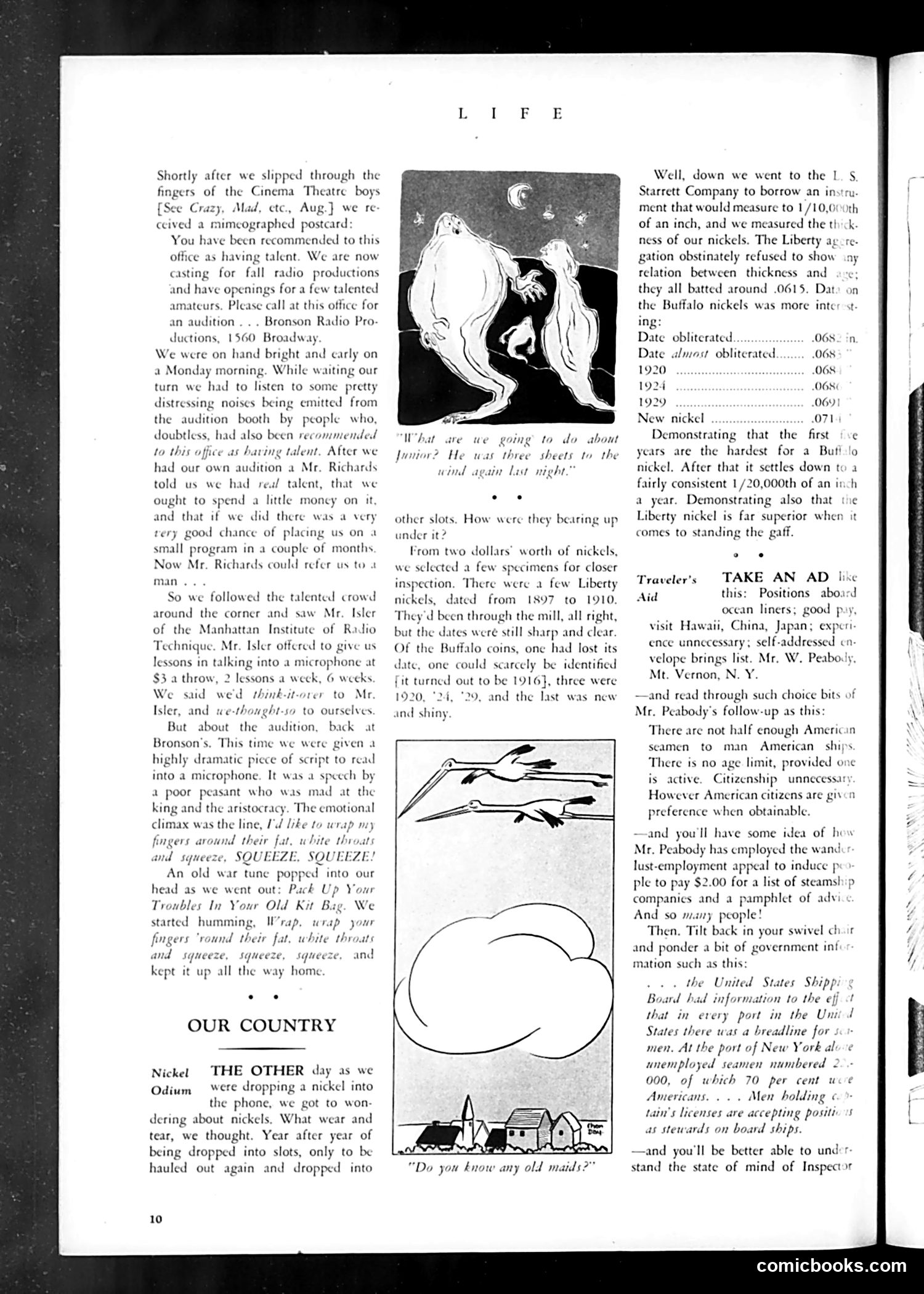
# Analysis of Life Magazine Page This page contains two separate pieces of humor content: **Upper section**: A narrative about auditioning for radio work at Bronson's, featuring an illustration of what appears to be a person being thrown or falling. The text jokes about an audition experience and includes the line "I'd like to wrap my fingers around their fat, white throats and squeeze. SQUEEZE, SQUEEZE!" — using exaggerated language for comedic effect about frustration with the audition process. **Lower section ("OUR COUNTRY - Nickel Odium")**: Discusses worn nickels being repeatedly dropped and retrieved. Includes illustrations of clouds and a rural house. The humor derives from the wear-and-tear on currency over time, presented as a mundane, relatable complaint about everyday objects deteriorating. Both pieces exemplify Life's style of satirizing ordinary American life experiences through absurdist humor and visual gags rather than political commentary.