A complete issue · 36 pages · 1930
Life — August 8, 1930
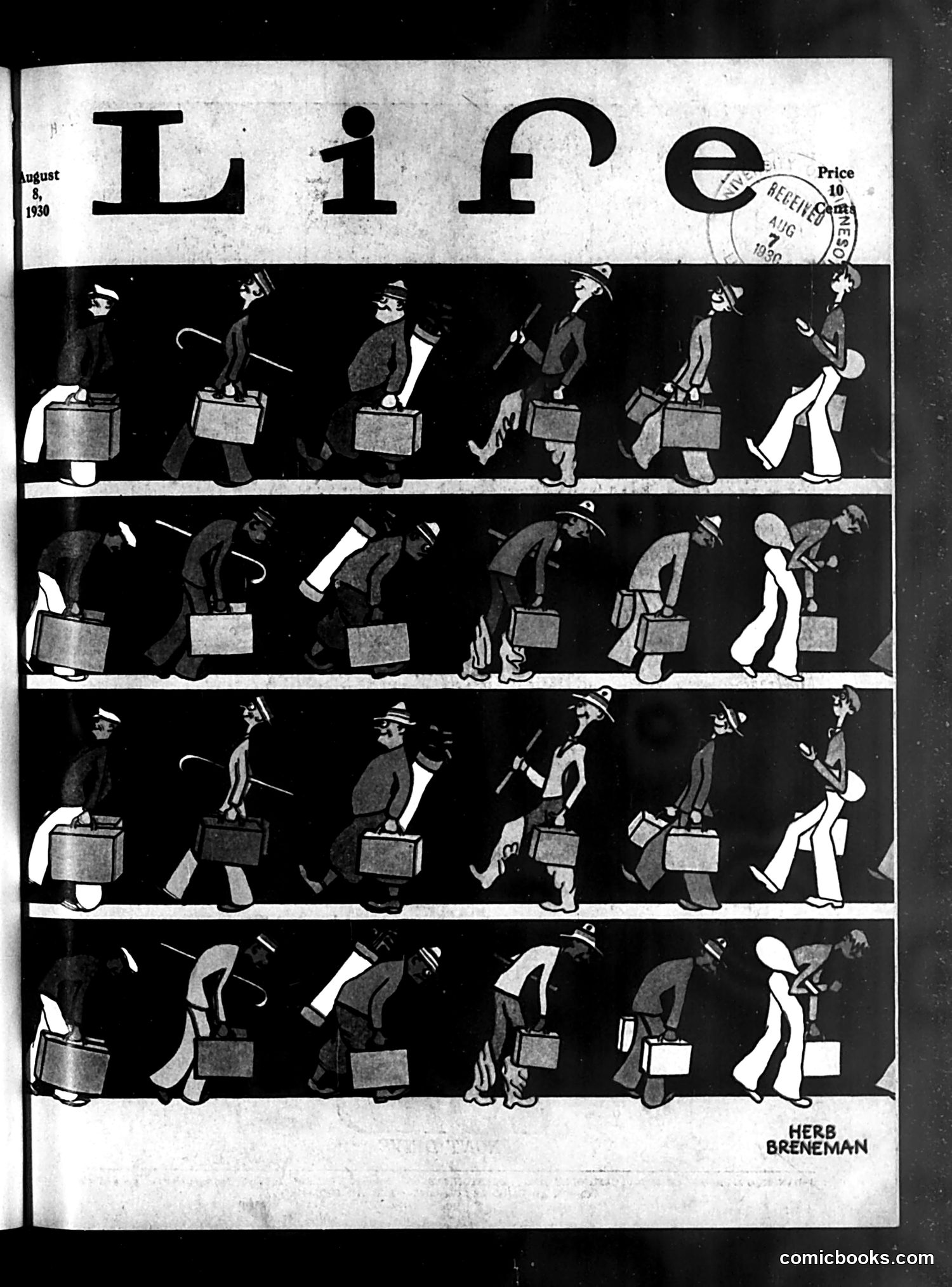
# Life Magazine Cover, August 5, 1930 This is a cover illustration by Herb Breneman depicting a satirical sequence of businessmen or workers carrying briefcases, shown across four horizontal strips with slight variations in their poses and clothing. The figures appear progressively more disheveled or distressed as they move downward, suggesting a deteriorating situation. Given the August 1930 date, this almost certainly references the **Great Depression**, which began with the stock market crash of October 1929. The briefcase-carrying figures likely represent businessmen or office workers experiencing financial collapse—their varying poses may illustrate the mounting despair and disarray affecting the American workforce during this economic crisis. The repetitive, comic-strip style emphasizes the widespread, systematic nature of the disaster.
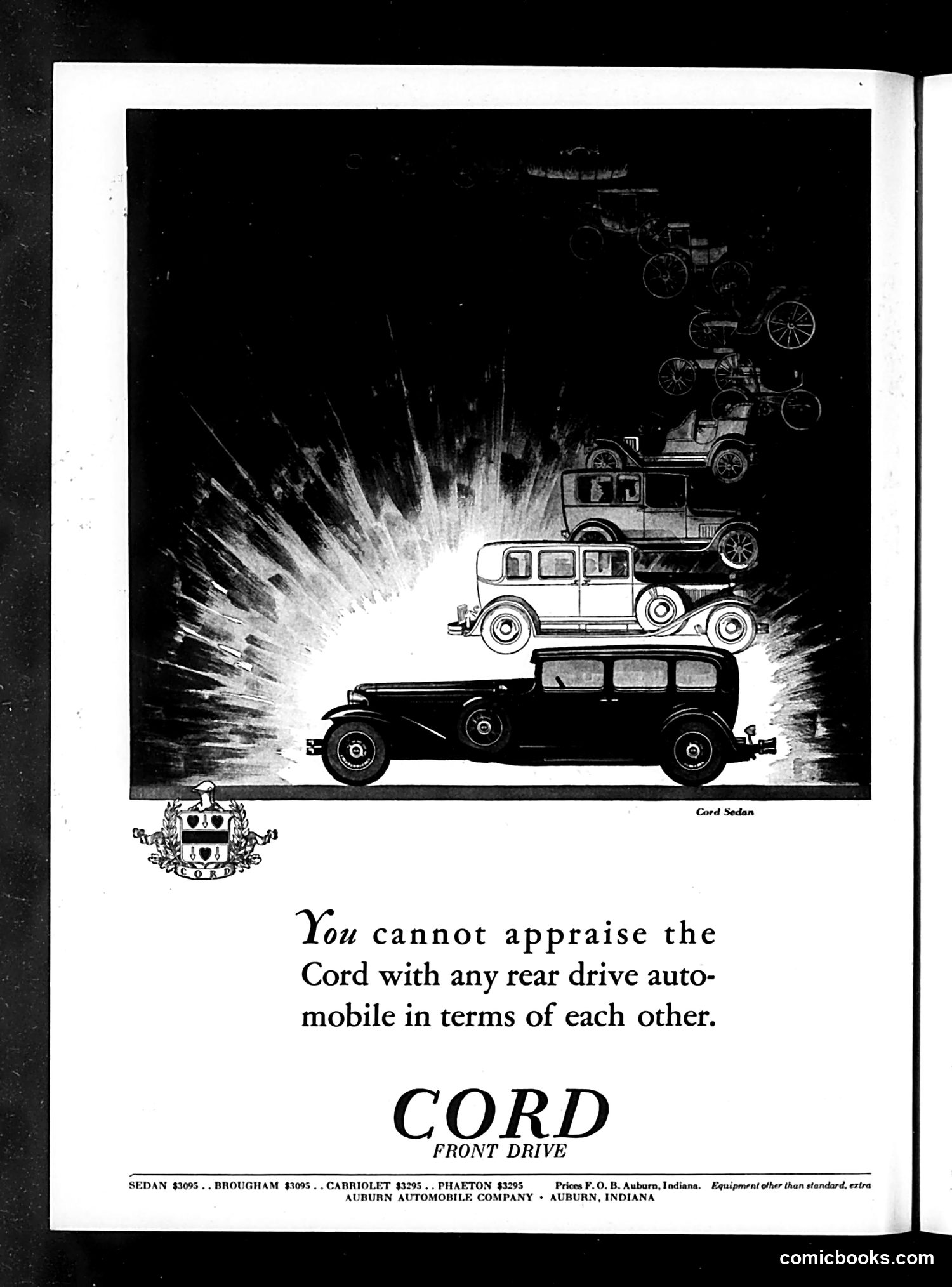
# Cord Automobile Advertisement This is a **car advertisement**, not political satire. It promotes the Cord automobile, highlighting its front-wheel-drive technology as a competitive advantage. The illustration shows a Cord sedan at the bottom, with various other vehicles (motorcycles, bicycles, and rear-drive automobiles) stacked above it in a radiating burst pattern. The tagline states: "You cannot appraise the Cord with any rear drive automobile in terms of each other." The message is that the Cord's front-wheel-drive system made it fundamentally superior and incomparable to conventional rear-drive vehicles. Prices and manufacturing details for Auburn Automobile Company are listed below. This represents early automotive marketing emphasizing technological innovation as a selling point.
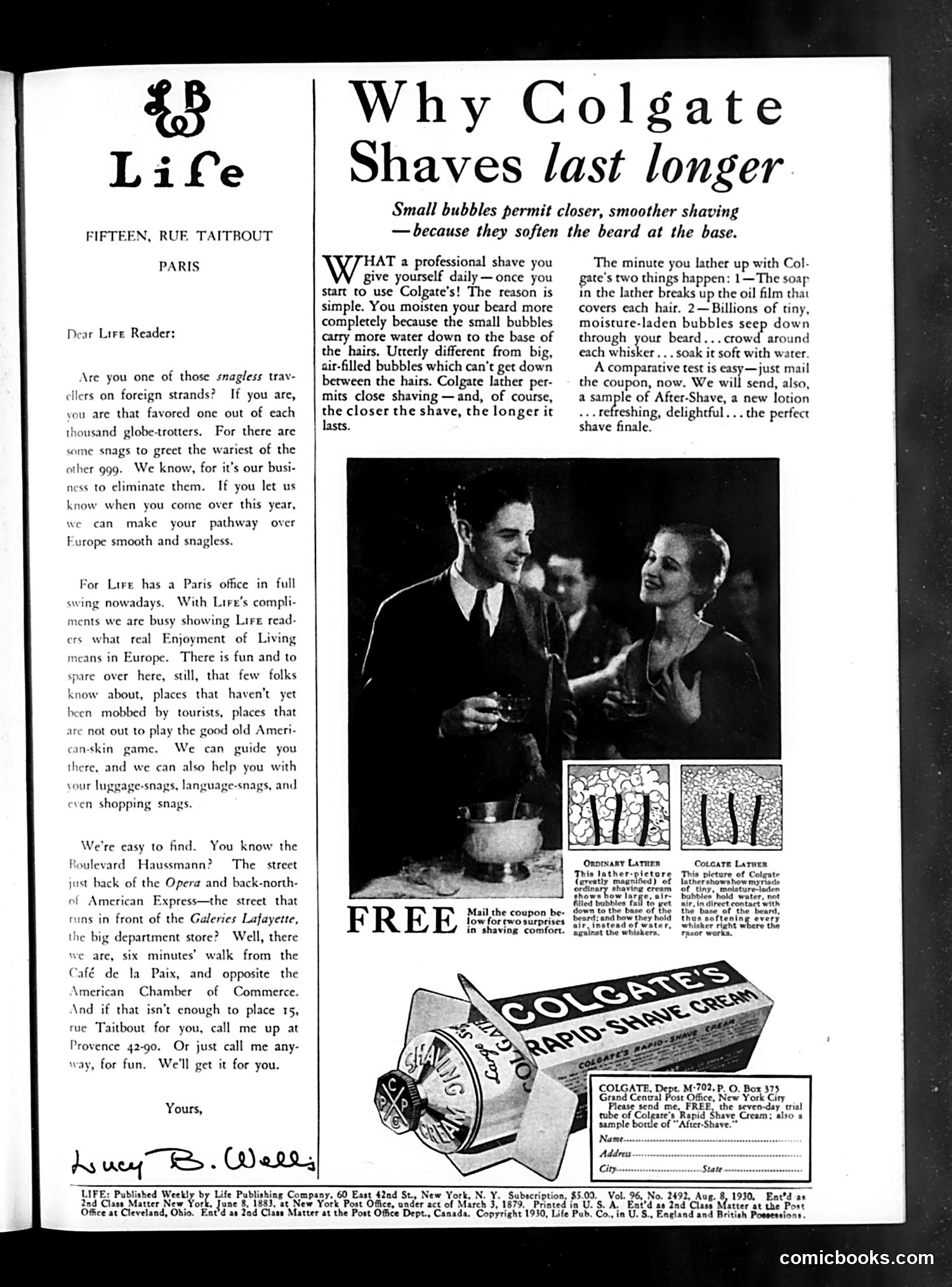
This page is primarily **advertising for Colgate shaving products**, not political satire. The left column contains a letter from "Lucy B. Walli" (likely a pseudonym) at Life's Paris office, offering travel tips to readers visiting Europe and mentioning Life's Paris office services. The right side features a **Colgate advertisement** explaining why their lather produces a closer shave. Two comparative microscope images show the difference between ordinary lather and Colgate's lather—the latter having smaller bubbles that penetrate beard hair more effectively. The advertisement includes a coupon offering a free sample of "After-Shave" lotion. This is **vintage advertising copy** emphasizing product superiority through pseudo-scientific claims about bubble size and beard softening.
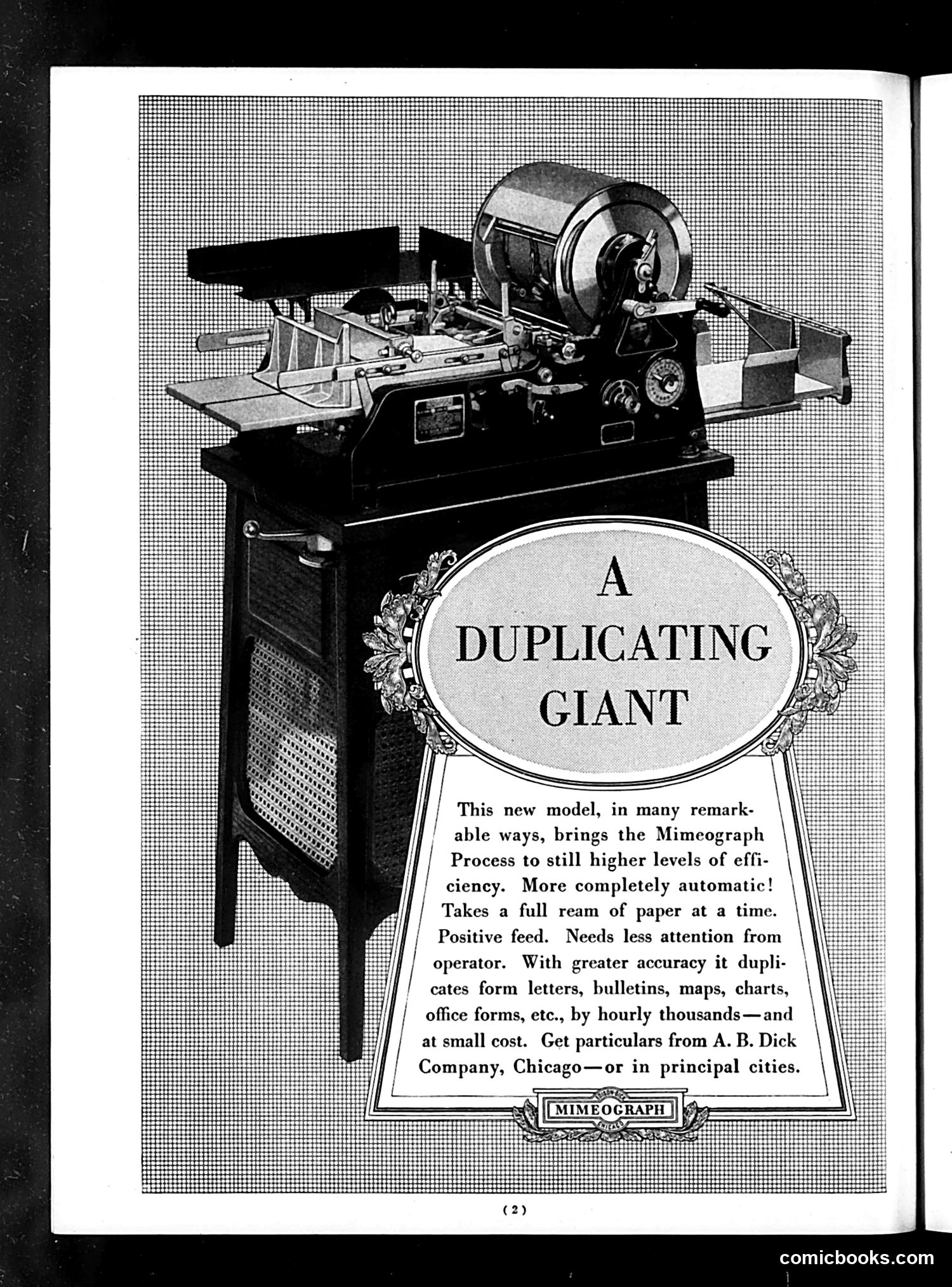
This page is primarily an **advertisement**, not editorial content or satire. It promotes "A Duplicating Giant"—a Mimeograph machine manufactured by A.B. Dick Company of Chicago. The ad uses marketing language typical of early-20th-century industrial advertising, emphasizing the machine's improvements: greater automation, efficiency, positive feed mechanism, and ability to duplicate documents "by hourly thousands—and at small cost." The visual shows the machine mounted on a stand with its characteristic large cylindrical drum. The decorative oval frame and ornamental typography are period-appropriate design elements meant to convey respectability and technological advancement. There is no political satire here—this is straightforward commercial advertising for office equipment.
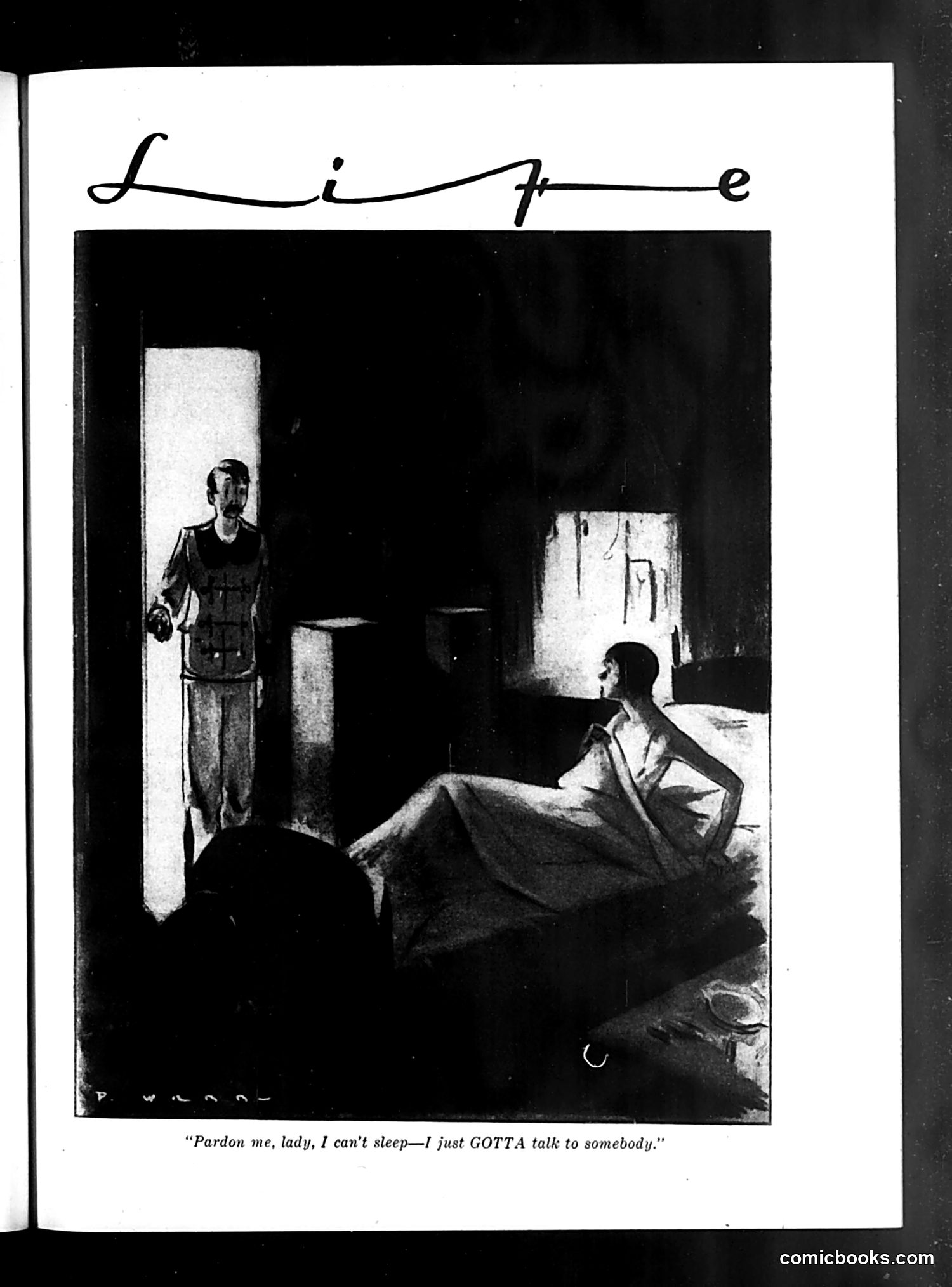
# Analysis This is a single-panel cartoon from *Life* magazine showing a domestic scene: a man stands in a doorway while a woman sits on a bed. The caption reads: "Pardon me, lady, I can't sleep—I just GOTTA talk to somebody." The humor relies on a social commentary about insomnia and emotional needs. The man's intrusion on the woman (presumably his wife or partner) at night, claiming he "just GOTTA talk," satirizes how some people prioritize their own restlessness over their partner's sleep. The cartoon gently mocks masculine behavior—the man's inability to manage his own anxieties quietly, instead imposing them on someone trying to rest. The joke reflects mid-20th-century domestic life and the tension between individual emotional needs and shared household obligations.
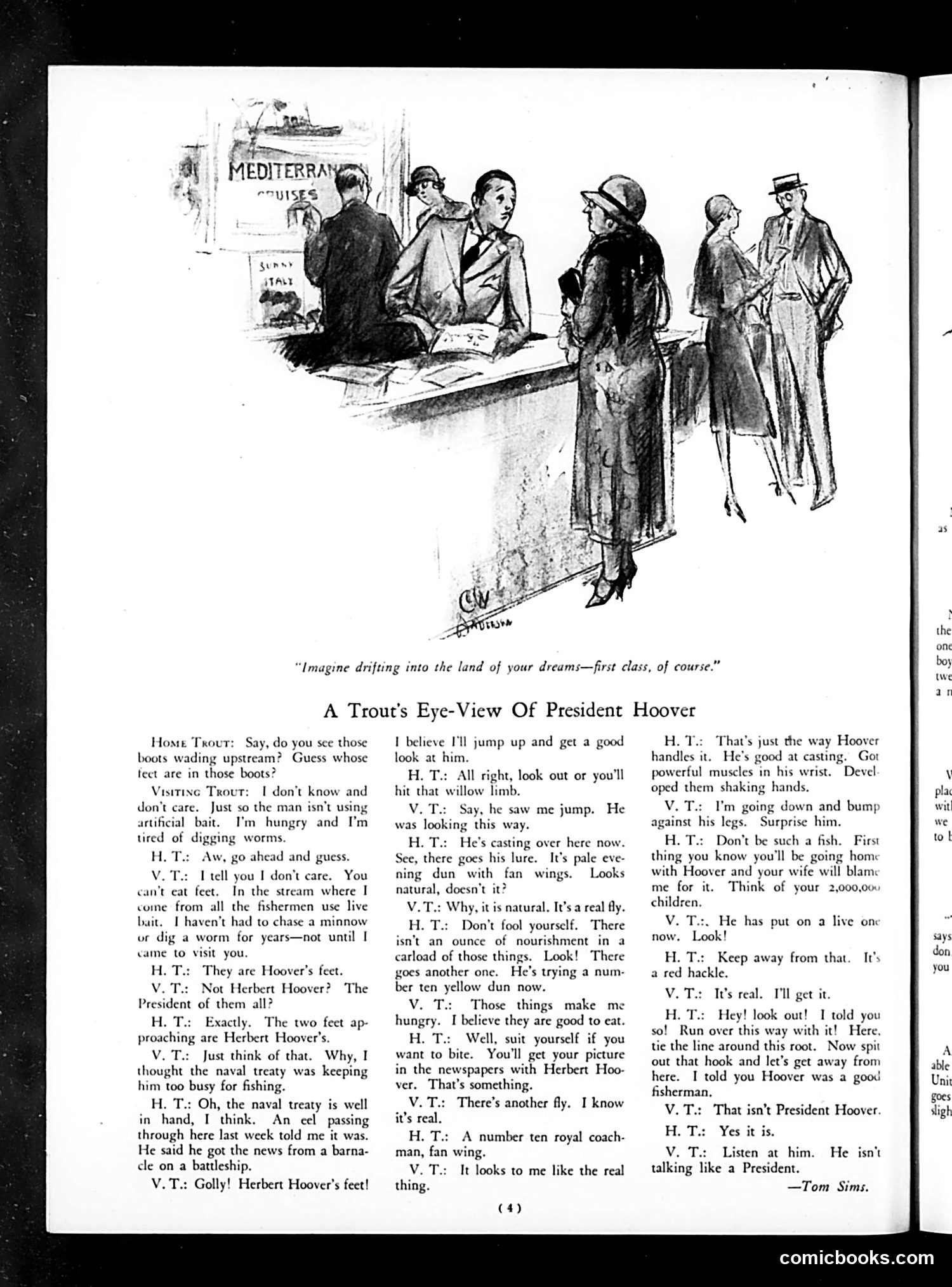
# "A Trout's Eye-View Of President Hoover" This satirical cartoon depicts a ticket office (labeled "MEDITERRANEAN CRUISES") where two trout observe tourists booking passage. The humor works on multiple levels: **The Setup:** Fish discuss President Hoover's fishing trips—a well-known pastime he was famous for during his presidency. **The Satire:** The trout cynically compare Hoover's leisurely Mediterranean cruises and fishing vacations to ordinary citizens' struggles. One trout notes Hoover's "powerful muscles" and carefree demeanor while common people presumably face economic hardship. **Historical Context:** This likely references the early Great Depression era (early 1930s), when Hoover's continued recreational activities appeared tone-deaf to suffering Americans. The cartoon mocks the disconnect between the president's comfortable lifestyle and the public's economic distress.
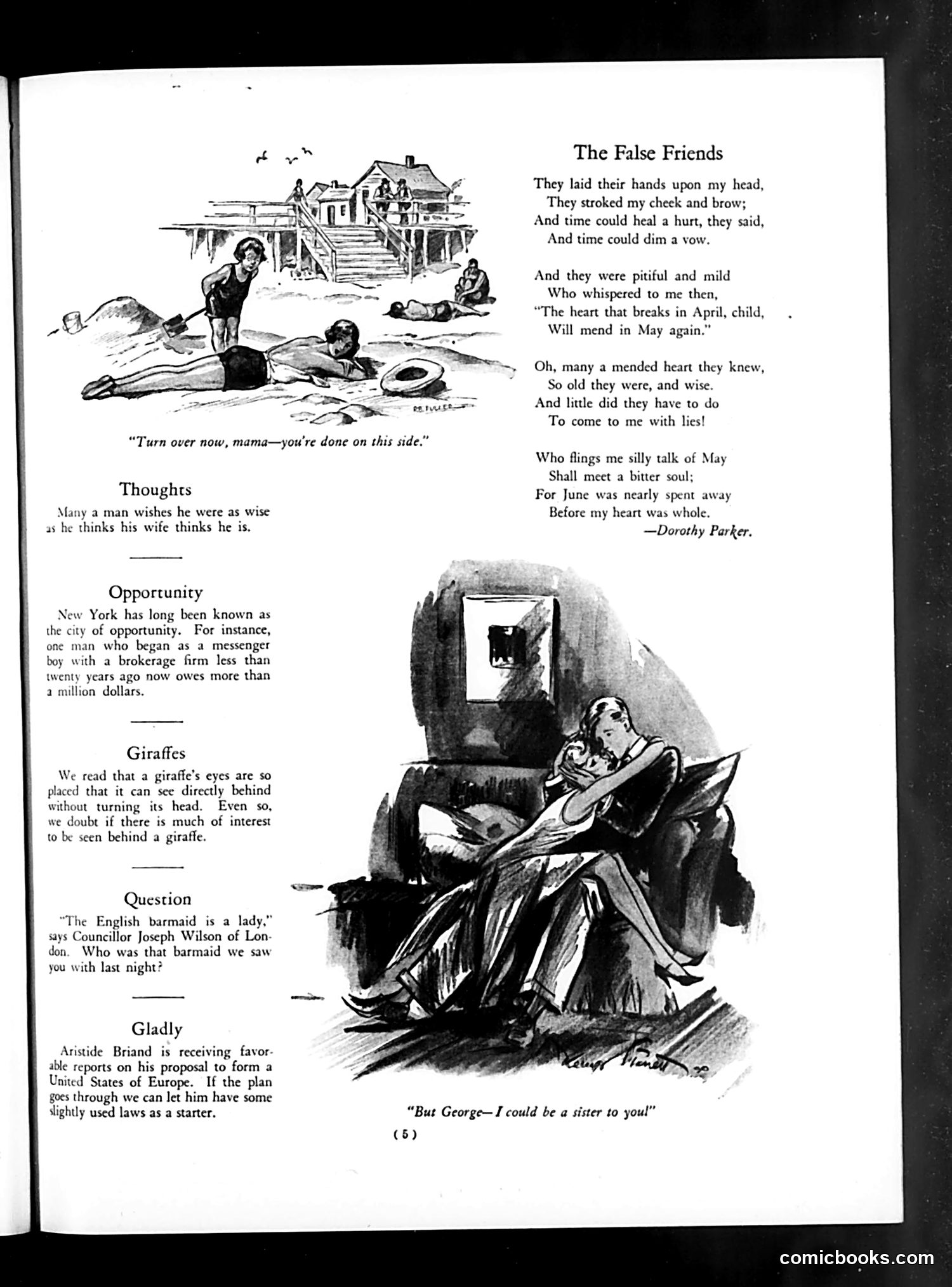
# Analysis of Life Magazine Page This page contains several short satirical pieces typical of Life magazine's humor section. **"The False Friends"** is a Dorothy Parker poem about people offering false comfort to someone heartbroken—they claim time heals wounds but their sympathy masks insincerity. The illustration shows a bedridden or reclining figure being attended to. The other brief items—**"Thoughts," "Opportunity," "Giraffes," "Question,"** and **"Gladly"**—are typical one-liner or short-paragraph observations poking fun at human nature, social pretensions, and current events (mentioning New York opportunity and Aristide Briand's European union proposal). The lower illustration shows two figures, with the caption **"But George—I could be a sister to you!"**—likely satirizing romantic or social misunderstandings between men and women. The humor reflects early 20th-century sensibilities about class, gender relations, and social folly.
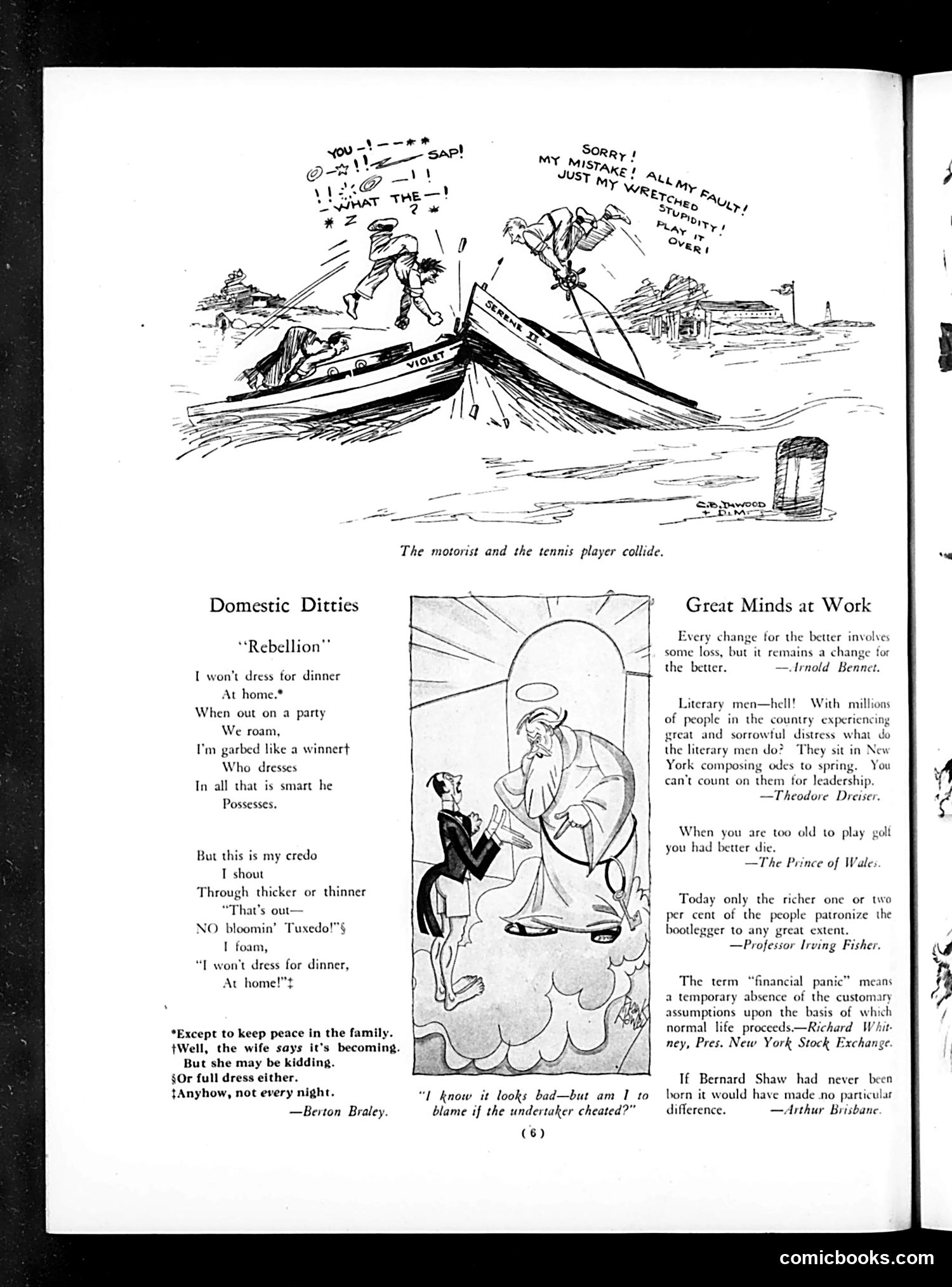
# Analysis The top cartoon shows "The motorist and the tennis player collide"—two figures have crashed their boats together on a beach. One shouts "YOU SAP!" while the other apologizes for wrecking their vessel during play. This is straightforward slapstick humor about an accident. The central illustration humorously depicts a rotund figure (appears to be a wealthy businessman or entrepreneur based on the clothing and setting) meeting with a smaller man in formal attire. The caption reads "I know it looks bad—but am I to blame if the undertaker cheated?"—suggesting the larger man has become suspiciously corpulent, implying he may have obtained an unusually large corpse or committed fraud. The page also includes literary quotations and a poem ("Rebellion") about domestic dress codes.
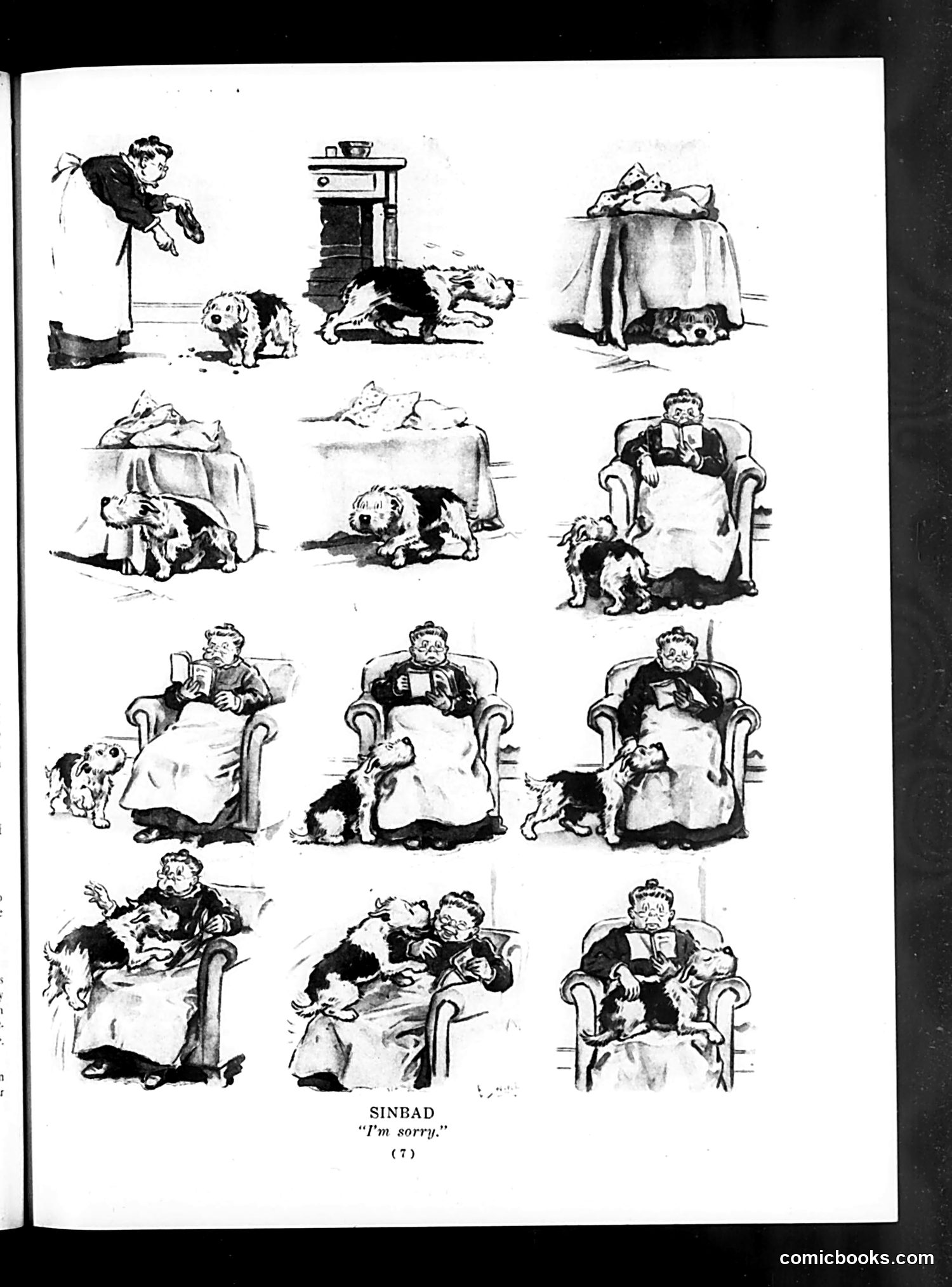
# Analysis of "Sinbad: 'I'm sorry'" This is a sequential comic strip featuring a character named Sinbad (likely referencing the fictional sailor) repeatedly apologizing while sitting in a chair with a dog. The narrative progression shows: **The setup:** Top panels depict domestic chaos—a woman chasing the dog, scattered furniture and household items, a table overflowing with objects. **The resolution:** Multiple panels show Sinbad seated in an armchair with the mischievous dog, apparently saying "I'm sorry" to someone (likely his wife or household member). **The joke:** This appears to be satirizing male domestic helplessness—a man apologizing for the chaos caused by his dog while remaining passively seated, suggesting he takes no responsibility for actually *fixing* the mess or controlling the animal. The repetition emphasizes his hollow apologies without action.
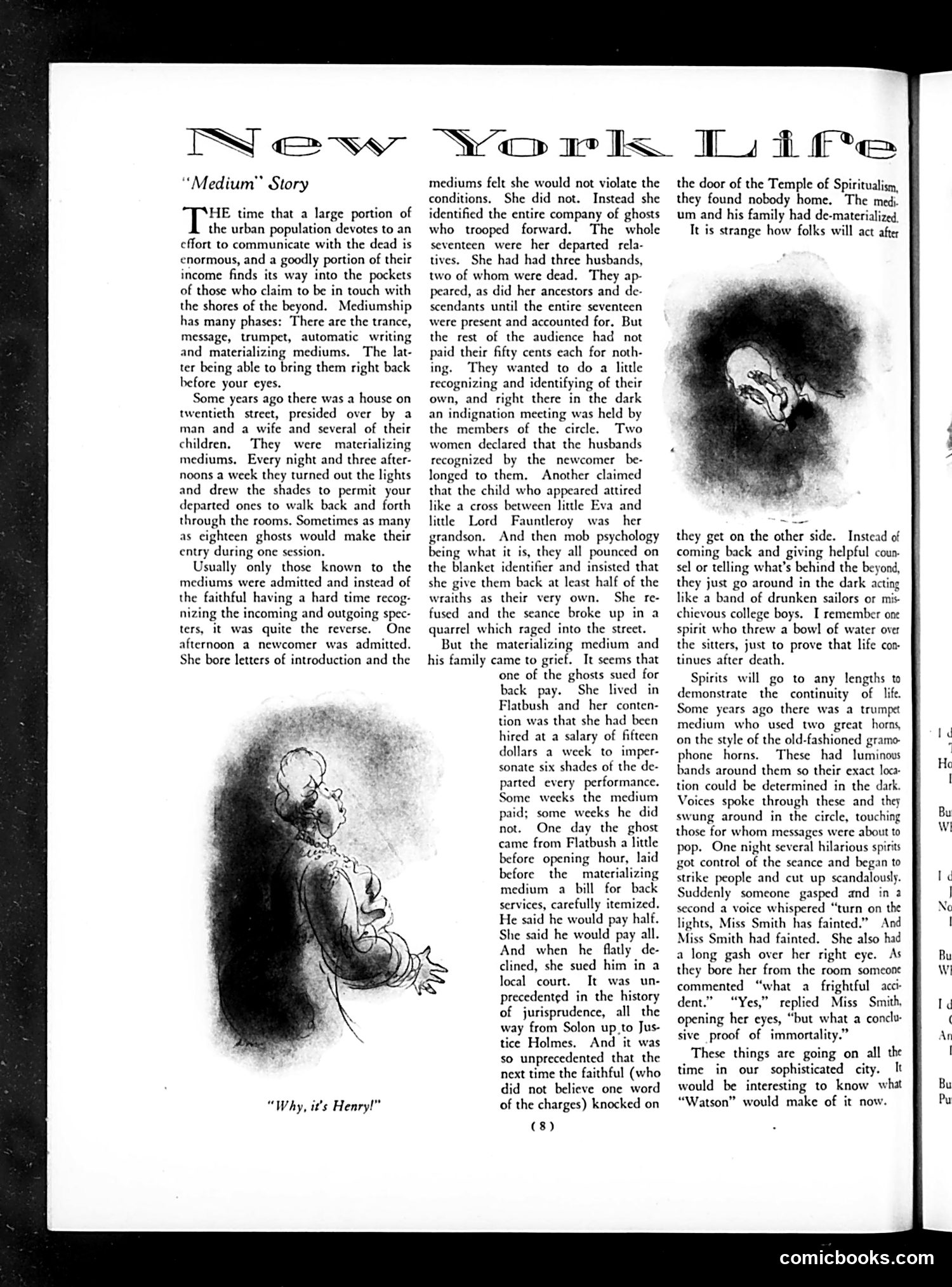
# Analysis of Life Magazine Page: "Medium" Story This page presents a satirical story about spiritualism and séances, a popular cultural phenomenon of the era. The narrative mocks the credulity of wealthy urbanites who hired "materializing mediums"—people claiming to contact the dead and produce physical manifestations of spirits. The story ridicules the absurdity: a medium hired at $15/week to impersonate departed relatives, eventually sued for back pay when she failed to materialize. The accompanying illustrations show the séance setup and a spirit manifestation. The satire targets both the fraudulent mediums exploiting clients and the gullible believers who ignored obvious deceptions. References to mob psychology and the spirits' increasingly ridiculous antics ("drunken sailors," bowl-throwing incidents) underscore how absurd these séances were to skeptical observers. This reflects turn-of-century skepticism toward spiritualism despite its continued popularity.
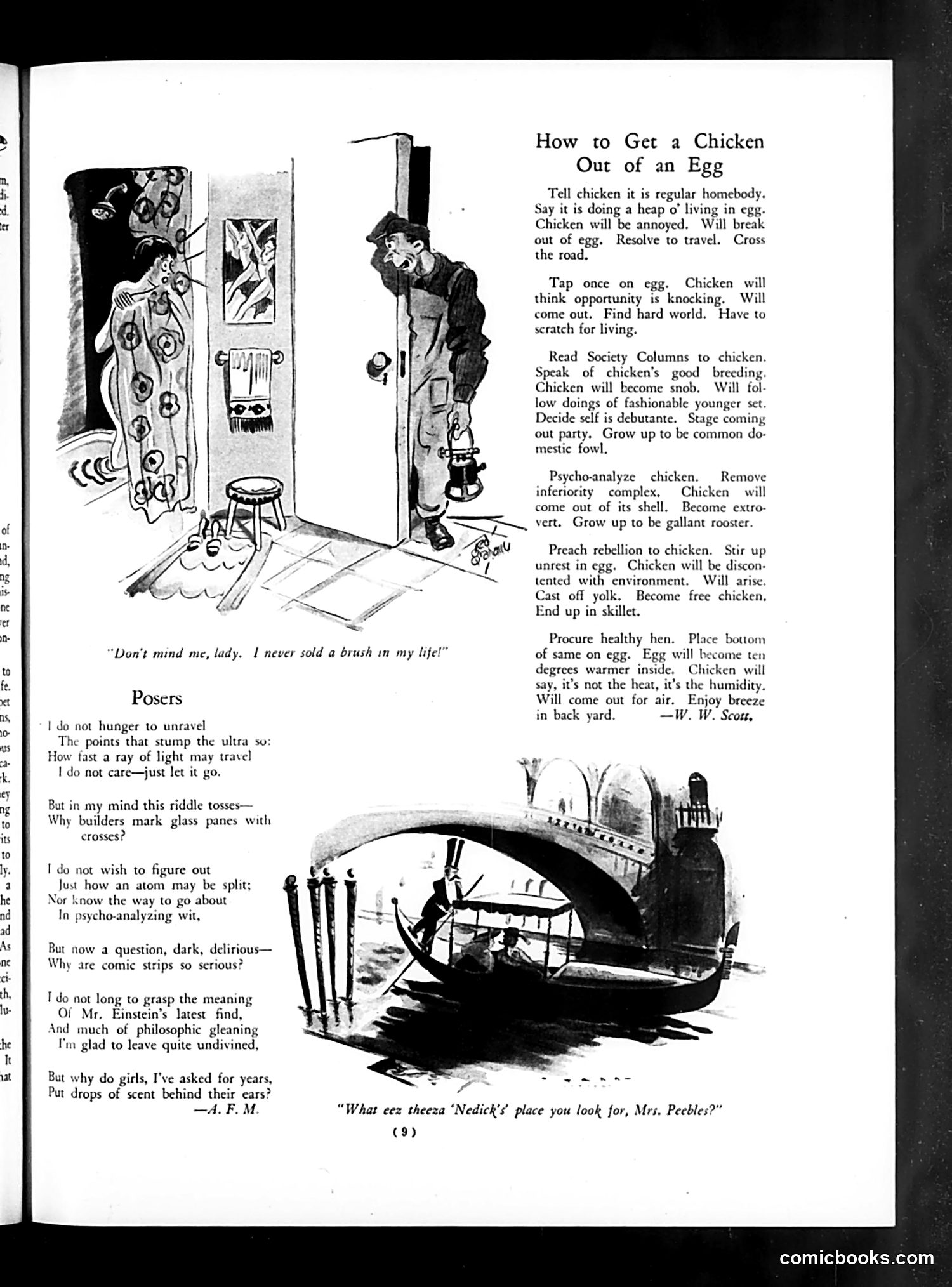
# Analysis of Life Magazine Page This page contains two unrelated pieces of satire: **"How to Get a Chicken Out of an Egg"** (top right) is absurdist humor mocking self-help advice popular in the 1920s-30s. It satirizes pseudo-intellectual trends by offering ridiculous "solutions" to a simple problem—from reading Society Columns to the chicken to psychoanalyzing it. The joke targets the era's obsession with pop psychology and fashionable trends. **"Posers"** (lower left) is a poem by A.F.M. questioning why intellectual and social conventions exist—why mark glass panes with crosses, why analyze complex physics, why use perfume? It mocks pretentious intellectualism and affectation. The illustrations (a man with a tall hat confronting a woman, a gondola scene) appear to be accompanying humorous captions rather than editorial cartoons addressing specific political events.
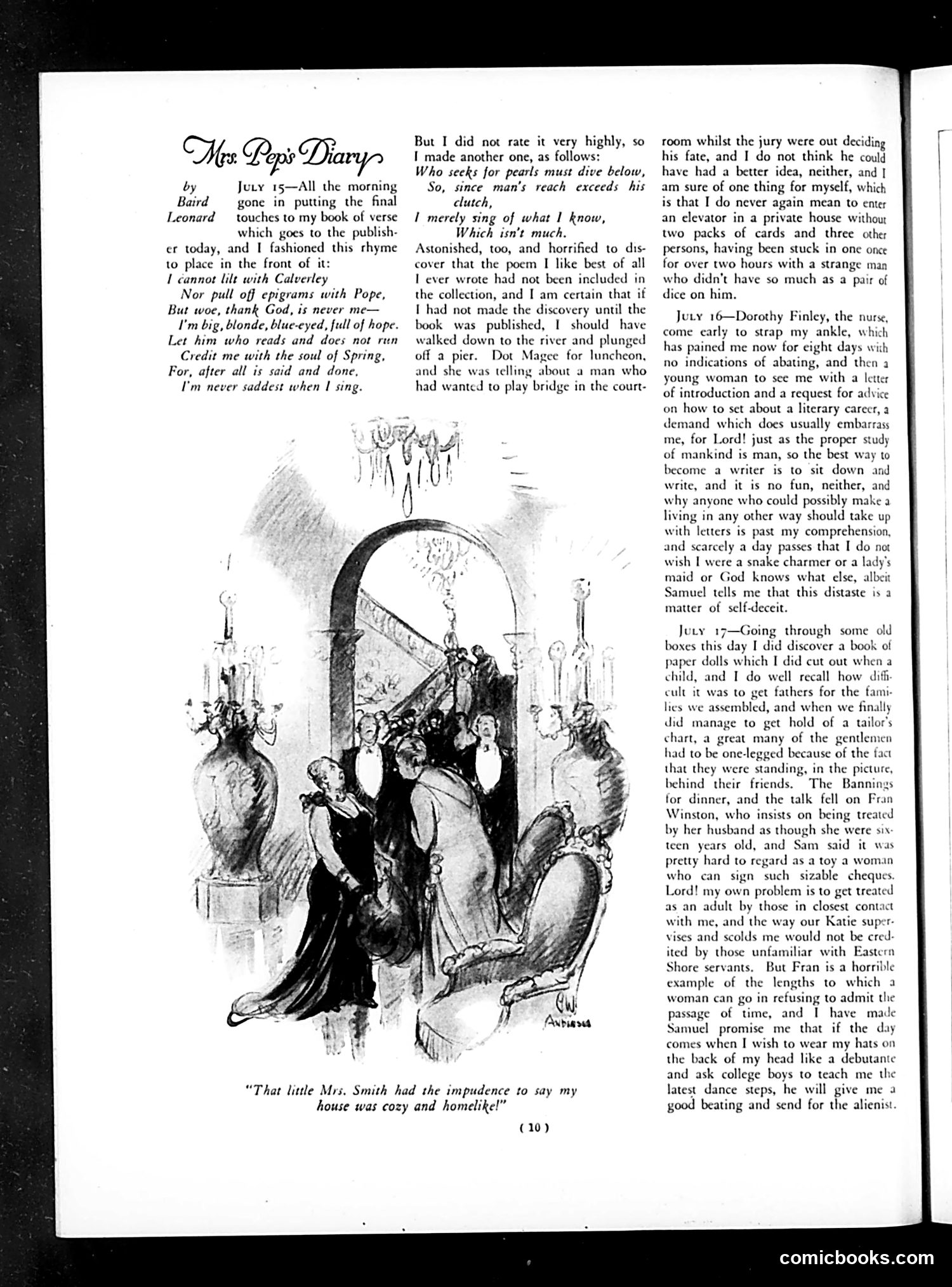
# Mrs. Pepo's Diary - Page Analysis This page contains a satirical diary entry by "Baird Leonard," featuring social commentary on early 20th-century upper-class life. The illustration depicts a formal social gathering—likely a dinner party or reception—where well-dressed figures interact in what appears to be an elegant interior space. The diary entries (July 15-17) mock pretentious literary aspirations, domestic complaints, and social anxieties among the wealthy. The caption beneath the illustration—"That little Mrs. Smith had the impudence to say my house was cozy and homely!"—reveals the satire's target: the social insecurity of the affluent classes, where "cozy" is perceived as an insulting comment suggesting modest rather than grand circumstances. The humor targets vanity and status anxiety among society figures.