A complete issue · 40 pages · 1930
Life — June 20, 1930
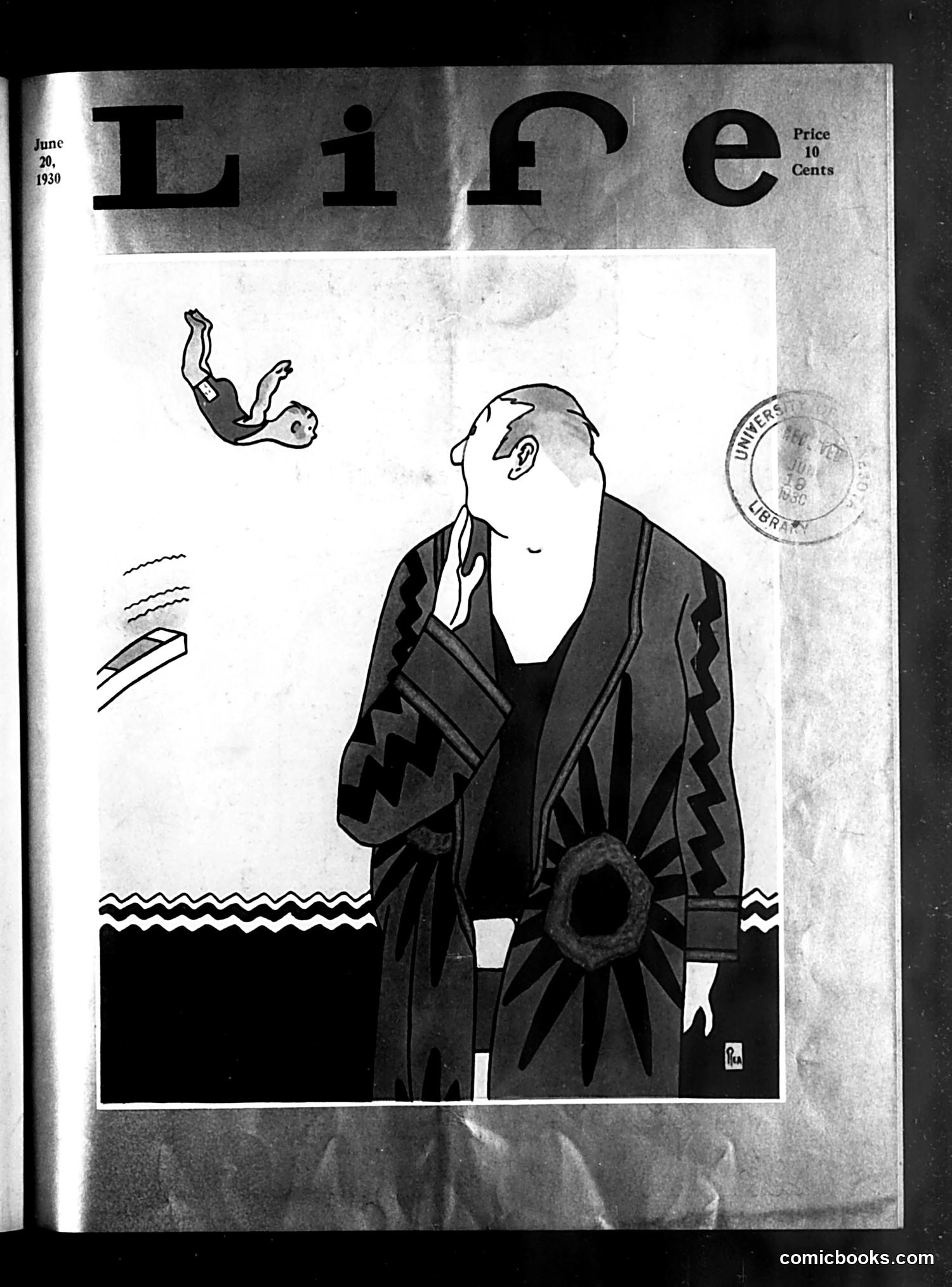
# Life Magazine Cover - June 20, 1930 This cover depicts a man in a ship captain's uniform at a ship's wheel, looking distressed as a small figure tumbles from above into the water. The captain appears to be losing control—his facial expression conveys alarm or despair. Given the June 1930 date, this likely references economic or maritime concerns during the early Great Depression. The imagery suggests incompetent leadership or a crisis situation spiraling out of control. The man overboard and the captain's distressed demeanor indicate disaster or catastrophe. Without additional text visible, the specific political figure or event referenced remains unclear, though the satirical commentary appears to critique whoever commands this "ship"—possibly a government or business leader blamed for current crises.
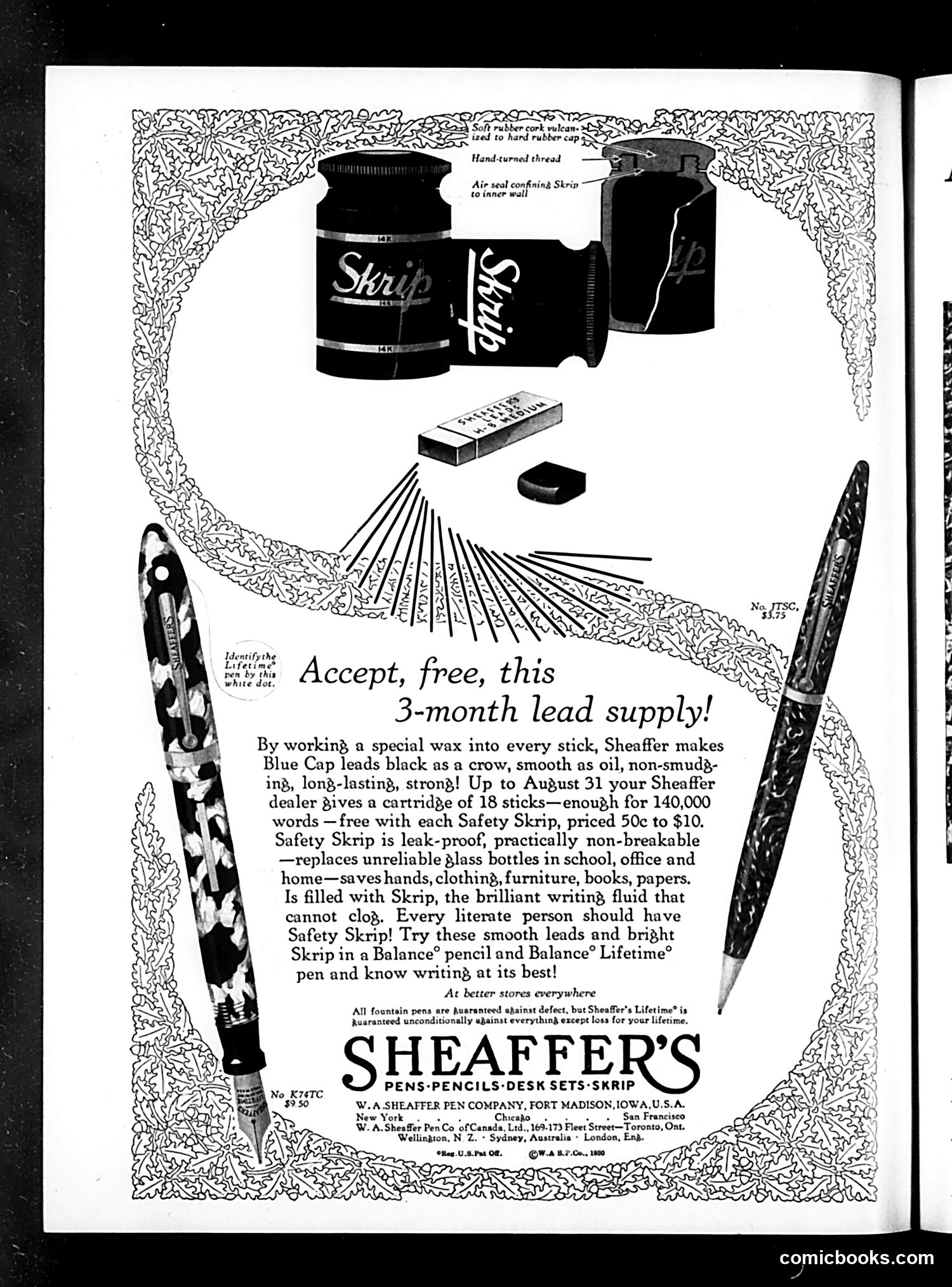
# Analysis This is **not a political cartoon or satire**—it's a straightforward **advertisement** for Sheaffer pens and pencils, specifically promoting their "Safety Skip" fountain pen ink product. The ad offers a promotional giveaway: purchasing Sheaffer pencils (priced 50¢ to $10) includes a free 3-month supply of "Safety Skip" ink. The text emphasizes the product's qualities: the ink writes smoothly, resists smudging, and won't clog. It highlights practical benefits like being leak-proof and suitable for school and office use. The decorative border and illustrated pens are standard design elements of the era's advertising. There is no political commentary or hidden satire—this is period marketing material aimed at consumers interested in writing instruments.
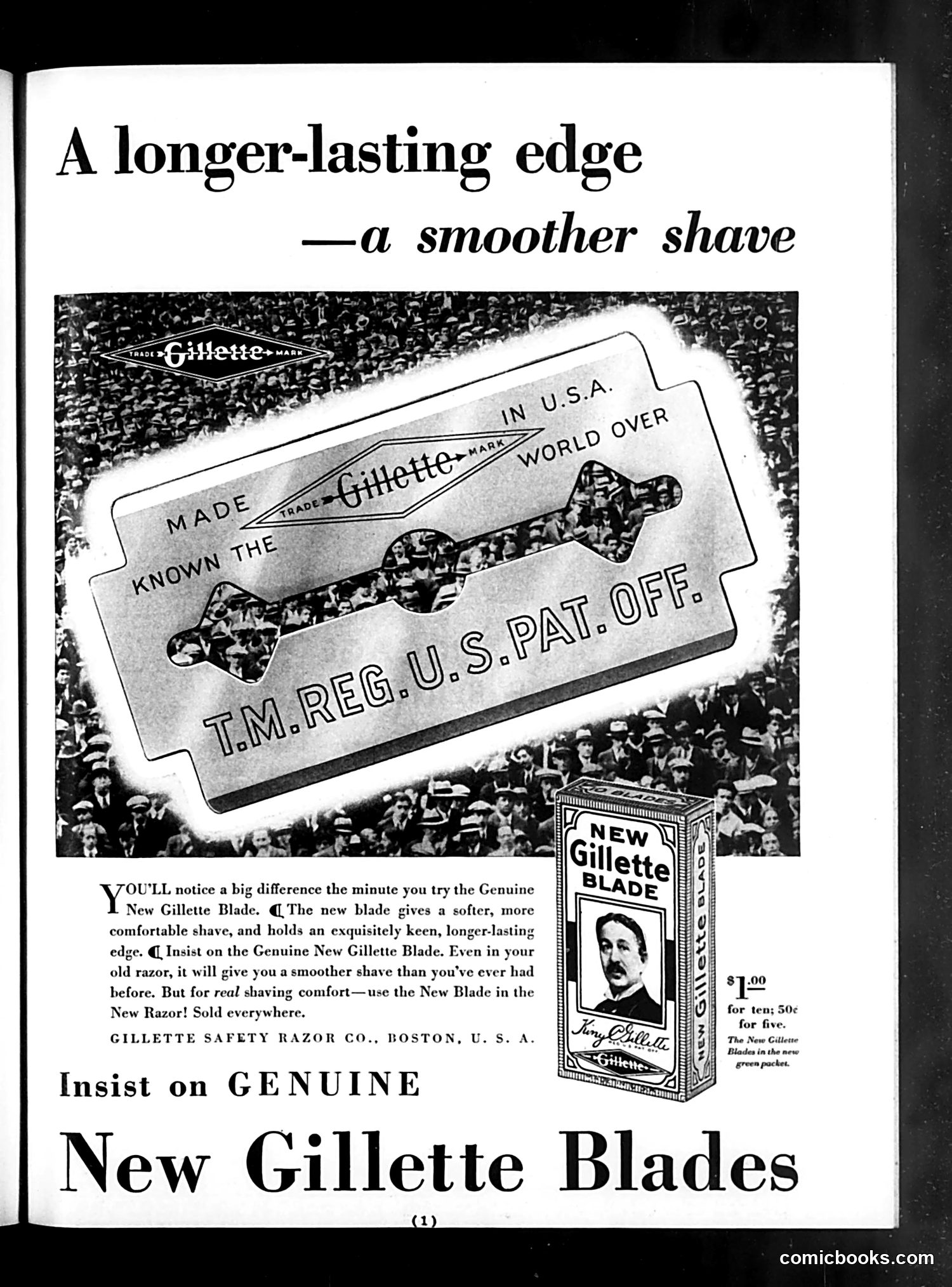
This is a **Gillette Safety Razor advertisement**, not political satire or a cartoon. The ad promotes the "New Gillette Blade," emphasizing its longer-lasting edge and smoother shave. The large central image shows a Gillette razor blade package displayed prominently against a crowded background (appearing to show masses of people), suggesting the product's widespread popularity and market dominance. The text claims the new blade provides superior comfort and a keener edge than competitors. It encourages consumers to "insist on GENUINE" blades and use them "in the New Razor" for optimal results. Pricing information indicates ten blades cost $1.00, or fifty cents for five. The Gillette Safety Razor Company, based in Boston, is identified as the manufacturer. This is straightforward early 20th-century consumer product advertising with no satirical intent.
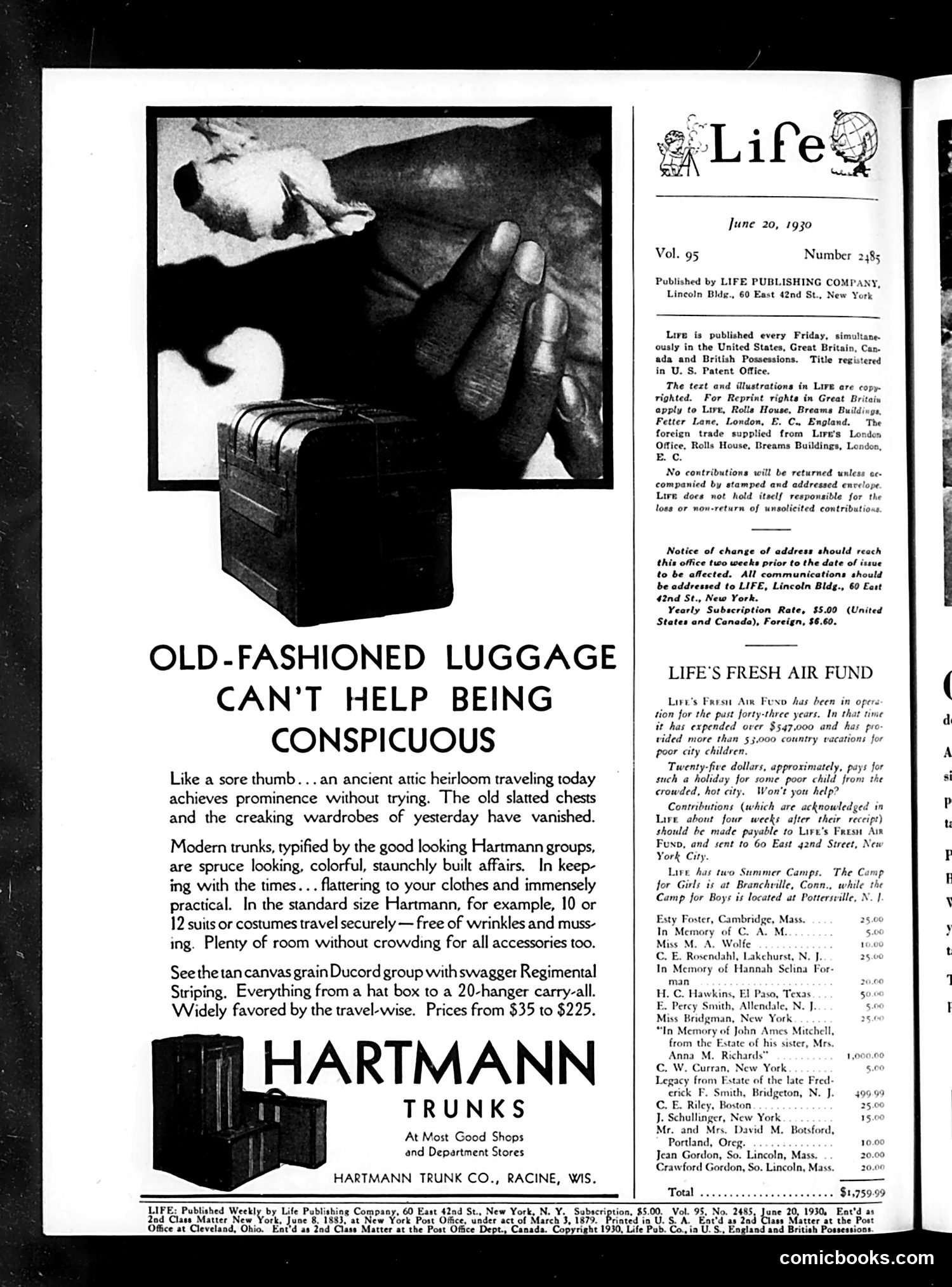
# Analysis This page is primarily **advertising**, not political satire. The main content is a Hartmann Trunks advertisement, which dominates the lower half of the page. The ad's visual joke contrasts old-fashioned luggage (shown in a photograph at top—an old steamer trunk being held by hands) with modern Hartmann trunks. The headline plays on this: old luggage "can't help being conspicuous" because it looks dated and cumbersome, like "a sore thumb" or "ancient attic heirloom." The advertisement promotes Hartmann's modern, sleek trunks as practical travel solutions for contemporary travelers who want to avoid the visual embarrassment of outdated baggage. Prices range from $35 to $225. The right column contains Life magazine's "Fresh Air Fund" announcement—a charitable initiative unrelated to the advertisement.
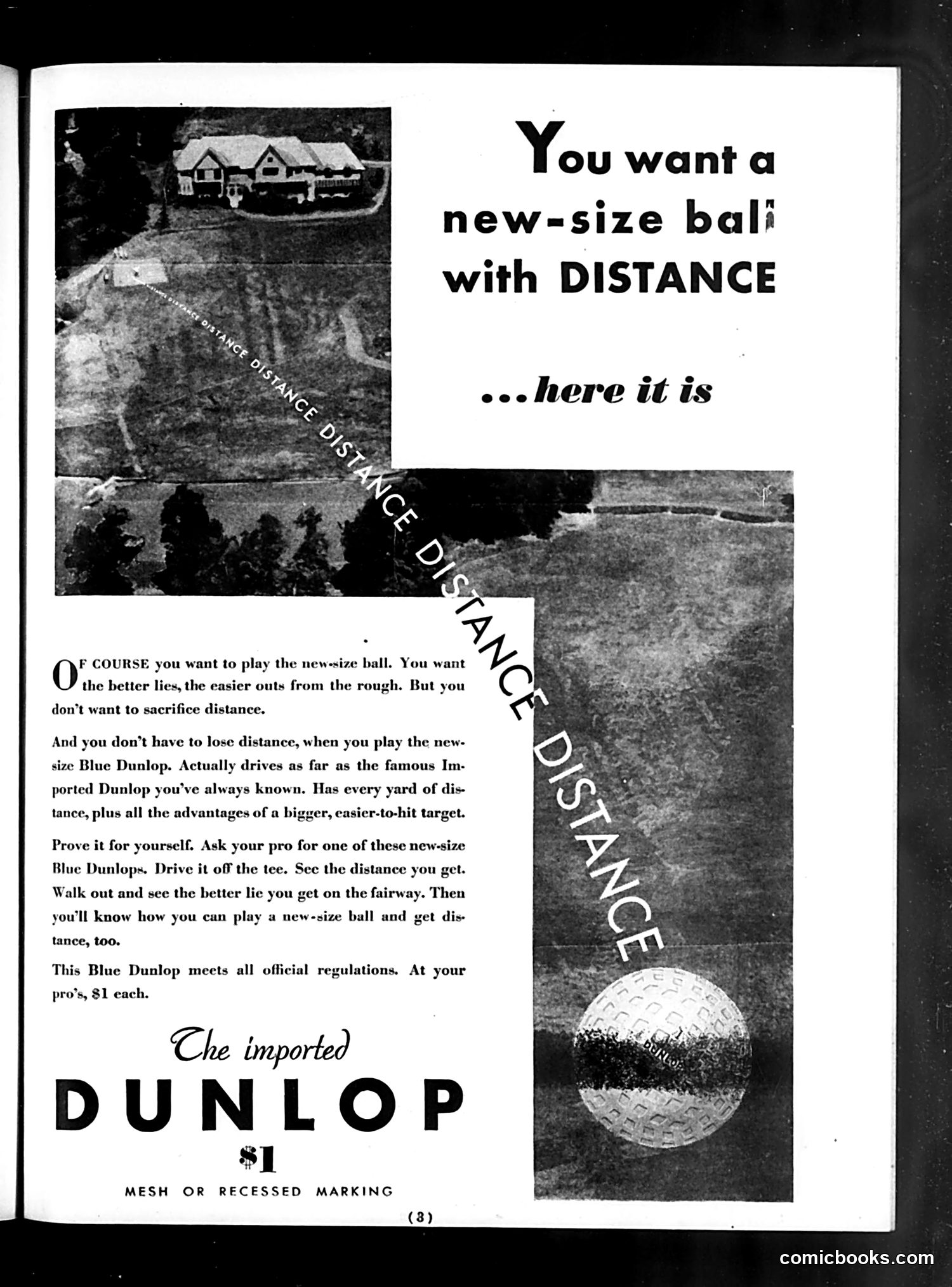
# Blue Dunlop Golf Ball Advertisement This is a straightforward **product advertisement**, not political satire or a cartoon. It promotes the "new-size Blue Dunlop" golf ball ($1), marketed as combining two desirable features: 1. **Larger size** for easier hitting and better lie on fairways 2. **Distance performance** matching the famous imported Dunlop ball The ad uses aerial photographs of suburban homes and fairways to emphasize the distance golfers can achieve. The diagonal text "DISTANCE DISTANCE DISTANCE" reinforces the sales pitch. The close-up photo of the ball itself demonstrates the product. The advertisement appeals to mid-century American golfers by suggesting they can enjoy recreational benefits without sacrificing performance—a common marketing strategy of the era.

# Analysis This is a **Northern Pacific Railway advertisement**, not satirical content. The page celebrates the railroad's "50,000,000 Miles" achievement—referring to the North Coast Limited train's operational record since March 29, 1900. The circular logo features a **yin-yang symbol** (the company's actual trademark), emphasizing balance and harmony. The text boasts the train's punctuality across major cities: Seattle, Minneapolis, Chicago, and stations throughout the Pacific Northwest. The advertisement emphasizes the railroad's reliability and luxury service, claiming "the unexcelled record" of running "every hour, every day, every year" for over two decades. The small print promotes the Northern Pacific's newest railroad passenger equipment. This is corporate promotion, not political satire.
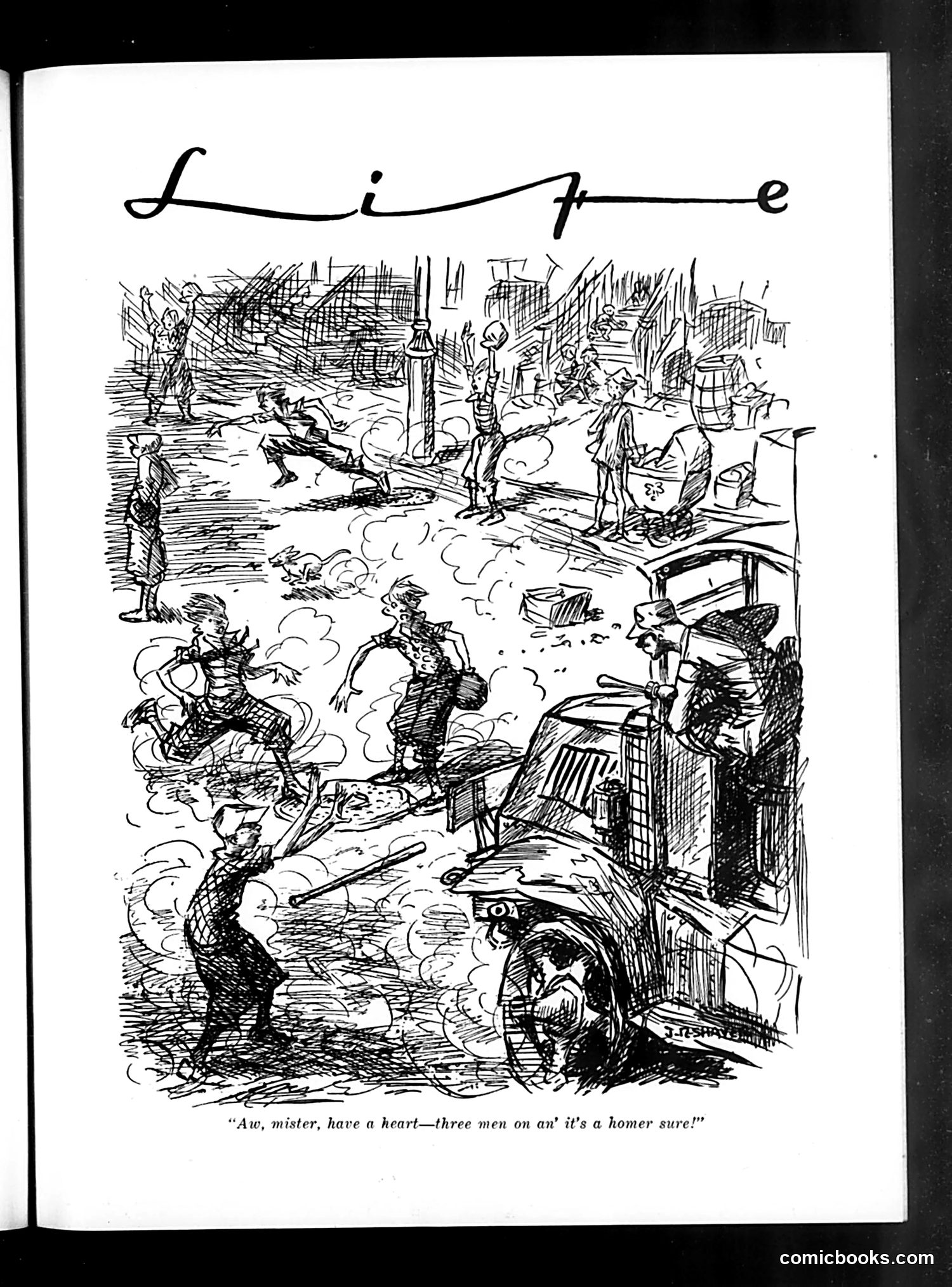
# Analysis of "Life" Magazine Cartoon Page This page shows a street scene titled "Life" with a caption: "Aw, mister, have a heart—three men on an' it's a homer sure!" The cartoon depicts what appears to be a **baseball game in progress on a city street**, with buildings visible on the right and numerous figures scattered across the scene. The speaker (likely a player or street urchin) is pleading with someone, using baseball vernacular—asking for mercy because "three men on" base and a hit would score a "homer" (home run). This is satirical **commentary on street baseball**, a common recreational activity in urban America. The humor lies in the informal, desperate appeal for fair play in an impromptu game, suggesting the chaotic, rule-bending nature of street sports where stakes feel high to the participants despite the casual setting.
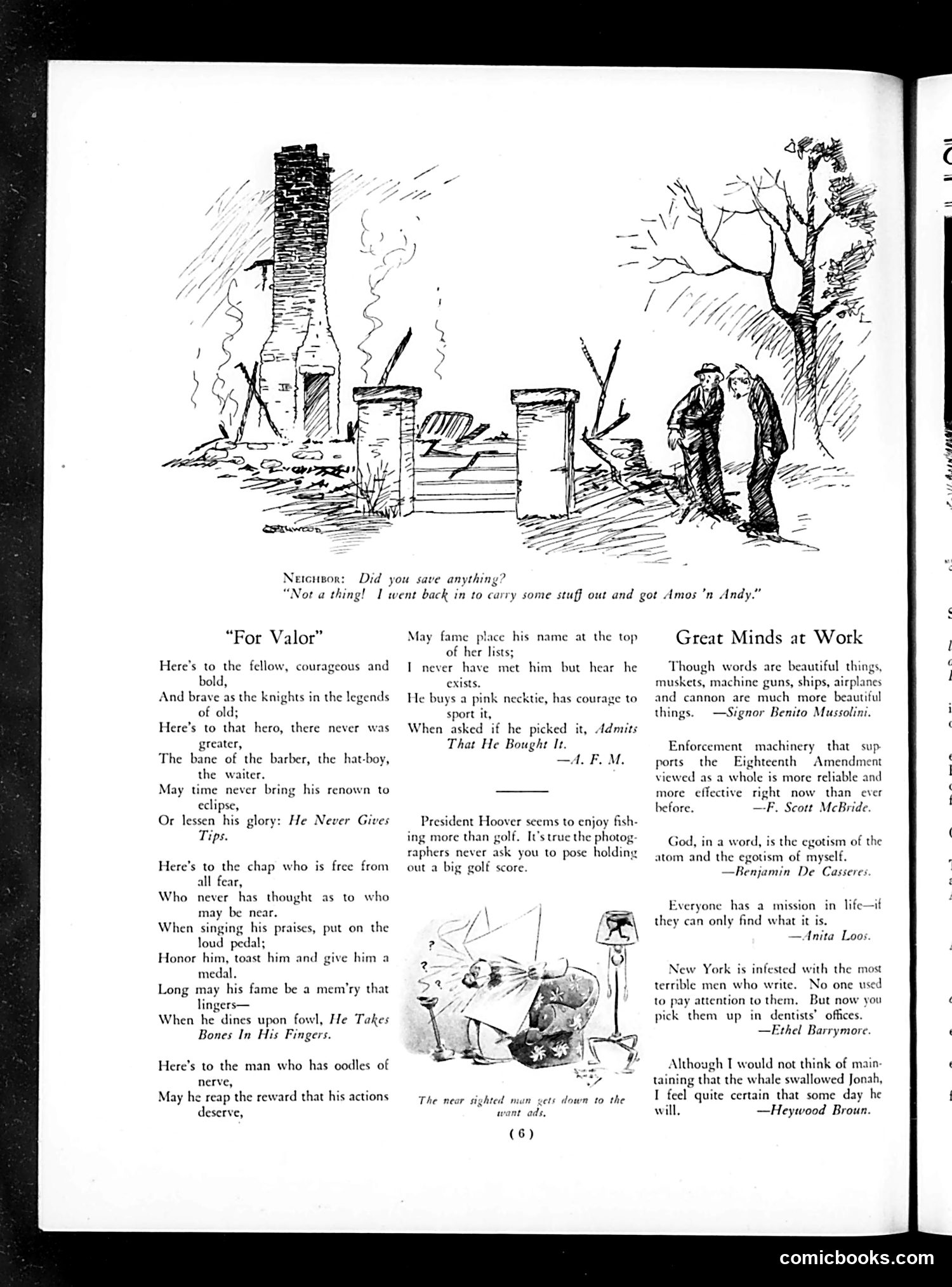
# Explanation for Modern Readers This page contains poetry and quotations rather than political cartoons. The top cartoon shows two neighbors discussing a fire—one asks if the other saw anything; the reply jokes about retrieving "Amos 'n Andy" (a reference to a popular 1920s-30s radio show). The main content includes "For Valor," a satirical poem mocking someone (likely a public figure) who avoids genuine heroism and danger, instead seeking easy glory and recognition. The right column offers brief philosophical quotes from various authors about words versus actions, egoism, and New York's literary scene. The lower cartoon depicts a fisherman, relating to Hoover's fishing hobby mentioned in the adjacent text. The page is primarily literary satire rather than visual political commentary.
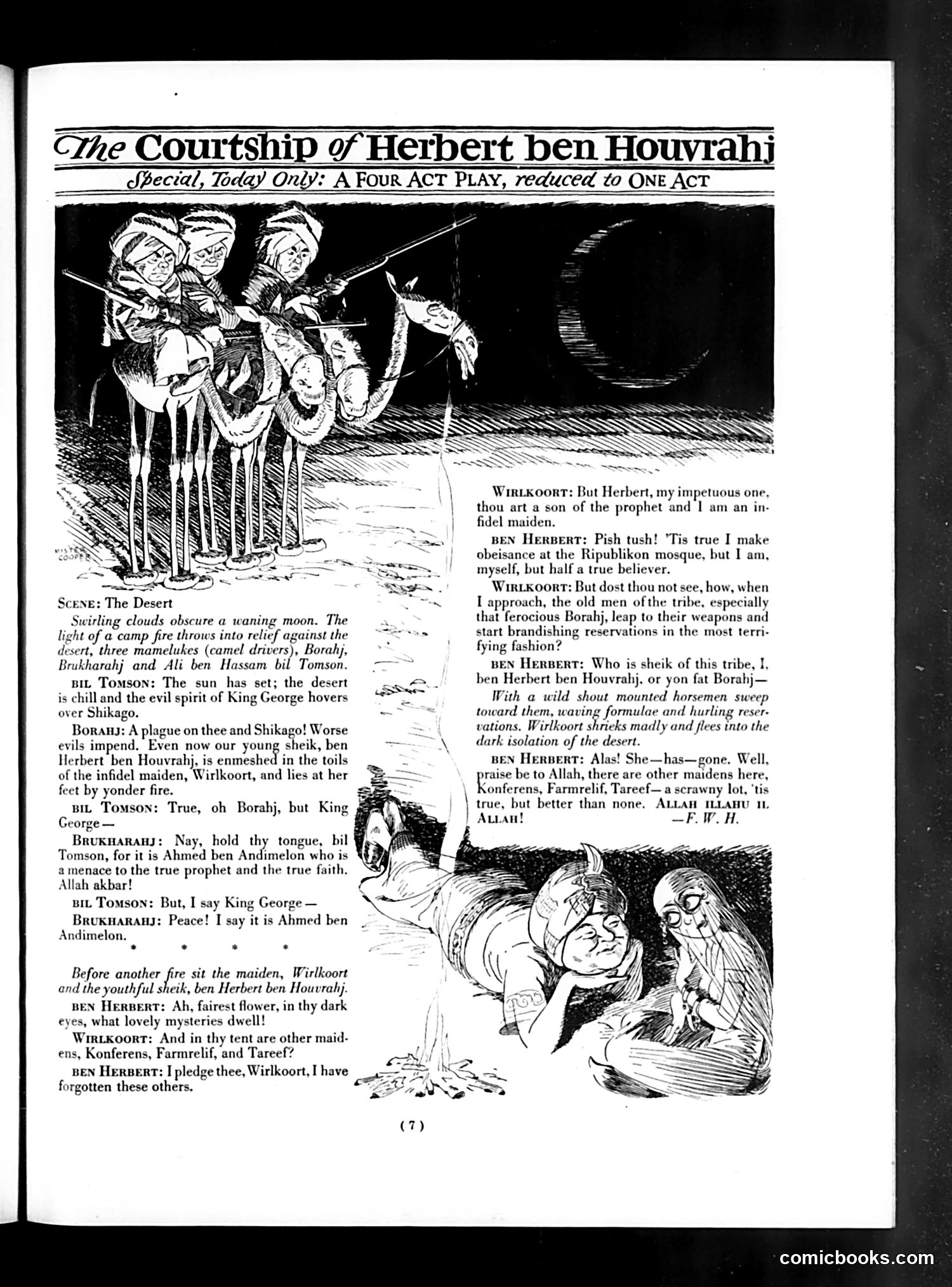
# "The Courtship of Herbert ben Houyrah" This is a one-act stage play adaptation featuring characters in Middle Eastern/North African dress. The scene depicts a desert setting with three camel drivers, and dialogue between characters named Wirlkoort, ben Herbert, Borajh, and others. The satire appears to target religious and cultural stereotypes through exaggerated character names and dialectical speech patterns. References to "King George," "the prophet," and "the true faith" suggest commentary on colonial-era religious and political authority. However, without additional historical context about the original four-act play or Life magazine's specific publication date, the precise political targets remain unclear. The caricatured illustrations and orientalist aesthetic suggest this reflects early 20th-century attitudes toward Middle Eastern subjects, though the exact satirical intent is difficult to determine from this page alone.
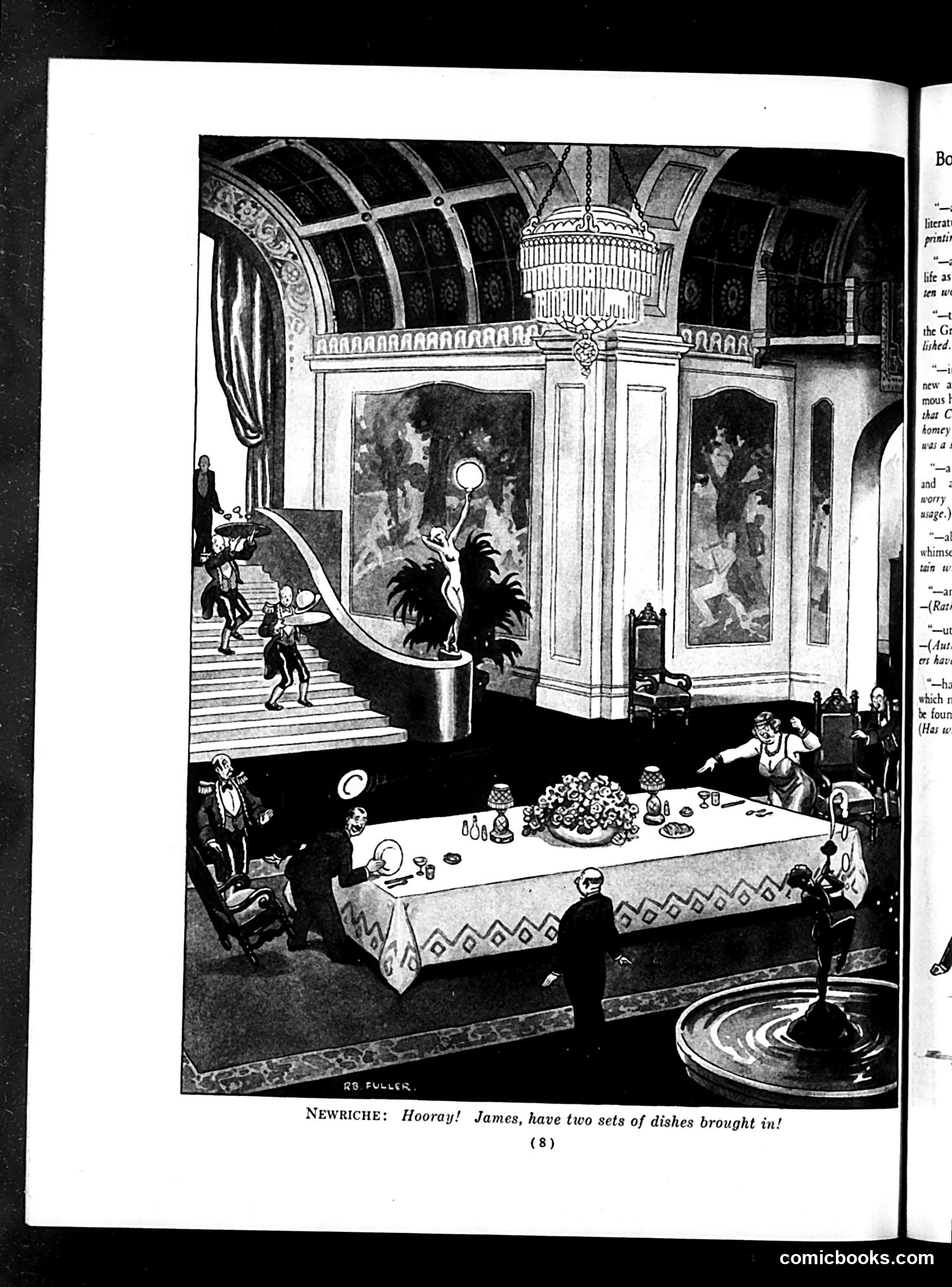
# Explanation for Modern Readers This is an illustration titled "NEWRICHE: Hooray! James, have two sets of dishes brought in!" The cartoon satirizes the "nouveau riche"—newly wealthy people lacking refined manners. The scene depicts an ostentatious dinner party in an elaborately decorated room with a chandelier and classical paintings. The host, appearing vulgar and overdressed, demands multiple place settings be brought out, suggesting either ignorance of proper dining etiquette or an attempt to display wealth through excess. The satire mocks the pretensions of the newly rich who assume more elaborate presentations equal sophistication. The contrast between the grand architectural setting and the host's crude behavior emphasizes that wealth alone cannot purchase genuine refinement or social grace—a common theme in early 20th-century American satire about class and social aspiration.
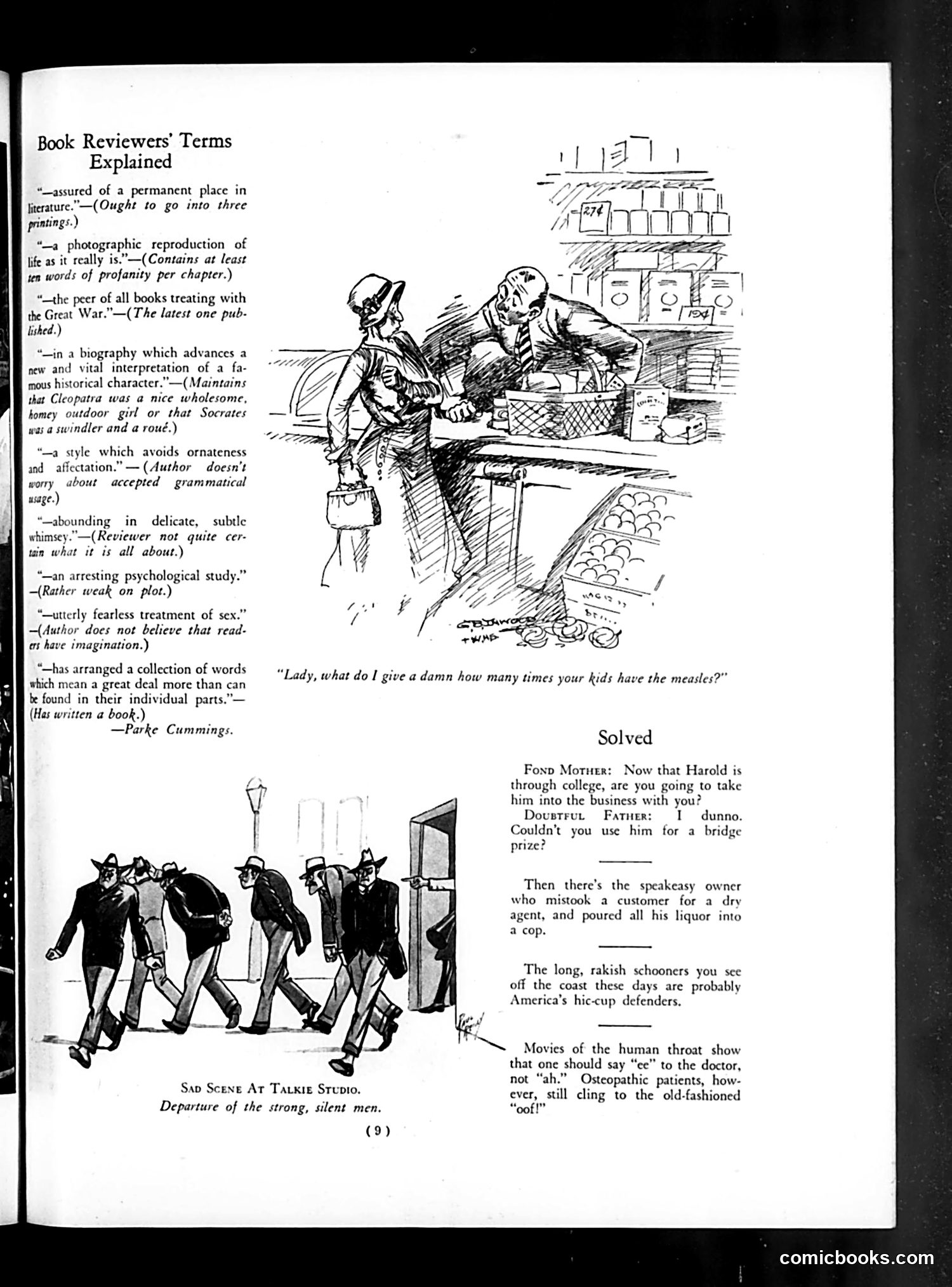
# Life Magazine Page Analysis This page contains two distinct sections: **Upper half:** "Book Reviewers' Terms Explained" — a satirical glossary mocking pretentious literary criticism. Examples include phrases like "assured of a permanent place in literature" and "a photographic reproduction of life as it really is," with parenthetical translations revealing the hollow nature of such praise. **Lower half:** Two cartoons. The top cartoon shows a woman asking a man "Lady, what do I give a damn how many times your kids have the measles?" — likely satirizing intrusive social conversation. The bottom cartoon titled "Sad Scene at Talkie Studio" depicts men in suits departing, labeled "Department of the strong, silent men" — mocking how sound films ended the era of silent-film stars who relied on physical performance rather than vocal ability. The "Solved" section contains brief humorous anecdotes about contemporary life.
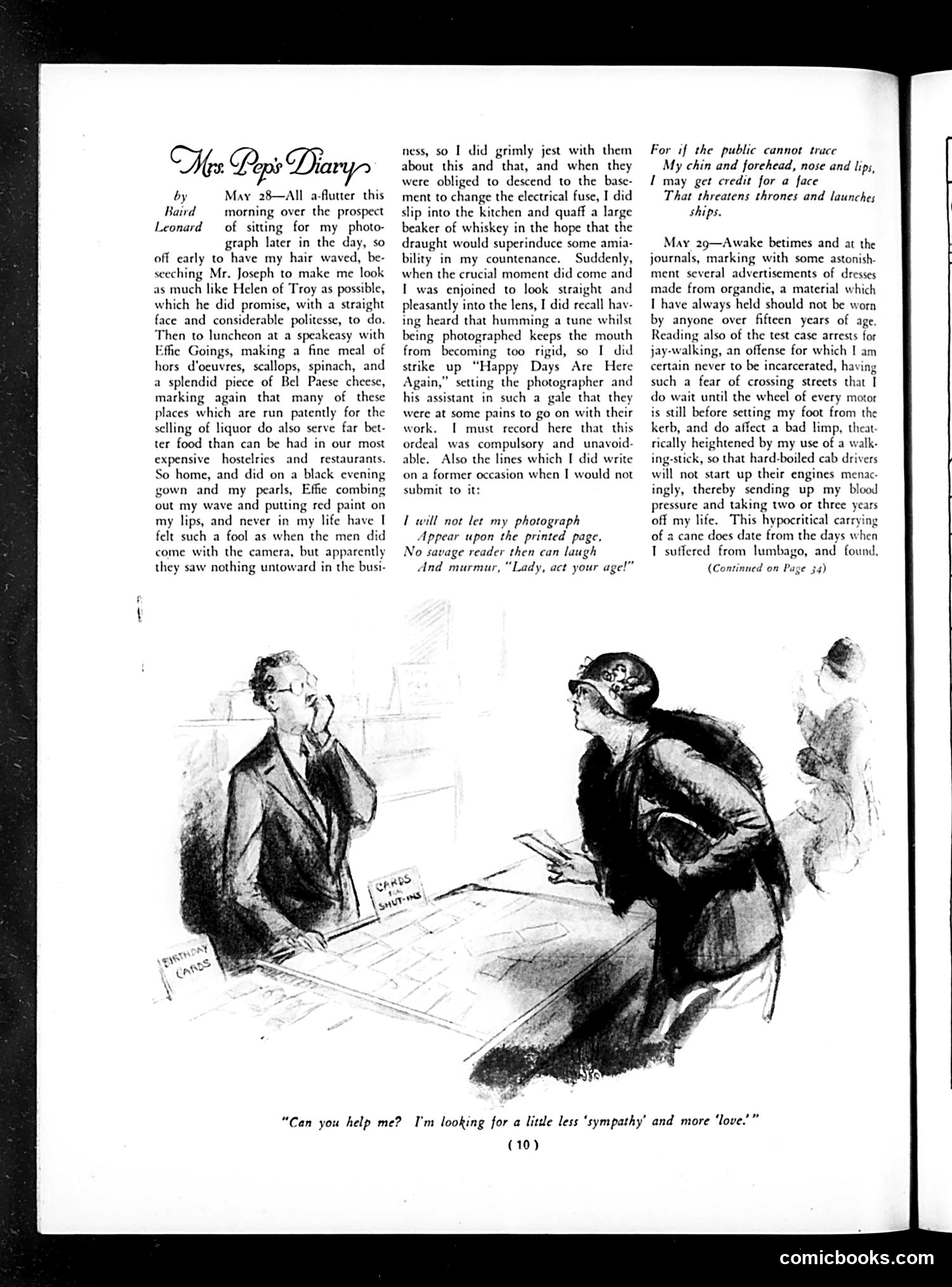
# Mrs. Pep's Diary Analysis This page from *Life* magazine presents a humorous diary entry by "Mrs. Pep's" (author Leonard) describing mundane domestic frustrations—hair waving appointments, electrical fuse issues, whiskey-fueled mishaps, and automotive troubles. The accompanying cartoon depicts two men examining what appears to be architectural blueprints or plans, with the caption: "Can you help me? I'm looking for a little less 'sympathy' and more 'love.'" The satire targets early 20th-century domestic life's petty annoyances and the tension between spouses. The diary's obsessive focus on small household crises—fuses, photographs, engine problems—mocks both female preoccupation with appearance and the broader domestic anxiety of the era. The cartoon's dialogue suggests marital discord masked by polite euphemism, poking fun at how couples communicate about relationship problems indirectly.