A complete issue · 36 pages · 1930
Life — January 10, 1930
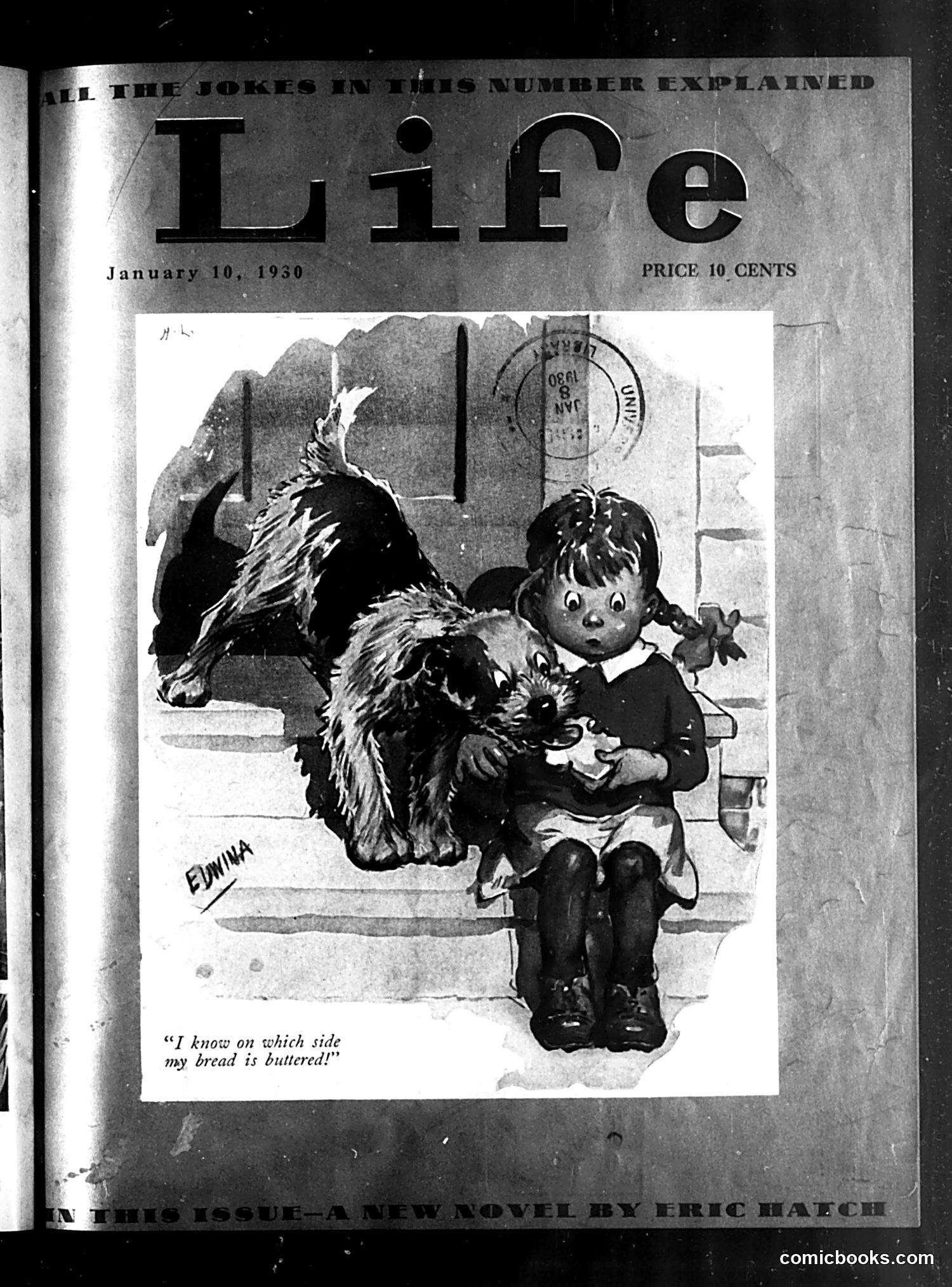
# Life Magazine, January 10, 1930 This cover illustration depicts a young child sitting on steps with two dogs, one licking the child's face. The caption reads: "I know on which side my bread is buttered!" The joke appears to be a play on the common expression "knowing which side your bread is buttered"—meaning understanding where your interests or advantages lie. Here, it's applied literally: the child recognizes the dogs are more likely to get butter (or food scraps) from being affectionate toward them than from other sources. This is a straightforward visual pun relying on interpreting an idiom literally through the illustration, typical of Life magazine's humorous approach to satire and wordplay during this period.
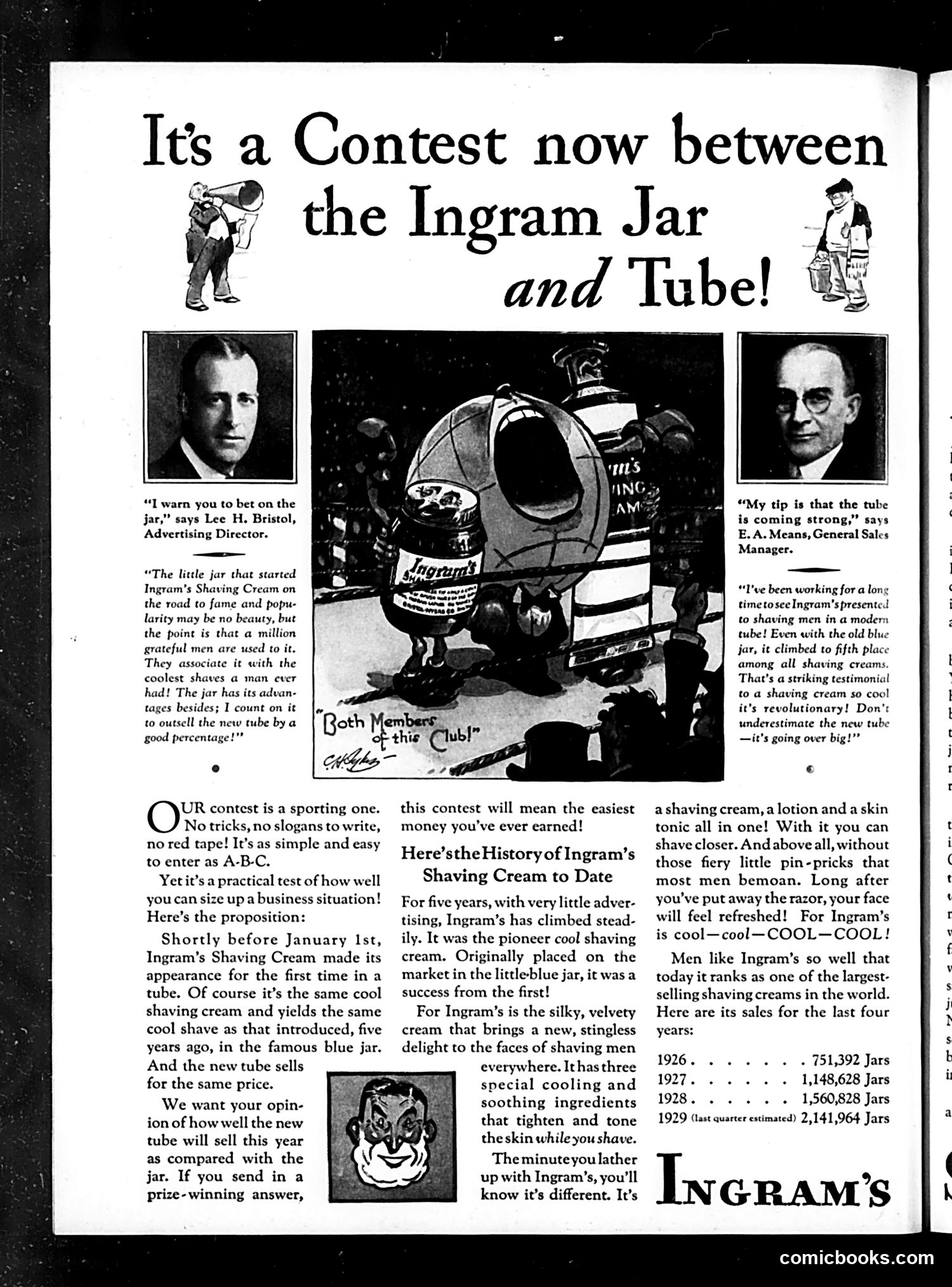
# Analysis This page is primarily **advertising**, not satire or political commentary. It promotes Ingram's Shaving Cream in a competitive marketing campaign framed as a "contest." The page contrasts Ingram's traditional product (sold in a "famous blue jar" for five years) with a new competitor: a shaving cream sold in a tube. Two businessmen are quoted—one defending the jar's heritage, the other promoting the tube as modern and superior. The central image shows both products in an anthropomorphized "contest," with the caption "Both Members of this Club!" suggesting friendly rivalry. **The humor is gentle commercial satire**: the page playfully frames ordinary product competition as dramatic sporting event, inviting readers to vote on which packaging will dominate the market. It's essentially a creative advertisement disguised as audience participation.
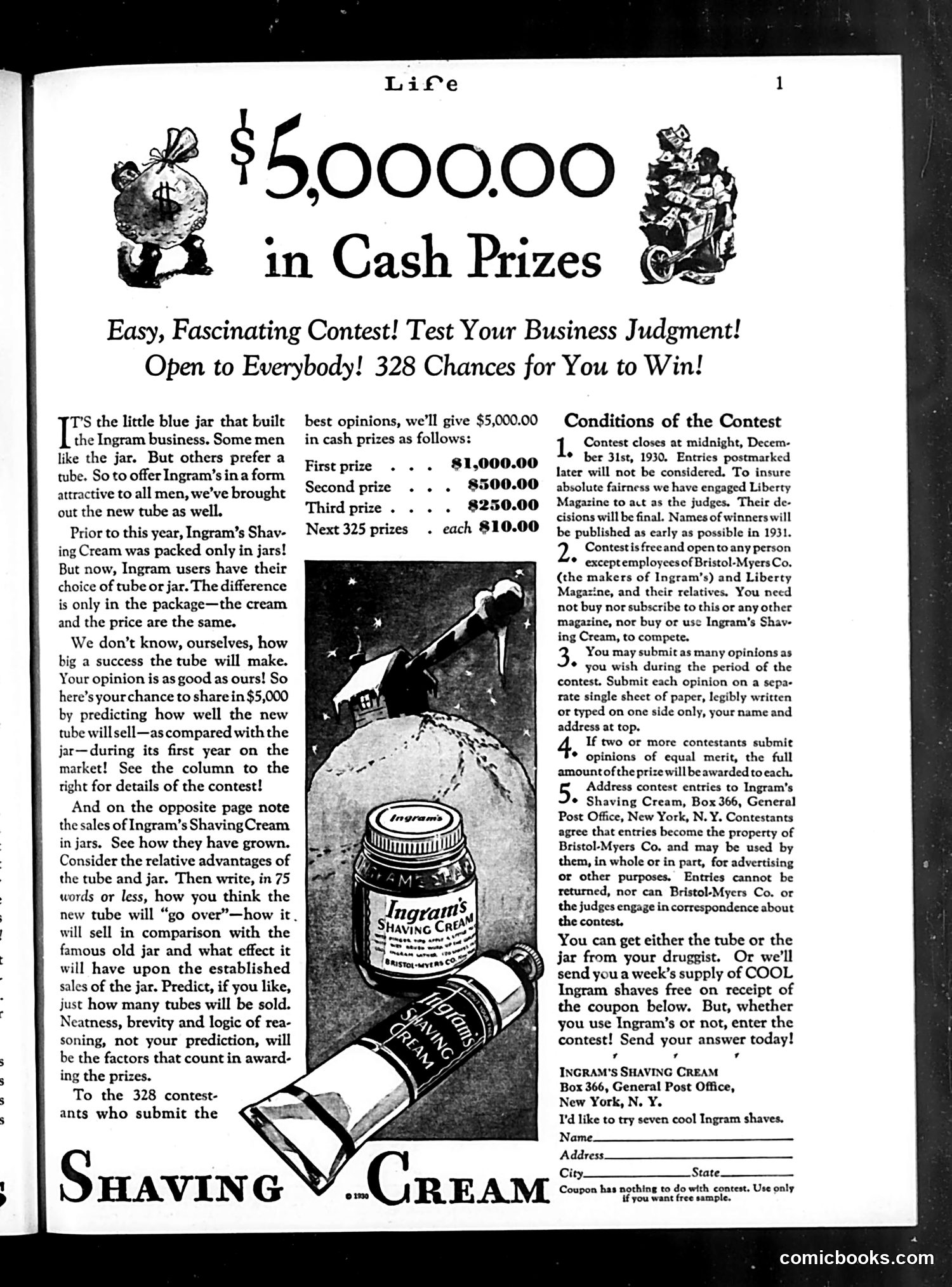
# Analysis This page is primarily **an advertisement for Ingram's Shaving Cream**, not political satire. It's a contest ad offering $5,000 in cash prizes to customers who predict how well a new tube packaging will sell compared to the traditional jar. The imagery shows Ingram's products—a jar and tube of shaving cream—alongside a figure (appears to be a man shaving or demonstrating the product). The "cartoon" element is minimal and decorative rather than satirical. The ad emphasizes consumer participation: entrants must write 75 words or fewer predicting the tube's market success versus the established jar. This reflects early 20th-century marketing tactics using contests to engage consumers and gather market research disguised as entertainment. There is **no political content or social satire** on this page.
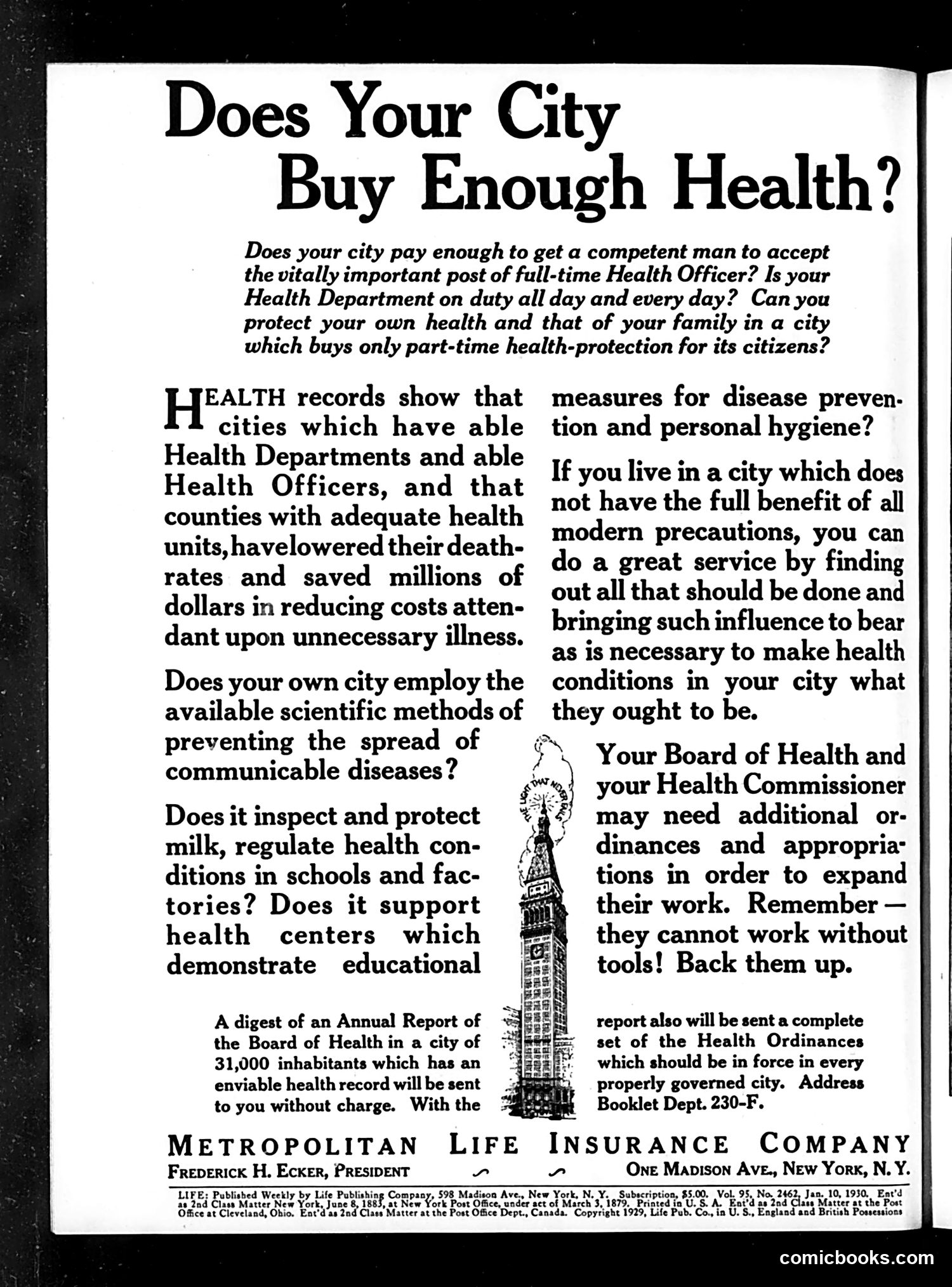
This is primarily an advertisement rather than satirical content. Metropolitan Life Insurance Company uses a full-page ad to advocate for adequate municipal health infrastructure. The ad questions whether cities employ full-time Health Officers and maintain comprehensive Health Departments. It argues that cities with "able Health Departments and able Health Officers" have lowered death rates and reduced illness costs. The piece urges readers to investigate their own city's health provisions—disease prevention methods, milk inspection, school health regulation, and health centers. It calls on citizens to support their "Board of Health" and "Health Commissioner" with necessary funding and ordinances. The illustration shows a city building (likely representing municipal government). Rather than satire, this represents Progressive Era advocacy for public health as a civic responsibility, positioning insurance companies as concerned corporate citizens promoting preventative medicine.
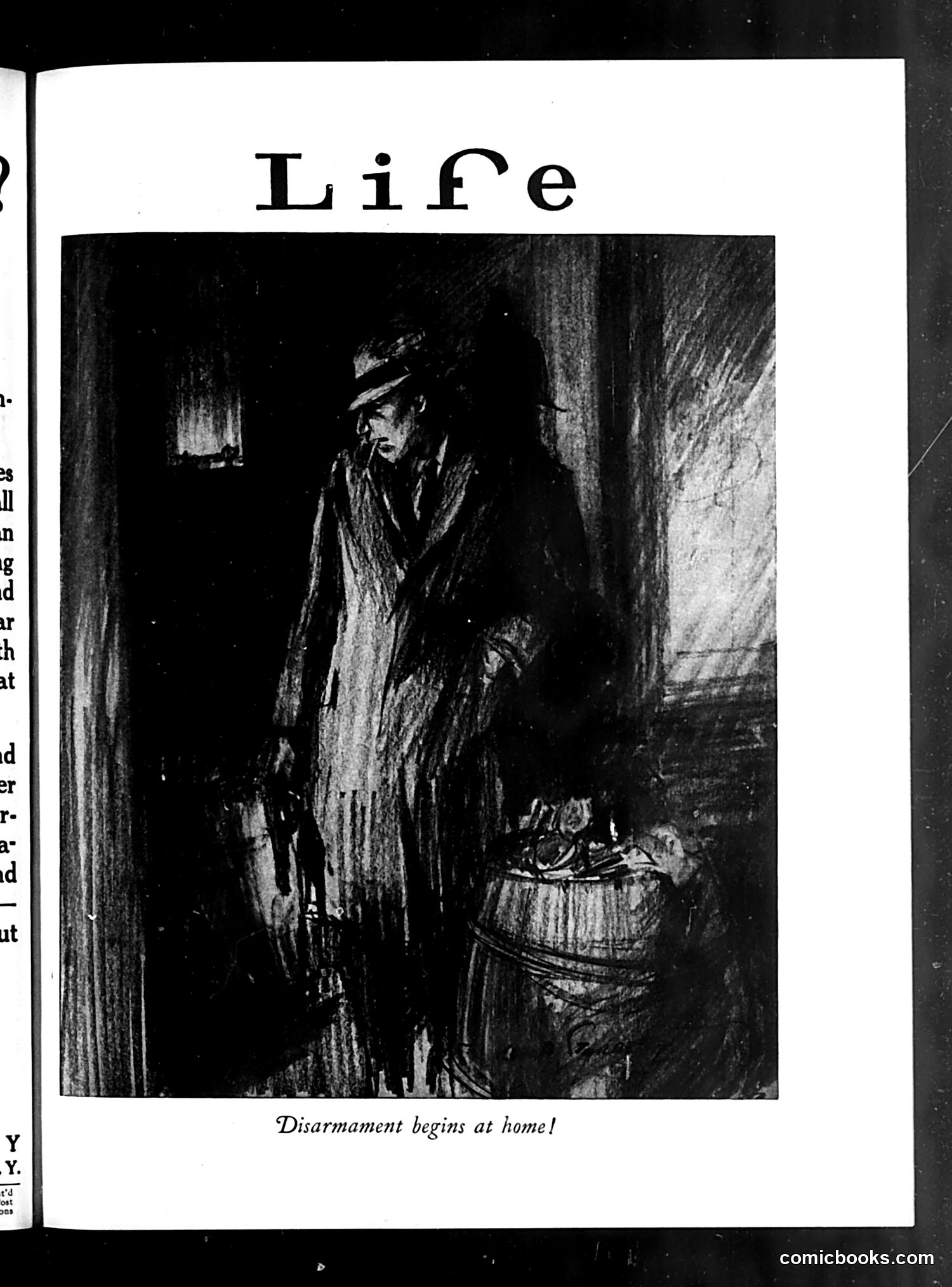
# Analysis This page from *Life* magazine features a satirical illustration titled "Disarmament begins at home!" The image depicts an older man in a hat and coat confronting what appears to be a child or smaller figure in an interior setting, likely a home. The satire critiques the hypocrisy of advocating for military disarmament while maintaining domestic violence or corporal punishment. The caption suggests that genuine disarmament—reducing weapons and aggression—must start within families before nations can credibly pursue peace agreements. The sketch-style artwork emphasizes the somber nature of the message, using domestic confrontation as a metaphor for broader peace advocacy. The exact historical period is unclear from this image alone, but the style suggests early-to-mid 20th century.
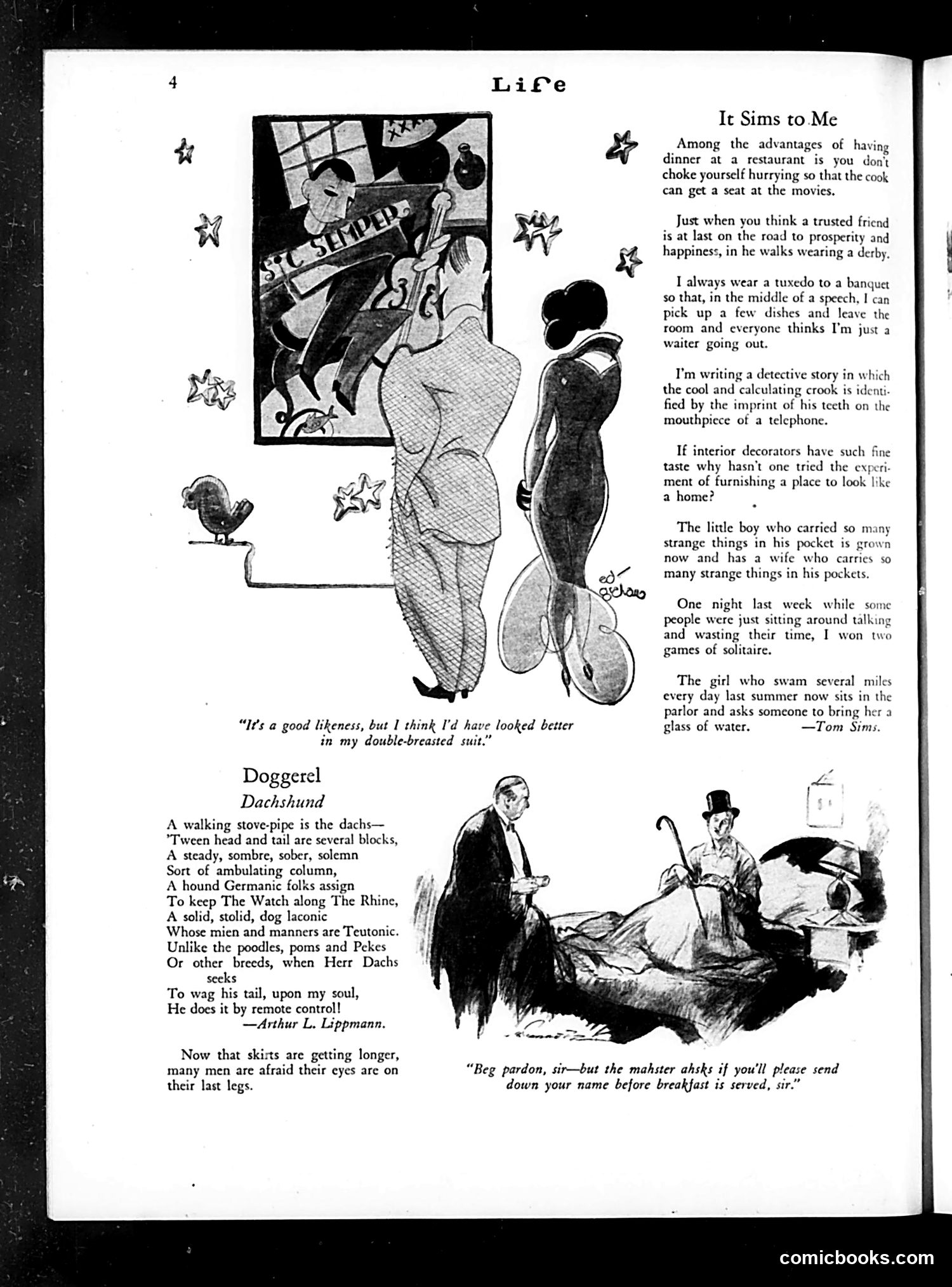
# Analysis of Life Magazine Page **Main Content:** The top illustration shows two women viewing what appears to be a cinema or entertainment poster, with a humorous caption about preferring to look better in a "double-breasted suit." This jokes about fashion trends and women's appearance. **"It Sims to Me" Column:** Tom Sims's humor column offers observational satire about everyday life—dining out, wearing tuxedos to speeches, detective fiction, interior design, and competitive games. These are lighthearted social commentaries typical of 1920s-30s magazine humor. **"Doggerel" Section:** A poem about the Dachshund (called "Dacshund"), presenting the breed as a German walking apparatus. The final couplet notes men are increasingly distracted by women's legs as skirts grow longer—period commentary on changing fashion and male attention. The cartoon at bottom appears unrelated domestic humor.
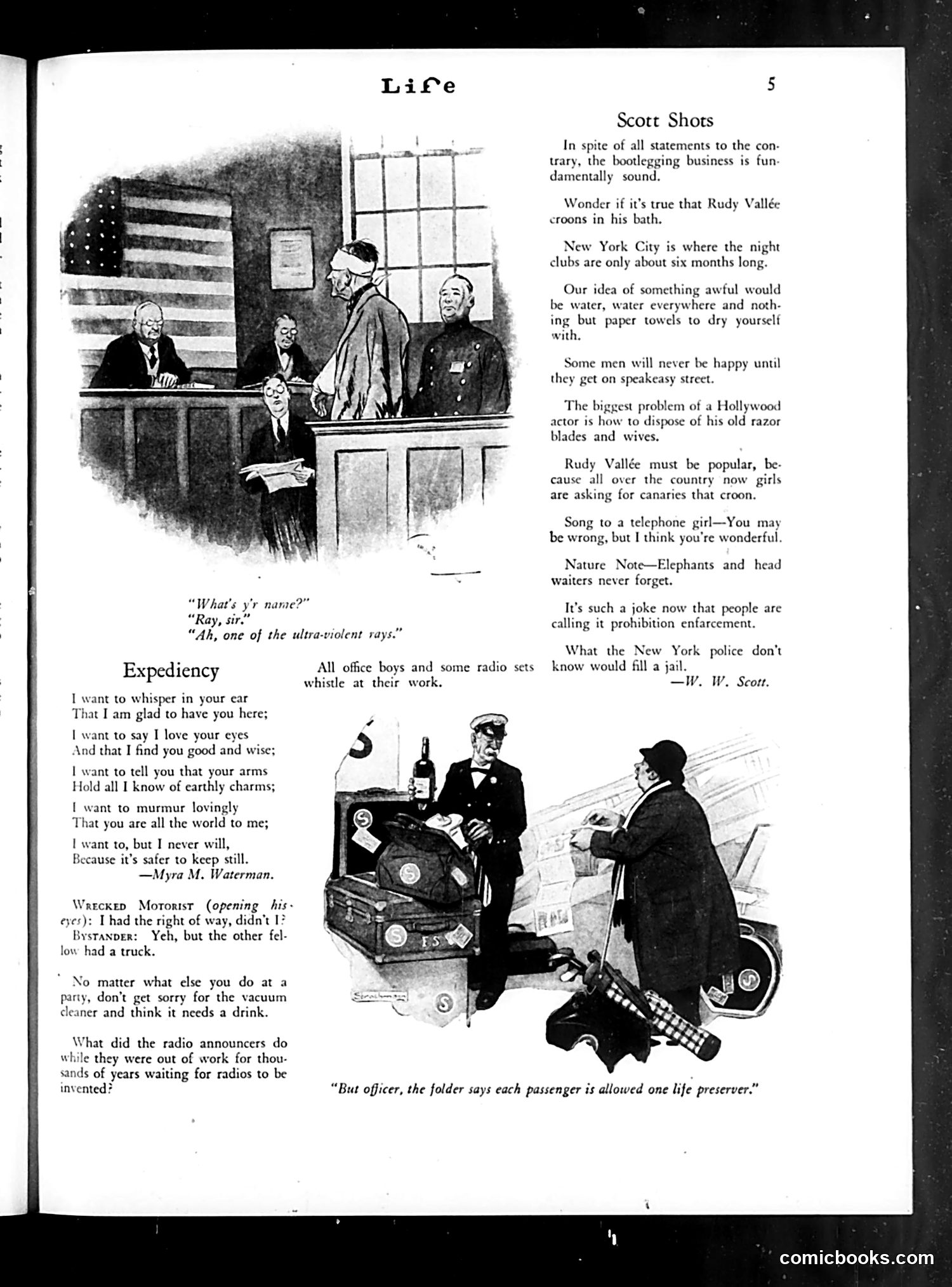
# Analysis of Life Magazine Page 5 **Upper Cartoon ("What's yr name?"):** A courtroom scene where a police officer interrogates a suspect about "ultra-violent rays." This appears to be satirizing contemporary anxieties about new technology or scientific weapons, possibly referencing 1920s-30s concerns about radio or X-rays being used criminally or mysteriously. **Lower Cartoon ("But officer, the folder says each passenger is allowed one life preserver"):** Two police officers stop a motorist illegally transporting life preservers. The joke mocks the absurdity of traffic enforcement—the officer literally interprets safety equipment regulations, treating life preservers like passengers requiring individual permits. It's satire of overzealous bureaucratic rule-following. Both cartoons ridicule law enforcement and regulatory absurdity of the era.
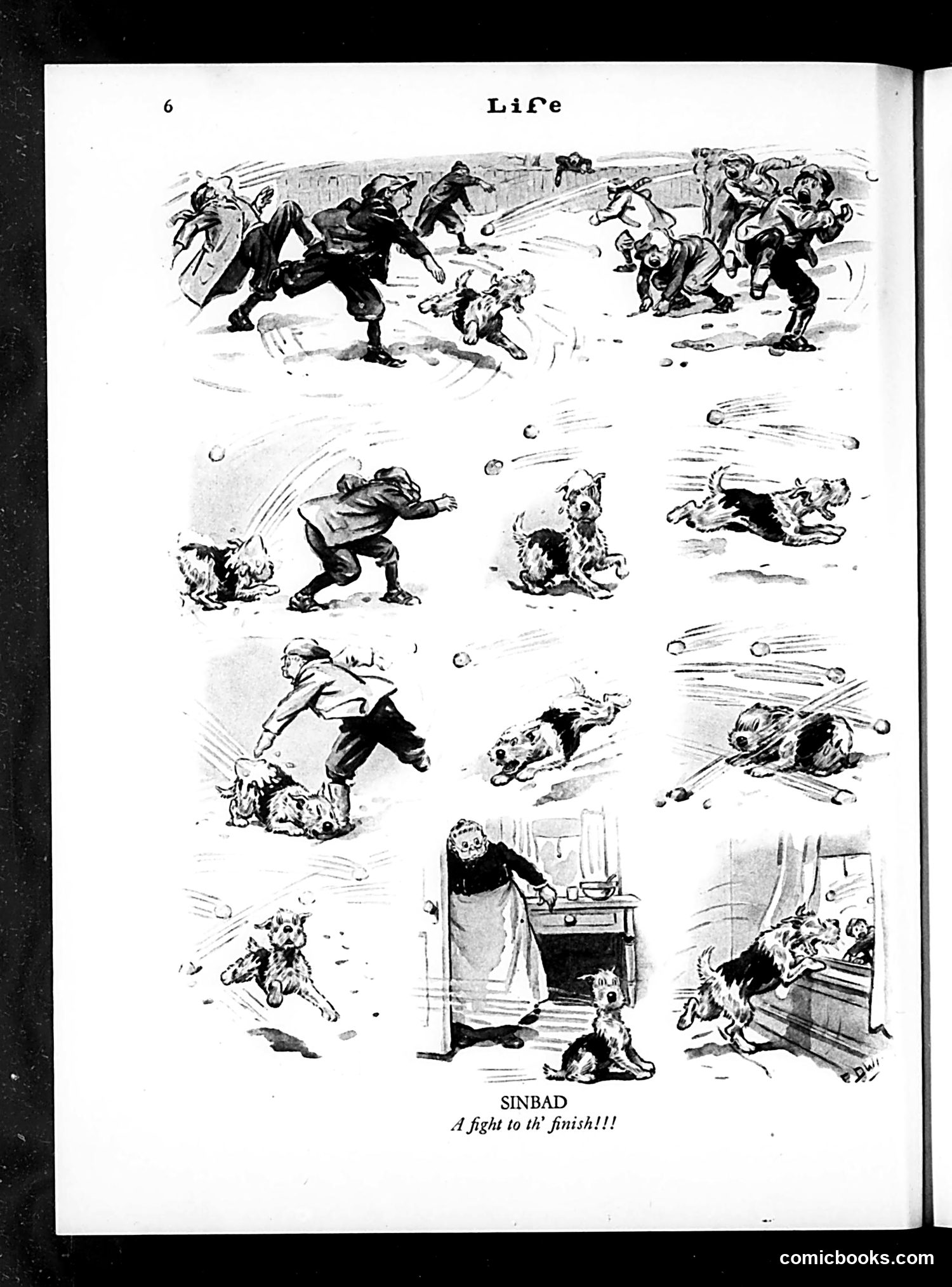
# Sinbad Comic Strip Analysis This page from *Life* magazine presents a humorous comic strip titled "Sinbad: A fight to th' finish!!!" The strip depicts a chaotic scene where a man (Sinbad) battles multiple dogs in various comedic scenarios. The top panel shows a large brawl with numerous figures and dogs scattered across what appears to be a street or public space. The remaining panels show individual vignettes of the protagonist struggling with dogs in different situations—chasing them, being chased, fighting them indoors, and engaging in physical comedy. The satire appears to be a lighthearted slapstick takeoff on adventure tales, with the legendary adventurer Sinbad reduced to an ordinary man comically overwhelmed by common street dogs. The humor derives from the contrast between Sinbad's mythic reputation and this mundane, farcical reality of urban dog trouble.
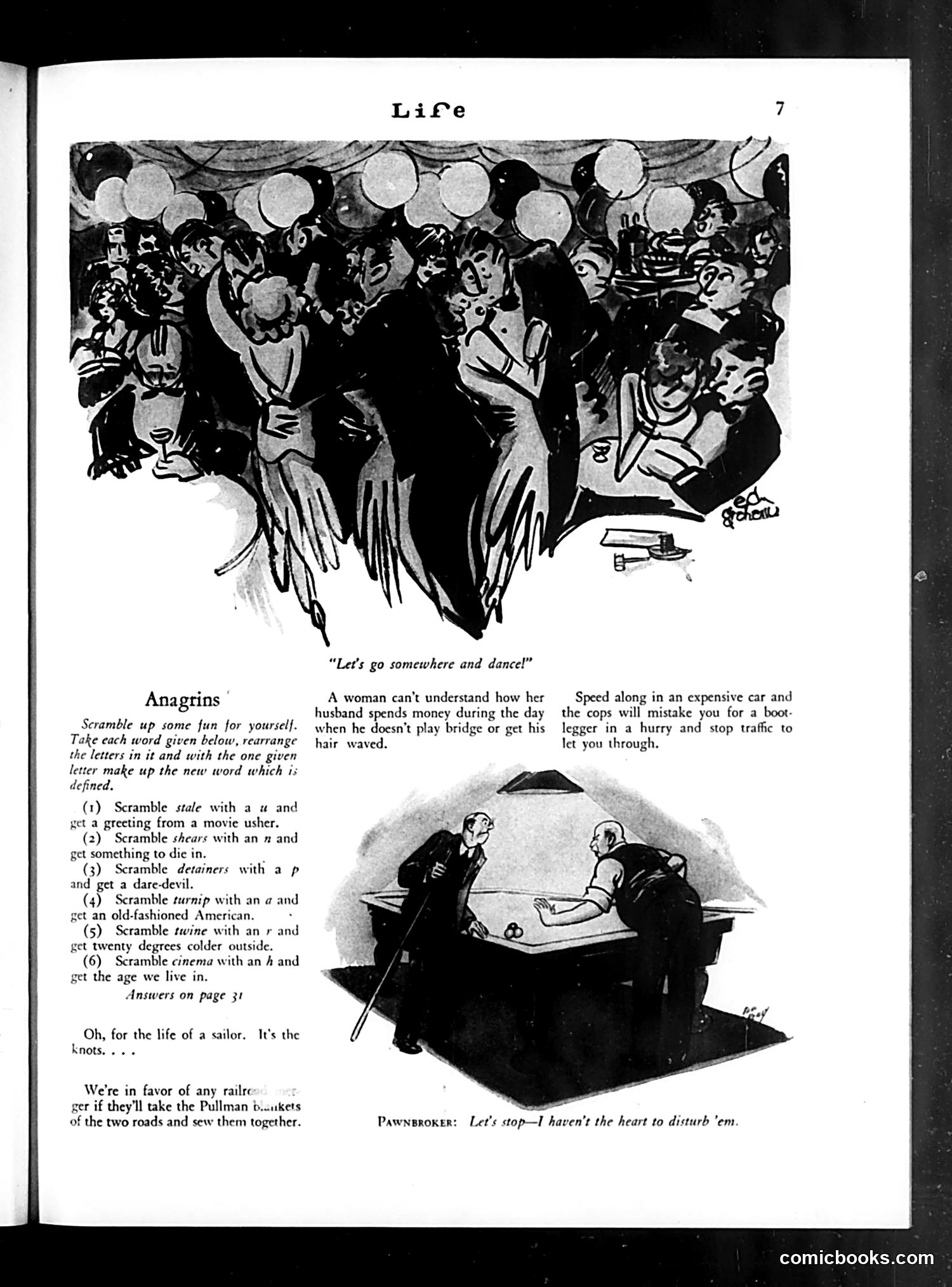
# Analysis of Life Magazine Page 7 **Top Cartoon:** "Let's go somewhere and dance!" depicts a lively Jazz Age party scene with couples in 1920s attire beneath hanging lanterns. The stylized, energetic drawing captures the era's nightlife culture, likely satirizing the social freedoms and moral concerns associated with the "Roaring Twenties." **Bottom Cartoon:** "Pawnbroker: Let's stop—I haven't the heart to disturb 'em" shows a pawnbroker discovering a couple intimately embraced in what appears to be a boat or enclosed space. The humor relies on the pawnbroker's unexpected sentimentality—he cannot bear to interrupt them despite his profession's transactional nature. **Anagrams Section:** A word-puzzle game offering definitions for scrambled words, typical of Life's entertainment content. The page reflects 1920s anxieties about leisure, courtship customs, and changing social mores.
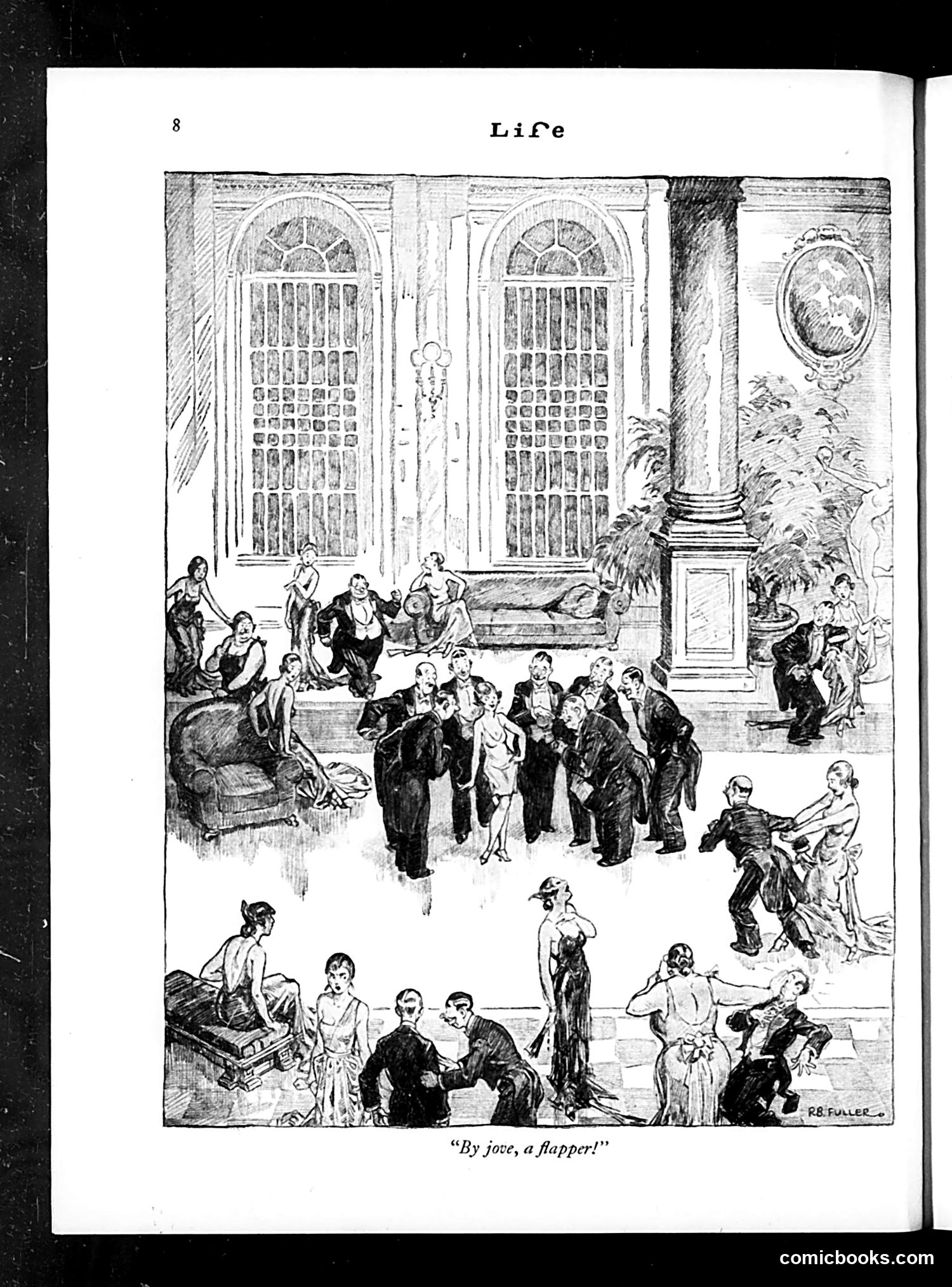
# "By Jove, a Flapper!" This single-panel cartoon by R.B. Fuller depicts a fashionable social scene, likely from the 1920s based on the artistic style. The illustration shows well-dressed figures in an elegant interior with tall arched windows and classical architectural details. The caption's exclamation—"By Jove, a flapper!"—appears to be satirizing the social reaction to the "flapper" phenomenon: young women who defied Victorian conventions through bobbed hair, shorter skirts, and independent behavior. The cartoon likely mocks the shock and surprise expressed by older, more conservative society members encountering these modern women. The scene captures the tension between traditional high society and the emerging youth culture of the Jazz Age, with the caption emphasizing outdated genteel expressions of astonishment at changing social norms.
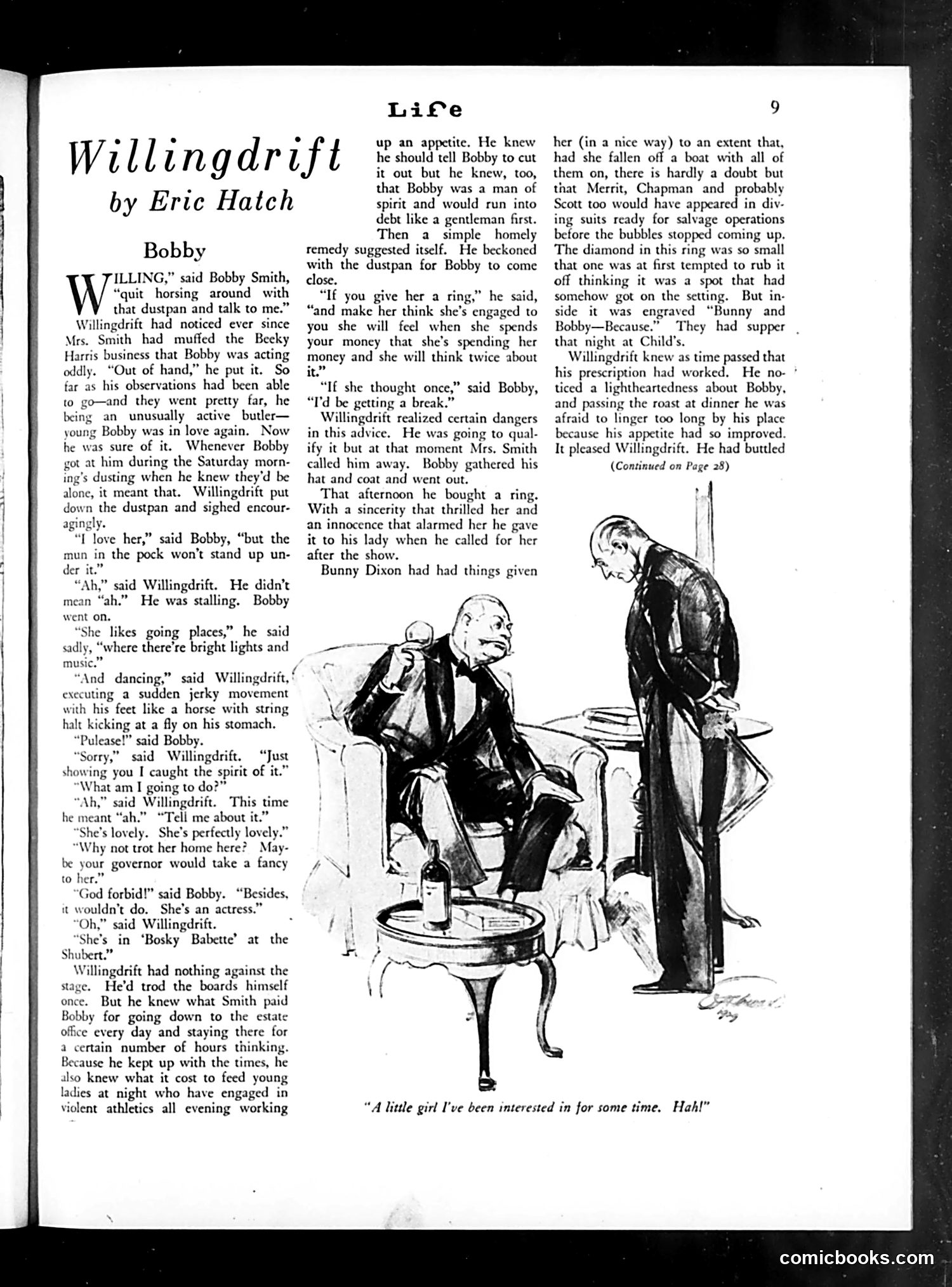
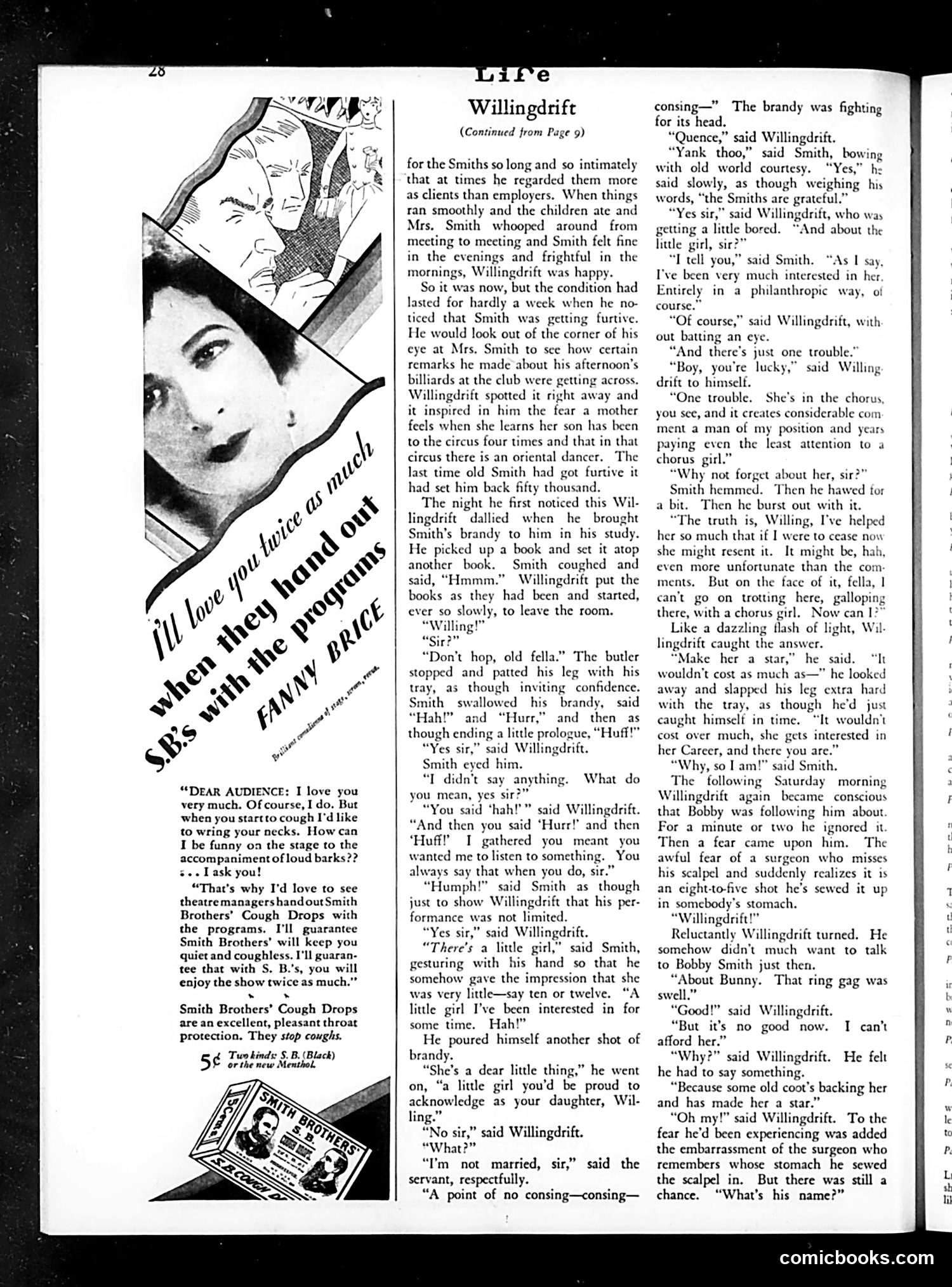
# "Willingdrift" by Eric Hatch - Satirical Fiction Page This page presents a short story titled "Willingdrift" featuring a character named Bobby Smith. The accompanying illustration shows two men in formal attire (suits and hats) in conversation, with one seated and one standing, apparently discussing romantic matters. The satirical content centers on Bobby's romantic pursuits and financial naiveté. The story mocks the upper-class gentleman who, despite his social pretensions and awareness of proper decorum, becomes romantically entangled and makes financially questionable decisions—specifically purchasing an engagement ring for a woman of lower social status (an actress). The humor derives from exposing the gap between his self-image as a sophisticated man-about-town and his actual sentimental, economically foolish behavior.
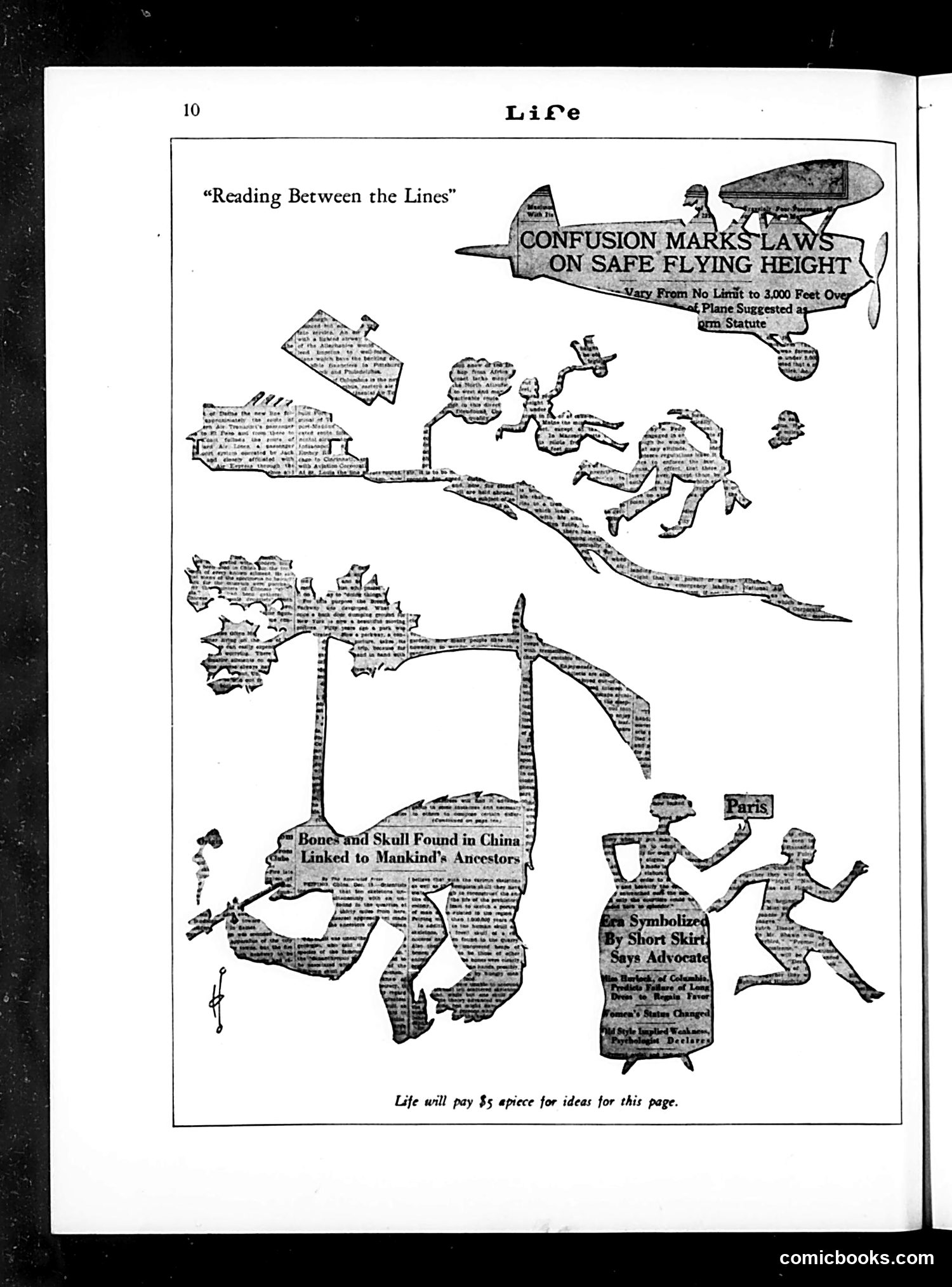
# Analysis of Life Magazine Page 10 This page presents a satirical infographic titled **"Reading Between the Lines,"** critiquing American legal inconsistencies through visual metaphors. The main subjects are: - **Safe flying height laws**: A map showing U.S. states with conflicting regulations on aircraft altitude (ranging "from No Limit to 3,000 Feet"), satirizing the patchwork of state aviation laws - **Chinese ancestry debate**: A figure labeled about "Bones and Skull Found in China Linked to Mankind's Ancestors"—likely mocking contemporary disputes over human evolution theory - **Women's fashion/rights**: Figures discussing hemlines and a "short skirt" advocate, referencing 1920s debates about women's clothing and social status The cartoons mock regulatory chaos and cultural anxieties of the era. The bottom tagline offers payment for reader submissions, indicating this was an interactive humor section. The satire targets governmental confusion and contemporary social controversies through absurdist visual contrast.