A complete issue · 36 pages · 1936
Judge — September 1936
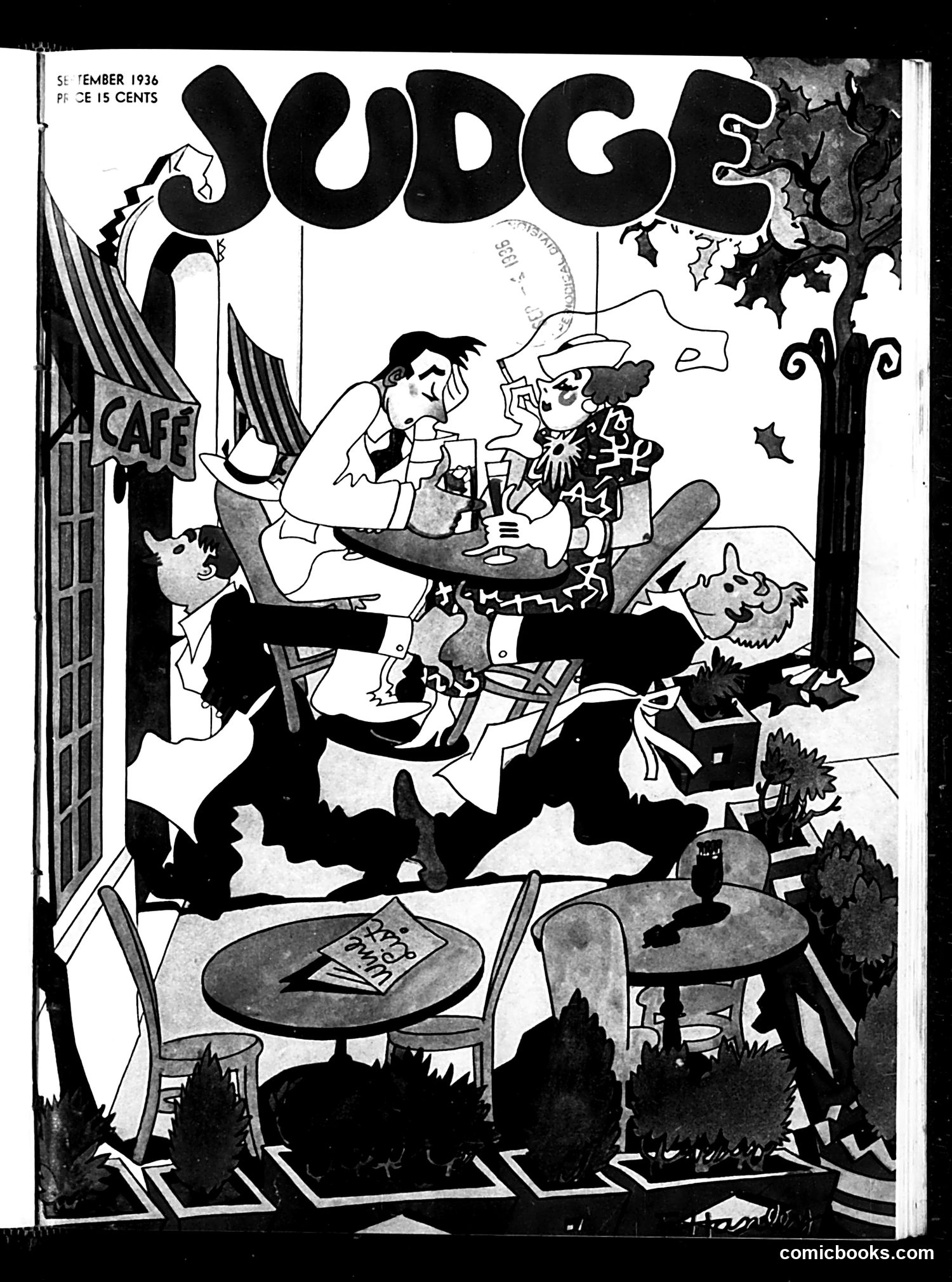
# Analysis of Judge Magazine Cover, September 1936 This cover depicts a chaotic outdoor café scene titled "JUDGE." The central figures appear to be caricatured politicians or public figures engaged in animated conversation, with exaggerated facial features typical of 1930s satirical illustration. The setting—an outdoor café with patrons, tables, and plants—suggests this satirizes social or political gatherings of the era. The dynamic, somewhat frenzied composition implies conflict or heated debate among the figures. Without clearer OCR text or identifying labels on the figures themselves, I cannot definitively identify specific politicians or reference the particular 1936 event being satirized. The style and composition suggest commentary on contemporary political discourse, but the exact targets and satirical point remain unclear from the visual evidence alone.
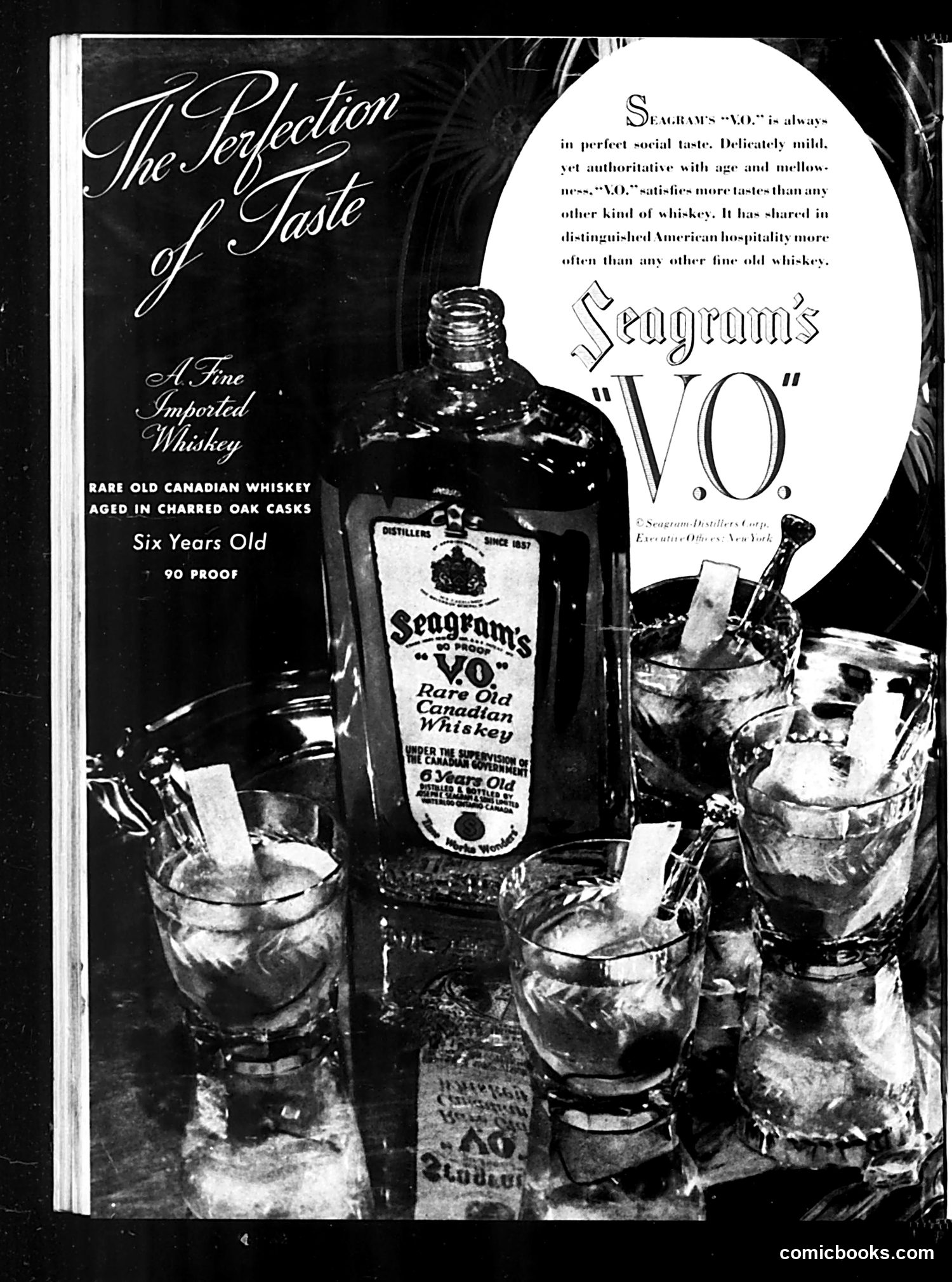
# Analysis This page is **primarily an advertisement**, not editorial satire. It promotes Seagram's "V.O." Canadian whiskey, described as "Six Years Old" and "90 Proof." The ad emphasizes the product's refined qualities—"perfect social taste," "delicately mild, yet authoritative"—and claims it has "shared in distinguished American hospitality more often than any other fine old whiskey." The visual shows the bottle surrounded by glasses of whiskey served on ice, appealing to upscale consumers. The large circular callout highlighting "V.O." dominates the right side. **Historical context**: This appears from the Prohibition era's aftermath, when whiskey advertising resumed (post-1933). The emphasis on "distinguished American hospitality" suggests marketing to the newly-legal, affluent consumer market. No political satire is evident—this is straightforward luxury product promotion.
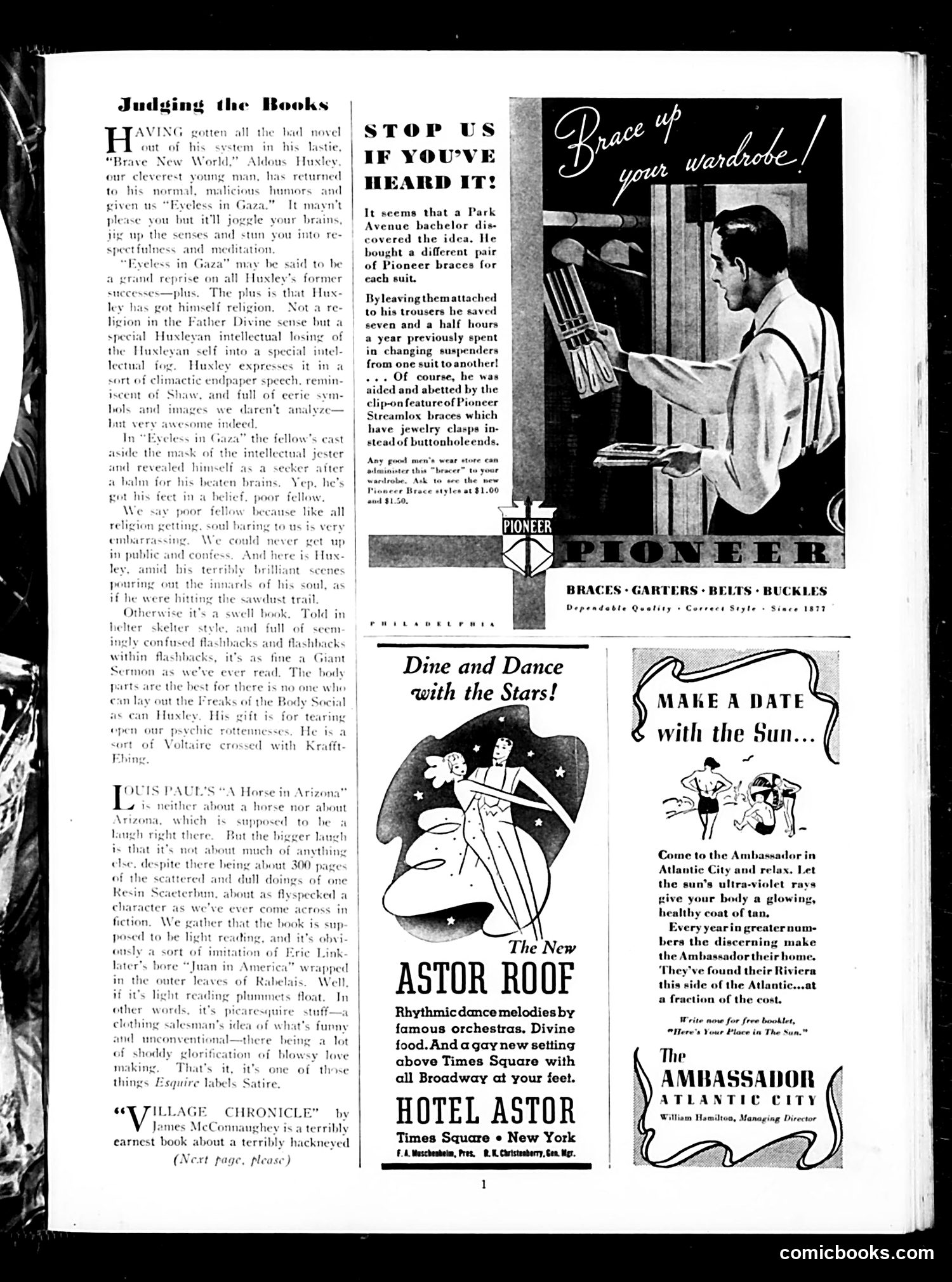
# Analysis of Judge Magazine Page This page is primarily **advertising and entertainment content** rather than political satire. The main features are: 1. **Book reviews** (left column) discussing novels by Aldous Huxley and Louis Paul, offering literary criticism. 2. **Pioneer Braces advertisement** (center-right) promoting men's suspenders with a photo of a man adjusting his wardrobe. 3. **Hotel Astor advertisement** (center-bottom) promoting the New York hotel's rooftop dining and dancing venue. 4. **Ambassador Hotel Atlantic City advertisement** (right side) promoting vacation tanning services. The page reflects 1920s-30s consumer culture and leisure activities. No political figures or satirical commentary are evident—this appears to be a typical Judge magazine page blending literary content with lifestyle advertising.
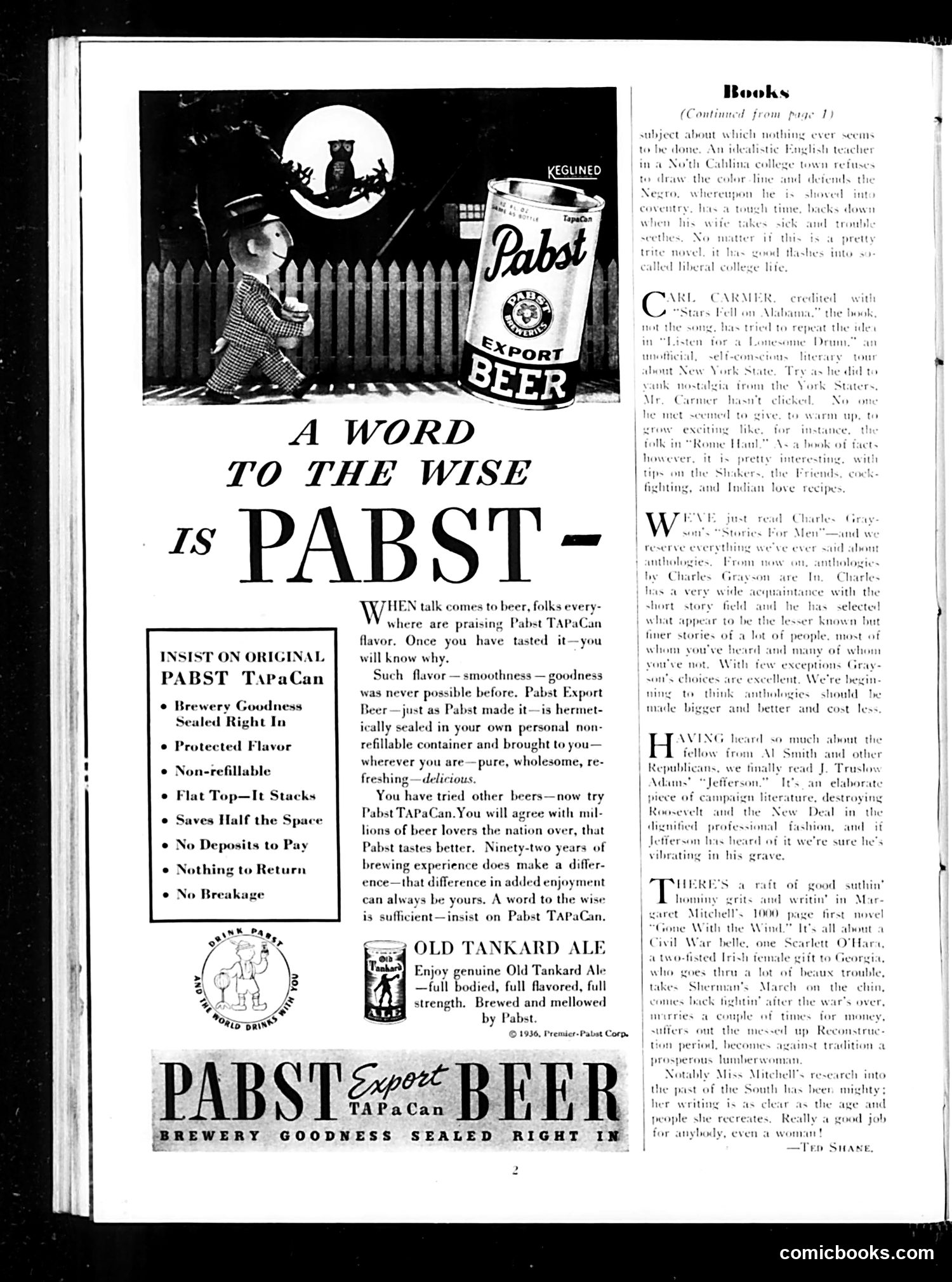
# Analysis This page is **primarily advertising**, not political satire. The dominant content is a Pabst beer advertisement occupying roughly two-thirds of the page. The main cartoon shows a figure in a nightcap looking at an owl perched on a fence under moonlight, with a Pabst Export Beer bottle prominently displayed. The caption "A WORD TO THE WISE IS PABST" is a pun on the saying "a word to the wise is sufficient," repurposing it to advertise beer. The advertisement emphasizes Pabst's TAPaCan container—a sealed, stackable, non-returnable can—listing practical benefits like space-saving and no deposits required. This appears to be promoting an innovative packaging technology of the era. The right column contains book reviews unrelated to the advertisement, including discussion of Southern literature.
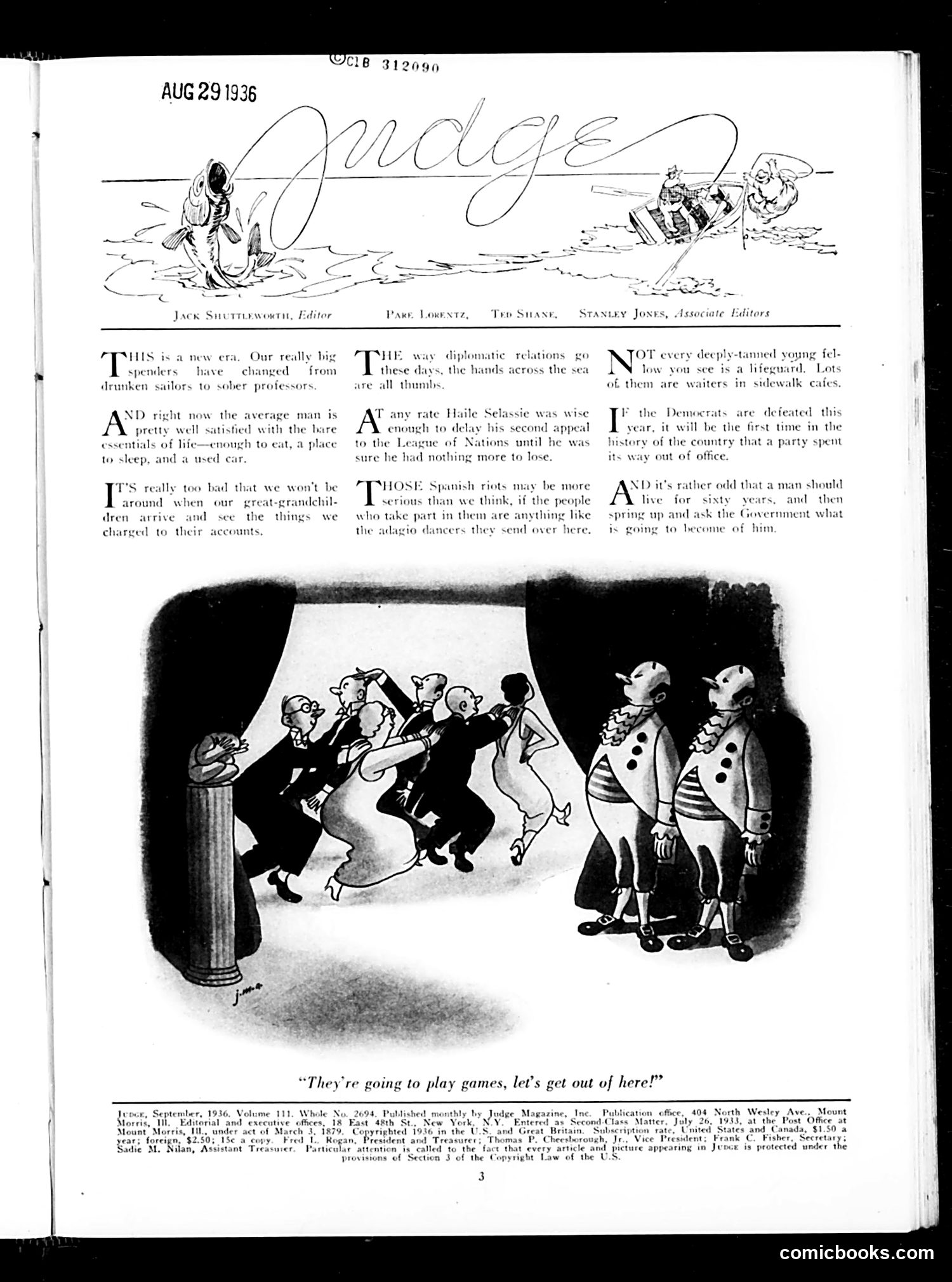
# Judge Magazine, August 29, 1936 The main cartoon depicts figures in formal dress dancing or celebrating while two uniformed officials (appearing to be diplomats or military leaders) stand watching disapprovingly on the right. The caption reads: "They're going to play games, let's get out of here!" The editorial text references contemporary 1936 issues: Haile Selassie's delayed League of Nations appeal, Spanish civil unrest (likely the recent outbreak of the Spanish Civil War in July 1936), and American politics ahead of the 1936 presidential election. The cartoon likely satirizes diplomatic anxieties about international instability—the festive party-goers represent nations indifferent to gathering international crises, while the stern officials embody diplomatic concern that conflict is imminent.
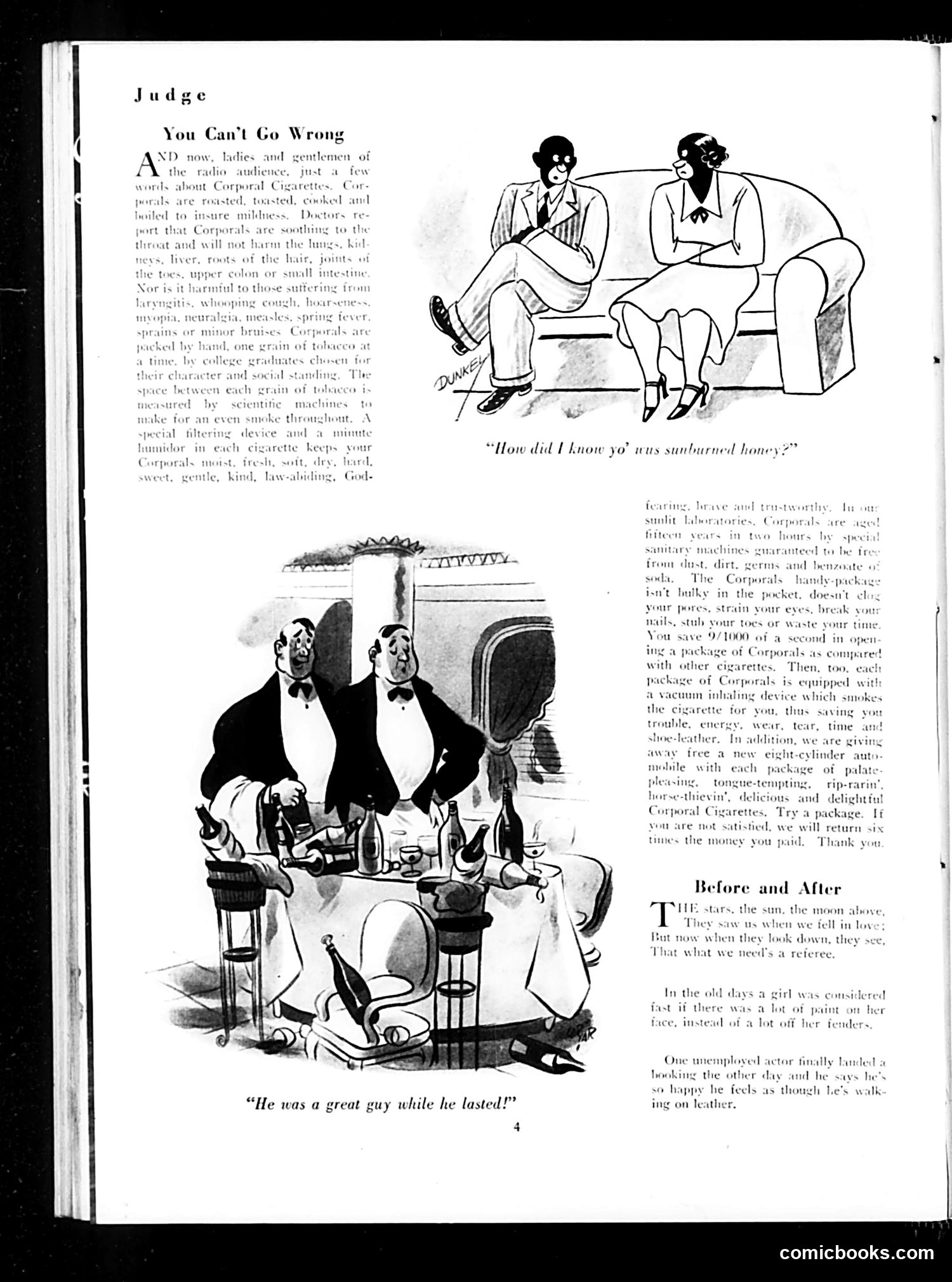
# Analysis: Corporals Cigarette Advertisement This page is primarily a **cigarette advertisement** disguised as humor content for *Judge* magazine. The top cartoon shows two people on a couch with the caption "How did I know you' was sunburned honey?"—a flirtation joke. The bottom cartoon depicts two well-dressed men at a dining table with the caption "He was a great guy while he lasted!"—implying mortality or romantic disappointment. The accompanying text promotes **Corporals cigarettes** through pseudo-scientific claims: the cigarettes are allegedly filtered, sanitized, and remove harmful substances. The advertisement uses humor and casual tone to market smoking as safe and sophisticated. The brief poem "Before and After" makes a crude joke about cosmetics and female appearance—typical period advertising that relied on demeaning humor about women's looks. This represents early 20th-century tobacco marketing before health warnings were required.
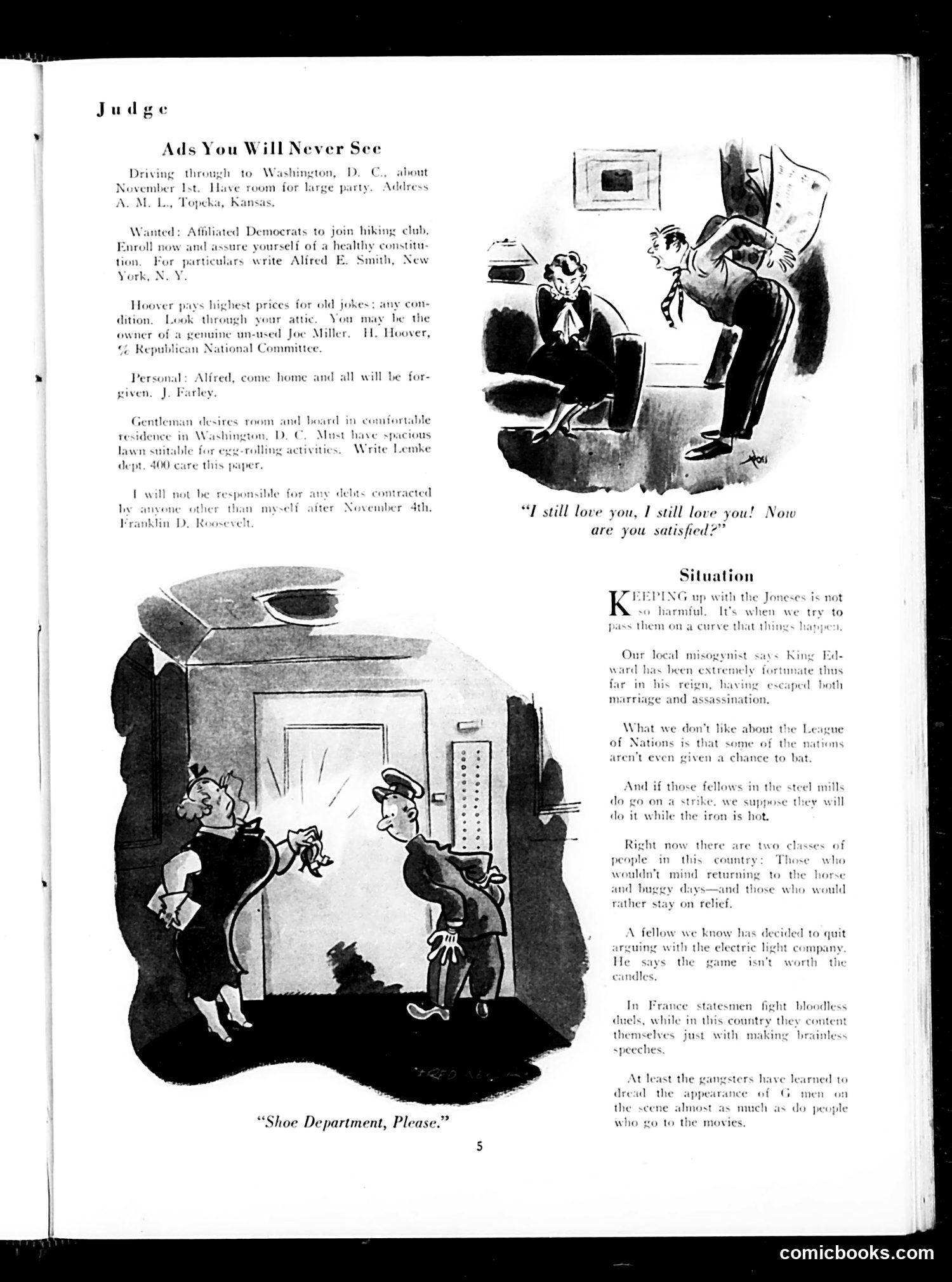
# "Shoe Department, Please" - Judge Magazine Cartoon Analysis The lower cartoon depicts a man entering what appears to be a department store elevator, asking for the "Shoe Department." The satire likely refers to **Prohibition-era speakeasies disguised as legitimate businesses**—the elevator operator and well-dressed figures suggest a hidden establishment behind an ordinary retail façade. During Prohibition (1920-1933), illegal bars operated covertly in office buildings and stores, requiring customers to know the right phrases or locations. The upper cartoon shows a domestic scene with the caption "I still love you, I still love you! Now are you satisfied?"—satirizing marital discord, possibly commentary on relationship conflicts common in contemporary society. The "Situation" column discusses international politics (League of Nations, labor strikes, French statesmen) with cynical observations typical of Judge's satirical tone.
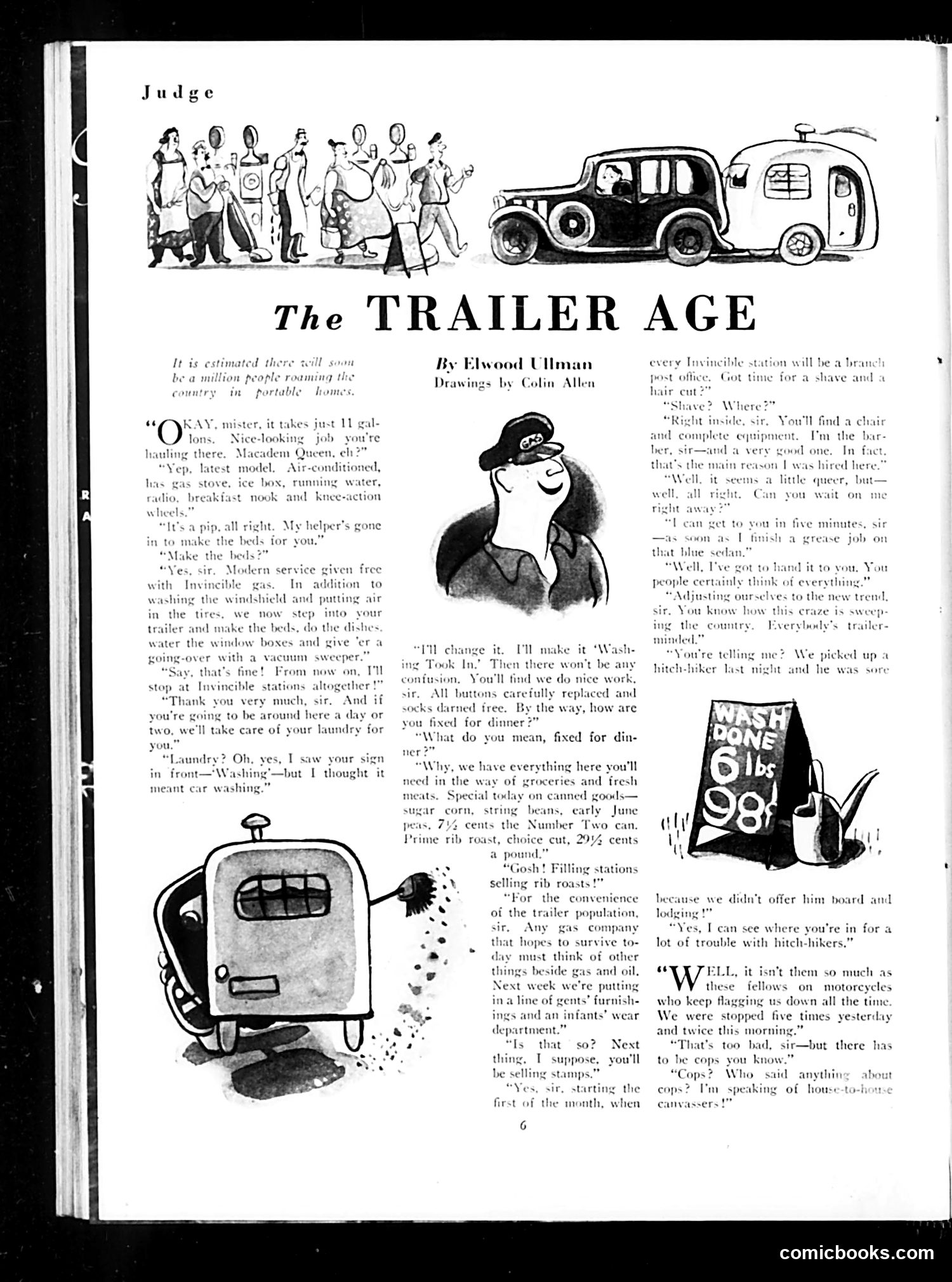
# "The Trailer Age" - Satire on Mobile Living This 1920s-30s Judge article satirizes the emerging trend of trailer homes—portable living accommodations towed behind automobiles. The cartoon depicts a family abandoning traditional domestic life for mobile existence. The satire mocks this lifestyle through a dialogue between a service station attendant and trailer owners, highlighting the absurdity: families living in cramped trailers while expecting hotel-like conveniences (laundry service, meals, comfortable beds). The text jokes about filling stations becoming "invincible stations"—implying they'd replace hotels and homes as civilization's anchors. The broader point appears critical: as Americans embrace automobile culture and mobility, they're sacrificing domestic stability and privacy. The trailer represents a peculiar American trend of rejecting settled life for perpetual transience, reducing home to a commercial service transaction.
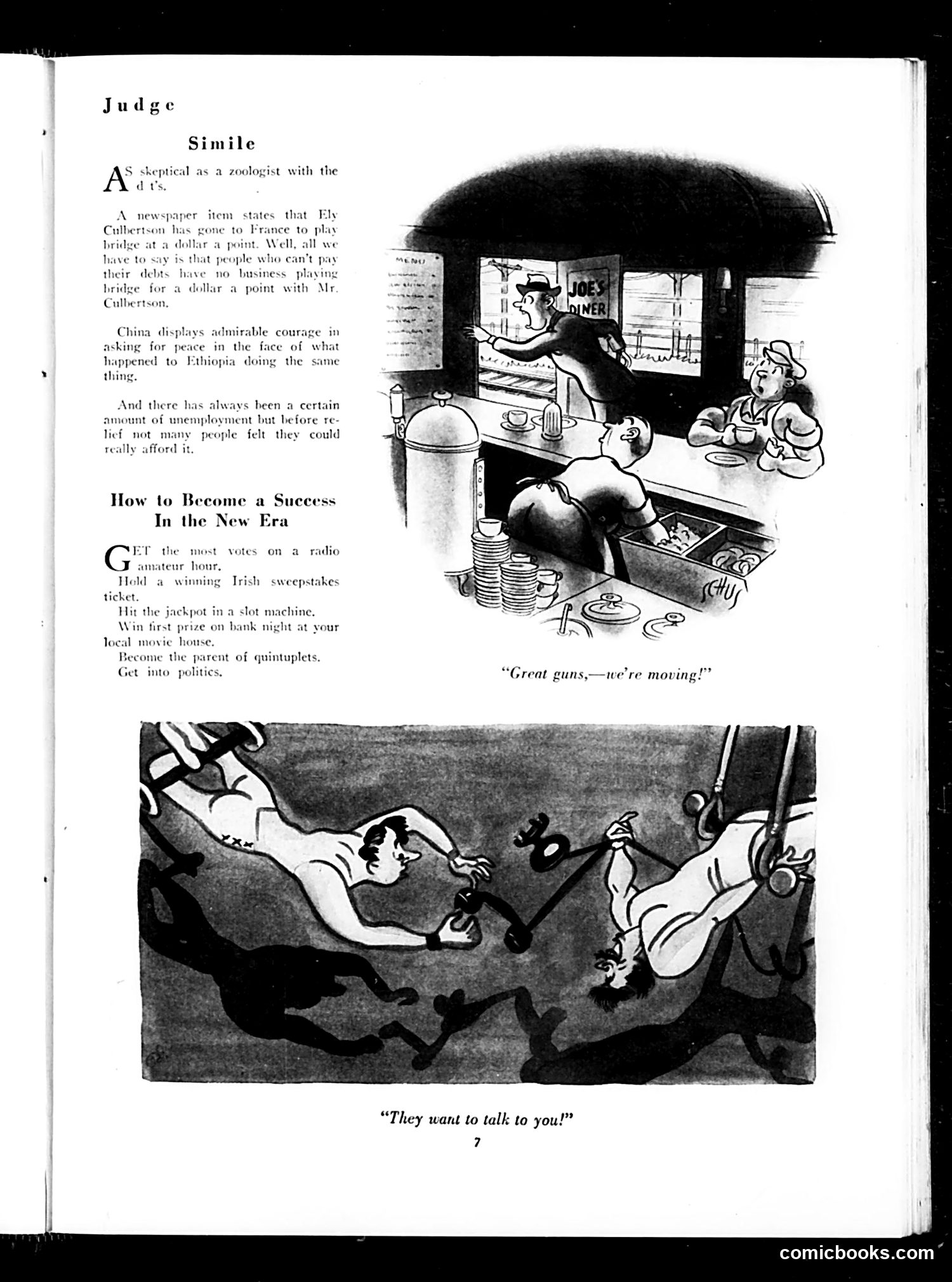
# Explanation for Modern Readers This page contains satirical commentary and humorous illustrations typical of Judge magazine's style. **Top Section ("Simile"):** Brief commentary on current events—Ely Culbertson (a famous bridge player) going to France, unemployment, and China's diplomatic efforts regarding Ethiopia. The humor relies on topical references from the era. **"How to Become a Success In the New Era":** Satirizes get-rich-quick schemes popular during uncertain economic times, mocking radio contests, sweepstakes, slot machines, and politics as paths to success. **Cartoons:** The top illustration shows a diner scene with the caption "Great guns—we're moving!" The bottom cartoon depicts multiple figures being pulled or dragged, captioned "They want to talk to you!"—likely satirizing either debt collectors or unwanted solicitations, common anxieties during economically uncertain periods. The overall tone mocks contemporary social aspirations and anxieties.
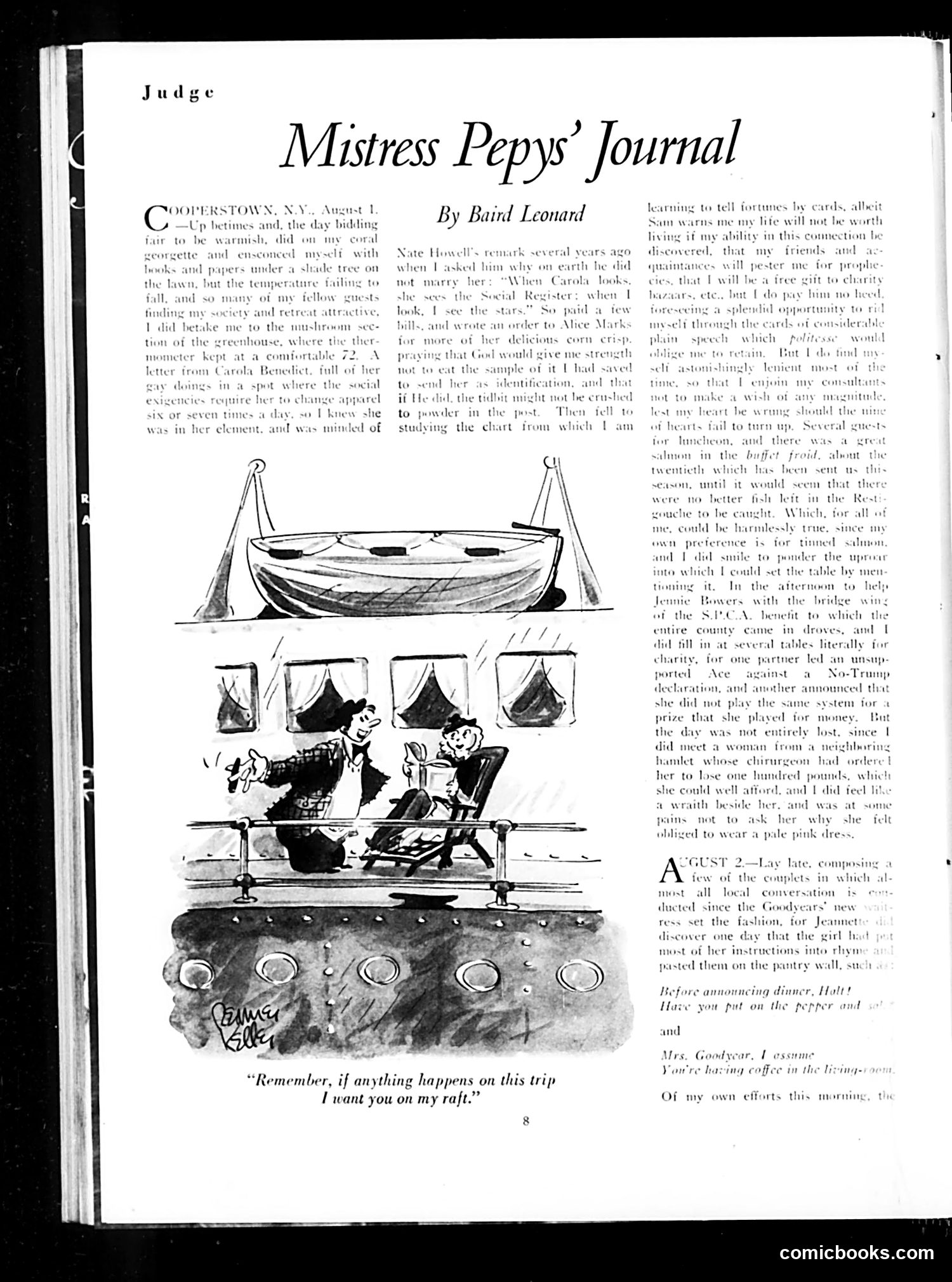
# "Mistress Pepys' Journal" Explanation This is a humor column mimicking Samuel Pepys's famous 17th-century diary, updated to contemporary (1920s) American social life. The column satirizes upper-class leisure activities and social pretensions. The main cartoon depicts a woman on a raft with two men below, captioned "Remember, if anything happens on this trip I want you on my raft"—a joke about prioritizing one's romantic interest in an emergency over actual safety or propriety. The text describes summer social events: bridge games, charity events, and fortune-telling. A running gag involves the "Goodyears'" fashion of composing witty couplets in conversation, which spreads through the community so thoroughly that even servants memorize and post them. The humor targets how fashionable trends cascade through society, and the absurdity of upper-class women trying to appear clever through forced verse-composition. The diary format allows gentle mockery of their vanities, trivial concerns, and self-absorption.
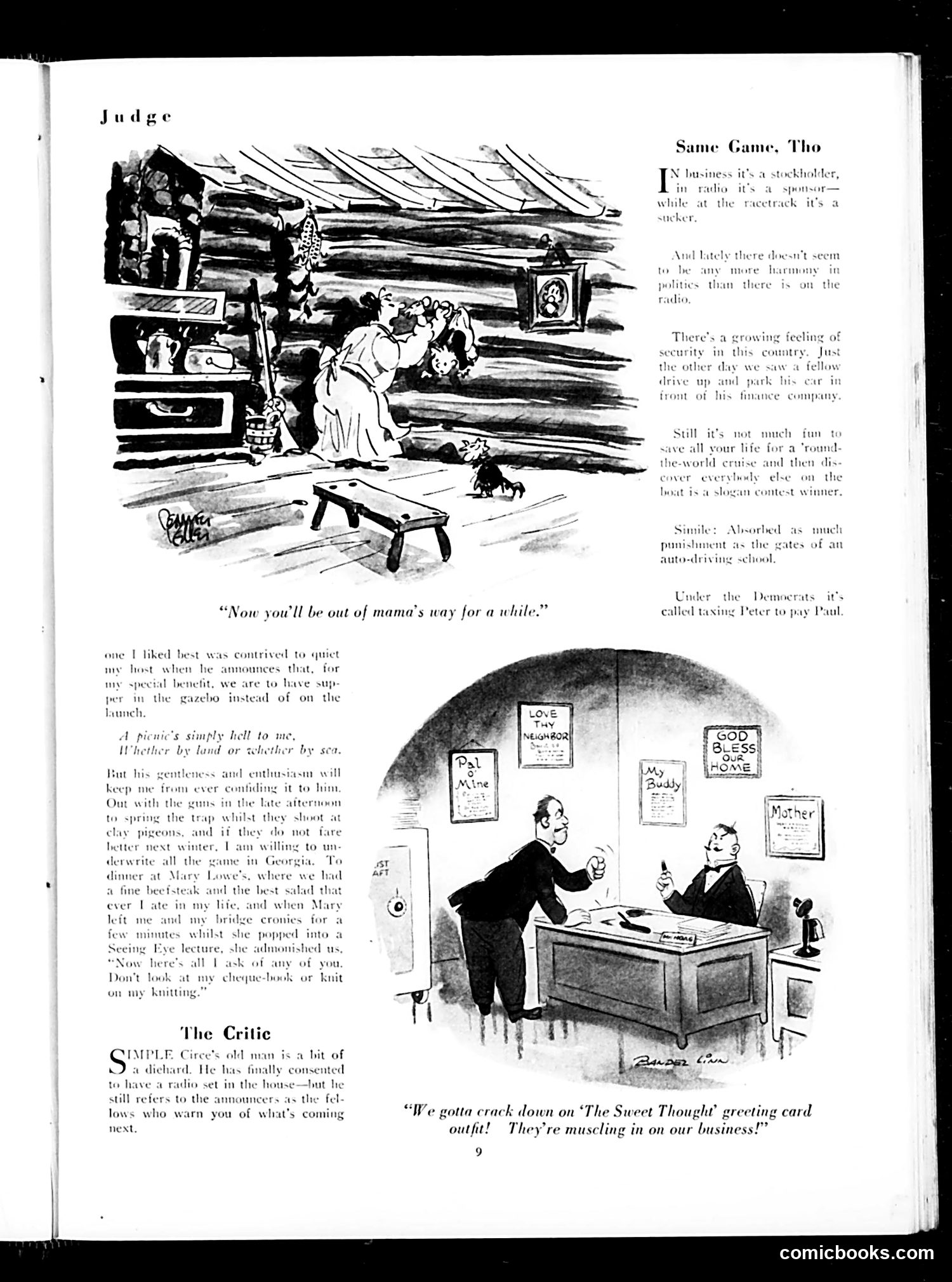
# Analysis of Judge Magazine Page **Top Cartoon ("Now you'll be out of mama's way for a while"):** Shows a mother with children preparing to leave home—likely depicting Depression-era anxieties about family separation or children leaving to seek work/opportunity elsewhere. The caption suggests ironic relief at their departure. **Bottom Cartoon ("We gotta crack down on 'The Sweet Thought' greeting card outfit"):** Depicts a businessman at a desk confronting what appears to be a competitor. The satire mocks how businesses blame rivals for lost profits rather than examining their own practices. The reference to "Sweet Thought" greeting cards muscling into the greeting card market reflects early 20th-century commercial competition. **Column Text ("The Critic"):** Humorously describes radio as a relatively new household technology. An older man reluctantly accepts a radio set but dismissively refers to announcers as merely "fellows who warn you of what's coming next"—poking fun at radio's early role as advertising medium rather than entertainment. The overall theme appears to be satirizing modern commercial anxieties and the generational divide regarding new technology.
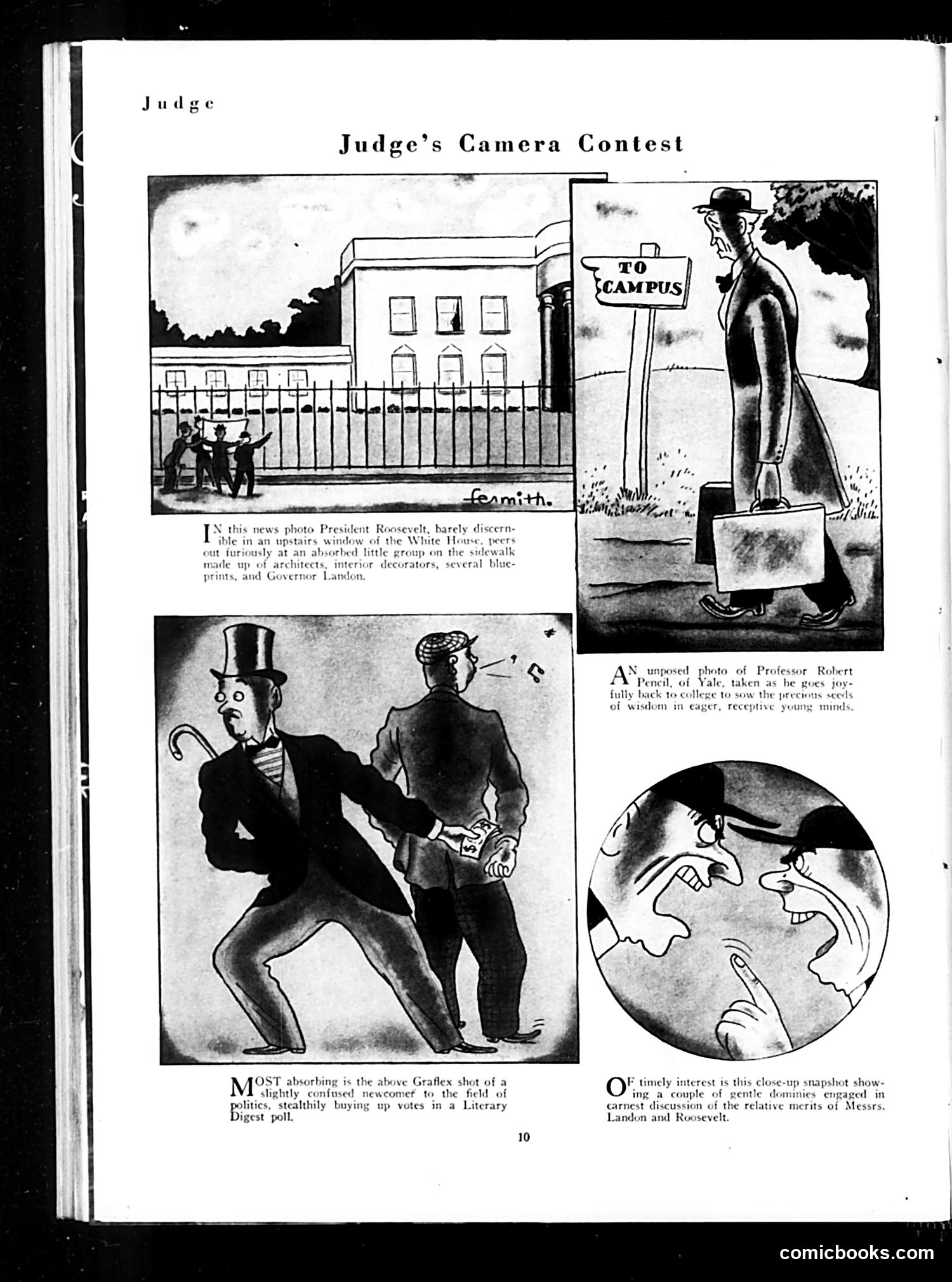
# Judge's "Judge's Camera Contest" This page satirizes President Roosevelt and contemporary politics through mock "news photos." The top image shows Roosevelt barely visible in a White House window while architects and decorators occupy the sidewalk—mocking his absence from or indifference to administrative detail. The lower-left cartoon depicts a confused newcomer to politics naively buying votes for a "Literary Digest poll"—likely referencing the 1936 Literary Digest poll that infamously predicted a Landon victory over Roosevelt. The circular image compares Landon and Roosevelt's relative merits in a humorous, reductive way. The overall satire suggests Roosevelt's disconnection from governance, political corruption in polling, and the absurdity of election prediction. The "camera contest" framing treats serious political matters as amusing candid moments.