A complete issue · 40 pages · 1929
Judge — August 3, 1929
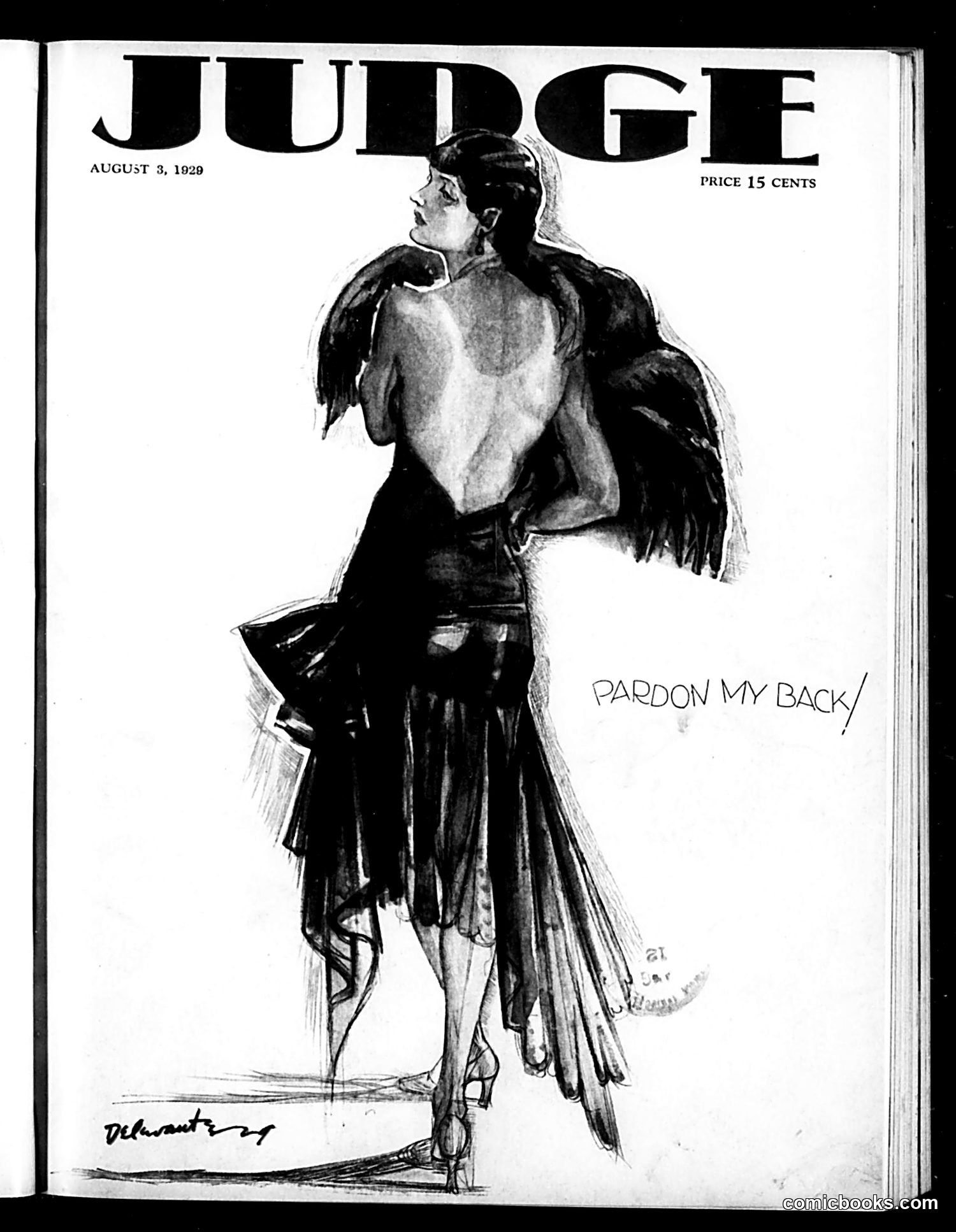
# Judge Magazine Cover Analysis **August 3, 1929** This cover depicts a woman in 1920s dress with wings, looking back over her shoulder. The caption reads "Pardon My Back!" The image likely satirizes women's fashion of the era, specifically the trend of backless or low-backed evening gowns that were scandalous by contemporary standards. The added wings transform the figure into an angelic or supernatural being, suggesting ironic commentary—perhaps mocking the contradiction between conservative social values and the increasingly daring fashions women wore during the Jazz Age. The "pardon" construction implies women were apologizing for (or defiantly refusing to apologize for) displaying their backs in public, a modest body part by today's standards but genuinely controversial in 1929.
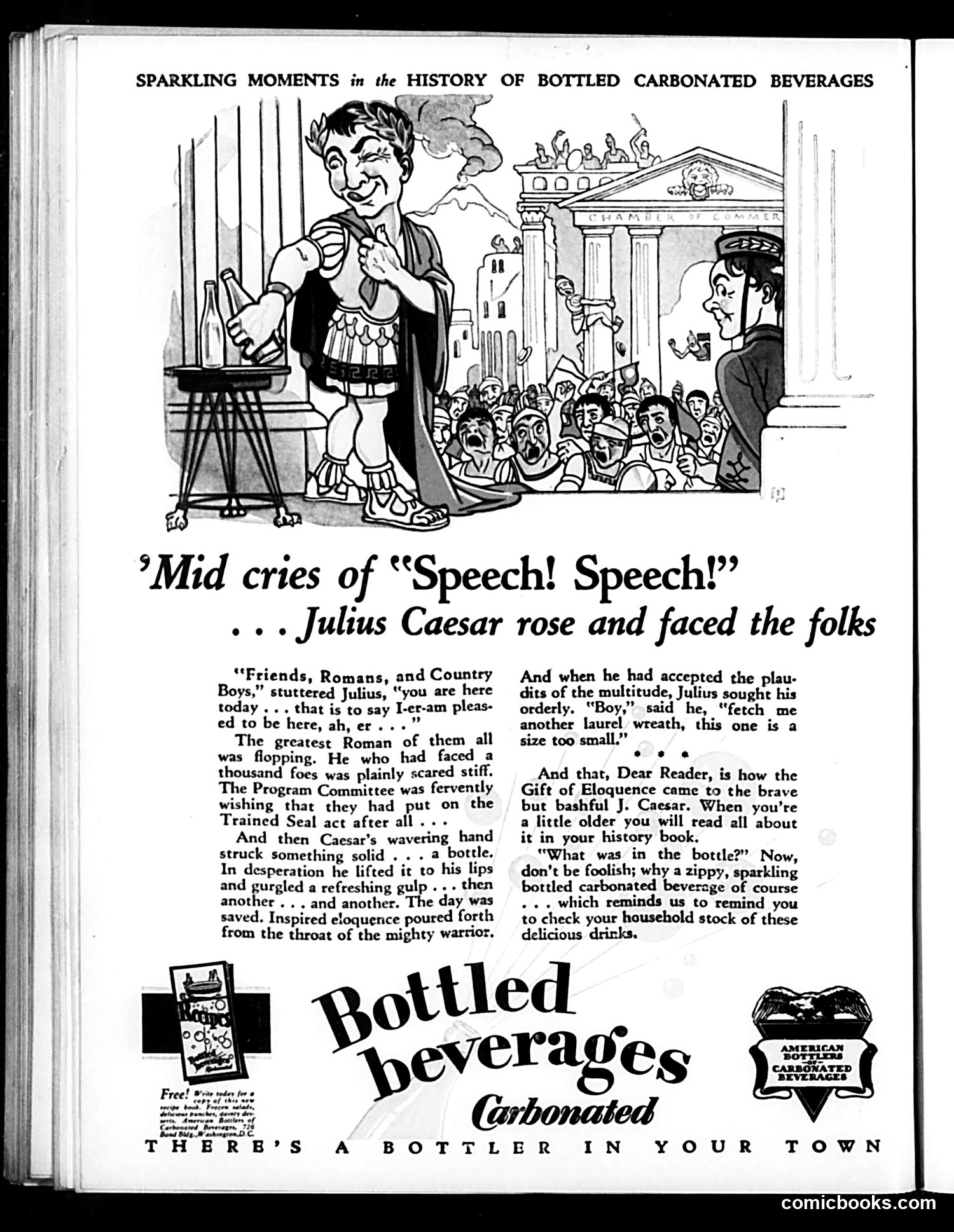
# Analysis This page is primarily **advertising for bottled carbonated beverages**, using a humorous historical framing device rather than political satire. The cartoon depicts a figure dressed as **Julius Caesar** addressing a crowd in ancient Rome, with the text playing on Shakespeare's famous line "Friends, Romans, countrymen." The joke establishes that Caesar supposedly drank carbonated beverages (implied through the bottle visible in the scene), which gave him eloquence and courage. The advertisement's point is lighthearted: just as carbonated drinks supposedly empowered Caesar, they'll invigorate modern consumers. The "Gift of Eloquence" tagline makes this explicit. This is **commercial advertising using historical humor** rather than political commentary—a common Judge magazine approach blending entertainment with product promotion.
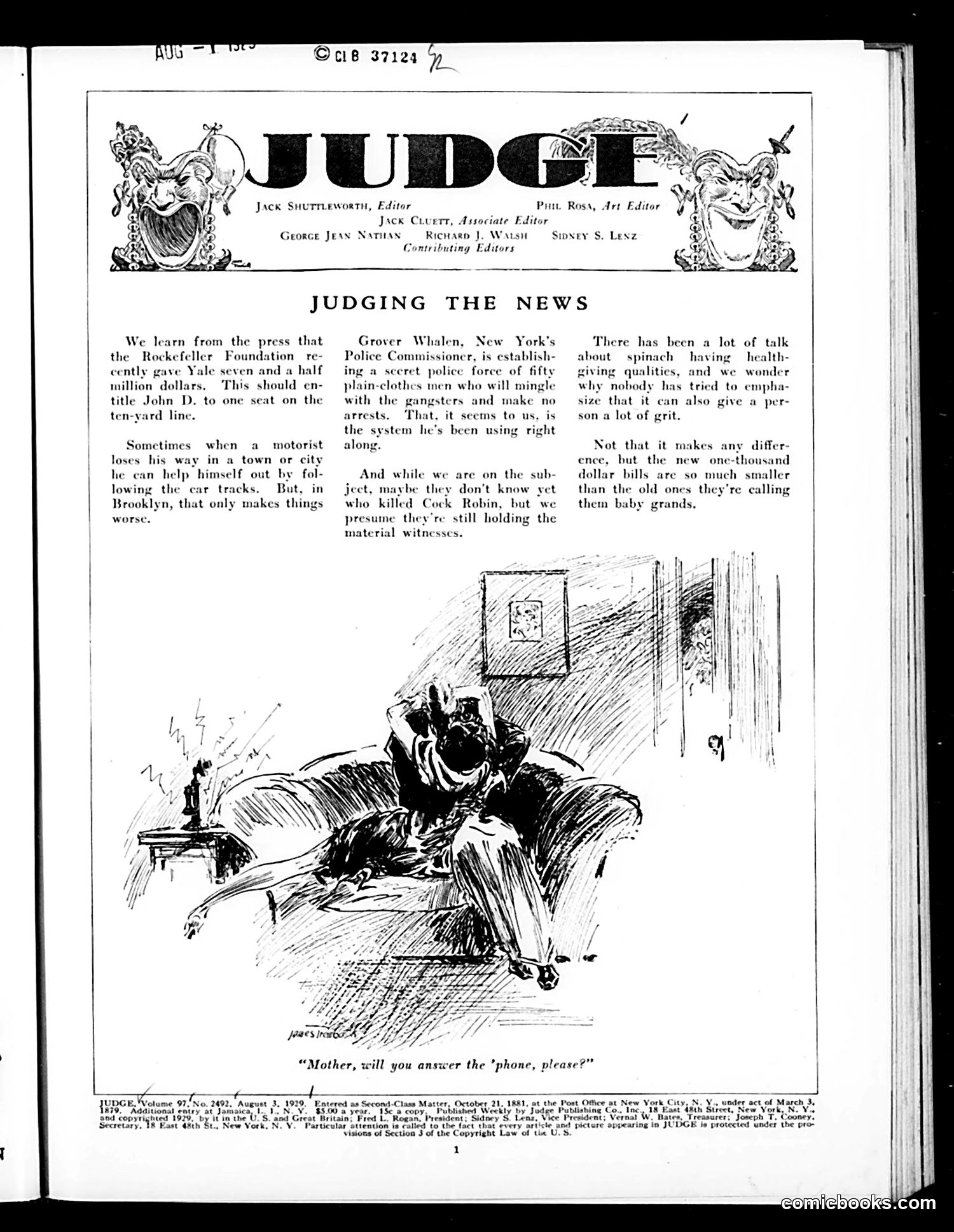
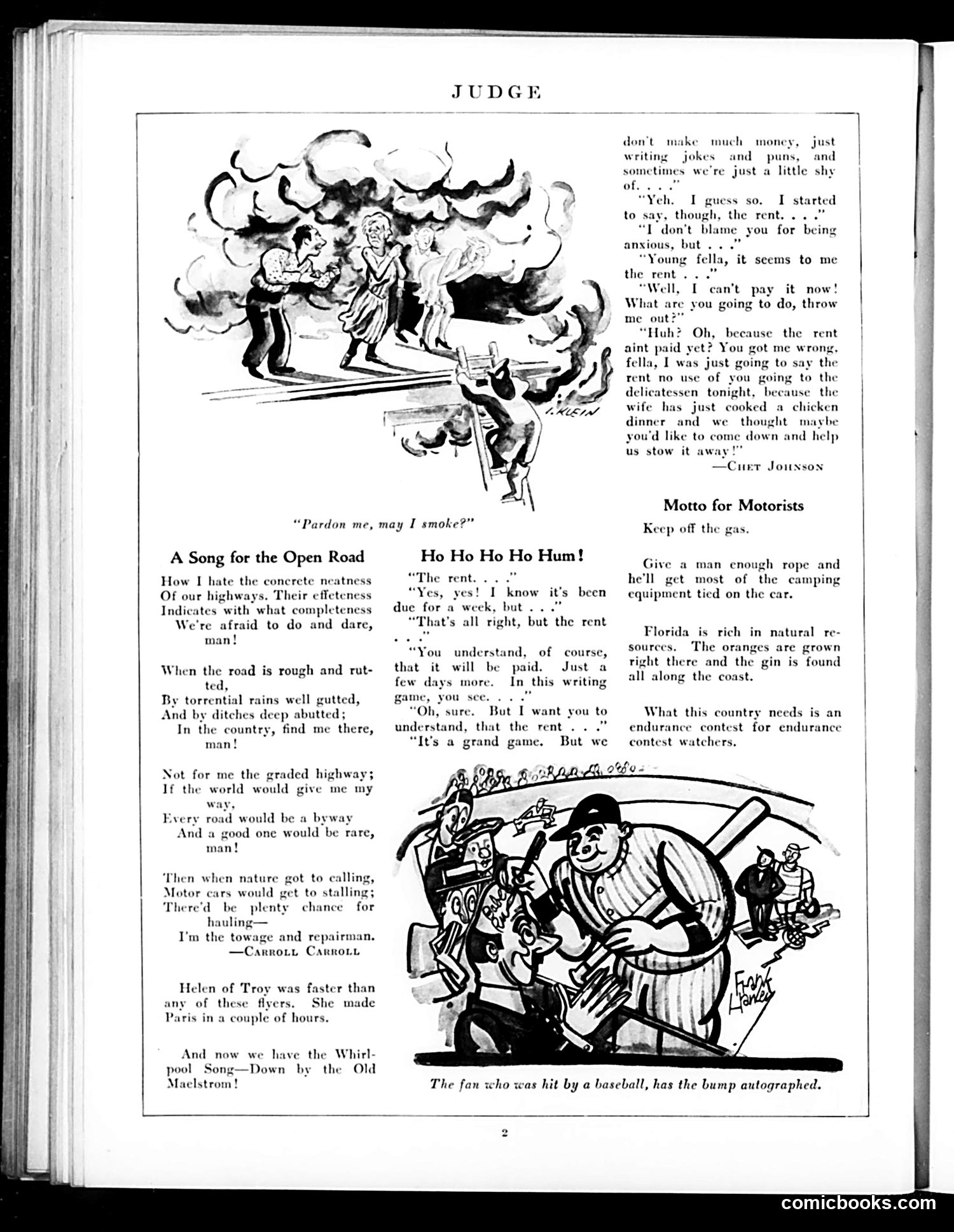
# Analysis of Judge Page This page contains humorous commentary on early 20th-century American life. The top cartoon "Pardon me, may I smoke?" depicts a domestic dispute about rent payment, with a landlord confronting tenants. The humor hinges on the tension between eviction threats and the tenant's attempt to distract with dinner invitations—a commentary on economic anxiety during an era of housing instability. "A Song for the Open Road" celebrates rural travel and self-sufficiency, likely reflecting nostalgia for pre-industrial America amid rapid urbanization. The bottom cartoon "The fan who was hit by a baseball, has the bump autographed" satirizes celebrity culture and fan obsession—a figure struck by a baseball gets the injury signed, mocking superficial celebrity worship. These pieces target working-class financial precarity and emerging consumer culture.
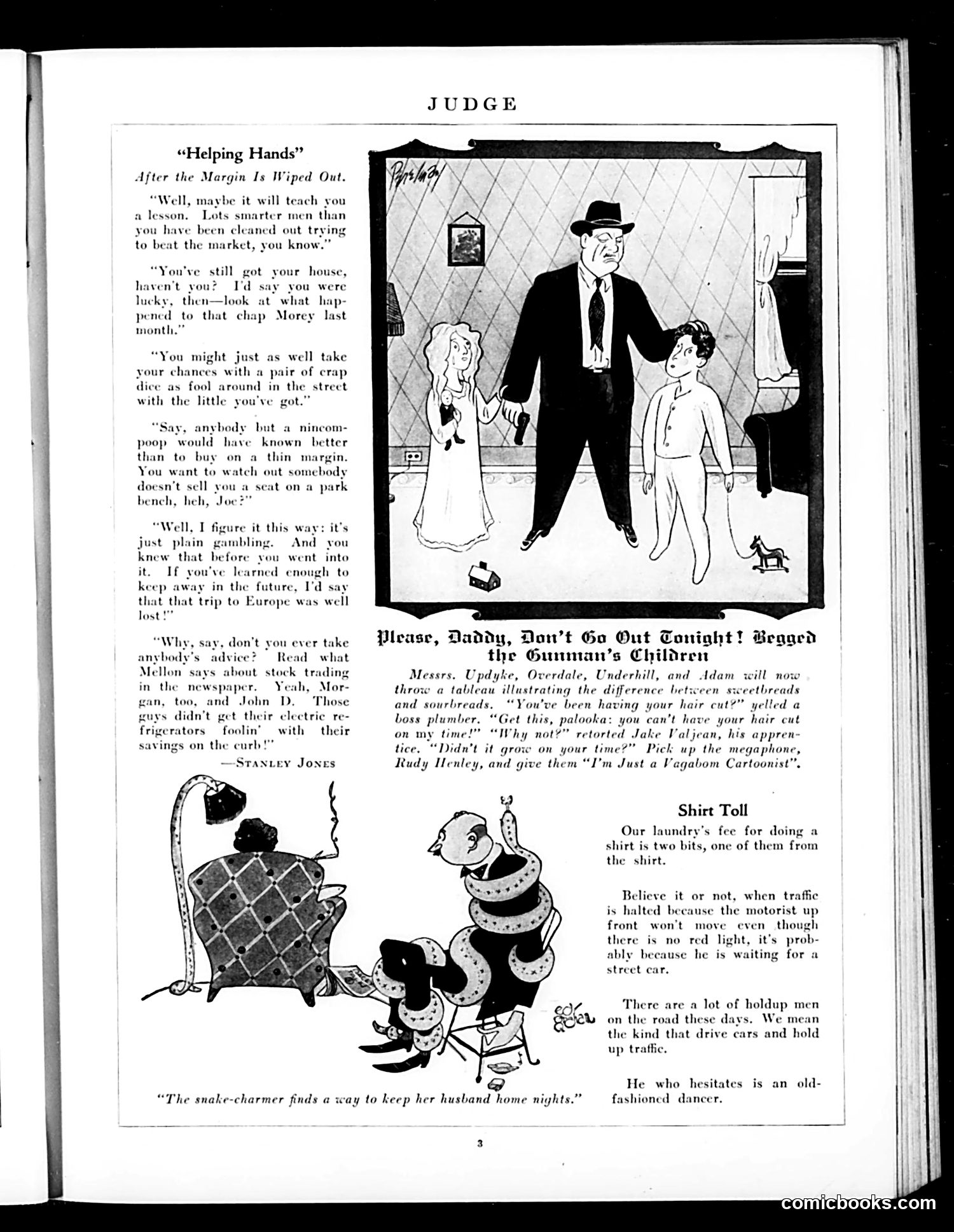
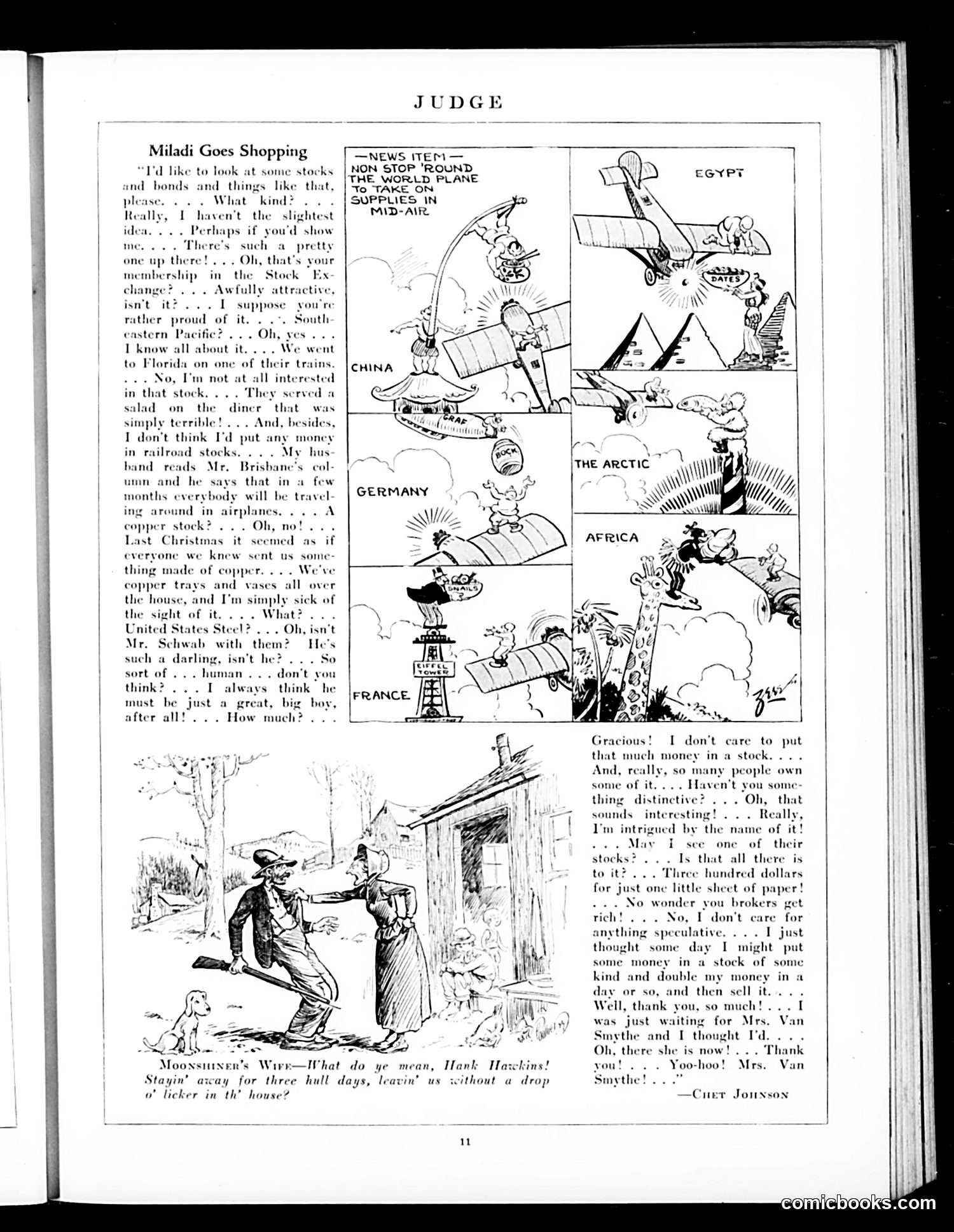
# Page Analysis: Judge Magazine Satirical Content This page contains three separate satirical pieces targeting early 20th-century social issues: 1. **"Helping Hands"**: A dialogue mocking financial advice to someone who lost money in the stock market. The joke criticizes how wealthy people casually suggest the poor gamble or take risks, treating serious financial losses flippantly. 2. **"Please, Daddy, Don't Go Out Tonight!"**: A cartoon showing a father with children, satirizing men's habits of frequenting nightlife establishments while neglecting family. The caption references vaudeville performers (Updyke, Overdale, etc.), suggesting commentary on entertainment-district culture. 3. **"Shirt Toll" and other brief items**: Short observations about laundry costs, traffic holdup men, and dancing etiquette—minor social commentary on daily frustrations and changing social customs. The overall tone ridicules wealthy indifference and critiques contemporary urban social behaviors.
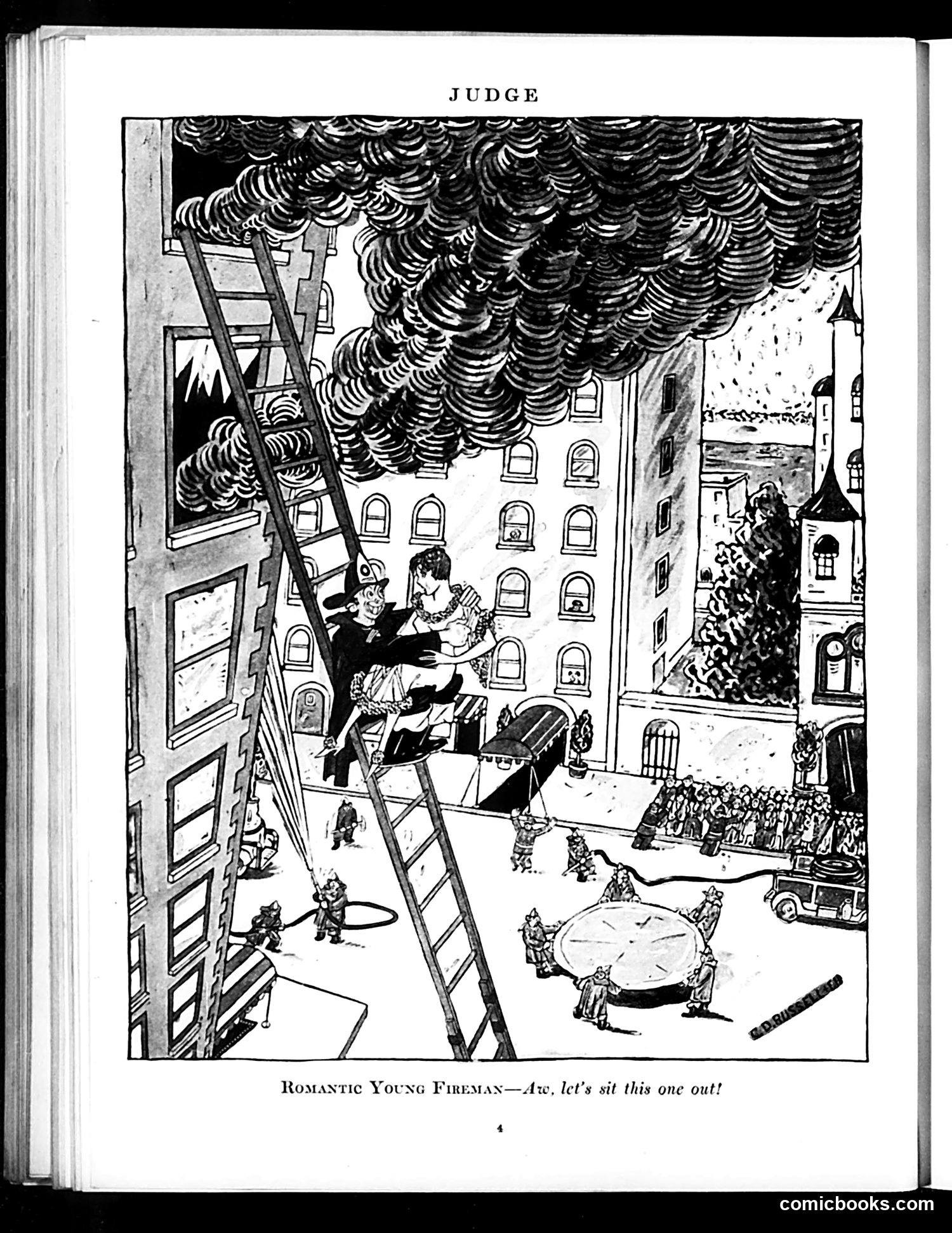
# Analysis This cartoon titled "Romantic Young Fireman—Aw, let's sit this one out!" depicts two firefighters on a ladder during an active building fire, with the structure engulfed in flames and crowds gathered below. The satire mocks the romantic notion of firefighting—the caption suggests one firefighter wants to abandon his duty to relax with his companion rather than fight the blaze. This jokes about the disconnect between the idealized, heroic image of firemen and the reality of dangerous, exhausting work. The "romantic" framing ironically undercuts actual heroism. The cartoon likely critiques either unrealistic public expectations of firefighters or satirizes sentimental portrayals of the profession that ignore the genuine peril and sacrifice involved.
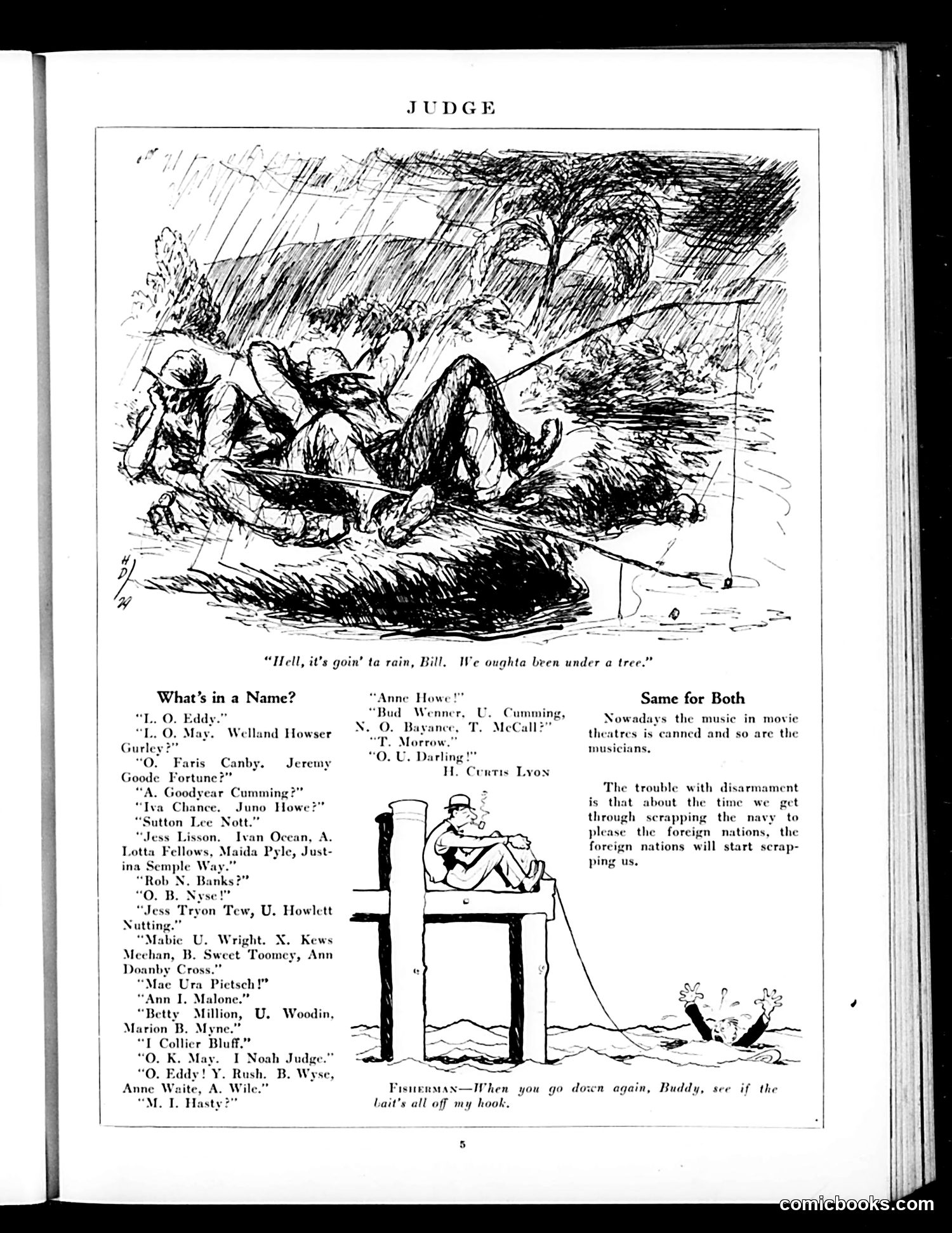
# Analysis of Judge Magazine Page **Top Cartoon:** Shows figures sheltering from rain under a tree, with one saying "Hell, it's goin' to rain, Bill. We oughta been under a tree." This appears to be a simple weather joke with no obvious political content. **Bottom Cartoon:** Depicts a figure at a gallows-like structure telling another "Fishermen! When you go down again, Buddy, see if the bait's all off my hook." This is dark humor about capital punishment, likely satirizing contemporary executions or judicial proceedings—a common Judge topic during this era. The page includes unrelated content: "What's in a Name?" lists what appear to be entertainment figures or cultural references, and "Same for Both" discusses film music and naval disarmament debates.
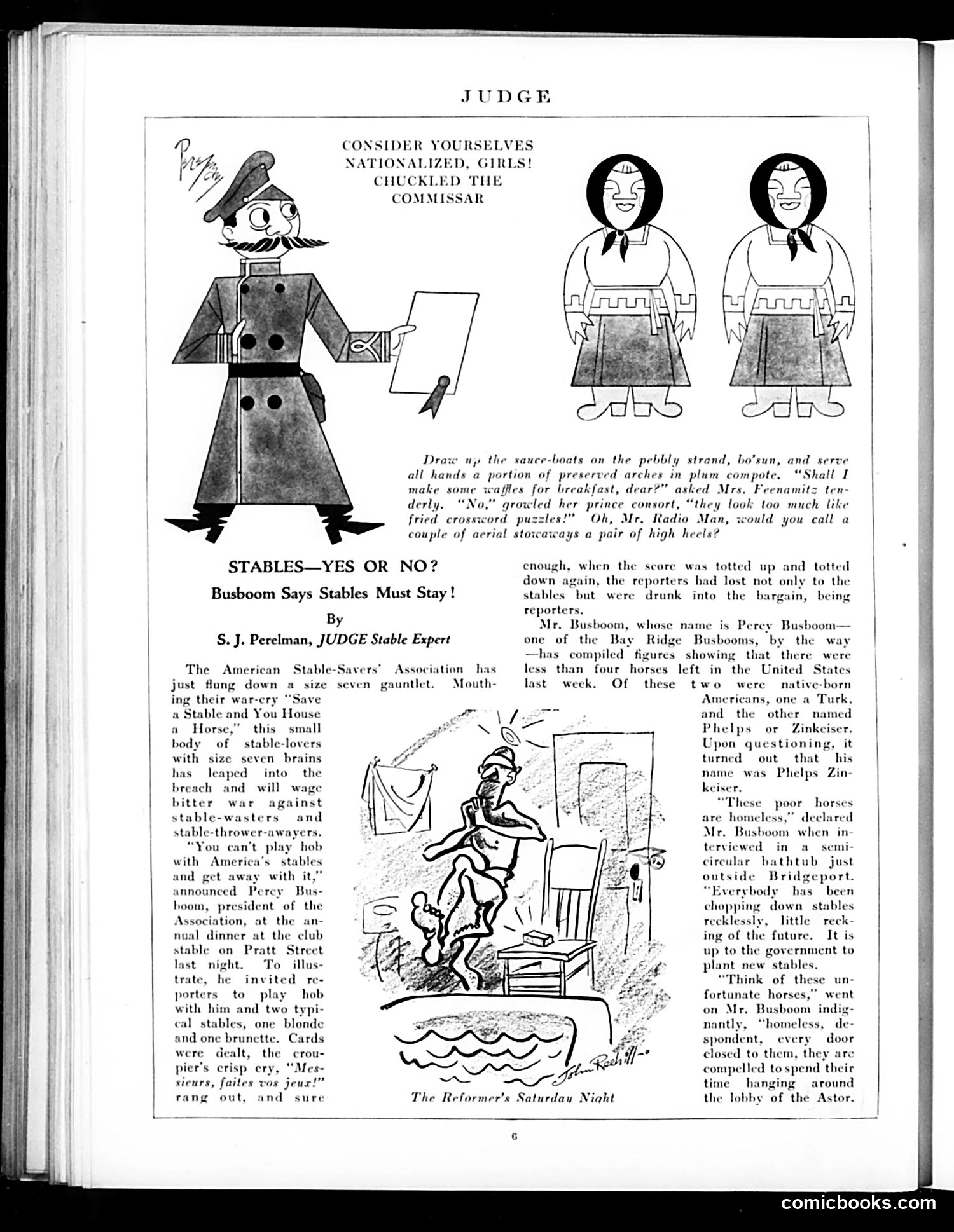
# Content Analysis This page satirizes the American Stable-Savers' Association and the debate over whether to preserve horses as the automobile age progresses. The top cartoon shows a naval commissar figure addressing two identical girls, apparently mocking Soviet commissars' propaganda methods. The main article by S.J. Perelman, labeled "JUDGE Stable Expert," humorously argues for keeping stables. It references Percy Busboom, who reported fewer than four horses remained in the U.S., naming the survivors (Americans, a Turk, and horses named Phelps or Zinkeiser). The accompanying illustration titled "The Reformer's Saturday Night" shows a chaotic domestic scene, likely satirizing well-intentioned but impractical reformers advocating for outdated institutions during rapid modernization. The satire critiques nostalgia-driven preservation efforts in an era of technological change.
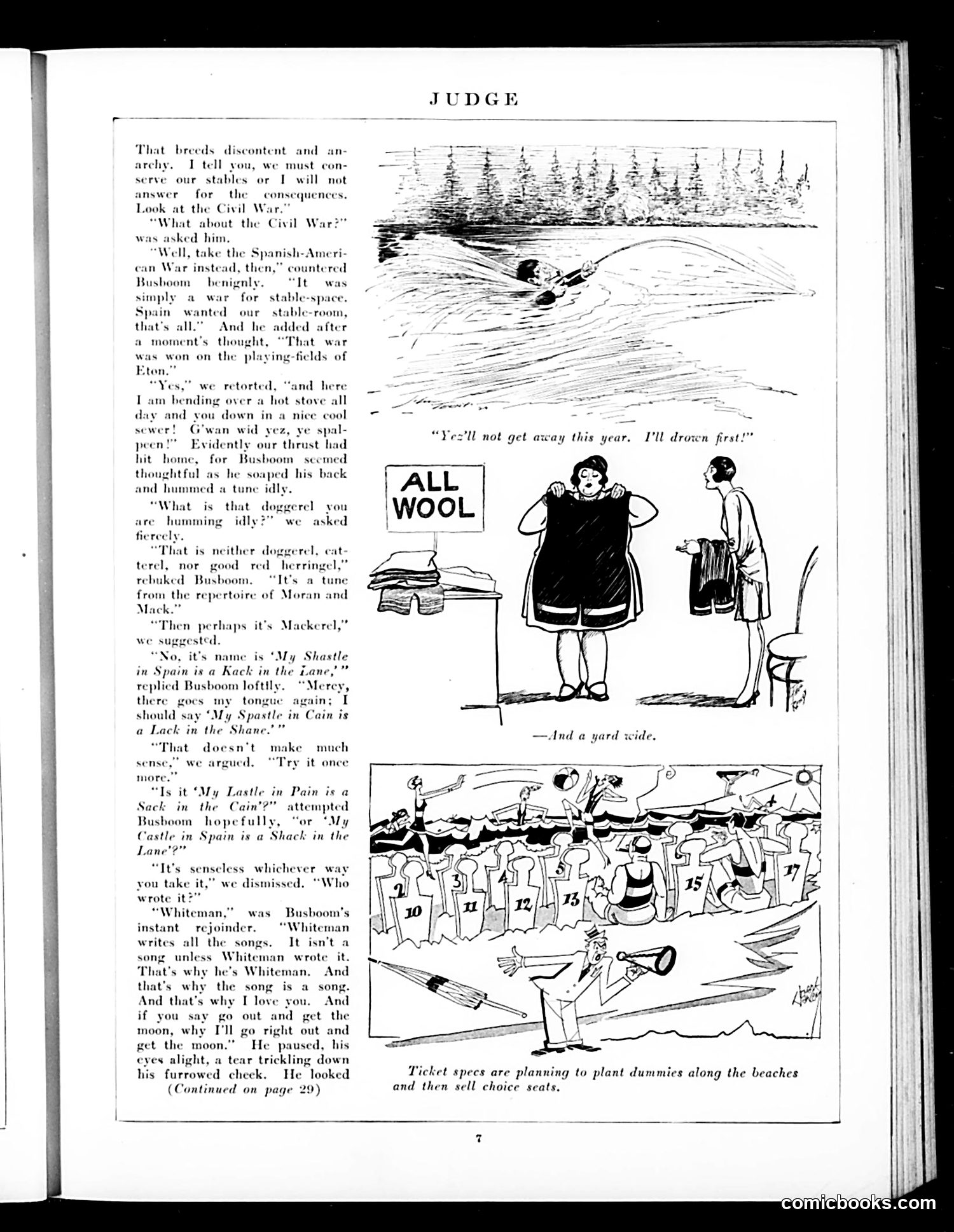
# Analysis of Judge Magazine Page This page contains humorous dialogue between two characters debating Irish immigration and assimilation, alongside satirical cartoons about beach ticketing schemes. **The main text** features "Busboom," an Irish character (indicated by dialect and name), defending Irish immigrants against accusations of causing "discontent and anarchy." His absurd logic—that the Spanish-American War was fought over "stable-space"—mocks nativist arguments blaming immigrants for social problems. **The cartoons** satirize: 1. **Top cartoon**: A woman selling "ALL WOOL" garments, depicted as wider than advertised—mocking false advertising of fabric width 2. **Bottom cartoon**: Beach ticket speculation schemes where promoters plan to place "dummies" (mannequins) along beaches to sell "choice seats"—satirizing tourist exploitation and fraud The page reflects early 20th-century anxieties about immigration, consumer fraud, and tourist industry deception. Judge was a satirical magazine targeting both working-class characters and commercial hucksterism of the era.
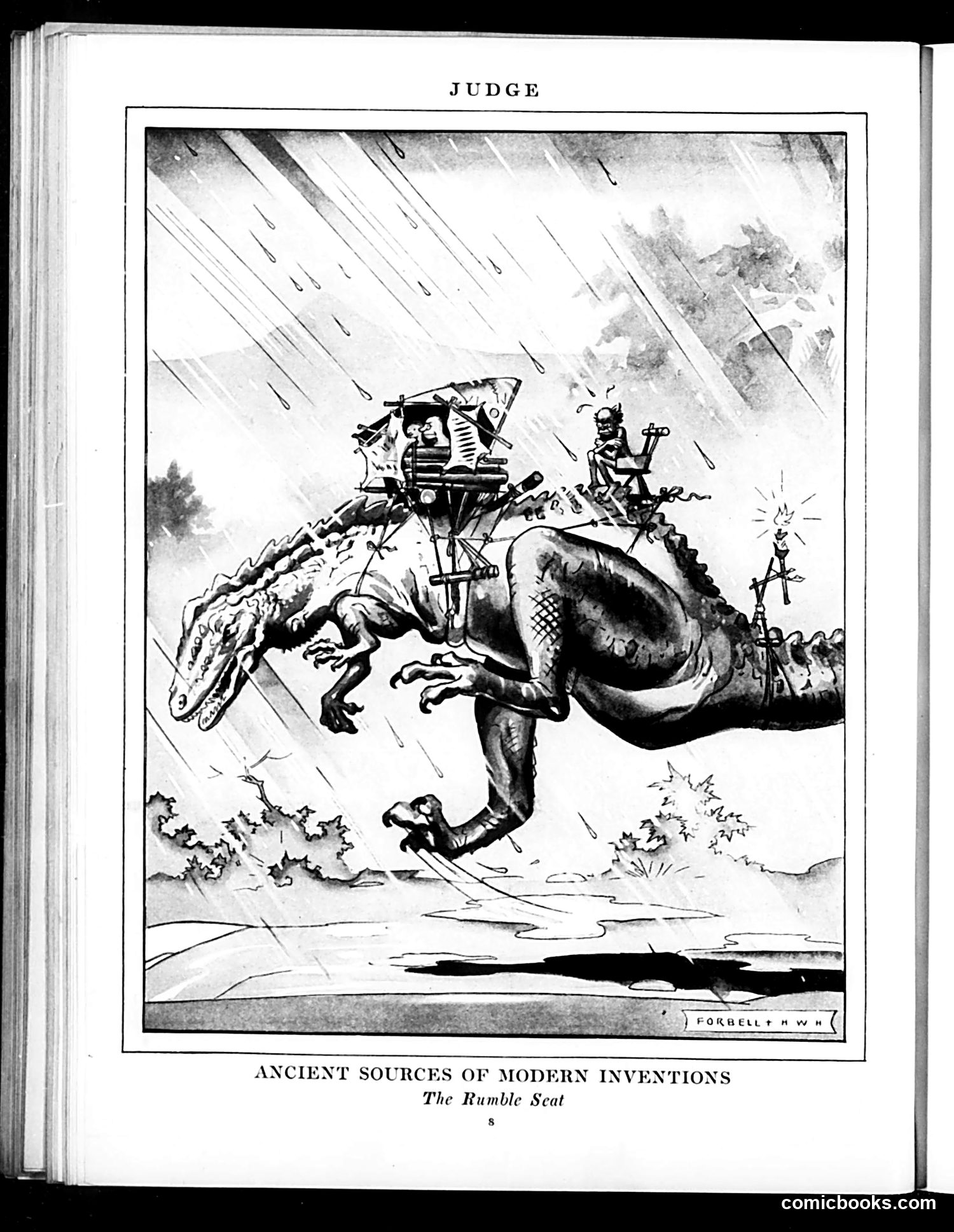
# Analysis This satirical cartoon from *Judge* magazine depicts a fantastical creature—appearing to be a dinosaur or prehistoric beast—ridden by small mechanical figures, riding through rain. The title "Ancient Sources of Modern Inventions: The Rumble Seat" is the key to understanding the joke. A "rumble seat" was a real early-automobile feature: an exposed, folding rear seat. The cartoon humorously suggests that this modern car feature has prehistoric origins—that ancient creatures provided the original inspiration for the rumble seat's design and function. The satire mocks the tendency to claim "ancient sources" for modern conveniences, presenting an absurd visual pun: the literal rumbling of a prehistoric beast becomes the "rumble" seat. The small figures clinging to the creature mirror passengers precariously perched in actual rumble seats.
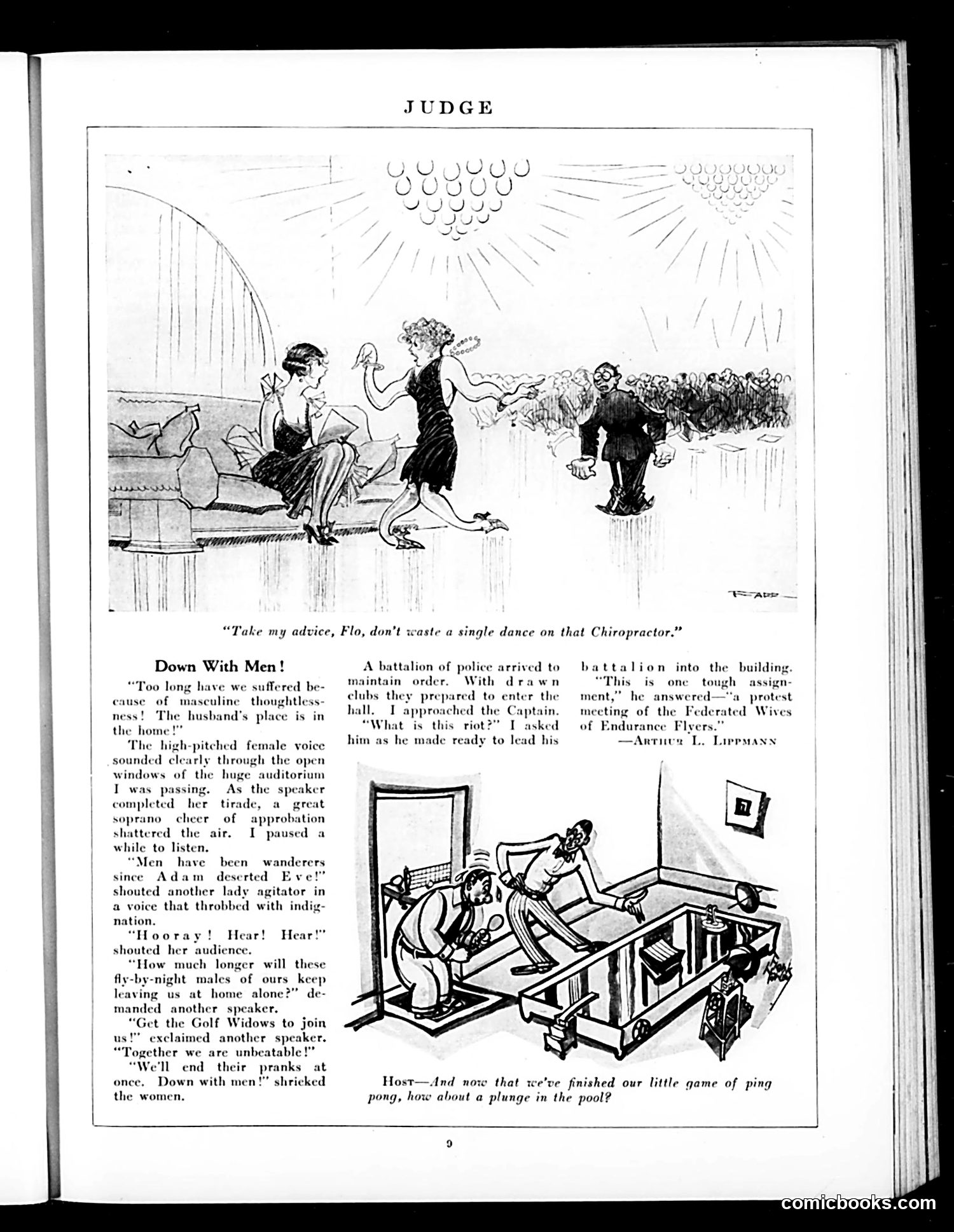
# "Down With Men!" - Judge Magazine Satire This page satirizes the women's suffrage and feminist movements of the early 20th century. The top cartoon depicts a women's rally with speakers denouncing male negligence—husbands abandoning domestic duties, men pursuing leisure (golf, flying) while wives stay home. Police are called to manage the "riot." The satire mocks the movement by portraying women's activism as shrill, emotionally overwrought, and requiring police intervention—a common dismissive trope used against suffragettes. The caption about "Golf Widows" and "Endurance Flyers" references real grievances (men prioritizing hobbies over family) but presents them as hysteria deserving ridicule. The lower cartoon adds gendered mockery: after ping-pong, a man casually suggests swimming—implying women should remain decorative and compliant rather than politically engaged. The overall message: women organizing for rights is presented as absurd disorder rather than legitimate political expression.
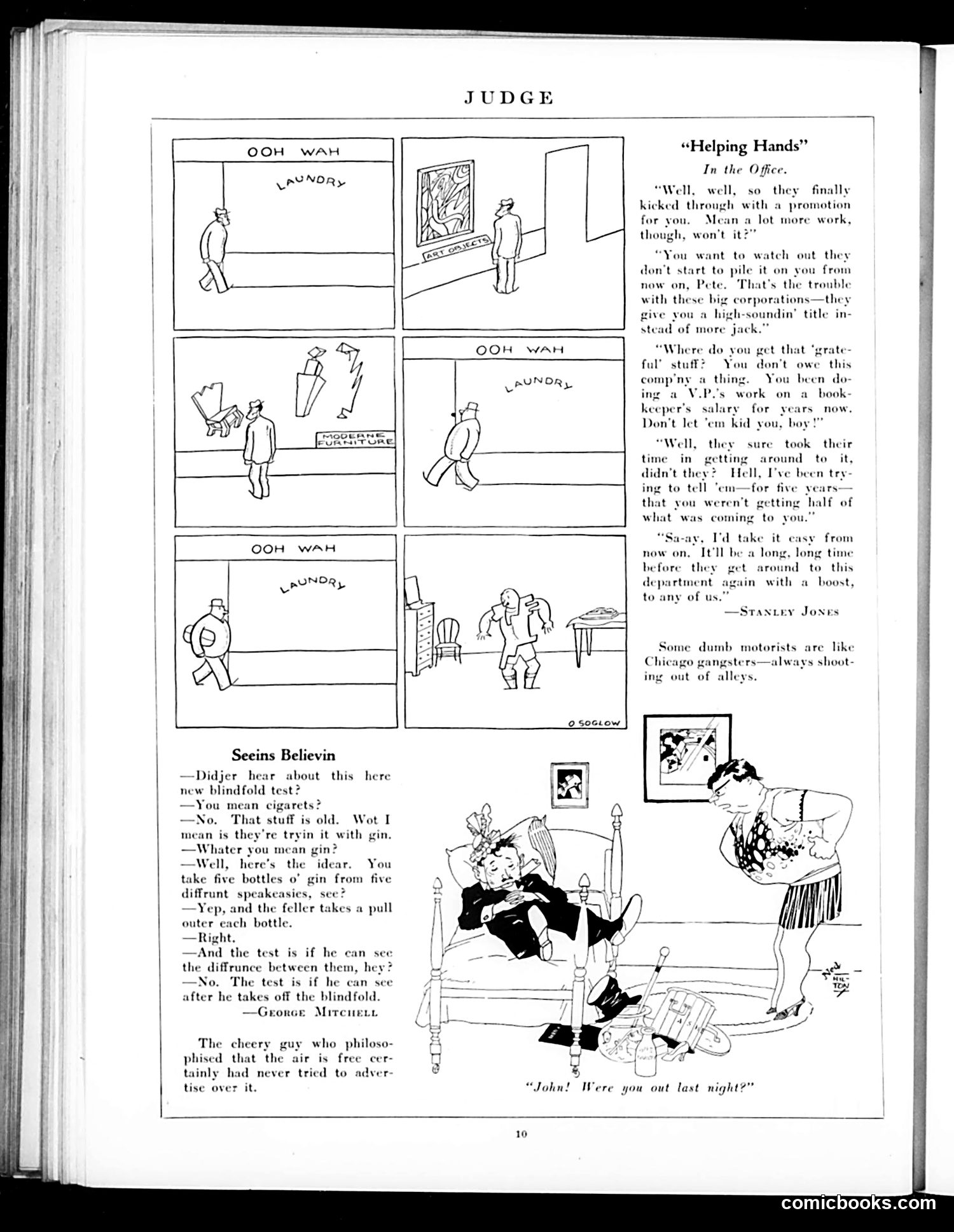
# Explanation for Modern Readers **"Helping Hands"** depicts workplace cynicism about promotions. A man receives a job advancement, but his coworkers warn him it's a trap: the company will load him with extra work without proportional pay increase, using the prestigious title as compensation instead of actual raises. The satire critiques corporate exploitation—companies leverage employee loyalty and ambition to extract more labor while maintaining stagnant compensation. **"Seeing Believin'"** is a Prohibition-era joke. It mocks a "blindfold test" supposedly distinguishing gin brands, but the actual test is whether someone can walk straight *after* drinking gin from five different illegal speakeasies. The humor targets both blind taste-test advertising and the absurdity of Prohibition enforcement (speakeasies were illegal establishments). Both sections satirize American workplace and social dynamics of the era—corporate manipulation and the underground alcohol trade during Prohibition.