
Penny Dreadfuls, 1923 · page 64 of 116
The Taking of Helen by John Masefield — page 64: what you’re looking at
What you’re looking at
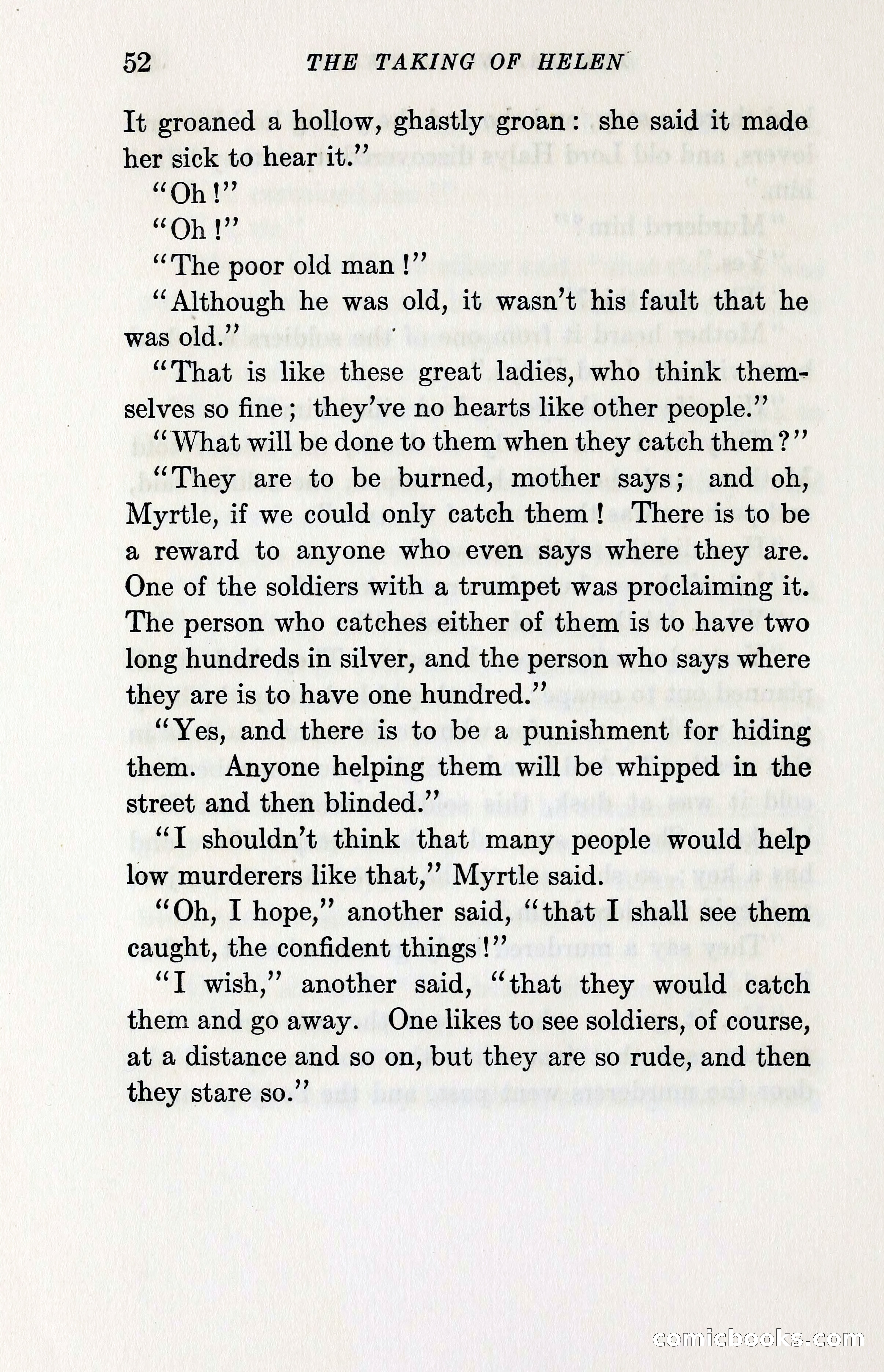
# Analysis of Page 52 from "The Taking of Helen" This page contains running prose dialogue from a Victorian penny dreadful. The conversation depicts women discussing a manhunt for two fugitives—apparently murderers who are to be burned if caught. The dialogue reveals the reward structure (two hundred silver for capture, one hundred for information) and severe punishments for those who help them (whipping and blinding). The speakers express mixed sentiments: moral condemnation of the fugitives, desire to see them caught, but also complaints about the soldiers conducting the search, whom they find rude and intrusive despite finding them pleasant "at a distance." The text emphasizes sensational drama and class-conscious social commentary typical of the genre.
📄 Transcribed text from this page (OCR, searchable)
Machine-transcribed from the original scan — historical spelling and the odd misread are preserved.
52 THE TAKING OF HELEN It groaned a hollow, ghastly groan: she said it made her sick to hear it.”’ iT 4 Oh 2? C¢ Oh i “The poor old man !”’ “Although he was old, it wasn’t his fault that he was old.”’ “That is like these great ladies, who think them- selves so fine; they’ve no hearts like other people.” “What will be done to them when they catch them ?”’ “They are to be burned, mother says; and oh, Myrtle, if we could only catch them! There is to be a reward to anyone who even says where they are. One of the soldiers with a trumpet was proclaiming it. The person who catches either of them is to have two long hundreds in silver, and the person who says where they are is to have one hundred.”’ “Yes, and there is to be a punishment for hiding them. Anyone helping them will be whipped in the street and then blinded.”’ “T shouldn’t think that many people would help low murderers like that,”” Myrtle said. “Oh, I hope,” another said, “‘that I shall see them caught, the confident things !”’ ‘“T wish,’ another said, “that they would catch them and go away. One likes to see soldiers, of course, at a distance and so on, but they are so rude, and then they stare so.”’ CONNIE DOOKS (C(O)