
Penny Dreadfuls, 1923 · page 63 of 116
The Taking of Helen by John Masefield — page 63: what you’re looking at
What you’re looking at
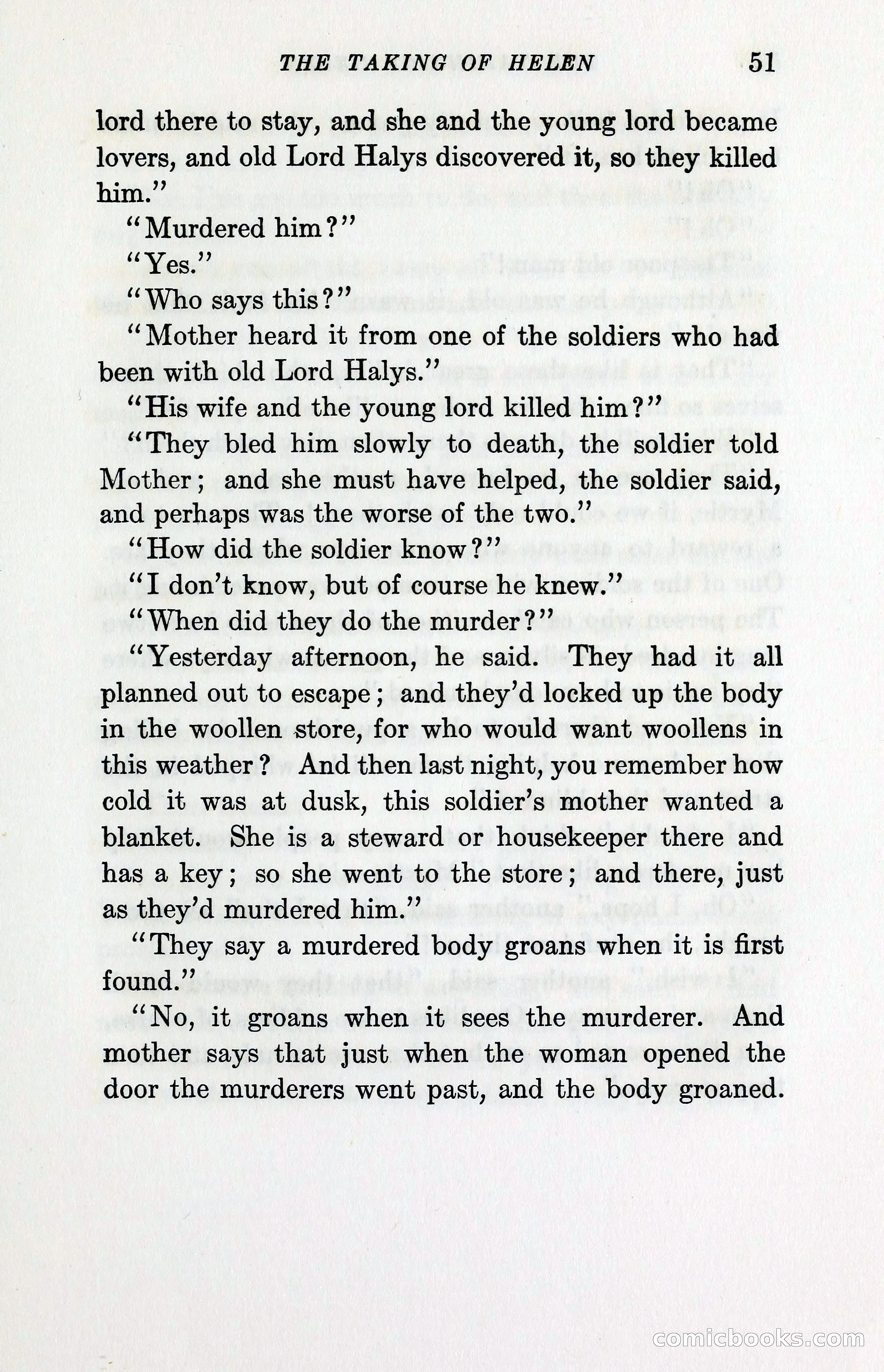
# Page from "The Taking of Helen" This is a page of running prose dialogue from a Victorian penny dreadful. The text depicts a conversation in which one character reports, secondhand, an account of a murder: a young lord and his lover (the wife of old Lord Halys) murdered the elderly lord by bleeding him slowly to death, then hid his body in a woollen store. The narrative includes a supernatural element—the discovery of the body when a servant woman (the soldier's mother) opens the store door causes the corpse to groan, which the character attributes to the murdered body sensing its murderers passing by.
📄 Transcribed text from this page (OCR, searchable)
Machine-transcribed from the original scan — historical spelling and the odd misread are preserved.
THE TAKING OF HELEN ol lord there to stay, and she and the young lord became lovers, and old Lord Halys discovered it, so they killed him.” “Murdered him ?”’ 66 Yes.”’ ‘Who says this?”’ “Mother heard it from one of the soldiers who had been with old Lord Halys.”’ “His wife and the young lord killed him?” “They bled him slowly to death, the soldier told Mother; and she must have helped, the soldier said, and perhaps was the worse of the two.’ “How did the soldier know?” ‘“‘T don’t know, but of course he knew.” “When did they do the murder?”’ “Yesterday afternoon, he said. They had it all planned out to eseape; and they’d locked up the body in the woollen store, for who would want woollens in this weather? And then last night, you remember how cold it was at dusk, this soldier’s mother wanted a blanket. She is a steward or housekeeper there and has a key; so she went to the store; and there, just as they’d murdered him.” “They say a murdered body groans when it is first found.” “No, it groans when it sees the murderer. And mother says that just when the woman opened the door the murderers went past, and the body groaned. CoOnnicoaooKs (C(O)