
Judge, 1938-02 · page 23 of 52
Judge — February 1938 — page 23: what you’re looking at
A restored page from Judge, 1938-02. Page through the whole issue in the reader above.
📄 Transcribed text from this page (OCR, searchable)
Machine-transcribed from the original scan — historical spelling and the odd misread are preserved.
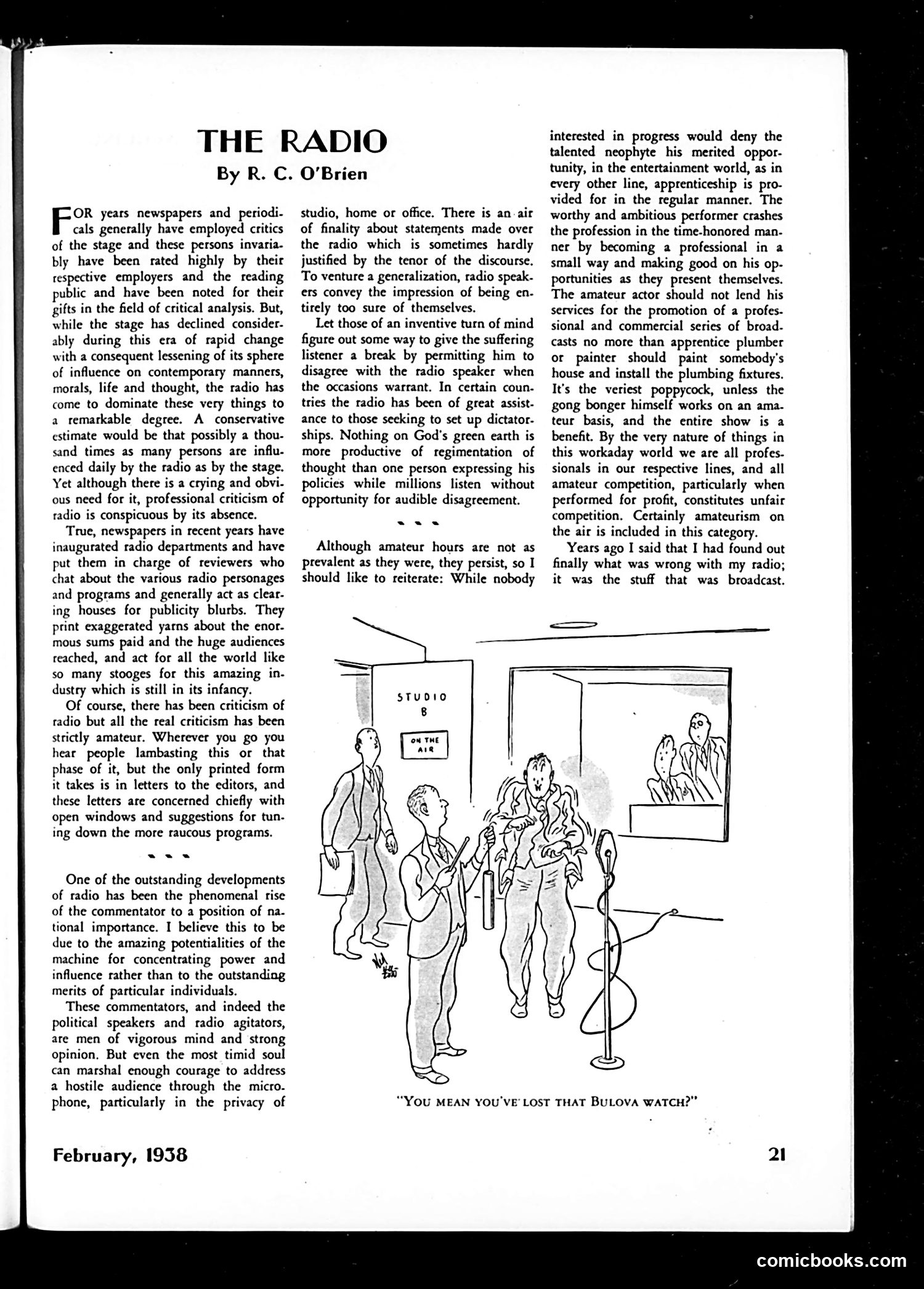
THE RADIO By R. C. O’Brien OR years newspapers and periodi- cals generally have employed critics of the stage and these persons invaria- bly have been rated highly by their respective employers and the reading public and have been noted for their gifts in the field of critical analysis. But, while the stage has declined consider- ably during this era of rapid change with a consequent lessening of its sphere of influence on contemporary manners, morals, life and thought, the radio has come to dominate these very things to a remarkable degree. A conservative estimate would be that possibly a thou- sand times as many persons are influ- enced daily by the radio as by the stage. Yet although there is a crying and obvi- ous need for it, professional criticism of radio is conspicuous by its absence. True, newspapers in recent years have inaugurated radio departments and have put them in charge of reviewers who chat about the various radio personages and programs and generally act as clear- ing houses for publicity blurbs. They print exaggerated yarns about the enor. mous sums paid and the huge audiences reached, and act for all the world like so many stooges for this amazing in- dustry which is still in its infancy. Of course, there has been criticism of radio but all the real criticism has been strictly amateur. Wherever you go you hear people lambasting this or that phase of it, but the only printed form it takes is in letters to the editors, and these letters are concerned chiefly with open windows and suggestions for tun- ing down the more raucous programs. wee One of the outstanding developments of radio has been the phenomenal rise of the commentator to a position of na. tional importance. I believe this to be due to the amazing potentialities of the machine for concentrating power and influence rather than to the outstanding merits of particular individuals. These commentators, and indeed the political speakers and radio agitators, are men of vigorous mind and ‘strong opinion. But even the most timid soul can marshal enough courage to address a hostile audience through the micro. phone, particularly in the privacy of February, 1958 studio, home or office. There is an. air of finality about statements made over the radio which is sometimes hardly justified by the tenor of the discourse. To venture a generalization, radio speak- ers convey the impression of being en- tirely too sure of themselves. Let those of an inventive turn of mind figure out some way to give the suffering listener a break by permitting him to disagree with the radio speaker when the occasions warrant. In certain coun- tries the radio has been of great assist- ance to those secking to set up dictator- ships. Nothing on God’s green earth is more productive of regimentation of thought than one person expressing his policies while millions listen without Opportunity for audible disagreement. Although amateur hours are not as prevalent as they were, they persist, so I should like to reiterate: While nobody interested in progress would deny the talented neophyte his merited oppor- tunity, in the entertainment world, as in every other line, apprenticeship is pro- vided for in the regular manner. The worthy and ambitious performer crashes the profession in the time-honored man- ner by becoming a professional in a small way and making good on his op- portunities as they present themselves. The amateur actor should not lend his services for the promotion of a profes- sional and commercial series of broad. casts no more than apprentice plumber or painter should paint somebody's house and install the plumbing fixtures. It's the veriest poppycock, unless the gong bonger himself works on an ama- teur basis, and the entire show is a benefit. By the very nature of things in this workaday world we are all profes- sionals in our respective lines, and all amateur competition, particularly when performed for profit, constitutes unfair competition. Certainly amateurism on the air is included in this category. Years ago I said that I had found out finally what was wrong with my radio; it was the stuff that was broadcast. sTuoIO 8 “YOU MEAN YOU'VE’ LOST THAT BULOVA WATCH?” comicbooks.com