
Judge, 1929-10-19 · page 22 of 36
Judge — October 19, 1929 — page 22: what you’re looking at
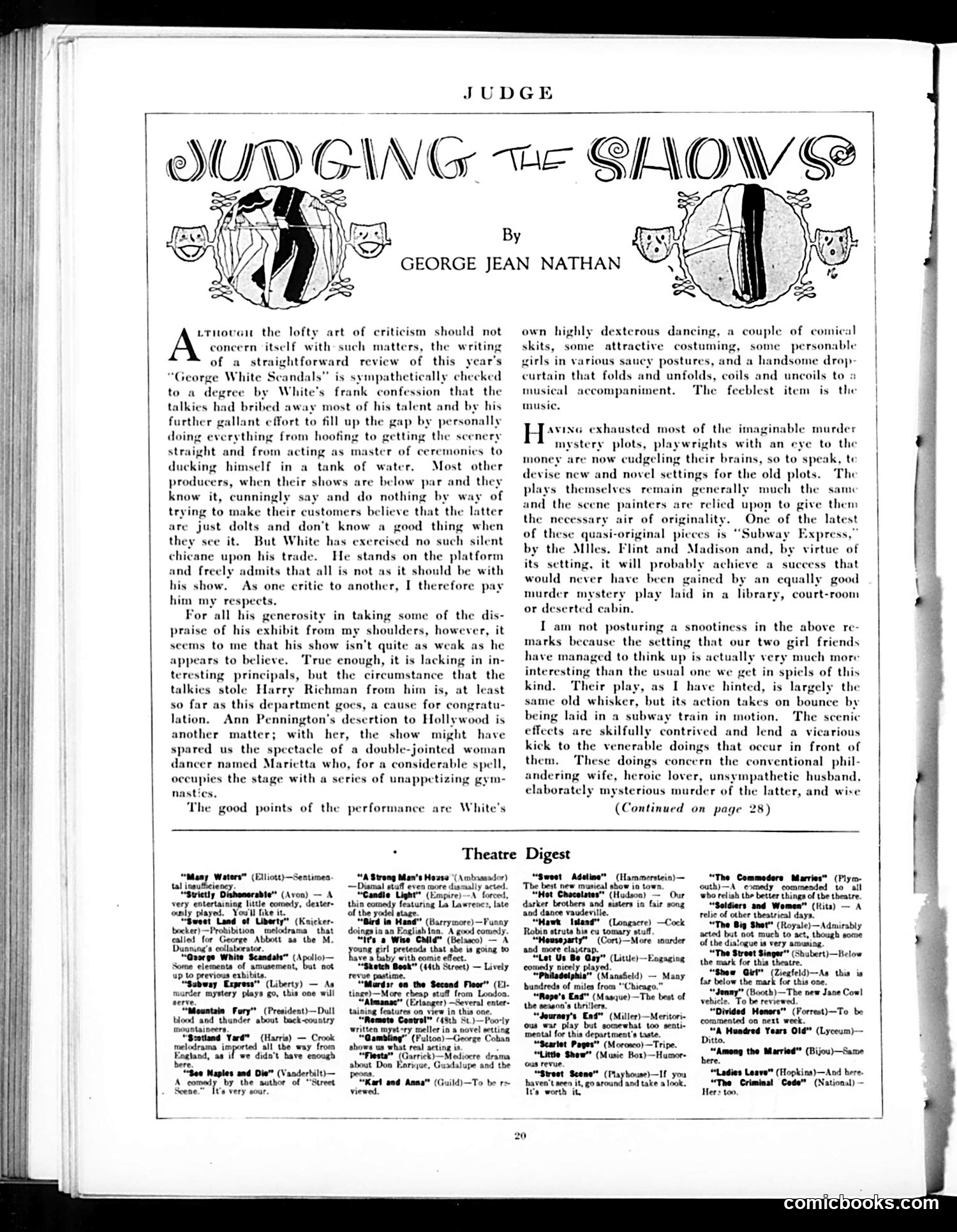
A restored page from Judge, 1929-10-19. Page through the whole issue in the reader above.
📄 Transcribed text from this page (OCR, searchable)
Machine-transcribed from the original scan — historical spelling and the odd misread are preserved.
JUDGE Lrnovan the lofty art of criticism should not A concern itself with such matters, the writing of a straightforward review of this ye: “George White Sc is” is sympathetically checked to a degree by White's frank confession that the talkies had bribed away most of his talent and by his further gallant effort to fill up the gap by personally doing everything from hoofing to getting the scenery straight and from acting as master of ceremonies to ducking himself in a tank of water. Most other producers, when their shows are be know it, cunningly say and do nothing by way of trying to make their customers believe that the latter are just dolts and don't know a good thing when they see it. But White has exercised no such silent chicane upon his trade. He stands on the platform and freely admits that all is not as it should be with his show. As one critic to another, I therefore pay him my respects. For all his generosity in taking some of the dis- praise of his exhibit from my shoulders, however, it seems to me that his show isn’t quite as weak as he appears to believe. True enough, it is lacking in in- teresting principals, but the circumstance that the talkies stole Harry Richman from him is, at least so far as this department goes, a cause for congratu- lation. Ann Pennington’s desertion to Hollywood is another matter; with her, the show might have spared us the spectacle of a double-jointed woman dancer named Marietta who, for a considerable spell, occupies the stage with a series of unappetizing gym- nasties. The good points of the performance are White's und they _ 7 GEORGE JEAN NATHAN own highly dexterous dancing, a couple of comical skits, some attractive costuming, some personable irls in various saucy postures, and a handsome drop curtain that folds and unfolds, coils and uncoils to « musical accompaniment. The feeblest item is the music. H AvING exhausted 1 mystery plots, playwrights with an eye to the money are now cudgcling their brains, so to speak, te devise new and novel settings for the old plots. The plays themselves remain generally much the samc and the scene painters are relied upon to give them the necessary air of ori y. One of the latest of these quayi-original pieces is “Subway Express,” by the Flint and Mac its setting, it will prol would never have been gi aginable murder son and, by virtue of achieve a success that ined by an equally good murder mystery play laid in a library, court-room or deserted cabin. I am not posturing a snootiness in the above re- marks because the setting that our two girl friends ave managed to think up is actually very much more interesting than the usual one we get in spiels of this kind. Their play, as I have hinted, is largely the same old whisker, but its action takes on bounce by being laid in a subway train in motion. The scenic effects are skilfully contrived and lend a vicarious kick to the venerable doings that occur in front of them. These doings concern the conventional phil- andering wife, heroic lover, unsympathetic husband, elaborately mysterious murder of the latter, and wise (Continued on page 28) : Theatre Digest (Many Watery” (Elictt)—Sentimea- “A Stang Man's Heasa (Ambassador) tal ineutbeiency. —Diamal stuff even more dismally acted 19 Dishonerabte” (Avon) — A “Candle Light” (Empire)—\ forces, very entertaining litle comedy, detier- thin ouady featuring La Lawreoe’, lato “Sweet Adeline” (Hammerstein) “The Commodore Marries” (Piym- The best new musical show in town. outh)—A exmedy commended to all “Hot Chocolates” (Hudson) — Our who relish the better things of the theatre. darker brothers and sisters in fair song cnn played. Youll ike it of Liberty” (Knicker- becker Prosioiion teledraa that calle! for George Abbott as the M. ‘White Scandals (Apollo)— Some elements of amusement, but not up to previous exhibits. 5 “Subway Express” (Liberty) — murder mystery plays go, this one will | verve Hy, “Mountain Fory (Presidest)—Dull blood and thunder about back-country imoustal seers jatiand Yared" (Harris) — Crook treladrama imported all the way from Fatinad, ‘as if we didn't have enough iy Naples and Die” (Veadertih= A co: by the author of Scene.” It's very sour of the yodel stage. “tied ia Mond (Barryore) —Fusny doings in an English tna. A good comnly. “IPs a Wise CAlld” (Belasco) — A ung pil preteada that abe is going 8 ve a baby with comic effect. “Sketch eee (He Street) — Lively revue past “iaurdor ea the Second Fler” (E- tinge)—More cheap stuff from Loadoa. “Almanae” (Erlanger) —Several enter- features on view in this one. “Remote Control” (48 St )—Poorly written myst-ry meller in a novel setting jambling”” (Fulton) George Coban ‘us what real acting is ‘“Plesta”™ (Garrick)—Mediocre drama sbout Doo Harijue. Guadalupe and the ° “Kart and Anna” (Cuild)—To be r= viewed. ‘and dance vaudeville. “Hawt Island” (Longacre) —Cock Robin struts bis cu tomary stuf “Heusezarty” = (Cort)—More wmarder and more ¢lajtrap. “Let Us Be Gay” (Little) Engaging comedy nicely played. “Philadelphia” (Mansfeld) — Many bundreds of miles from **Chicago.” “Repe’s Eng” {iseaae) The best of the season's thril “Journey's ta (Miller) —Meritori- ous war play but somewhat too senti- meatal for this department's taste. “Scarlet Pages” (Moronco)—Tripe. “Little Shew” (Music Bor) —Humor- ous revue. “Street Scene” (Fayhouse)—If you haven't seen it, go. around and take a look. It's worth it, “Soldiers and Women” (Itits) — A relic of other theatrical days. “Tee Big Sher" (Royale) Adnirabiy acted but not much to act, thoagh some of the dialogue is very amating. “The Street Singer” (Shubert) —Below the mark for this theatre. “Sheu Gkt” (Zieateld)—As this ia far below the mark for this one. “denny” (Boot)—The new Jane Cow! vehicle. To be revie “Divided Honors” (Porrest)—To be commented on next week. “A Hundred Years O14" (Lyceum)— Ditto. pe ZAmens the Marrie€” (Bijou)—Same ere. “Ladies Leave” (Hopkins)—And bere. “Tre Criminal Code” (National) — Hers too. 20 rod Ccomicbooks.com