A complete issue · 51 pages · 1935
Life — December 1935
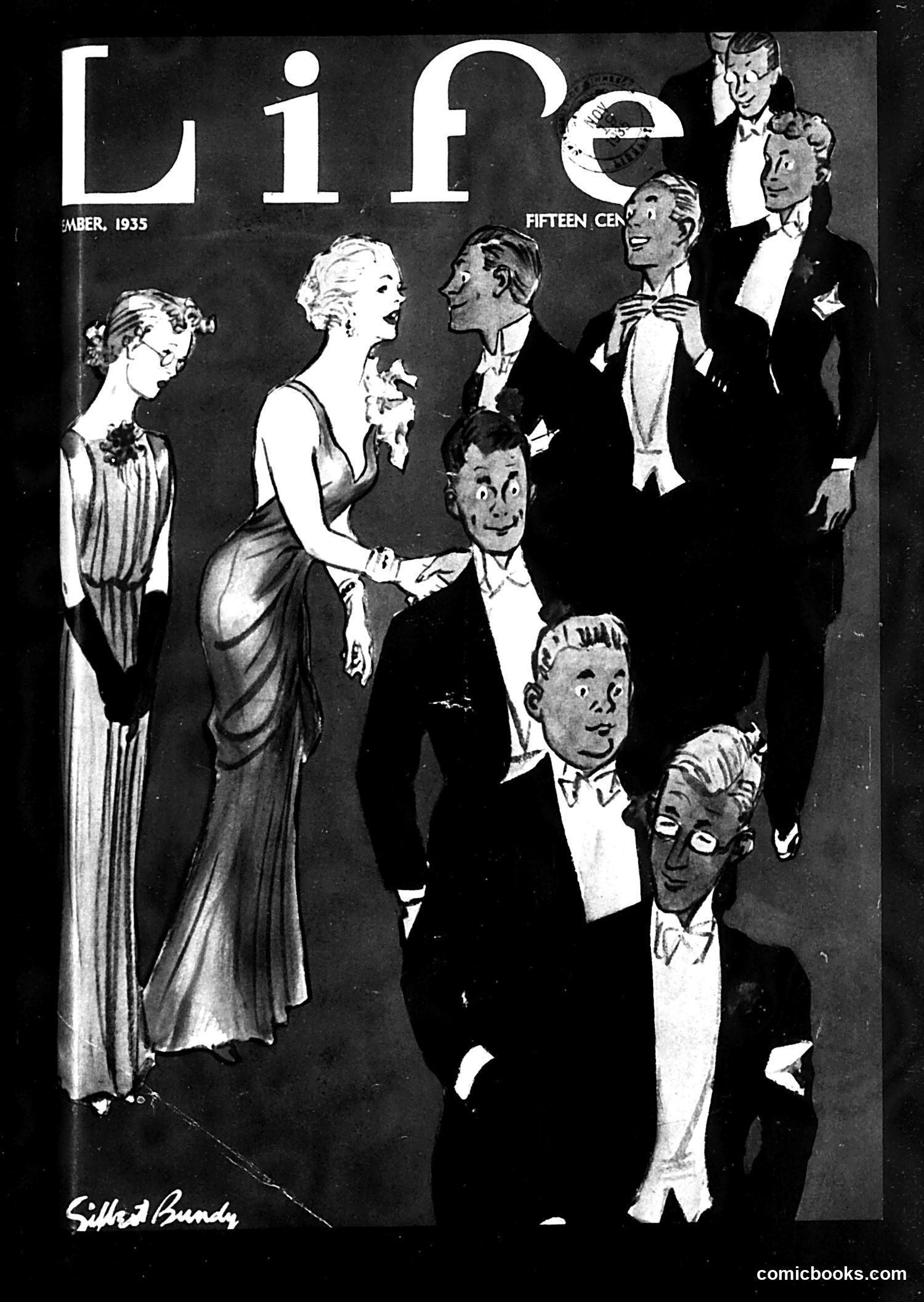
# Life Magazine Cover, December 1935 This is a Life magazine cover (December 1935) illustrated by Sickel Bundy, depicting a formal evening social scene. The composition shows well-dressed figures in tuxedos and evening gowns at what appears to be a sophisticated party or gala event. The satire likely comments on 1930s high society and wealth during the Great Depression—a contrast between the elegantly dressed attendees and economic hardship affecting ordinary Americans. The exaggerated facial expressions and caricature style suggest mockery of the wealthy elite's indifference to wider social conditions. However, without identifying specific individuals in the illustration or additional text content, the precise satirical targets remain unclear from the image alone.
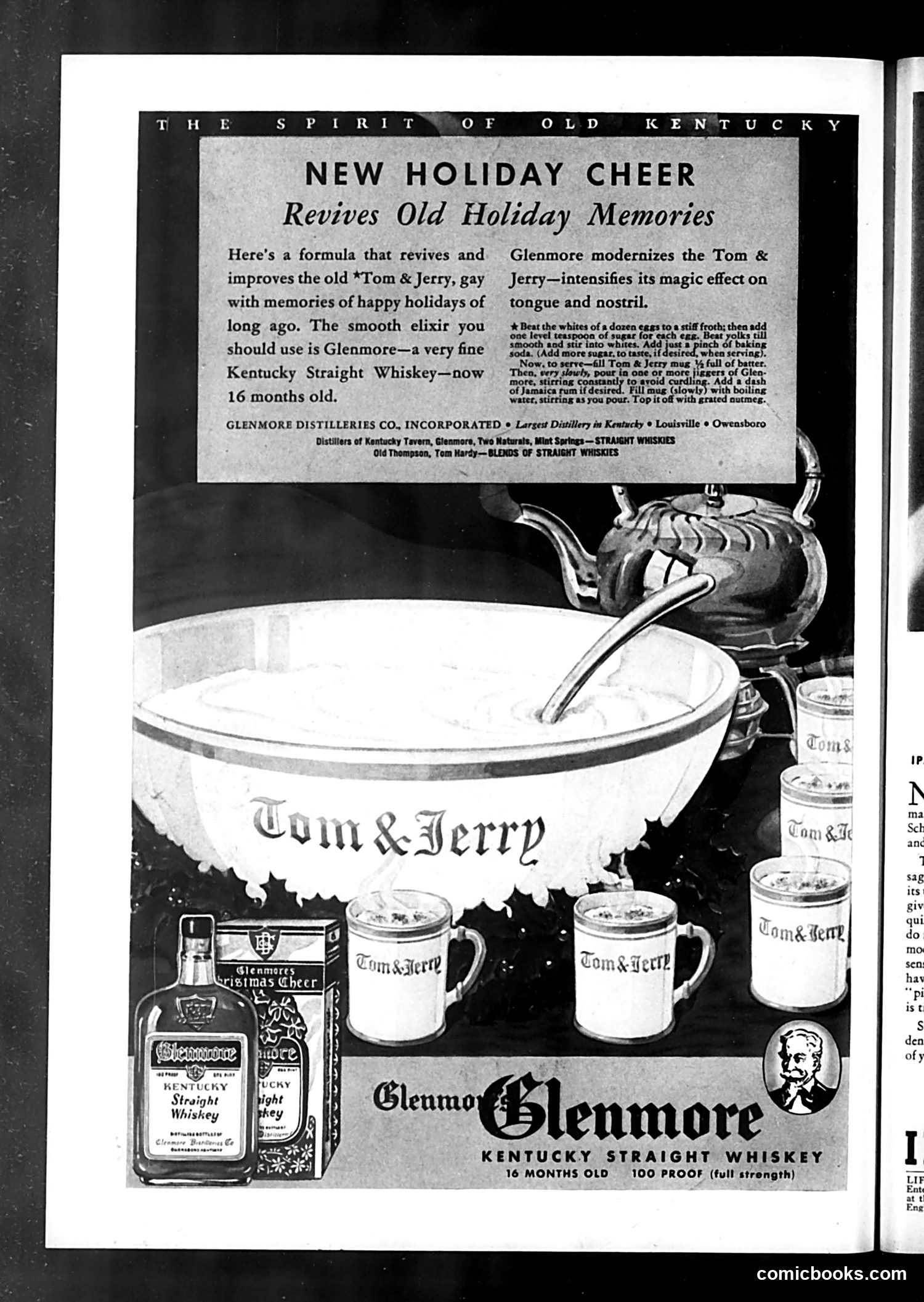
# Analysis This is a **whiskey advertisement**, not political satire. It promotes Glenmore Kentucky Straight Whiskey by marketing a cocktail recipe called "Tom & Jerry"—a traditional holiday drink combining whiskey, eggs, sugar, and spices. The ad's humor appeals to nostalgia: it claims this "modernized" Tom & Jerry recipe "revives old holiday memories" from "long ago." The large central image shows an ornate punch bowl labeled "Tom & Jerry" with matching mugs and a whiskey bottle, positioned to suggest this is an elegant, festive drink. The satirical element is mild—merely mocking the idea that adding Glenmore whiskey "intensifies its magic effect on tongue and nostril," presenting liquor consumption as sophisticated holiday tradition-making.
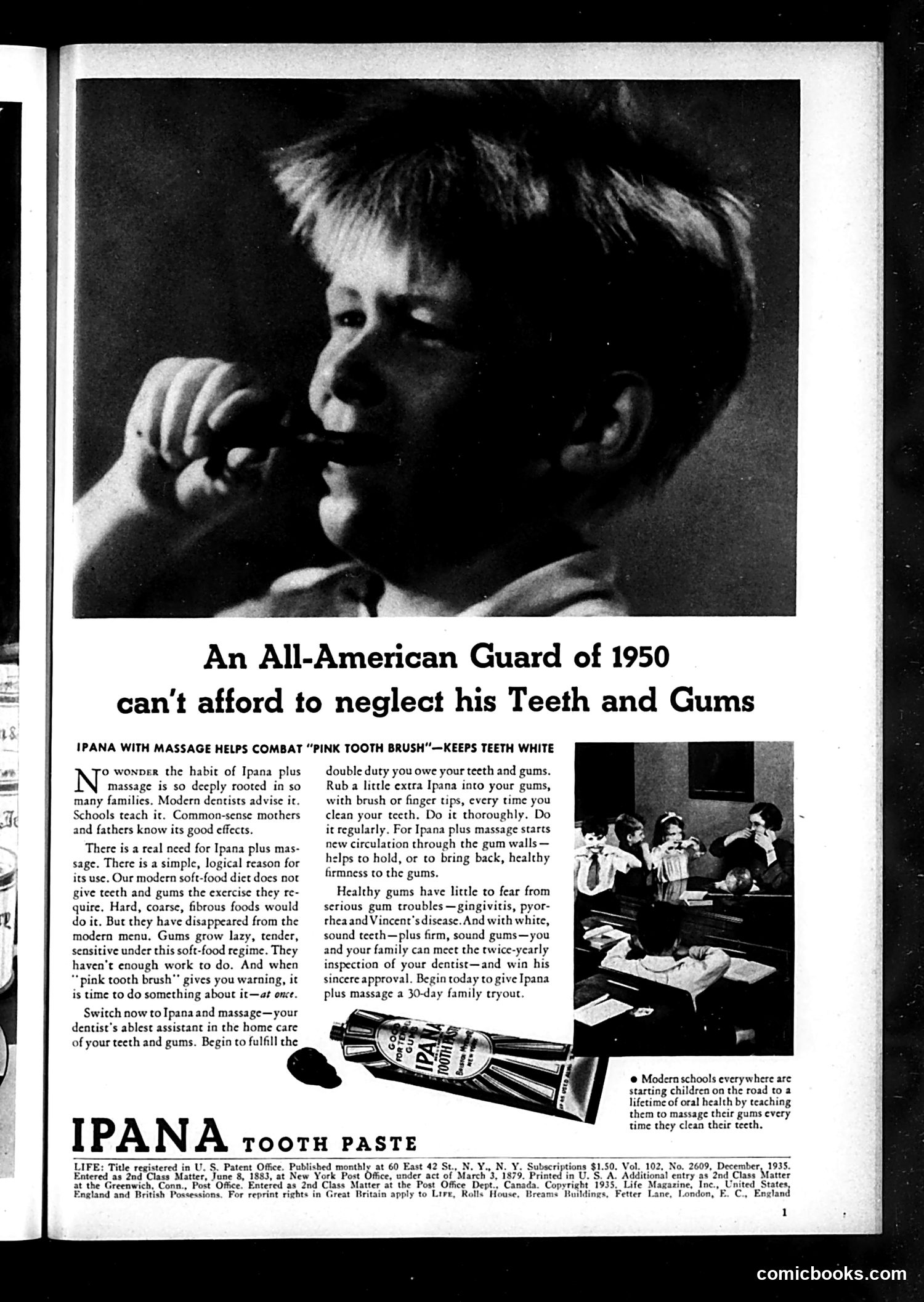
# Analysis This is primarily a **toothpaste advertisement**, not a political cartoon. The page advertises Ipana Tooth Paste in Life Magazine (December 1935). The ad features a photograph of a young boy demonstrating tooth care and includes a separate photograph showing what appears to be a school setting, illustrating the advertiser's claim that "Modern schools everywhere are teaching children on the need for a lifetime of oral health by teaching them to massage their gums every time they clean their teeth." The headline references "An All-American Guard of 1950"—using patriotic language to encourage American families to adopt the dental hygiene practice of gum massage. The advertisement emphasizes that proper tooth and gum care prevents serious dental diseases. This is straightforward product marketing emphasizing health benefits, not satire.
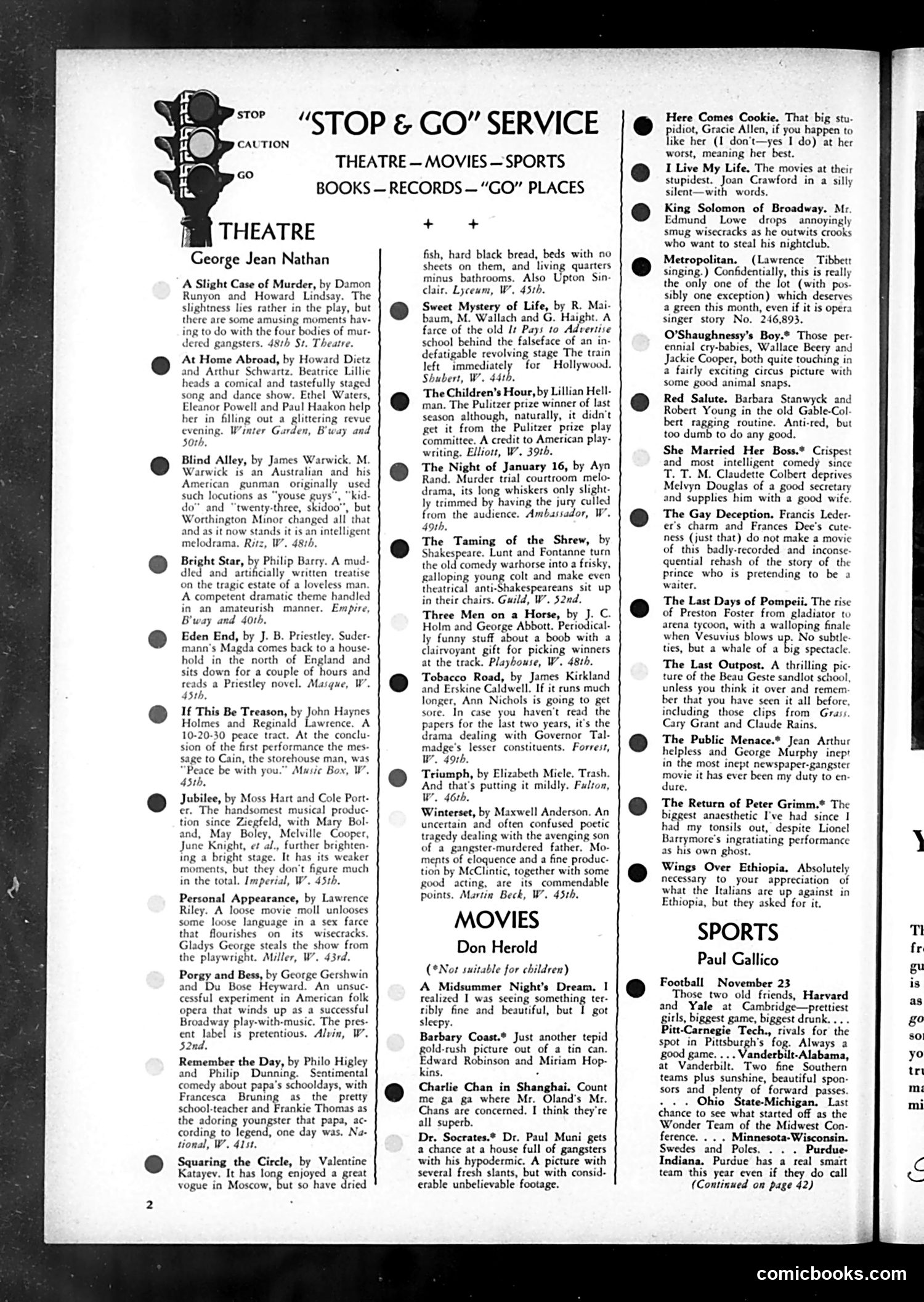
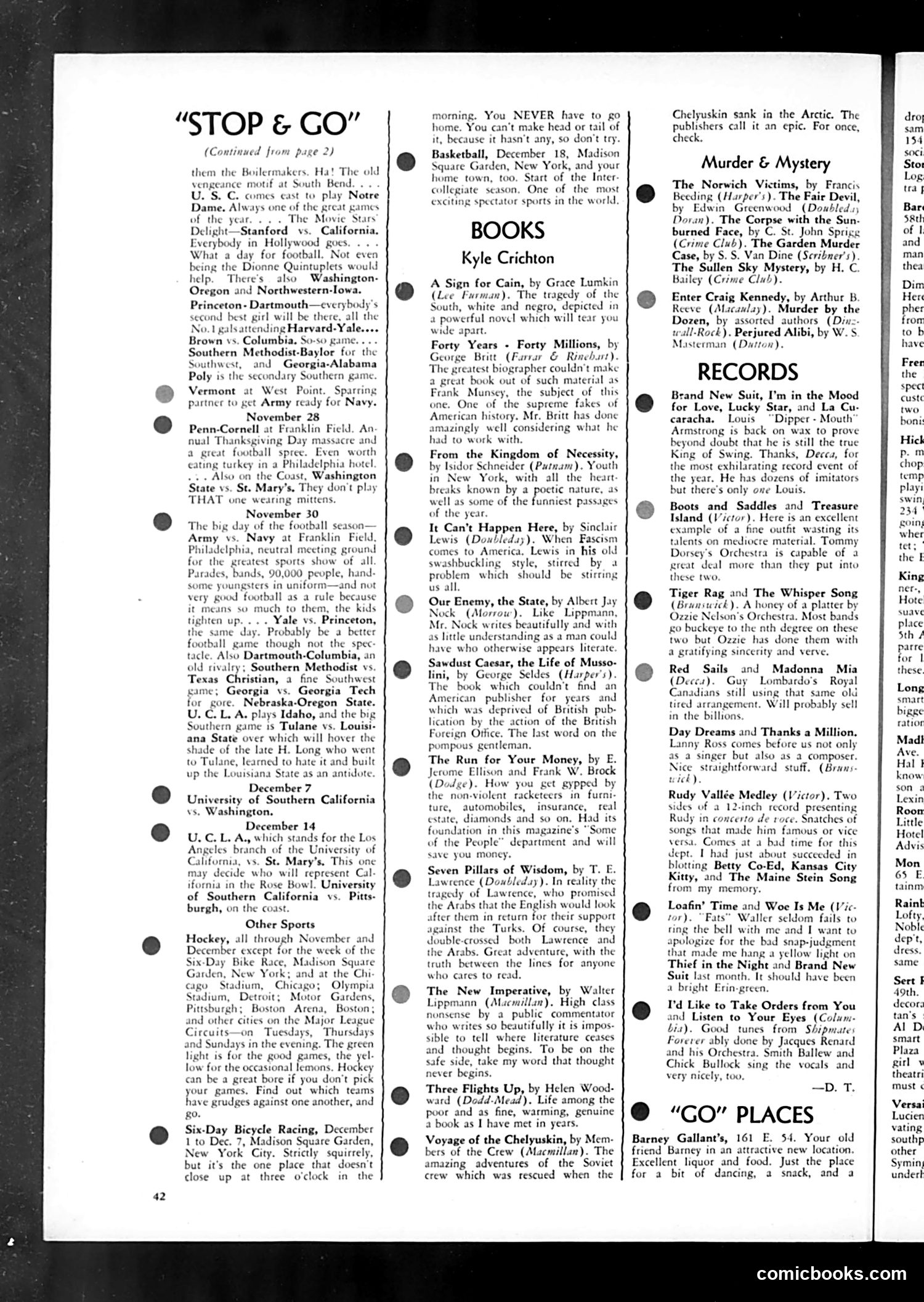
# Content Analysis This page is primarily **not a cartoon but a entertainment review section** titled "Stop & Go Service," organized by George Jean Nathan. It contains capsule reviews of theater productions, movies, and sports events rather than satirical commentary. The "Stop & Go Service" device uses a traffic light graphic as its organizing metaphor—reviews apparently categorized by whether Nathan recommends stopping to see something (green light) or proceeding with caution/avoiding it (red light). The content focuses on contemporary 1920s Broadway shows, films, and sporting events with brief critical assessments. This appears to be a regular entertainment column providing readers quick guidance on cultural offerings, rather than political satire or social commentary typical of Life magazine's cartoons.
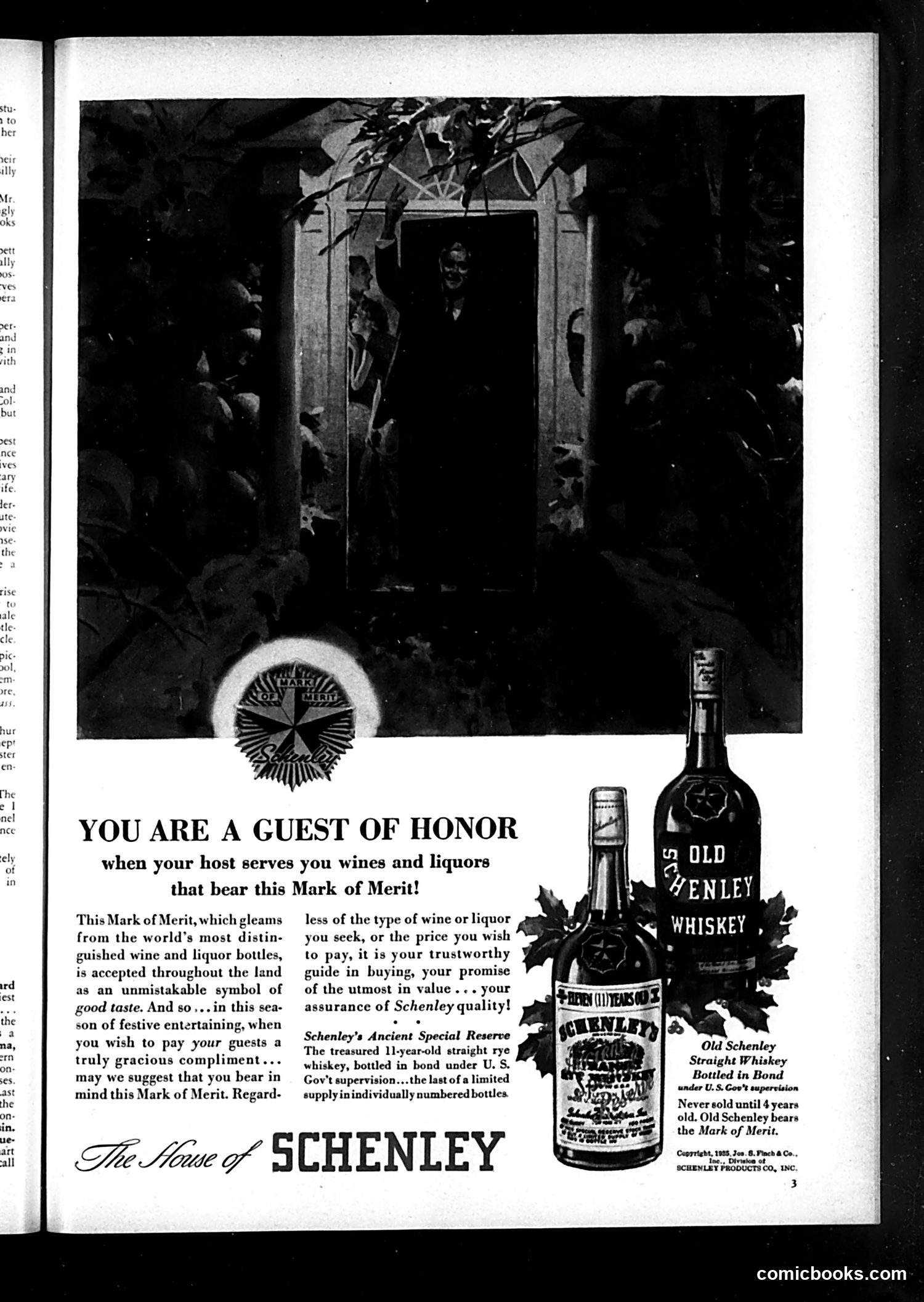
# Analysis This page is primarily a **Schenley whiskey advertisement**, not political satire or editorial cartoon content. The ad features a photograph of an elegantly dressed woman standing in a doorway, framed by ivy or climbing plants, presented as aspirational imagery. The text positions Schenley's "Mark of Merit" as a symbol of refined taste and hospitality—assuring hosts that serving these branded spirits guarantees their guests will recognize quality. The advertisement emphasizes exclusivity ("good taste") and trust in the brand's reputation. It highlights specific products like "Old Schenley Whiskey" and "Schenley's Ancient Special Reserve." For modern readers: this represents vintage advertising's use of sophisticated imagery and social aspiration to market alcohol, targeting hosts concerned with impressing guests through branded luxury goods.
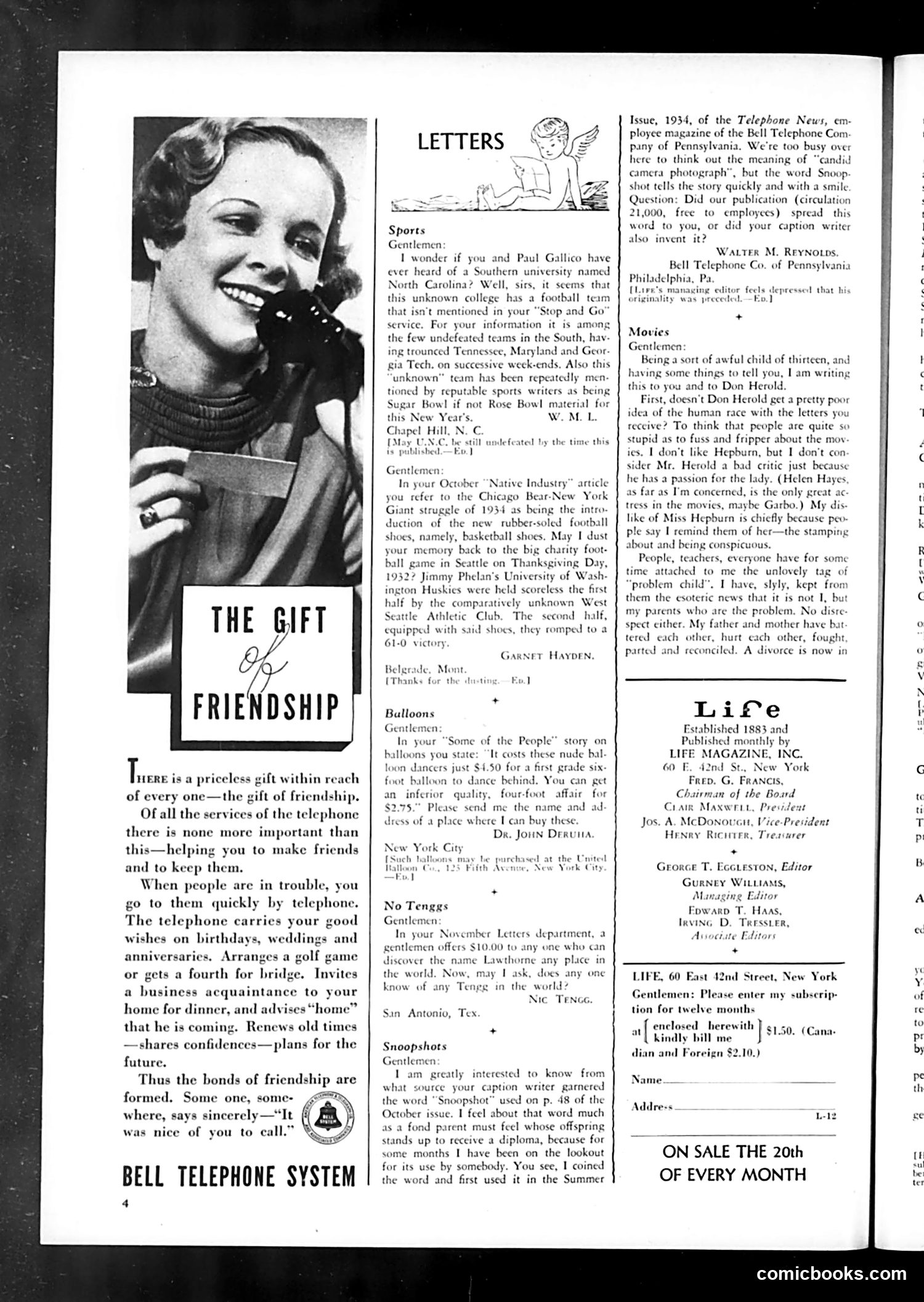
# Analysis This page is primarily a **letters-to-the-editor section** for Life magazine, not a political cartoon. The main visual element is a **Bell Telephone System advertisement** featuring a woman on a telephone with the headline "THE GIFT OF FRIENDSHIP." The ad promotes telephones as a means of maintaining social bonds—helping readers "make friends and keep them" by calling for birthdays, anniversaries, and social invitations. It's a straightforward corporate advertisement emphasizing the telephone's social utility during an era when long-distance calling was still a significant service. The letters address various topics (sports, movies, balloons, tengas) but contain no obvious political satire. This appears to be a standard magazine page mixing reader correspondence with advertising.
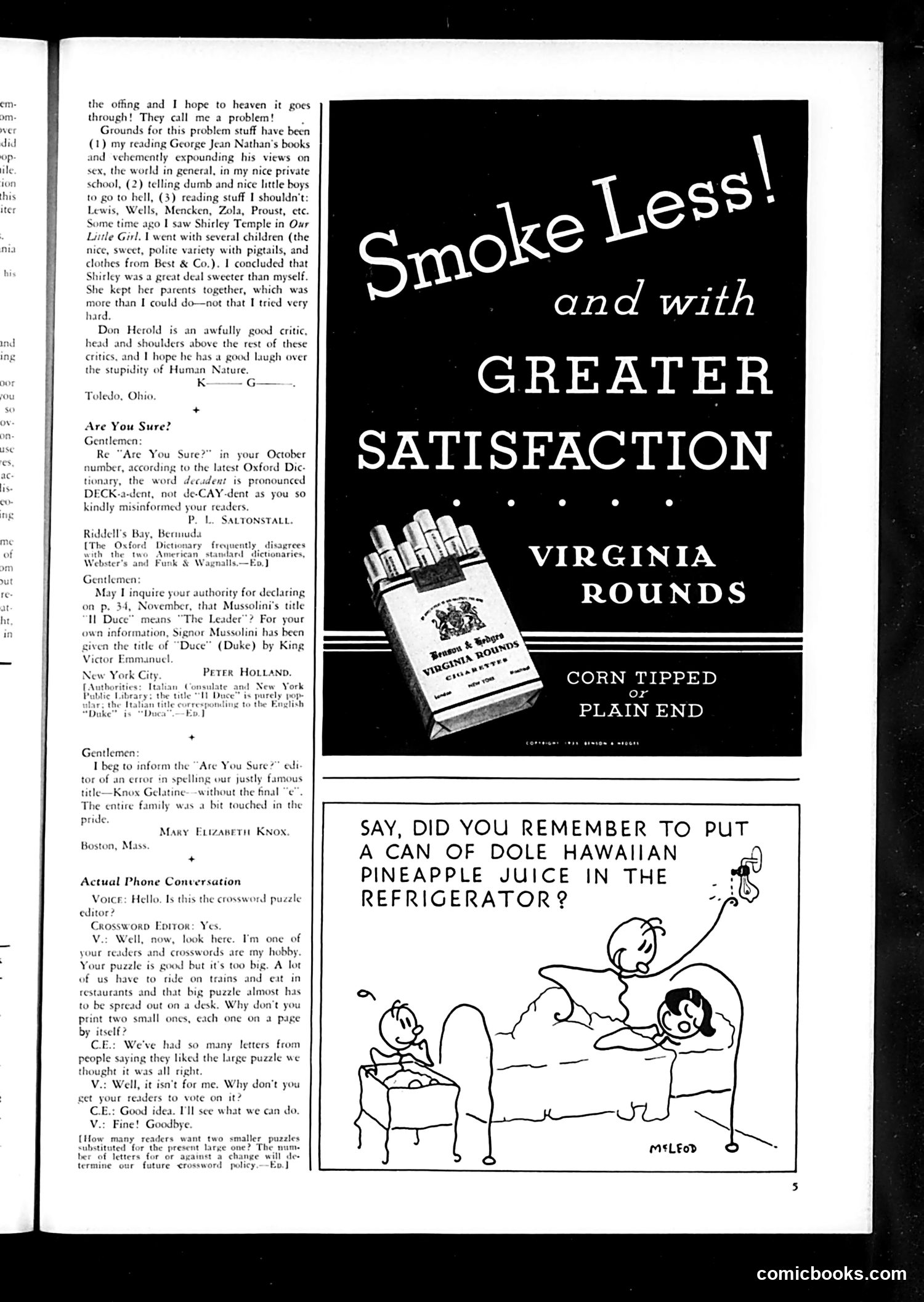
# Analysis This page contains reader letters and advertisements rather than political cartoons. The letters section ("Are You Sure?") addresses corrections to previous issues—one reader corrects pronunciation of "decided" and another queries the meaning of "Il Duce" (Mussolini's title). The main advertisement promotes Virginia Rounds cigarettes with the slogan "Smoke Less! and with Greater Satisfaction," available "Corn Tipped or Plain End." The cartoon below is a simple domestic humor sketch by "McLeod" showing a wife reminding her husband about pineapple juice in the refrigerator—an everyday marital moment with no political content. The page reflects Life magazine's typical mix of reader correspondence and period advertising, including cigarette promotion then considered unremarkable.
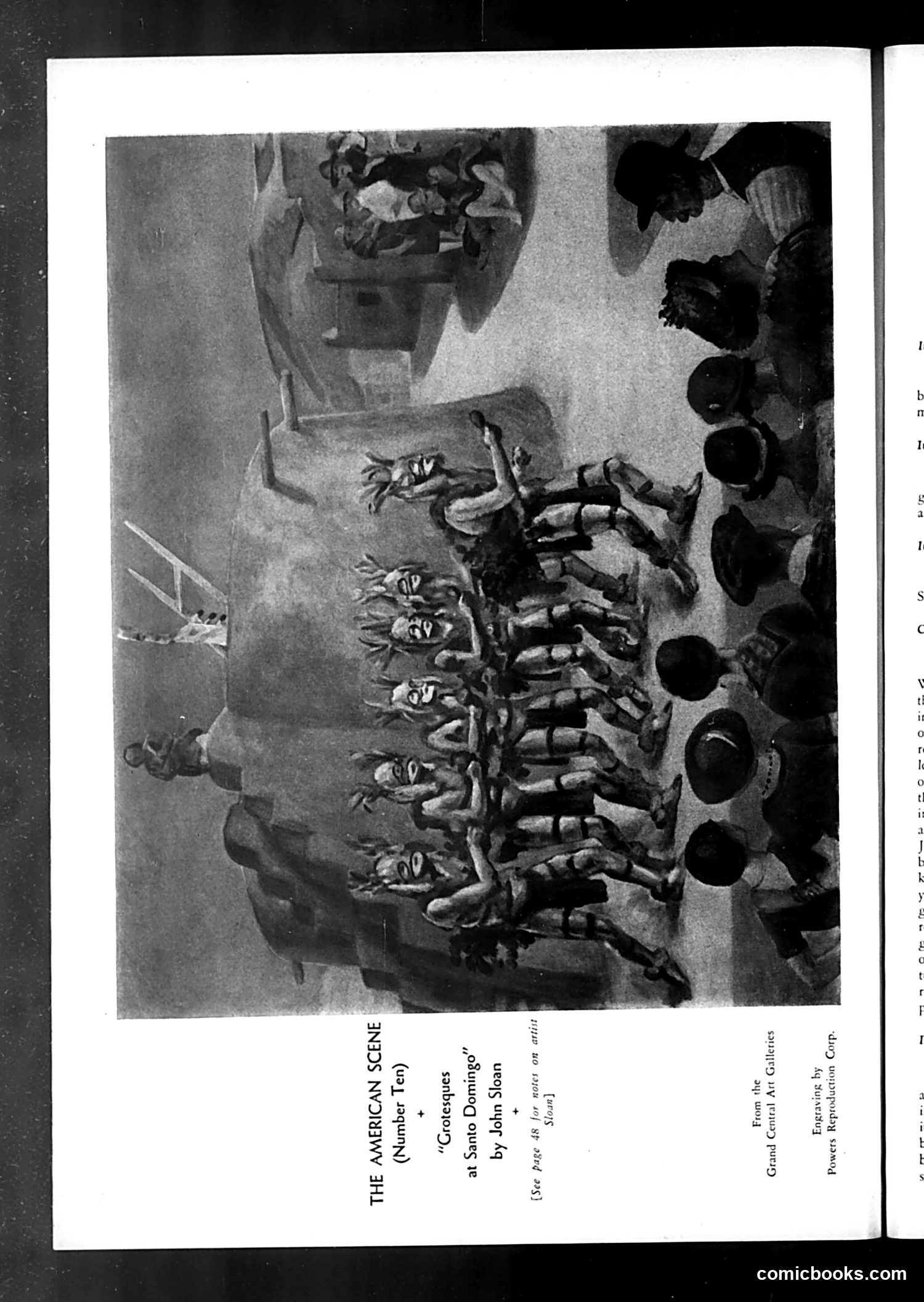
# Analysis of "The American Scene" This page shows a photograph labeled "Croqueties at Santo Domingo" directed by John Sloan for the General Galleries. The image depicts dancers arranged in a choreographed formation, likely documenting a cultural or theatrical scene from Santo Domingo (now the Dominican Republic). Without additional context visible on this page, the satirical intent—if any—is unclear. The photograph appears to be presented straightforwardly as a cultural documentation rather than explicit political commentary. Life magazine frequently featured such ethnographic or theatrical content, though the framing and selection could itself constitute subtle social commentary on American attitudes toward Caribbean cultures during this period. The "American Scene" series likely aimed to document contemporary cultural practices, though modern viewers should consider the implicit biases of early 20th-century photojournalism.
# Analysis This page from *Life* magazine presents satirical commentary on American bureaucratic absurdities. The header illustration depicts chaos and folly. **Content includes:** - **"Some of the People"**: Short items mocking government inefficiency—a New Jersey town banning ducks, a Minnesota lake-building petition, NYC whiskey laws, and Supreme Court justices' uncomfortable old chairs worth less than their $300,000 furnishings. - **"P.O. Headaches"**: A satirical piece about Christmas cards with hidden money being mailed through the Post Office, suggesting postal workers might steal them—poking fun at both mail security and holiday gift-giving schemes. - **"Letter of Recommendation"**: A humorous mock recommendation letter for a public servant, ironically praising contradictory qualities (fearless yet cautious, skilled yet controversial). It jokes about hiring "General Johnson," likely referencing a contemporary political figure, though identity is unclear. The satire targets government incompetence and bureaucratic irony.
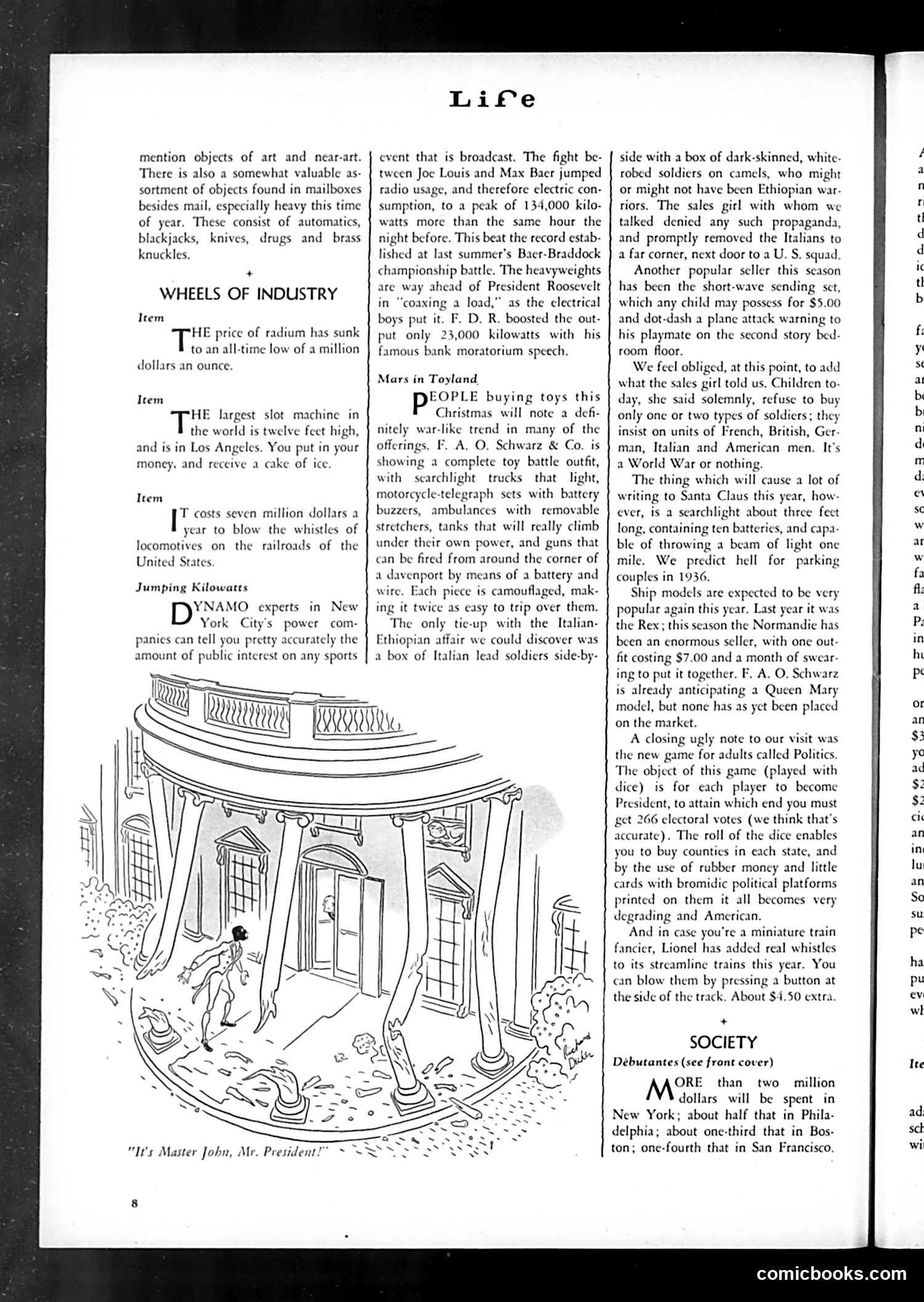
# Analysis of Life Magazine Page The main cartoon depicts a massive classical building (appears to be a government structure) collapsing or sinking into the ground while a small figure below calls out "It's Master John, Mr. President!" This is political satire about government inefficiency or mismanagement under a presidential administration. The caption's reference to "Master John" and the building's catastrophic failure suggests criticism of failed policies or administrative collapse—likely commenting on contemporary political scandals or incompetence during the presidency referenced in the article text above (which mentions Roosevelt and industrial/power generation debates). The accompanying text discusses consumer goods, toys, and entertainment trends, suggesting this issue blends political commentary with lifestyle coverage typical of Life magazine's satirical approach to American culture.
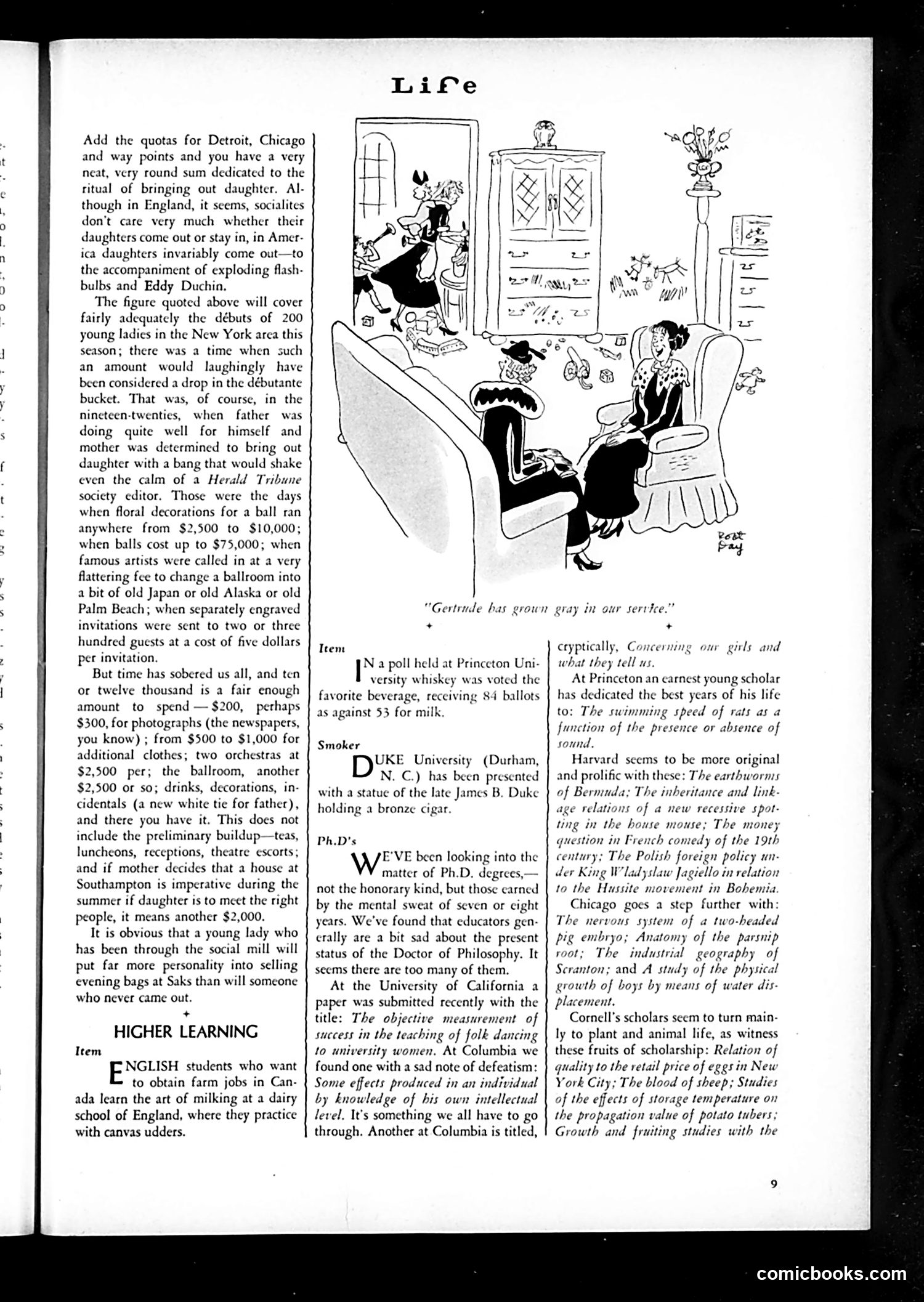
# Life Magazine Page Analysis This page contains satirical commentary on American social life in the 1920s. The main cartoon depicts a chaotic domestic scene with a woman gesturing dramatically while a man sits in a chair—likely satirizing the "flapper" era's changing gender dynamics and social customs. The text discusses debutante balls costing up to $75,000, mocking wealthy families' extravagant coming-out rituals. It references specific universities (Princeton, Duke, UC, Columbia) conducting absurd academic studies—parodying the era's proliferation of obscure scholarly research. The humor targets: wealthy pretension, societal conformity, and the disconnect between elaborate social rituals and their actual value. References to "Gertrude has grown gray in our service" suggest servants' exhaustion from hosting endless social events. The satire aims at both the upper classes and academic institutions deemed unnecessarily frivolous.
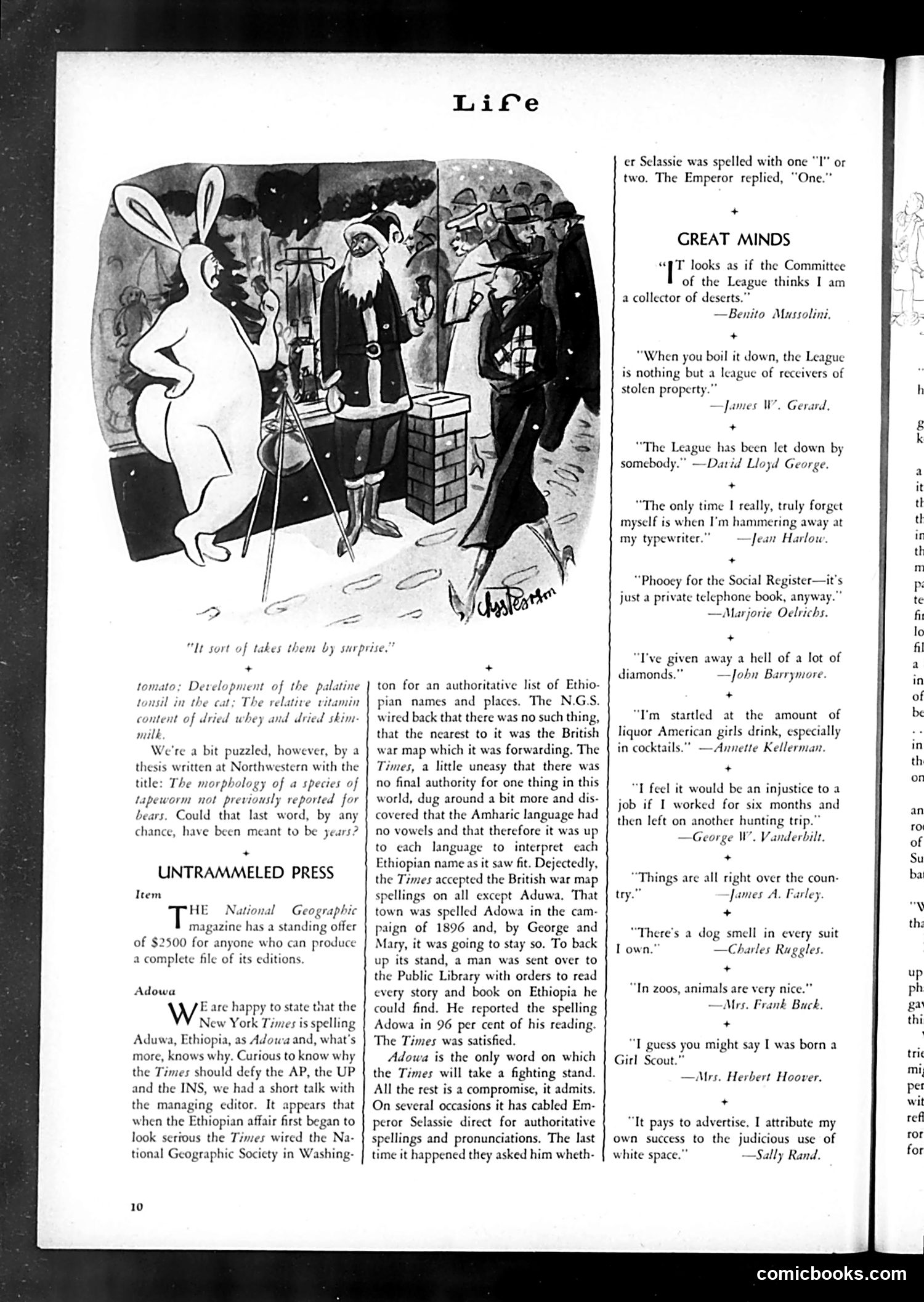
# Cartoon Analysis The main cartoon shows a large anthropomorphic rabbit in formal dress presenting to what appears to be officials or dignitaries. The caption reads "It sort of takes them by surprise." The surrounding "Great Minds" section contains satirical quotes criticizing the League of Nations—comparing it to "a collector of deserts" (Mussolini), "a league of receivers of stolen property" (James W. Gerard), and suggesting it has "been let down by somebody" (David Lloyd George). **Context**: This page satirizes the League of Nations' ineffectiveness, likely from the 1920s-1930s. The rabbit cartoon's exact meaning is unclear from the image alone, but given the surrounding anti-League commentary, it appears to mock the League's surprising or absurd proposals or actions. The quotes reflect contemporary criticism that the League failed to prevent aggression or resolve international disputes.