A complete issue · 50 pages · 1935
Life — July 1935
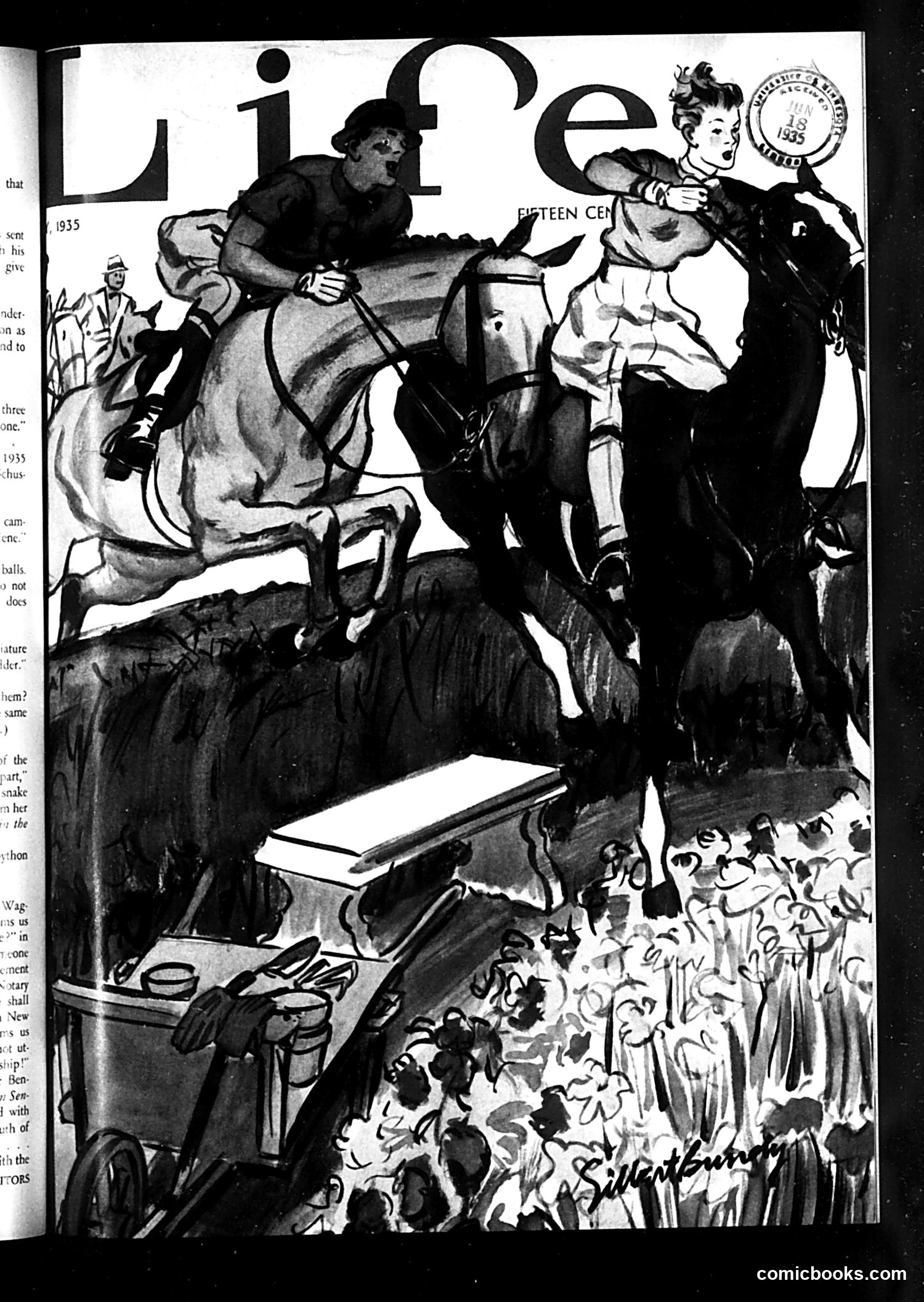
# Analysis This 1935 *Life* magazine page features a satirical illustration signed by Silberberg depicting a chaotic scene of horse racing or equestrian sport gone awry. A jockey rides wildly on horseback while well-dressed spectators (appearing to be wealthy patrons or gamblers) scatter in panic below. A woman in fashionable dress recoils, and scattered betting slips or money litter the ground. The cartoon likely satirizes the unpredictability and chaos of horse racing gambling—a popular vice during the Depression era. The contrast between the upper-class spectators' refined appearance and their undignified scrambling suggests mockery of wealth and social pretension crumbling in moments of excitement or financial loss. The "15 CENTS" price mark indicates this was affordable mass-market satire targeting middle-class readers familiar with racing culture.
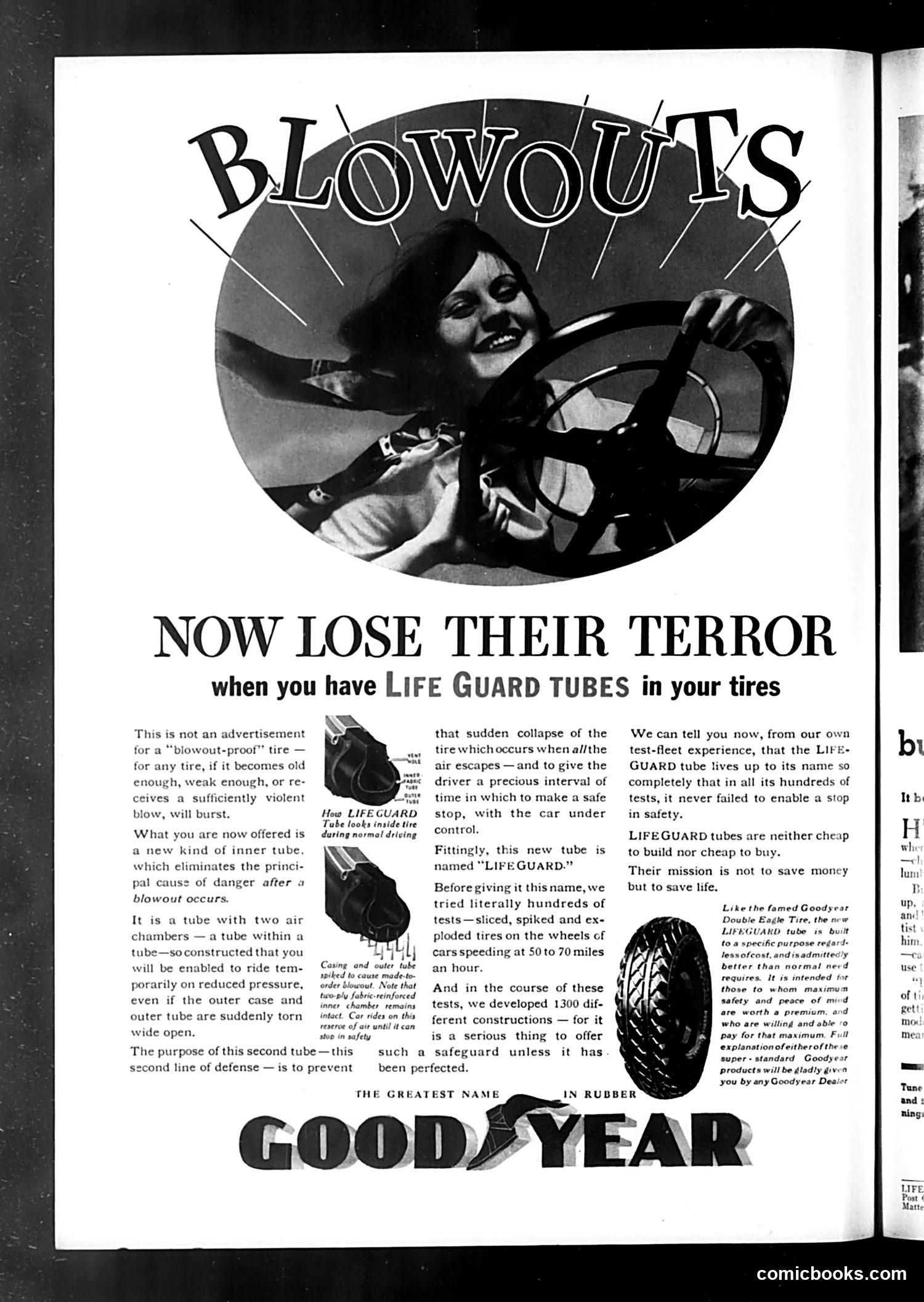
# Analysis This is a **Goodyear tire advertisement**, not a political cartoon or satirical content. The page promotes Goodyear's "Life Guard" inner tubes for automobiles. The advertisement features a woman driver at a steering wheel, smiling confidently. The marketing message emphasizes safety: Life Guard tubes prevent blowouts by using a double-chamber design that reduces pressure if the outer tube tears, allowing drivers to reach safety before collapse occurs. The headline "NOW LOSE THEIR TERROR" refers to drivers' fear of sudden tire blowouts—a genuine highway hazard in the early automotive era. The ad claims Life Guard tubes have undergone rigorous testing at 50-70 mph speeds. This reflects **early 20th-century automobile safety concerns** when tire failure was a serious, potentially fatal risk. The smiling woman represents the newfound confidence and safety this product promises to motorists.

# Analysis This is primarily a **toothpaste advertisement**, not political satire. The page features Ipana Tooth Paste marketing. The photograph shows a man labeled "The Old Man" to 1,000 Lumberjacks, but notably he's described as having a "dental cripple"—meaning his teeth are in poor condition despite his rugged persona. The advertisement uses this contrast humorously: even a tough wilderness figure needs proper dental care. The ad includes endorsements from a "famous scientist" and "dental authority" recommending Ipana paste and gum massage for healthier teeth and gums. It warns against soft foods and poor oral hygiene, which the copy suggests causes "pink tooth brush" (bleeding gums). This reflects early-20th-century advertising that linked personal hygiene products to social respectability and health—positioning proper tooth care as essential regardless of one's tough exterior or occupation.
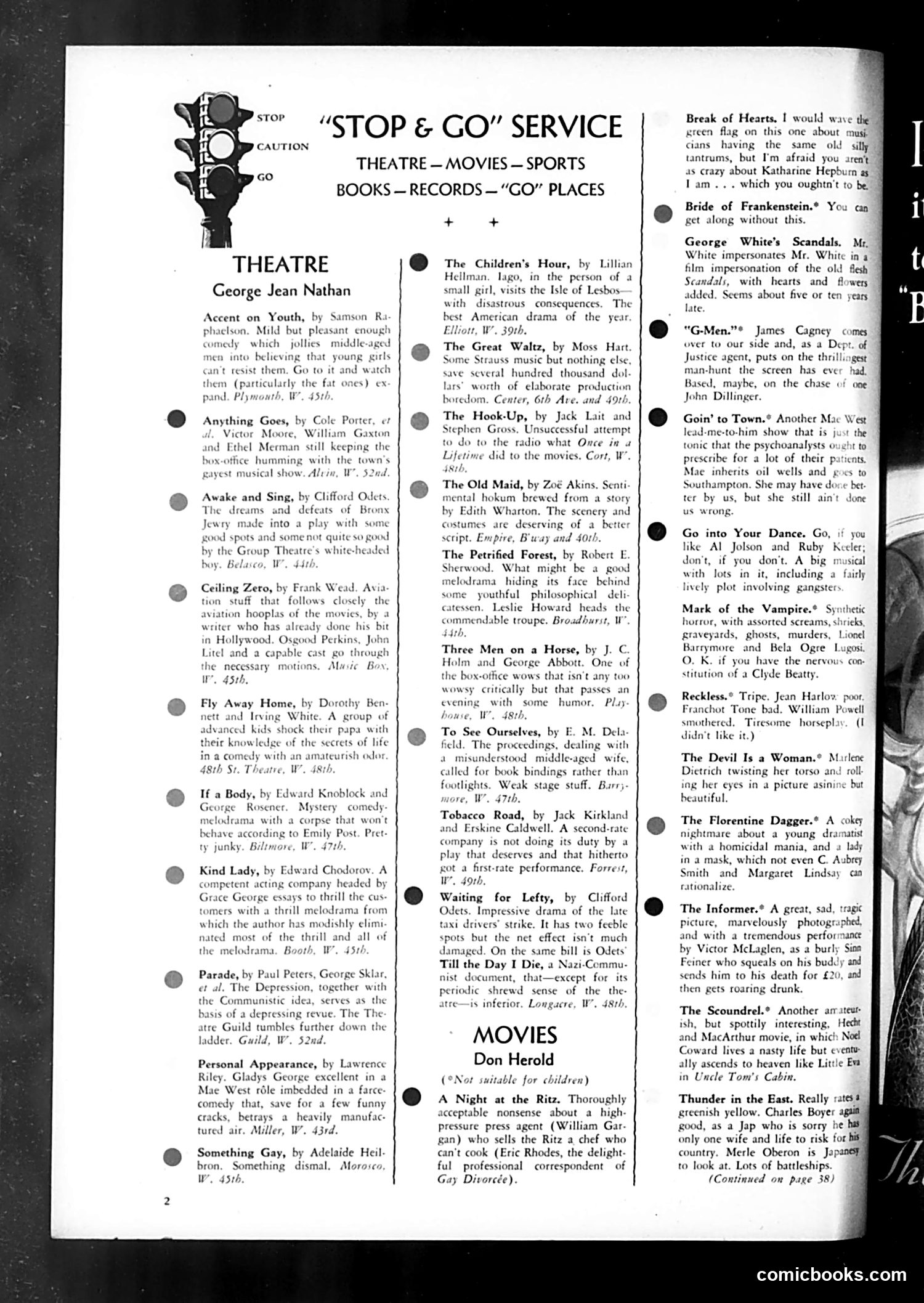
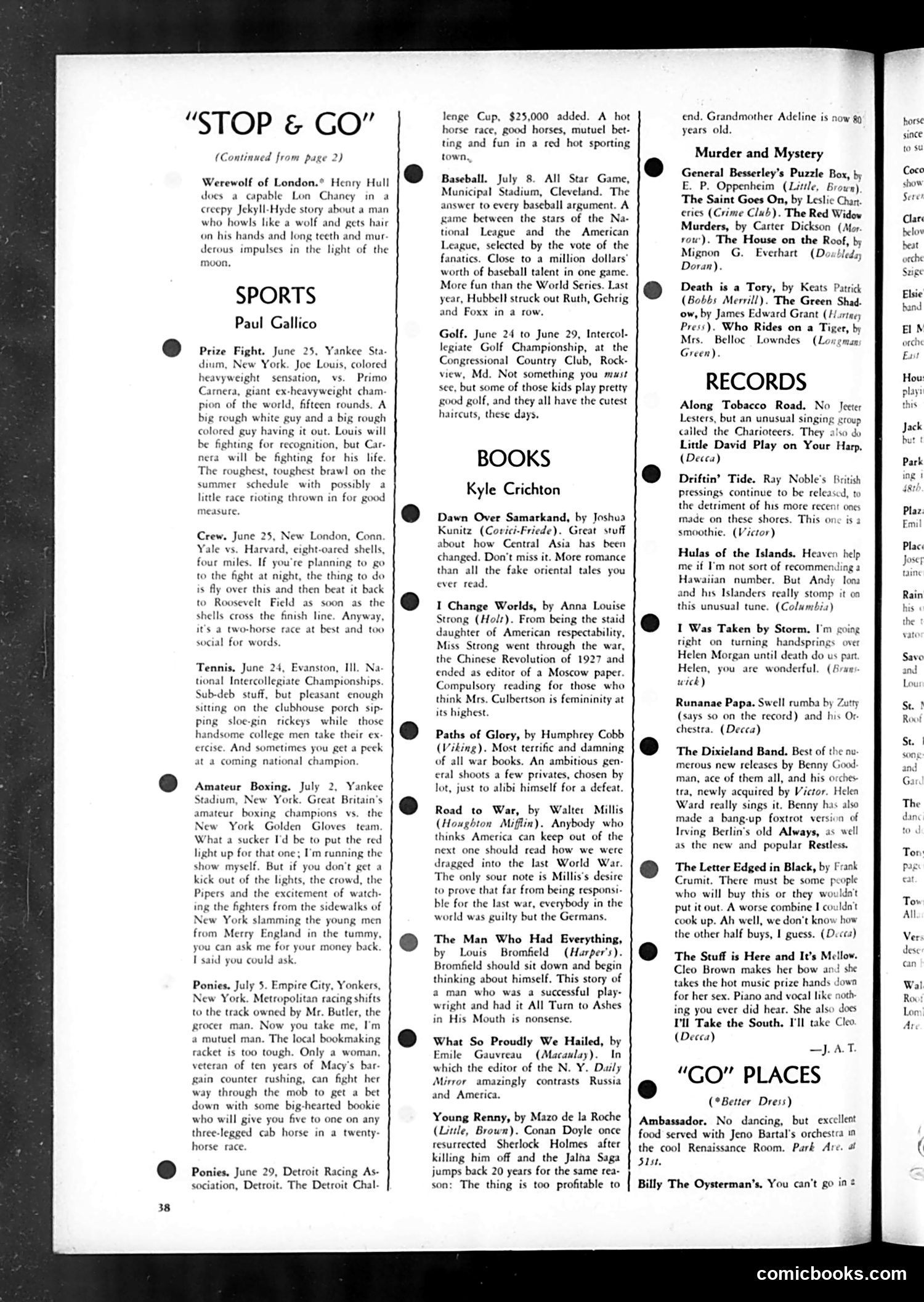
# Page Analysis This appears to be a **theatrical and entertainment review page** from Life magazine, not a political cartoon page. The content consists of: **Left column:** "Stop & Go" Service—a traffic light graphic introducing theater reviews by George Jean Nathan, covering plays like "Accent on Youth," "The Children's Hour," and "Awake and Sing." **Right columns:** Movie reviews by Don Herold and brief capsule reviews of other films and plays. **The satire:** The page uses the traffic light metaphor to categorize entertainment—"Stop" (avoid), "Caution" (mixed), and "Go" (recommended)—making entertainment criticism accessible through familiar visual language. This is **entertainment criticism, not political commentary**. The humor derives from witty theatrical commentary rather than social or political satire. No specific caricatures or political figures appear.
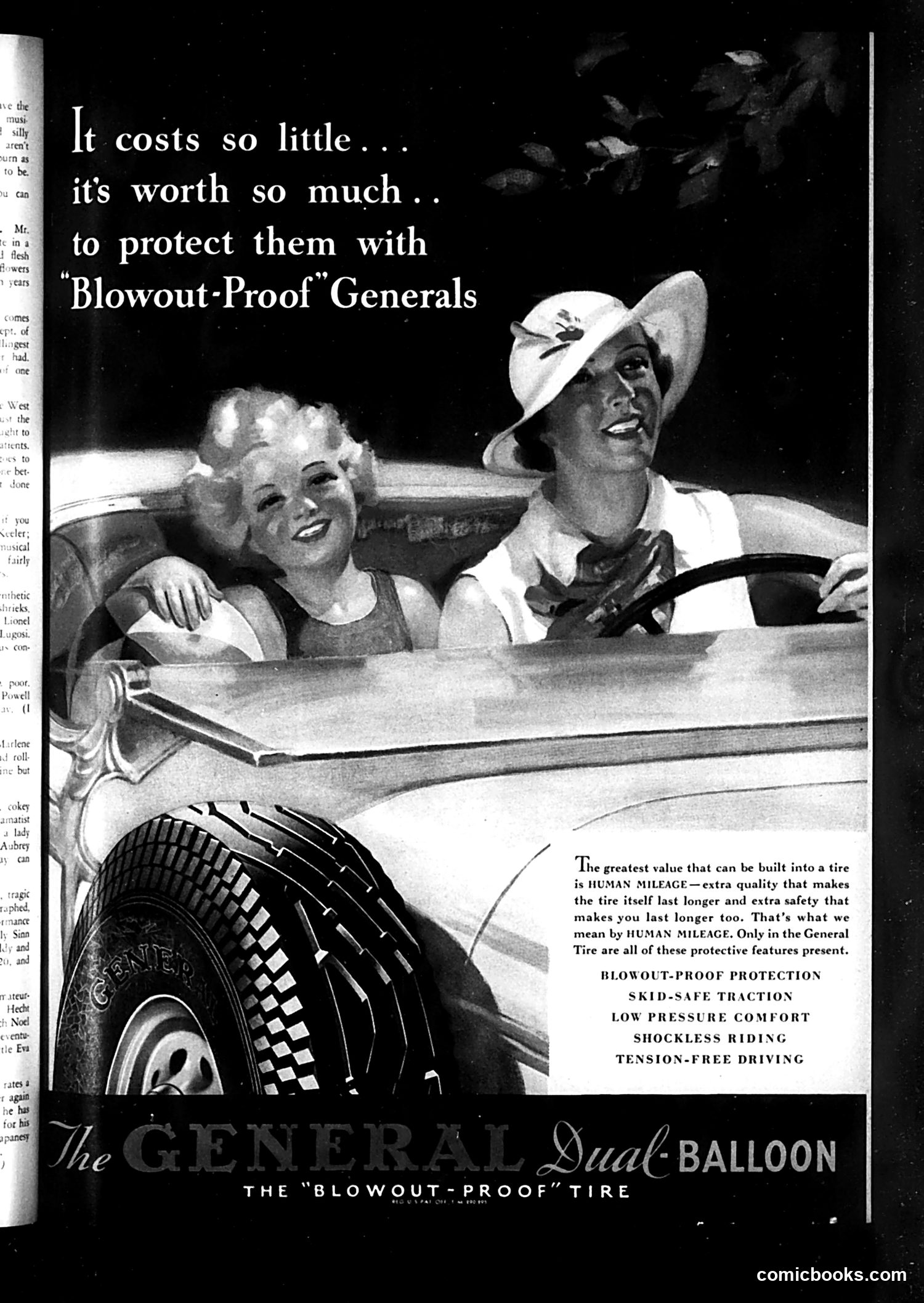
This is a **General Tire advertisement**, not political satire or editorial content. The ad uses a romantic couple in a convertible to promote "Blowout-Proof Generals"—tires marketed with safety features like "skid-safe traction," "low pressure comfort," and "shockless riding." The headline's wordplay ("It costs so little...it's worth so much") emphasizes affordability paired with protective benefits. The product name "Human Mileage" refers to tire durability extending vehicle lifespan. The young, attractive couple and convertible imagery appeal to 1940s consumers seeking both safety and leisure lifestyle. This represents typical mid-century automobile advertising strategy: combining romance/aspiration with practical product benefits to sell consumer goods. The page layout and styling suggest this appeared in Life magazine during the 1930s-1940s era.
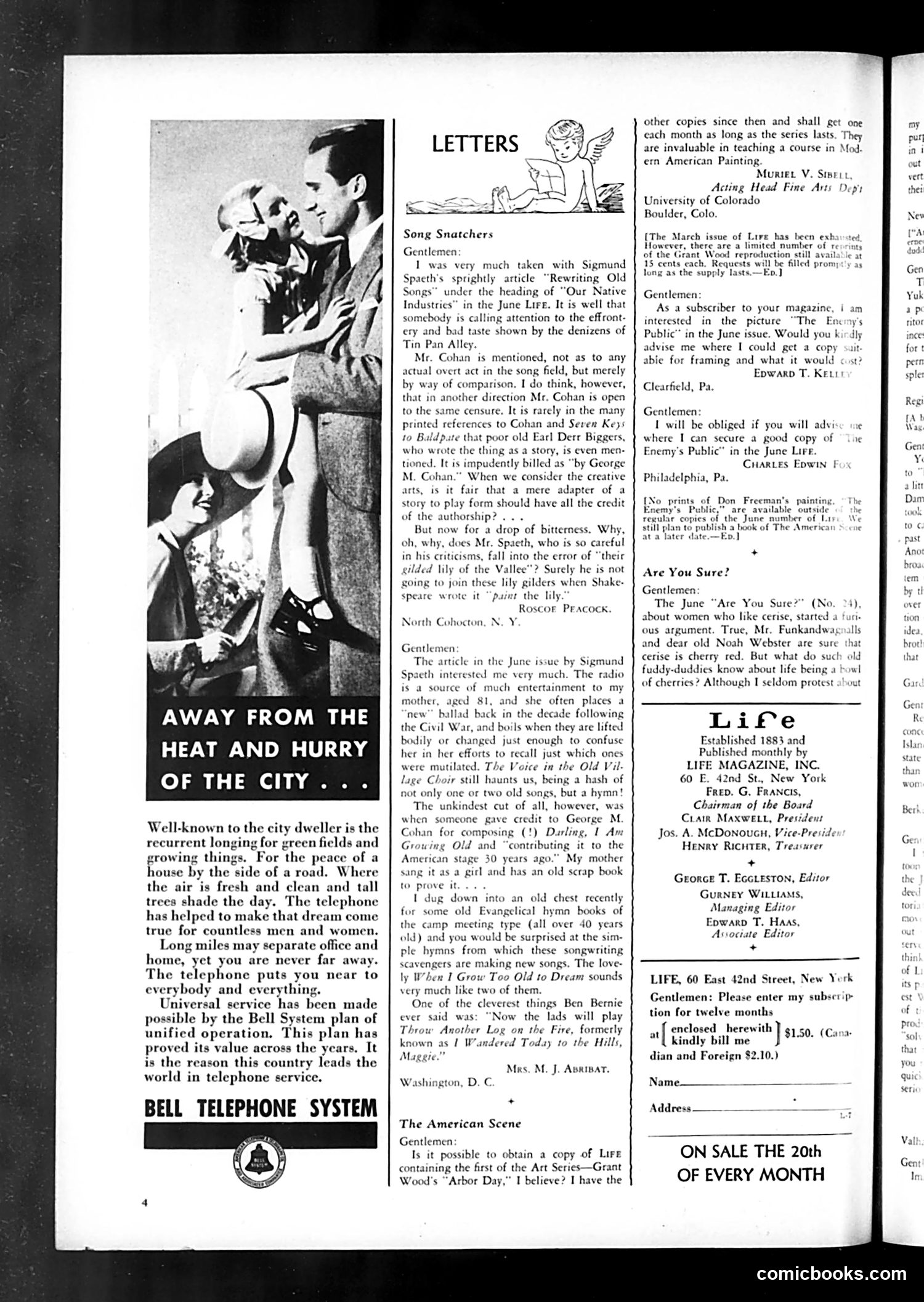
# Analysis This page is primarily a **letters section** and **advertising** (Bell Telephone System ad) rather than political content. The photograph shows two figures in what appears to be a theatrical or comedic scene labeled "AWAY FROM THE HEAT AND HURRY OF THE CITY," though the specific identities and context are unclear from the image alone. The letters discuss magazine content: readers inquire about obtaining back issues of Life, ask about locating specific articles (like "The Enemy's Public"), and debate literary credits—particularly whether Sigmund Spaeth or George M. Cohan deserves credit for certain song compositions and arrangements. The page represents typical early-20th-century magazine operations: reader engagement, subscription promotion, and literary/artistic attribution disputes that occupied contemporary audiences.
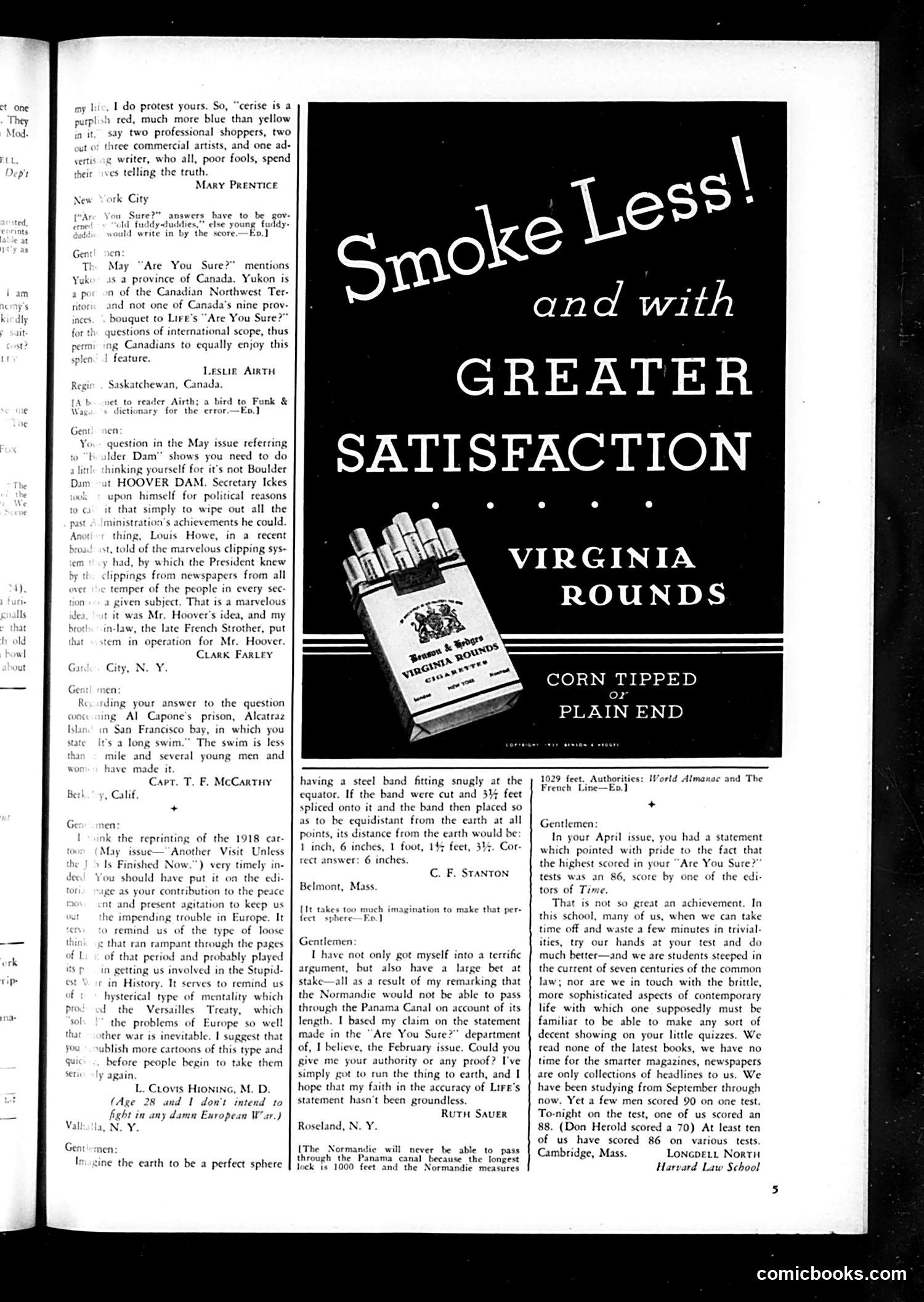
# Virginia Rounds Cigarette Advertisement This page is primarily a **cigarette advertisement** for Virginia Rounds brand cigarettes, not political satire. The ad occupies the right half of the page and features a large image of a cigarette package. The headline "Smoke Less! and with Greater Satisfaction" reflects a common **1930s advertising strategy**: marketing cigarettes as *less harmful* by emphasizing quality and reduced quantity rather than abstinence. The phrase "Corn Tipped or Plain End" refers to the filter design. The left side contains reader letters responding to various *Life* magazine articles, unrelated to the advertisement. This layout—mixing editorial content with full-page ads—was standard magazine practice of that era.
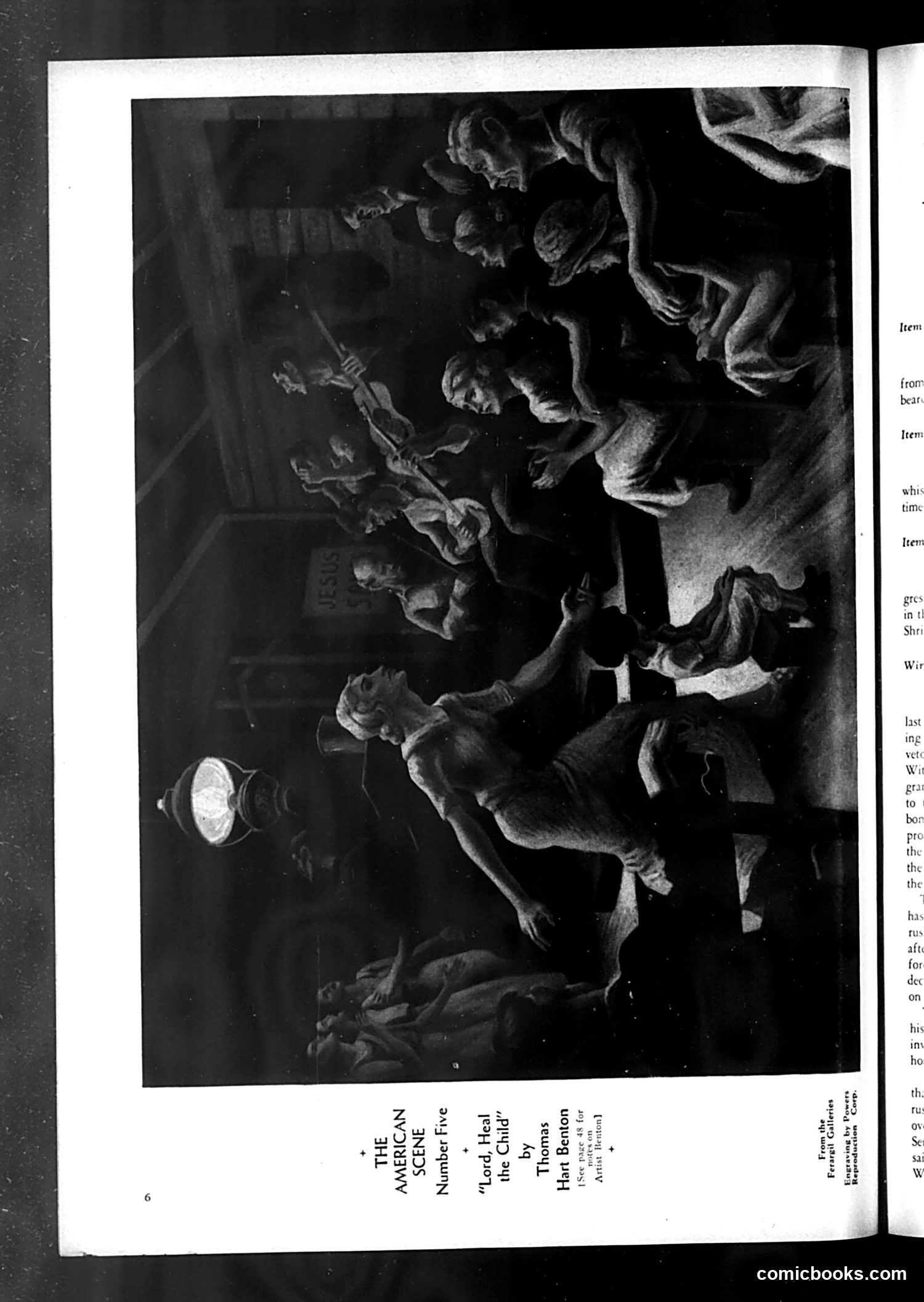
# Analysis This appears to be page 6 from Life magazine, featuring an illustration titled **"The American Scene"** (Number Five), showing **"Lord Held the Child"** by **Thomas Hart Benson** (likely Thomas Hart Benton, the famous American regionalist painter). The black-and-white reproduction depicts a dramatic religious or allegorical scene with multiple figures gathered around a central luminous figure or object. The composition is dark and expressionistic, with figures rendered in Benton's characteristic style. However, I cannot definitively identify specific political or social references from the image alone without additional context about the publication date or accompanying article text, which appears to be cut off on the right margin. The dramatic religious imagery suggests social commentary typical of 1930s American art, but the specific satirical point remains unclear from this page alone.
# Analysis of Life Magazine Page This page satirizes American infrastructure and celebrity culture circa the 1920s. The "Some of the People" section mocks contemporary absurdities: a congressman sleeping outdoors during traffic signals malfunction, excessive telegraph usage during the Shriners convention, and a $35,000 congressional appropriation for extra D.C. police during the convention. The main satirical piece, "Love Conquers All," ridicules Hollywood's perceived greed and California's tax threats. It portrays movie studios as self-pitying ("If they don't treat us good / There ain't a single season we should stay"), with state governors competing to attract the industry by offering tax incentives. The satire suggests Hollywood's disproportionate influence over American policy and the desperation of states competing for the film industry's economic benefits.
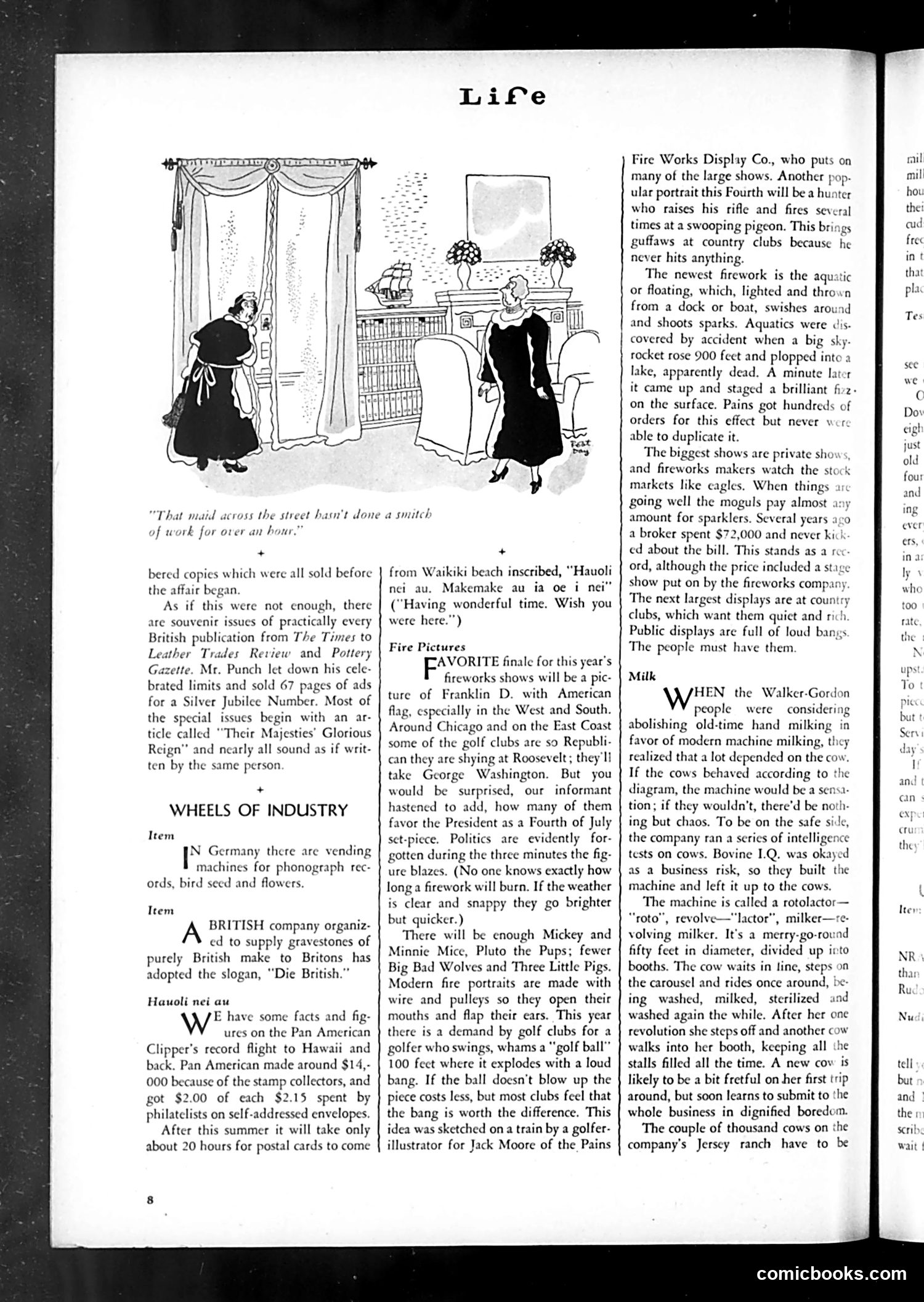
# Analysis of Life Magazine Page The main cartoon depicts two women in 1920s dress in a domestic interior. One stands by a window/curtains while the other sits. The caption reads: "That maid across the street hasn't done a match of work for over an hour." **What this means:** This is social satire about idle wealthy women observing their servants' work habits. The joke relies on the irony that the speaker is herself doing nothing but watching—criticizing the maid's laziness while being leisurely. It reflects 1920s class dynamics and the employer-servant relationship, where affluent housewives had time to monitor domestic staff closely. The humor targets both the leisure class's judgment and their own idleness. The page also contains various short-form humor items about fireworks displays, British phonographs, and mechanical milking machines—typical of Life's miscellaneous content format.
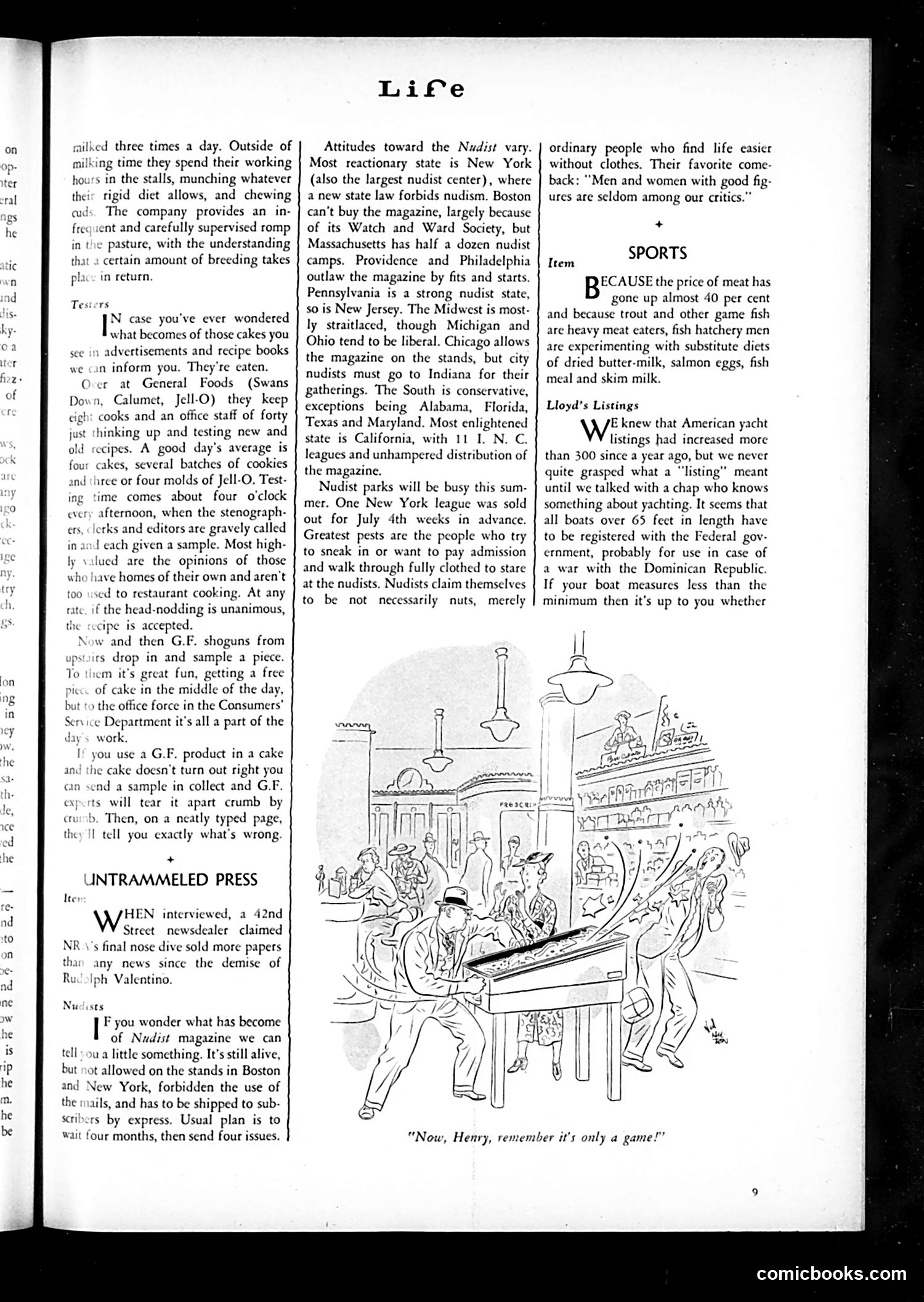
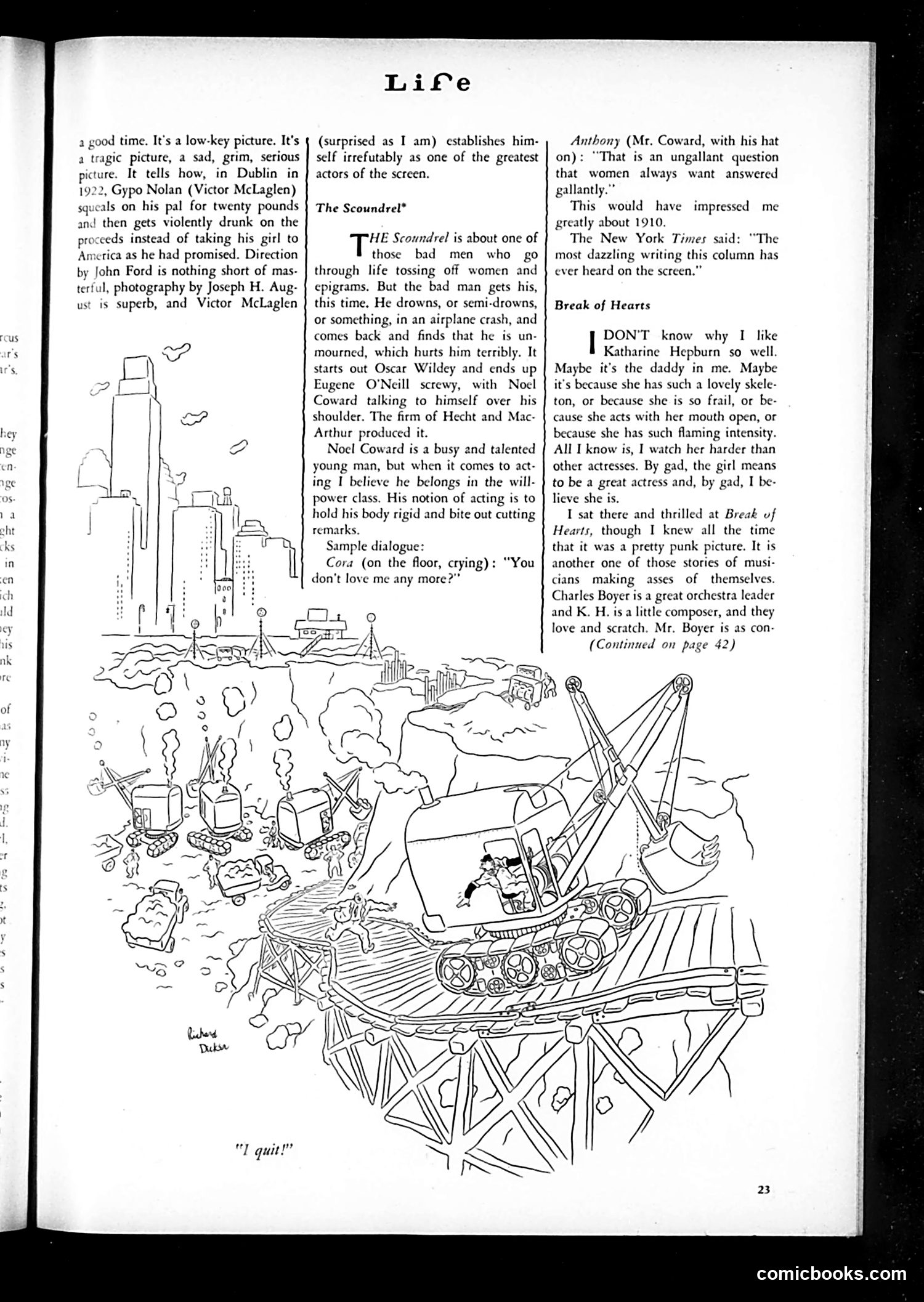
# Explanation for Modern Readers The main cartoon illustrates a section titled "Sports" discussing meat rationing and game fish substitutes. The illustration shows a chaotic restaurant or dining scene where a large fish is being served at a table, with diners reacting with apparent surprise or dismay. The caption reads, "Now, Henry, remember it's only a game!" This is wartime satire: the cartoon mocks the necessity of serving unusual protein substitutes (like fish) instead of traditional meat during rationing, likely from the World War II era. The humor lies in the husband's need to reassure his wife that eating these unfamiliar foods is merely temporary—"a game"—while the visual chaos suggests the actual disruption to domestic dining customs was far from playful or acceptable to consumers.
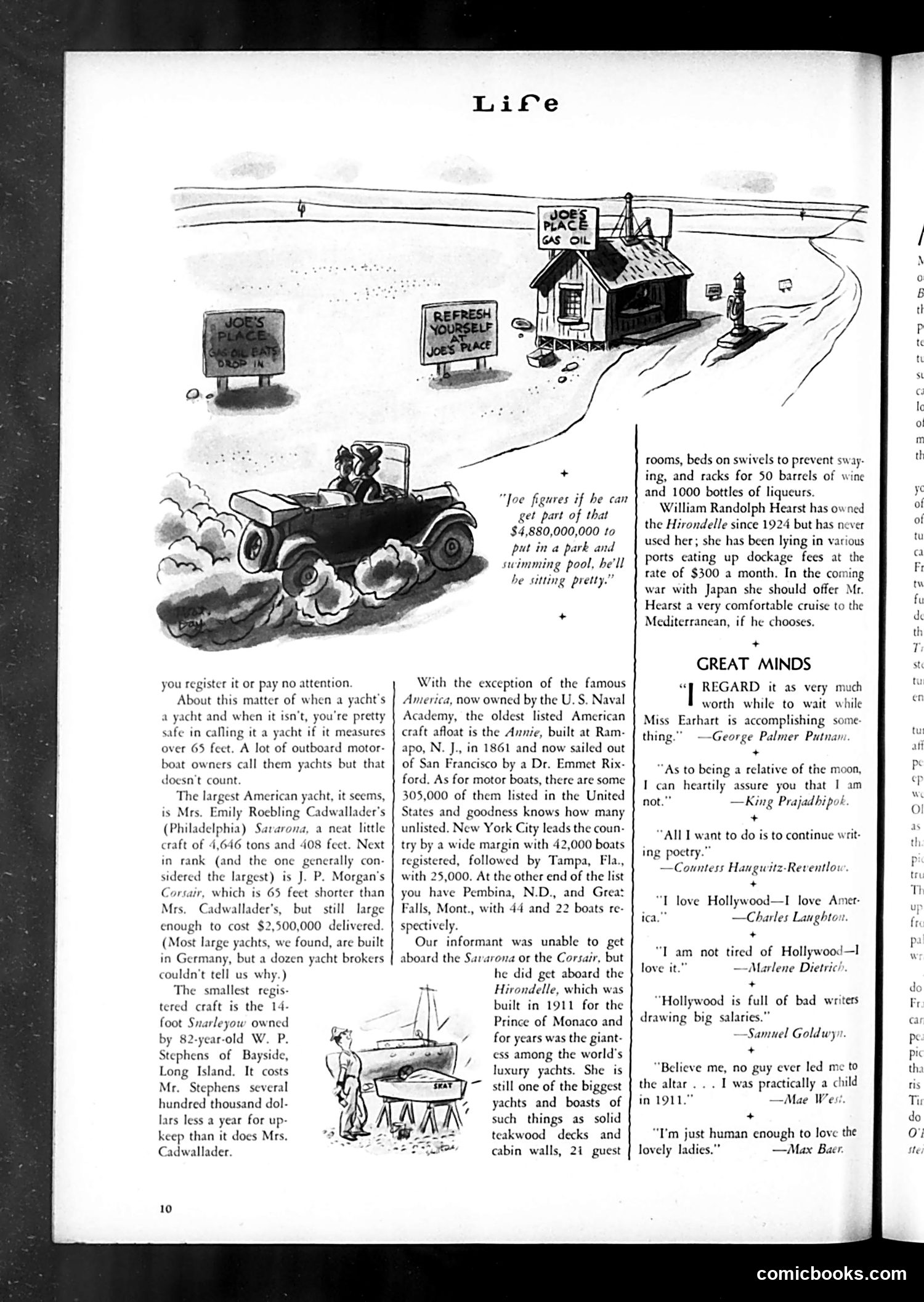
# Analysis of Life Magazine Page This page from *Life* magazine contains satirical commentary about American wealth and leisure during the Jazz Age. The main cartoon depicts a nouveau-riche motorist at a roadside gas station, with a caption joking that he hopes to eventually afford parking his $4,880,000 yacht in a swimming pool—satirizing ostentatious wealth displays among the newly rich. The "Great Minds" section features humorous celebrity quotes about Hollywood, yachts, and romance, poking fun at celebrity culture and their vapid statements. The text discusses yacht ownership and luxury vessels, including references to William Randolph Hearst's ship *Hirondelle*, critiquing the extravagant spending habits of America's ultra-wealthy during a period of significant economic inequality. The overall satire targets the conspicuous consumption and self-absorption of the wealthy elite.