A complete issue · 54 pages · 1935
Life — June 1935
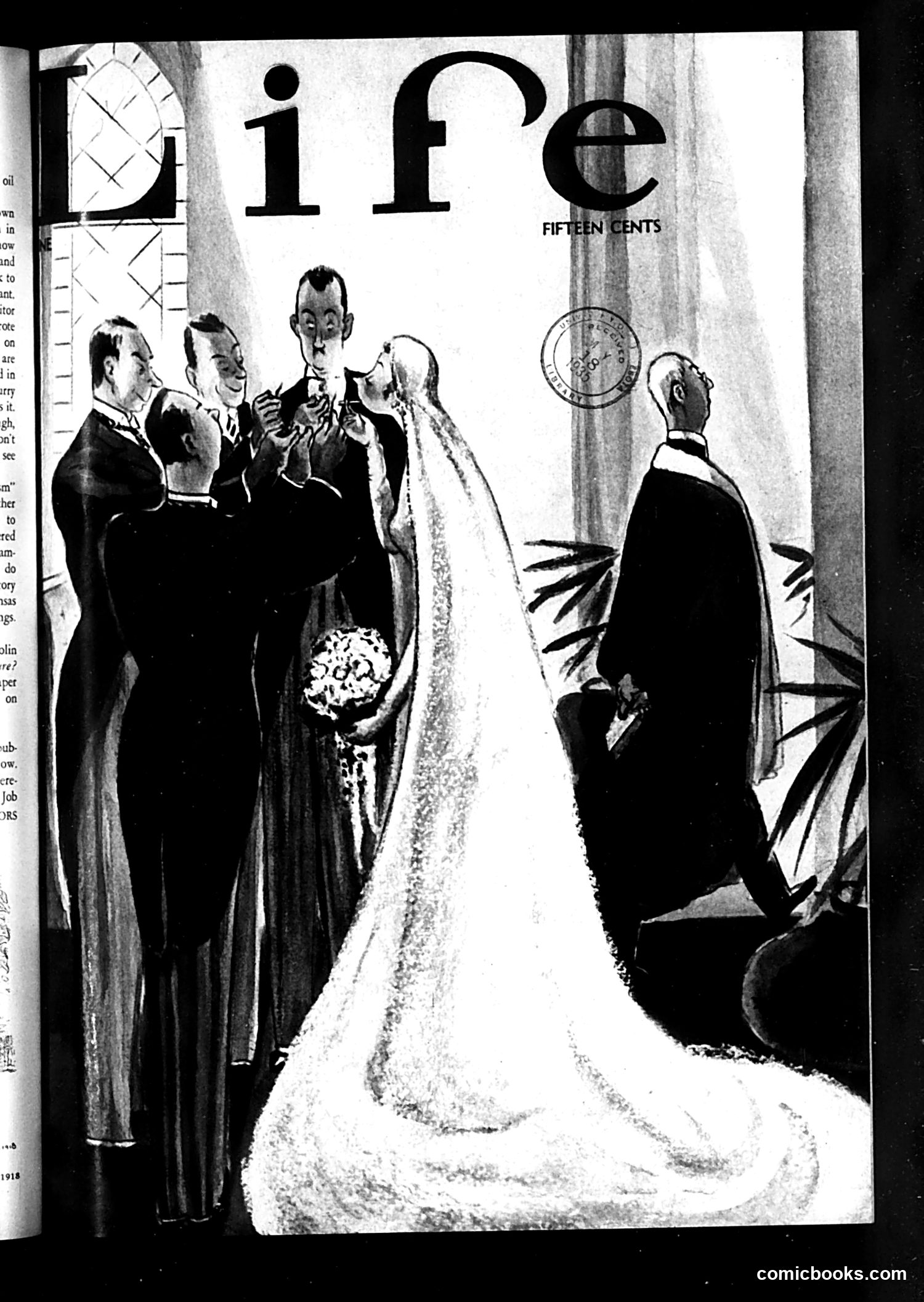
# Life Magazine Cover Analysis This is a Life magazine cover (priced at fifteen cents) depicting a wedding scene. A bride in a long white gown with trailing veil stands at the altar surrounded by formally dressed men in dark suits. One man on the right appears to be a clergyman or official conducting the ceremony. The satire likely comments on marriage or a significant social/political union of the era, though without additional context from the magazine's date or text, the specific figures and event being referenced remain unclear. The formal, somewhat austere composition and the prominent positioning of the bride suggests this is satirizing a notable wedding, possibly involving public figures. The exact political or social commentary cannot be determined from the image alone.
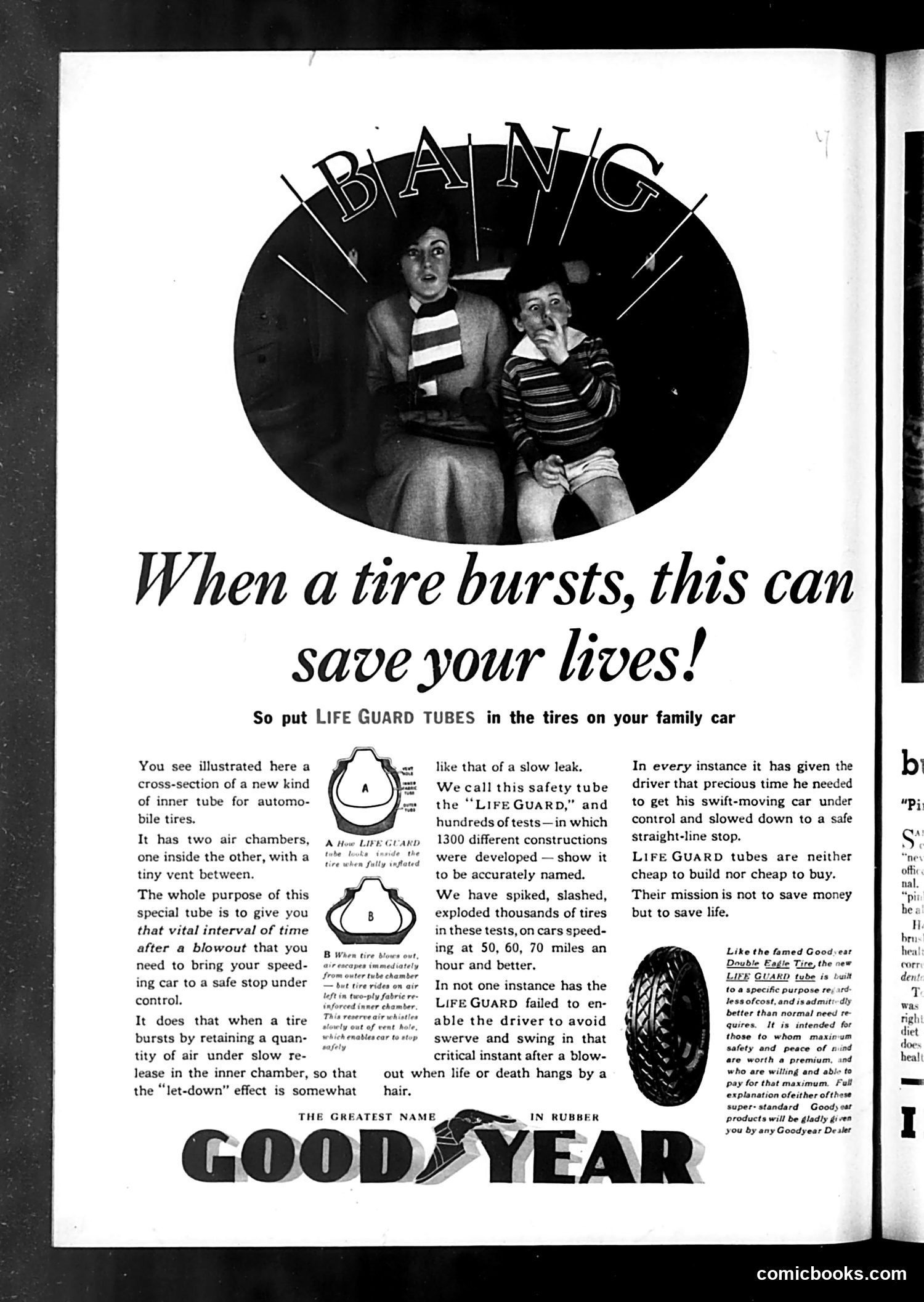
# Analysis This is a **Goodyear tire advertisement**, not a political cartoon. The page promotes "Life Guard Tubes," a safety inner tube designed to prevent rapid tire deflation during blowouts. The image shows a woman and child in a circular frame labeled "BAING" (likely "BAILING"), illustrating a dangerous situation. The advertisement's pitch: when a tire bursts, the Life Guard tube's dual air chambers allow gradual pressure loss instead of sudden failure, giving drivers time to safely stop rather than lose control at high speed. The text emphasizes this is a **safety feature, not a cost-saving one**—explicitly stating Life Guard tubes are "neither cheap to build nor cheap to buy." The appeal is to family protection: avoiding the life-or-death scenarios of uncontrolled tire failure.
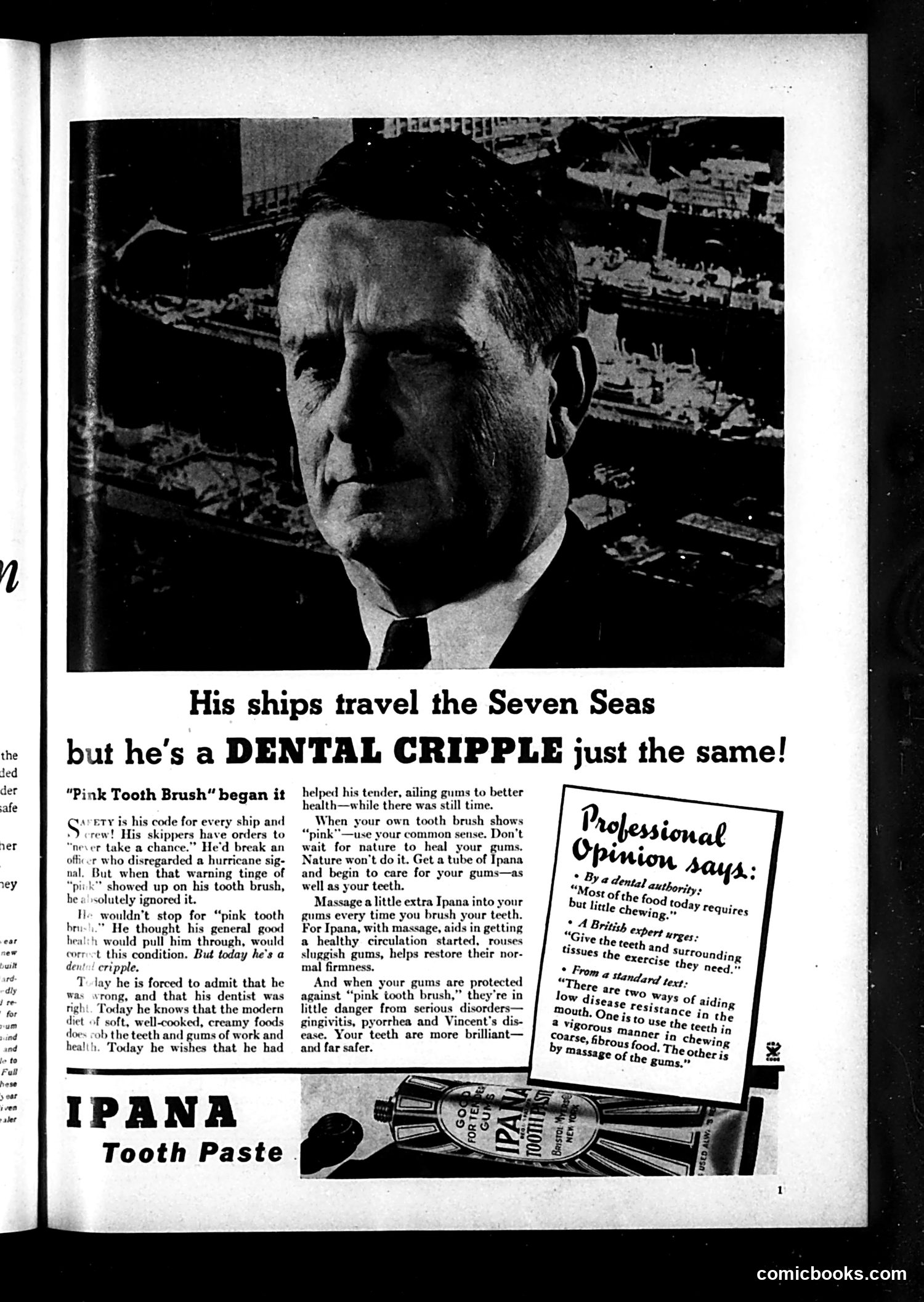
# Analysis This is primarily an **advertisement for Ipana Tooth Paste**, not political satire. The page features a photograph of a stern-faced man (identity unclear from the image alone) with the headline "His ships travel the Seven Seas but he's a DENTAL CRIPPLE just the same!" The ad uses humorous contrast: despite commanding a shipping fleet—suggesting success and authority—the man suffers from poor dental health. The copy explains how "Pink Tooth Brush" (Ipana's branded brush) helps address gum disease through massage and better oral hygiene. The "Professional Opinions" box includes endorsements from dental authorities supporting the product's claims about gum care and tooth health. This reflects early-20th-century advertising's tendency to undermine confident figures' authority by exposing personal health vulnerabilities, using shame as a sales tactic.
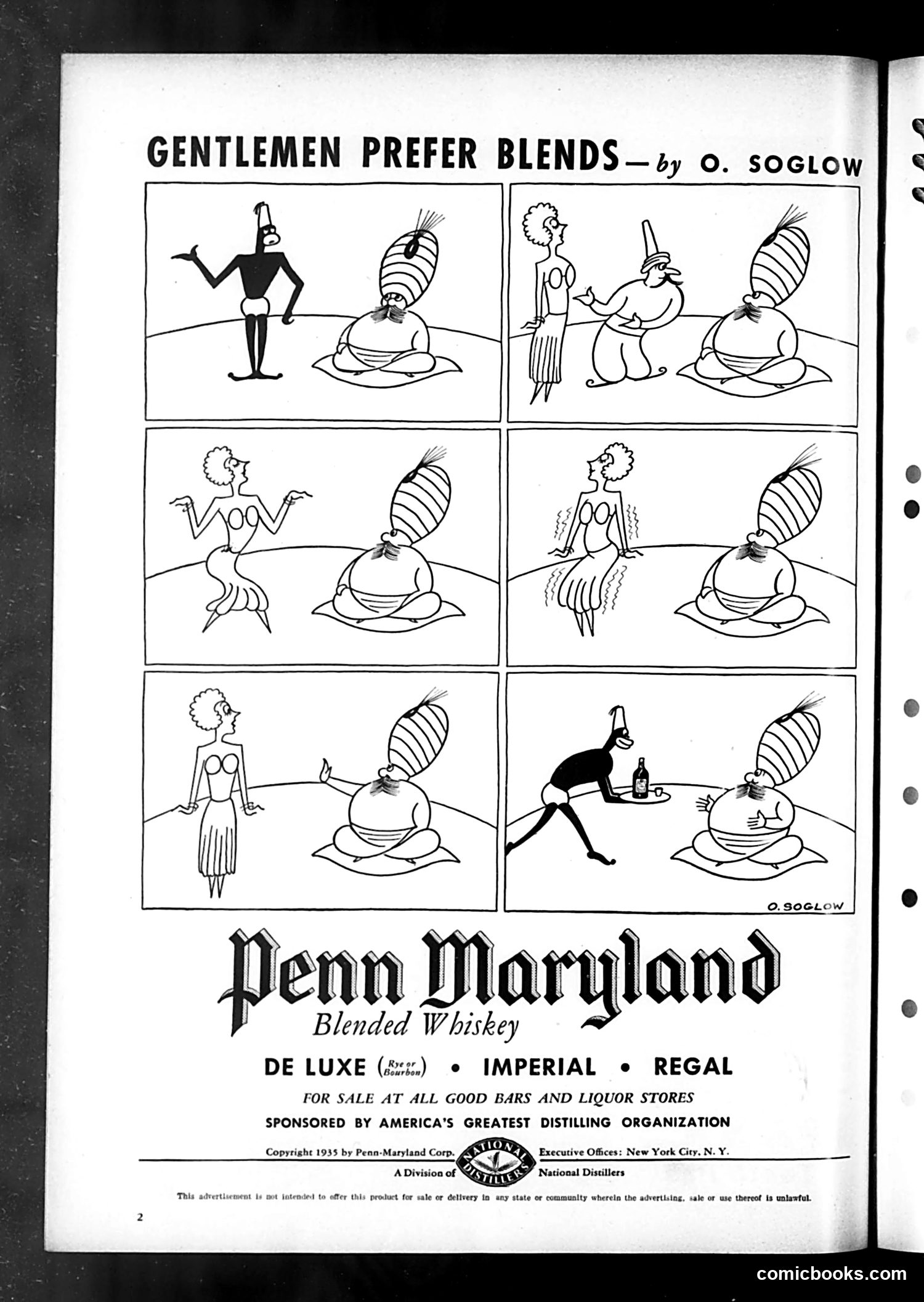
# Penn Maryland Blended Whiskey Advertisement This is a 1933 whiskey advertisement by cartoonist O. Soglow titled "Gentlemen Prefer Blends." The six-panel comic shows a rotund man with a beehive-shaped head representing different whiskey blends, interacting with various women in different poses and situations—dancing, gesturing, sitting passively. The joke plays on the 1925 Anita Loos novel/film "Gentlemen Prefer Blondes," substituting "blends" (whiskey blends) for "blondes." It suggests that men prefer blended whiskey just as they prefer blondes—presented here through the women's varied, somewhat objectifying poses around the central male figure. The advertisement ran post-Prohibition repeal (note the 1933 copyright), marketing Penn Maryland whiskey through humor and sexual innuendo typical of the era's advertising approach.
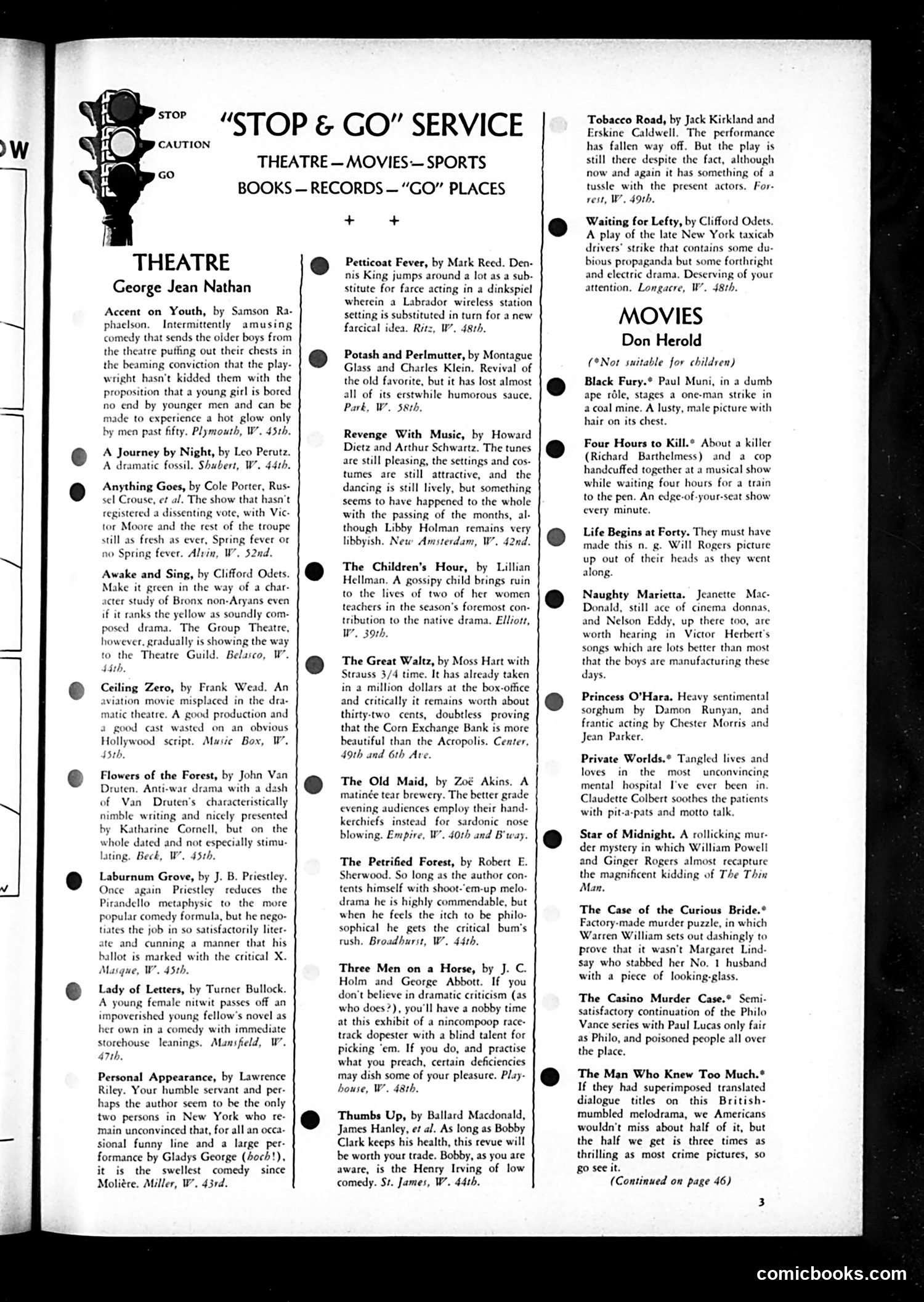
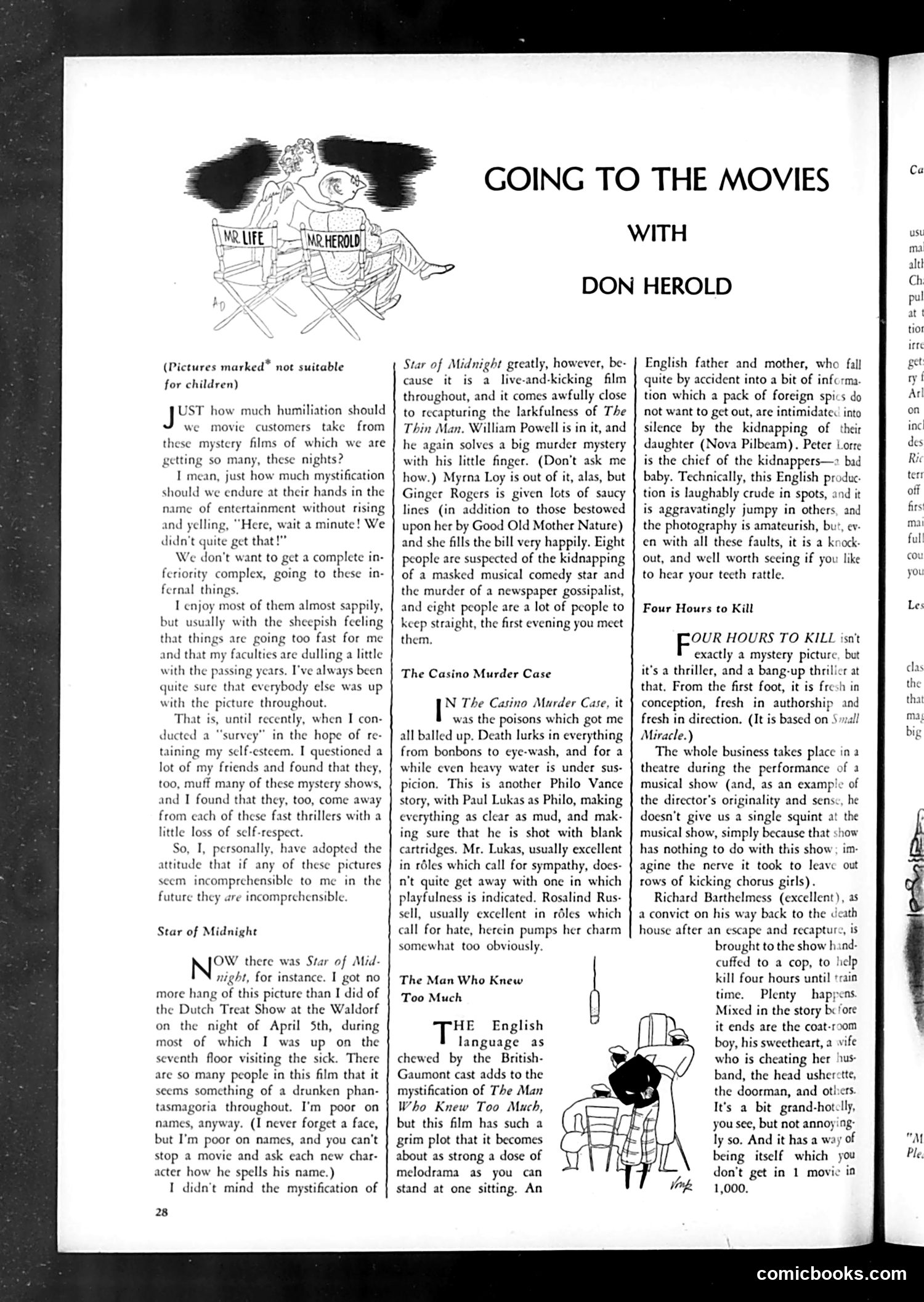
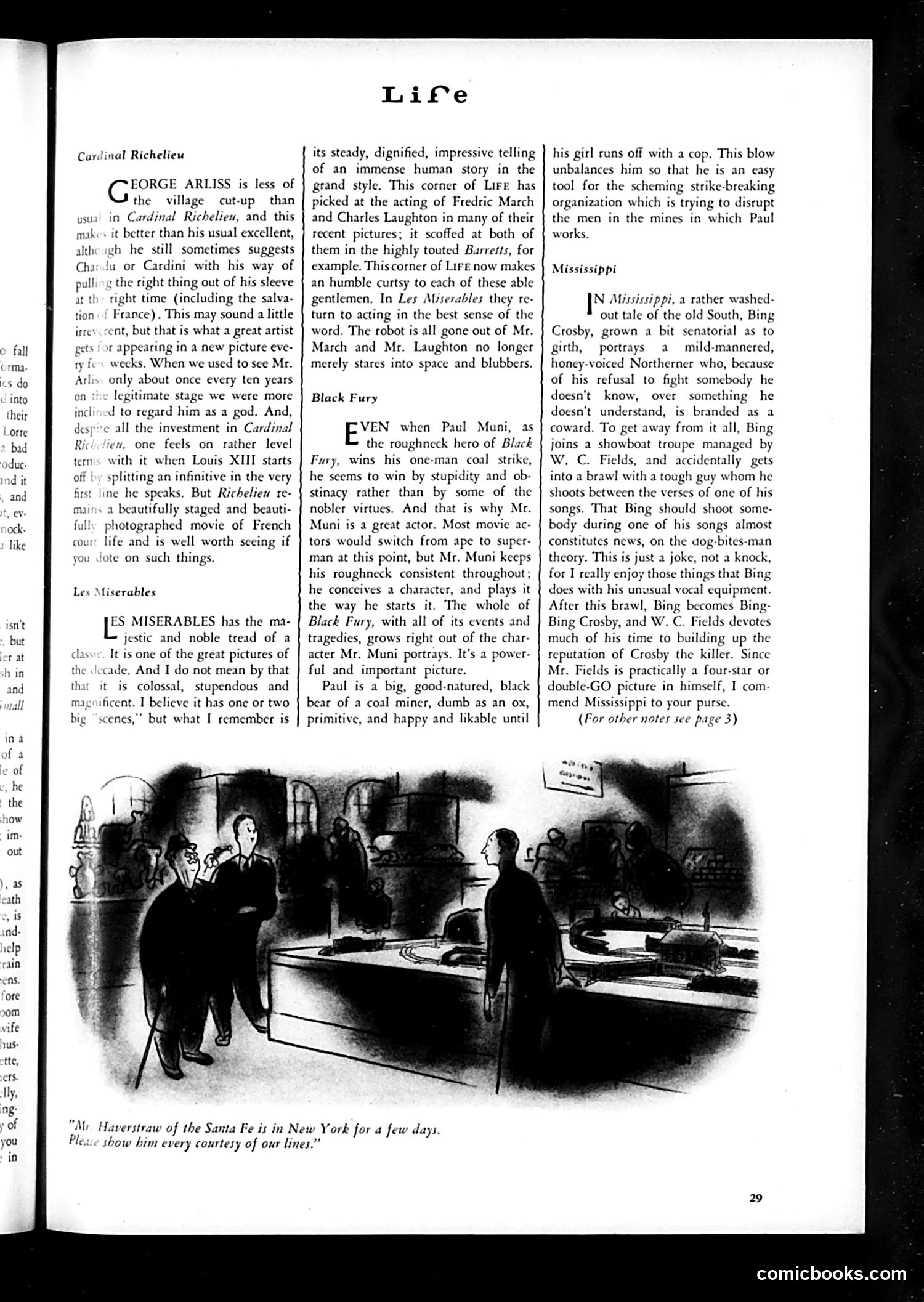
# "Stop & Go" Service Page This page is primarily a **theater and movie review section** rather than political satire. The masthead features a traffic light symbol—the "Stop & Go" metaphor organizing entertainment reviews by recommendation level. The reviews critique Broadway plays (like "Accent on Youth," "Petticoat Fever") and films (including "Black Fury," "Four Hours to Kill"). The traffic light device humorously applies traffic-control concepts to entertainment: green light = recommended, yellow = caution/mixed, red = avoid. This is a **consumer guide format** typical of Life magazine's satirical approach—using visual wit (the traffic signal) to evaluate popular culture rather than political commentary. The page reflects 1930s theater and cinema landscape through contemporary critical assessment.
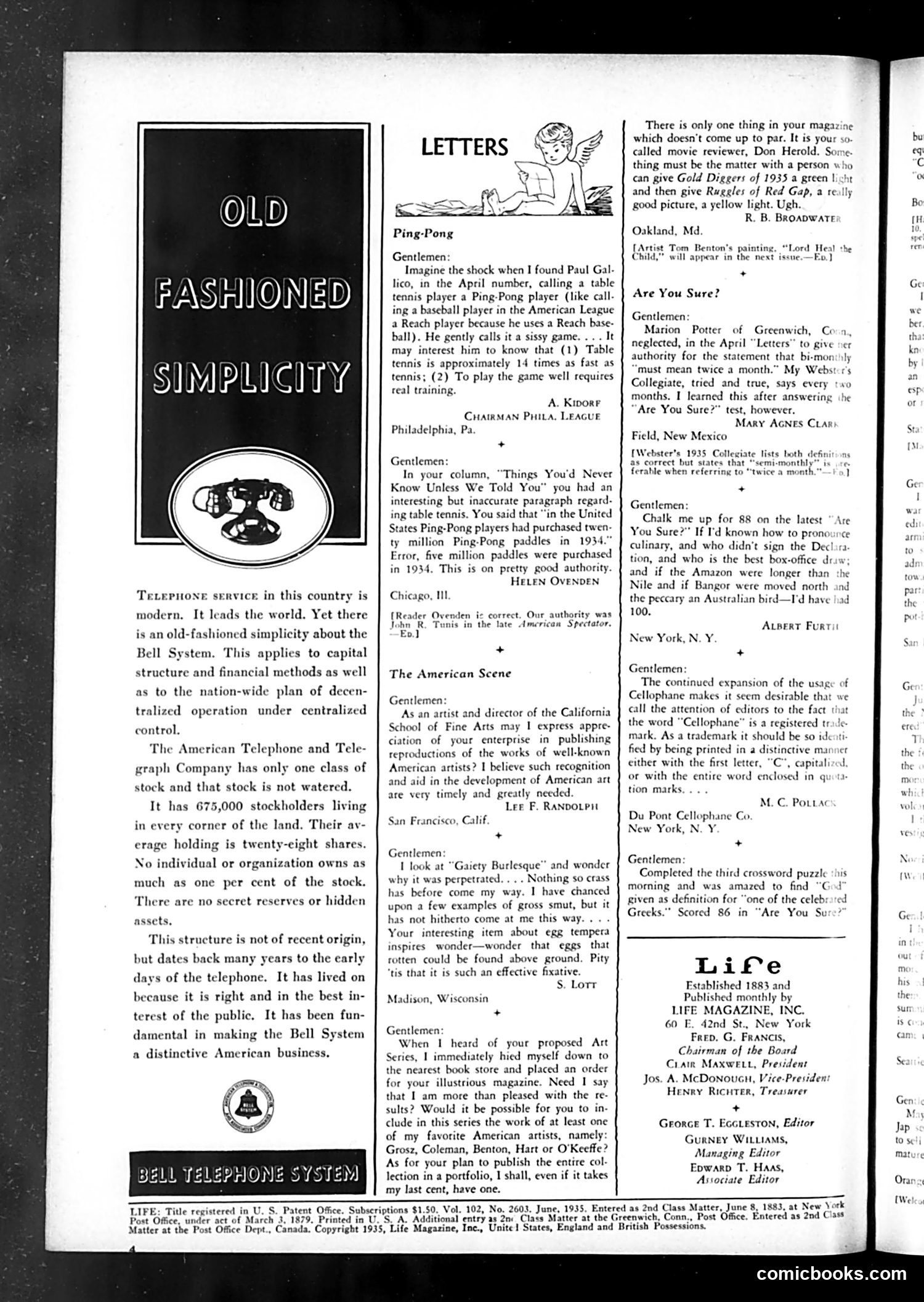
# Analysis of Life Magazine Page (June 1935) This page consists primarily of a **letters section** and editorial/corporate information, not political cartoons. The main visual element is a **Bell Telephone System advertisement** featuring "Old Fashioned Simplicity"—an old rotary telephone shown in a decorative oval frame. The ad's irony is its central message: despite appearing antiquated, the Bell System's structure represents modern efficiency through "centralized control" and transparent corporate governance (no "secret reserves"). It's essentially praising the telephone monopoly's stability and public trustworthiness to potential investors. The letters discuss ping-pong, art recognition, and crossword puzzles—typical reader correspondence. There's no political satire evident on this particular page.
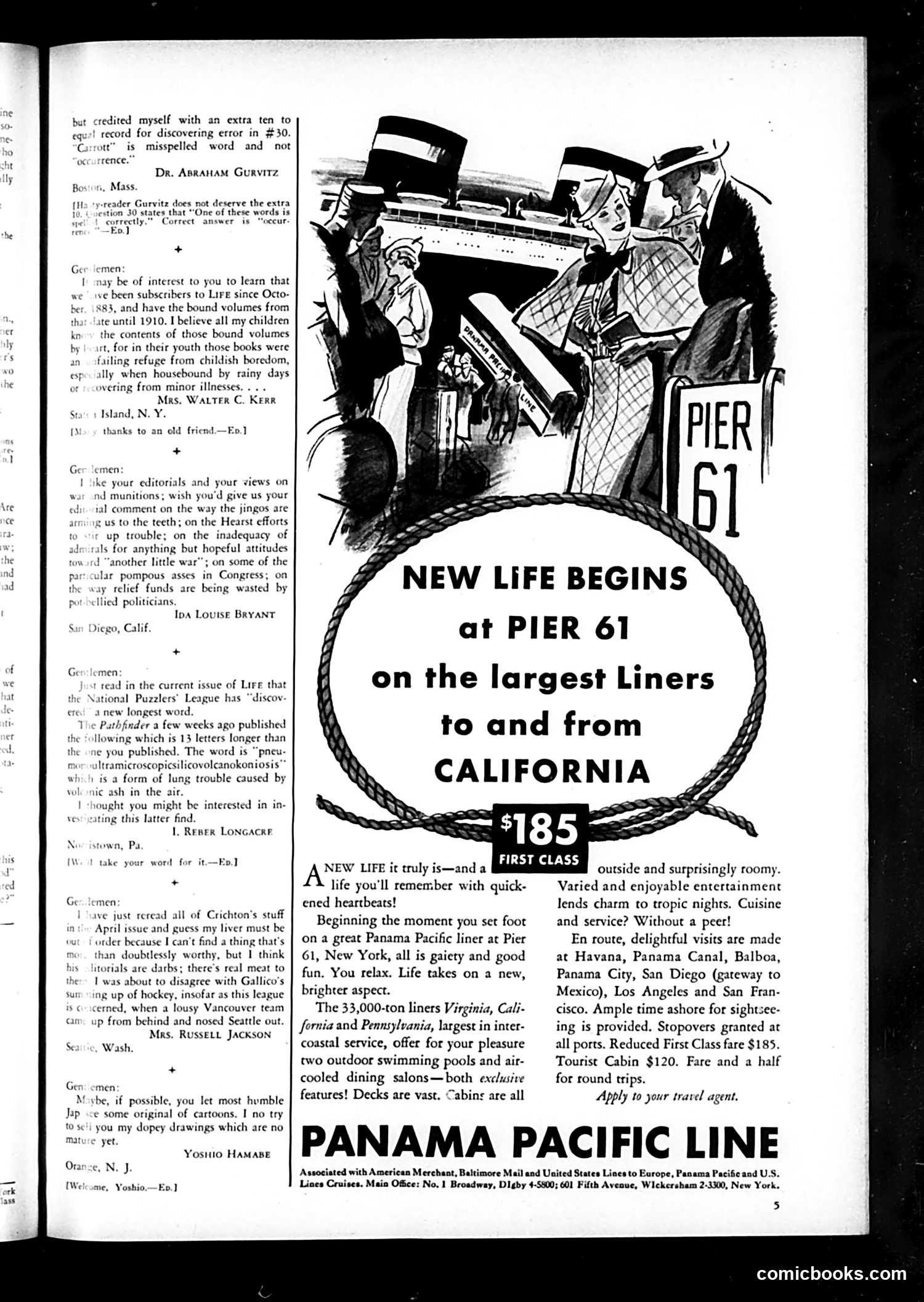
# Content Summary This page consists primarily of **reader letters and advertisements** rather than editorial cartoons or satire. The left column contains correspondence from readers discussing *Life* magazine content, including references to puzzles and previous articles. The right side features a **full-page advertisement** for the Panama Pacific Line's ocean liner service to California. The ad depicts passengers boarding at "Pier 61" with luggage and top hats, promoting luxury voyage amenities: swimming pools, dining salons, and ports including Havana, Panama Canal, and San Francisco. First-class passage costs $185. This reflects the era's emphasis on **steamship travel as premium transportation and entertainment**—before commercial aviation dominated long-distance travel. The advertisement targets affluent readers seeking leisure voyages.
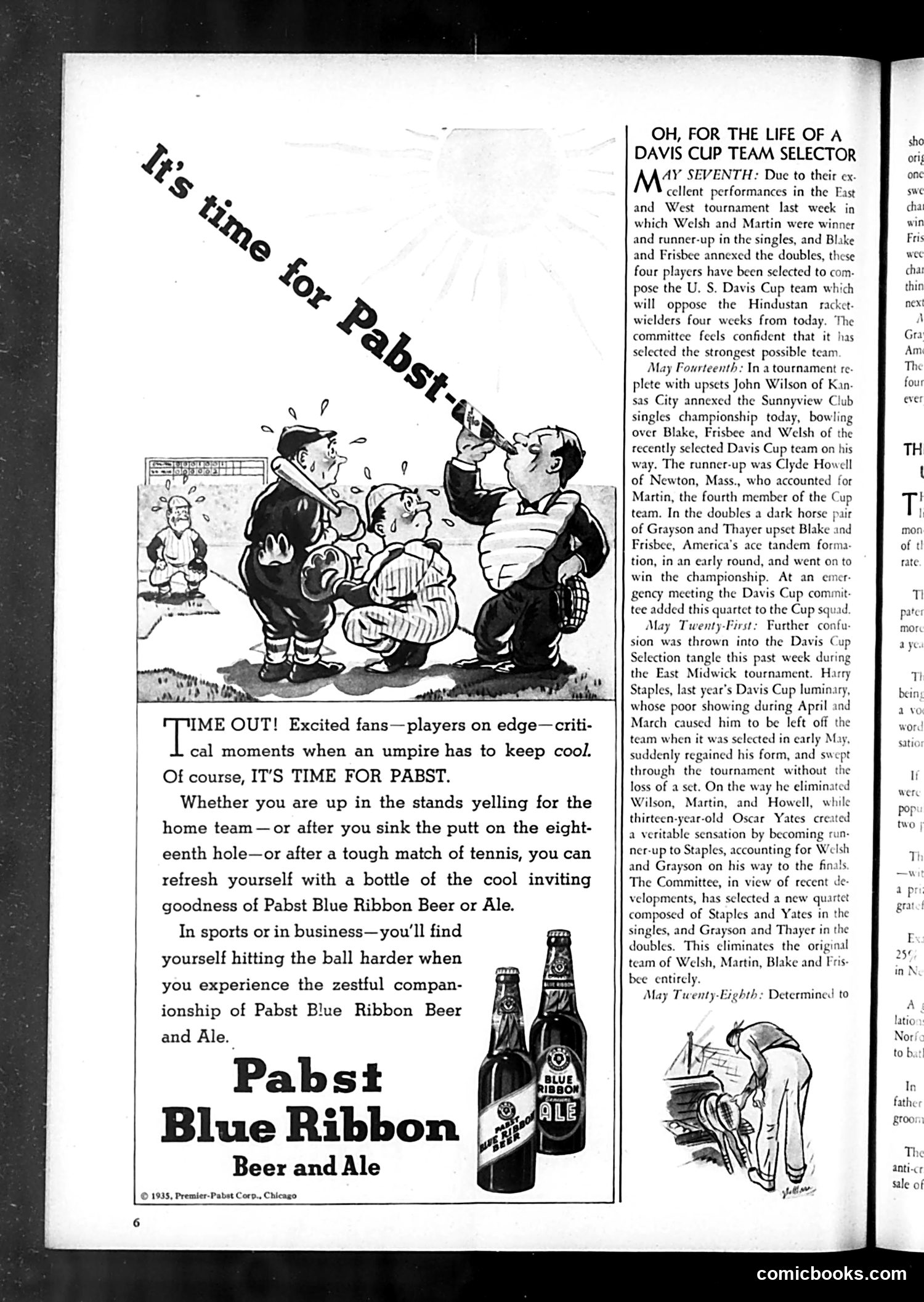
# Analysis This page is primarily a **Pabst Blue Ribbon Beer advertisement** (1935, per copyright mark) rather than political satire. The left side features a sports-themed cartoon showing excited fans and players in heated moments—baseball, golf, and tennis contexts are referenced. The ad's message: drinking Pabst helps you "keep cool" during intense sporting moments and competitive situations. The right column contains a **Davis Cup tennis article** discussing U.S. team selection controversies. The text describes disputes over choosing four players for the Davis Cup team, with various tournament results and player performances detailed. The small cartoon at bottom right appears unrelated—possibly a maritime or fishing scene sketch. The page blends advertisement with sports journalism—a common 1930s magazine format.
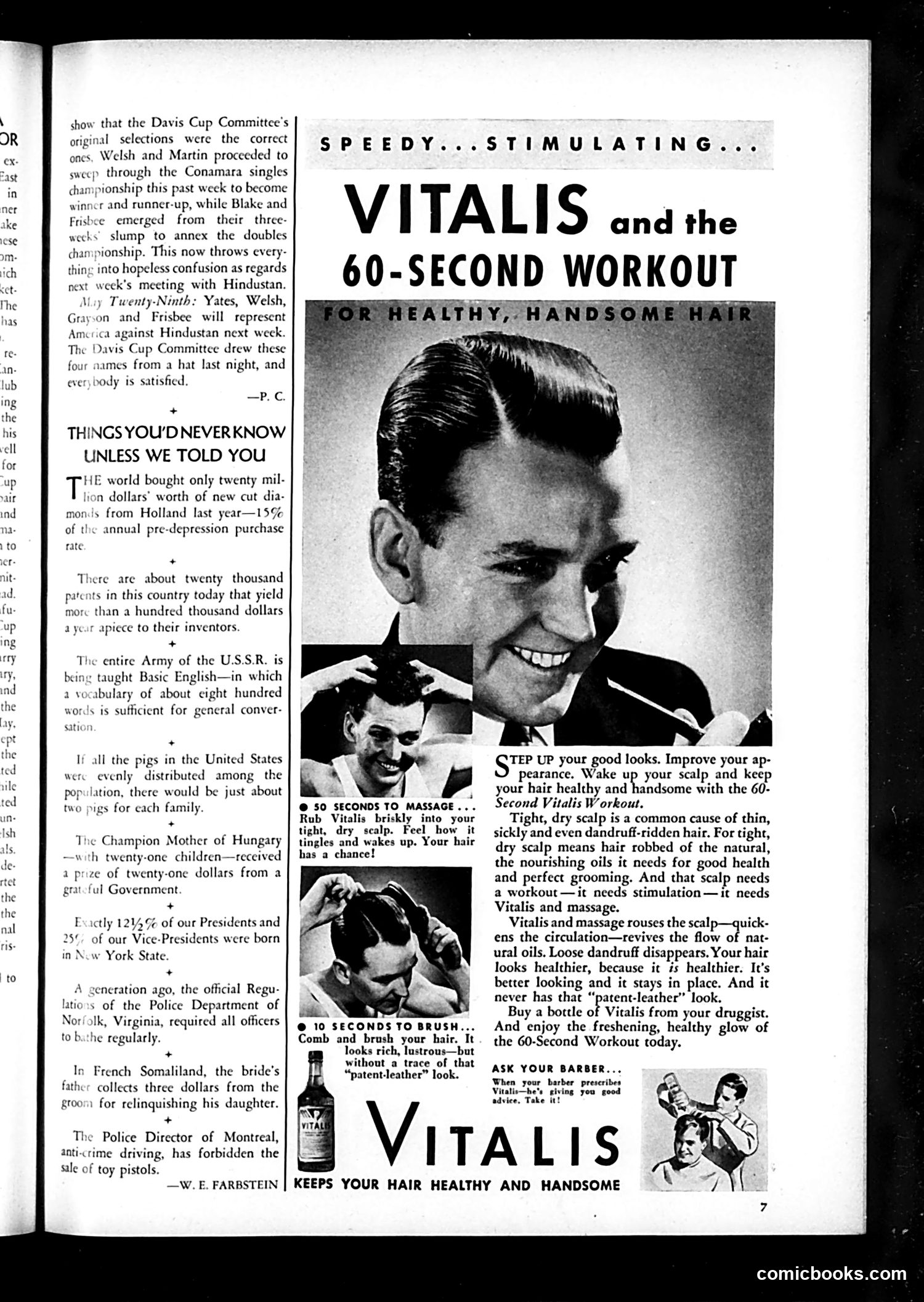
# Content Analysis This page is primarily a **Vitalis hair product advertisement**, not political satire. The large right-side ad promotes Vitalis with a "60-Second Workout" for hair health through scalp massage and brushing. The left column contains a miscellaneous section titled "THINGS YOU'D NEVER KNOW UNLESS WE TOLD YOU"—a recurring Life magazine feature of quirky facts and observations. These include trivia about diamond purchases, patents, Army language training, pig distribution, Hungary's government payments, U.S. Presidents' birthplaces, and Montreal police policy. **No political cartoon or satire is present.** This is a standard magazine page mixing editorial filler with commercial advertising, typical of mid-20th century American periodicals. The Vitalis ad reflects period grooming standards emphasizing healthy, well-maintained hair as a marker of masculine appearance.
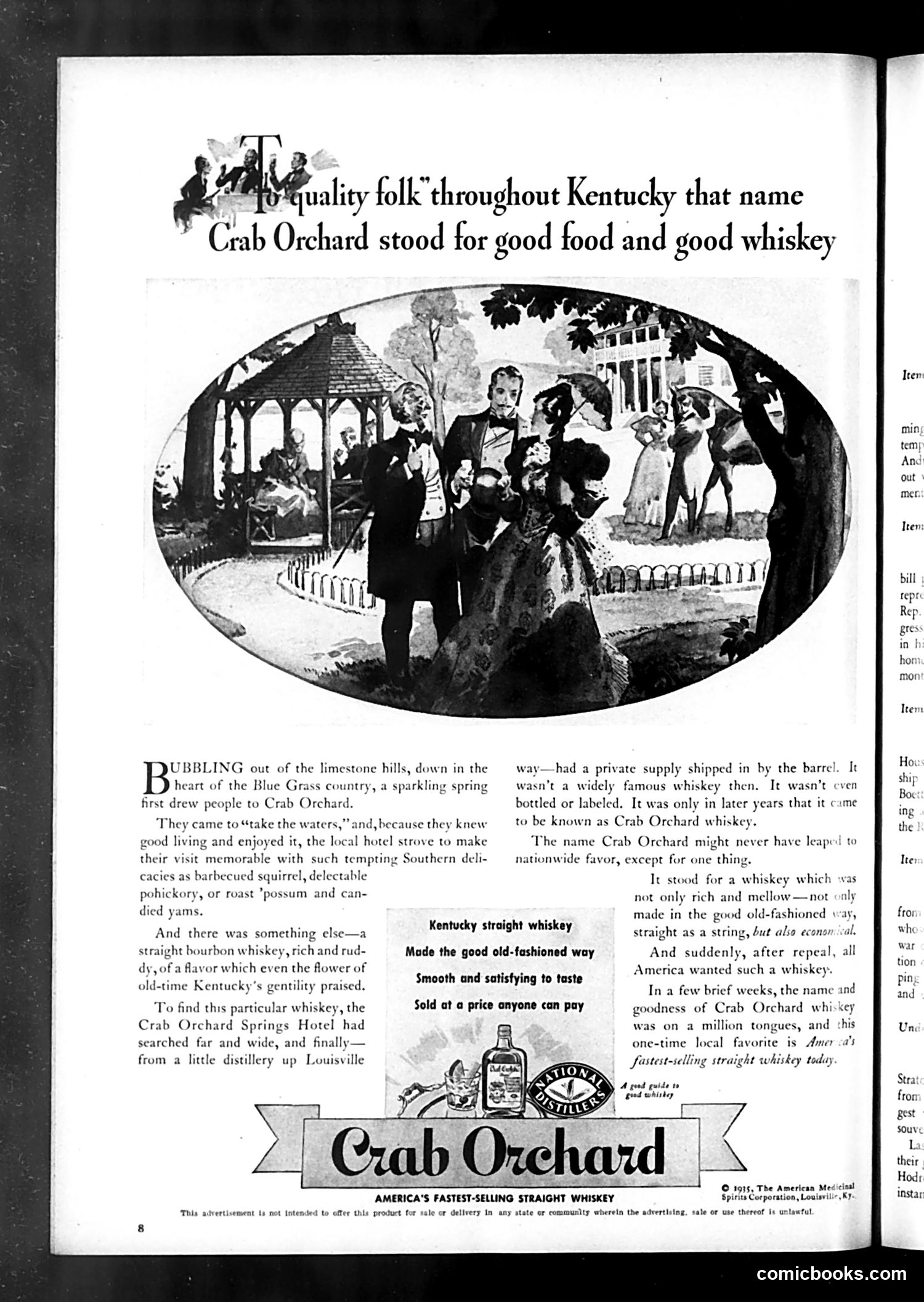
# Crab Orchard Whiskey Advertisement This is a **whiskey advertisement**, not political satire. The page promotes Crab Orchard whiskey, "America's fastest-selling straight whiskey." The illustration depicts an elegant social gathering in Kentucky's Blue Grass country, showing well-dressed figures at what appears to be a garden party near a gazebo. The narrative explains that the whiskey gained popularity through word-of-mouth among quality-conscious Kentuckians who appreciated both "good food and good whiskey." The ad emphasizes the product's appeal: it's "smooth and satisfying to taste" and "sold at a price anyone can pay," positioning it as affordable quality. The text notes the brand became "America's fastest-selling straight whiskey" after achieving rapid regional popularity. This represents early 20th-century lifestyle advertising targeting middle and upper-class consumers.
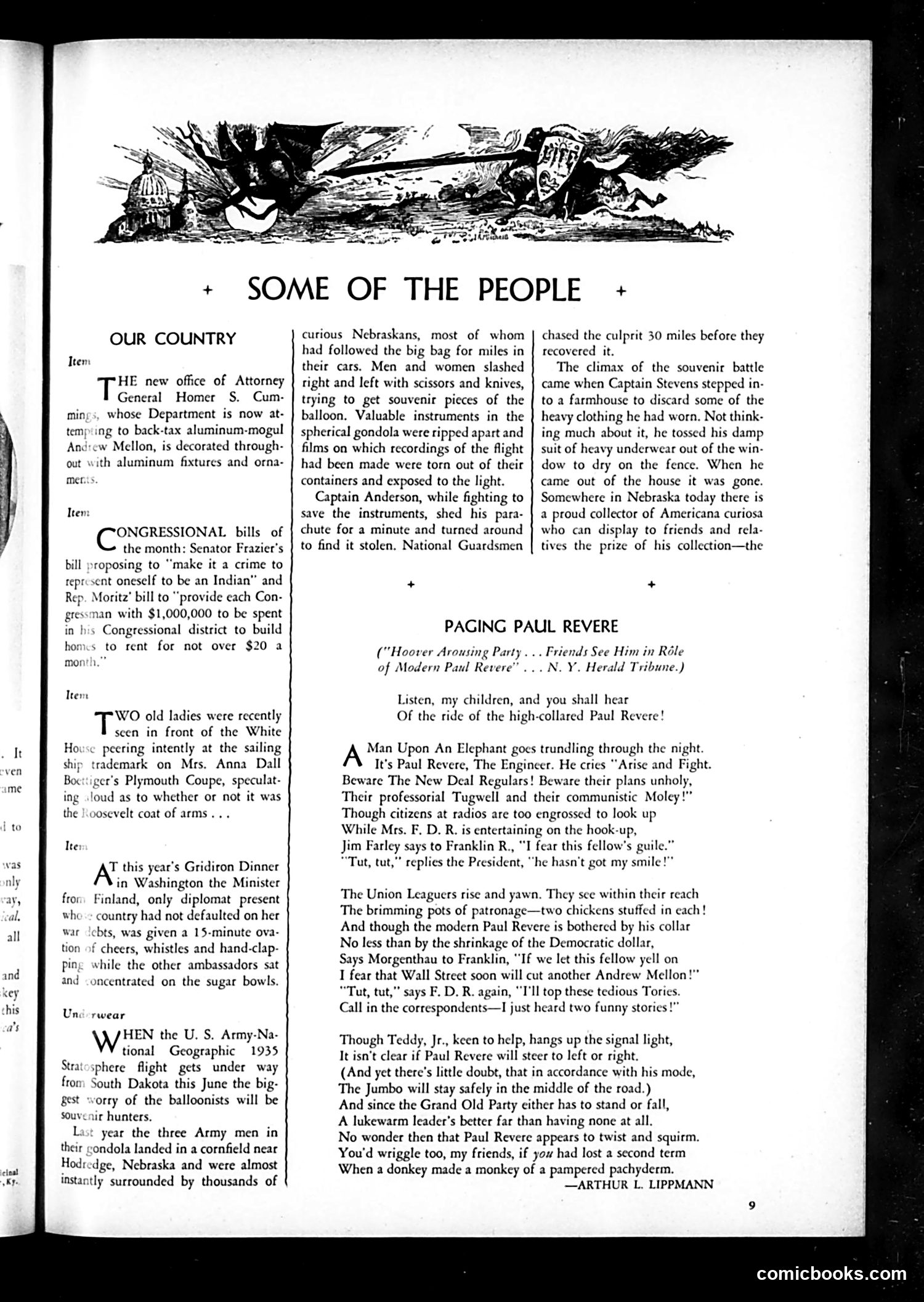
# Analysis of "Some of the People" - Life Magazine Page This page contains political commentary and humor about contemporary events. The left column discusses recent news items: Attorney General Homer Cummings' new office decorations, Congressional bills (including one by Senator Frazier and Rep. Moritz), and anecdotes about White House visitors and a Gridiron Dinner. The main feature is "Pacing Paul Revere," a satirical poem by Arthur L. Lippmann mocking Paul Revere as a modern figure warning about the New Deal administration. The poem attacks Roosevelt's policies and cabinet members (Tugwell, Moley, and others), presenting them as threats. This reflects conservative criticism of FDR's New Deal programs during the 1930s Depression era. The satire targets New Deal supporters and government initiatives as dangerous innovations.
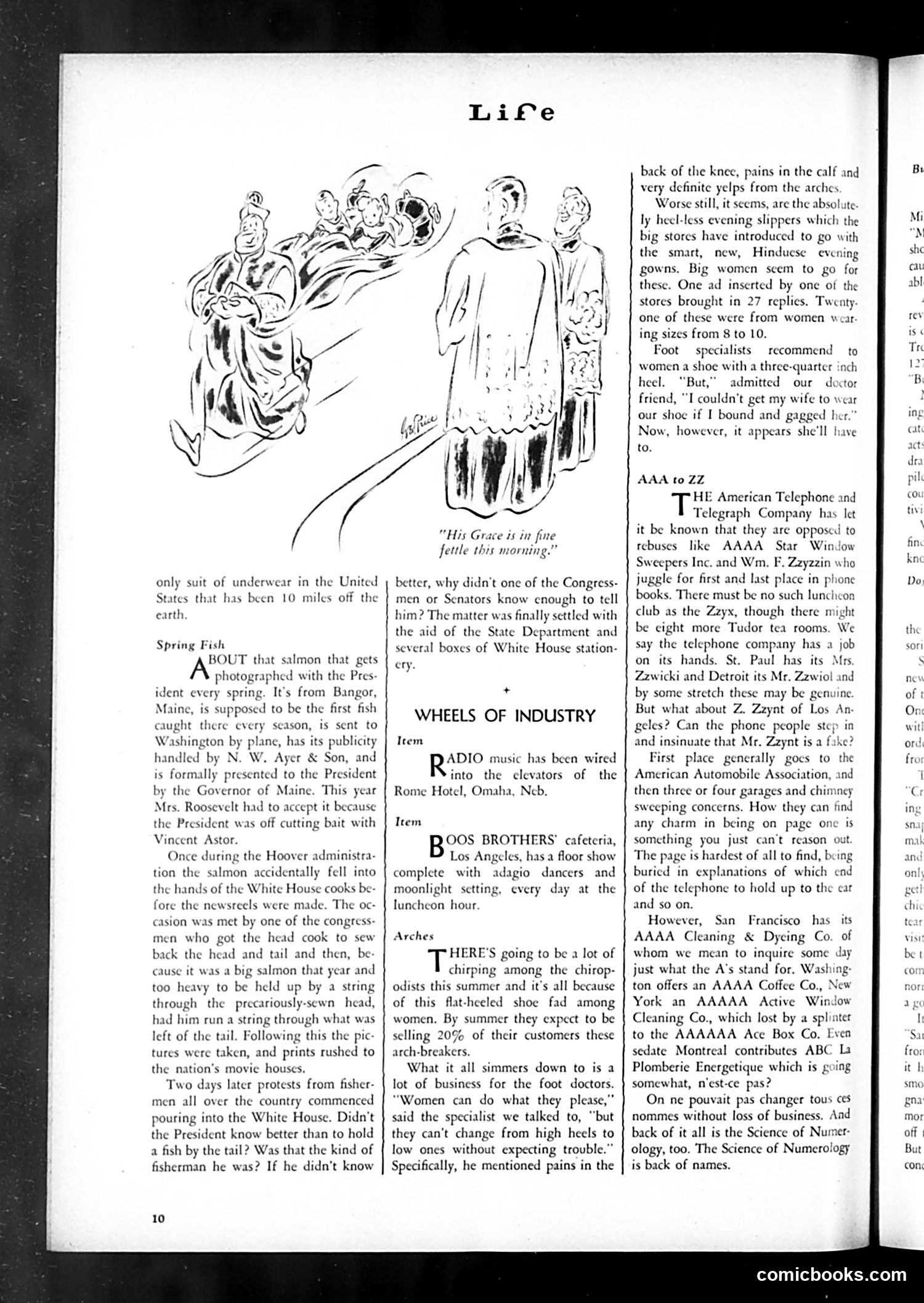
# Analysis of Life Magazine Page This page contains miscellaneous satirical items rather than a single cartoon. The main illustration shows a figure labeled "His Grace is in fine fettle this morning," depicting what appears to be an elegantly dressed person surrounded by attendants or admirers—likely satirizing someone of high social status or political prominence, though the specific individual is unclear from the image alone. The text sections ridicule various absurdities: hemlines on women's shoes from big stores (sizes 8-10), the American Telephone & Telegraph Company's supposed opposition to unusual names (listing people with names like "Zzyzzyn"), and chiropodists' business booming due to poor shoe design. The satire targets consumer culture, corporate bureaucracy, and fashion industry excesses typical of Life's early 20th-century commentary.