A complete issue · 54 pages · 1935
Life — March 1935
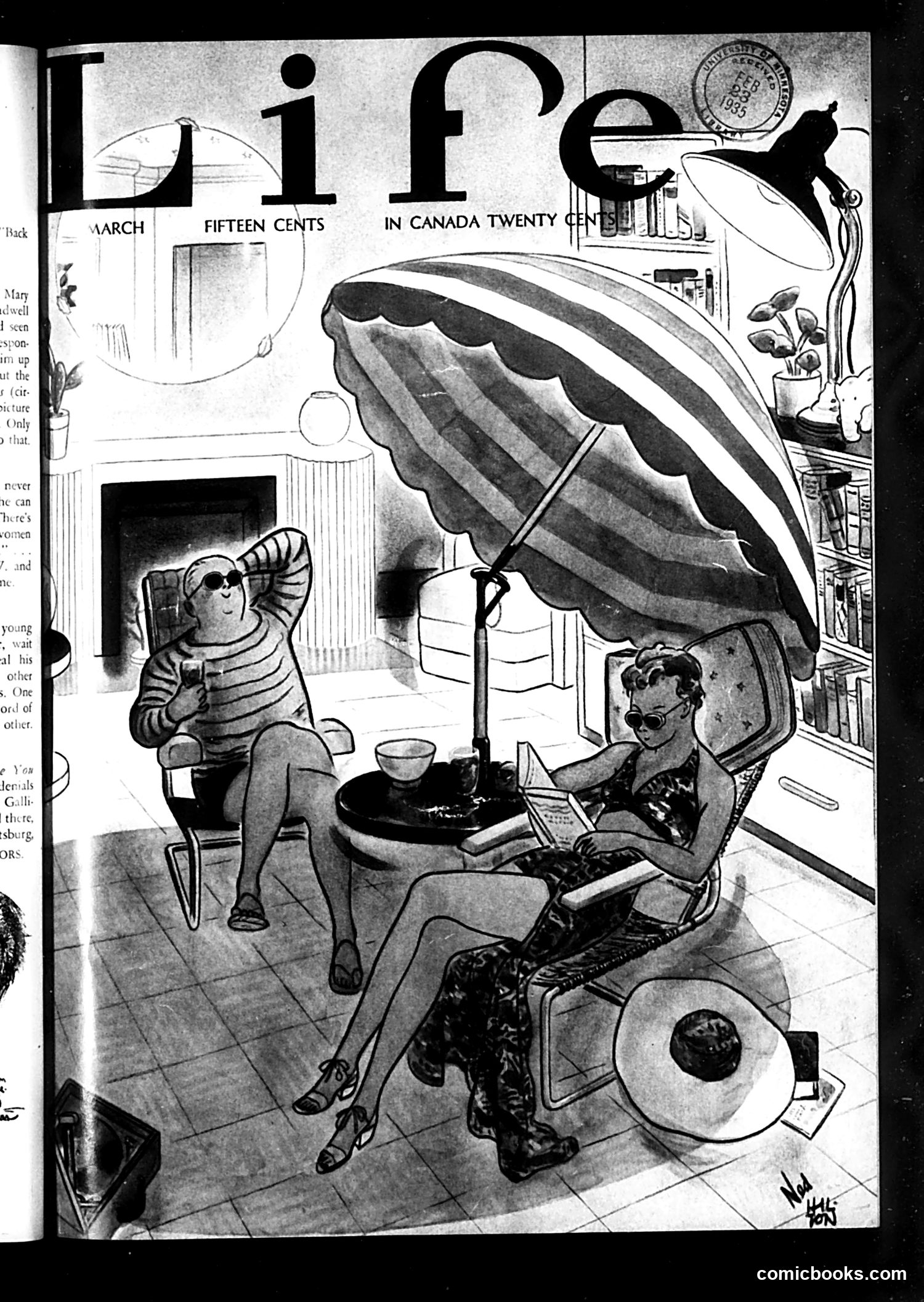
# Life Magazine Cover Analysis This is a **Life magazine cover from March** (price: 15 cents in Canada, 20 cents in the U.S.), featuring a satirical illustration of two women relaxing indoors during what appears to be **spring or summer weather**. The main joke centers on **leisurely domestic life**: one woman sits in a striped beach chair holding a parasol, while another reclines reading. The setup suggests they're enjoying vacation-like comfort at home rather than venturing outdoors. The satirical point likely mocks either **wealthy leisure** or the contrast between advertised ideals of relaxation and actual domestic routines. The artist's signature appears at bottom right. Without additional context from the magazine's interior, the specific social commentary remains somewhat unclear, though the overall tone is light domestic humor typical of Life's era.
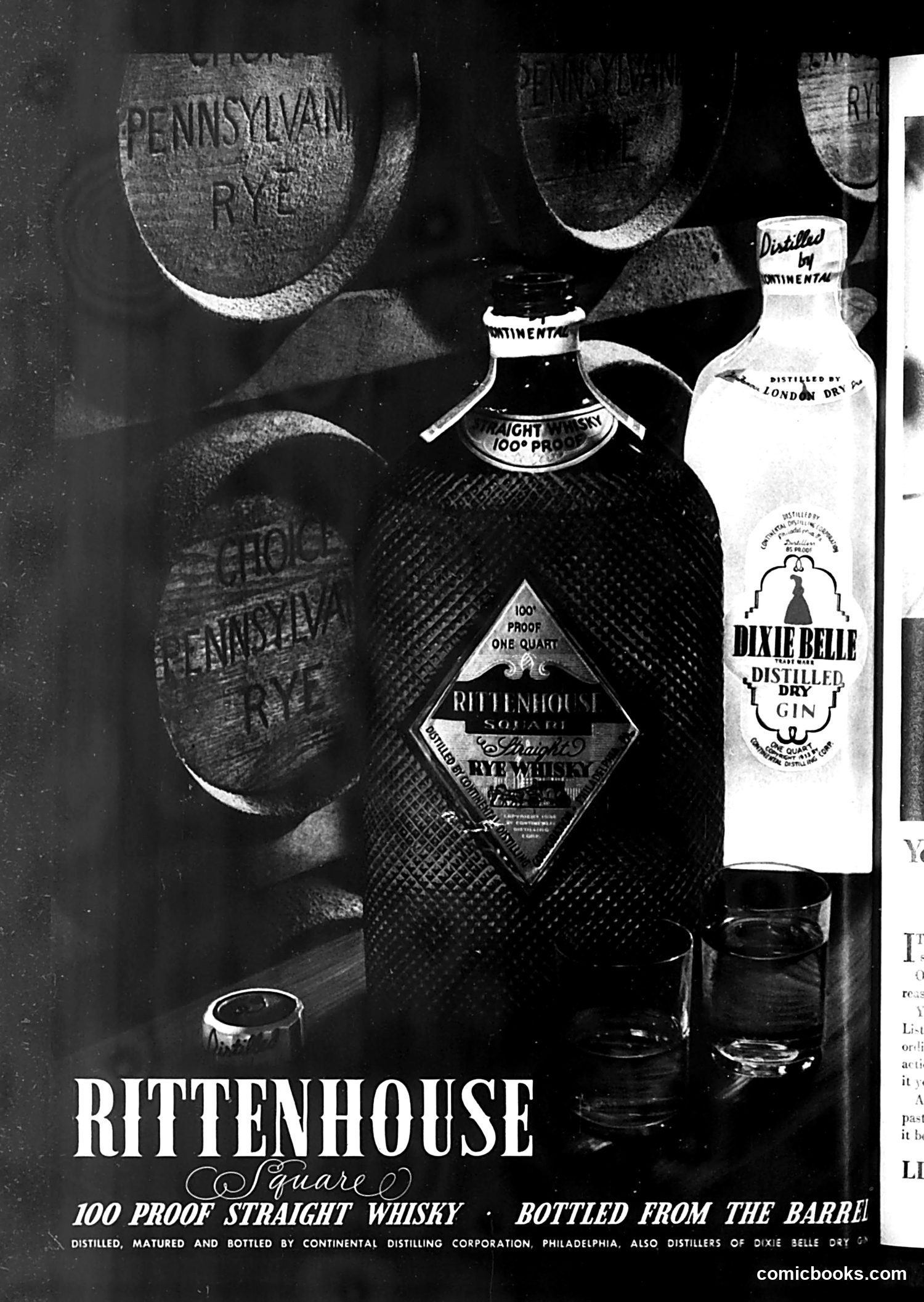
# Analysis This is primarily a **liquor advertisement**, not a political cartoon. It advertises "Rittenhouse Square" rye whiskey at 100 proof, "bottled from the barrel" by Continental Distilling Corporation of Philadelphia. The ad also mentions they distill "Dixie Belle" dry gin. The image shows bottles of these spirits alongside wooden barrels (marked "Pennsylvania Rye" and other text) and drinking glasses. The black-and-white photography emphasizes the product's premium, traditional character. This likely dates to the **pre-Prohibition or early post-Prohibition era** (1920s-1930s), when American distillers were reestablishing their brands after alcohol's legal ban. The ad appeals to consumers seeking quality American whiskey with established regional pedigree.
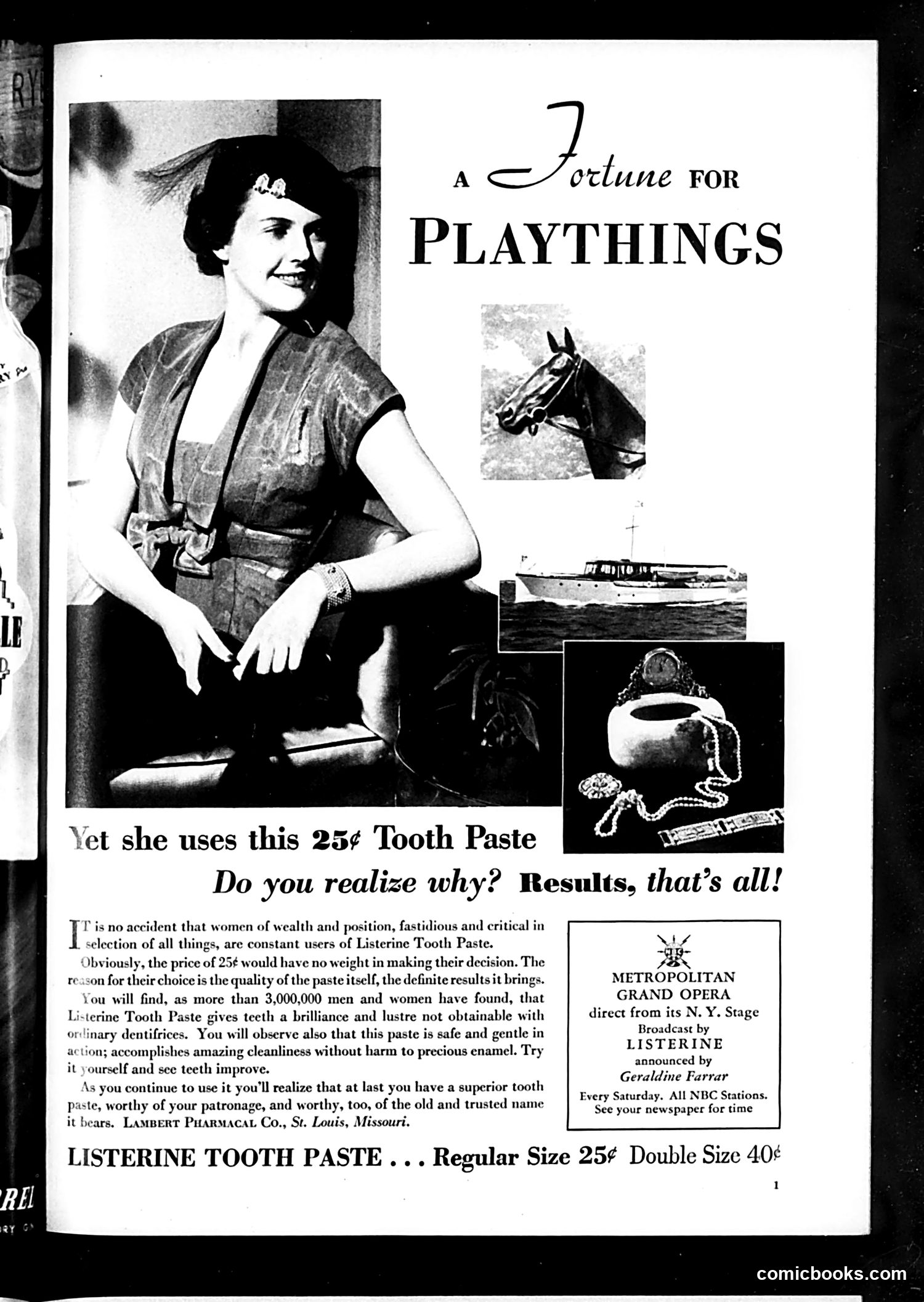
# Analysis This is primarily an **advertisement for Listerine Tooth Paste**, not editorial content or satire. The page features a glamorous woman in 1920s-30s styling alongside luxury items (a horse, yacht, and decorative vessel), suggesting wealth and refined taste. The ad's rhetorical strategy employs **aspirational marketing**: it argues that women of "wealth and position" choose this 25¢ toothpaste because results matter more than price. The accompanying text claims over 200,000 users have found Listerine superior for brightness and lustre. The sidebar advertises a Metropolitan Grand Opera broadcast on NBC radio, featuring singer Geraldine Farrar—adding cultural prestige to the page. This represents typical early 20th-century advertising logic: associating affordable products with luxury lifestyles and celebrity endorsement.
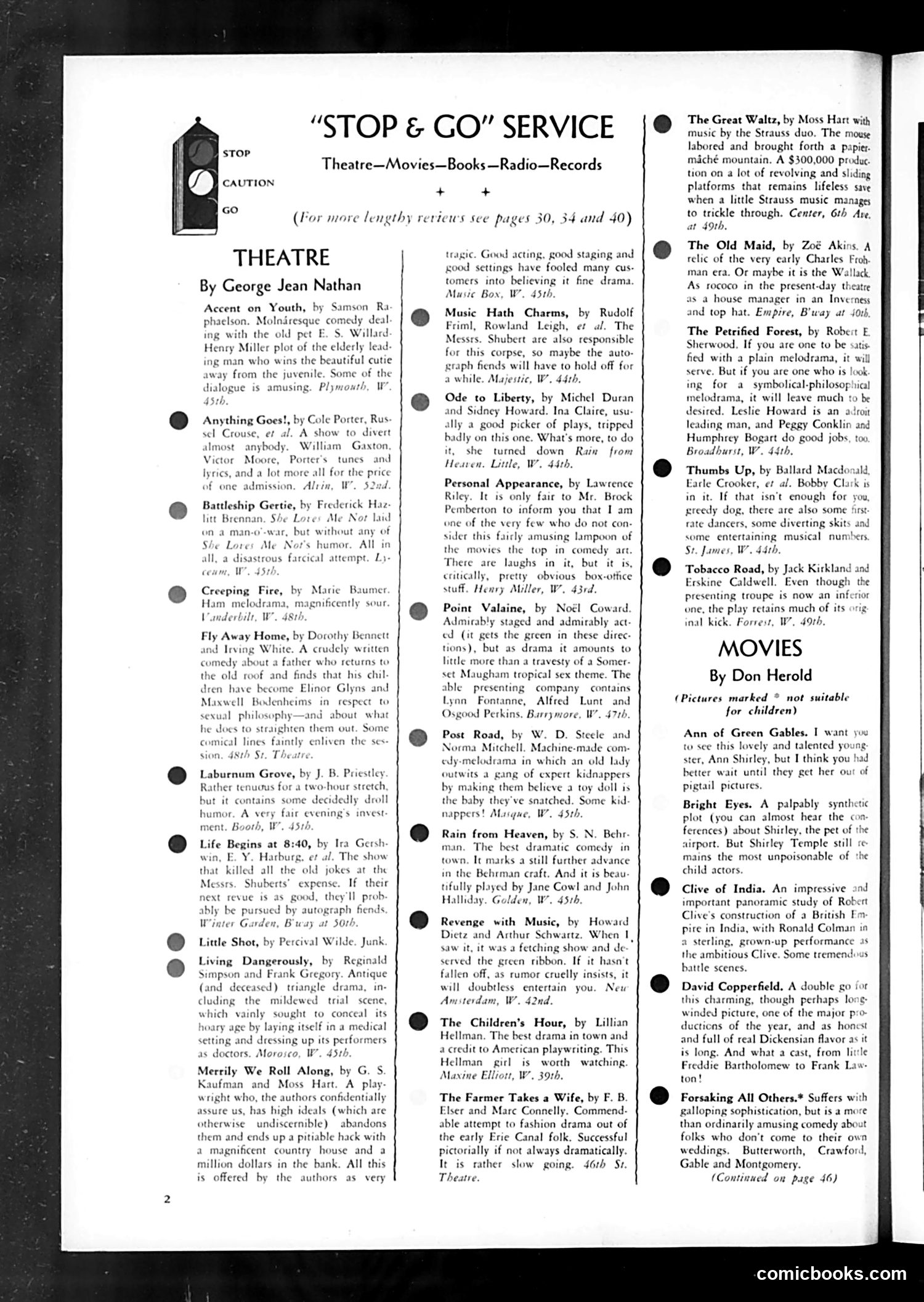
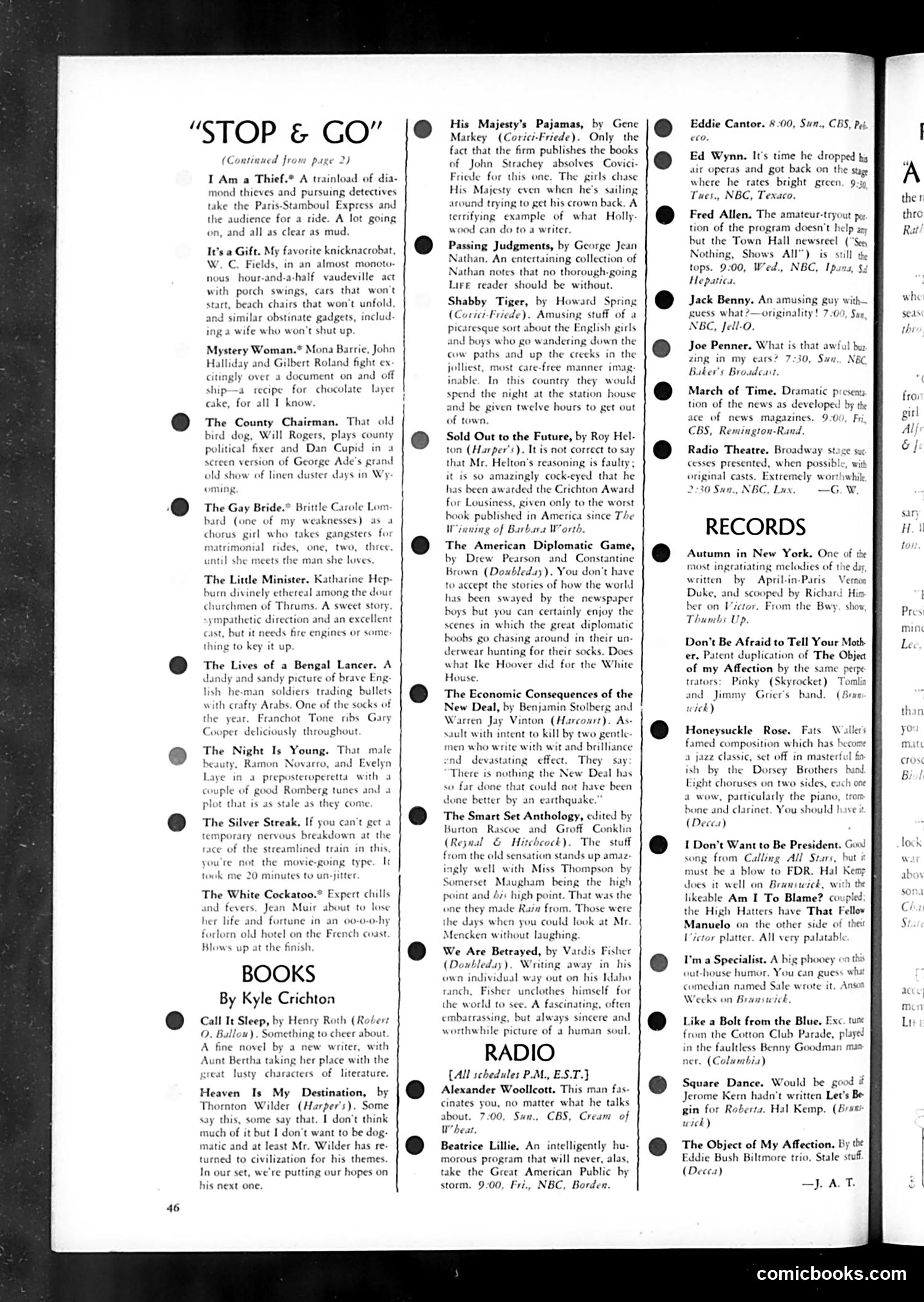
# Analysis This page is primarily a **review section**, not a cartoon or satirical feature. It's titled "STOP & GO SERVICE" and contains theater, movie, book, radio, and record reviews by George Jean Nathan and Don Herold. The only visual element is a small **traffic light icon** at the top left, serving as the section's design motif—"STOP" and "GO" refer to the reviewing format of recommending or warning against entertainments. The reviews themselves are critical assessments of Broadway productions and films from what appears to be the 1940s, offering opinions on performances, staging, and dramatic merit. This is editorial content rather than political satire or cartooning.
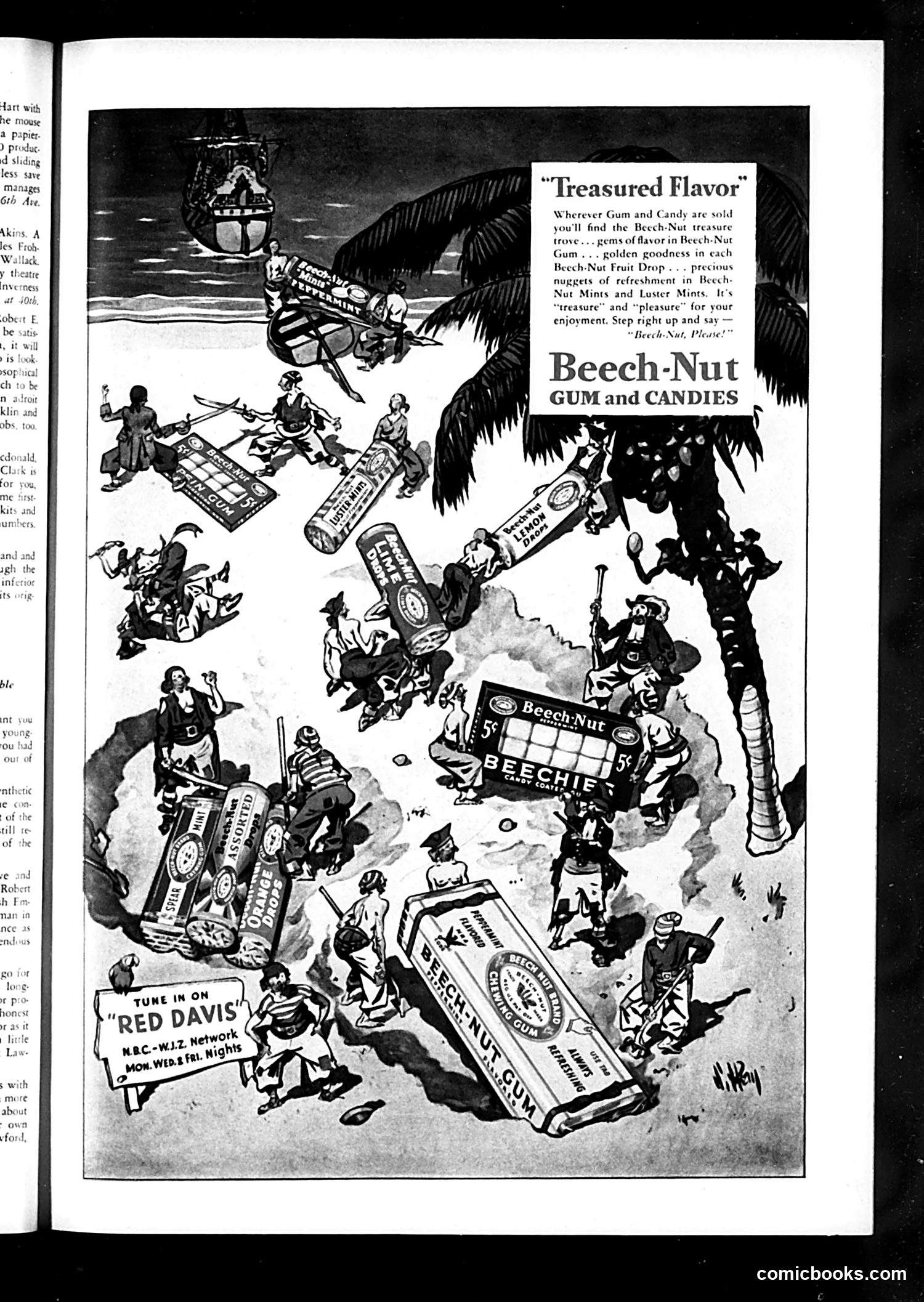
# Beech-Nut Gum and Candies Advertisement This is a vintage **advertisement**, not political satire. The full-page ad for Beech-Nut gum and candies depicts a whimsical island scene populated by cartoon characters enjoying the products. The "Treasured Flavor" headline emphasizes the brand's appeal. Notable elements include: - Large Beech-Nut product packages dominating the landscape - Multiple figures in playful poses scattered across a tropical setting - A palm tree and what appears to be a parrot - A small radio advertisement at bottom left promoting "Red Davis" on NBC-WIZ Network (MON, WED, FRI NIGHTS) The illustration style is typical 1930s-40s advertising art. The ad sells the product through escapist fantasy rather than any political commentary.
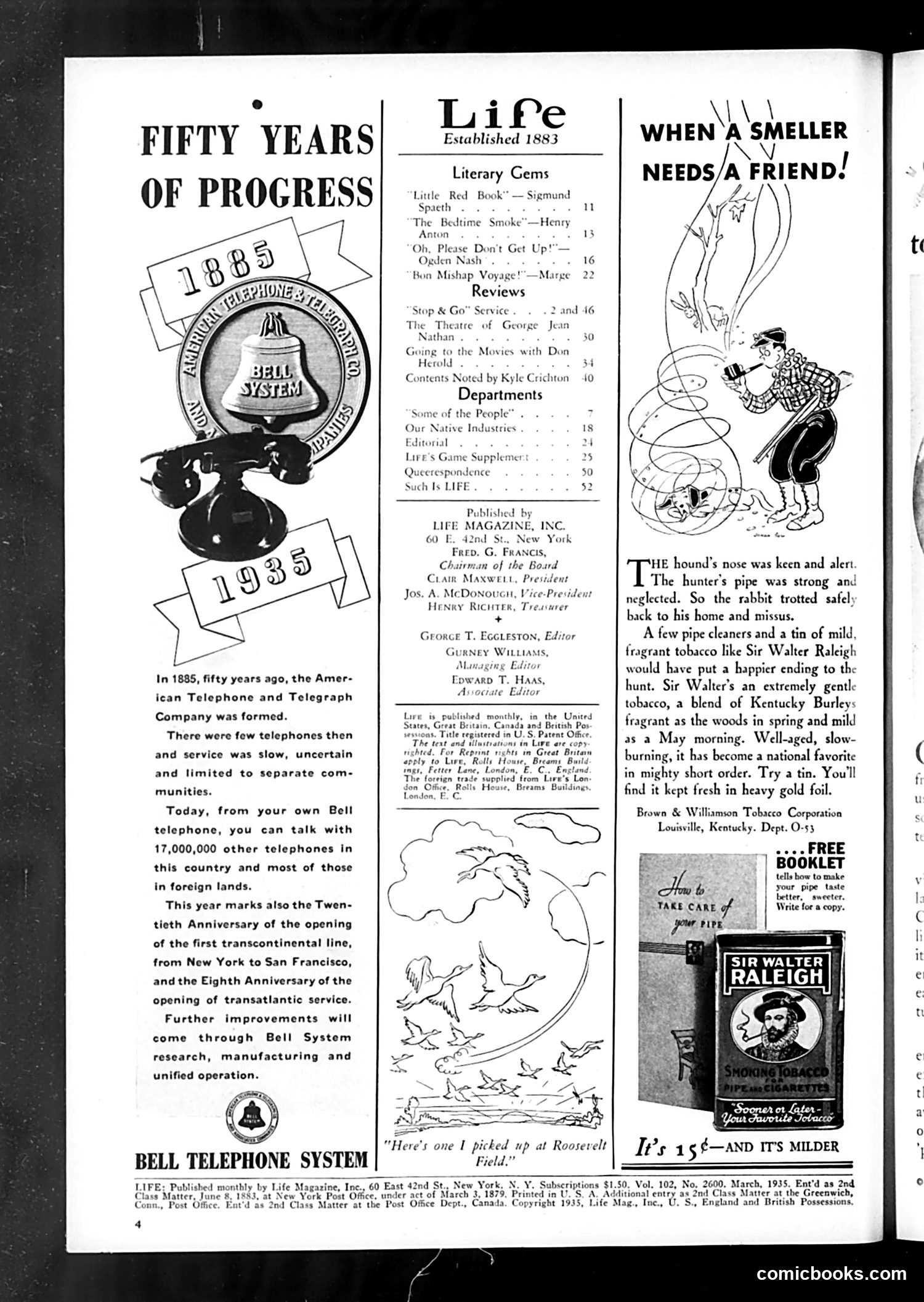
# "When a Smeller Needs a Friend" This cartoon illustrates a humorous hunting scenario. A hunter with his dog discovers that his pipe tobacco—specifically Sir Walter Raleigh brand—is so fragrant and pleasant that it attracts rabbits instead of helping him hunt them. The joke plays on the marketing claim that the tobacco has an appealing scent. The accompanying text describes Sir Walter Raleigh as a "mild" tobacco blend from Kentucky, noting that its pleasant aroma would make "a happier ending to the hunt" than typical hunting outcomes. This is essentially an advertisement disguised as a cartoon joke, using humor to promote the tobacco brand's desirable qualities to readers in 1935.
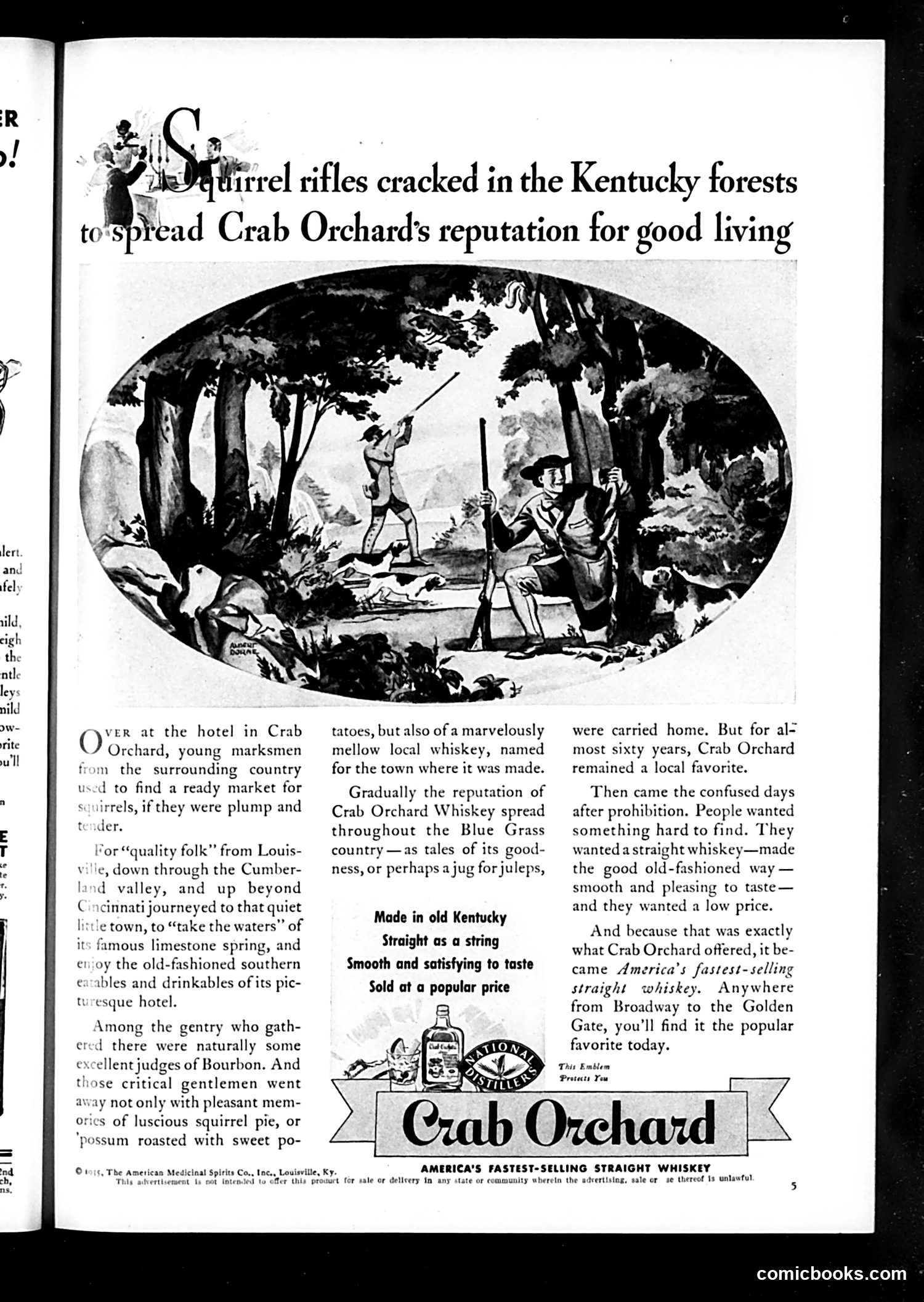
# Crab Orchard Whiskey Advertisement This is a **whiskey advertisement**, not political satire. It uses a romanticized illustration of Kentucky frontier life—hunters with rifles in a forest—to market Crab Orchard Whiskey as an authentically American product with historical roots. The text narrates how the whiskey gained reputation among Kentucky gentry and travelers, eventually becoming famous nationwide. Notably, it addresses the **Prohibition era aftermath**: the ad acknowledges people wanted "a straightforward whiskey—made the good old-fashioned way" at "a low price," positioning Crab Orchard as satisfying post-Prohibition demand for accessible quality spirits. The slogan calls it "America's fastest-selling straight whiskey," suggesting market dominance during alcohol's legal return.
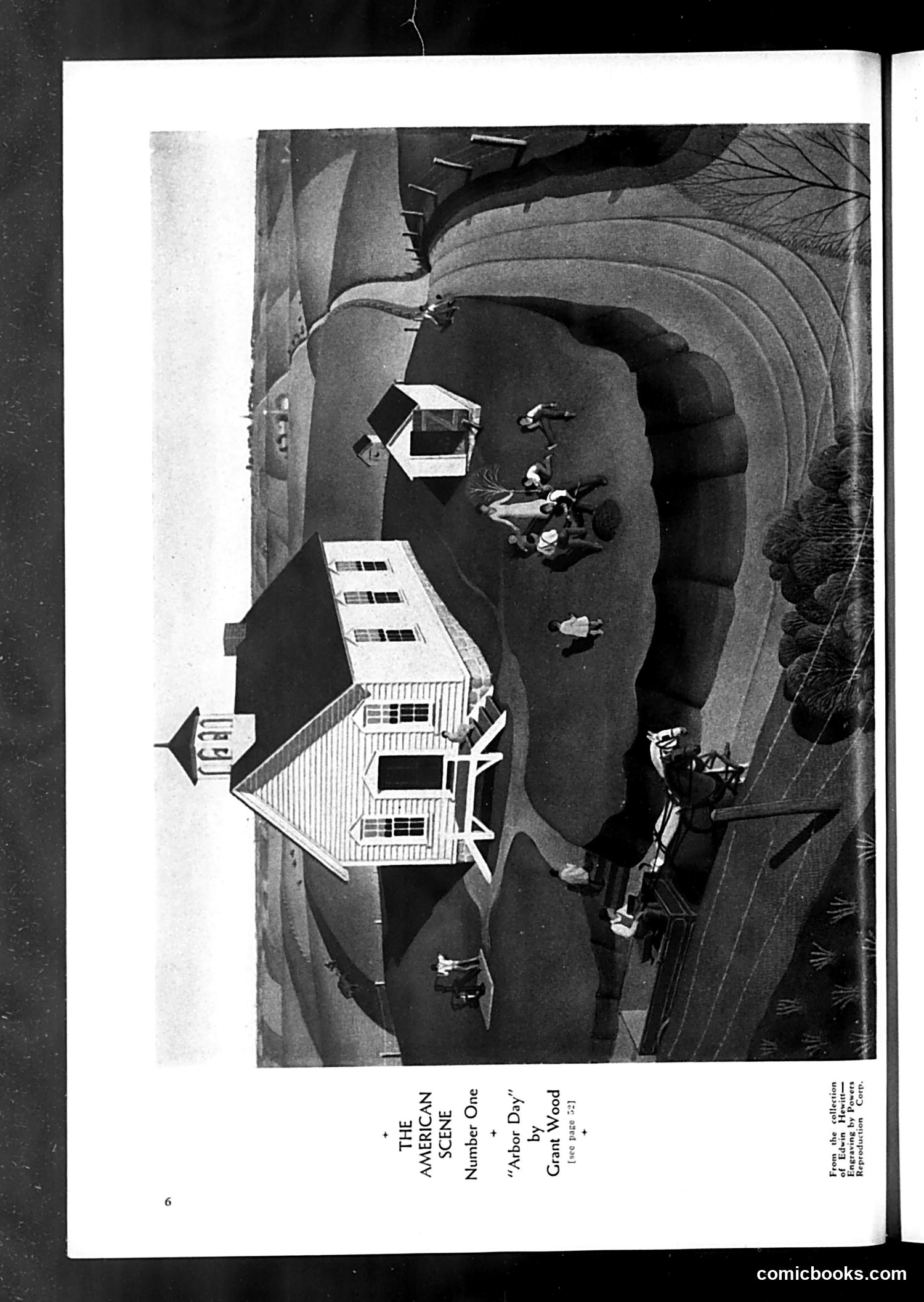
# "The Umpire Scene" - Life Magazine This appears to be a scene illustration (possibly from a play or story) showing a baseball umpire's decision-making moment. The caption reads "THE UMPIRE SCENE" with credits listing "Number One," "Arbor Day," "Grant Wood," and what appears to be a publication date reference. The image shows a figure in an umpire's stance making a call, with other figures (likely players) gathered around. The composition and style suggest this is satirizing the dramatic, consequential nature of an umpire's judgment in baseball—a moment of absolute authority where one person's subjective decision affects the game's outcome. Without additional context about the specific publication date and artistic references, the precise satirical target remains unclear, though it likely comments on power, authority, or decision-making in American life through the baseball metaphor.
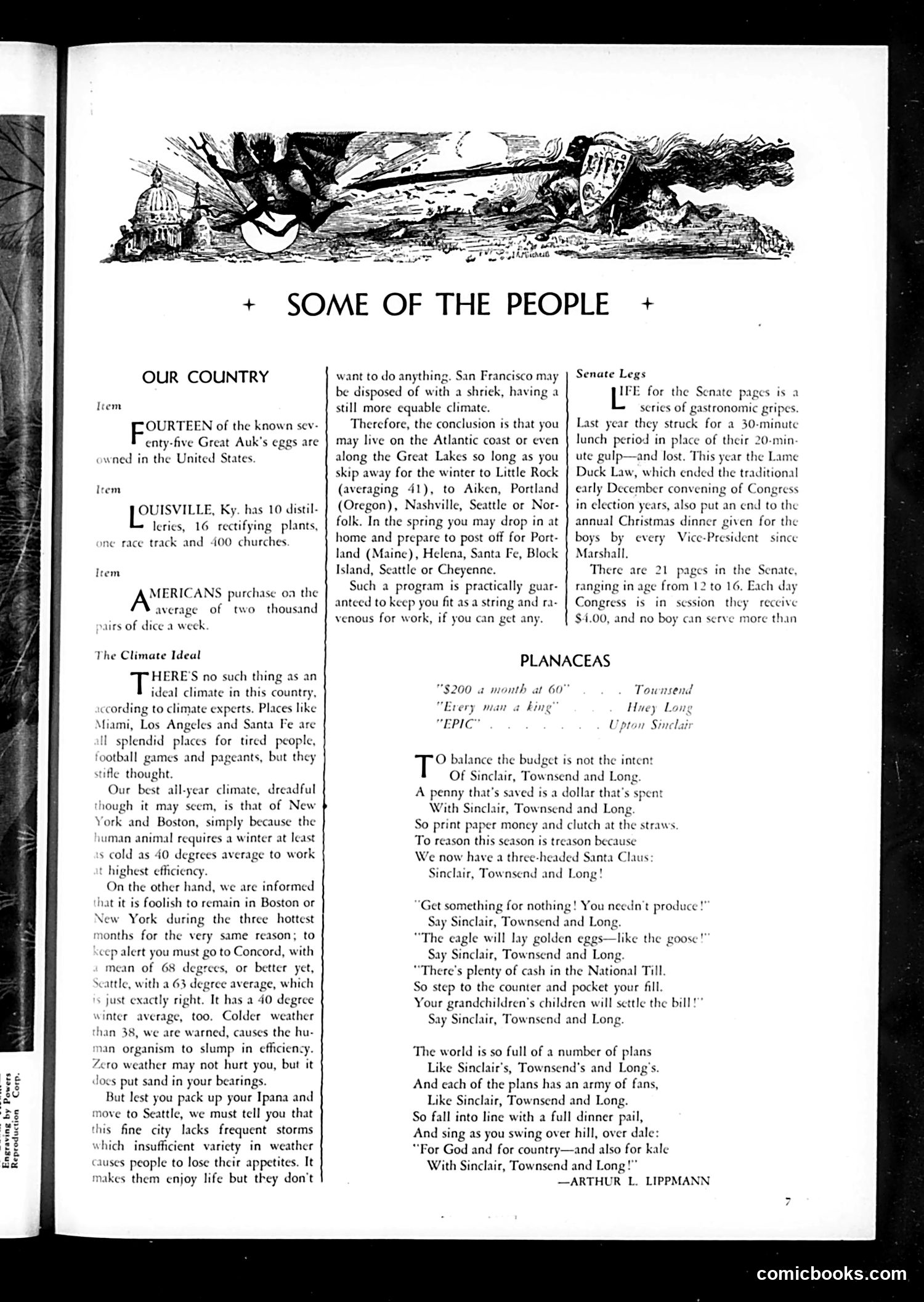
# Analysis This page from *Life* magazine contains satirical commentary on American life rather than political cartoons. The content critiques several contemporary issues: **"Our Country"** mocks American consumption (noting people buy two thousand pairs of dice weekly) and regional disparities. **"The Climate Ideal"** sarcastically debates which U.S. city has the best weather. It ridicules the notion that an "ideal climate" exists, noting that places like Miami and Los Angeles are praised for outdoor activities, yet New York and Boston's harsh winters are defended as character-building. The satire suggests Americans irrationally romanticize their regional climates despite objective discomfort. **"Planaceas"** presents verse by Arthur L. Lippmann parodying political slogans and economic plans—likely referencing 1920s-30s political rhetoric about budgets and national prosperity, mocking their hollow promises.
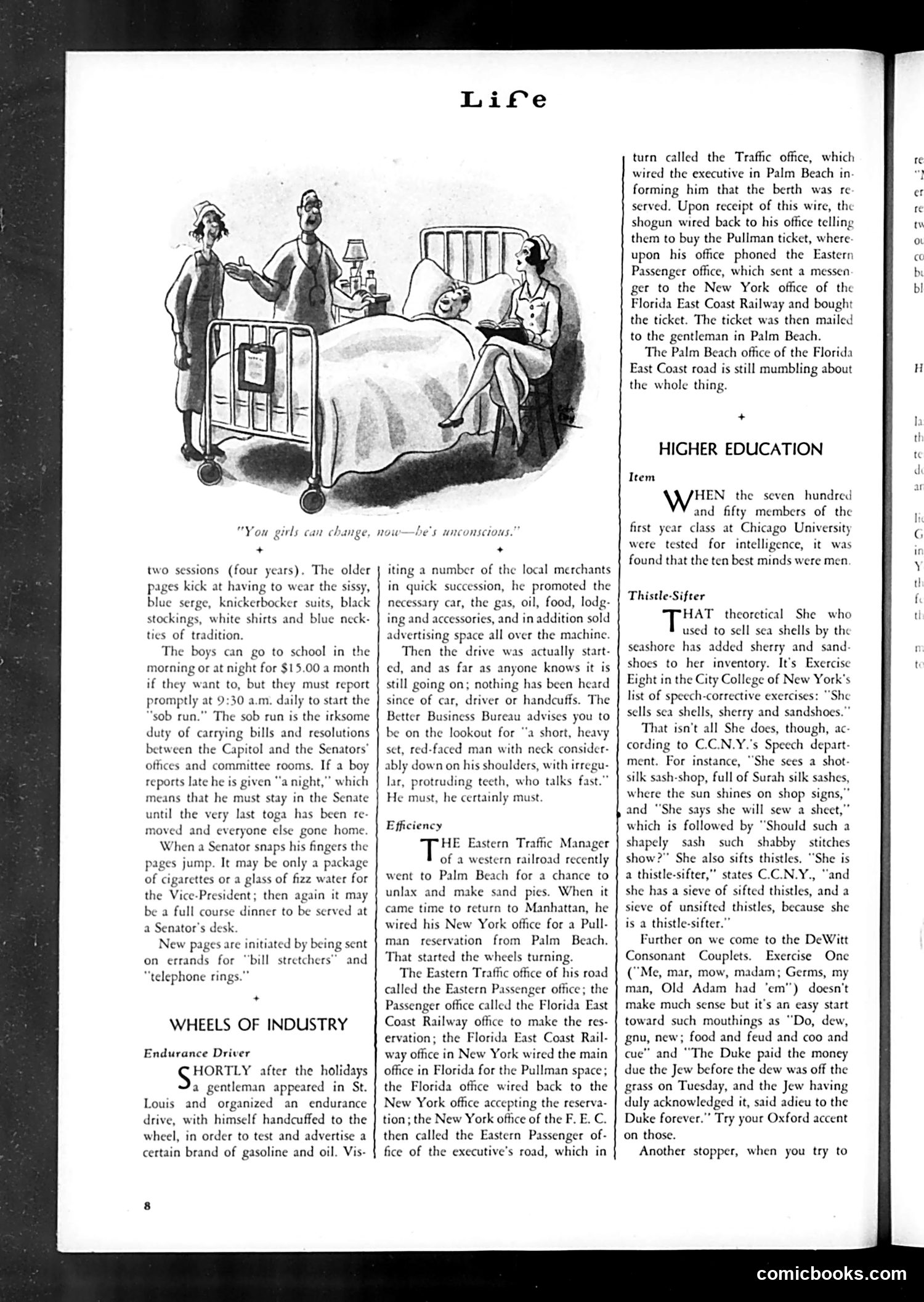
# Analysis of Life Magazine Page This page contains satirical anecdotes about American institutional absurdities rather than political cartoons. The main illustration shows a hospital scene with the caption "You girls can change, now—he's unconscious," mocking medical staff behavior. The three short humor pieces mock: 1. **Senate page boys** — critiquing the absurd bureaucratic duties required of young congressional staff 2. **Railroad efficiency** — satirizing the comically convoluted chain of offices and communications needed for a simple Pullman ticket reservation between Palm Beach and New York 3. **Higher education** — poking fun at women's colleges teaching "practical skills" like sewing and selling seashells The humor relies on readers recognizing everyday institutional inefficiency and pretension in early 20th-century America.
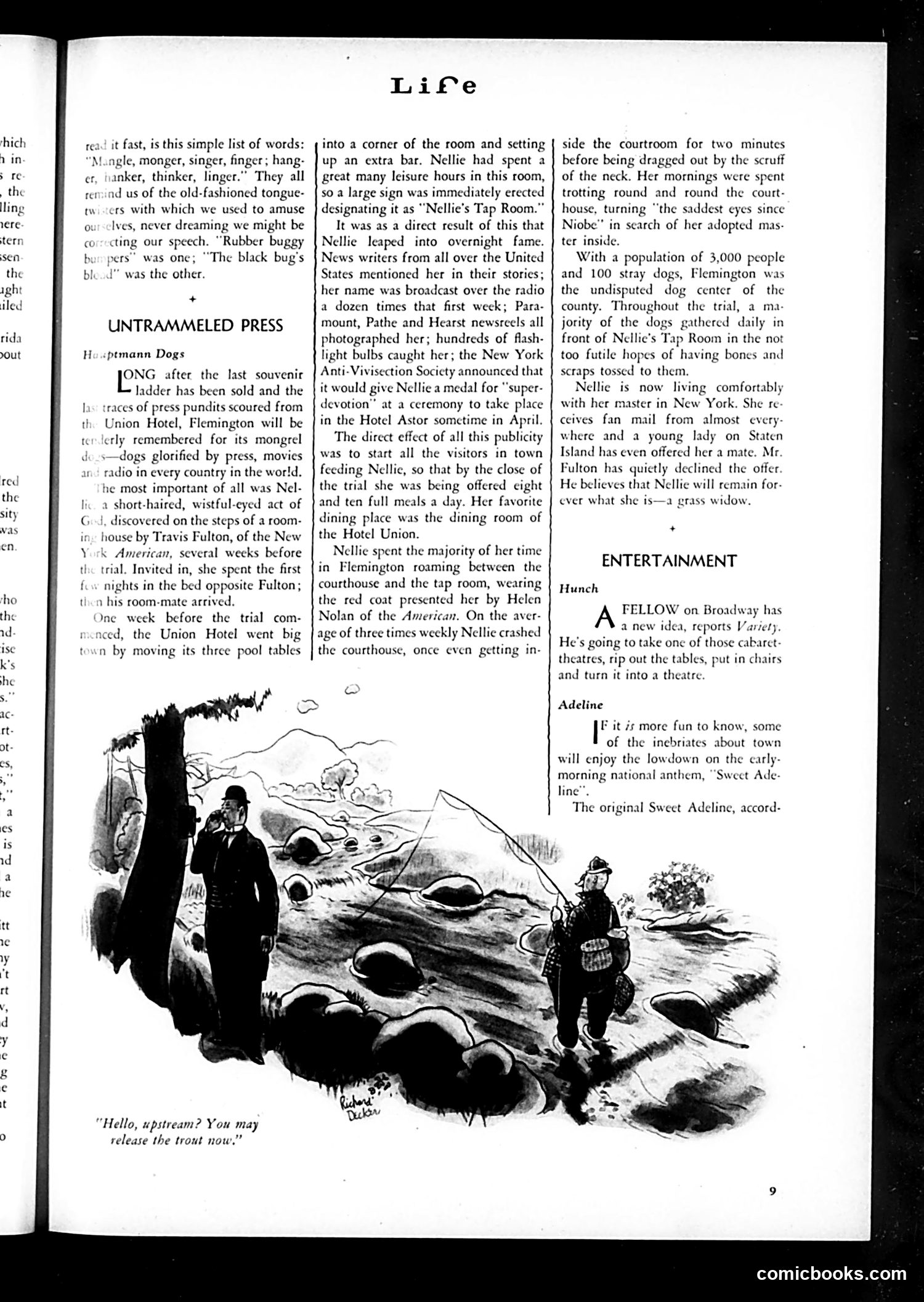
# Life Magazine Page Analysis This page contains two distinct sections: **"Untrammeled Press" - Hessmann Dogs:** An article celebrating a dog named Nellie who became famous through media coverage. The piece describes how press attention and radio broadcasts made her a celebrity—she received fan mail, was offered a medal, and drew crowds. The satire appears to mock how the press can manufacture celebrity from trivial subjects, turning an ordinary dog into a sensation through relentless coverage. **"Entertainment" Section:** Two brief items: one about a Broadway fellow converting a cabaret theater into a theatrical venue by simply rearranging furniture, and another about the origins of the song "Sweet Adeline." The cartoon below depicts two men in a rural/outdoor setting with logs, with one saying "Hello, upstream? You may release the trout now."—likely satirizing artificial or staged nature activities.
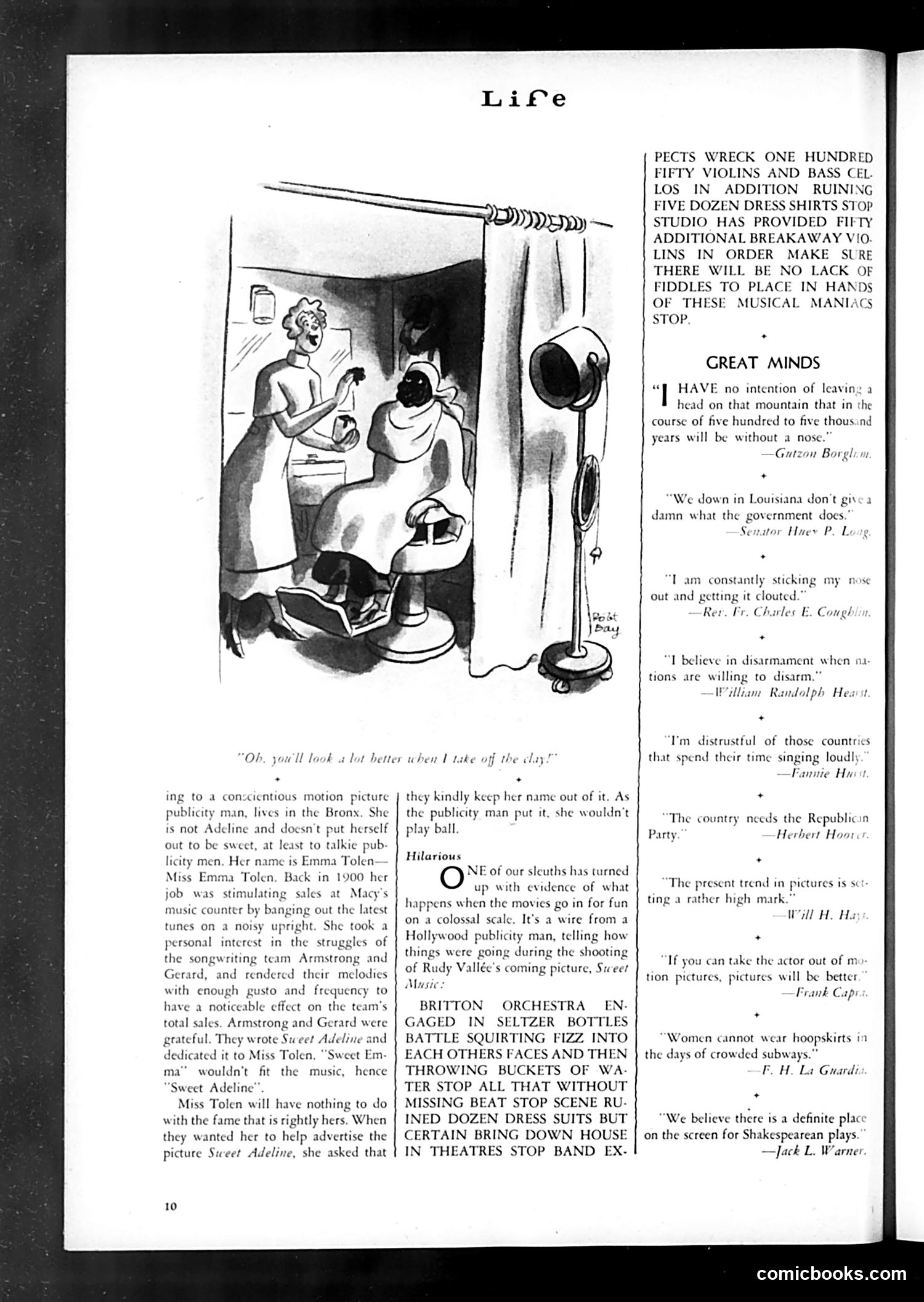
# Analysis of Life Magazine Page The main cartoon depicts a publicity man showing a woman his work—likely promoting her as a singer or entertainer. The caption "Oh, you'll look a lot better when I take off the city!" suggests a publicist's makeover strategy, implying cosmetic or image manipulation to sell performers. The accompanying article discusses Emma Tolen, a Broadway singer turned publicist in the Bronx. It describes how she successfully promoted musical acts through unconventional means, collaborating with songwriters Armstrong and Gerard. The "Great Minds" section collects humorous quotes from public figures on various topics—disarmament, government, motion pictures, and Shakespeare. Overall, the page satirizes entertainment industry image-making and the role of publicists in manufactured celebrity personas.