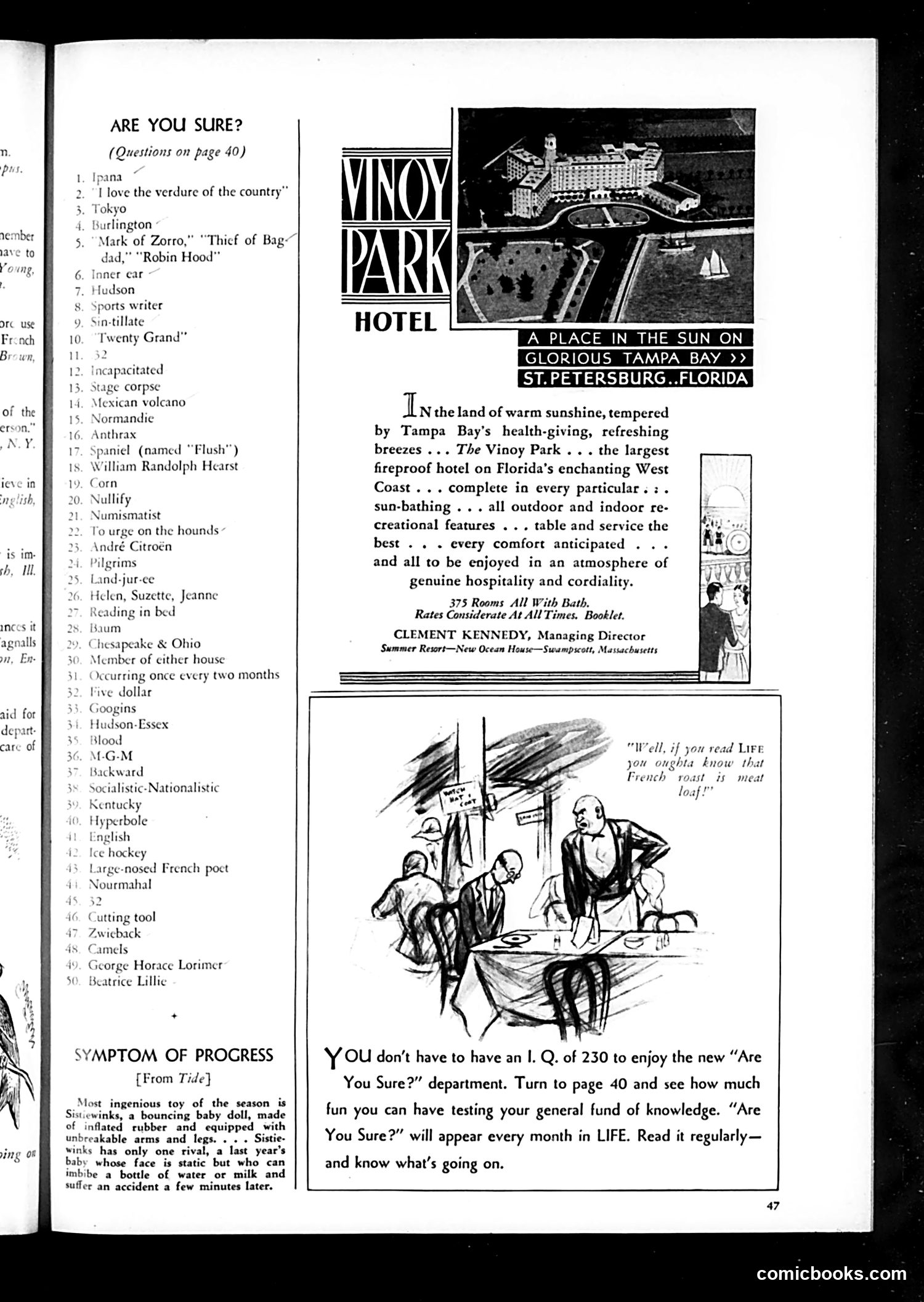
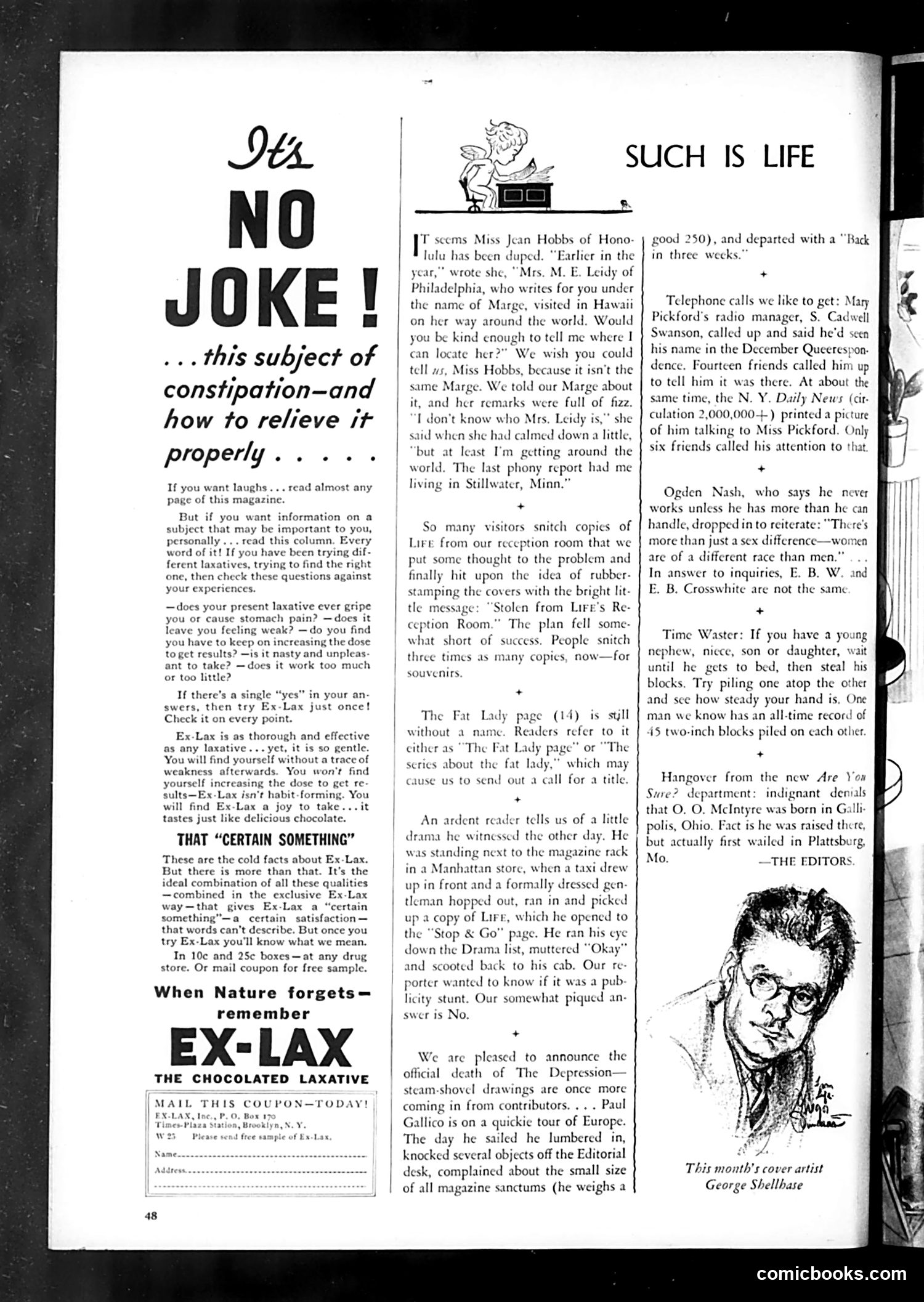
A complete issue · 50 pages · 1935
Life — February 1935
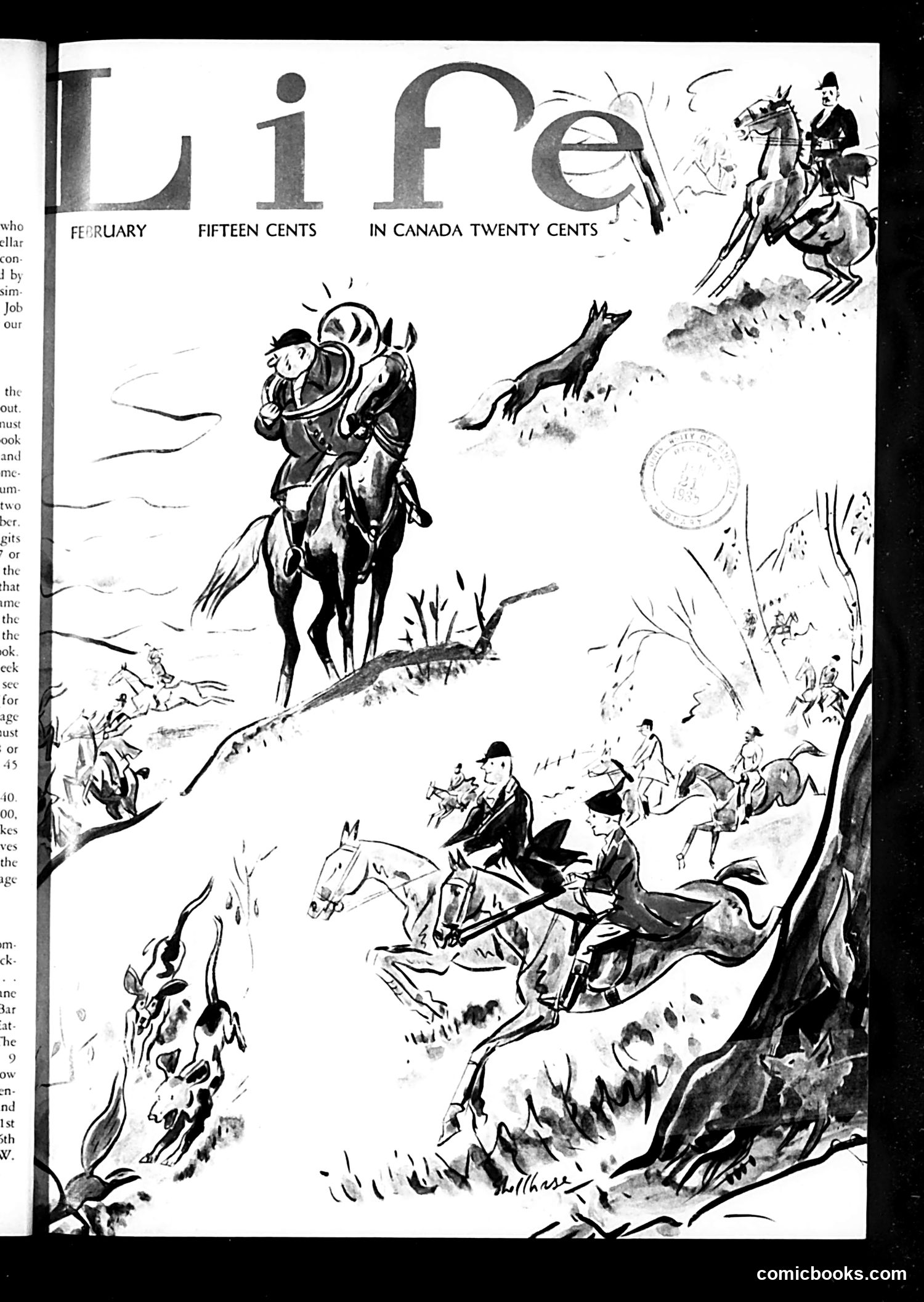
# Life Magazine Cover - February Issue This is a **Life magazine cover** from February (price: 15 cents US, 20 cents Canada). The illustration depicts a **fox hunt scene** with mounted riders pursuing a fox across countryside terrain with flames visible below. The visual metaphor appears to satirize a **hunt or pursuit** of some kind—likely political or social in nature, given Life's satirical mission. The dramatic composition, with the fox fleeing downhill while aristocratic hunters pursue on horseback, suggests commentary on power dynamics or the persecution of a vulnerable target by the privileged class. Without additional context or visible date, the specific political reference remains unclear, though the imagery invokes themes of class conflict and inevitable doom for the hunted.
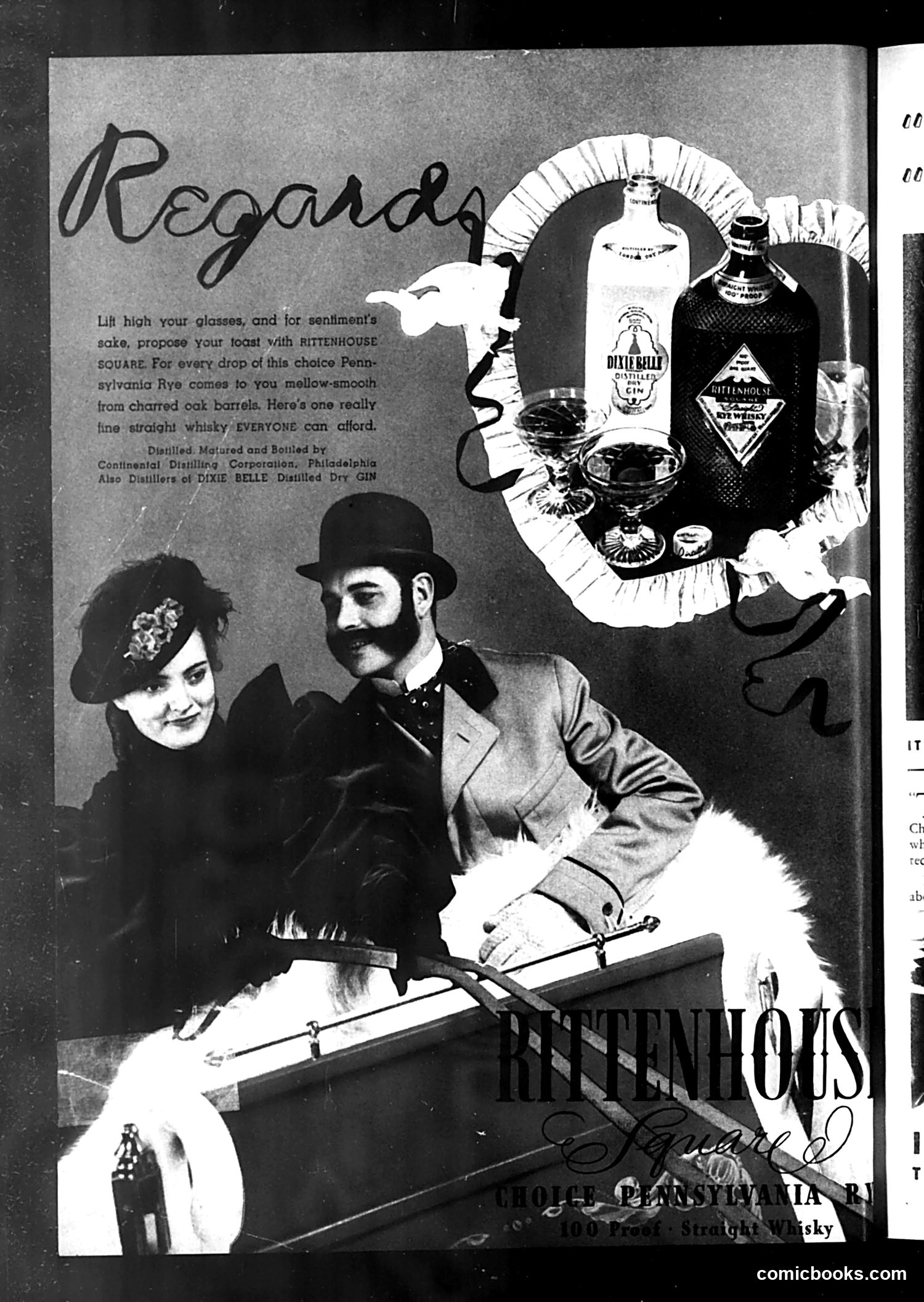
# Rittenhouse Square Whiskey Advertisement This is primarily a **liquor advertisement** for Rittenhouse Square rye whiskey and Dixie Belle gin, produced by Continental Distilling Corporation of Philadelphia. The ad uses the heading "Regards" and depicts an elegantly dressed couple in formal attire (she in a decorated hat, he in a bowler) raising glasses in a toast. The copy encourages readers to "lift high your glasses" and propose toasts with this whiskey, emphasizing it's "really fine, straight whiskey EVERYONE can afford." The advertisement reflects pre-Prohibition or early post-Prohibition era marketing, targeting middle and upper-class consumers through imagery of sophisticated social occasions and formal dress. The humor lies in the aspirational lifestyle it promises—affordable luxury for social gatherings.
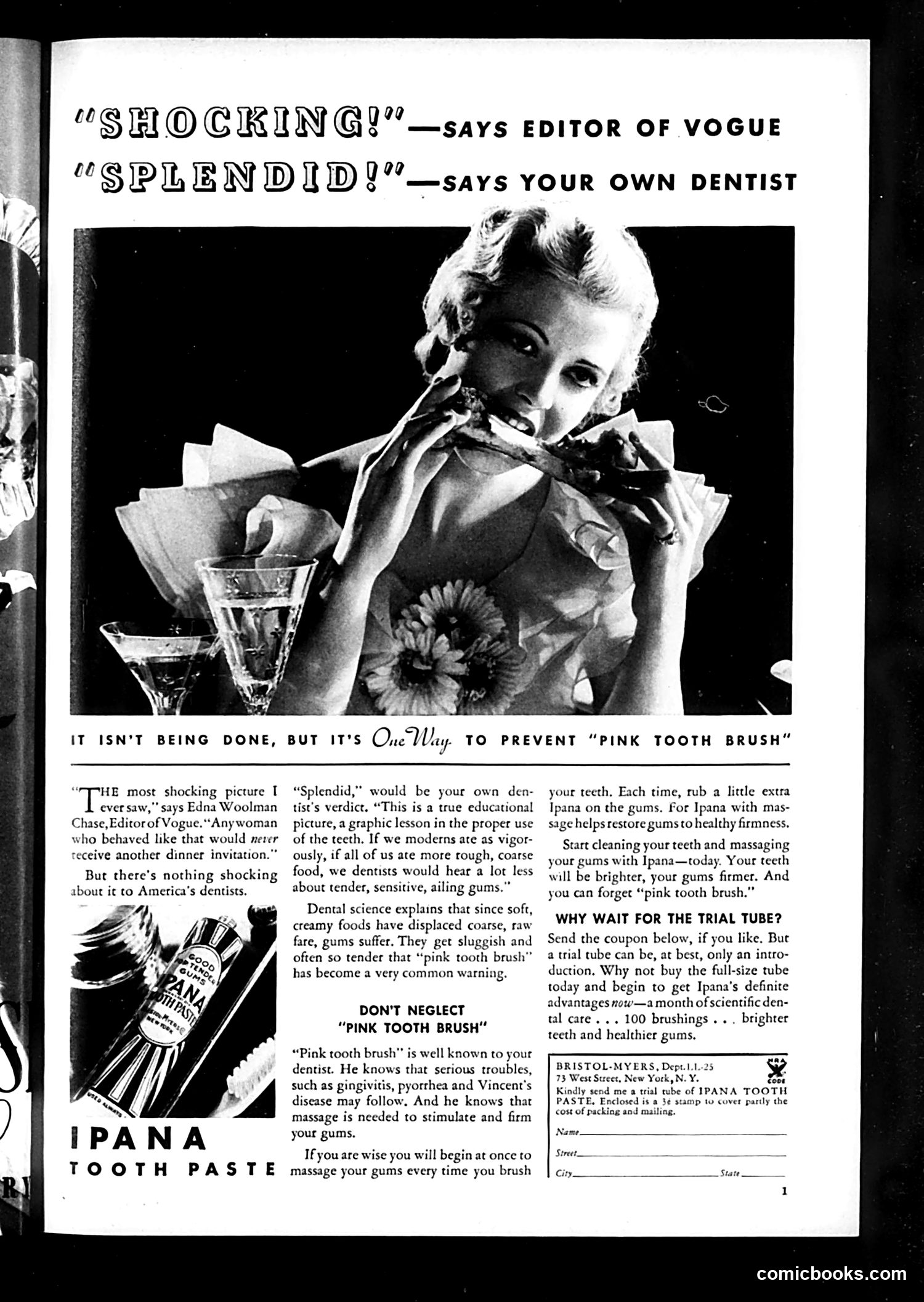
# Analysis This is primarily **an advertisement for Ipana Tooth Paste**, not political satire. The page uses social commentary as marketing strategy. The headline quotes "Vogue Editor" calling something "shocking" and contrasts it with "your own dentist" calling it "splendid." The central image shows a woman in an elegant pose with cocktails, appearing to eat messily or carelessly—illustrating poor oral hygiene habits. The "shocking" behavior referenced is neglecting gum health, which dentists warned caused "pink tooth brush" (bleeding gums). The ad argues that modern soft foods have displaced coarse diets, making gum disease common. The satire targets upper-class women who prioritize fashion magazine approval (Vogue) over practical health advice. It's purely commercial messaging dressed in social commentary to sell toothpaste and gum care.
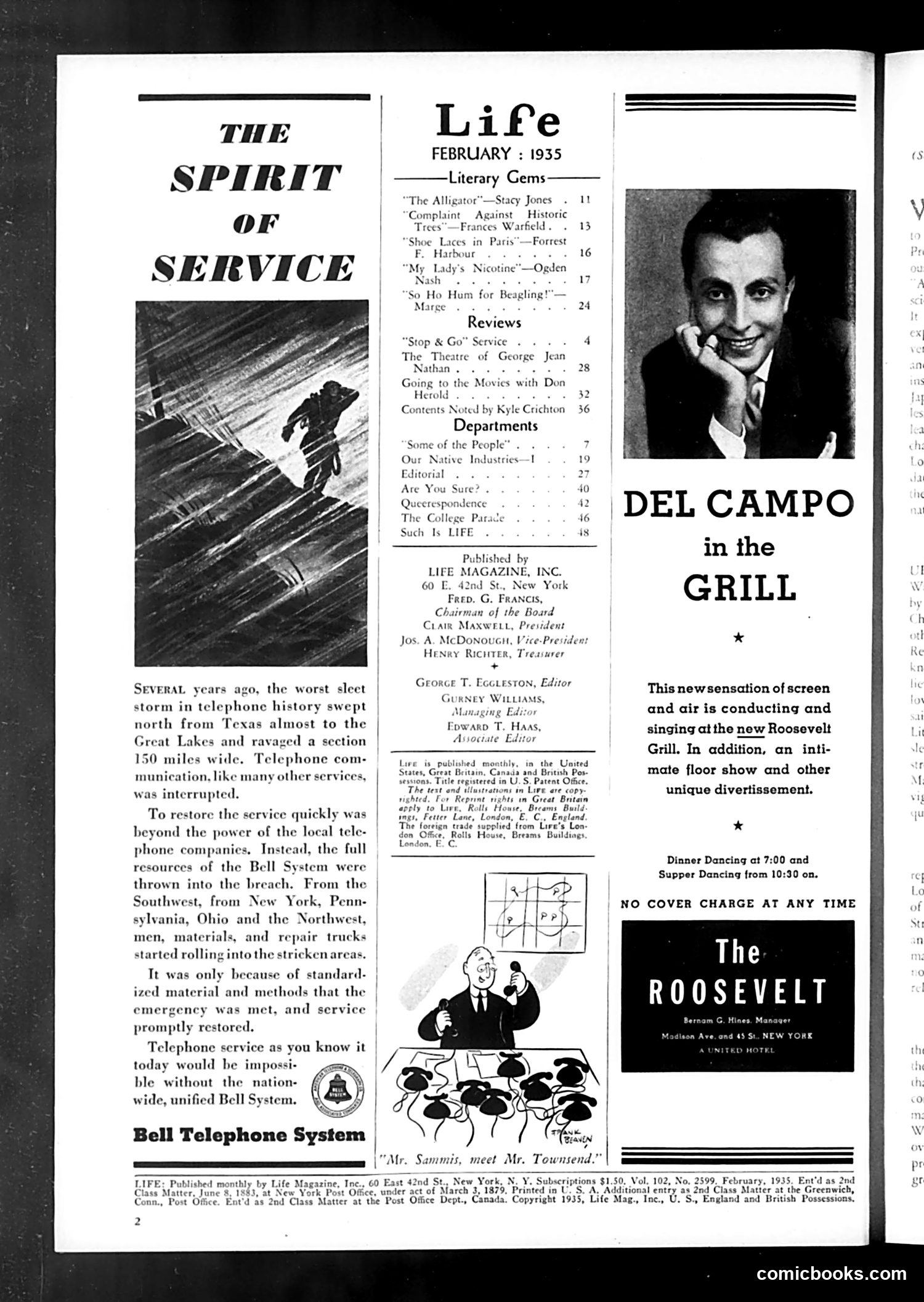
# Analysis This page is primarily **advertising and magazine content** rather than political satire. The left side features "The Spirit of Service," a Bell Telephone System advertisement about restoring phone service after a severe sleet storm that disrupted communications across the Great Lakes region. The narrative emphasizes the Bell System's coordinated resources and standardized methods as essential to rapid service restoration. The right side advertises **Del Campo in the Grill**, a Roosevelt Hotel nightclub featuring dinner and supper dancing. A small cartoon shows a man at a desk with a calendar, captioned "Mr. Sammit, meet Mr. Townsend"—likely a mild office humor about scheduling rather than political commentary. The page reflects 1935 Depression-era confidence in institutional systems and leisure entertainment.
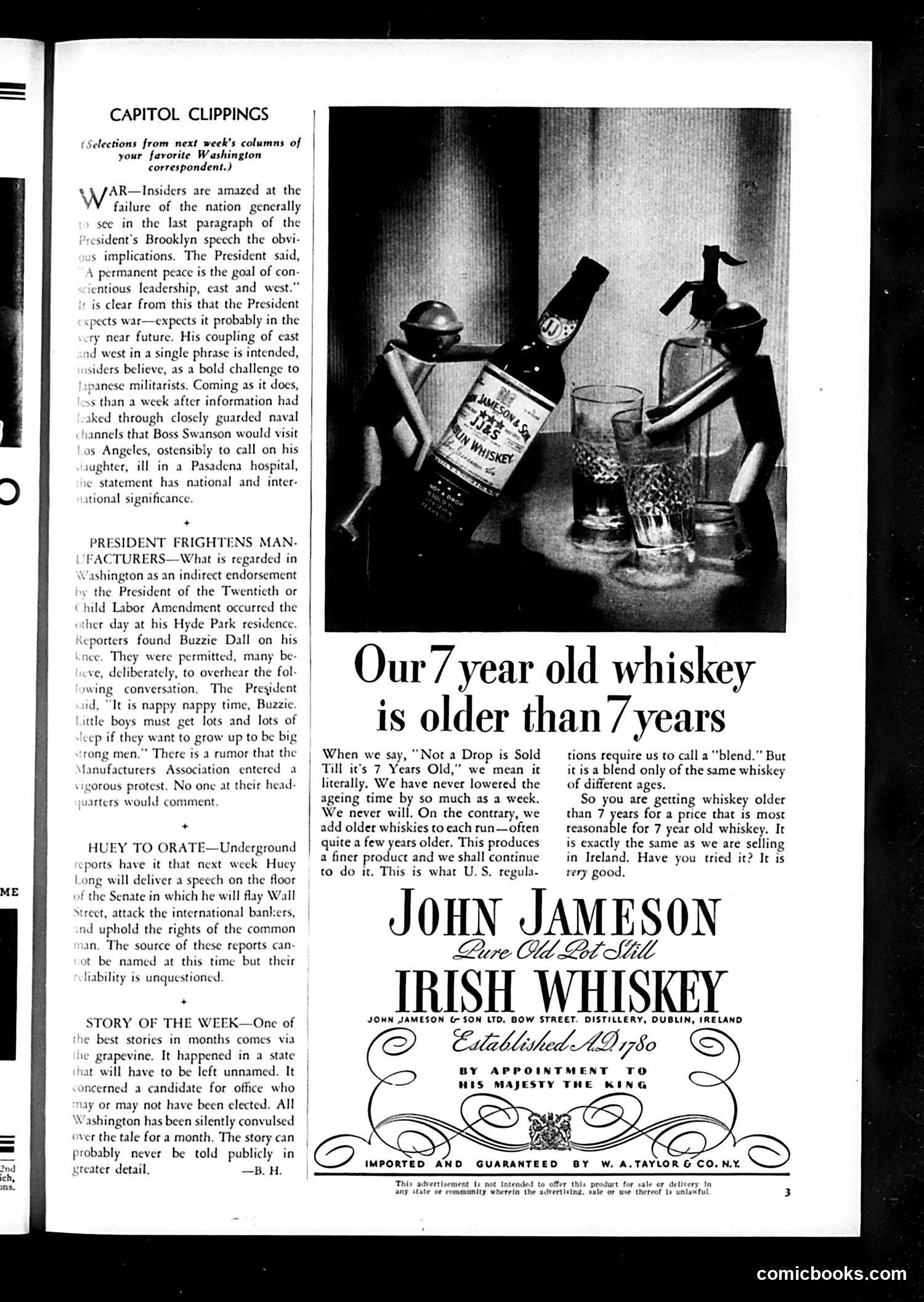
# Analysis This page is primarily a **John Jameson Irish Whiskey advertisement** (established 1780), not political satire. The ad's headline cleverly plays on product labeling: "Our 7 year old whiskey is older than 7 years," explaining that the whiskey ages longer than its stated designation requires, making it premium quality. The left column contains "Capitol Clippings"—brief political gossip items about Washington insiders, including references to the President's Brooklyn speech, a rumored visit by "Boss" Swanson, and an upcoming Senate speech by someone named Huey about Wall Street and international bankers. The cartoon image (bottles and glasses) is merely decorative product photography, not political commentary. This is fundamentally a commercial page using news-style formatting to lend credibility to advertising.
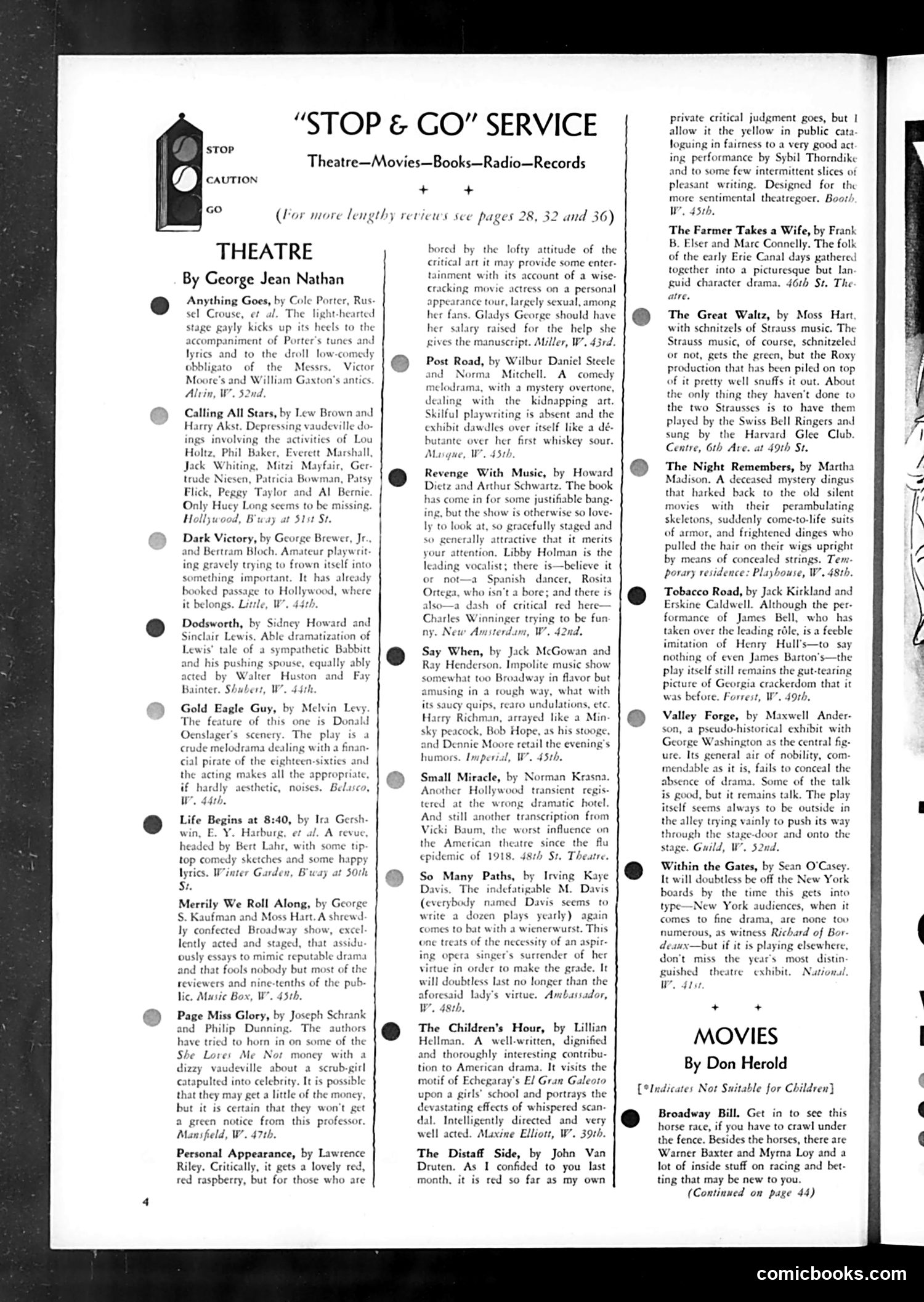
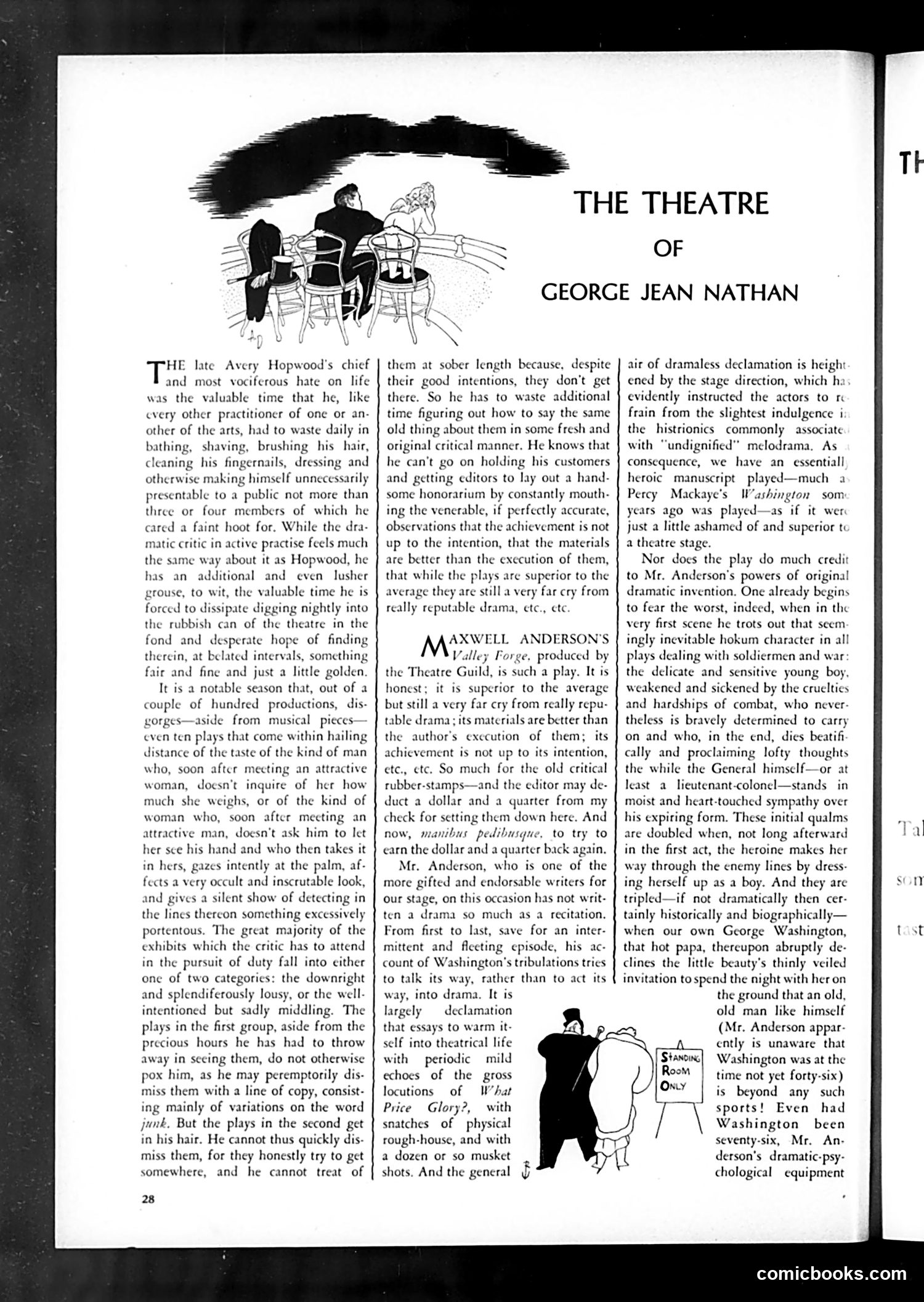
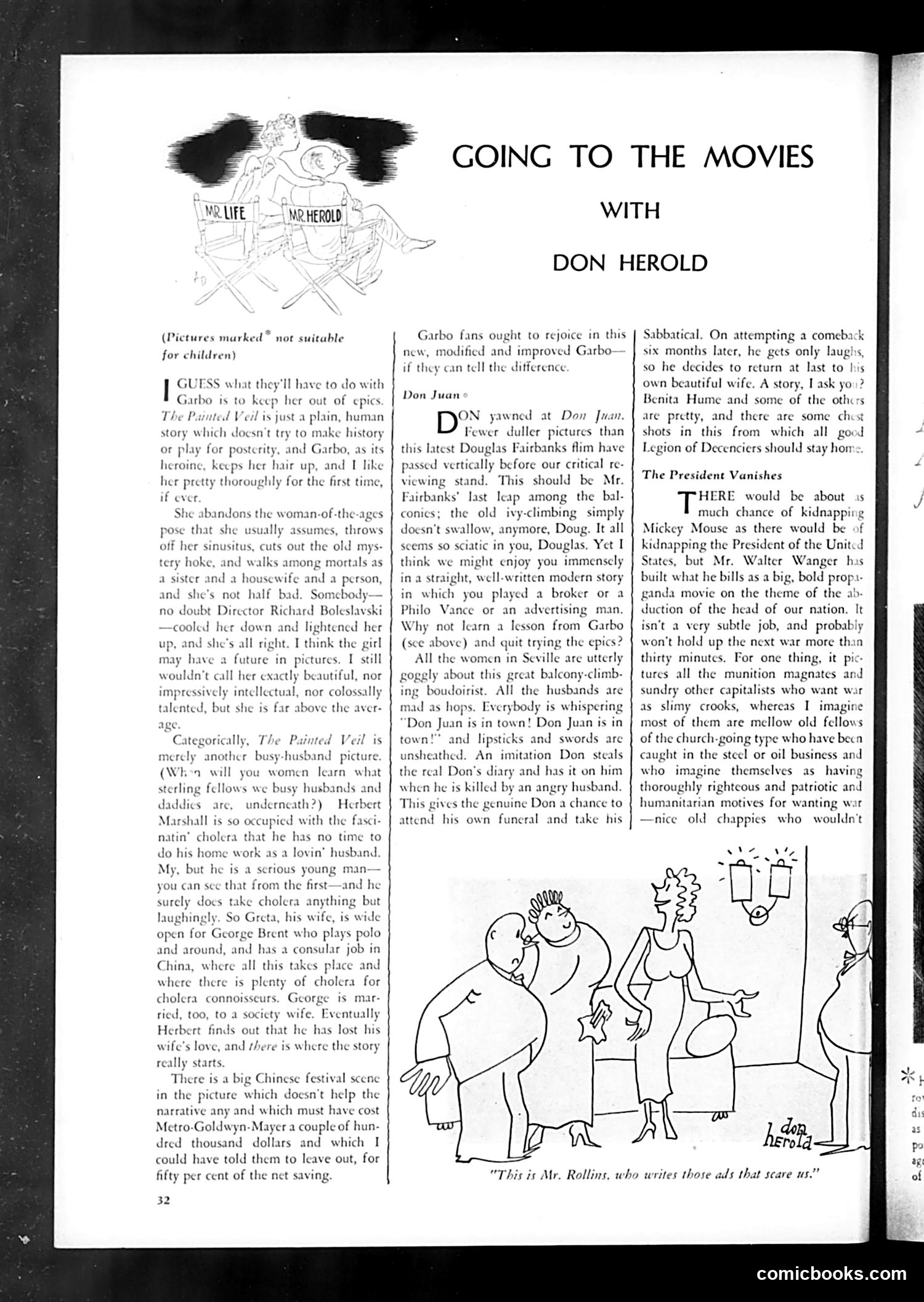
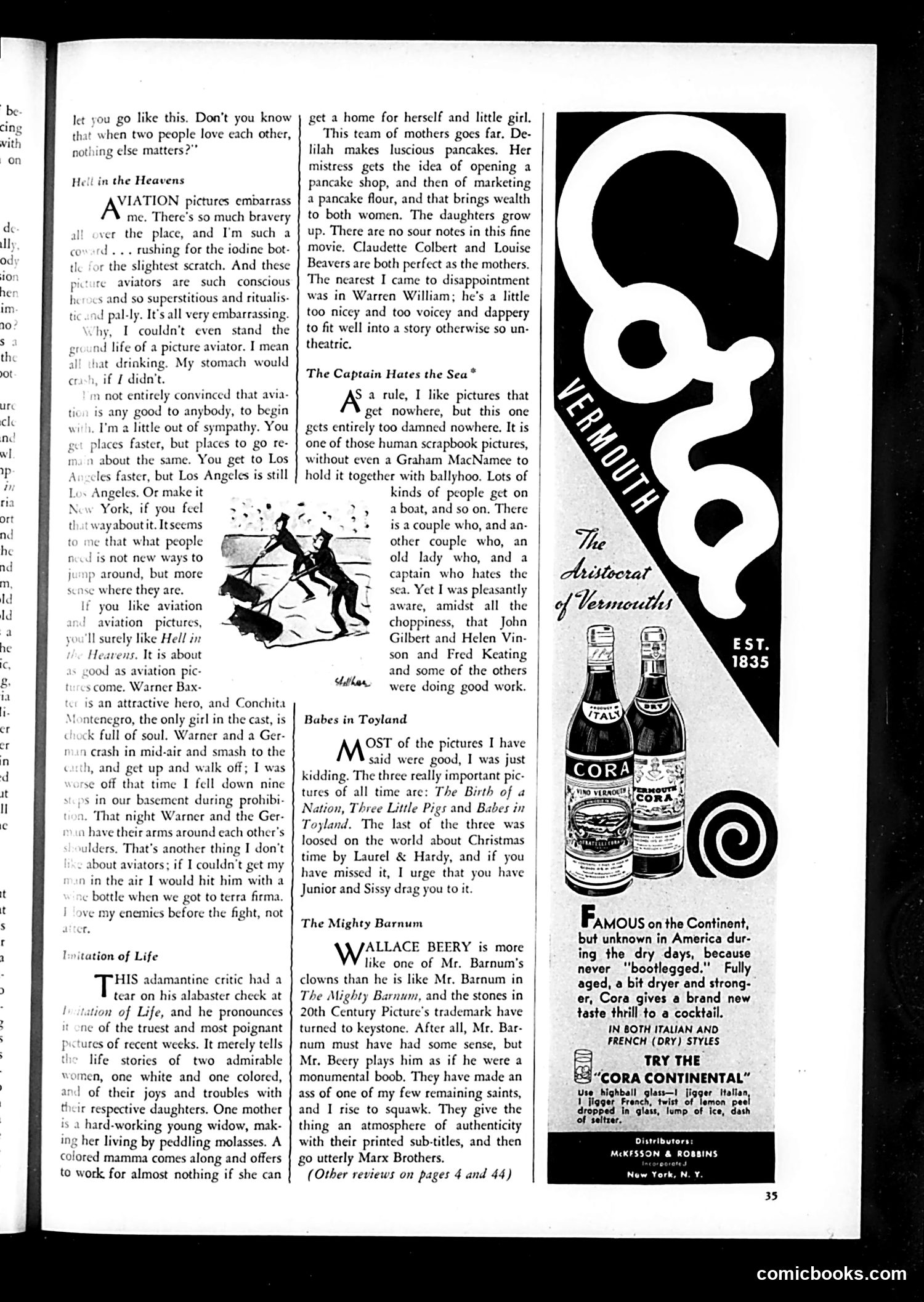
# "Stop & Go" Service Page - Life Magazine This page is primarily a **theater and movie review section**, not a political cartoon. It features George Jean Nathan's theater column reviewing Broadway productions, followed by Don Herold's movie reviews. The actual design element is a small illustration at the top: a **traffic light** labeled "STOP CAUTION GO," serving as a visual metaphor for the review format—the magazine "stops" readers to alert them about theater and film worth seeing or avoiding. The reviews discuss various 1930s productions with Nathan's characteristic critical commentary. This appears to be a standard entertainment criticism page rather than political satire, focusing on theatrical and cinematic quality assessment for contemporary readers.
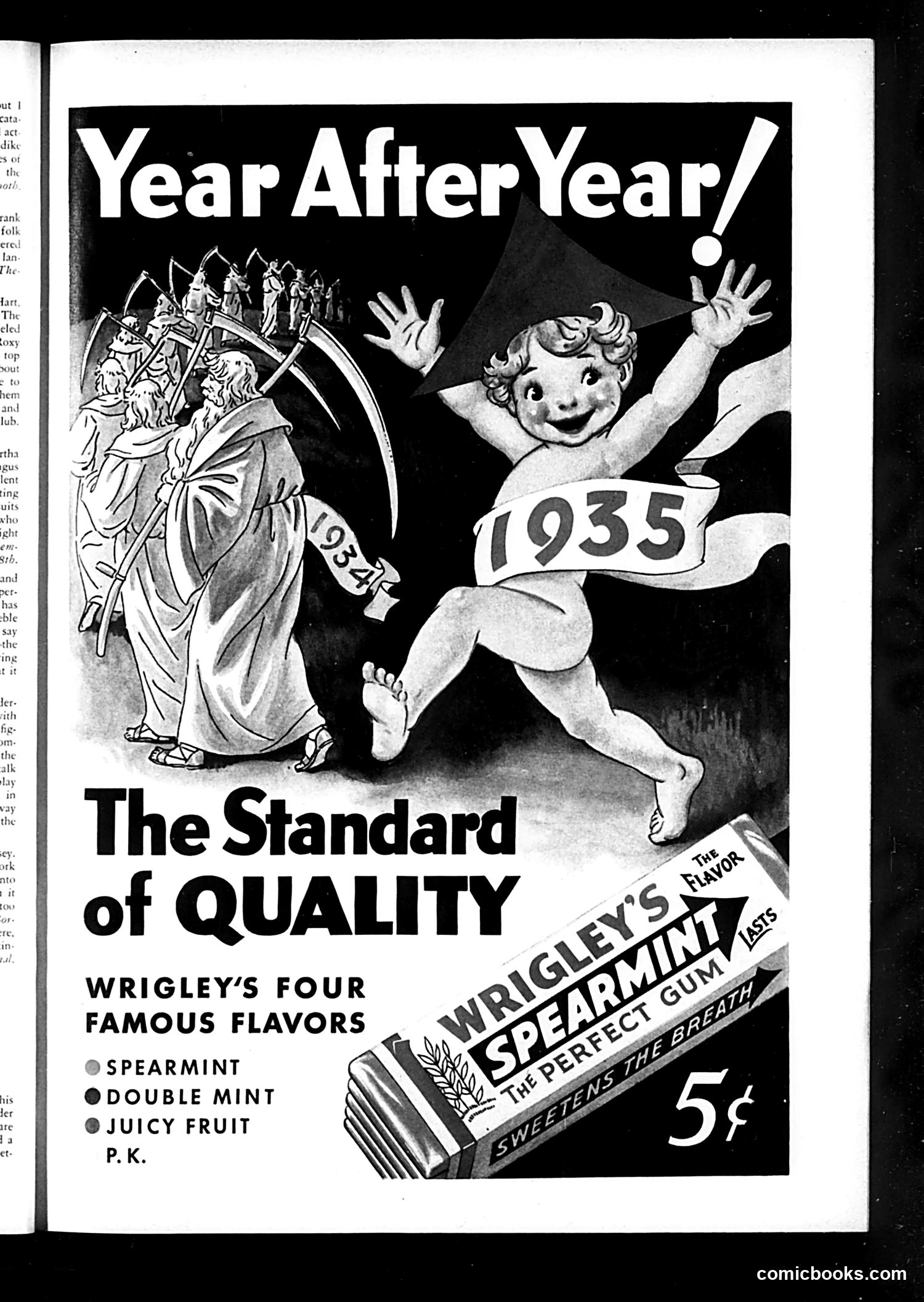
# Analysis This is primarily a **Wrigley's gum advertisement**, not political satire. The page uses the phrase "Year After Year!" to emphasize product longevity and consistency. The imagery depicts: - **Left side**: A robed figure (likely representing Death or Time) holding a scythe, labeled "1924," symbolizing the passage of time - **Right side**: A cherub or baby figure marked "1935," representing the present year and renewal The advertisement's message is that despite a decade passing (1924-1935), Wrigley's maintains "The Standard of QUALITY." The contrast between Death/Time and youthful vitality suggests the brand has remained vibrant and relevant through changing times. The ad lists Wrigley's "four famous flavors" (Spearmint, Double Mint, Juicy Fruit, and P.K.) and prices the product at 5 cents, emphasizing affordability alongside quality.
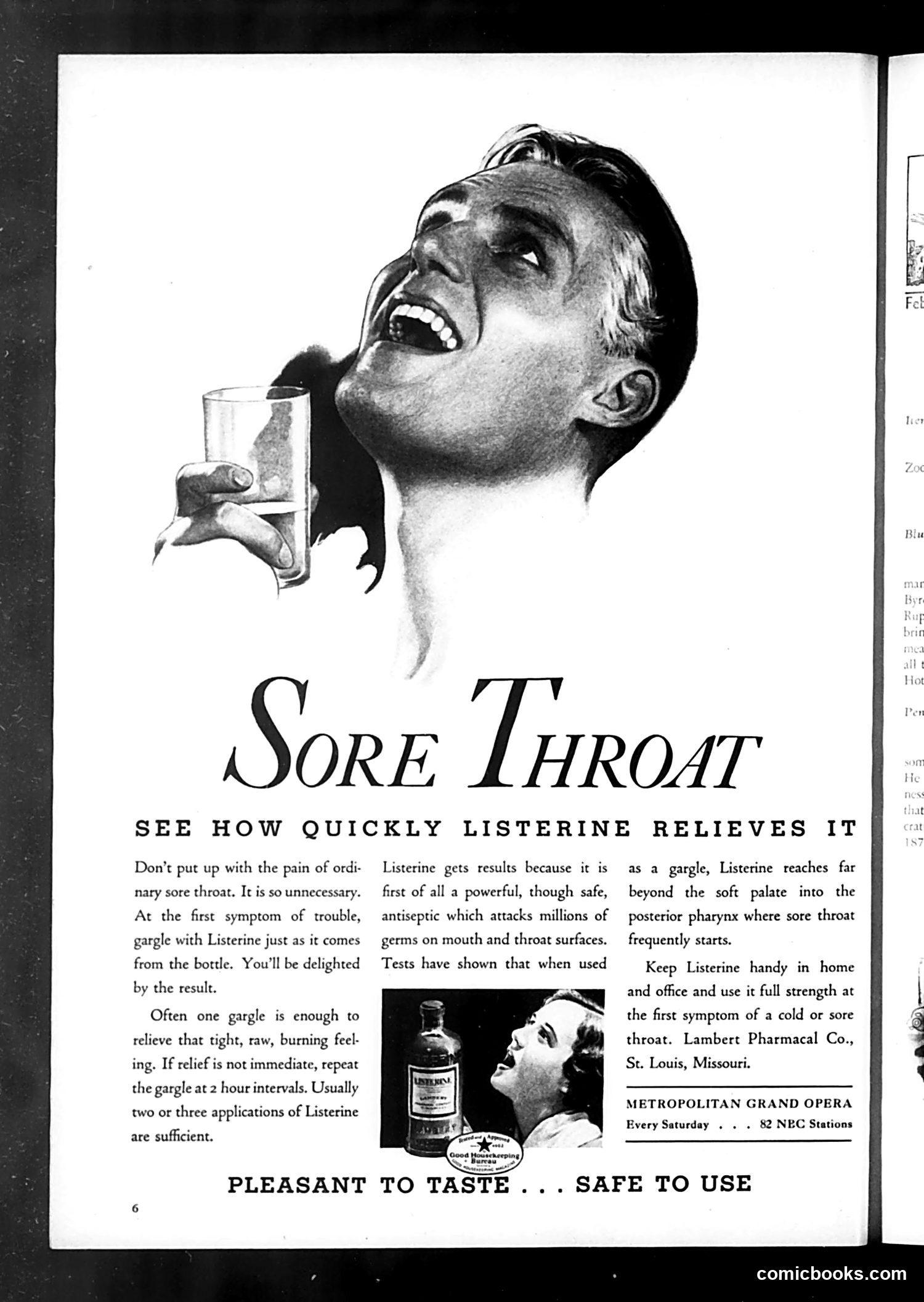
# Analysis This page is **an advertisement, not satire or political commentary**. It's a Listerine mouthwash ad from an era when such products made dramatic medical claims. The image shows a man gargling, head tilted back in exaggerated relief. The ad promises Listerine quickly relieves sore throats through antiseptic action against germs. It recommends keeping the product "handy" and using it "at the first symptom of a cold or sore throat." The small text notes Metropolitan Grand Opera airs Saturdays on NBC, likely cross-promotional advertising to reach radio listeners during the broadcast. By modern standards, this represents misleading health marketing—mouthwash cannot treat infections. Such claims would violate current FDA regulations. The ad exemplifies vintage advertising's unchecked therapeutic promises before strict medical advertising oversight.
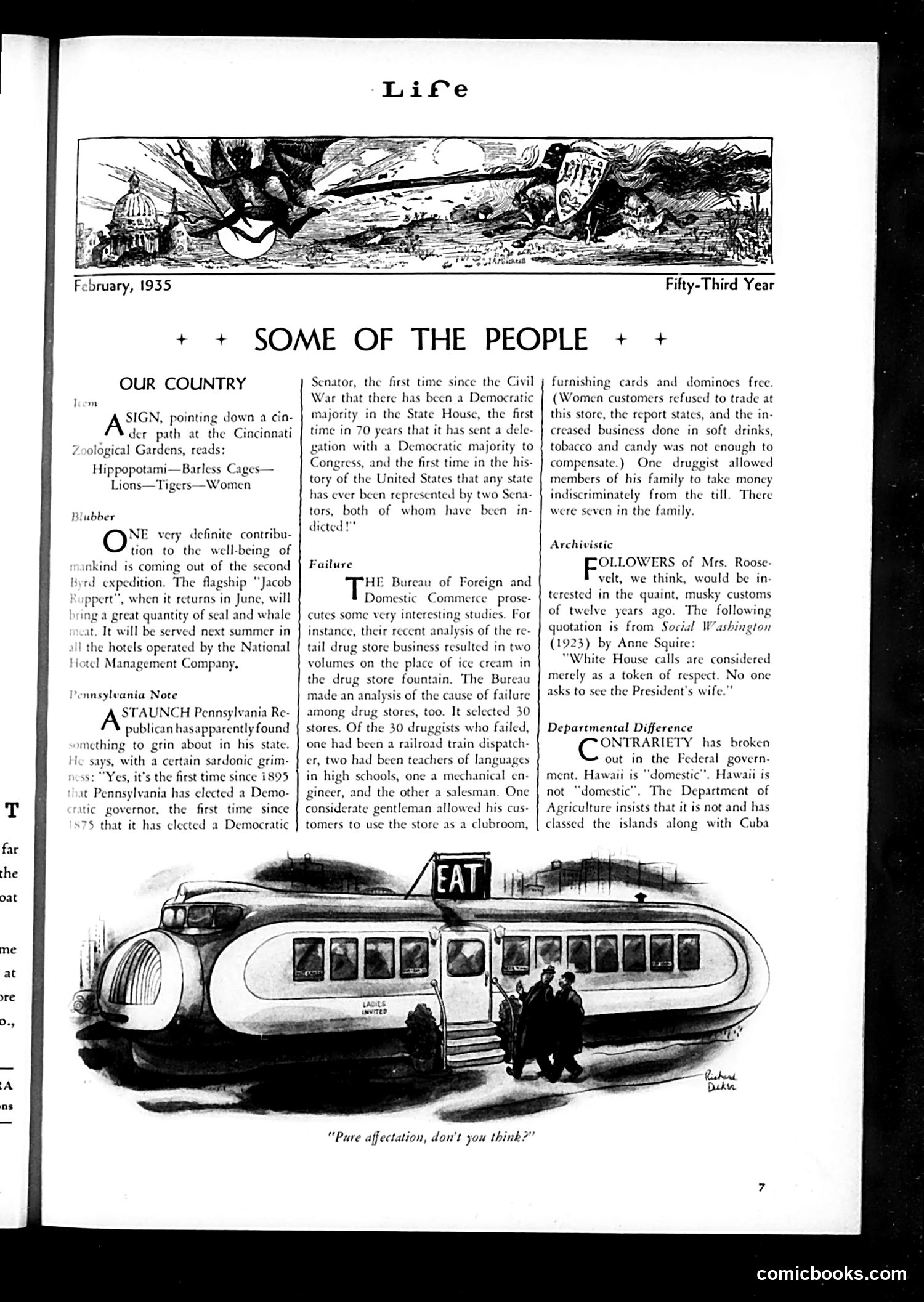
# "Pure Affectation, Don't You Think?" This cartoon satirizes the streamlined, futuristic diner design craze of the 1930s. The illustration shows an ultra-modern, silver bullet-shaped roadside eatery with an "EAT" sign, featuring rounded windows and sleek industrial styling—the height of Art Deco modernism popular during the Depression era. The caption's snobbish comment mocks the pretentiousness of this "pure affectation." The joke targets how such restaurants adopted fashionable, impractical aesthetic design over substance or comfort. The well-dressed figures outside suggest upper-class diners evaluating whether this trendy establishment is truly refined or merely affected posturing. The cartoon reflects broader 1930s cultural tensions between modernist design aspirations and skepticism about their real utility.
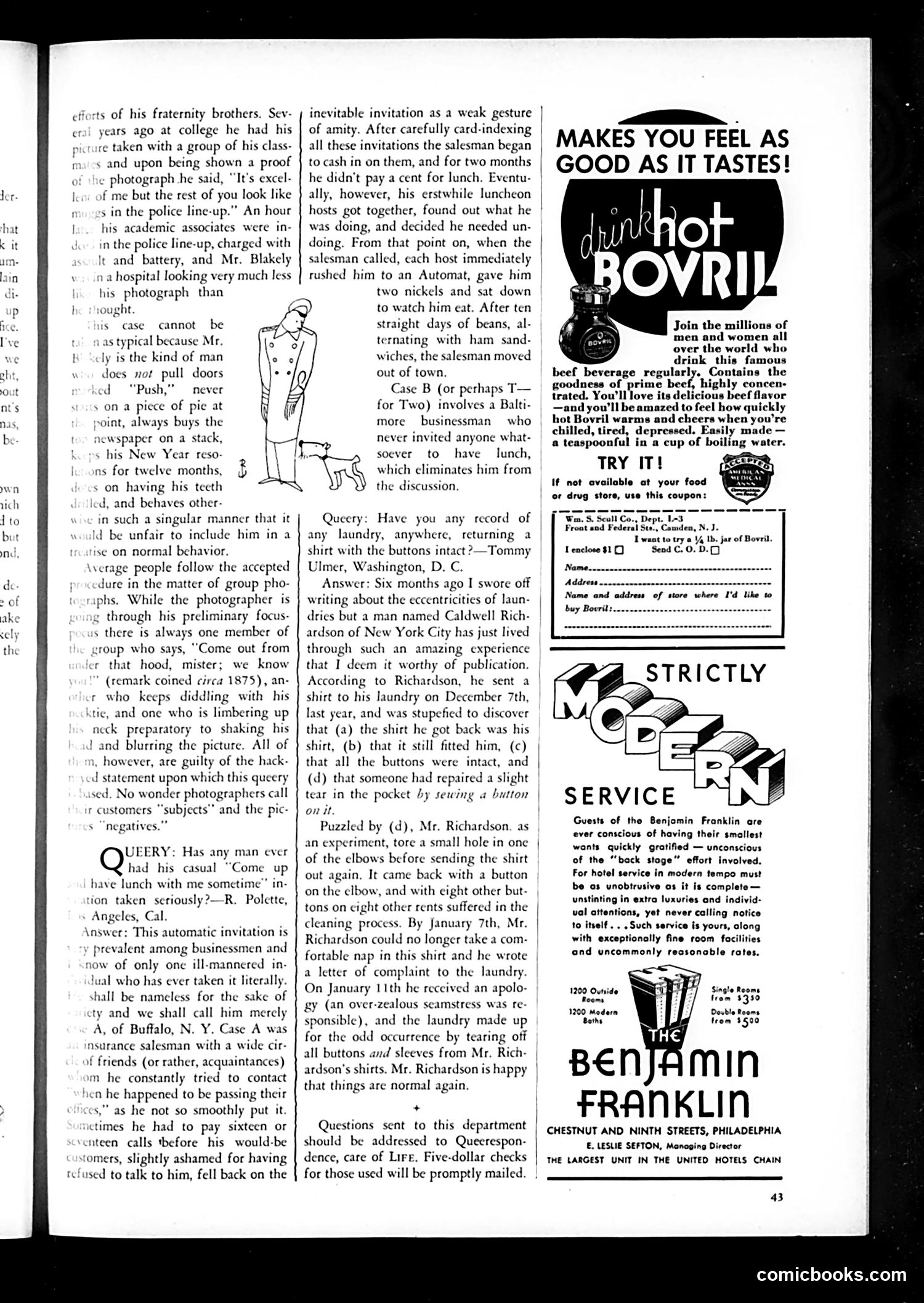
# Life Magazine Page Analysis This page contains three humorous anecdotes about retail and consumer oddities from the "Wheels of Industry" section. The visible cartoon—a simple line drawing of a duck or waterfowl—accompanies the "Fish Story" column, which describes a man who discovered a live trout flopping in a washing machine at a roadside restaurant. The satire targets the absurdities of modern commerce and consumer culture: department stores implementing impractical policies (C.O.D. purchases for glassware), industrial inefficiency (unwashed glassware returned to customers), and bizarre customer service scenarios. The humor relies on readers finding these retail mishaps relatable—reflecting early-to-mid 20th-century consumer frustrations with inconsistent business practices.
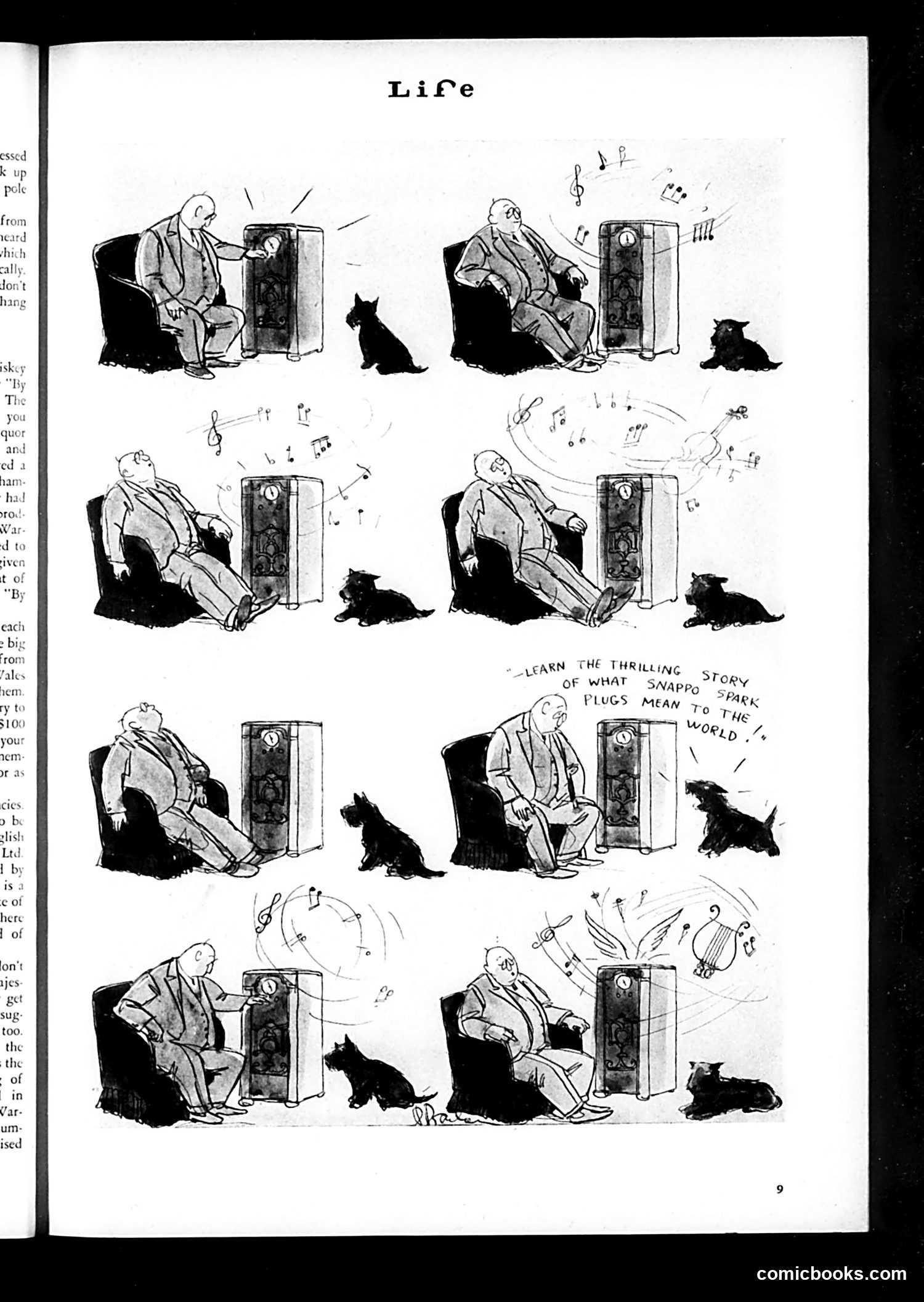
# "Life" Cartoon Page Analysis This is a humorous multi-panel comic titled "Life" depicting a man repeatedly attempting to operate what appears to be an early radio or electronic device, with a black cat present throughout. The joke progresses through eight panels showing the man's escalating frustration—from careful adjustment, to animated gestures, to increasingly wild conducting motions—as he struggles with the device's function or reception. Musical notes accompany many panels, suggesting he's trying to tune in to music or broadcast content. The caption at the bottom reads: "LEARN THE THRILLING STORY OF WHAT SNAP SPARK PLUGS MEAN TO THE WORLD." This appears to be an advertisement for spark plugs, using the man's comedic frustration with early radio technology as a vehicle for product promotion. The satire mocks both newfangled electrical devices and advertising hyperbole of the era.
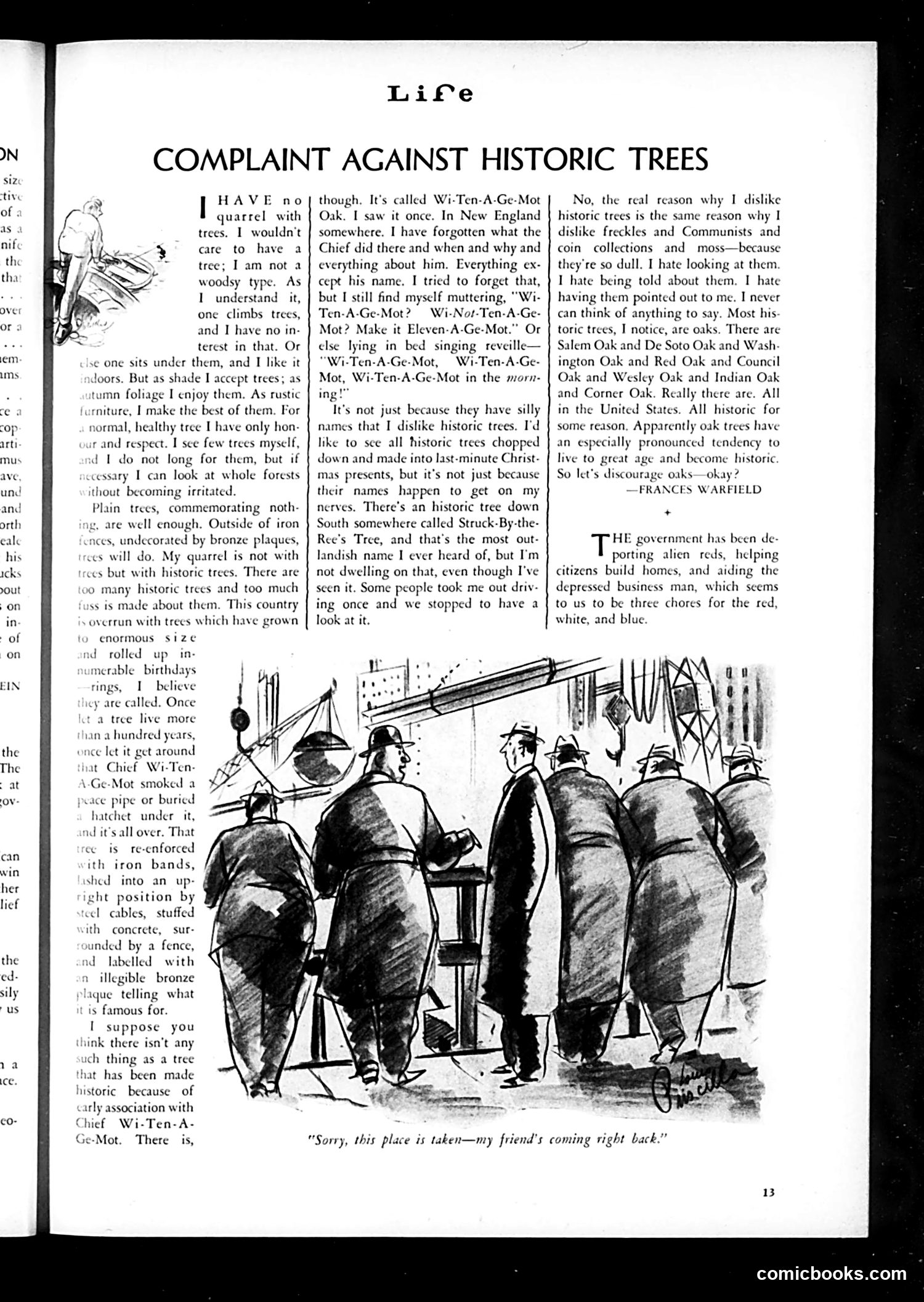
# Analysis This page contains several brief humorous anecdotes and quotations rather than political cartoons. The one illustration shows a figure climbing or clinging to what appears to be a ship's rigging or mast. The "Cockroaches" section satirizes an exterminating company in Washington, D.C., recounting an awkward encounter where a cockroach specialist was called to an apartment but ended up chasing cockroaches alongside embarrassed residents—poking fun at the incompetence of pest control services. The page's other content consists of quips and observations attributed to various figures (including Elmer Rice and Joseph Hergesheimer), touching on theatrical criticism, authorship, and politics. These are brief satirical commentary rather than visual cartoons, characteristic of *Life* magazine's format during this era.