A complete issue · 52 pages · 1935
Life — January 1935
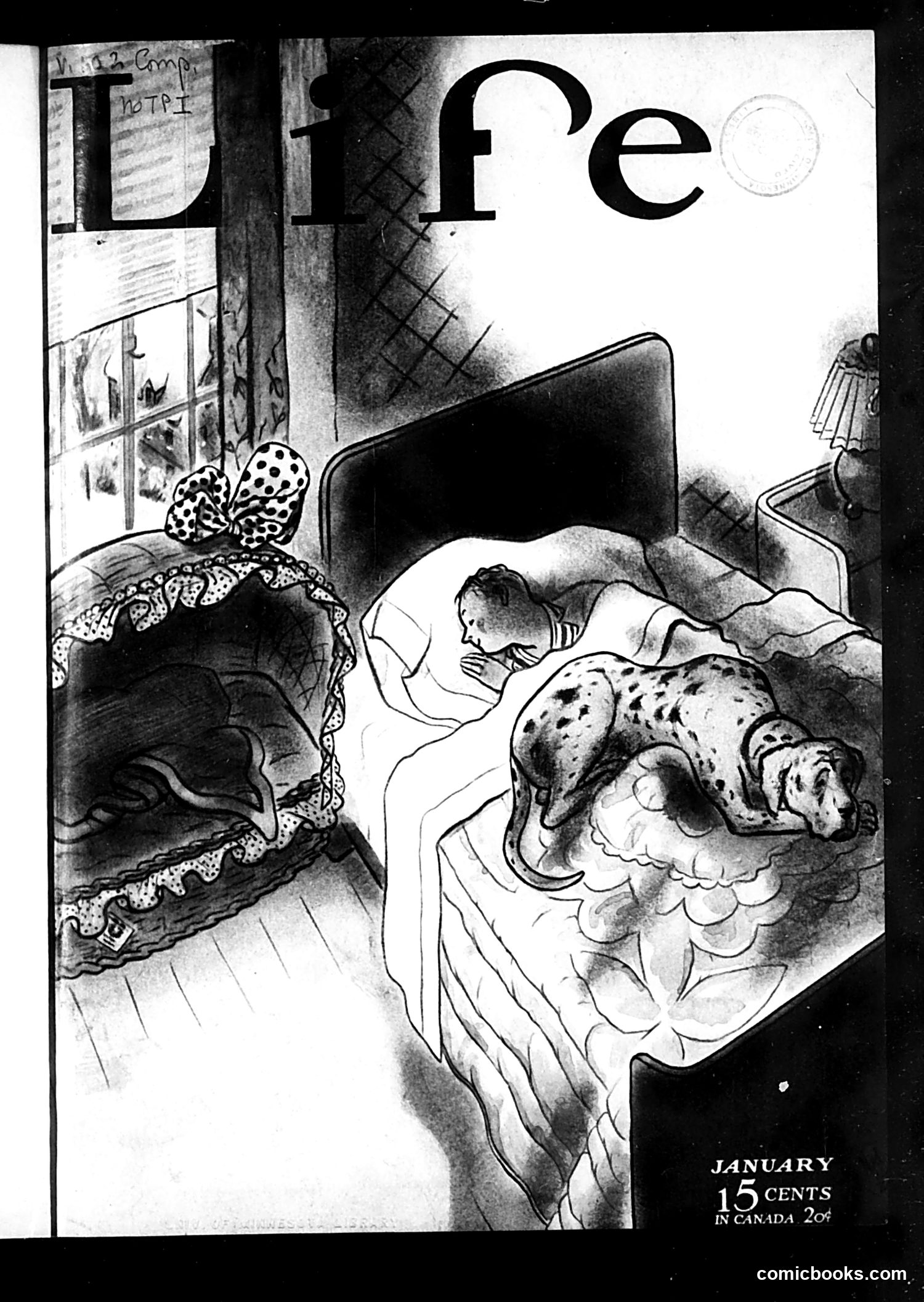
# Analysis This is a **Life magazine cover** from January (15 cents, likely early 20th century based on pricing and style). The illustration depicts a bedroom scene with a sleeping child and what appears to be a large spotted dog on the bed. A woman in decorative clothing with a polka-dot bow sits nearby. The satirical point likely concerns **pet indulgence or sleeping arrangements** — a common humor topic of the era. The exaggerated size of the dog and its prominent placement on the child's bed suggests commentary on how pet owners anthropomorphize animals or allow them inappropriate household privileges. Without clearer context or visible text identifying specific figures, the exact satirical target remains unclear, though it appears to mock domestic customs around pets and child-rearing.
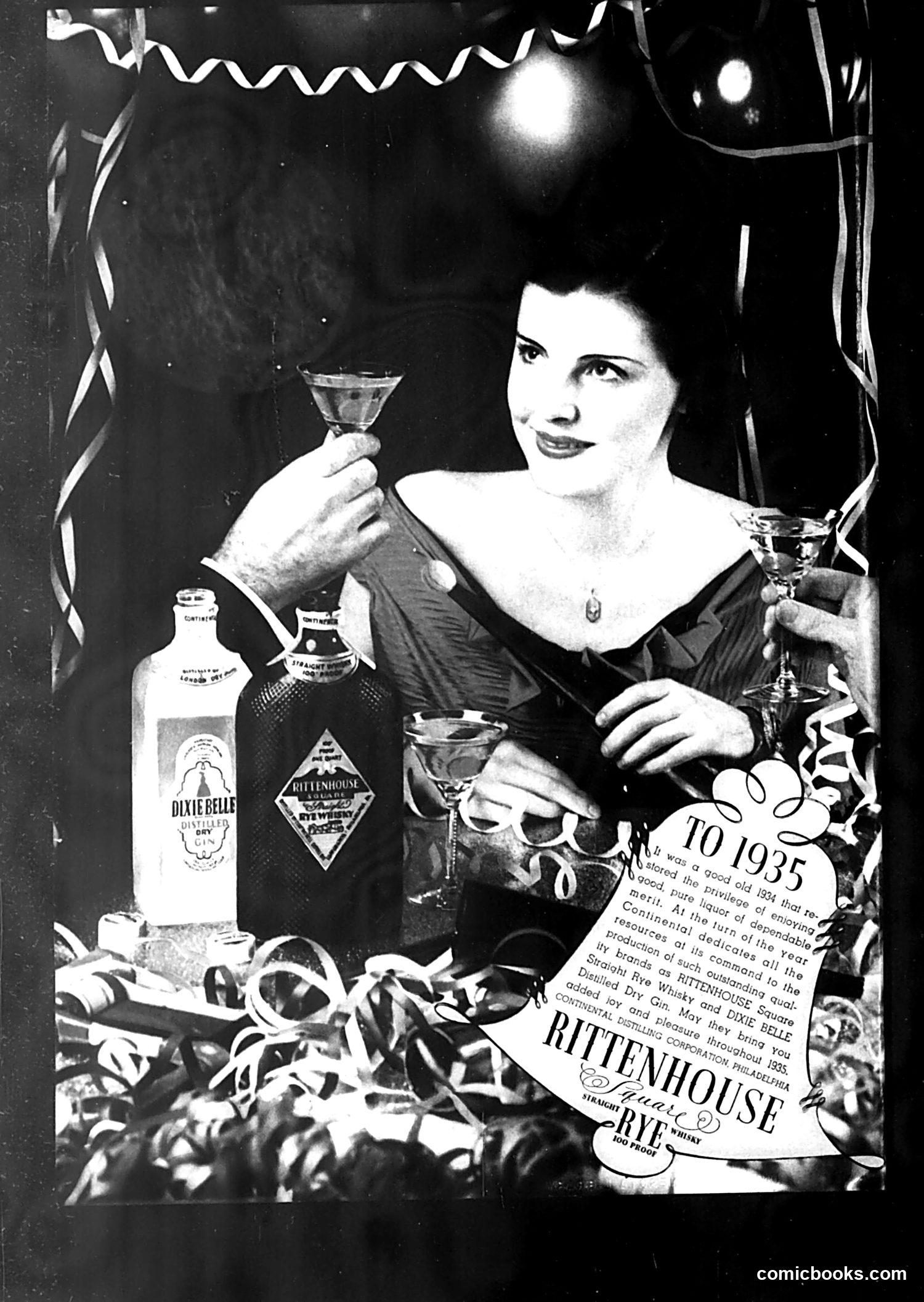
# Rittenhouse Rye Whiskey Advertisement This is a **commercial advertisement**, not political satire. It promotes Rittenhouse Rye Whiskey and celebrates the brand's longevity—the visible text references "TO 1935" and mentions the whiskey being "aged" and "good old Rittenhouse." The ad features an elegantly dressed woman in 1930s style holding cocktail glasses, surrounded by liquor bottles (including Dixie Belle and Rittenhouse brands) and festive decorations like streamers and ribbons. The advertisement appears designed to appeal to affluent consumers during Prohibition's repeal era (1933 onwards), associating the whiskey with sophistication, celebration, and leisure. The woman's glamorous presentation was typical advertising strategy of the period to market alcoholic beverages to middle and upper-class audiences.
I can see this is a nearly black page with minimal visible content—just some white linear elements on the left edge and the "comicbooks.com" watermark at bottom right. The image quality is too dark and degraded to discern any cartoon figures, caricatures, text, or satirical content with confidence. Without being able to read the OCR text clearly or see the actual illustrations, I cannot reliably identify the political/social references, figures depicted, or the satirical point intended. This appears to be either a severely damaged scan, a blank/advertising page, or an image where the contrast has been lost. To provide accurate historical analysis as requested, I would need a clearer version of this page.

I can see this is a largely illegible black-and-white page from what appears to be *Life* magazine, with a circular illustration visible in the upper-center portion and text fragments on the right margin that are too faint to read with confidence. The circular image appears to show a figure, but the reproduction quality and darkness of the scan make it impossible to identify specific individuals, political references, or the intended satire with certainty. On the right edge, there are partial column headers or text fragments visible, but they're too obscured to decipher reliably. Without clearer reproduction quality, I cannot accurately explain the cartoon's meaning, identify its subjects, or contextualize its satire for a modern reader as requested. The page quality prevents meeting the accuracy standard required.
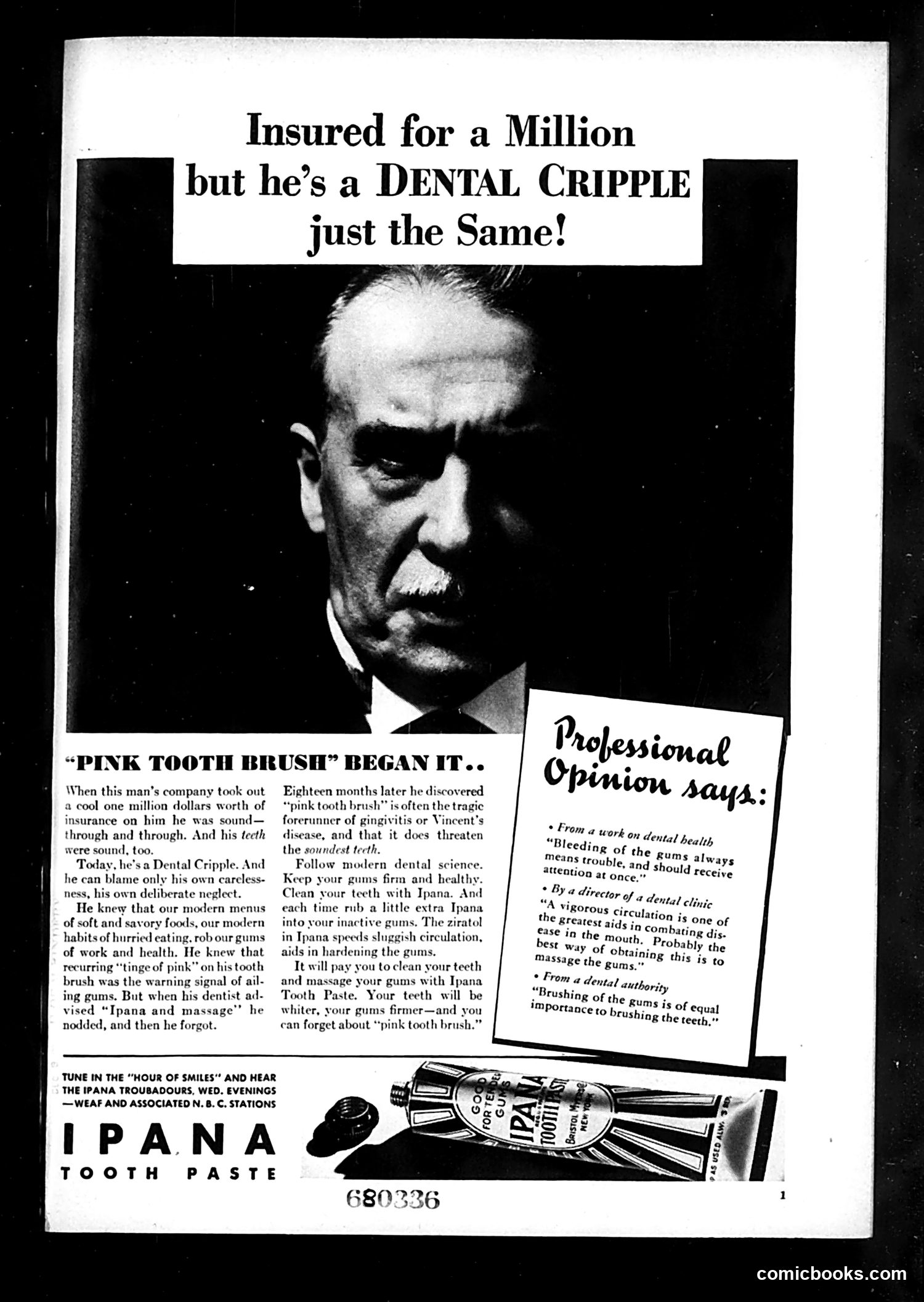
# Analysis This is a **vintage toothpaste advertisement**, not political satire. It advertises Ipana Tooth Paste using a narrative approach popular in early-to-mid 20th century advertising. The ad tells a cautionary tale: a wealthy man ("insured for a million") developed gum disease ("pink tooth brush"—bleeding gums) from neglecting oral hygiene. Despite his financial security, this dental problem made him look unhealthy and aged. The ad presents Ipana as the solution, emphasizing gum health through regular brushing and massage. The "Professional Opinion" sidebar quotes dental authorities supporting the product's claims about gum disease prevention and treatment. The humor derives from the irony that money cannot protect against preventable dental problems—only proper brushing with Ipana can. It's lifestyle advertising leveraging anxiety about health and appearance.
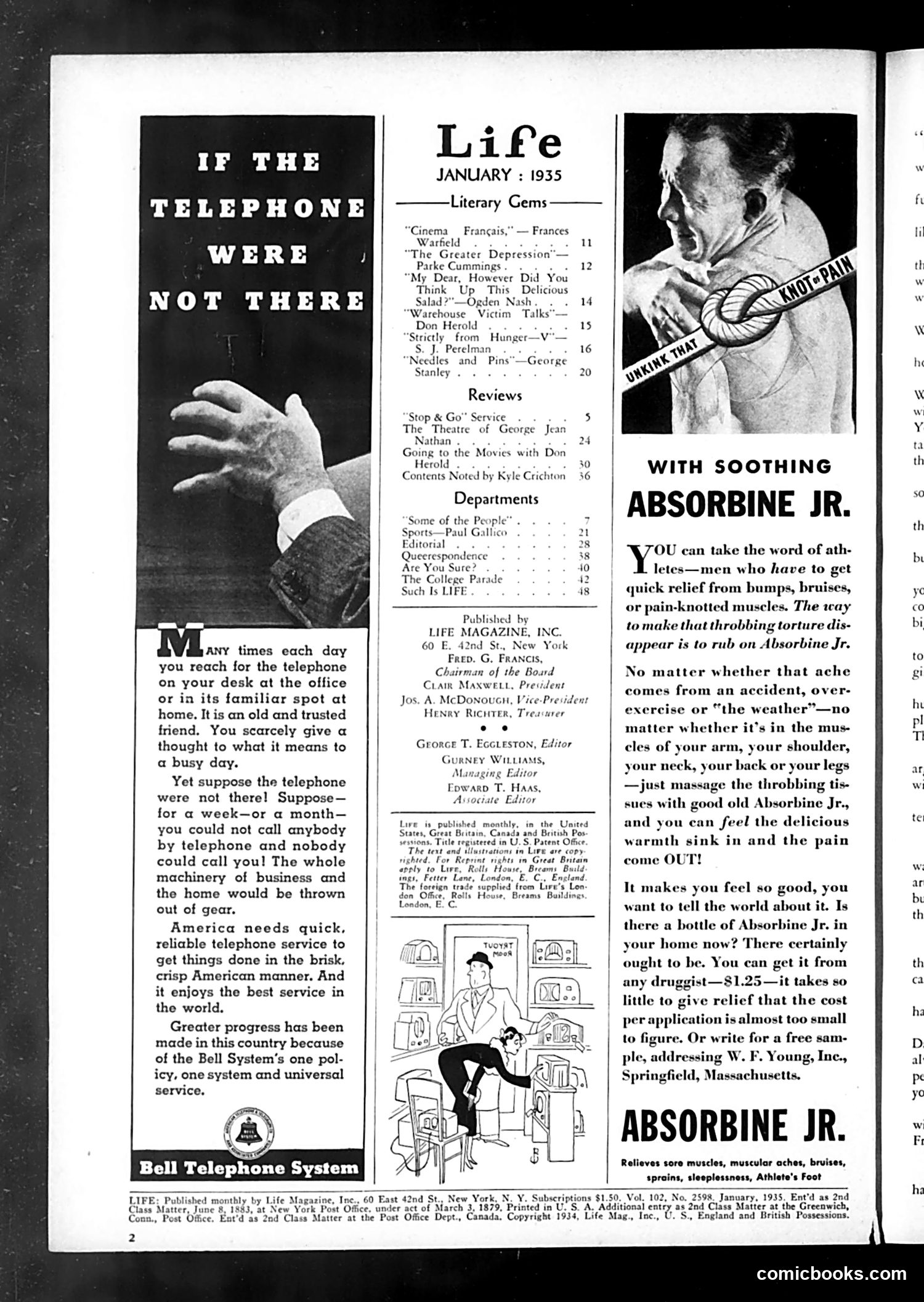
# Life Magazine, January 1935 - Analysis This page contains a **Bell Telephone System advertisement** (left) and an **Absorbine Jr. liniment advertisement** (right), with the magazine's table of contents in the center. The Bell ad uses satire to argue that telephone service is essential to American business and daily life. It presents a hypothetical scenario: "If the telephone were not there" for a week or month, depicting how society would collapse without it. The message emphasizes that reliable telephone infrastructure underpins American progress and efficiency. The Absorbine Jr. ad shows an athlete and uses testimonial language about pain relief for muscles and bruises—typical 1930s advertising for medicinal liniments. The page is primarily **commercial content** rather than satirical commentary on contemporary politics or events.
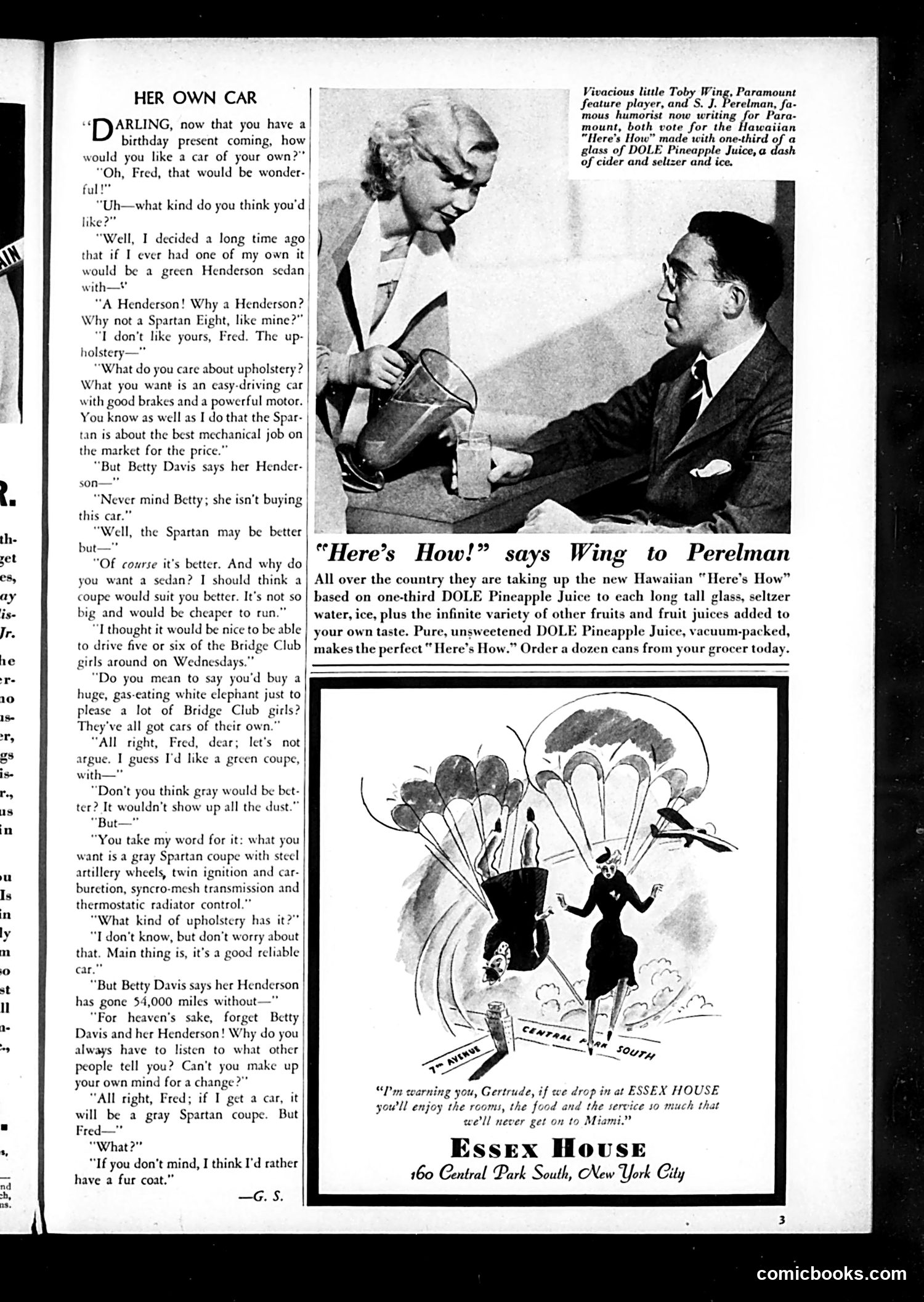
# Analysis This page contains a lighthearted dialogue titled "Her Own Car" about a woman deciding what automobile to purchase as a birthday gift. The conversation satirizes consumer preferences and gender stereotypes of the era: Fred argues for practical, performance-focused choices (Spartan Eight), while the unnamed woman prioritizes comfort and aesthetics (green Henderson sedan, gray Spartan coupe). The humor lies in Fred's exasperation that she won't simply accept his recommendations and repeatedly changes her mind—a common comedic trope about indecisive women shoppers. The page also features advertisements for "Here's How!" (a DOLE pineapple juice drink) and Essex House hotel in New York City, reflecting typical 1920s-30s magazine content mixing editorial humor with branded messaging.
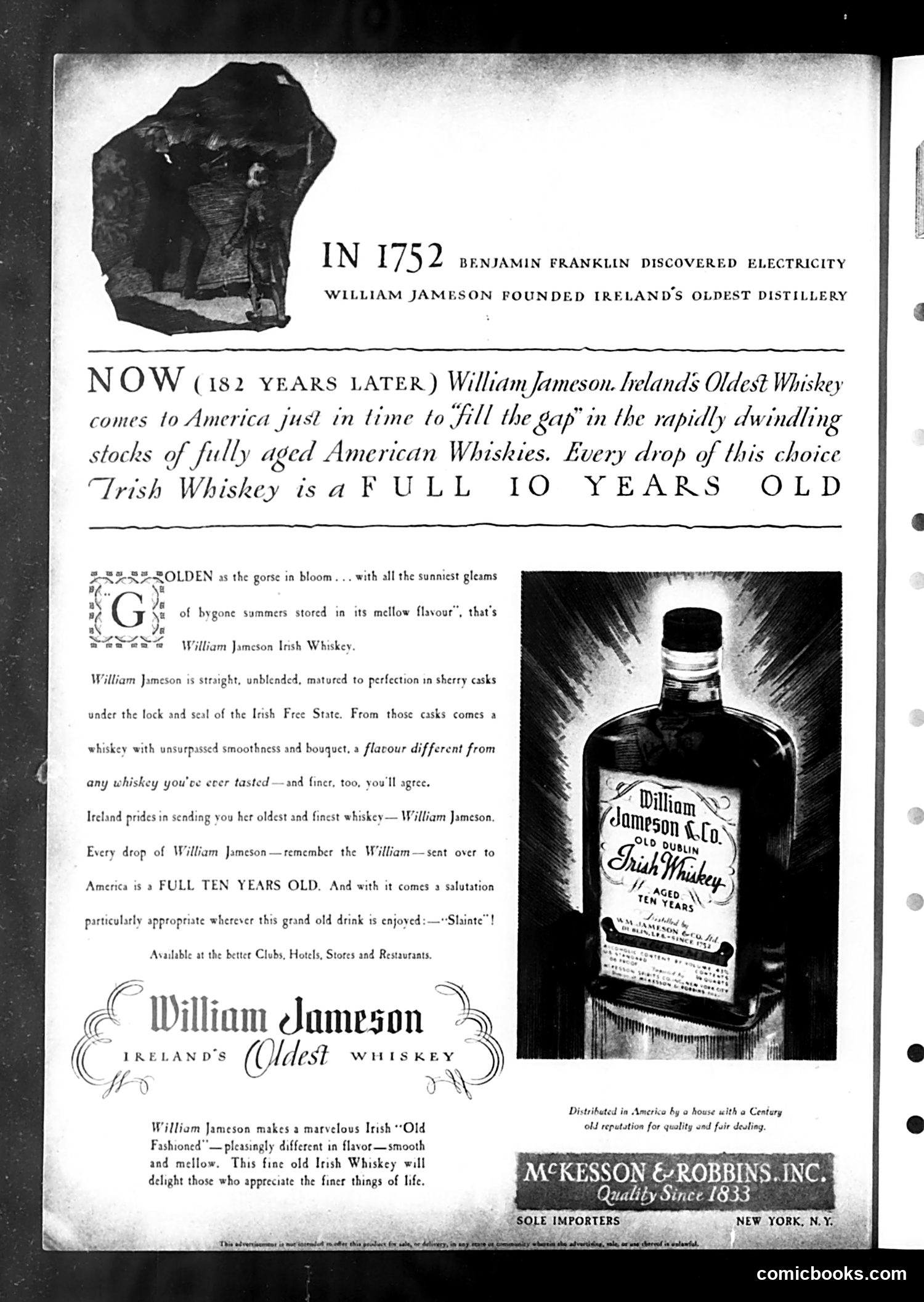
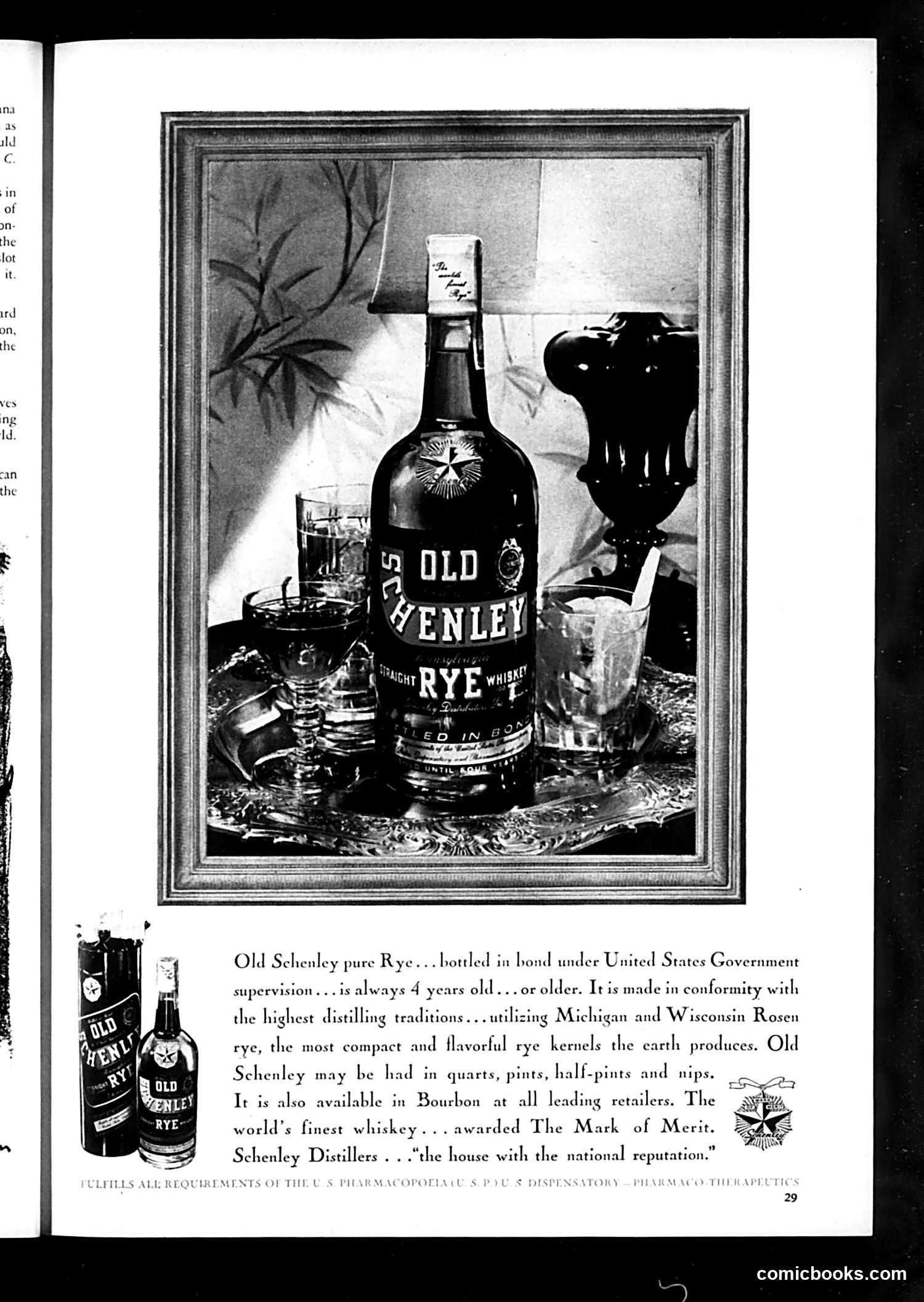
This is a **whiskey advertisement**, not satire or political content. The page promotes William Jameson Irish Whiskey, marketed as "Ireland's Oldest Whiskey." The ad uses historical framing—referencing Benjamin Franklin's 1752 electricity discovery and the distillery's founding—to establish prestige and tradition. The key selling point is that the whiskey is "a FULL 10 YEARS OLD," positioned as filling a gap in "rapidly dwindling stocks of fully aged American Whiskies." This suggests post-Prohibition scarcity (likely 1930s-40s context). The bottle image on the right shows the product label prominently. The distributor, McKession & Robbins, Inc. (New York), emphasizes quality and fair dealing. The tone is sophisticated, appealing to educated, affluent consumers who appreciate fine spirits and historical narratives.
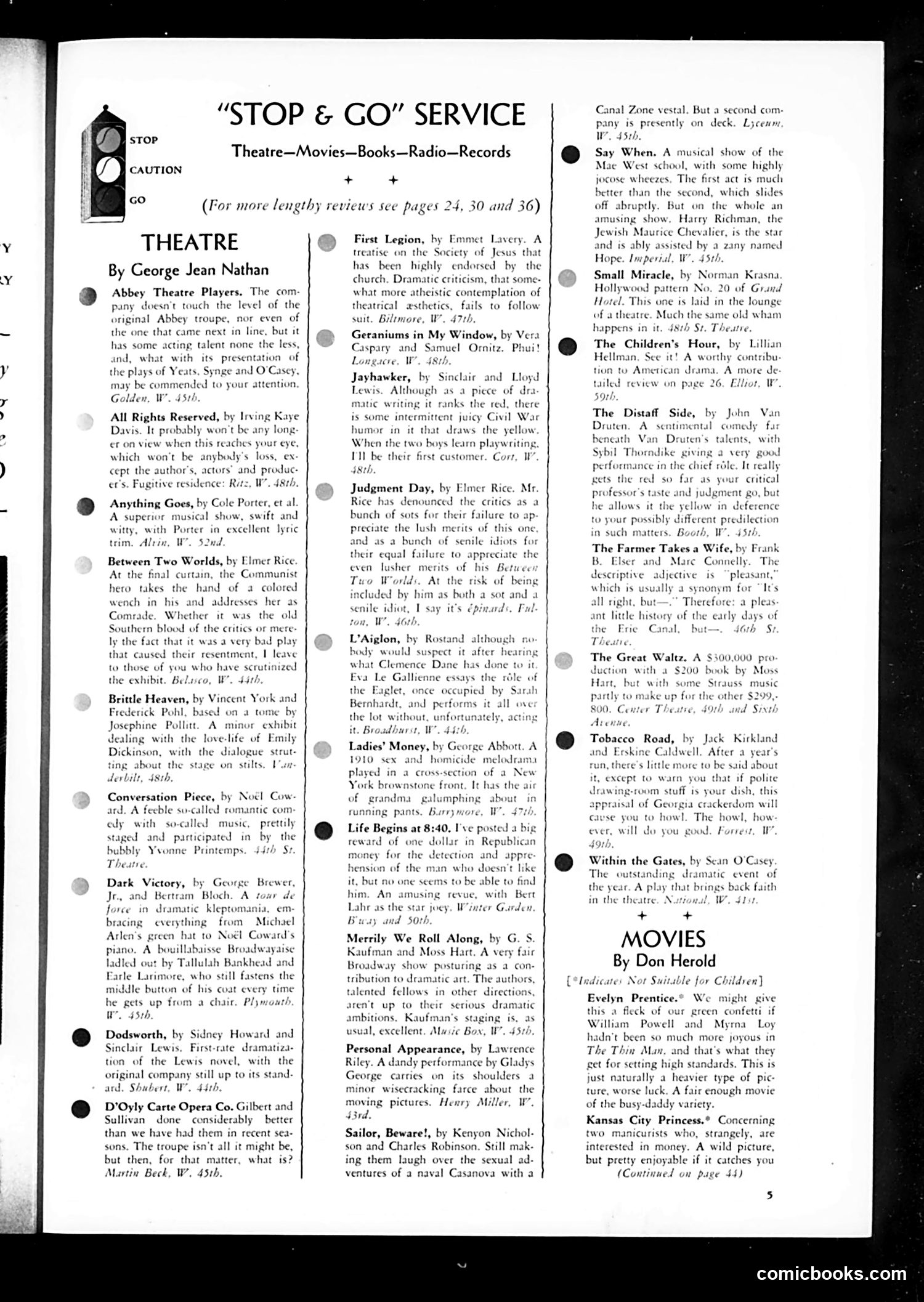
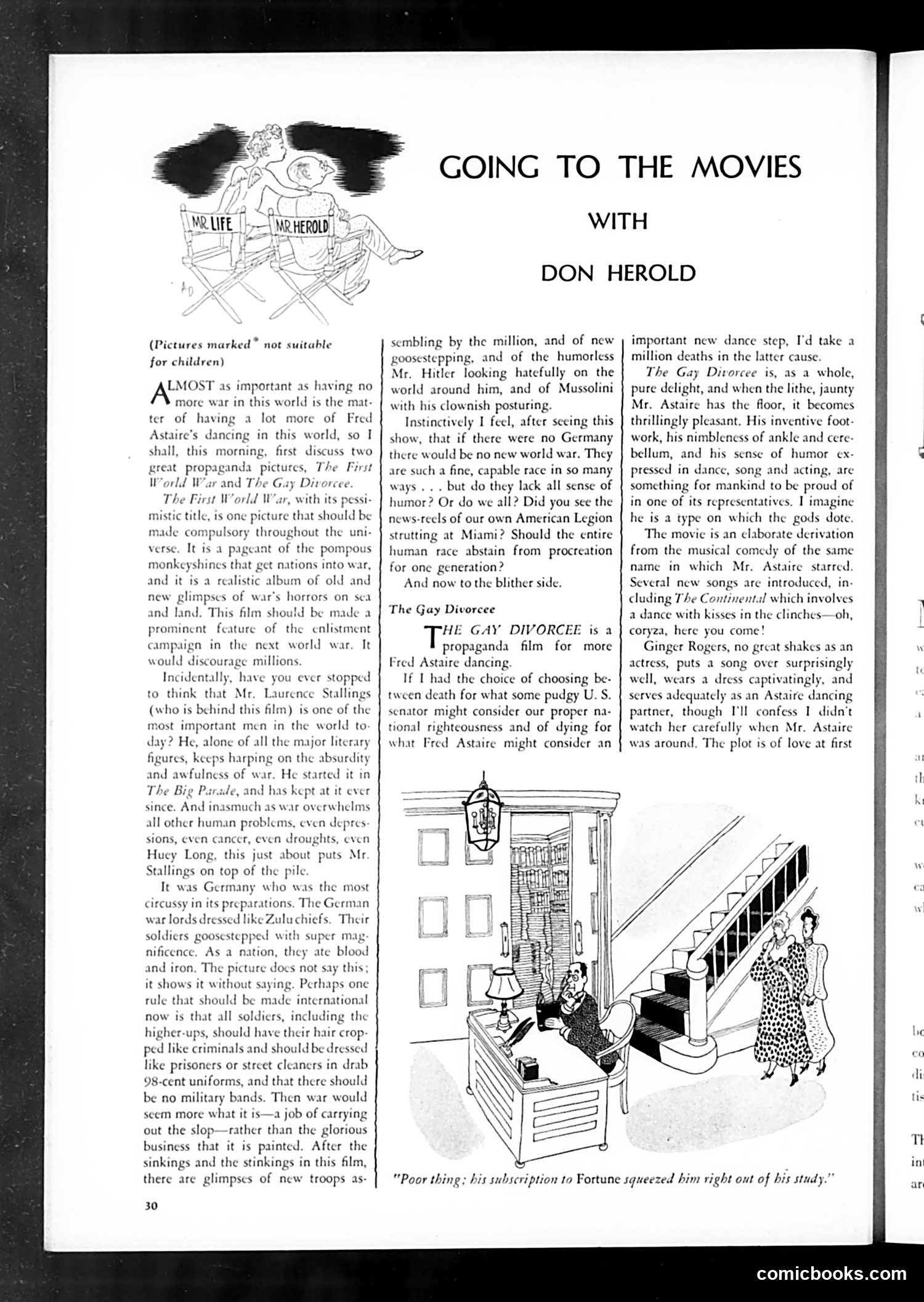
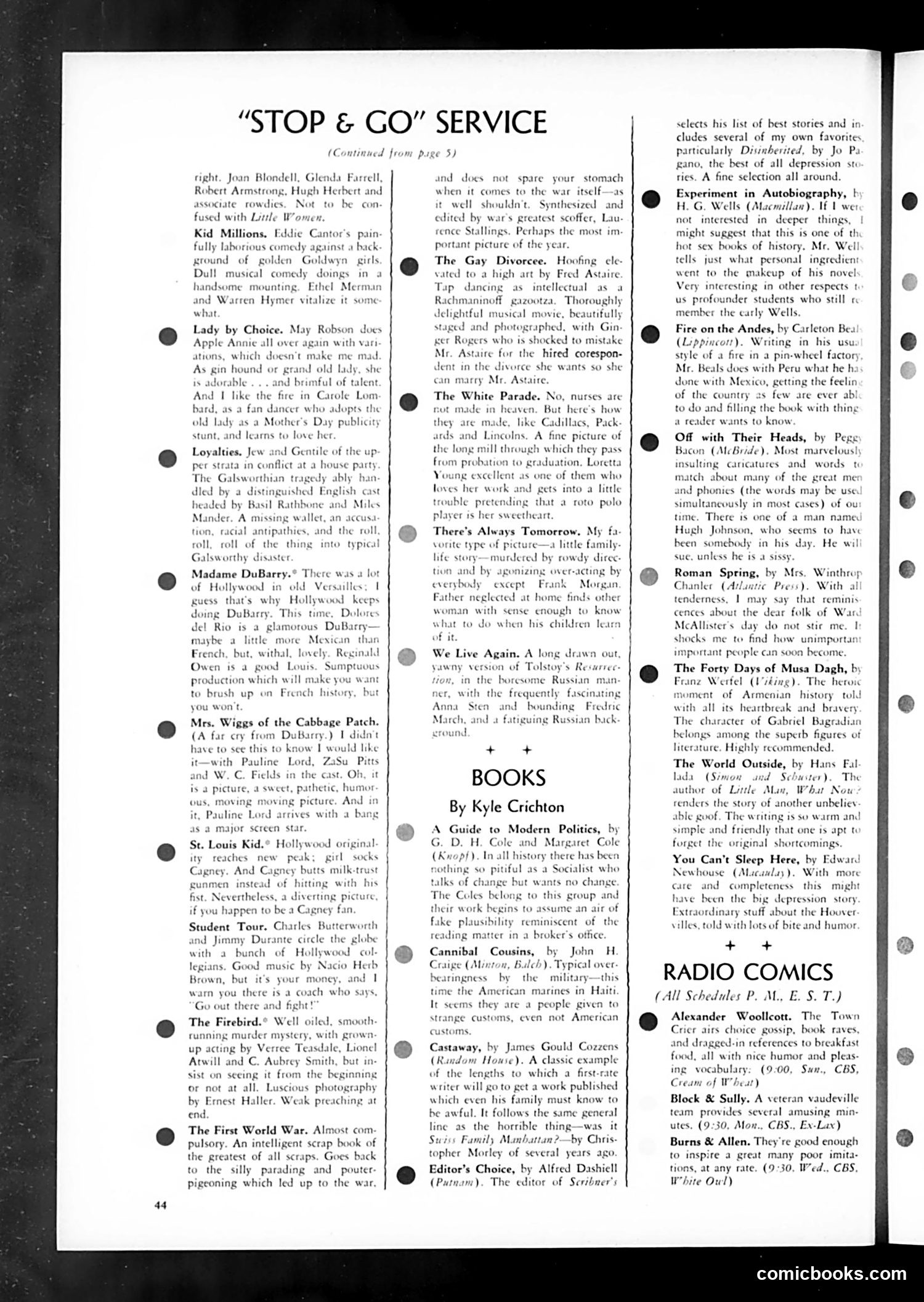
# "Stop & Go" Service: Theatre Reviews Page This is a theatre and movie review page from *Life* magazine, structured as a "Stop & Go" service guide (indicated by the traffic light icon). The content is not satirical or political—it's a straightforward critical review section covering Broadway plays and films. The page lists theatrical productions with brief critical assessments (marked with filled or empty circles indicating quality). Reviews cover works like *Abbey Theatre Players*, *Anything Goes*, and *D'Orly Carte Opera Co.*, alongside movie reviews by Don Herold. This represents *Life's* role as a general-interest magazine providing entertainment criticism alongside its better-known satirical content. The format is informational rather than comedic or propagandistic.
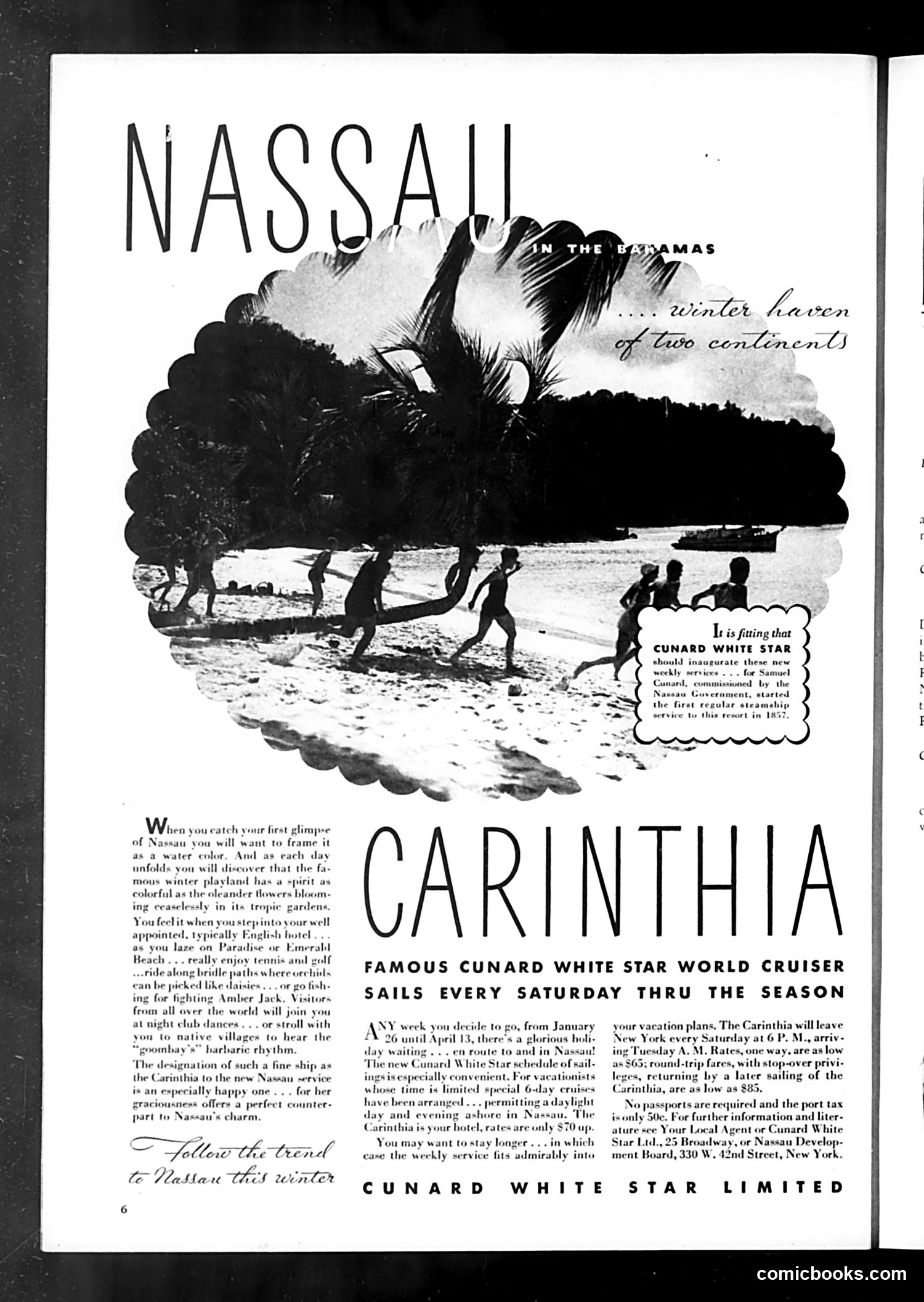
# Analysis This page is **primarily an advertisement**, not satire or political commentary. It promotes the Cunard White Star Line's cruise ship *Carinthia*, which offered weekly Saturday departures to Nassau in the Bahamas during winter season (January-April). The imagery shows beachgoers and tropical scenery to evoke Nassau as an exotic winter destination. The text emphasizes luxury amenities—golf, fishing, lounging—and contrasts Nassau's colorful, relaxed atmosphere with presumably cold American winters. The historical note mentions that Cunard White Star "started the first regular steamship service to this resort in 1852," lending prestige to the company. This reflects 1930s-era cruise tourism marketing: framing Caribbean destinations as accessible escapes for wealthy Americans seeking warmth and leisure during winter months.
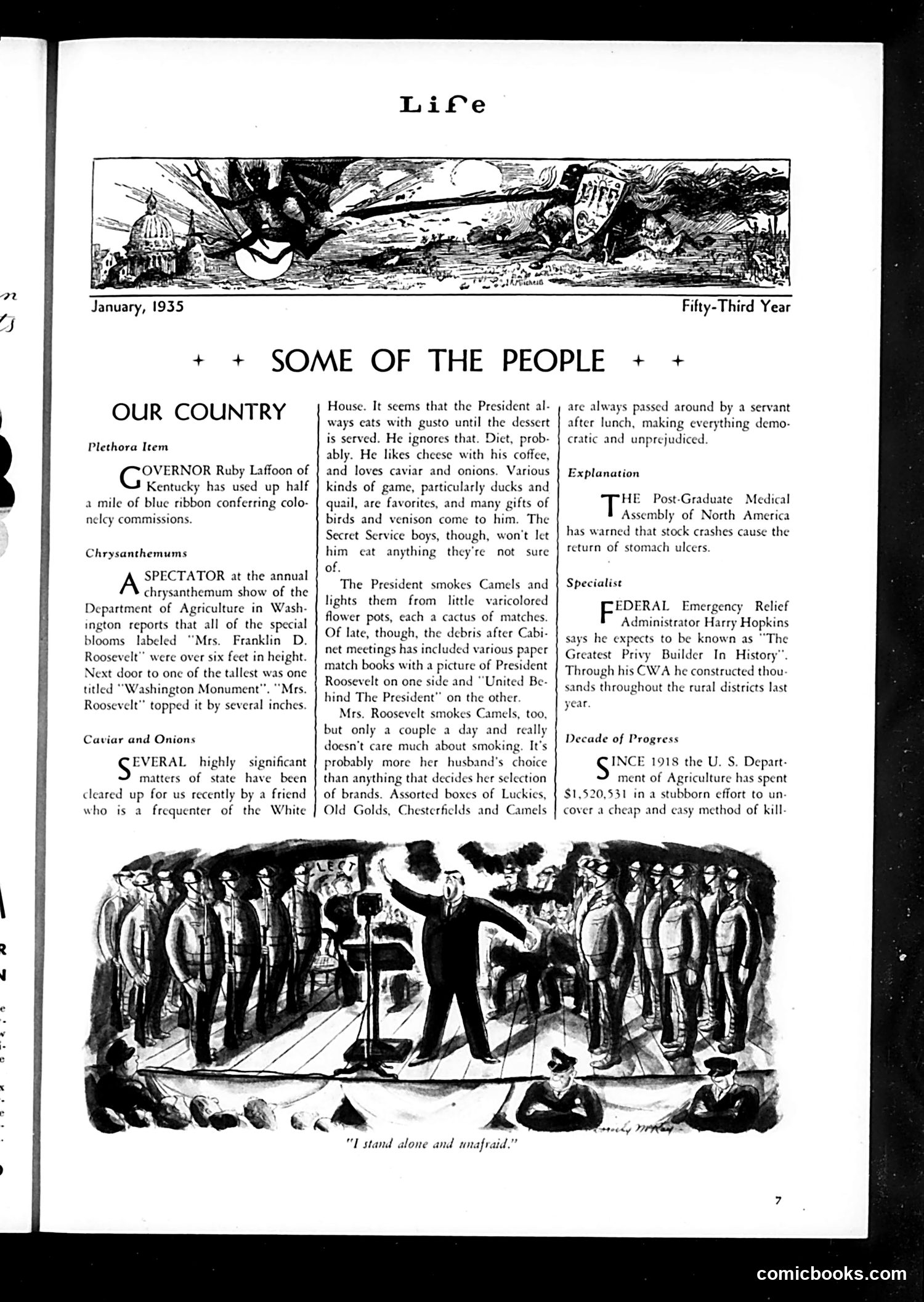
# Life Magazine, January 1935: Political and Social Commentary This page features satirical commentary on President Franklin D. Roosevelt's personal habits and New Deal policies. The "Plethora Item" section mocks FDR's dining preferences—his love of game, caviar, and cheese—contrasting his refined tastes with Depression-era hardship. The text jokes about his cigarette smoking habits and his wife's apparent indifference to his brand choices. The large cartoon depicts a figure speaking to a crowd with the caption "I stand alone and unafraid"—likely satirizing Roosevelt's leadership claims during economic crisis. Below, sections on agricultural policy and Emergency Relief Administrator Harry Hopkins critique the administration's spending efforts as inefficient. The satire reflects conservative skepticism of New Deal programs and FDR's presidency.
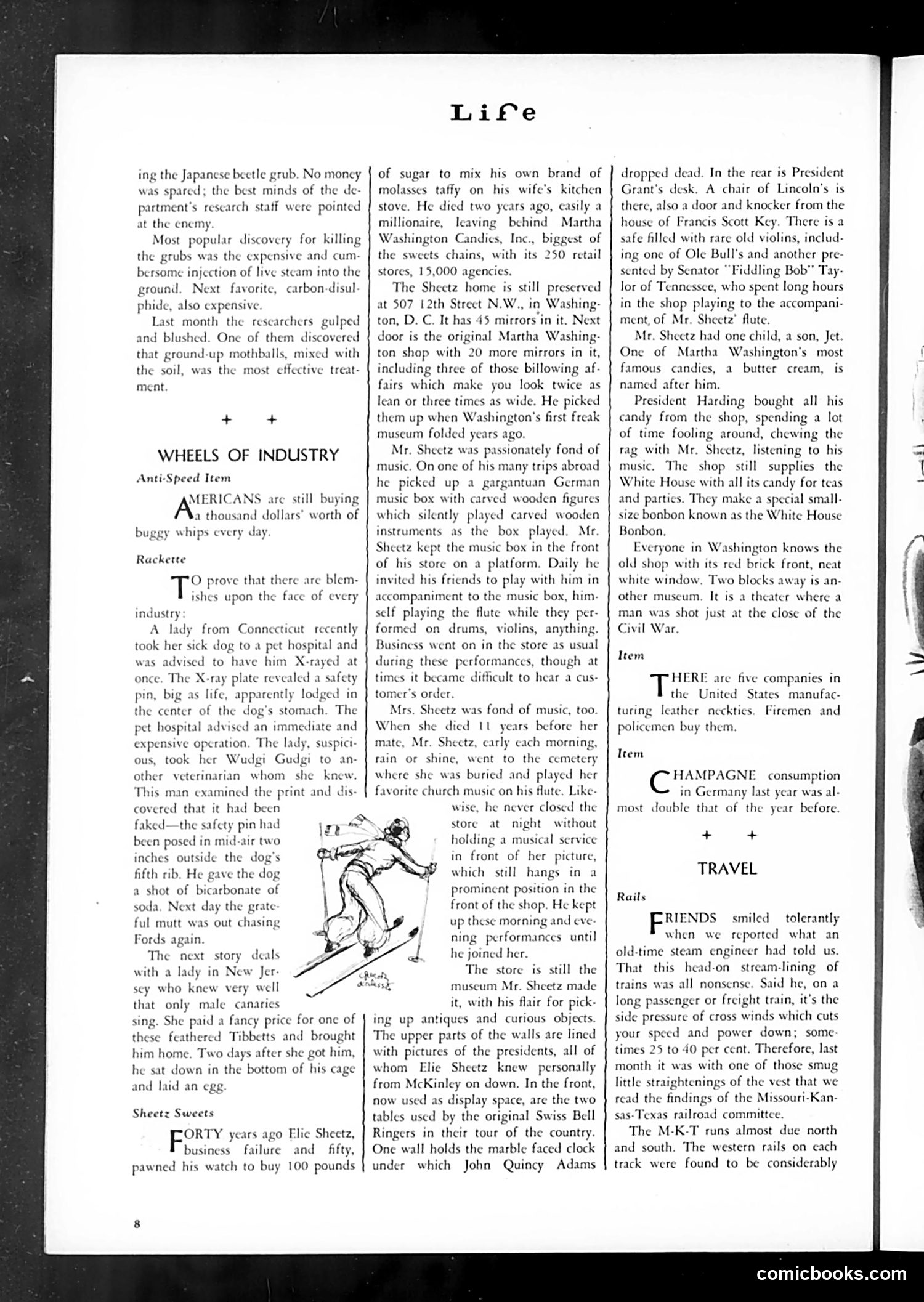
# Analysis of Life Magazine Page This page contains miscellaneous humorous items rather than a political cartoon. The visible illustration shows a skier in an exaggerated pose, accompanying a short piece titled "Rockette" about an X-ray revealing a safety pin lodged in a dog's stomach. The content includes brief anecdotes labeled "Wheels of Industry" (about Americans buying buggy whips), sections on curiosities like the Sheetz candy store in Washington D.C., and travel observations about steam trains. The humor relies on absurdist situations and mild social observation rather than political satire. Without date information visible, the specific historical references are unclear, though mentions of President Harding and Civil War-era Washington locations provide period context.