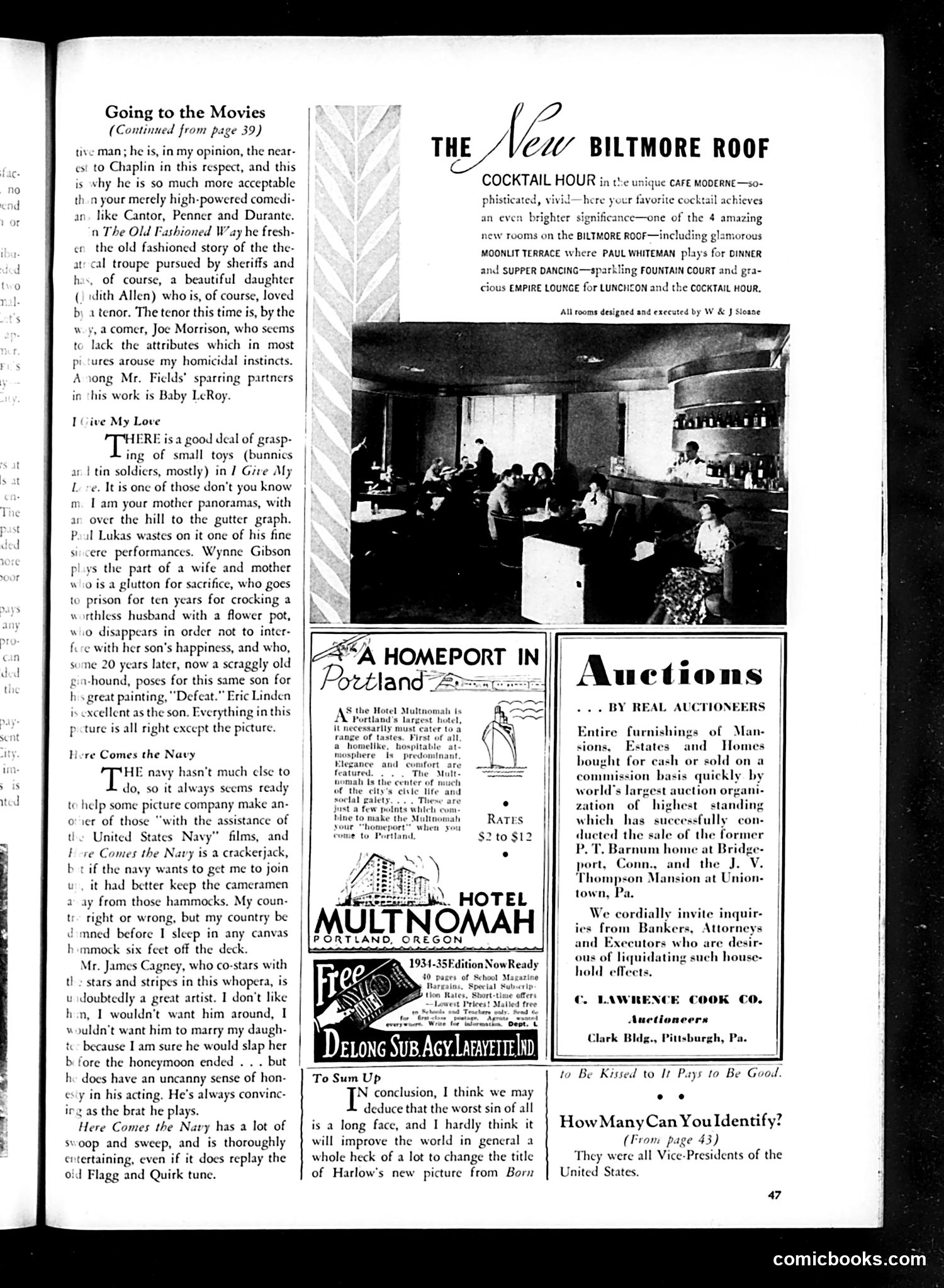
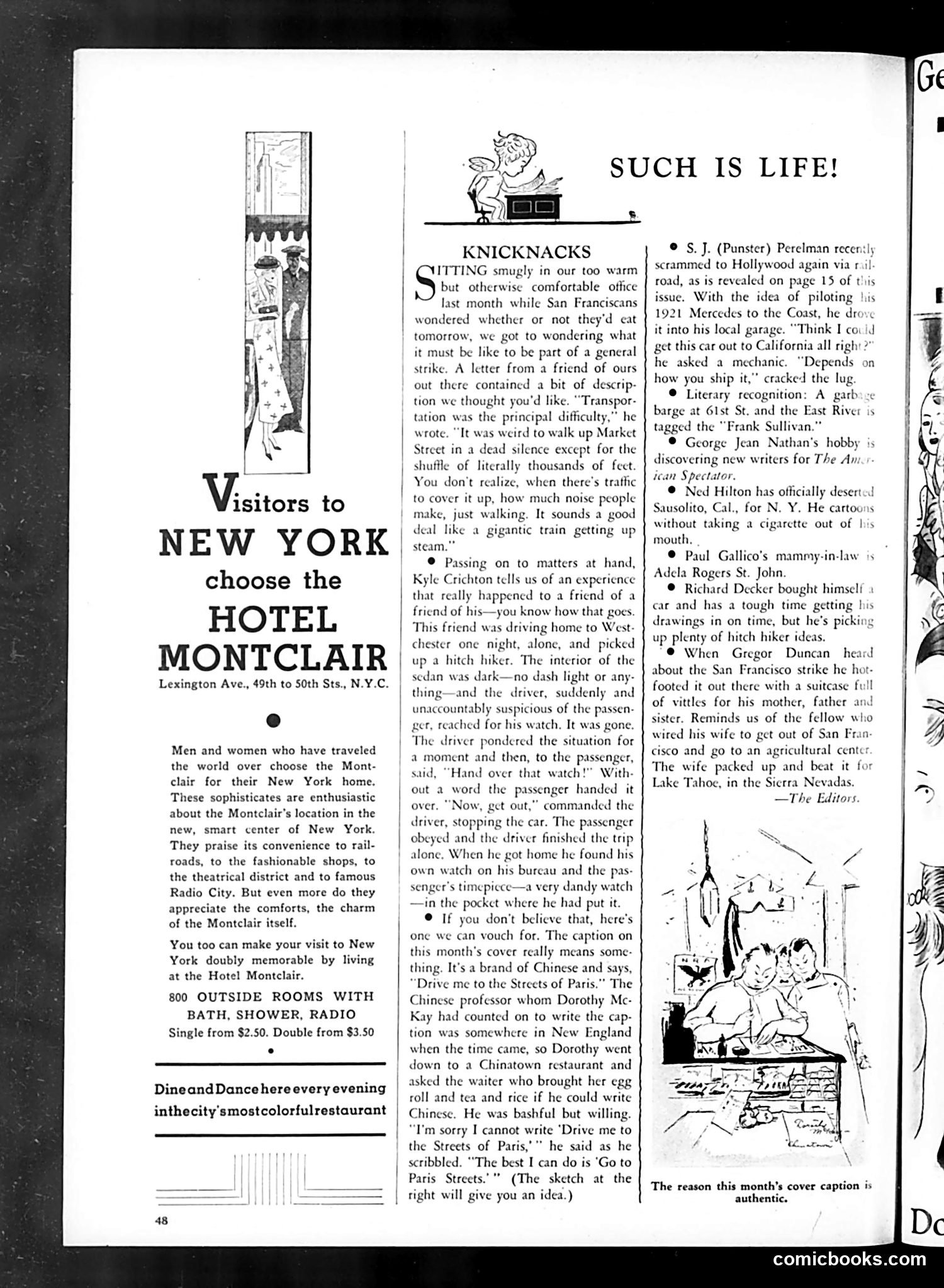
A complete issue · 50 pages · 1934
Life — September 1934
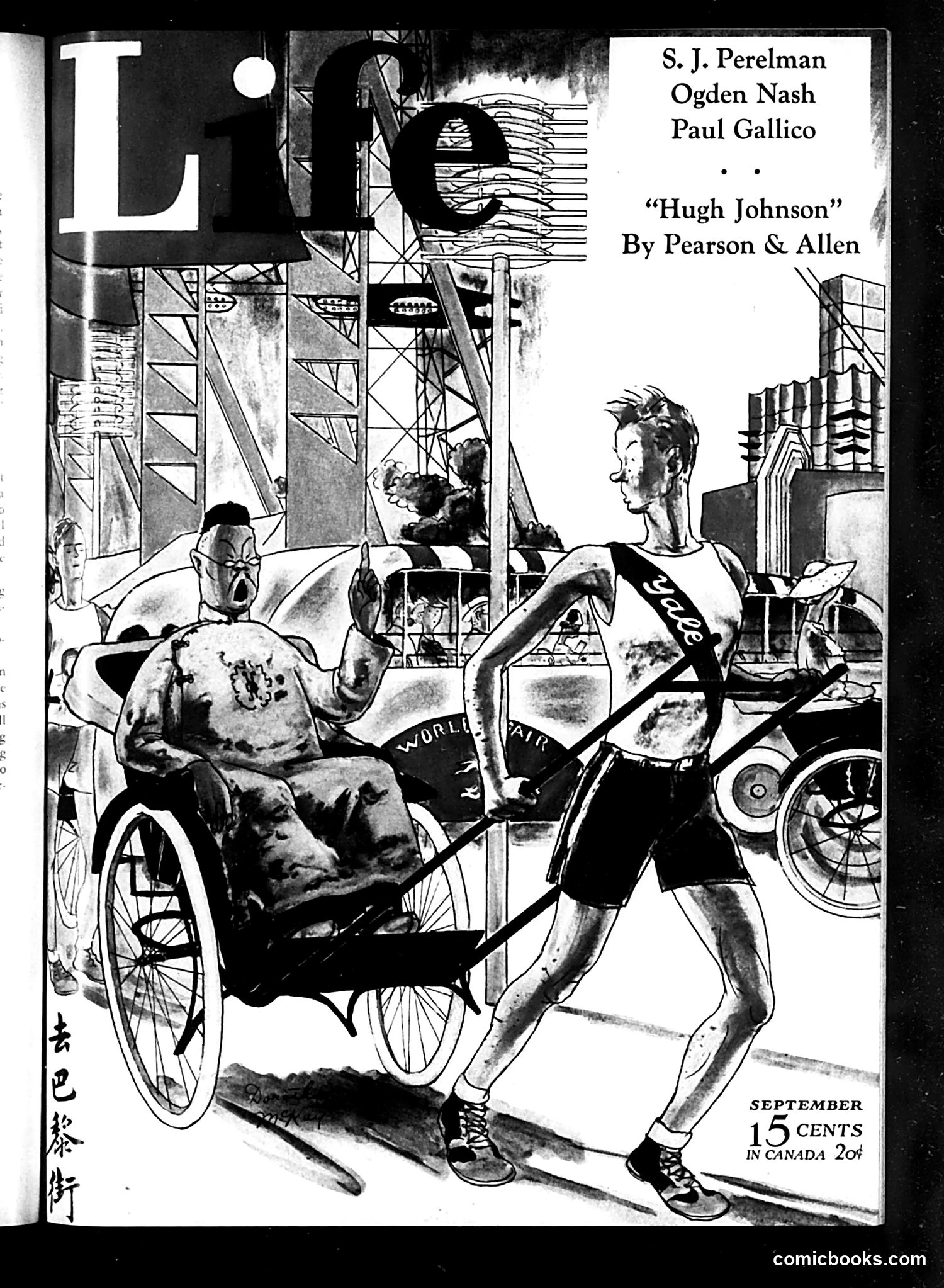
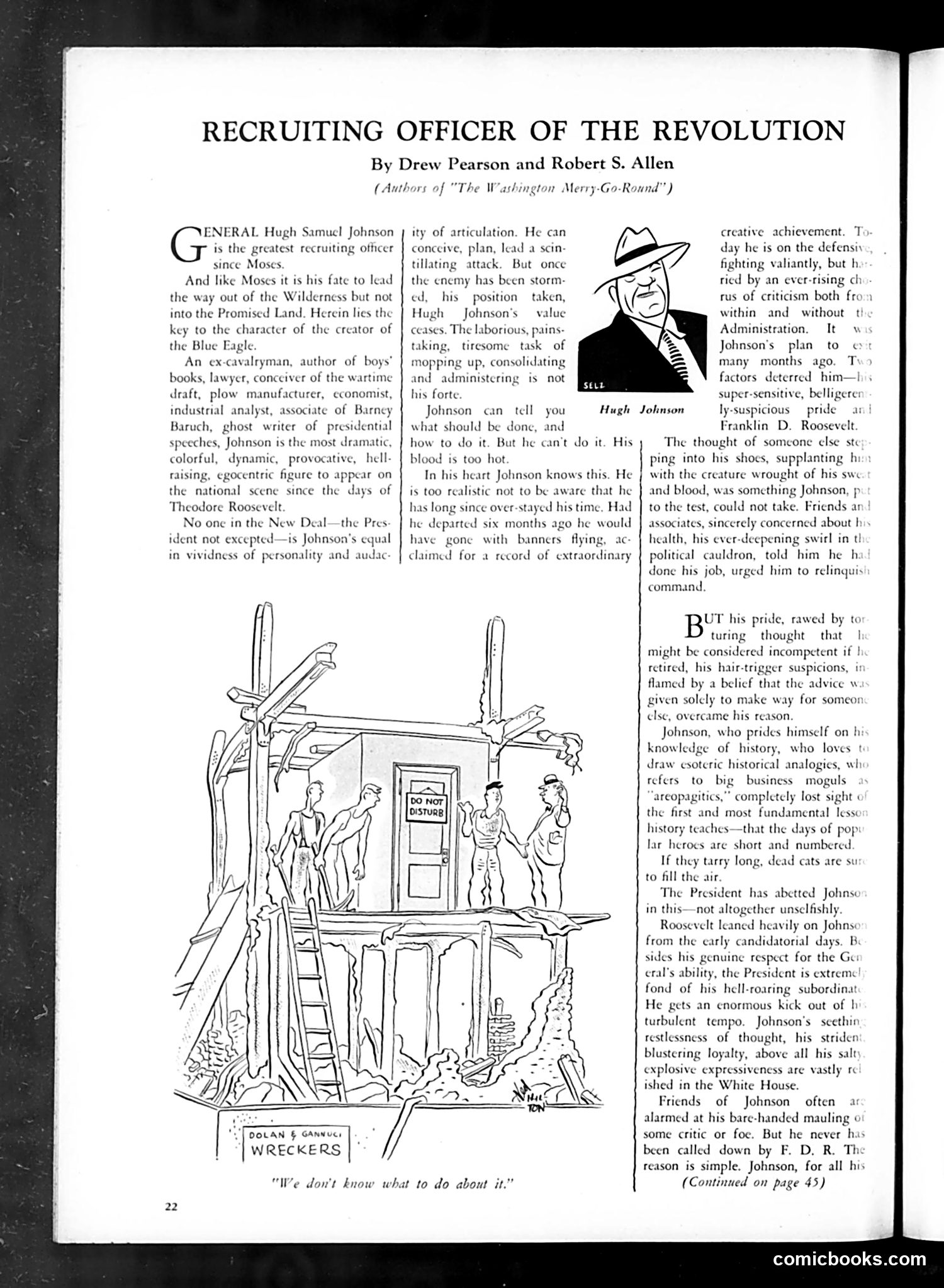
# Analysis This appears to be a **Life magazine cover from September** (price 15 cents, 20 cents in Canada), featuring an illustration of a rickshaw scene. The cover credits list **S.J. Perelman, Ogden Nash, and Paul Gallico** as contributors, and advertises a story titled **"Hugh Johnson" by Pearson & Allen**. The illustration depicts a **rickshaw puller (likely an Asian laborer) straining to pull a large, well-fed passenger** through an urban landscape with industrial buildings visible behind. This appears to be **satirizing American excess or corporate power** — possibly Hugh Johnson, who was a prominent New Deal administrator. The caricature may be critiquing either his physical appearance or his perceived burden on society, using the rickshaw metaphor to comment on imbalanced power dynamics or exploitation during the Depression era.
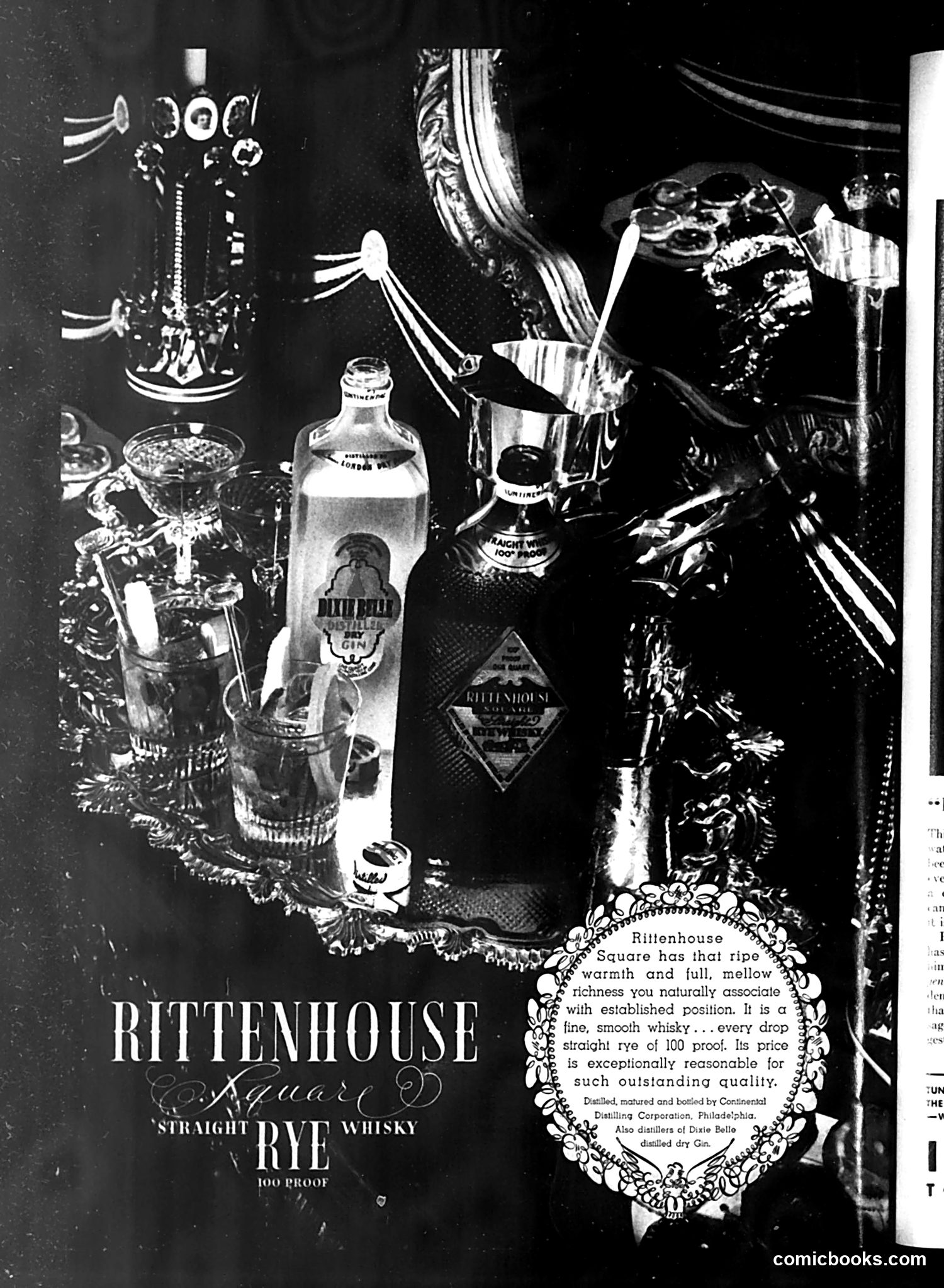
This page is primarily an advertisement for Rittenhouse Square Straight Rye Whiskey (100 proof), not a political cartoon. The ad features an elegant still-life arrangement of the whiskey bottle alongside decorative glassware, ornamental vessels, and what appears to be fine spirits or liqueurs displayed on an ornate surface. The accompanying text emphasizes the product's quality, describing it as having "ripe warmth and full, mellow richness" associated with "established position," marketed as "a fine, smooth whiskey" at "exceptionally reasonable" price for the quality. The ad notes it was distilled and bottled by Continental Distilling Corporation in Philadelphia. This appears to be vintage advertising content rather than satirical commentary.
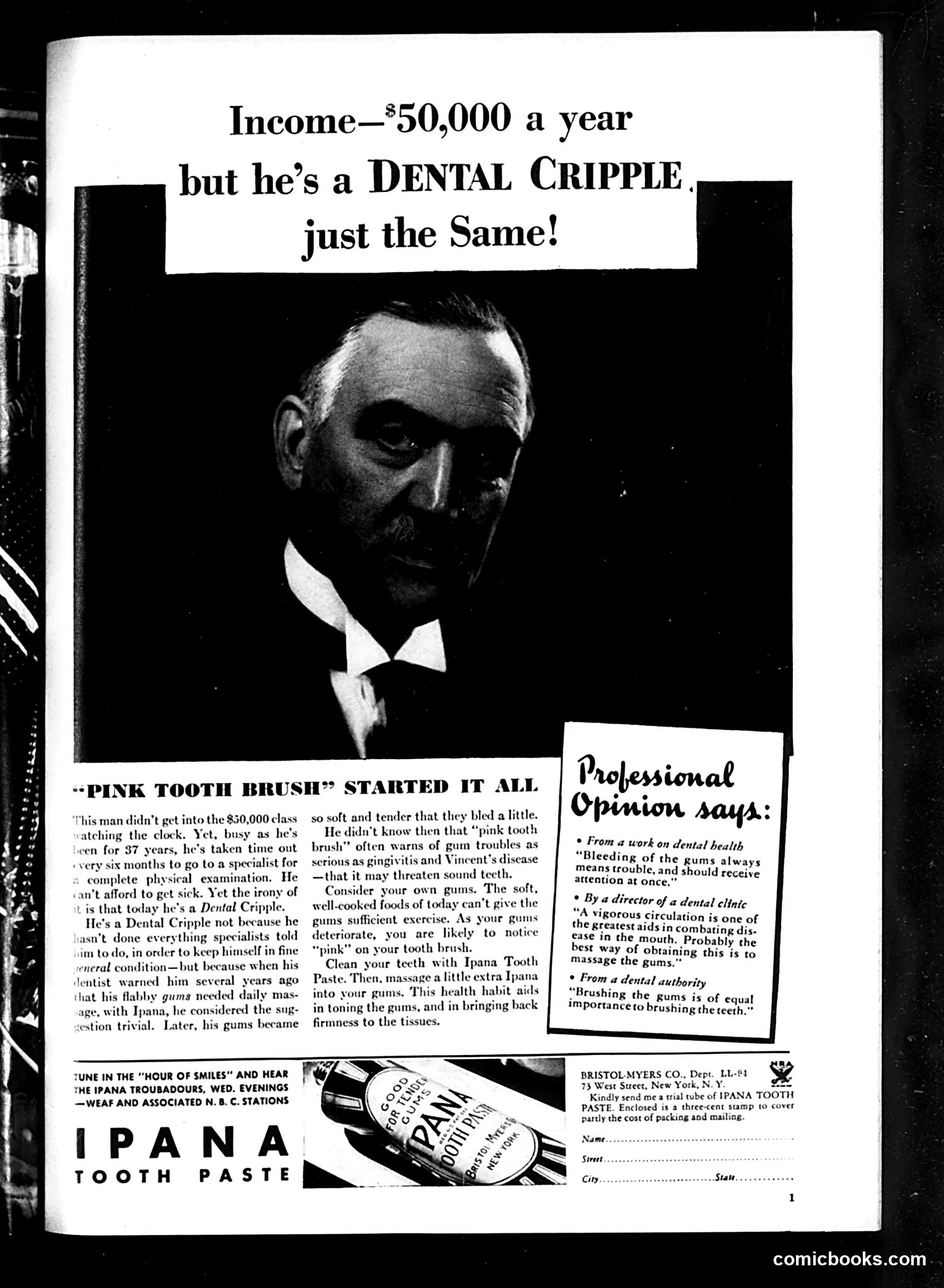
# Analysis of Ipana Tooth Paste Advertisement This is a **vintage toothpaste advertisement**, not political satire. It uses a crude, now-offensive approach: a well-dressed man with poor dental health is labeled a "DENTAL CRIPPLE" despite earning $50,000 annually—substantial mid-20th century income. The ad argues that wealth cannot compensate for bad teeth, implying poor oral hygiene reflects personal failure. It claims the man neglected his gums, possibly due to using inferior toothbrushes, and recommends **Ipana Tooth Paste** with gum massage as the solution. The "Professional Opinion" box features quotes from dental authorities endorsing the product's gum-care benefits. By modern standards, the "cripple" terminology is considered deeply ableist and offensive, reflecting attitudes from an earlier era that would be unacceptable today.
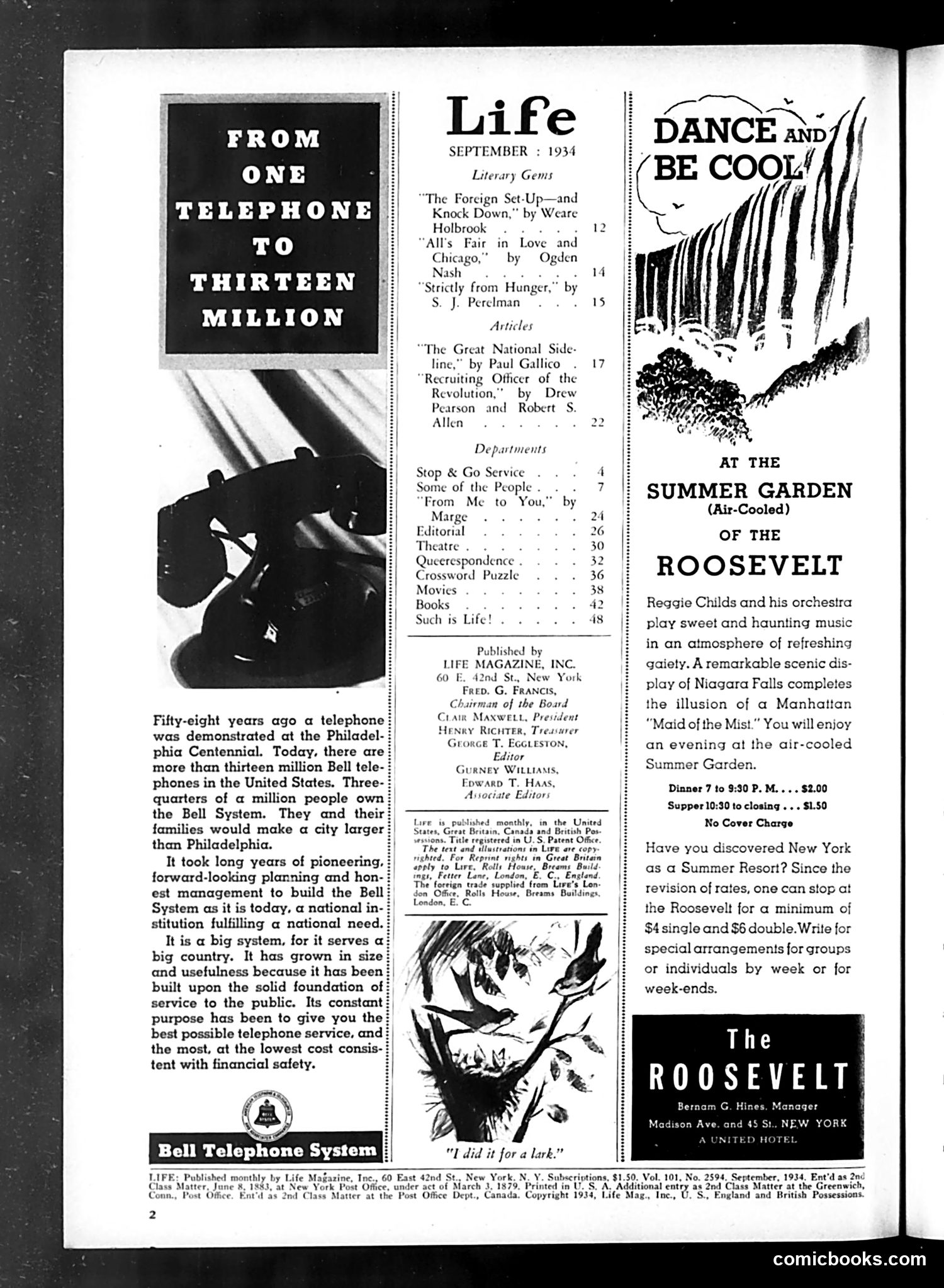
# Life Magazine, September 1934 - Page Analysis This is primarily a **table of contents and advertising page** rather than a satirical cartoon page. The left side features a **Bell Telephone System advertisement** with the headline "FROM ONE TELEPHONE TO THIRTEEN MILLION," celebrating the telephone's 58-year history since its 1876 Philadelphia demonstration. The ad emphasizes Bell's growth and reliable service infrastructure. The right side contains **advertisements for the Roosevelt Hotel** in New York, promoting its air-cooled Summer Garden with live music by Reggie Childs' orchestra, and dinner pricing. The center shows the magazine's **table of contents** listing literary pieces, articles, and departments for this September 1934 issue. No political satire or caricature is present on this page—it's a standard contents/advertising section typical of Life's format during this period.
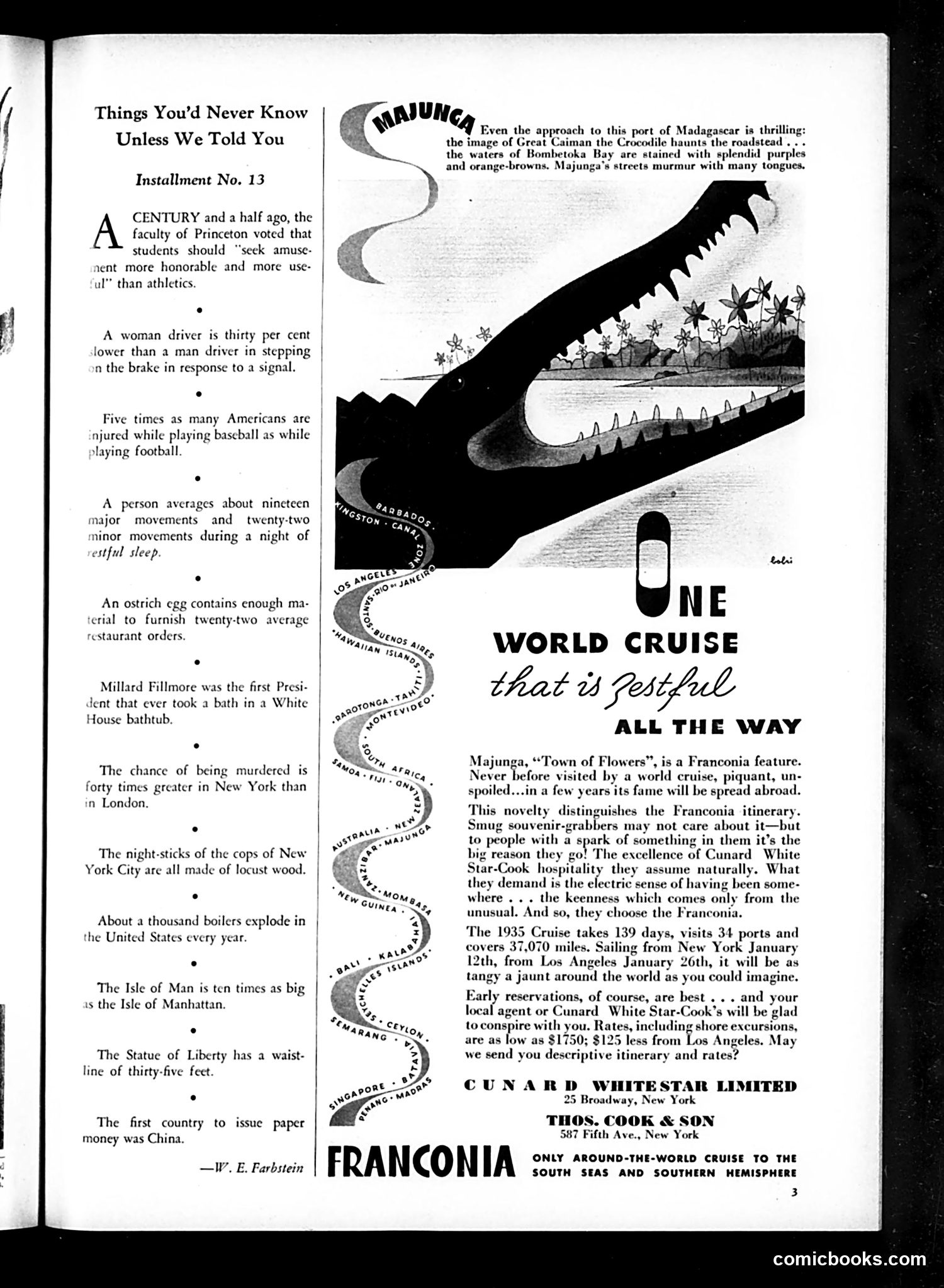
# Page Analysis This page is primarily **advertising**, not satire or political commentary. The left column contains "Things You'd Never Know Unless We Told You"—trivia facts (Princeton voting on athletics, ostrich egg capacity, etc.). These are filler content typical of Life magazine. The right side features a **Franconia cruise line advertisement** with an illustrated **crocodile** as the central graphic element. The image plays on exotic colonial imagery—the crocodile represents adventure in Madagascar and other distant ports. The tagline "ONE WORLD CRUISE that is restful ALL THE WAY" markets luxury travel. The ad emphasizes the Franconia's 1935 voyage visiting 34 ports across 139 days. It's straightforward promotional material targeting affluent readers, not satirical commentary. The crocodile is decorative exoticism, not a caricature or political figure.
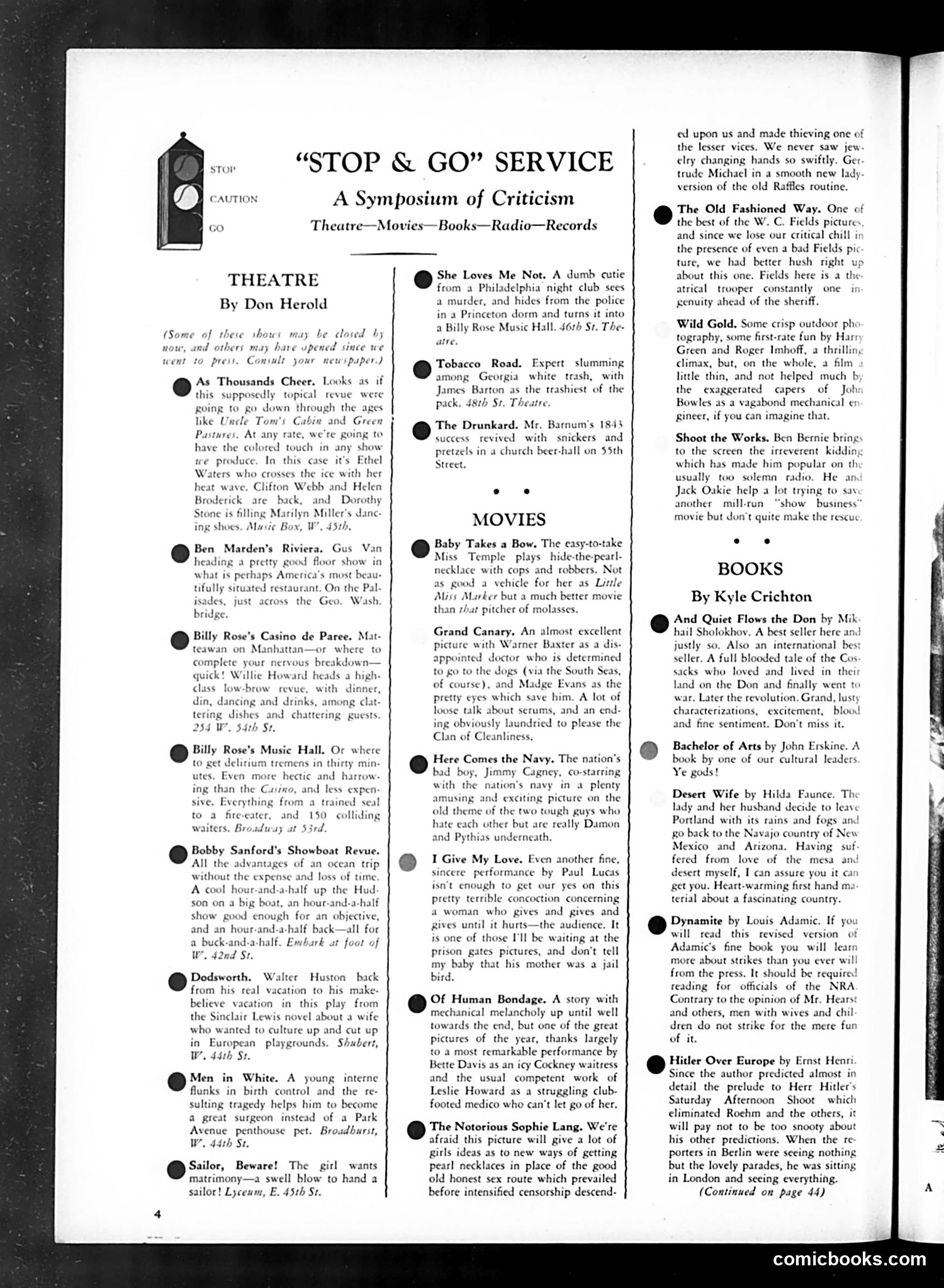
# "Stop & Go" Service: A Symposium of Criticism This is a **review/criticism page** from Life magazine covering theatre, movies, books, radio, and records. The title "Stop & Go Service" refers to the traffic light imagery in the header—Life is using the metaphor of traffic signals to guide readers toward what's worth their time (green/go) versus what to avoid (red/stop). The page features brief critical reviews by Don Herold (theatre) and Kyle Crichton (books), with punchy assessments of contemporary Broadway shows, films, and literature. Rather than political cartoons, this is satirical *critique*—using humor and caustic commentary to evaluate popular entertainment. The format assumes readers want quick, witty dismissals of mediocre productions alongside endorsements of worthwhile ones.
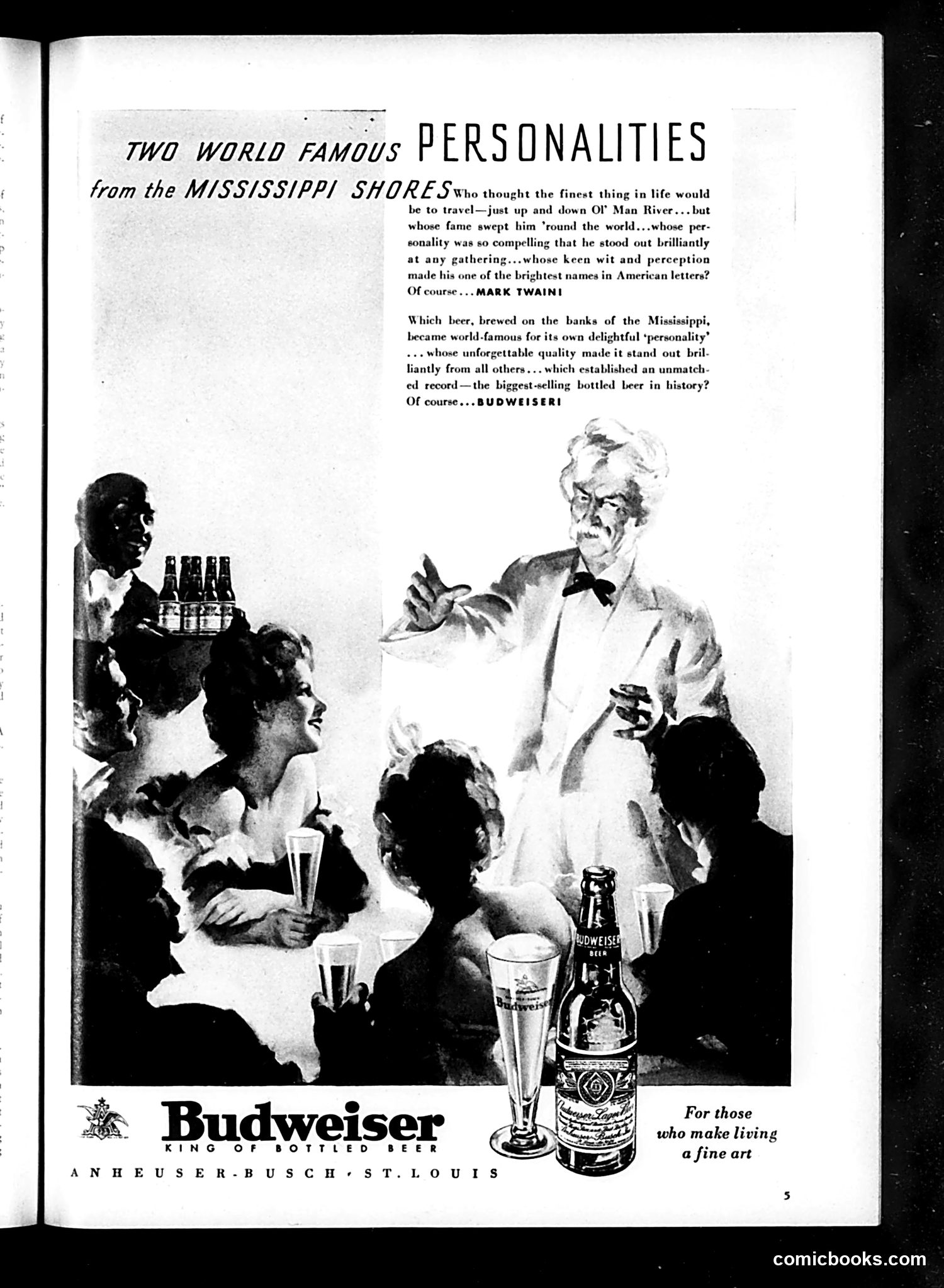
# Advertisement Analysis This is a **Budweiser beer advertisement**, not satire or political commentary. The ad compares two famous Mississippi River personalities: 1. **Mark Twain** — the celebrated American writer known for travel literature and wit, praised for his "personality" and "keen wit and perception." 2. **Budweiser beer** — claimed as the world's biggest-selling bottled beer, praised for its "unforgettable quality" and distinctive "personality." The advertisement uses a clever analogy: just as Twain became world-famous for his personal magnetism and literary brilliance, Budweiser achieved fame through quality and character. The illustration shows a gentleman (likely representing Twain based on the distinctive hair) entertaining well-dressed patrons at what appears to be a social gathering, with Budweiser bottles and glasses visible. The tagline—"For those who make living a fine art"—positions the beer as a luxury product for sophisticated consumers.
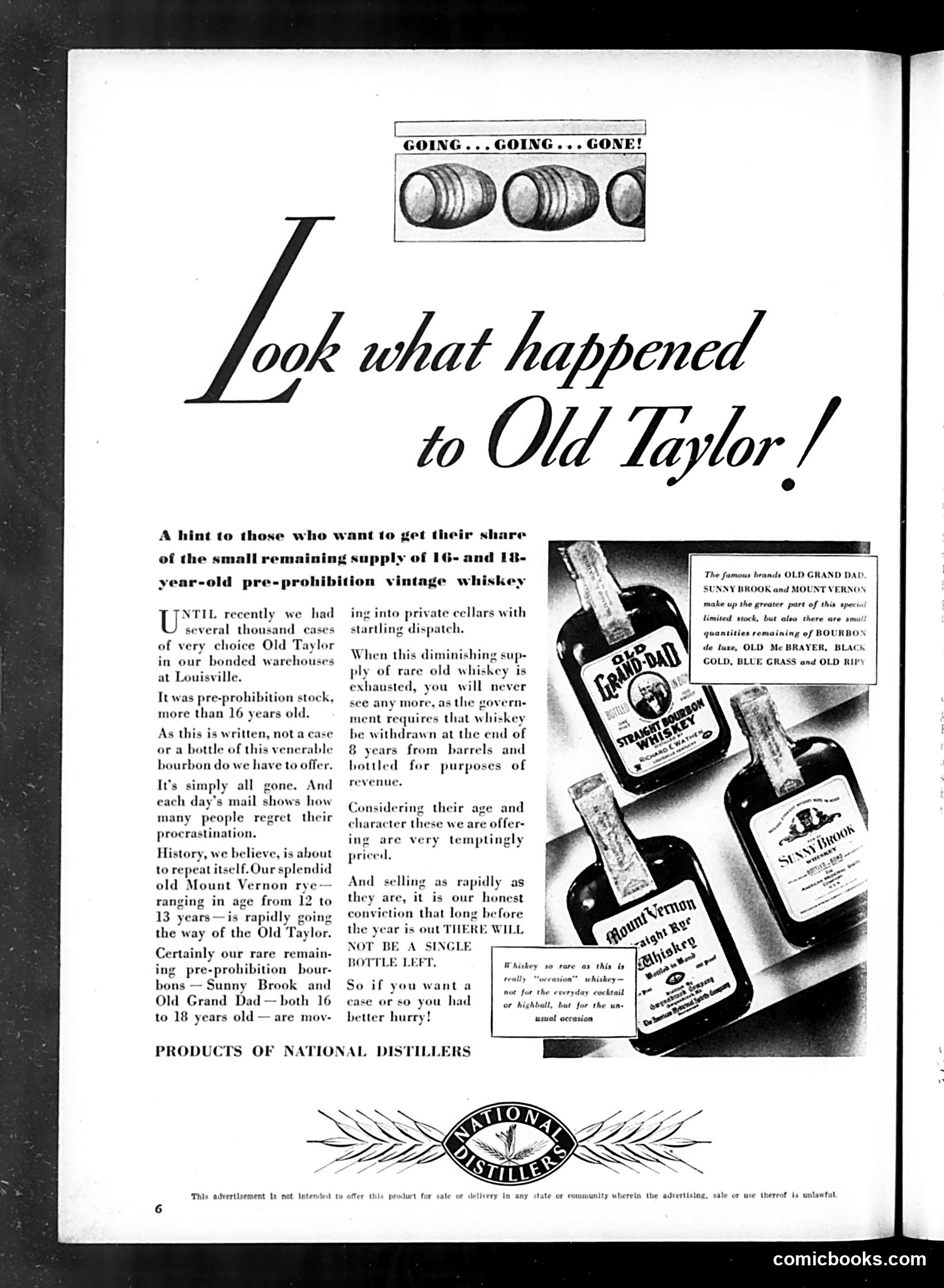
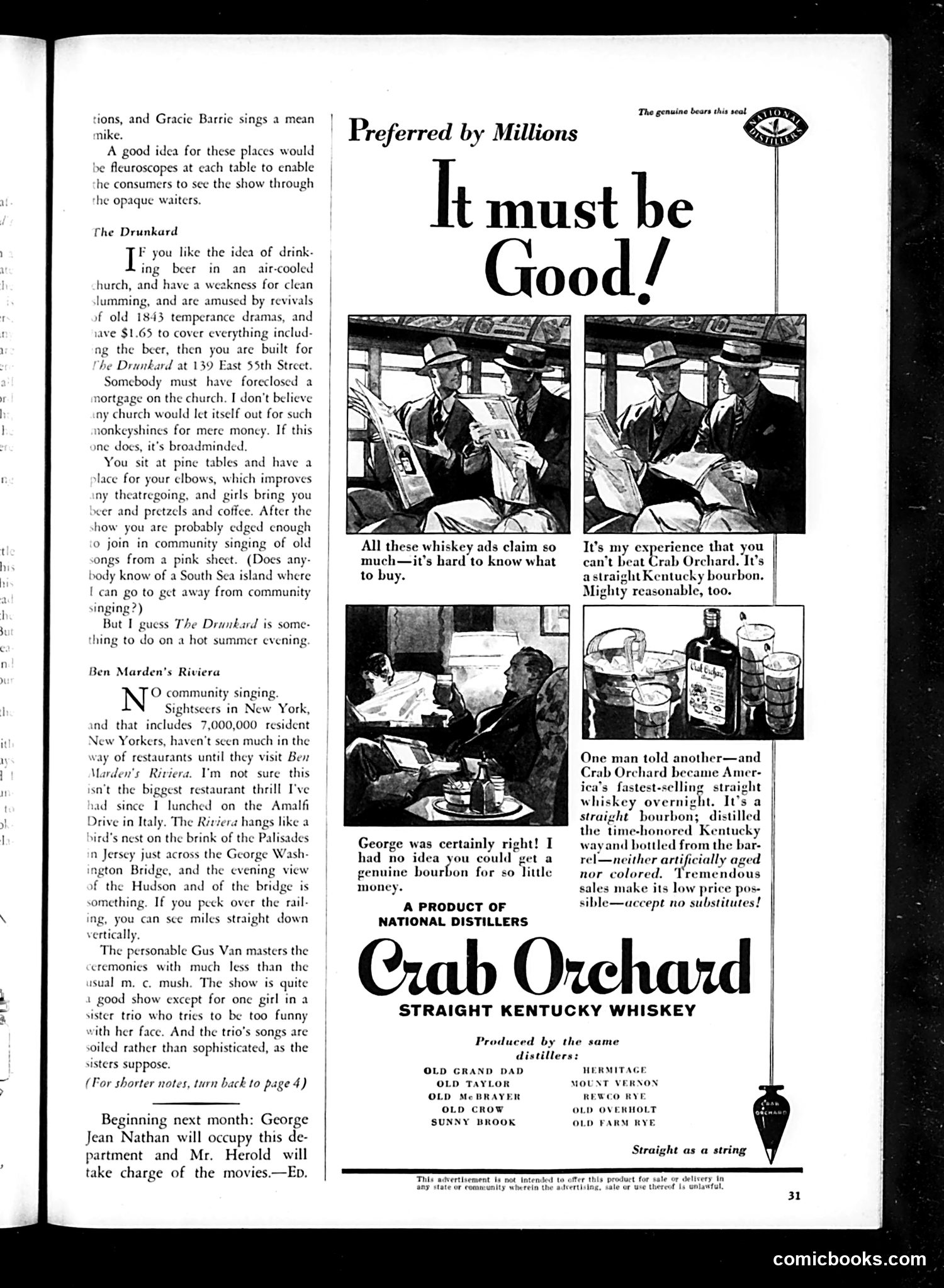
# Analysis This is a **National Distillers advertisement**, not editorial satire. It advertises pre-Prohibition vintage whiskey brands (Old Taylor, Sunny Brook, Old Grand Dad, etc.) to readers during Prohibition. The ad's "joke" is darkly humorous: it acknowledges that supplies of 16-18 year-old pre-Prohibition whiskey are nearly exhausted. The headline "Look what happened to Old Taylor!" refers to the whiskey running out, not a person. The ad warns potential buyers to "hurry" before these rare bottles disappear forever—since the government requires all remaining pre-Prohibition stock be withdrawn after 8 years. This reflects a real market for black-market vintage spirits during Prohibition (1920-1933), when such bottles became scarce luxury items.
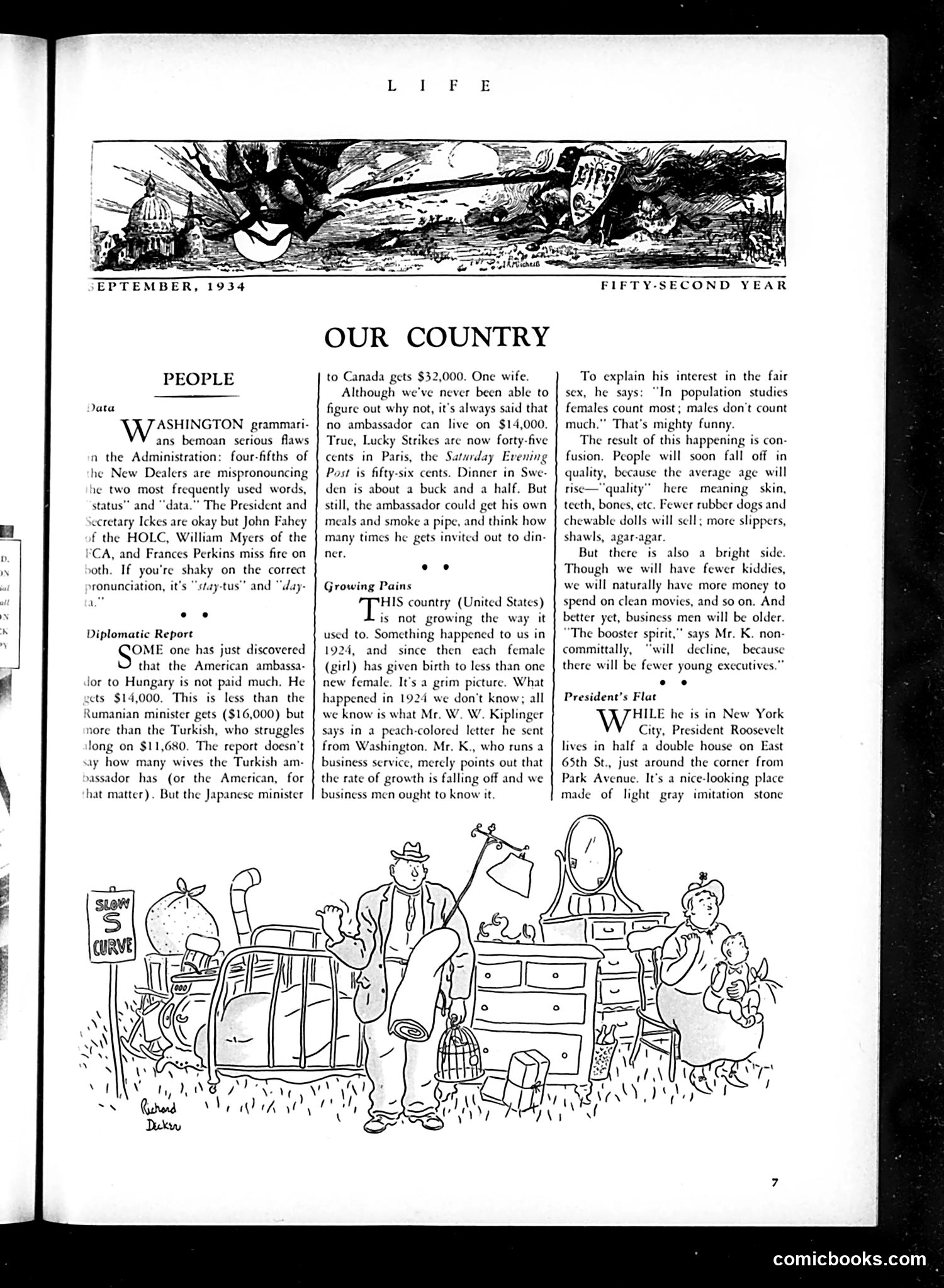
# "Our Country" - Life Magazine, September 1934 This page satirizes American life during the Depression-era New Deal. The cartoon at bottom depicts a family amid economic chaos—a wrecked car, scattered furniture, and domestic disorder—suggesting the instability of ordinary American households. The text sections mock various absurdities: Washington officials mispronouncing words, the absurdly low salary of the American ambassador to Hungary ($14,000), and a demographic crisis where the U.S. birth rate has declined since 1924. One section quotes economist W.W. Kiplinger warning that fewer young people means "business men will be older." The "President's Flat" item notes Roosevelt lives in a modest Manhattan apartment, poking gentle fun at his residence. Overall, the page uses humor to comment on governmental incompetence, economic hardship, and social decline during the early Roosevelt administration.
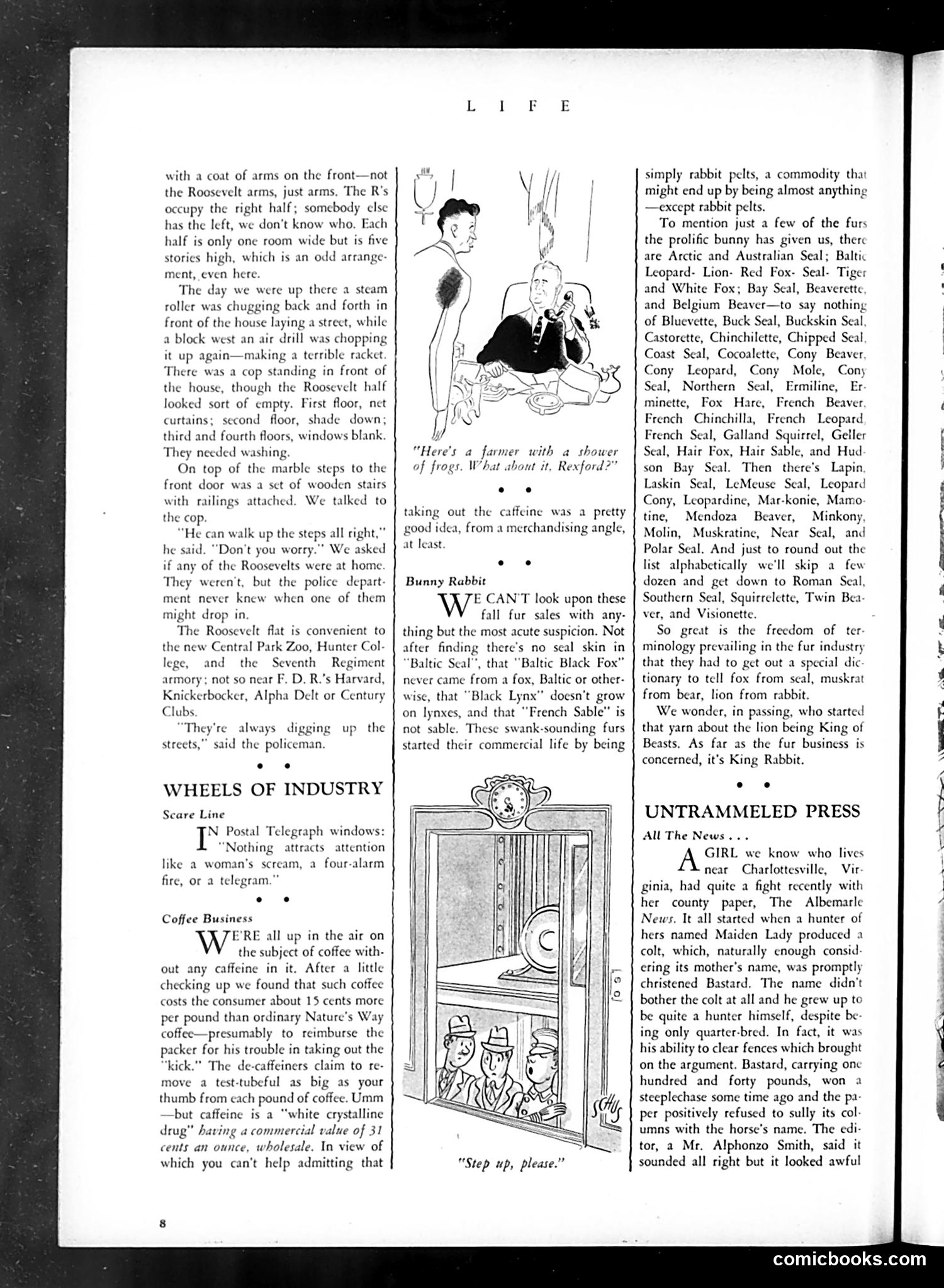
# Content Analysis This page from *Life* magazine contains three sections: **"Wheels of Industry"** discusses the economics of coffee consumption, claiming caffeine costs consumers an extra 15 cents per pound compared to decaffeinated coffee. It's satirizing commercial markup practices and the public's acceptance of inflated prices. **"Bunny Rabbit"** critiques deceptive fur industry labeling, where animals like foxes are marketed under misleading names (e.g., "Baltic Black Fox" or "French Sable"). The satire exposes how sellers misrepresent cheap pelts as luxury furs to unsuspecting consumers. **"Untrammeled Press"** humorously recounts a Virginia newspaper story about a horse named "Bastard" that won a steeplechase. The satire mocks the editor's discomfort publishing the horse's legitimate name. The cartoons accompanying these sections illustrate the humorous situations described, using visual comedy to enhance the written satire.
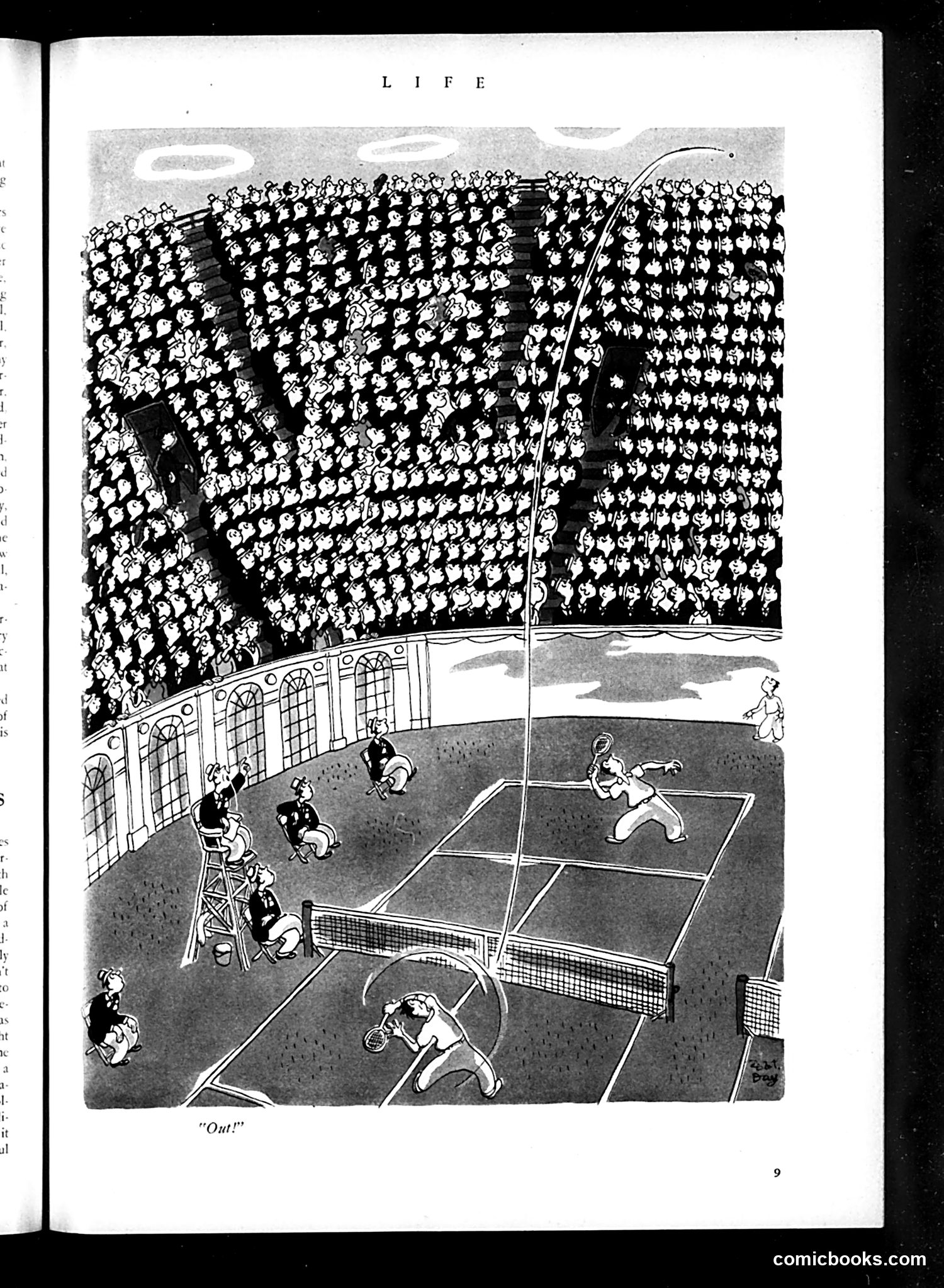
# Cartoon Analysis: "Out!" This cartoon depicts a table tennis match being observed by an enormous crowd in stadium seating. The caption "Out!" suggests a disputed call—the ball appears to have gone outside the boundary line, hence the umpire's decision. The satire likely comments on the disproportionate public interest in minor sporting events. The massive audience dwarfs the actual players and their modest game, suggesting how modern mass media and spectator culture can inflate the significance of trivial competitions. This reflects early-to-mid 20th-century anxieties about crowds, entertainment, and society's misplaced priorities—filling stadiums for table tennis rather than more substantial pursuits. The humor derives from this absurd incongruity between the small-scale sport and the enormous, densely-packed crowd.
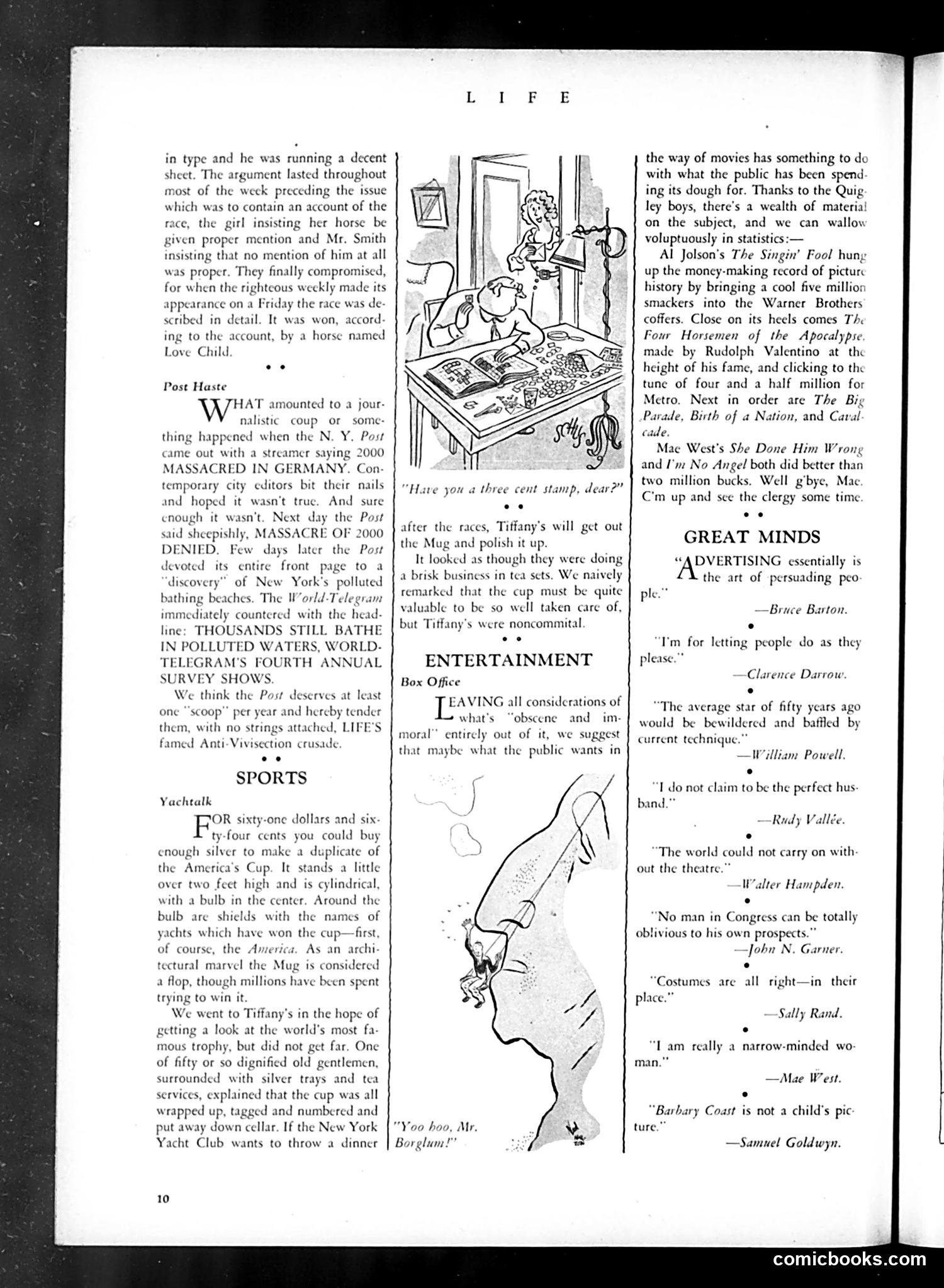
# Analysis of Life Magazine Page This page contains three sections: continued articles about horse racing and journalism ethics, a "Sports" section about yacht racing, and an "Entertainment" section with film industry quotes. The main cartoon shows a figure being ejected from a window with the caption "You boo, Mr. Boynham!" This appears to satirize audience disapproval at a theater or performance venue—likely mocking either a performer or critic receiving harsh public rejection. The "Great Minds" section collects quotes from entertainment industry figures (Bruce Barton, Clarence Darrow, Mae West, etc.) about advertising, theater, and show business—a common Life magazine feature offering witty or contrarian takes on contemporary culture. The overall page reflects 1920s entertainment industry preoccupations: legitimate theater's status, cinema's growing dominance, and public taste in popular culture.