A complete issue · 50 pages · 1934
Life — August 1934
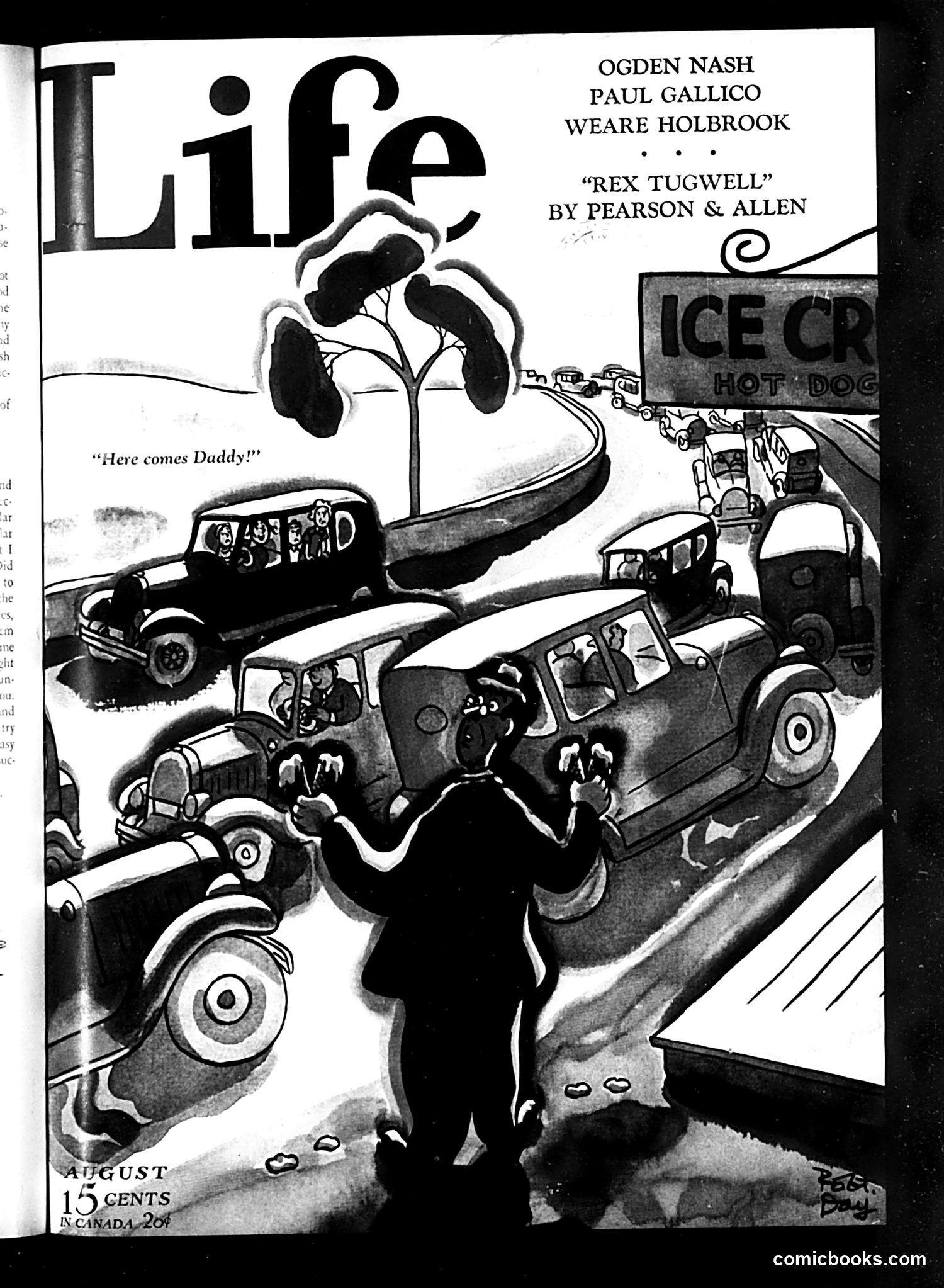
# Analysis of Life Magazine Cover This appears to be a Life magazine cover from August 15 (price 15 cents in Canada, 20 cents U.S.). The main illustration depicts a traffic jam scene with multiple automobiles and a figure gesticulating in the center, captioned "Here comes Daddy!" The cartoon satirizes automobile congestion and the challenges of 1920s-30s motor traffic. The exaggerated central figure represents frustration with gridlocked vehicles—a social complaint about rapidly increasing car ownership overwhelming roads. The page also advertises content featuring Ogden Nash, Paul Gallico, and Weare Holbrook, plus a play called "Rex Tugwell" by Pearson & Allen. A partial advertisement for "Ice Cream" or similar product appears on the right edge. The overall theme suggests Life magazine's satirical commentary on modern American automotive culture and its chaotic side effects.
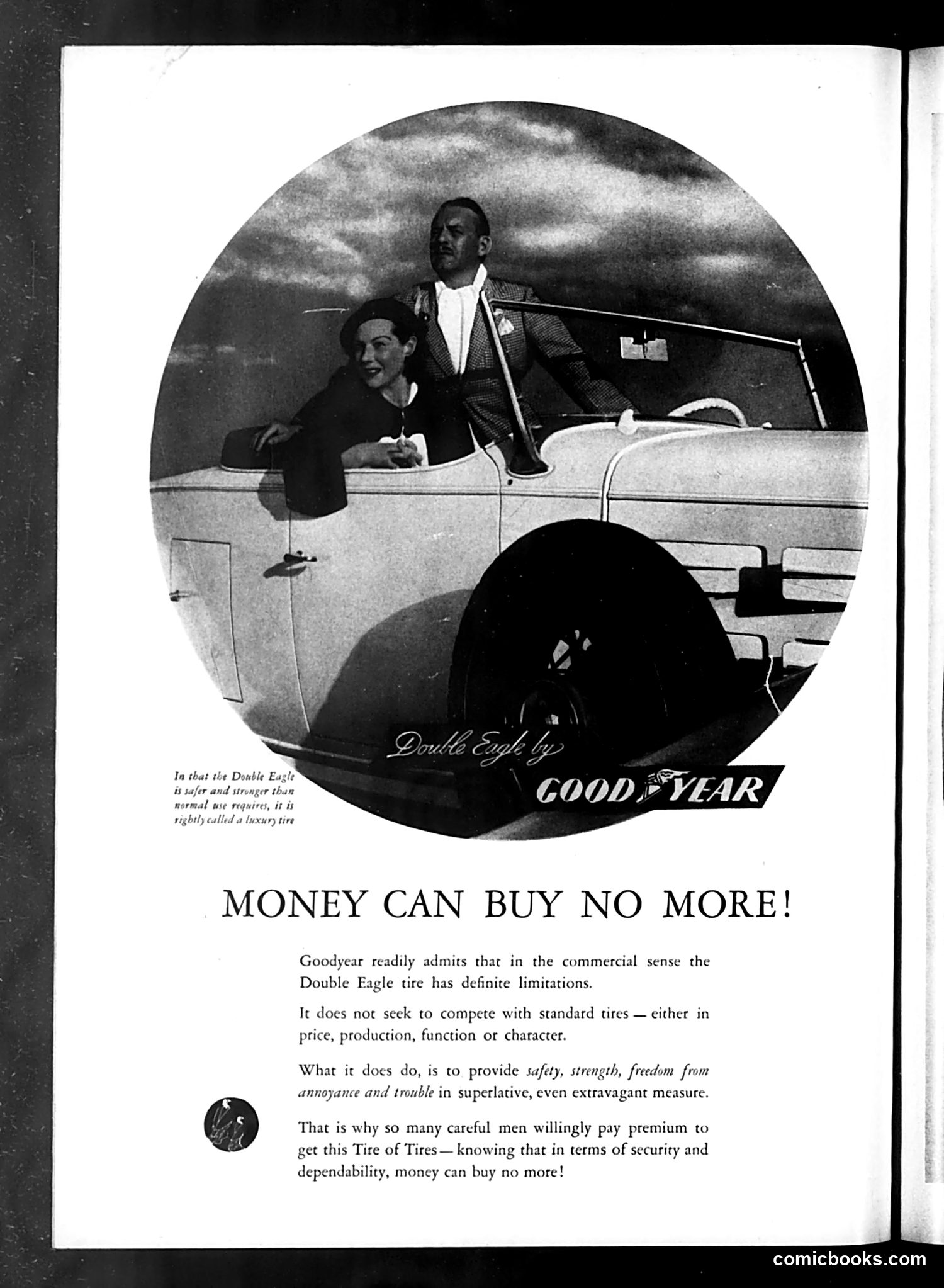
# Analysis This is a **Goodyear tire advertisement**, not political satire. The page depicts two well-dressed people in a luxury convertible automobile, showcasing the "Double Eagle" tire. The advertisement's headline—"MONEY CAN BUY NO MORE!"—claims that premium pricing for this tire is justified because it offers superior safety and reliability that cheaper alternatives cannot match. The copy explicitly states Goodyear doesn't compete on price or production, but rather on "safety, strength, freedom from annoyance and trouble." This represents **luxury marketing of the early-to-mid 20th century**, positioning the product as aspirational and worth premium cost for "careful men" concerned with "security and dependability." The elegant imagery and confident copy reflect Depression-era or post-Depression advertising that appeals to affluent consumers.
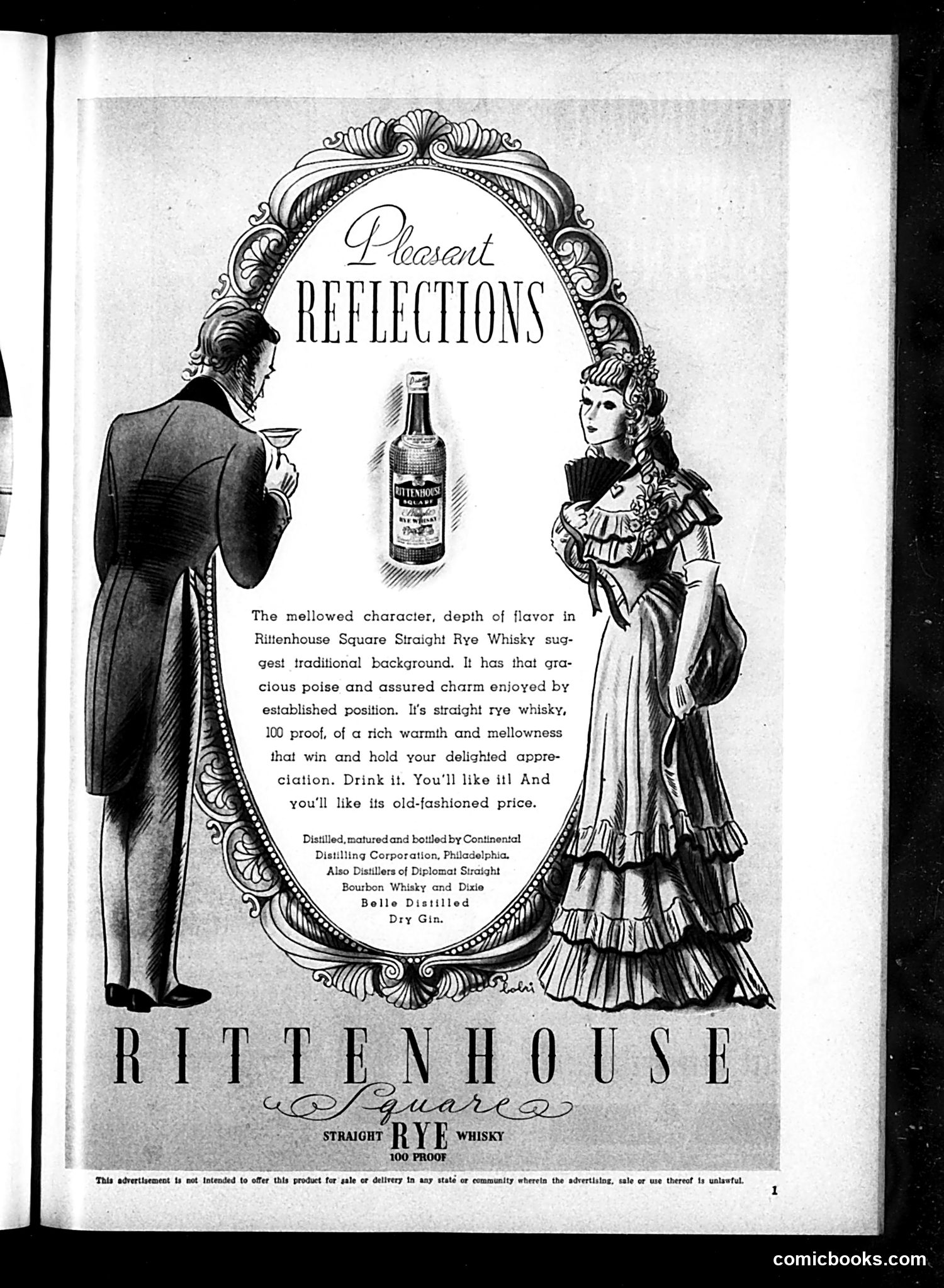
# Analysis This is a **advertisement**, not satire or political cartoon. It promotes Rittenhouse Square Straight Rye Whisky (100 proof) made by Continental Distilling Corporation in Philadelphia. The ad uses period imagery—a gentleman and elegantly-dressed woman in 18th-century costume—to suggest aristocratic refinement and "traditional background." The ornate mirror frame reinforces associations with established wealth and "gracious poise." The text emphasizes the whisky's quality, smoothness, and "old-fashioned price," appealing to consumers seeking premium liquor with historical prestige. A disclaimer at bottom indicates this predates modern advertising regulations—notably stating the product is not offered "in any state or community wherein the advertising, sale or use thereof is unlawful," reflecting Prohibition-era legal complications around alcohol marketing.
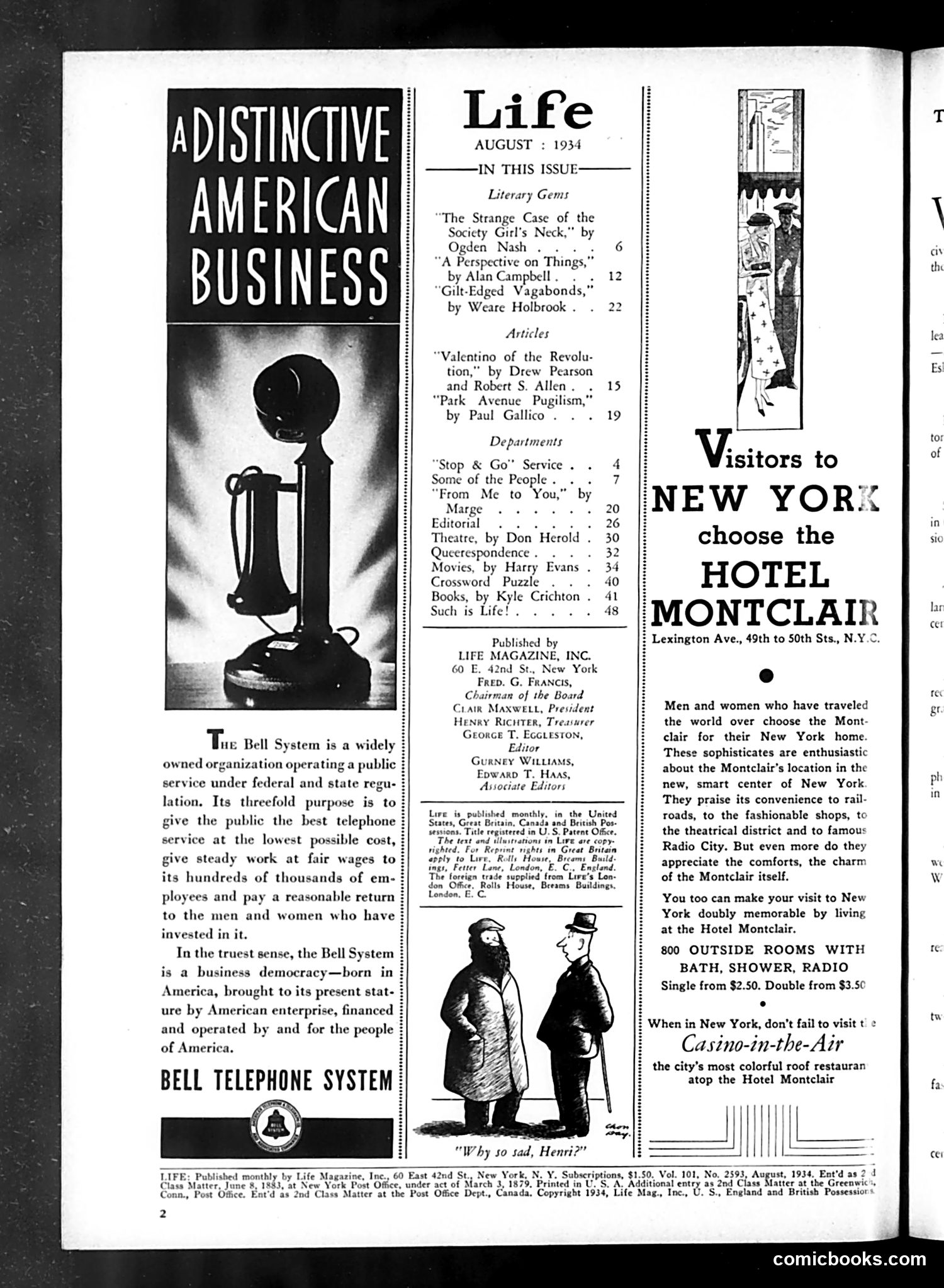
# Life Magazine, August 1934: "A Distinctive American Business" This page features an advertisement for the Bell Telephone System alongside the magazine's table of contents. The left side displays a stark black-and-white illustration of an old-fashioned telephone handset on a stand, labeled "A Distinctive American Business." The accompanying text presents the Bell System as a "business democracy" — a widely-owned, publicly-regulated enterprise serving the American people efficiently. This represents 1930s corporate messaging emphasizing public service and broad ownership during the Depression era. The small cartoon at the bottom (captioned "Why is sad, Henri?") appears to be a separate humorous illustration unrelated to the telephone advertisement, typical of the magazine's mixed content format. The page is primarily commercial in nature, showcasing how major corporations advertised to Life's educated, middle-class readership.
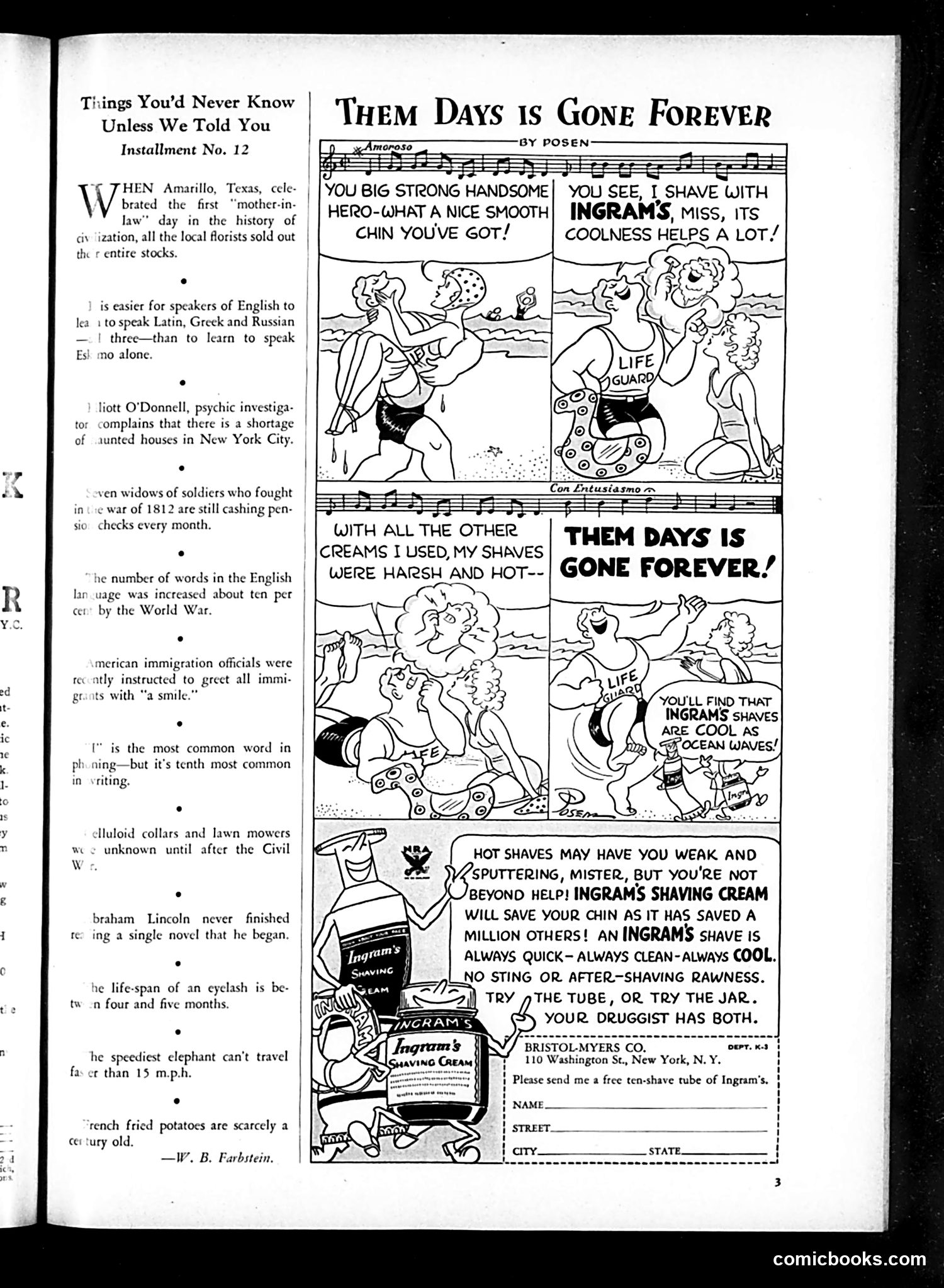
# "Them Days Is Gone Forever" - Ingram's Shaving Cream Advertisement This is a **vintage advertisement disguised as a comic strip** by Posen for Ingram's Shaving Cream. The "cartoon" features beachgoers complimenting a man's smooth chin, attributing his "coolness" to Ingram's shaving cream rather than his own qualities. The humor targets masculine vanity: other men praise his appearance while women surround him—the implication being that good shaving cream grants social success. The phrase "Them Days Is Gone Forever" suggests old-fashioned, harsh shaving methods are obsolete. The bottom panel shifts to direct product messaging, claiming Ingram's eliminates irritation better than competitors. It's fundamentally a sales pitch wrapped in comedic flirtation and male fantasy, typical of mid-20th-century advertising strategies.
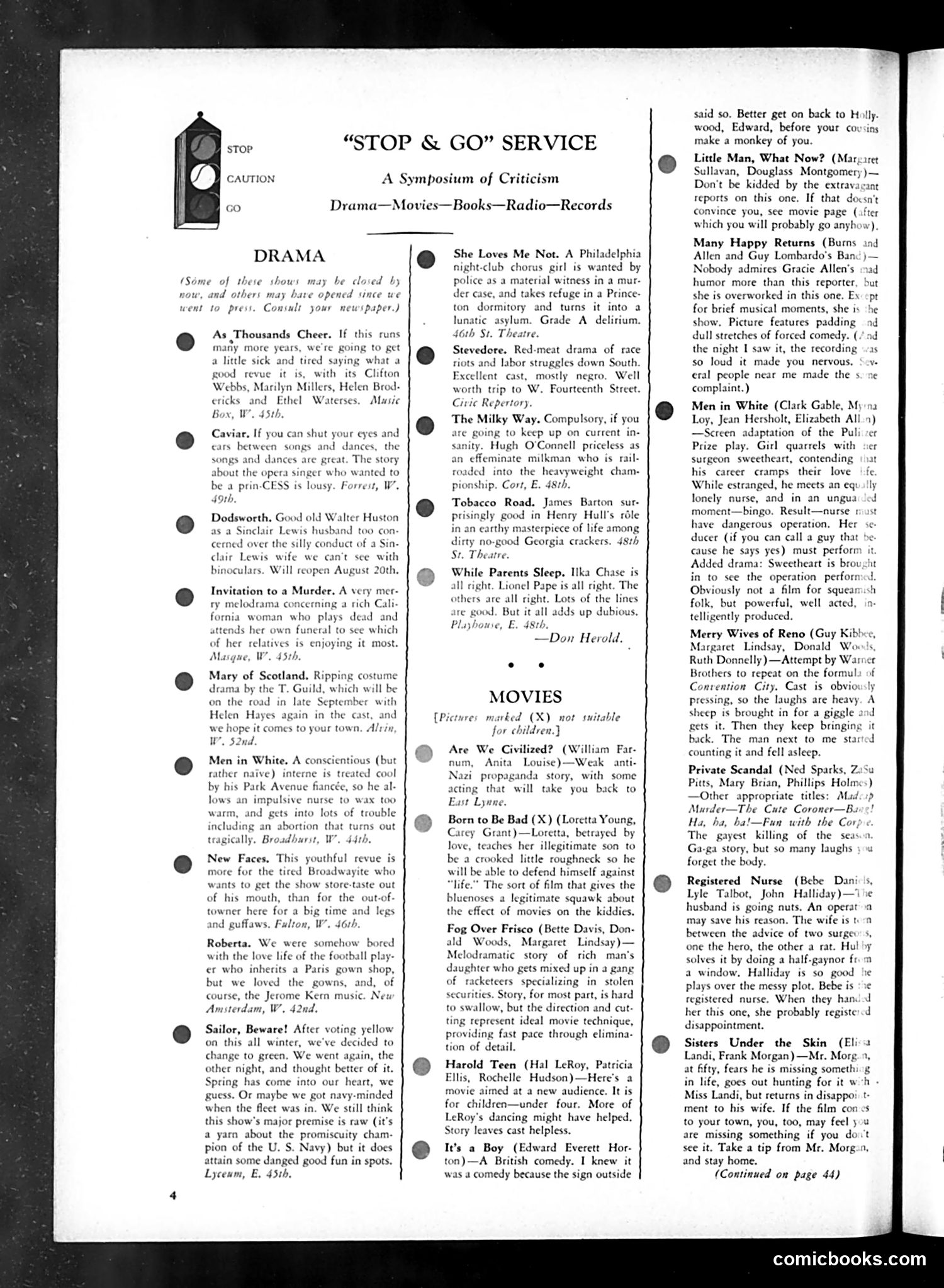
# "Stop & Go" Service: A Symposium of Criticism This page presents entertainment reviews organized by medium (Drama, Movies, Books, Radio, Records). The traffic light illustration at top left is a visual pun—the "Stop & Go" title references both the signal and the reviewer's critical verdicts, suggesting they'll tell readers what entertainment to stop watching and what to go see. The reviews themselves aren't satirical commentary but rather straightforward critical assessments of 1940s films and theatrical productions. The satire lies in the page's conceptual framing: using a traffic signal as metaphor for critical gatekeeping—Life magazine as arbiter of taste, directing readers' entertainment consumption like traffic flow.
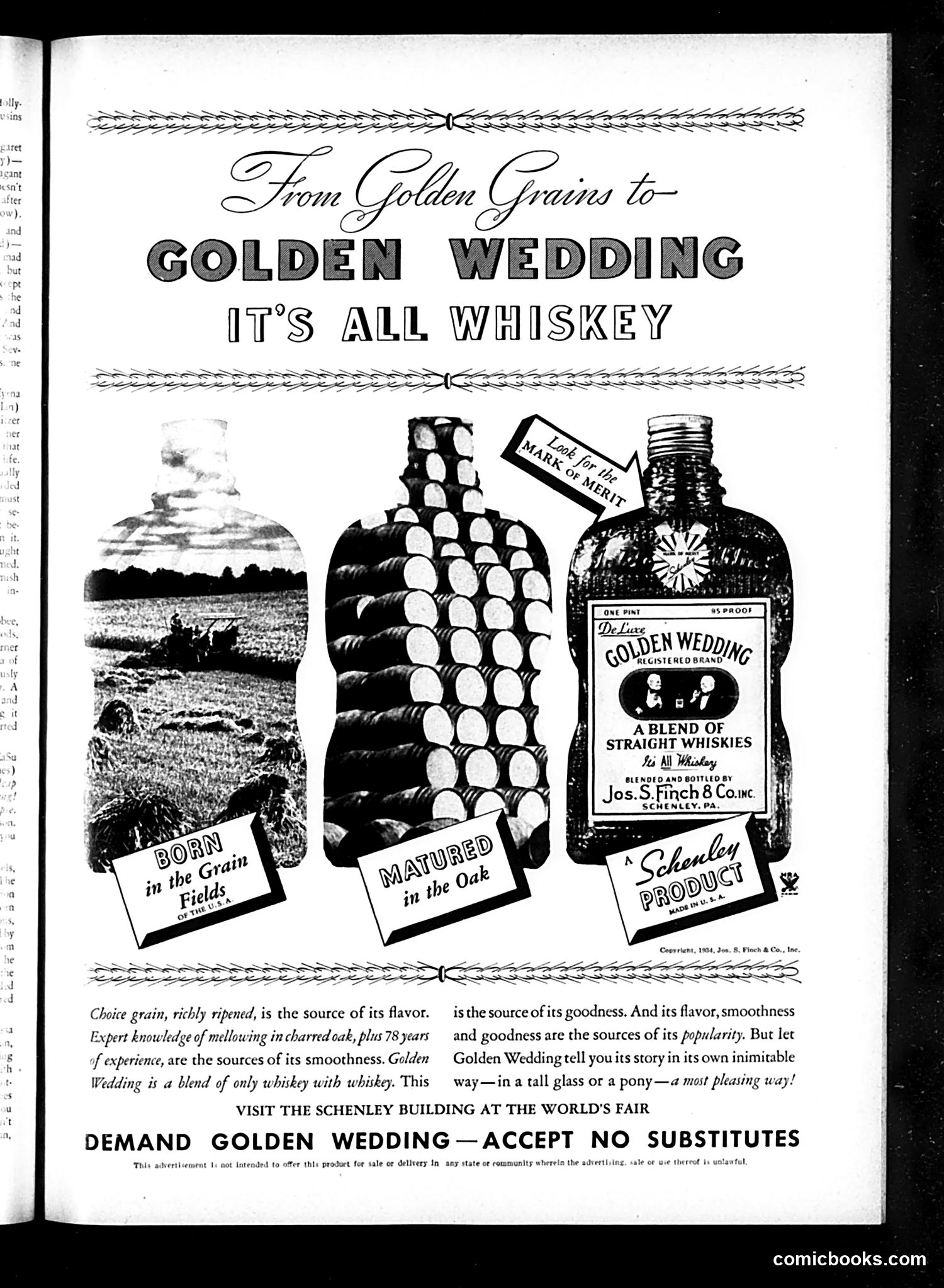
# Analysis This is a **whiskey advertisement**, not political satire. It's a Golden Wedding brand ad from Jos. S. Finch & Co. in Schenley, PA, promoting their blended whiskey product. The ad uses a visual metaphor: three bottle-shaped panels showing whiskey's "journey" from grain fields (left) through oak barrel maturation (center) to the finished product (right). The tagline "From Golden Grains to Golden Wedding—It's All Whiskey" emphasizes the natural grain-to-bottle process. The ad references "The World's Fair" (likely 1933 Chicago), inviting readers to visit Schenley's building there. The bottom line demands consumers "Accept No Substitutes," a common competitive advertising tactic of the era. This represents Depression-era marketing emphasizing quality and authenticity.
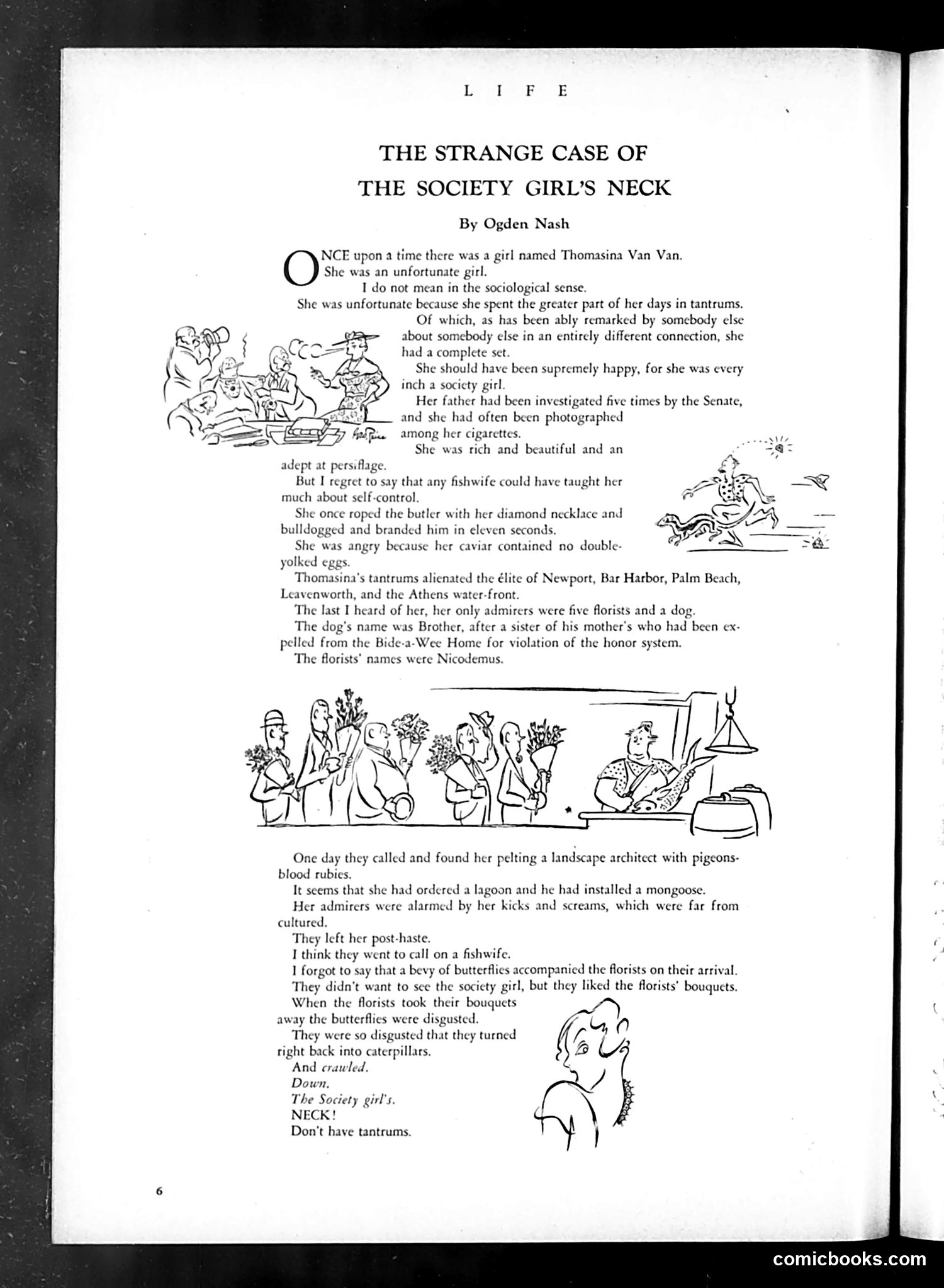
# "The Strange Case of the Society Girl's Neck" by Ogden Nash This satirical piece mocks wealthy socialites' behavior and vanity. The story follows Thomasina Van Van, a rich "society girl" from elite East Coast locations (Newport, Bar Harbor, Palm Beach). The satire hinges on her lack of self-control—she abuses her butler, injures him with her diamond necklace, and throws tantrums over minor disappointments. The humor climaxes when florists and a dog are her only "admirers," and she melts down upon encountering a landscape architect with pigeons and a mongoose. The insects' transformation into caterpillars triggers her final breakdown. Nash uses exaggerated physical comedy and the punchline about her "neck" (lacking self-control/manners) to ridicule upper-class entitlement and emotional immaturity, suggesting even wealth cannot excuse boorish behavior.
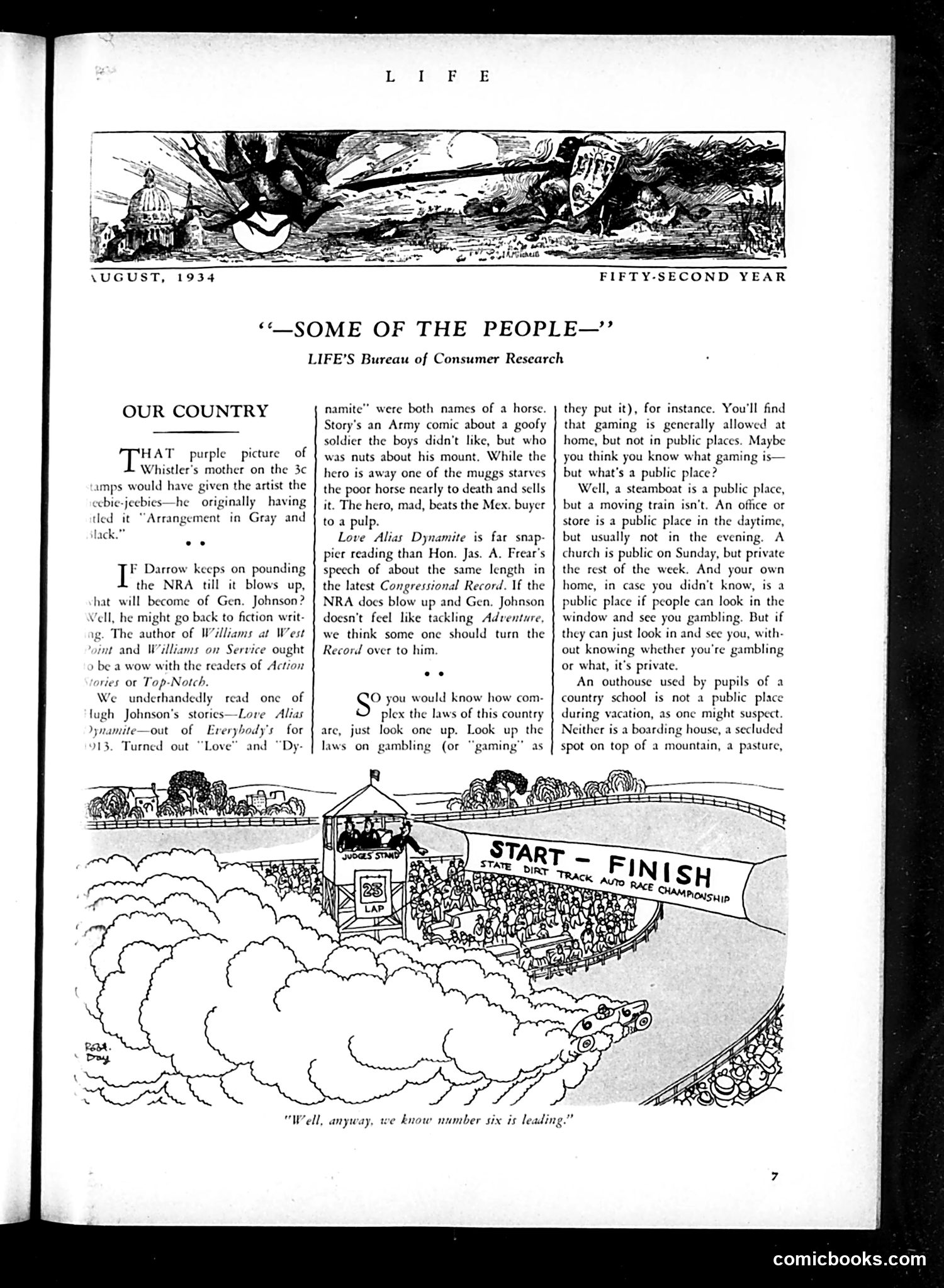
# Political Cartoon Analysis: "Some of the People" This page from *Life* magazine (August 1934) satirizes American gambling laws and their inconsistent enforcement. The main cartoon illustrates a dirt-track auto racing event labeled "START-FINISH," depicting spectators at what appears to be a public racing venue where betting occurs. The accompanying text discusses the ambiguity of gambling's legal status: it's "generally allowed at home, but not in public places." The satire targets the hypocrisy that racing events—ostensibly public—operate in a legal gray area where gambling happens openly despite prohibition. The cartoon's caption, "Well, anyway, we know number six is leading," humorously acknowledges the gambling context while authorities tolerate or ignore it. This reflects 1930s Prohibition-era debates about regulation versus reality.
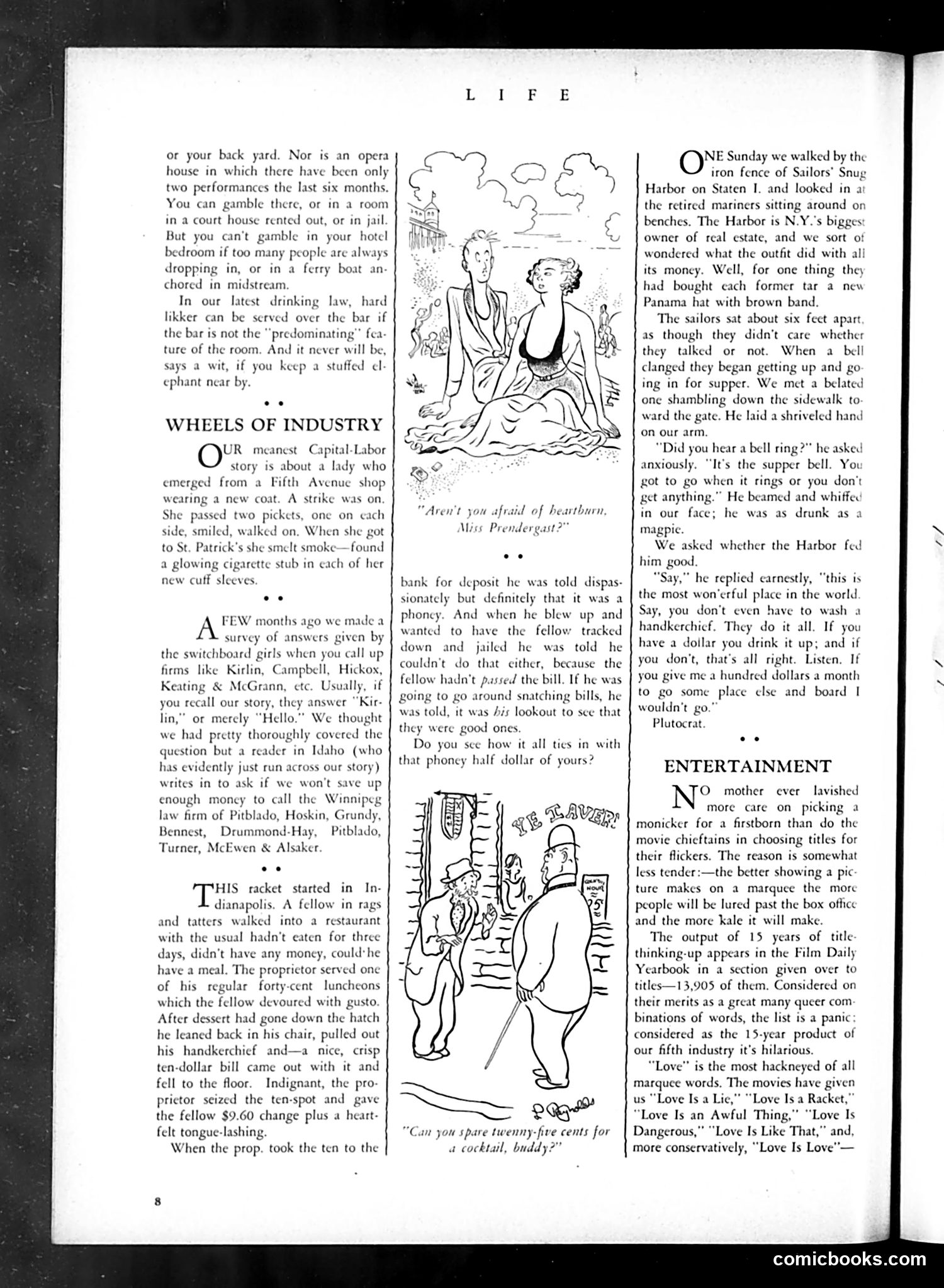
# Analysis of Life Magazine Page This page contains three satirical pieces about American social customs and entertainment. **"Wheels of Industry"** mocks labor strikes through the story of a Fifth Avenue shop girl who picketed wearing a new coat—appearing fashionable rather than genuinely protesting. **"A Few Months Ago"** satirizes survey respondents claiming they'd refuse to patronize establishments with poor service, yet when actually facing minor inconveniences (like an unpaid bill or rude proprietor), they accept them passively rather than following through on their stated principles. The joke targets the gap between what Americans claim they believe and how they actually behave. **"Entertainment"** criticizes movie studios' desperation in titling films, noting they've produced 13,905 titles in 15 years. The cartoons mock both the absurdity of film titles and the movie industry's cynical approach to marketing. The overall theme: American hypocrisy and commercialism.
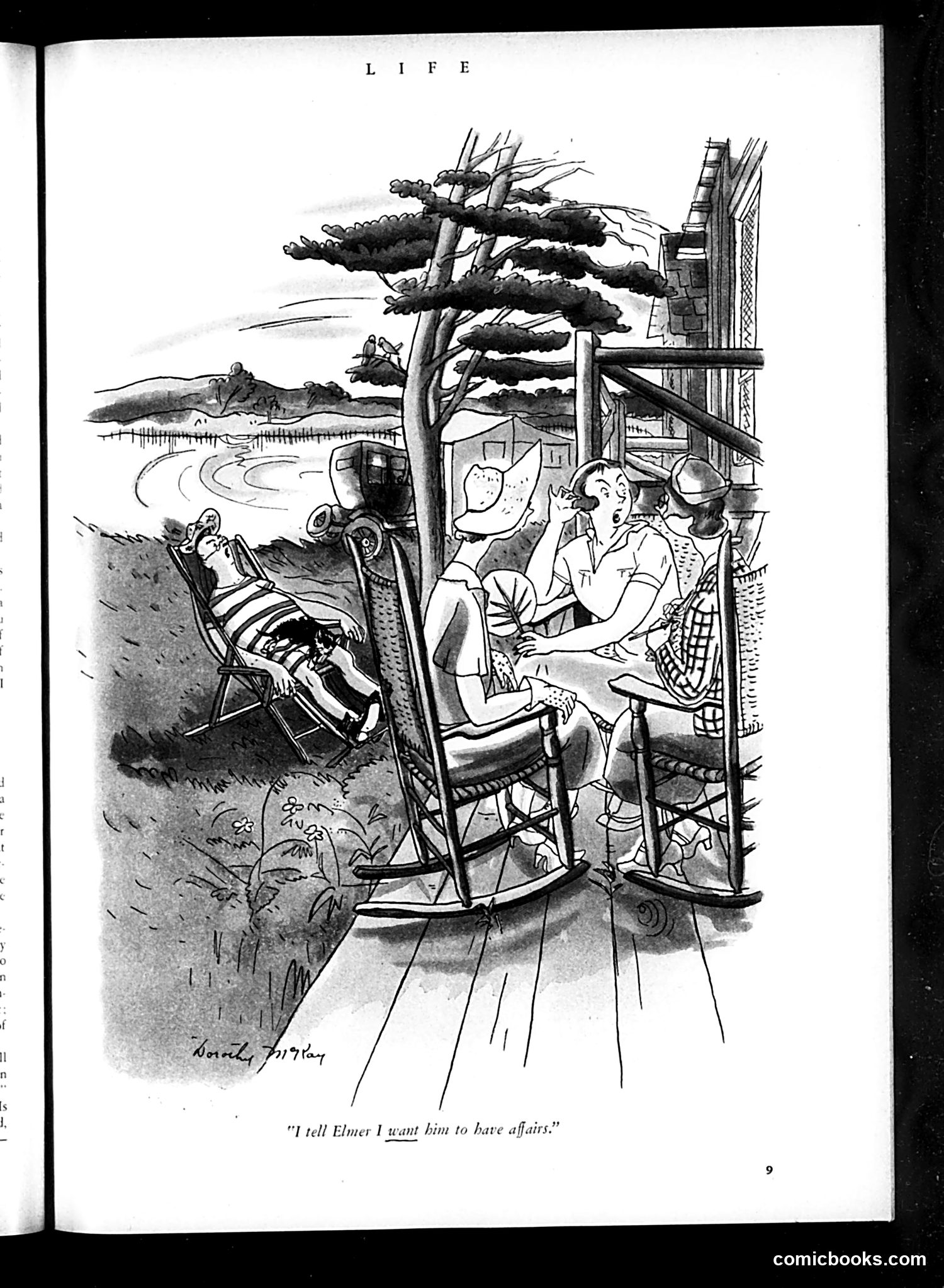
# Analysis This is a single-panel cartoon captioned "I tell Elmer I *want* him to have affairs." The scene depicts a woman on a porch speaking to what appears to be a group of people (likely friends or neighbors), while a man labeled "Elmer" sits alone in a chair to the left. The cartoon satirizes marital dynamics and mid-20th century relationship attitudes. The joke's point appears to be ironic: the woman publicly claims she wants her husband to have affairs, likely as a way of appearing modern, liberated, or sophisticated to her peers. However, the visual isolation of "Elmer"—sitting apart and seemingly oblivious or uncomfortable—suggests the husband himself doesn't benefit from this arrangement, making the woman's stated position seem performative or self-serving rather than genuinely progressive. This reflects period anxieties about changing gender roles and relationship expectations.
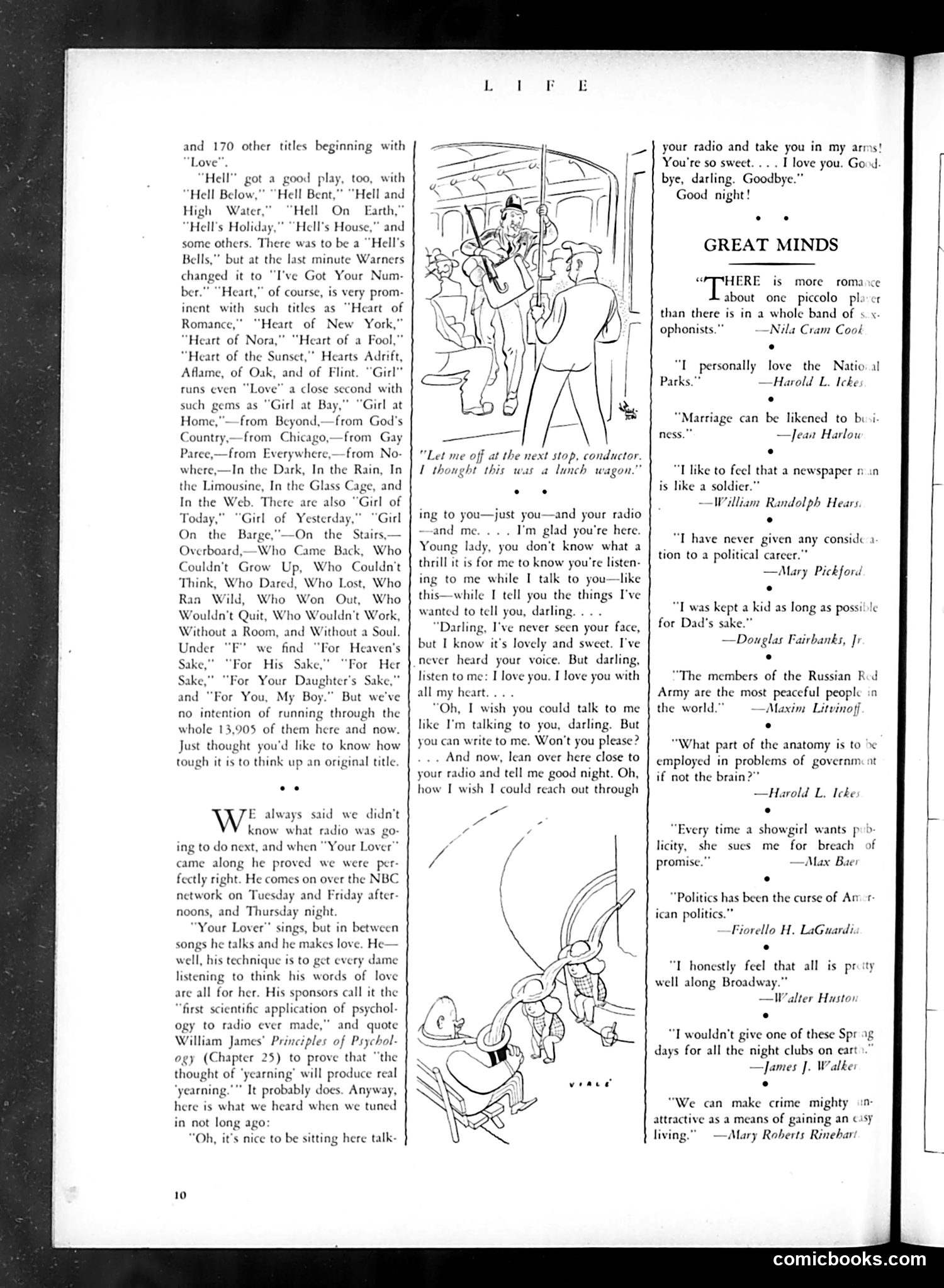
# Analysis of Life Magazine Page 10 This page contains two illustrations with accompanying text about radio entertainment. The upper cartoon shows people in a car listening to a radio broadcast. The caption reads: "Let me off at the next stop, conductor. I thought this was a lunch wagon." The lower illustration depicts someone operating radio equipment, with dialogue about a radio romance—a person listening to "Your Lover" broadcasts and developing an emotional connection to the singer, saying "I love you" back through the radio. The satire targets the early radio era's power to create parasocial relationships—listeners becoming emotionally attached to radio personalities they've never met. The humor lies in the absurdity of one-way intimacy: people treating radio broadcasts as genuine personal connection. This reflects 1920s-30s concerns about mass media's psychological effects on audiences.