A complete issue · 50 pages · 1934
Life — July 1934
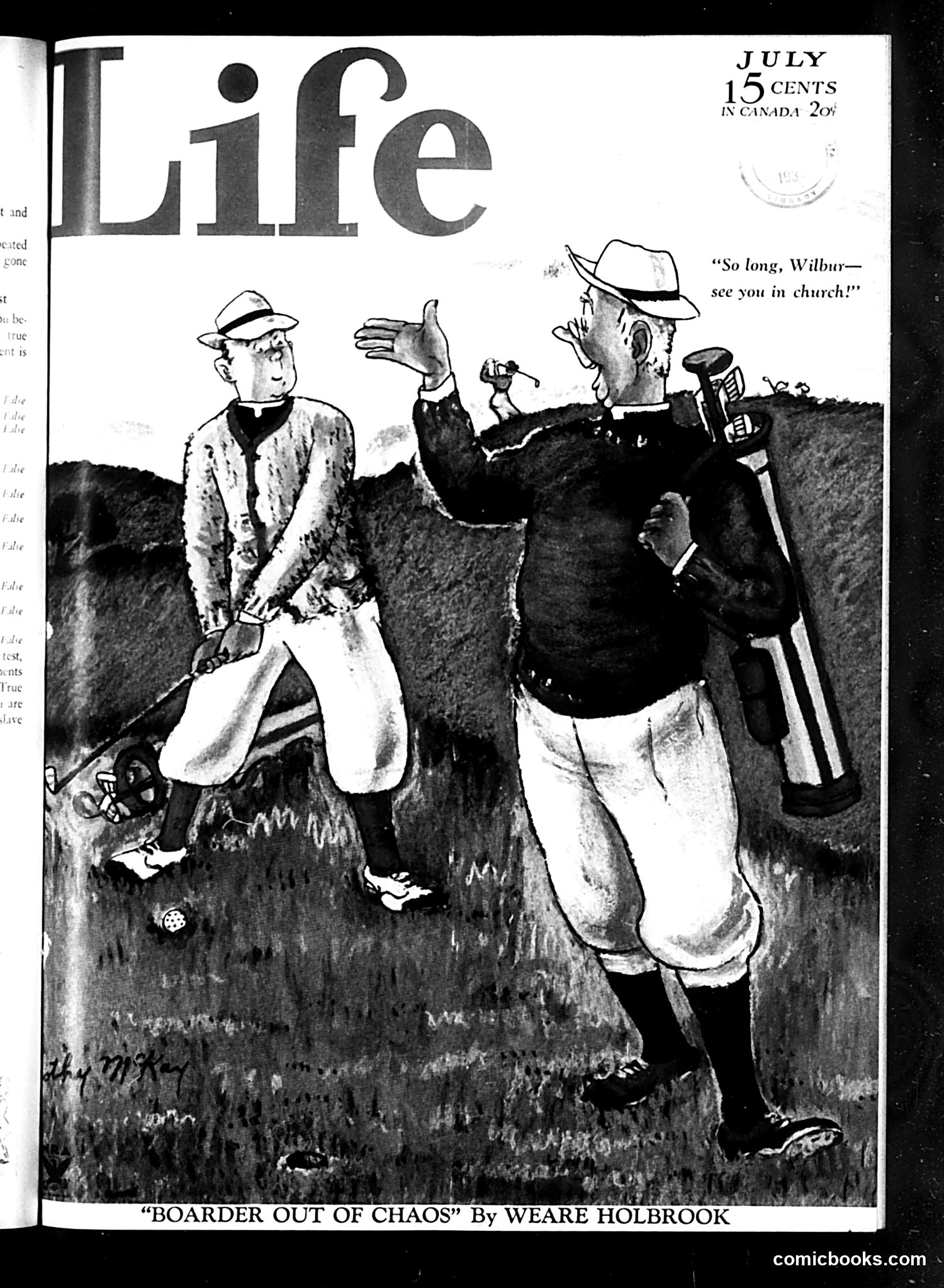
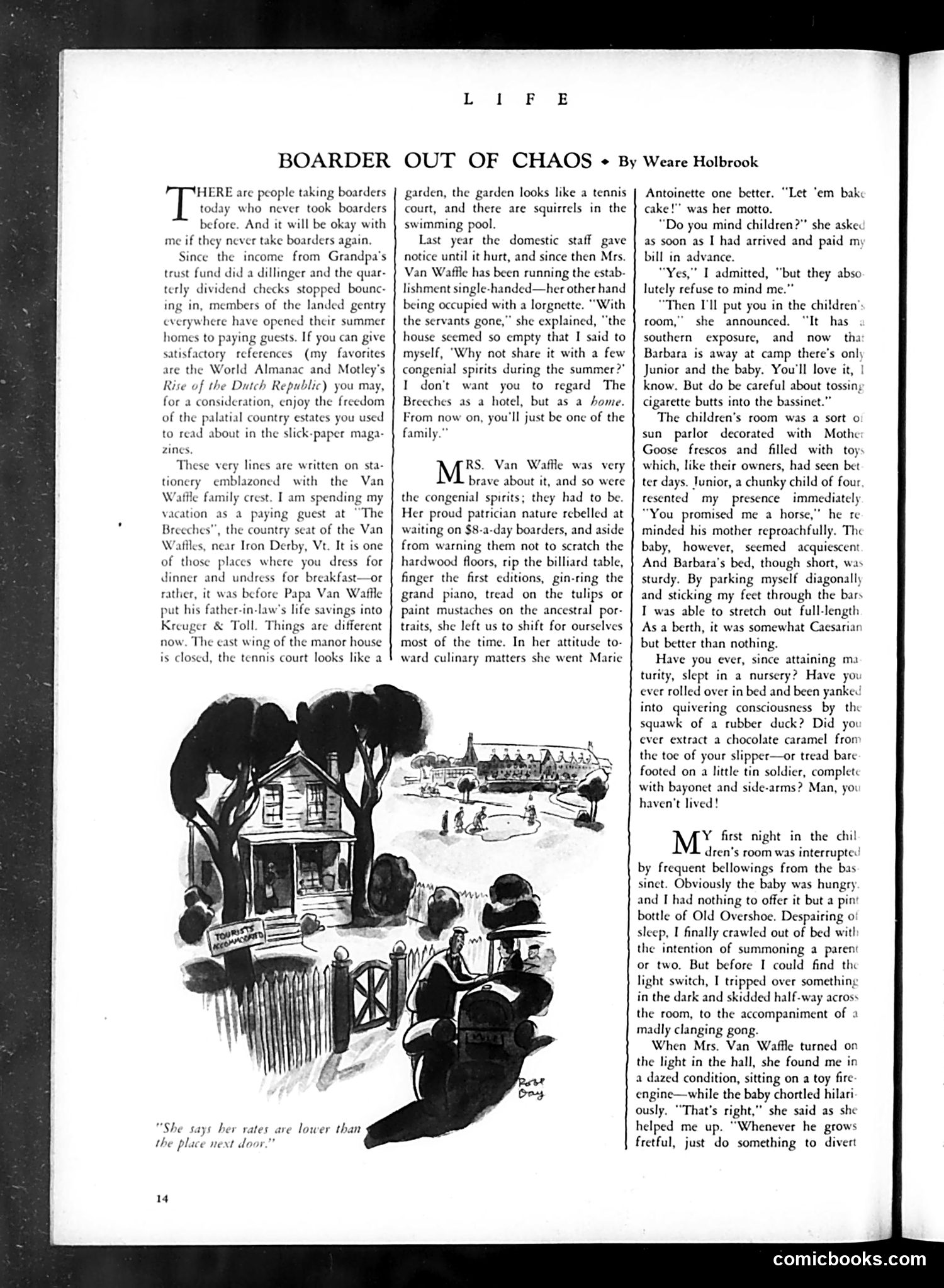
# "Boarder Out of Chaos" by Weare Holbrook This Life magazine cover (July issue, 15 cents) depicts a golfing scene with the caption "So long, Wilbur—see you in church!" The cartoon shows two golfers on what appears to be a course with rough terrain. One figure is saying goodbye to "Wilbur" while holding golf clubs. The title "Boarder Out of Chaos" is unclear from the image alone—it may reference a specific contemporary event or person named Wilbur that modern readers would need additional context to identify. The humor appears to rest on the casual social interaction between the golfers and their promise to meet at church, suggesting ironic commentary about weekend leisure activities conflicting with religious observance. The specific satirical target remains uncertain without additional historical documentation.
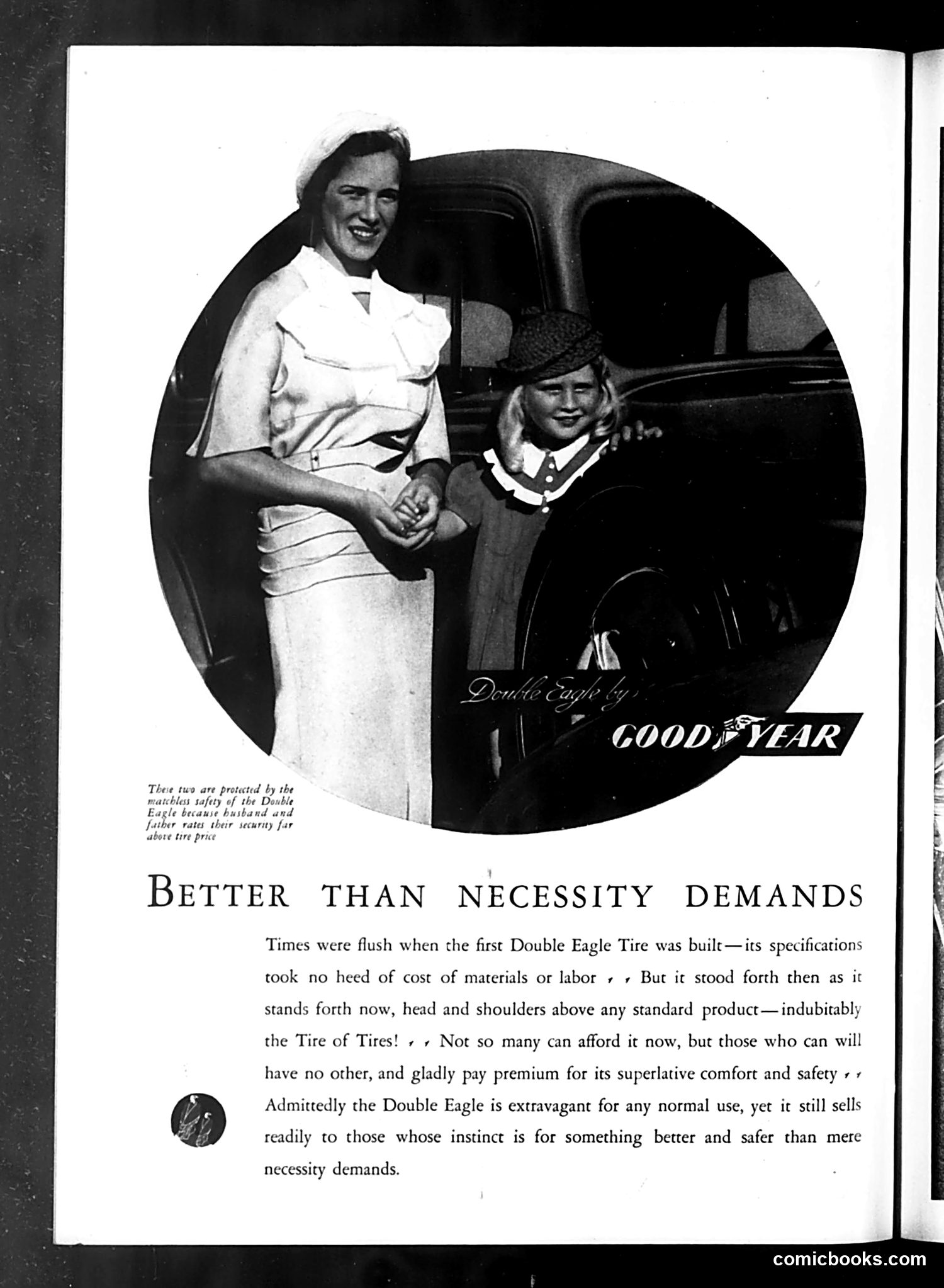
# Analysis This is a **Goodyear tire advertisement**, not political satire or cartooning. The image shows a woman and child posed beside a car, with text praising the "Double Eagle" tire brand. The ad's headline—"Better than Necessity Demands"—frames premium tire purchase as a luxury choice for safety-conscious, affluent consumers. The accompanying text positions the Double Eagle as an extravagant but superior product: expensive, but justified for those prioritizing "superlative comfort and safety" over mere functionality. This reflects 1920s-30s consumer marketing that appealed to middle/upper-class aspirations through emphasis on quality, safety, and status. The family imagery was typical advertising strategy of the era, suggesting that buying premium tires demonstrated responsible parental concern.
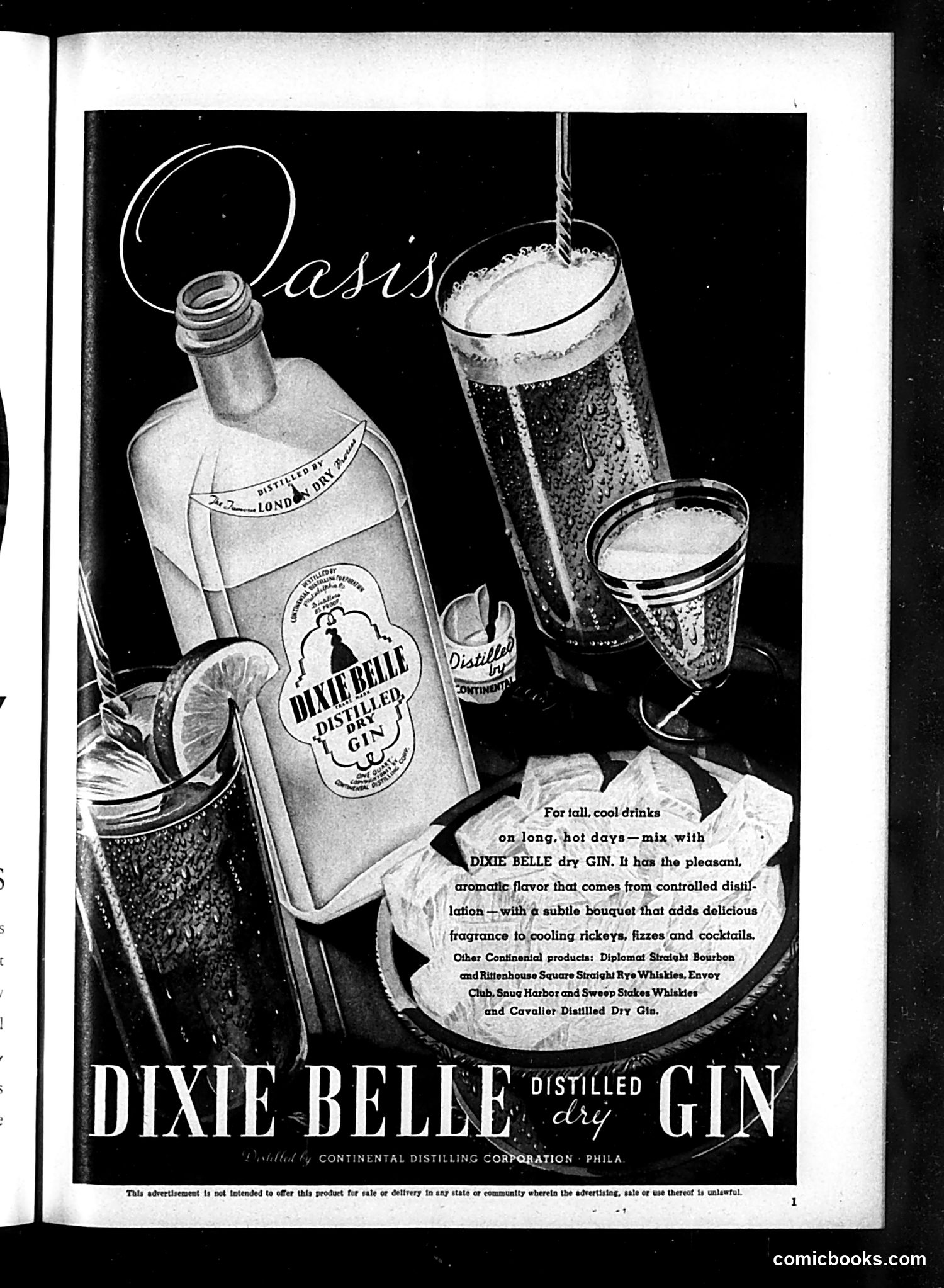
# Analysis This is a **full-page advertisement**, not political satire. It promotes Dixie Belle Distilled Dry Gin, manufactured by Continental Distilling Corporation in Philadelphia. The ad uses the word "Oasis" at the top, positioning gin as a refreshing escape during hot weather. The visual shows a bottle of Dixie Belle gin alongside served drinks with ice and garnish (appears to be a lemon slice). The accompanying text emphasizes the gin's "pleasant aromatic flavor" and suitability for "tall, cool drinks on long, hot days." The disclaimer at the bottom indicates this was published during Prohibition or shortly after, when alcohol advertising faced legal restrictions. There is no political cartoon or satire present on this page.
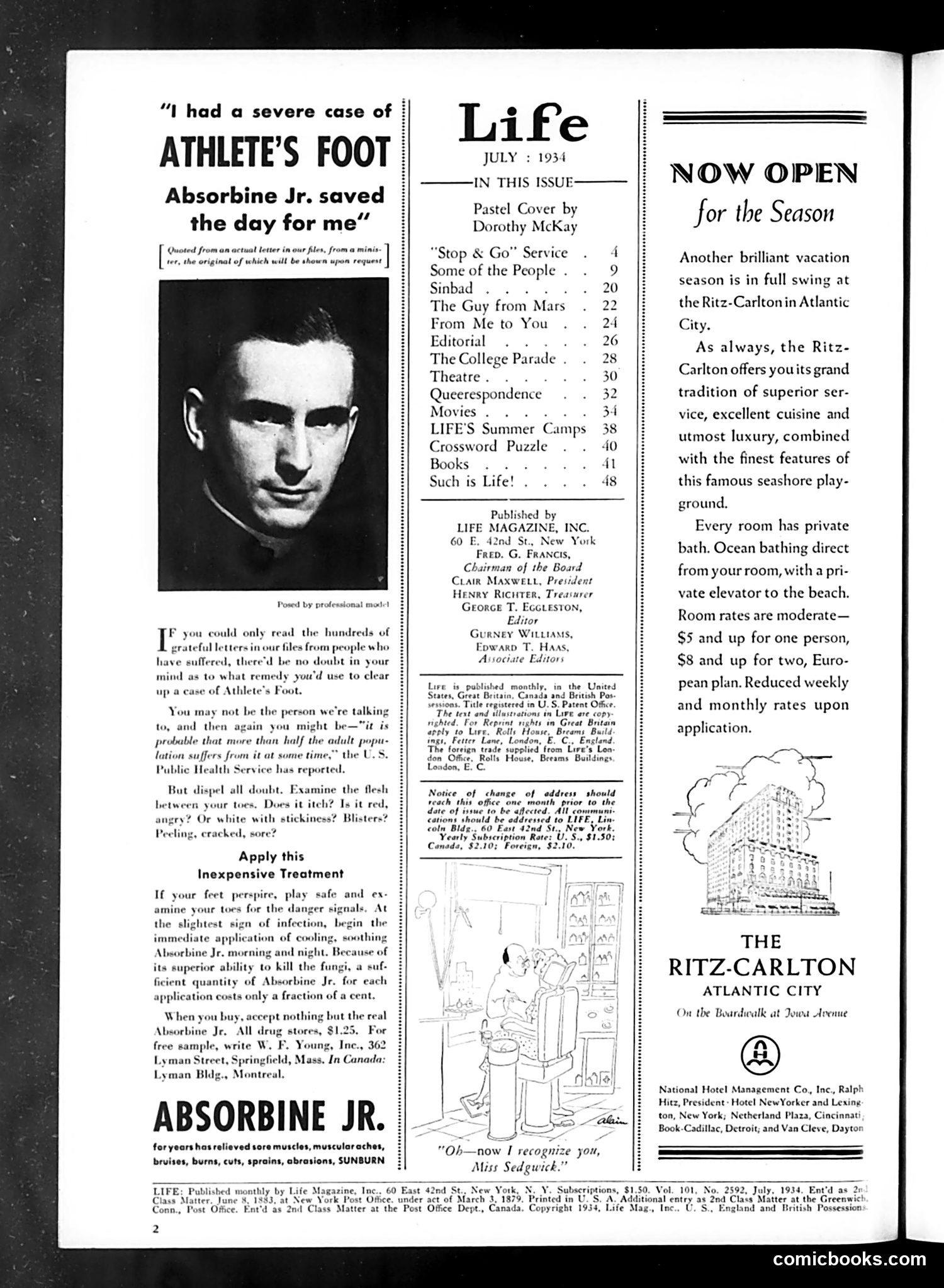
# Analysis of Life Magazine, July 1934 This page is primarily **advertising and magazine content**, not political satire. The left side features an **Absorbine Jr. advertisement** using a testimonial format common in 1930s marketing. A man's photograph accompanies a claim about curing athlete's foot—a genuine medical product advertisement, not satire. The center shows the **magazine's table of contents** for July 1934, listing articles like "Sinbad" and "The Guy from Mars." The right side advertises the **Ritz-Carlton Hotel in Atlantic City**, emphasizing luxury amenities: private ocean-view baths, moderate rates ($5-8), and the "European plan." The small cartoon at bottom center appears unrelated to political content—just a humorous domestic scene caption. **This is a straightforward magazine layout with no discernible political satire or commentary.**
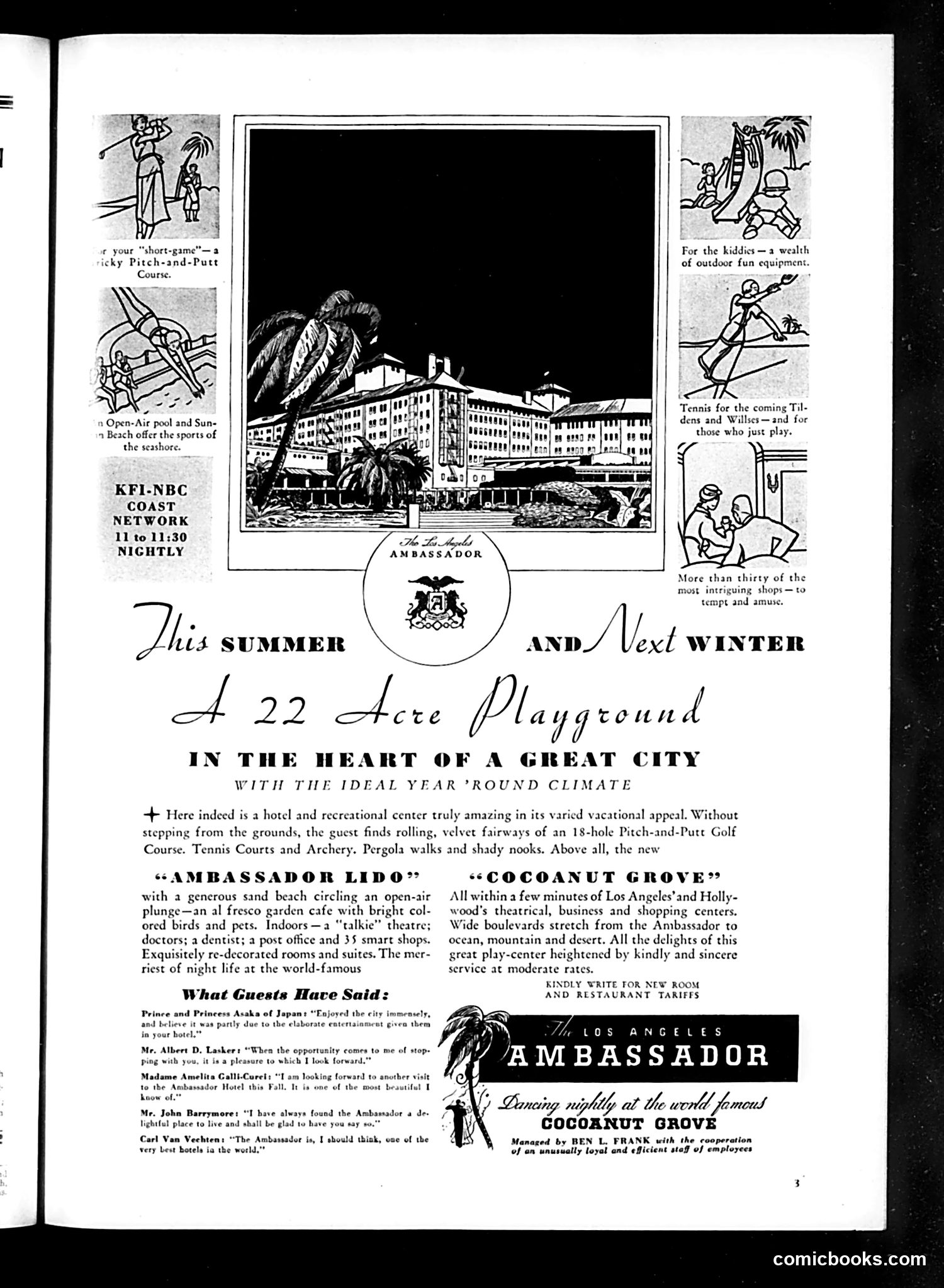
# Analysis This page is primarily **advertising** for the Ambassador Hotel and its affiliated Coconut Grove nightclub in Los Angeles, not political satire or comics. The central image shows the hotel's Art Deco architecture. Surrounding illustrations depict recreational amenities: golf, tennis, water sports, and shopping—marketed as year-round entertainment in Southern California's climate. The "What Guests Have Said" section includes testimonials from named individuals (Prince and Princess Asaka of Japan, Alfred B. Lasker, etc.), lending prestige through celebrity endorsement—a common 1920s-30s marketing technique. The bottom advertises nightly dancing at the Coconut Grove, managed by Ben L. Frank. This is a straightforward hospitality advertisement, not satirical commentary.
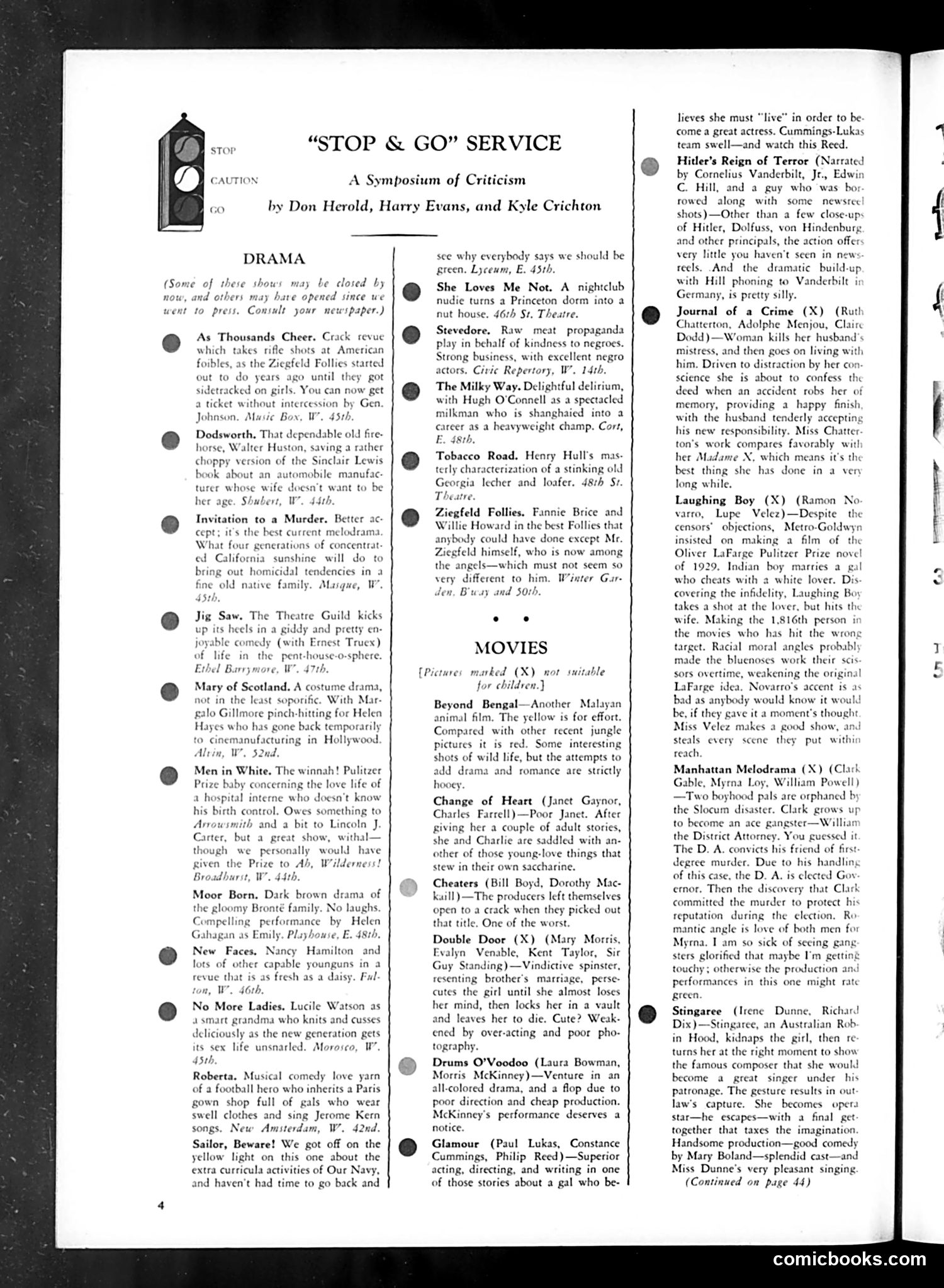
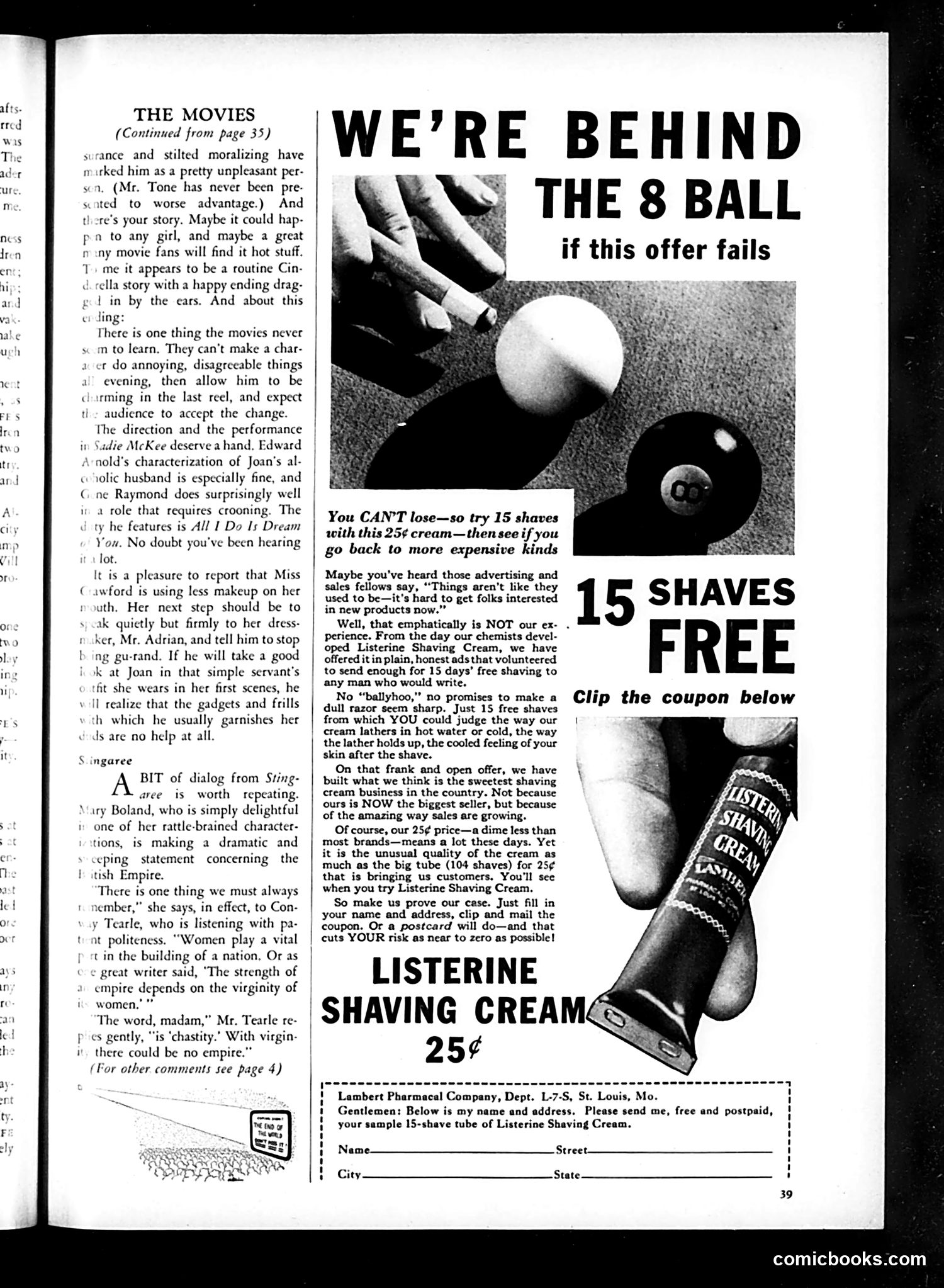
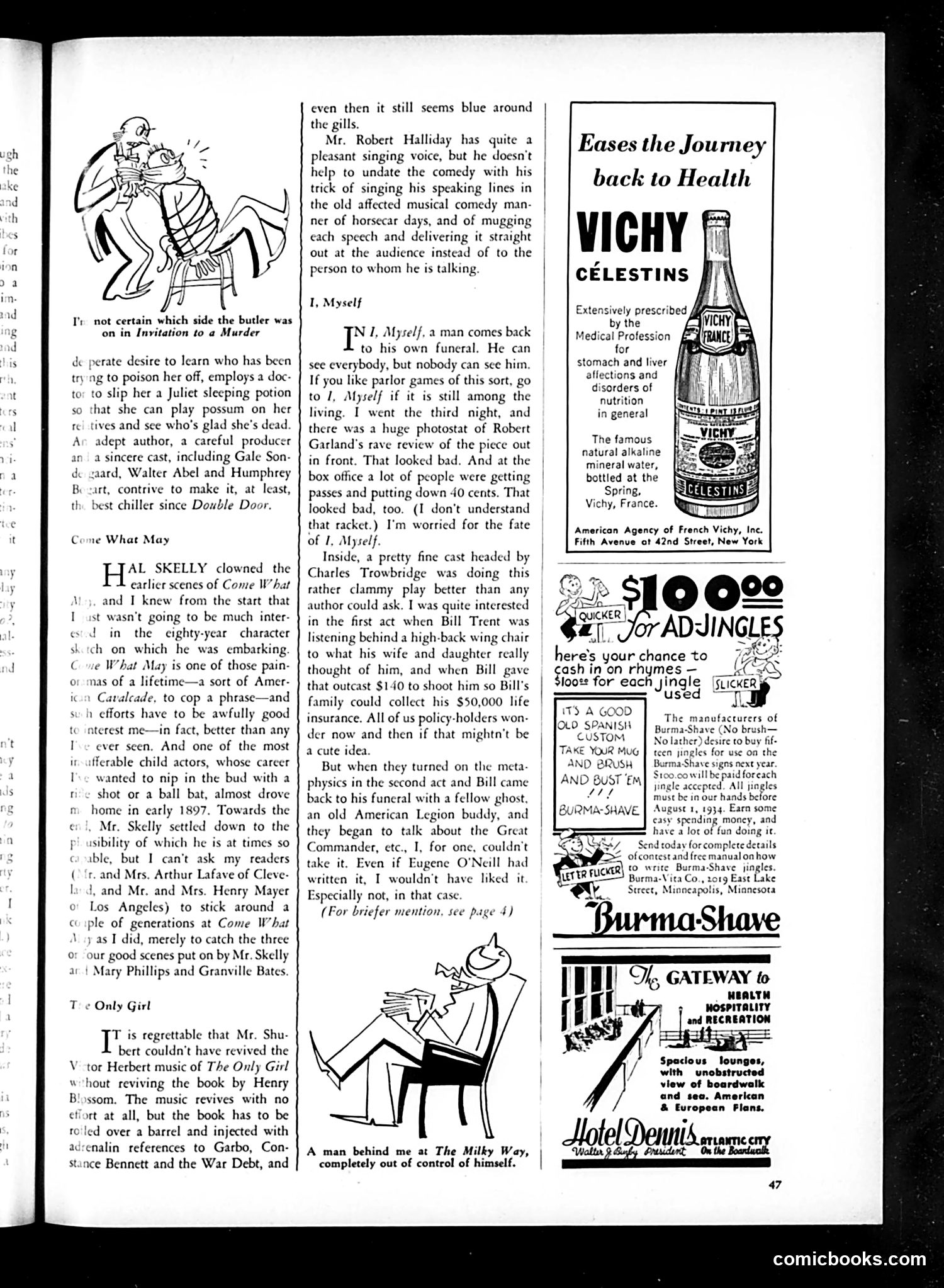
# Page Analysis This is a theater and film review page from *Life* magazine, not a political cartoon. The main content consists of: **"Stop & Go" Service** - A symposium of criticism by Don Herold, Harry Evans, and Kyle Crichton reviewing contemporary theatrical productions and films. The **Drama section** lists plays with brief critiques (e.g., "As Thousands Cheer," "Dodsworth," "Jig Saw"). The **Movies section** reviews films including "Beyond Bengal," "Change of Heart," and "Manhattan Melodrama." The traffic light illustration at top left is decorative, reinforcing the "Stop & Go" title theme—suggesting some productions merit stopping to watch, others to skip. This is straightforward entertainment criticism, not satire or political commentary.
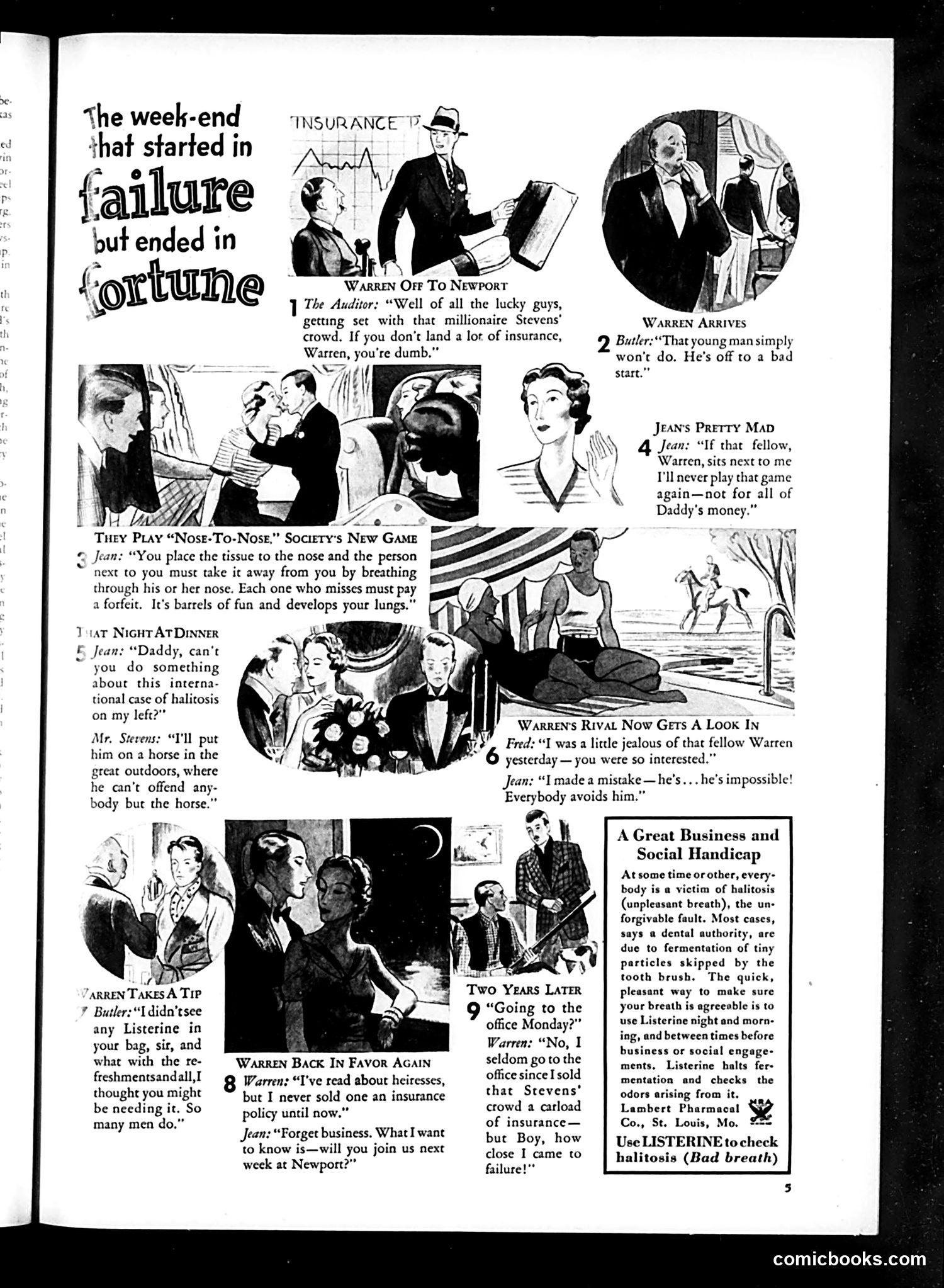
# "The Week-End That Started in Failure but Ended in Fortune" This appears to be a serialized romantic comedy strip from Life magazine, likely from the 1920s-30s. The narrative follows Warren, a man seeking to join a wealthy social circle (the "millionaire Stevens' crowd"). Through a series of misadventures—including failed insurance pitches and social fumbles—Warren ultimately wins over Jean, a woman from that elite group. The satire targets social climbing and class aspirations of the era: Warren's desperate attempts to network, the shallow concerns of wealthy socialites, and romantic rivalries within high society. The strip mocks both Warren's ambitions and the frivolous preoccupations of the rich, while an embedded Listerine advertisement suggests commercial sponsorship typical of period magazines.
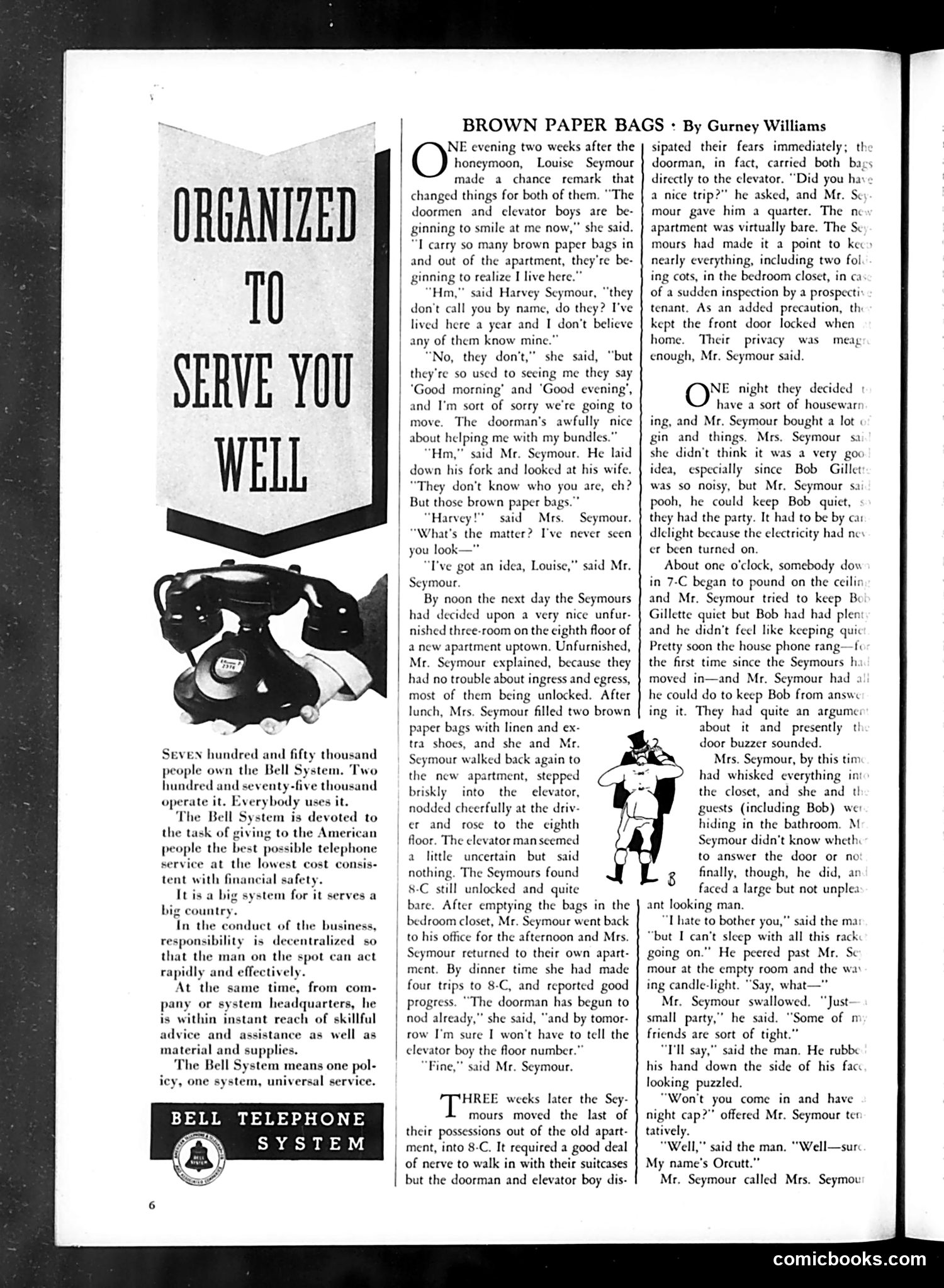
# Analysis of "Brown Paper Bags" by Gurney Williams This is a short story with accompanying advertisement, not political satire. The narrative follows Mr. and Mrs. Seymour, who move into a modest apartment and use brown paper bags to organize their belongings—a humble, practical solution. The story humorously chronicles the chaos this causes among neighbors and building staff who don't recognize the couple, mistaking their paper-bagged items for suspicious activity. The accompanying Bell Telephone System advertisement emphasizes the company's reliability and reach, suggesting that proper communication (via telephone) could have prevented the misunderstandings. The satire is gentle—poking fun at urban apartment life, privacy concerns, and class anxieties of the era, rather than targeting specific political figures or events.
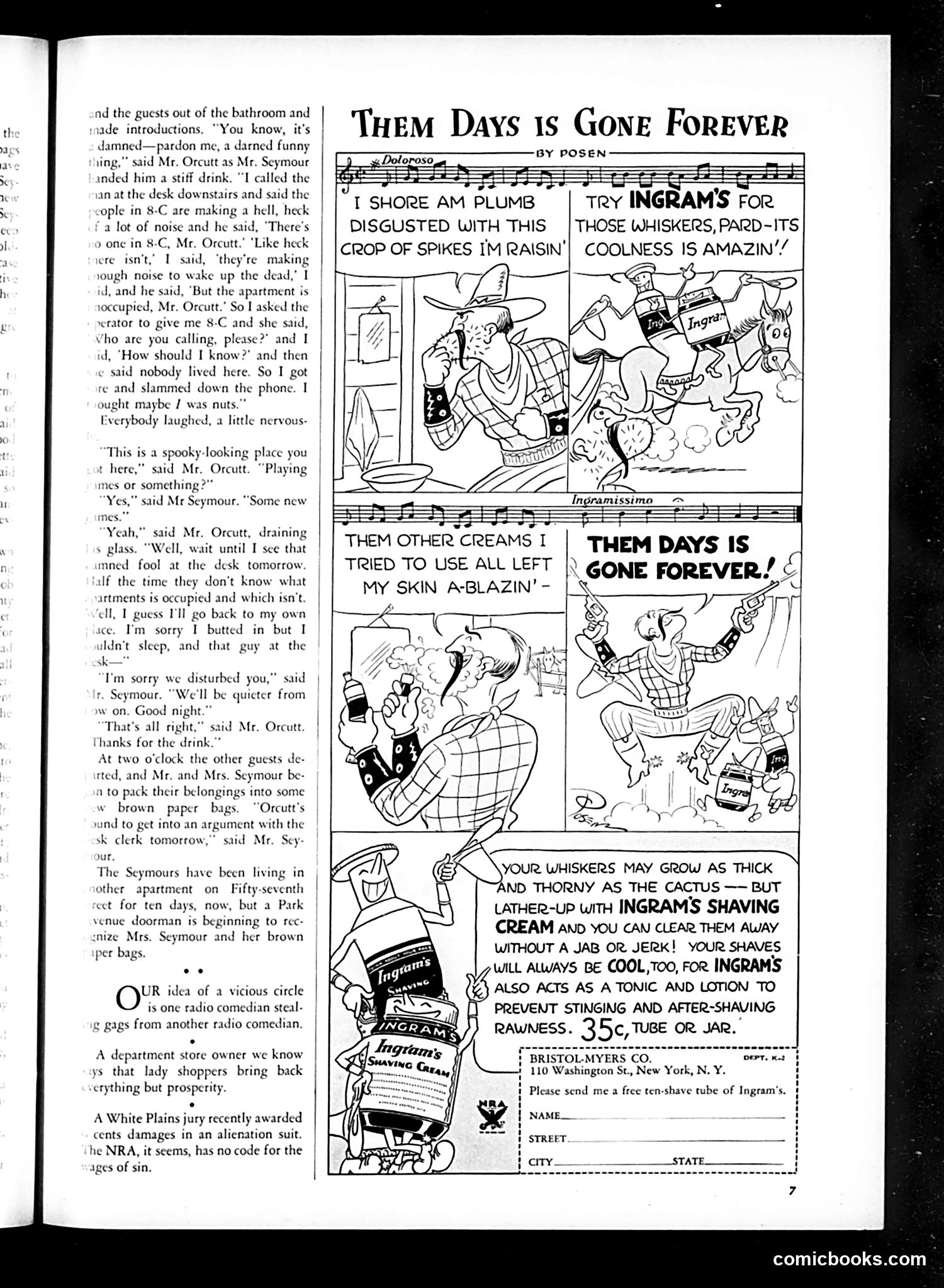
# Analysis This page is primarily an **advertisement for Ingram's Shaving Cream**, disguised as editorial content. The comic strip "Them Days Is Gone Forever" by Posen uses humor to promote the product. The narrative shows a man complaining about his whiskers and trying various skin creams with poor results. The advertisement's message is that Ingram's Shaving Cream solves this problem and, as a bonus, acts as a "tonic and lotion" to prevent skin irritation. The accompanying text discusses a humorous apartment building incident but appears largely filler content surrounding the ad. For modern readers: this represents **early advertising integration** into editorial magazines—blending entertainment with product promotion in ways that would raise ethical concerns today regarding disclosure and advertising transparency.
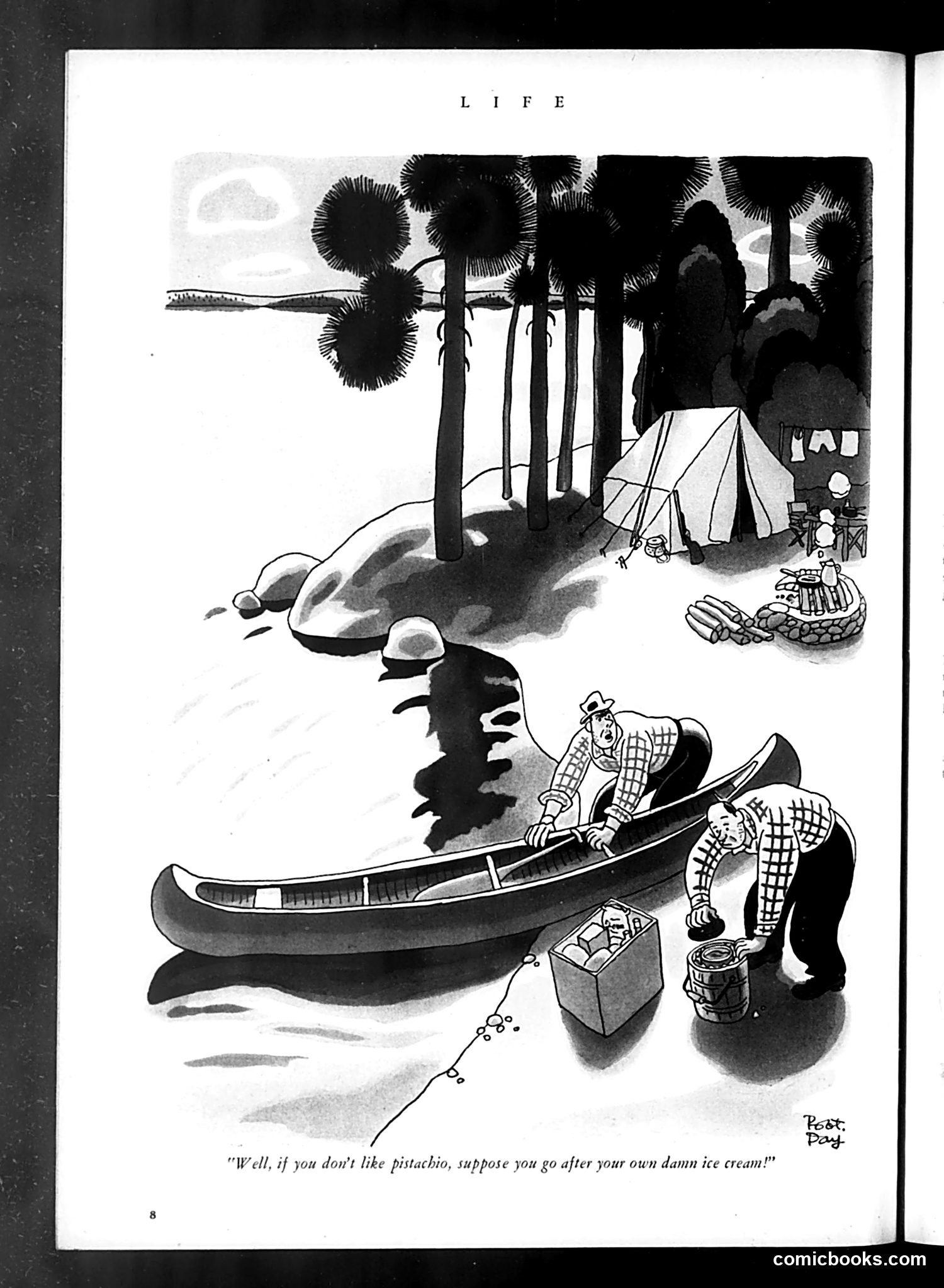
# Analysis This is a single-panel cartoon showing two men in a canoe near a tropical camp with palm trees. One man says to the other: "Well, if you don't like pistachio, suppose you go after your own damn ice cream!" The joke is a humorous complaint about being stranded in what appears to be a remote tropical location (possibly suggesting an expedition or vacation). The satire mocks the expectation of comfort and convenience even in primitive circumstances—the speaker is irritated that his companion is being picky about ice cream flavor when they're apparently far from civilization. It's a commentary on modern entitlement and the demand for creature comforts in unlikely situations. The cartoon relies on the absurdity of expecting ice cream preferences to be accommodated in such isolated conditions.
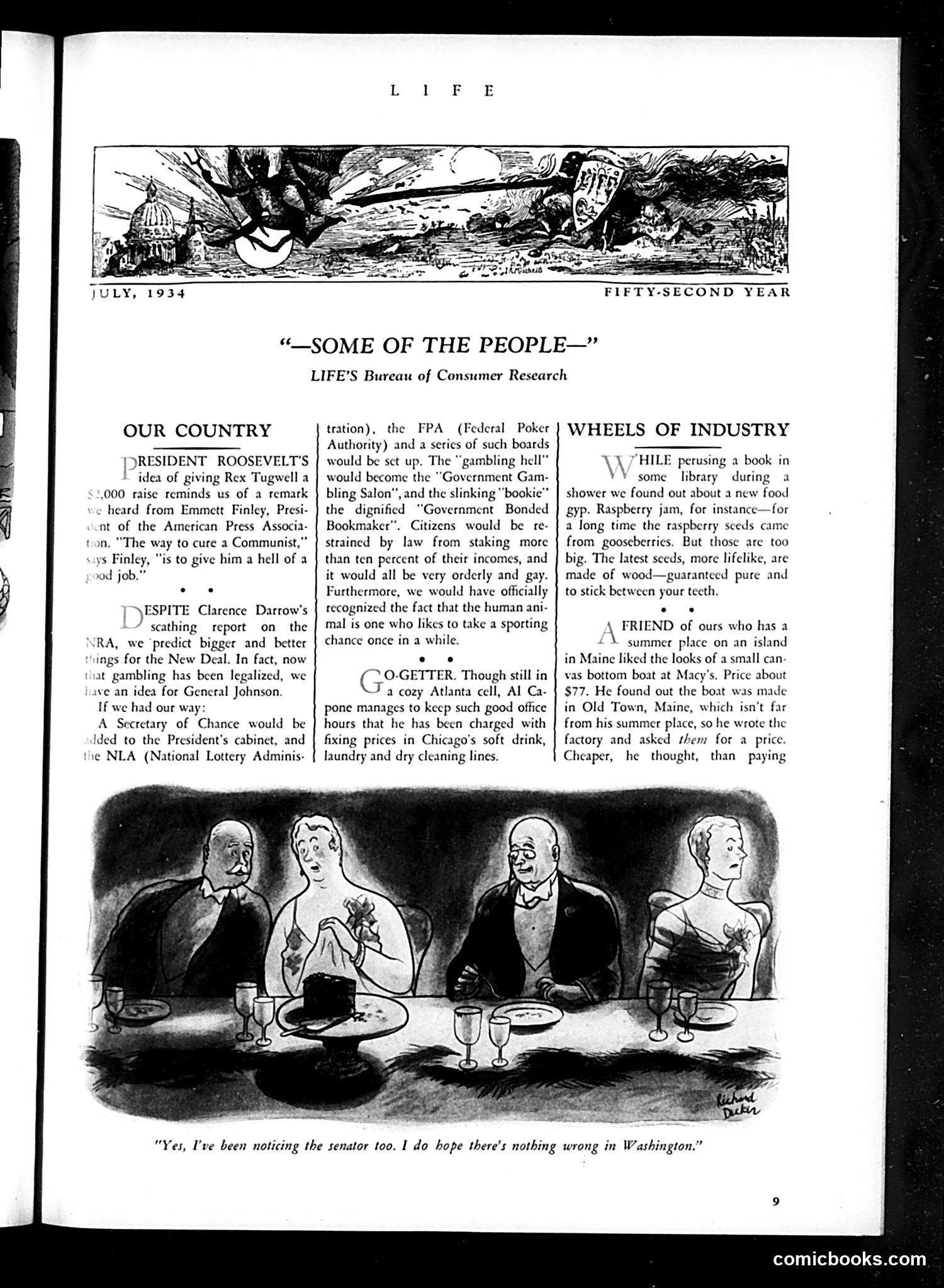
# Political Cartoon Analysis: Life Magazine, July 1934 This cartoon satirizes Washington corruption during the Great Depression. Four well-dressed diners at an upscale restaurant represent political/corporate elites. The caption—"Yes, I've been noticing the senator too. I do hope there's nothing wrong in Washington"—uses ironic understatement to mock their collective moral blindness or complicity. The imagery contrasts sharply with the surrounding text about FDR's New Deal programs (NRA, Federal Poker Authority satire, gambling legalization debates). While ordinary Americans struggle economically, these establishment figures dine luxuriously, apparently unconcerned about ethical problems in government. The cartoon criticizes both political corruption and the wealthy class's detachment from national crisis during the 1930s.
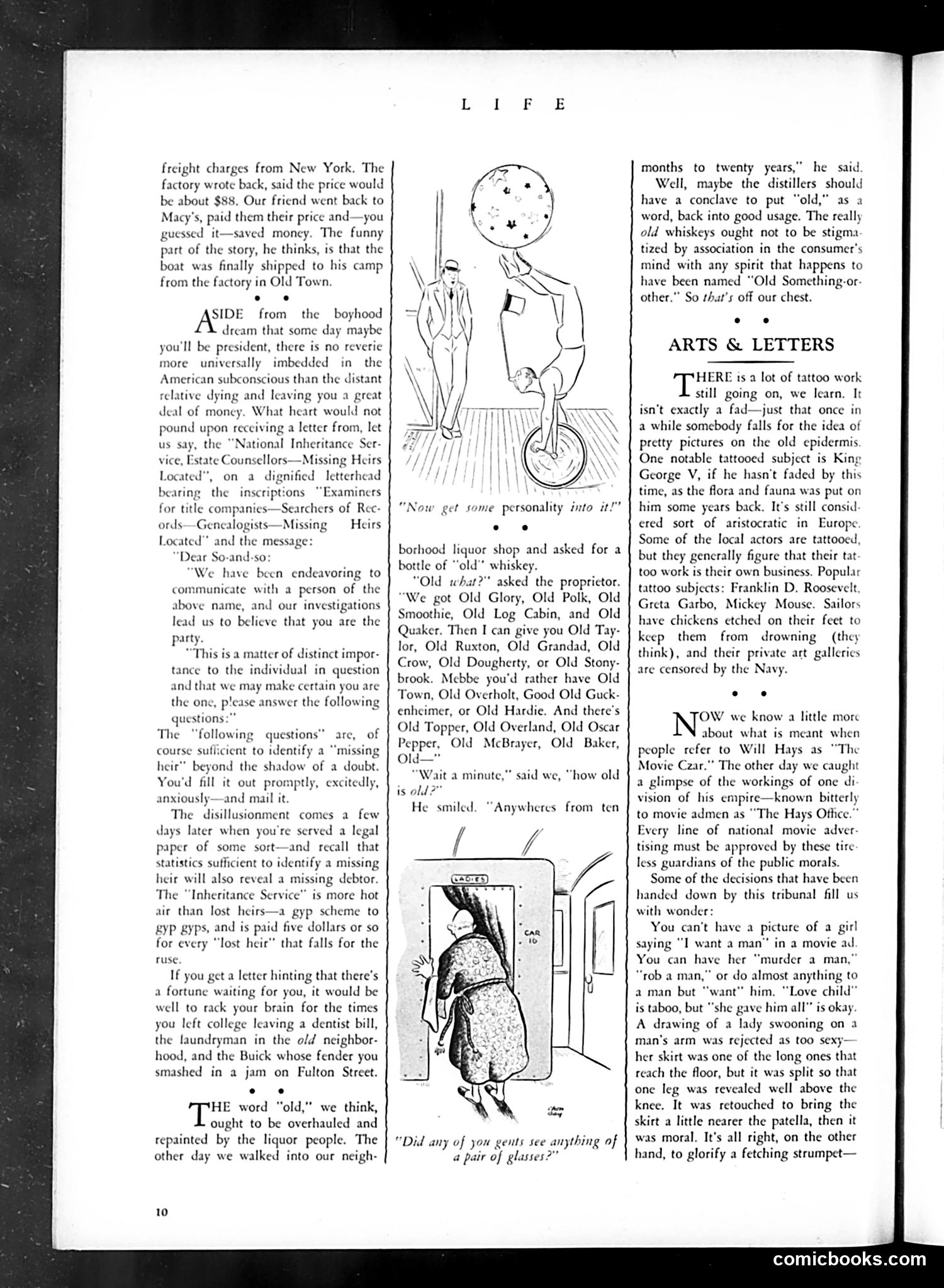
# Life Magazine Page Analysis This page contains two main sections: a humorous essay about inheritance schemes and a satirical piece on Hollywood movie censorship titled "Arts & Letters." **The Cartoon (center-left):** Shows a man and woman examining a globe at what appears to be an antique shop. The caption reads: "Now get some personality into it!" This illustrates the preceding text's joke about a "National Inheritance Service" scam—promising to locate missing heirs through dignified letterhead and suspicious advertisements. **The Lower Cartoon:** Depicts a woman in a phone booth (labeled "USED"). The caption asks: "Did any of you gents see anything of a pair of glasses?" This accompanies discussion of Hollywood film censorship standards, which the text claims absurdly reject certain images while allowing others. The cartoon likely satirizes the arbitrary and ridiculous nature of these moral guardianship decisions affecting movie content.