A complete issue · 58 pages · 1934
Life — April 1934
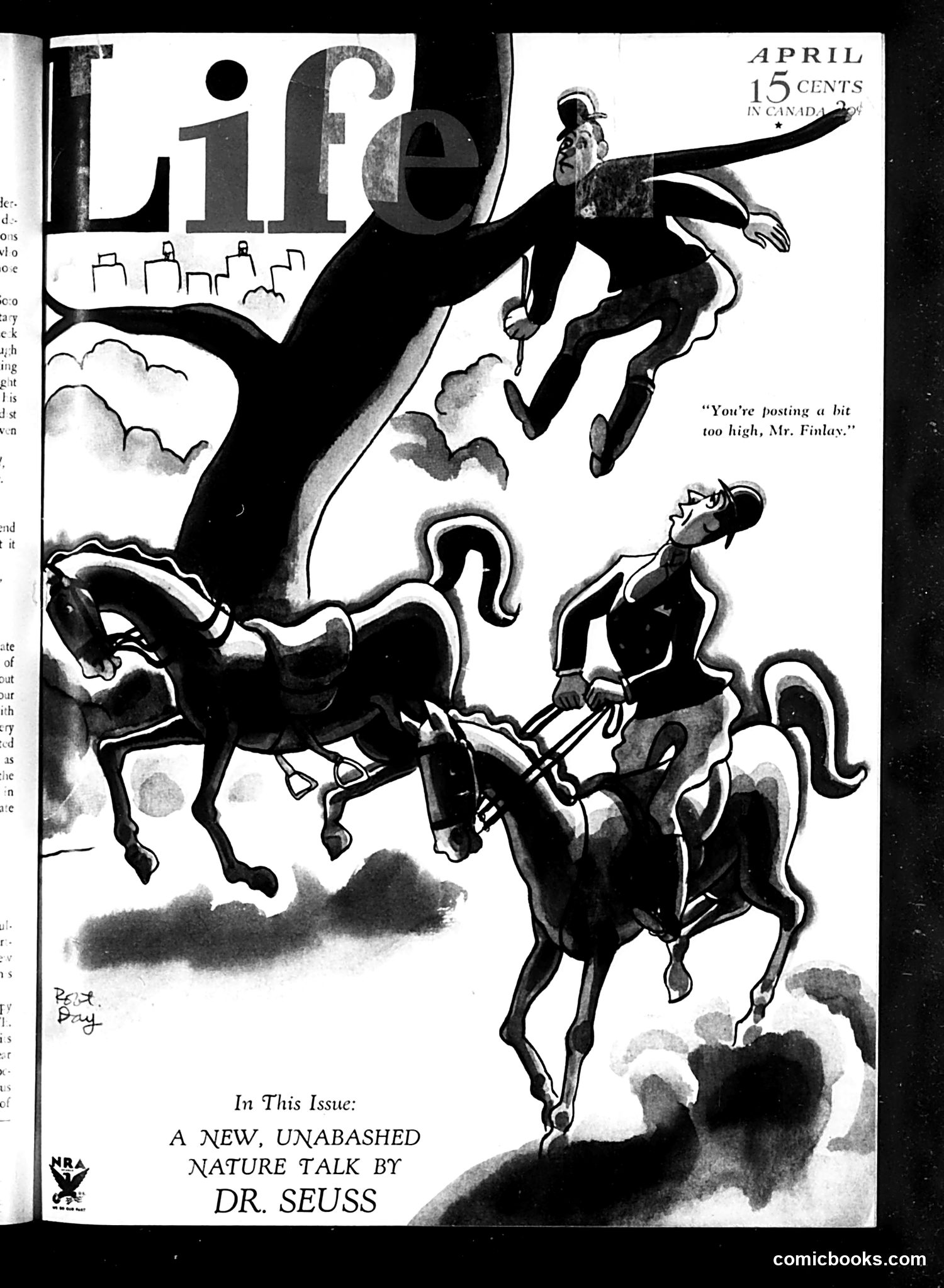
# Life Magazine Cover Analysis (April, 15 cents) This is a satirical cover illustration by Peter Arno depicting a man on horseback being bucked off while riding wildly through clouds. The quote "You're posting a bit too high, Mr. Finlay" suggests the rider is overreaching—"posting too high" is equestrian terminology meaning sitting improperly in the saddle, but here functions as metaphor for ambition exceeding one's ability. The figure appears to be named Finlay, though his specific identity is unclear without additional context. The chaotic scene with rearing horses suggests financial or political instability—likely referencing someone whose overconfidence led to a dramatic fall during this April period (year unclear from image alone). The cover advertises "A New, Unabashed Nature Talk by Dr. Seuss" inside.
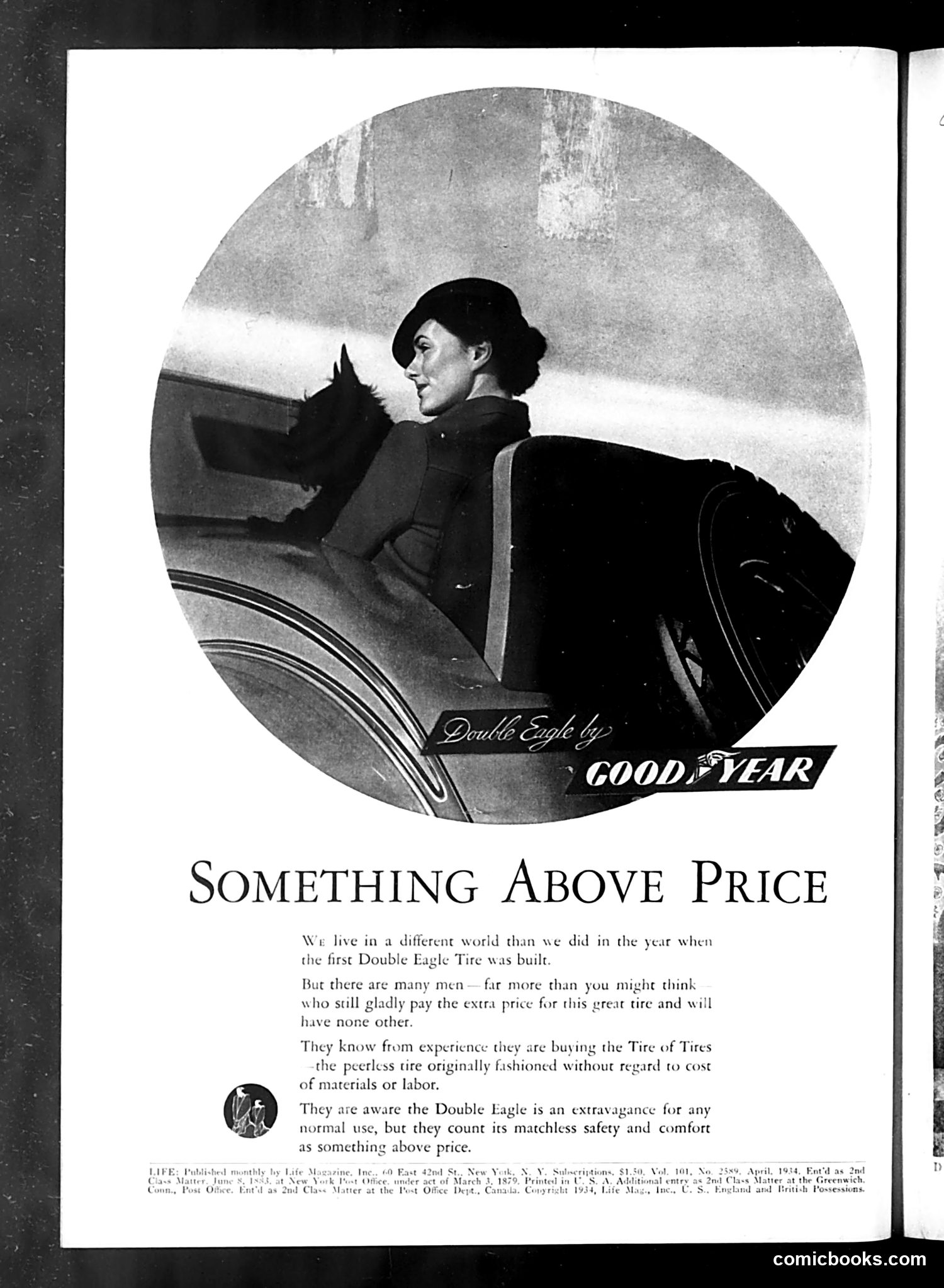
This is a Goodyear tire advertisement, not political satire. The ad features a woman in profile viewing what appears to be a tire display, with the headline "Something Above Price." The advertisement argues that while times have changed since the original Double Eagle tire was created, many consumers will pay extra for superior quality and safety. The copy emphasizes that the Double Eagle represents "the Tire of Tires—the peerless tire originally fashioned without regard to cost of materials or labor." The ad positions premium tire quality as a value proposition beyond mere cost considerations—appealing to buyers who prioritize safety and comfort. This reflects 1920s-1930s marketing strategies that emphasized product superiority and prestige rather than price competition.
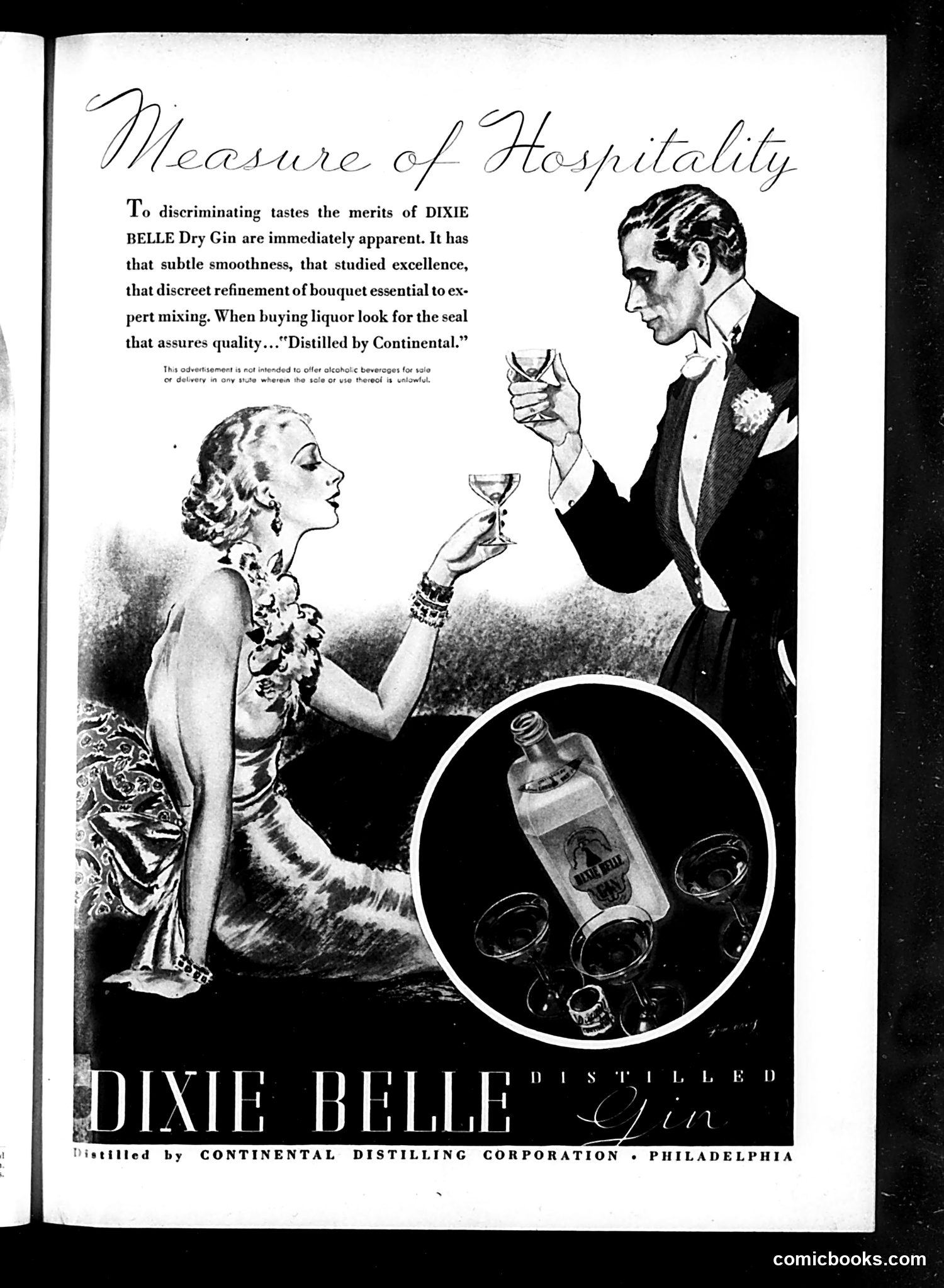
# Dixie Belle Gin Advertisement Analysis This is a **gin advertisement**, not political satire. It depicts a luxurious social scene titled "Measure of Hospitality" showing an elegantly dressed couple at what appears to be a cocktail party. The man in formal wear offers a drink to a woman in evening dress. The ad emphasizes DIXIE BELLE Dry Gin's quality—its "subtle smoothness" and "studied excellence"—positioning it as a mark of refined entertaining and good taste. The circular inset shows the bottle and glasses. **Historical context**: This advertisement dates from the Prohibition era (1920-1933), when such liquor ads were illegal in America. The small disclaimer text indicates this was likely published in a magazine outside the U.S. or represents pre-Prohibition material.
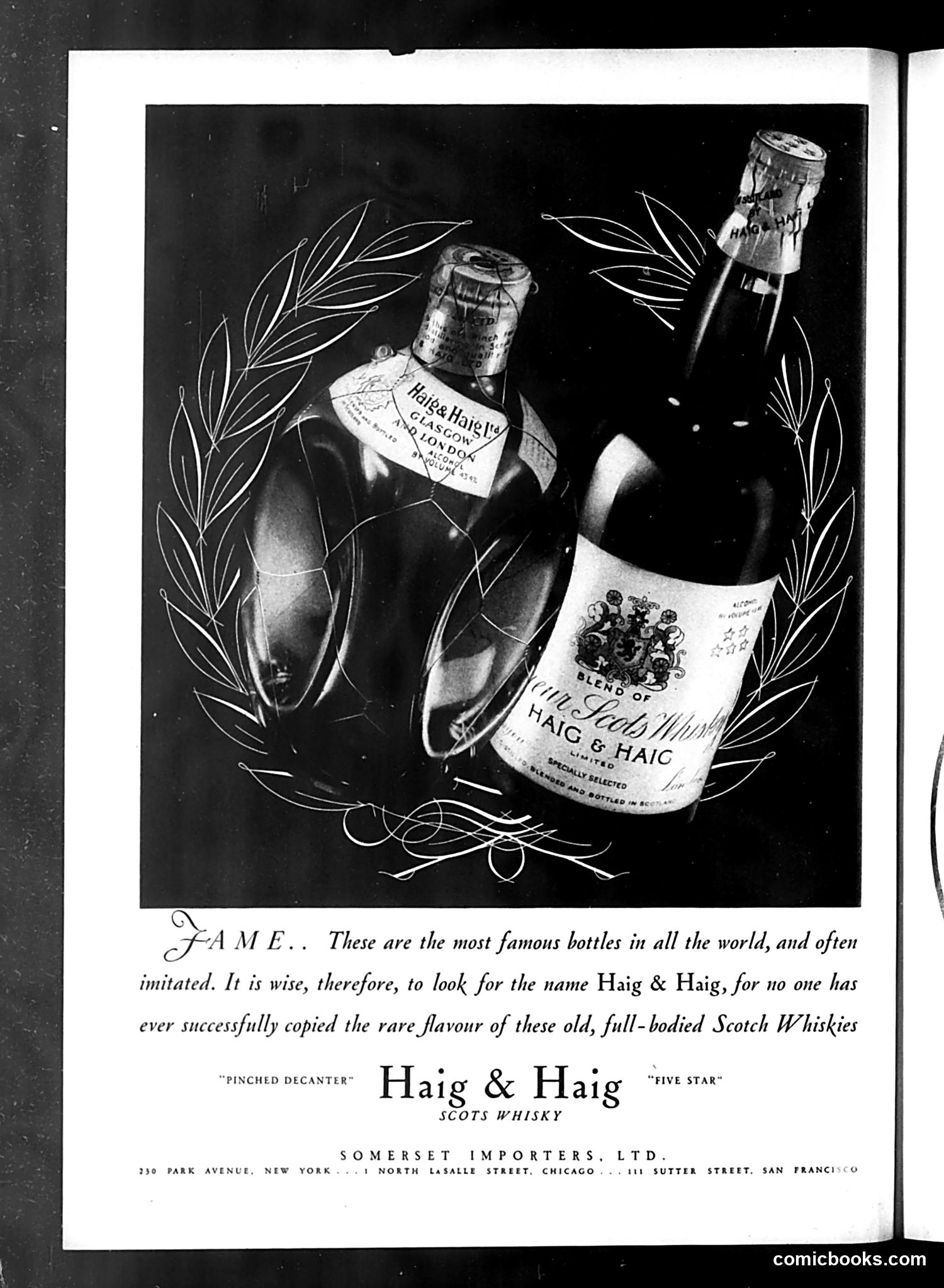
# Haig & Haig Scotch Whisky Advertisement This is a **commercial advertisement**, not political satire. It promotes Haig & Haig Scotch Whisky, featuring two bottles arranged decoratively with laurel wreaths in a black-and-white photograph. The ad's sales pitch emphasizes brand authenticity and prestige: the text warns consumers that these are "the most famous bottles in all the world, and often imitated," advising buyers to look specifically for the "Haig & Haig" name because no competitor has successfully replicated "the rare flavour of these old, full-bodied Scotch Whiskies." Two varieties are shown: "Pinched Decanter" and "Five Star." The importer is Somerset Importers, Ltd., with offices in New York, Chicago, and San Francisco. This appears to be vintage pre-WWII advertising emphasizing brand recognition and anti-counterfeiting—common marketing concerns for premium imported spirits.
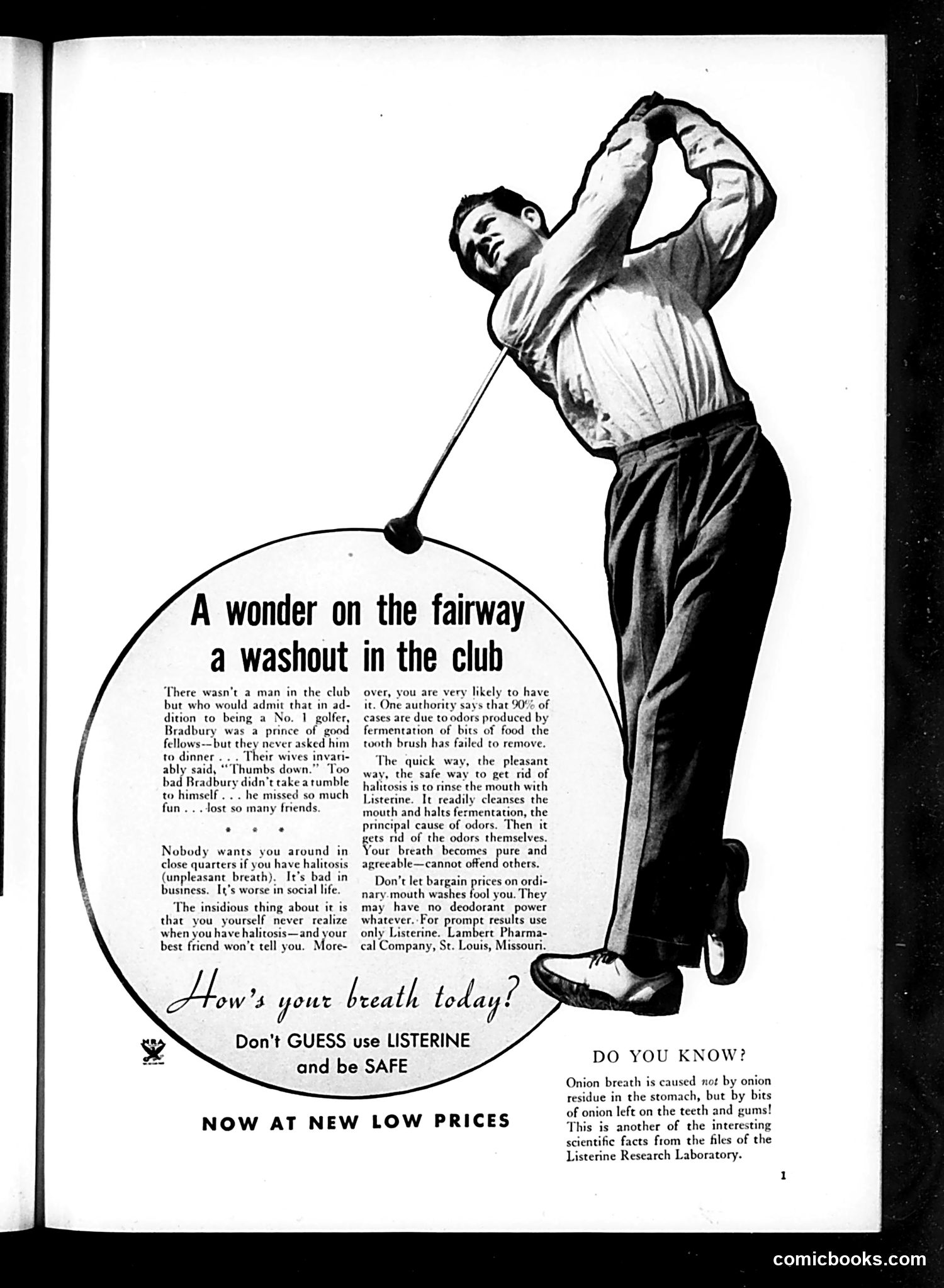
# Listerine Advertisement as Social Satire This is a **Listerine mouthwash advertisement** disguised as social commentary. The cartoon shows a golfer mid-swing, with text describing how halitosis (bad breath) ruins social and business relationships—a condition the ad implies only Listerine can solve. The satire targets **upper-class anxiety**: a character named Bradbury, described as "a prince of good fellows," is socially isolated because of bad breath. His wives allegedly said "thumbs down," and friends avoid him. The ad invents pseudo-scientific claims (citing "one authority" and the "Listerine Research Laboratory") to justify the product's necessity. The golf setting appeals to affluent readers. This exemplifies early 20th-century advertising's strategy of creating shame-based demand—manufacturing social insecurity to sell products.
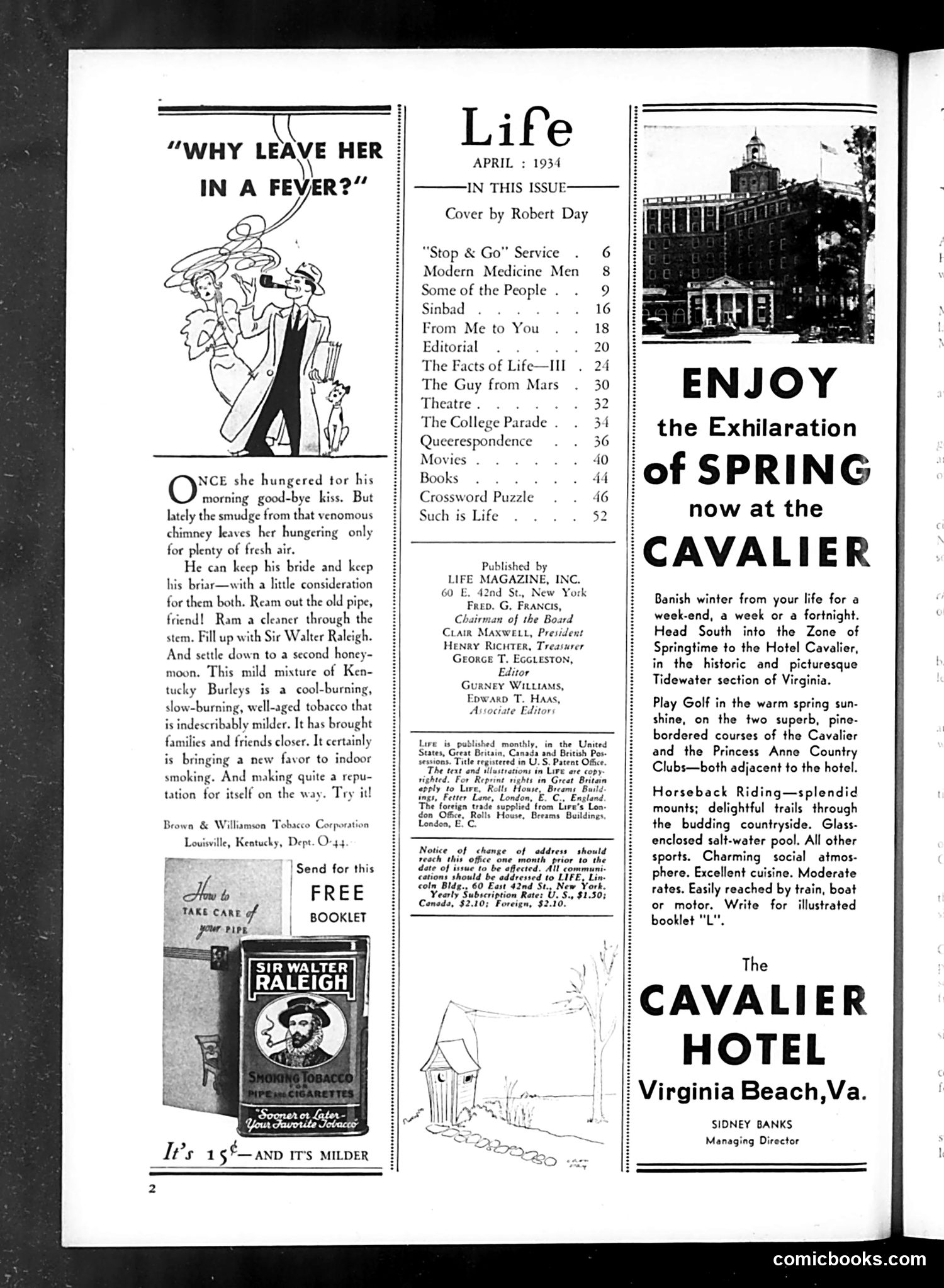
# Life Magazine Table of Contents Page, April 1934 This is primarily a **table of contents and advertising page** rather than editorial content. The left side features a tobacco advertisement (Sir Walter Raleigh smoking tobacco) with a humorous illustration about a husband trying to keep his new bride satisfied during a honeymoon by using mild tobacco. The right side advertises the Cavalier Hotel in Virginia Beach. The cartoon at top left ("Why Leave Her in a Fever?") is a domestic humor piece about maintaining marital contentment—typical 1930s advertising messaging linking consumer products (tobacco) to relationship harmony. The page reflects the magazine's business model: mixing satirical editorial content with full-page advertisements integrated throughout.
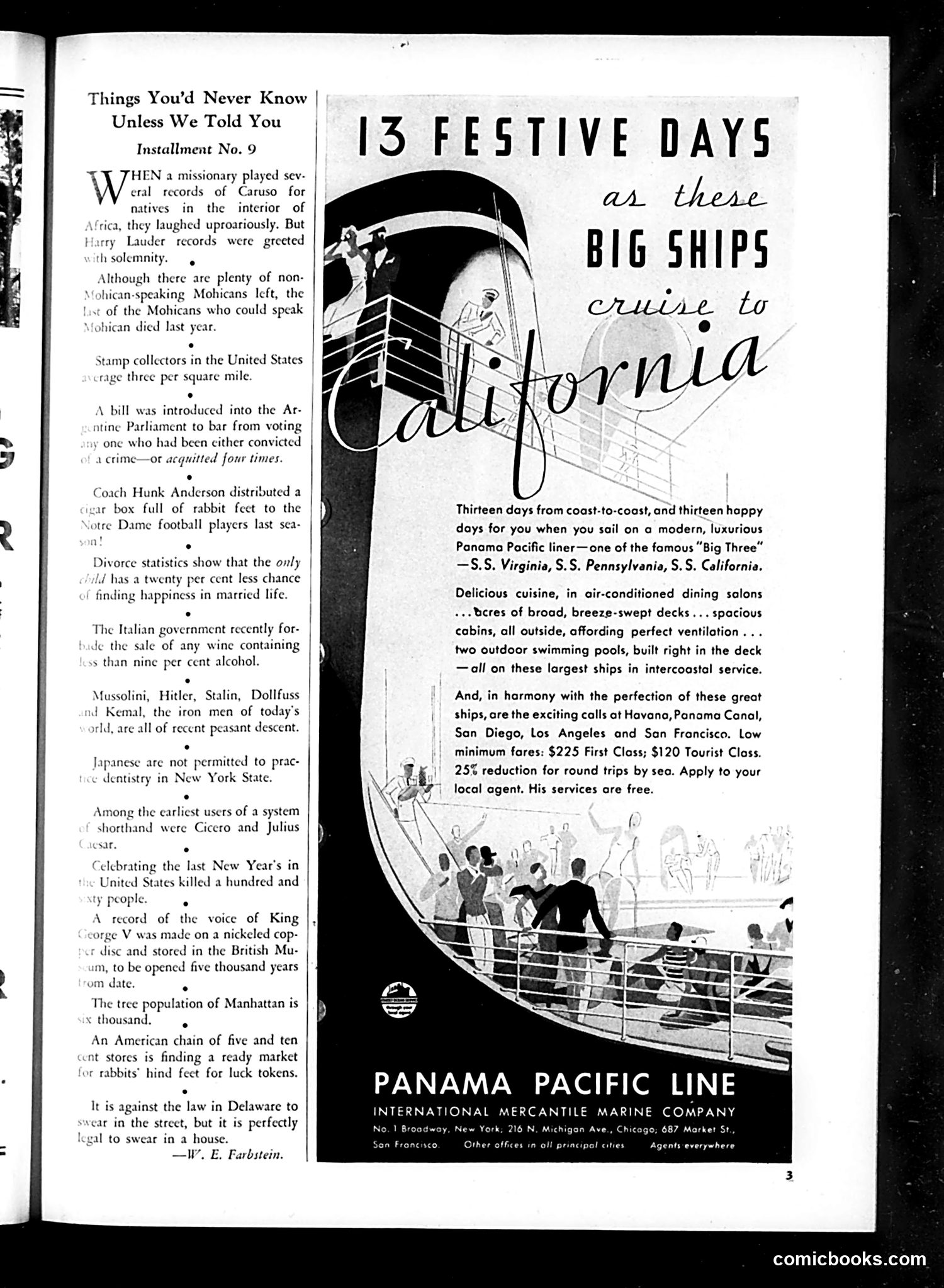
# Page Analysis This page is primarily an **advertisement for Panama Pacific Line cruise ships**, not political satire. The left column contains "Things You'd Never Know Unless We Told You" — lighthearted trivia facts (about Caruso records, stamp collectors, rabbit's feet, etc.). The main content is a large cruise ship advertisement promoting 13-day California voyages on luxury liners including the S.S. Virginia, S.S. Pennsylvania, and S.S. California. The ad emphasizes amenities like air-conditioned dining, swimming pools, and stops at Havana, Panama Canal, and California ports. There is **no political cartoon or satire** on this page — it's commercial marketing material from what appears to be a 1920s-1930s era publication.
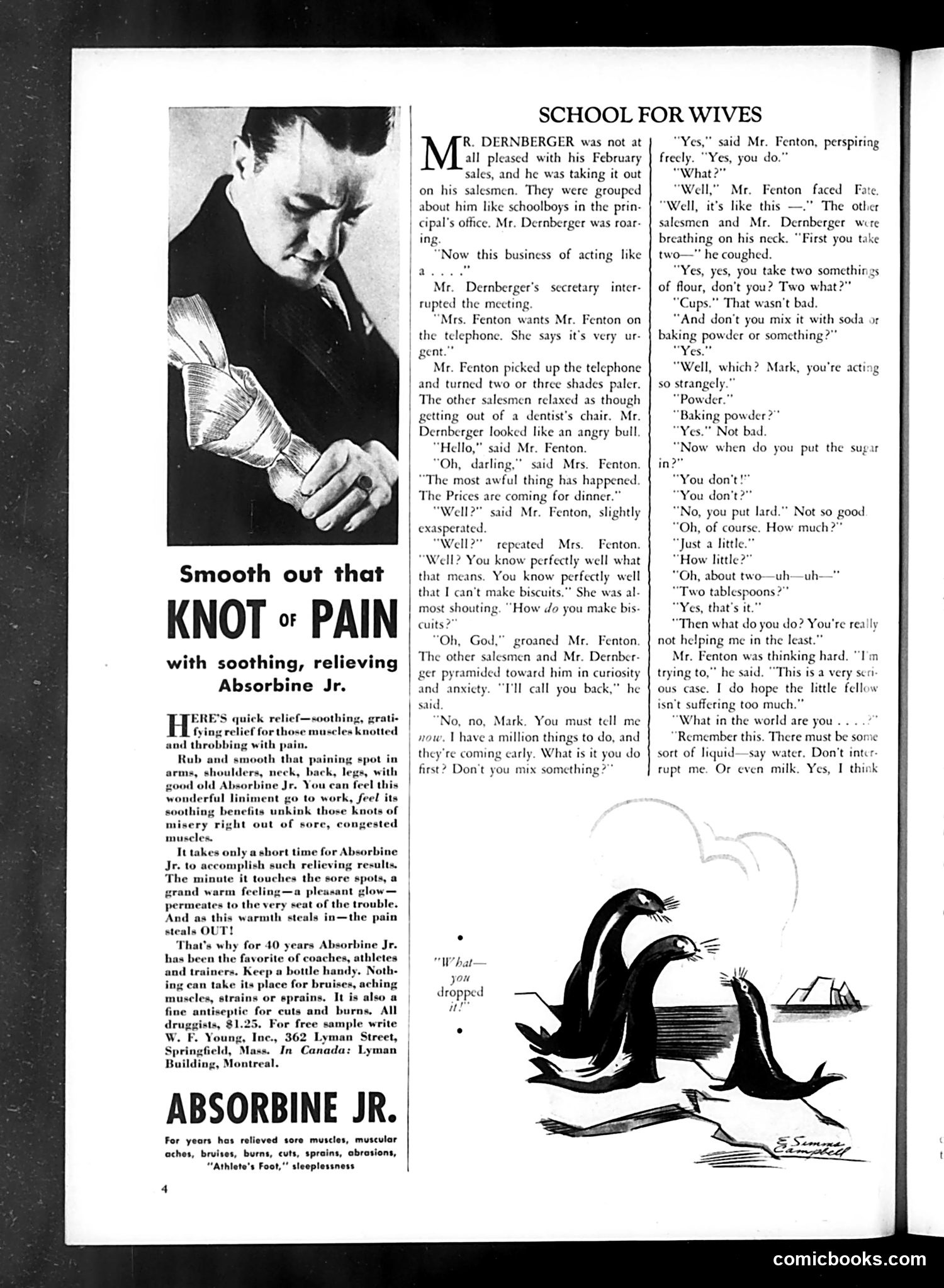
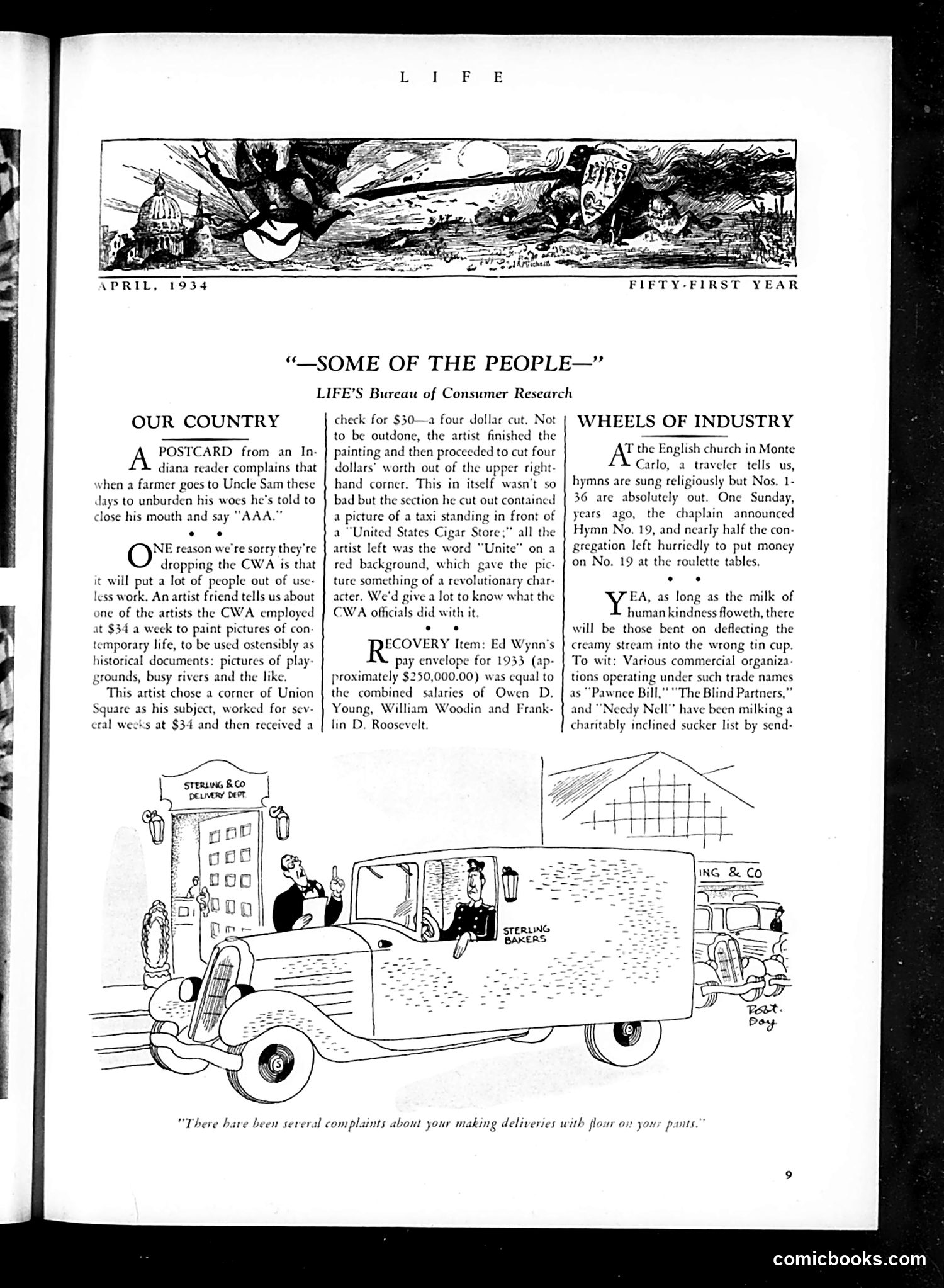
# "School for Wives" - Page Analysis This page contains a satirical short story titled "School for Wives" about marital incompetence. Mr. Fenton calls his wife Mrs. Fenton to ask about dinner preparations, but she's frustrated because he doesn't follow basic cooking instructions—he can't remember whether to use flour, soda, or baking powder, or when to add sugar. The joke satirizes the gender dynamics of the era: wives were expected to educate their husbands on domestic matters, treating adult men like schoolchildren. The cartoon at bottom (showing a figure tripping) reinforces this theme of incompetence. The page also includes a full-page advertisement for "Absorbine Jr.," a pain-relief product, suggesting this is primarily a commercial publication disguised as humor.
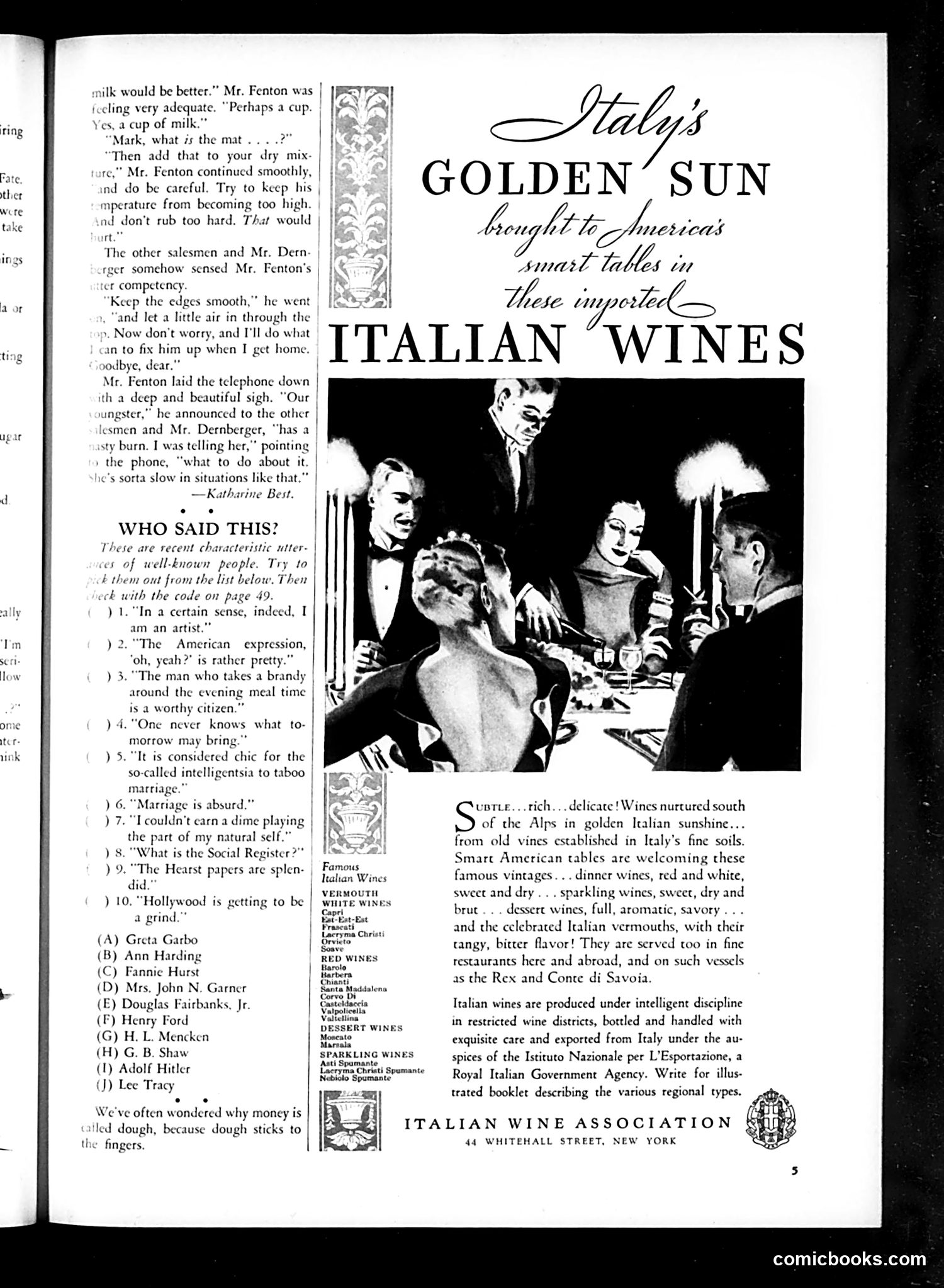
# Analysis This page is primarily **advertising, not satire or editorial content**. The right side features a full-page advertisement for "Italy's Golden Sun" Italian wines, marketed to American consumers as sophisticated imports for "smart tables." The image shows an elegant dinner party scene with well-dressed diners. The left side contains unrelated editorial content, including a "Who Said This?" game asking readers to match famous quotations to historical figures (including Greta Garbo, Ann Harding, Henry Ford, and Adolf Hitler). There is **no political cartoon** on this page. The wine advertisement simply promotes Italian imports as status symbols for American dining, reflecting 1930s-era glamorization of European sophistication.
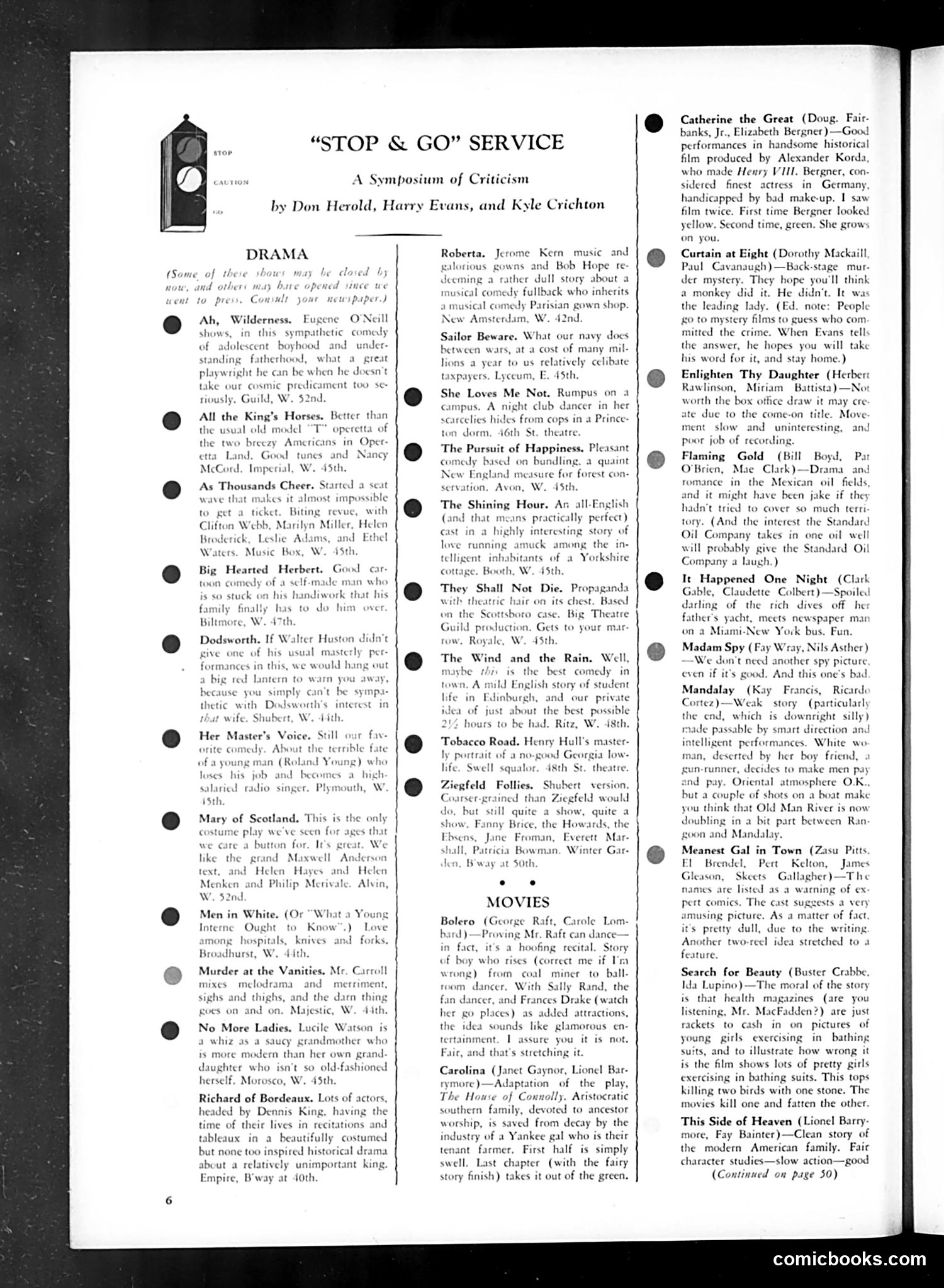
# "Stop & Go" Service - A Symposium of Criticism This page presents drama and film reviews from Life magazine's critics (Don Herald, Harry Evans, and Kyle Crichton). The content is a straightforward critical survey of contemporary theatrical productions and movies, not satire or political commentary. The left column lists drama reviews (marked by bullet points) of plays like "Ah, Wilderness!" and "Big Hearted Herbert." The right side shifts to movie reviews, critiquing films such as "Catherine the Great" and "Flaming Gold." The "Stop & Go" metaphor in the title suggests the critics are giving a mixed assessment—some productions warrant stopping to see, others should be passed by. This is standard arts criticism, not political satire.
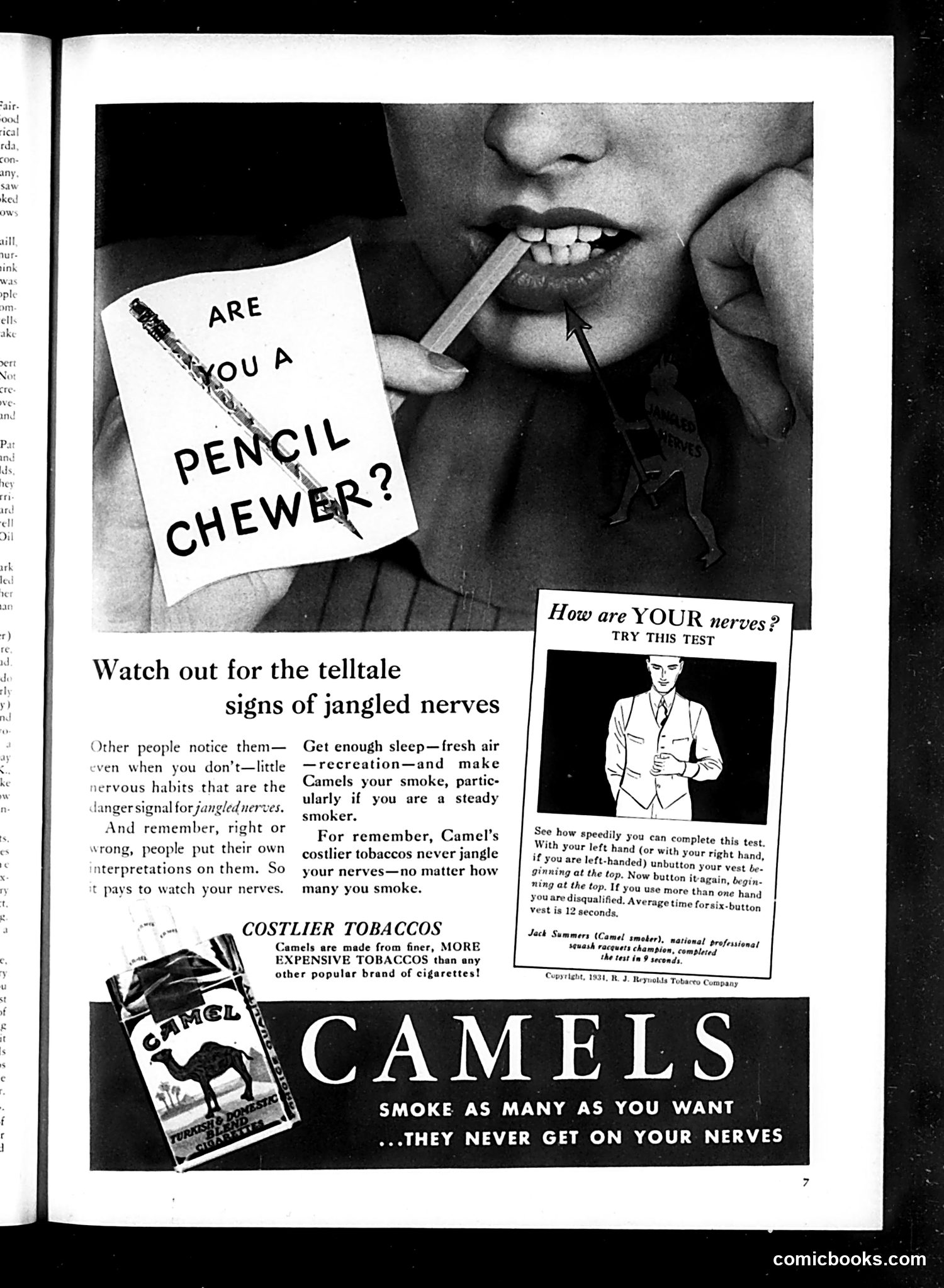
# Advertisement Analysis This is a **Camel cigarette advertisement**, not satire or political commentary. The ad uses a now-infamous marketing strategy: claiming cigarettes *calm nerves* rather than damage health. The main image shows a young person chewing a pencil nervously, with text asking "ARE YOU A PENCIL CHEWER?" This depicts nervous behavior as socially embarrassing—a problem Camels supposedly solve. The "How are YOUR nerves?" test invites readers to check their own nervousness, implying smoking Camels prevents such habits. The advertisement explicitly claims Camel's "costlier tobaccos never jangled your nerves—no matter how many you smoke," directly marketing cigarettes as a anxiety remedy. This represents pre-warning-label tobacco advertising that made health claims later proven false and now illegal.
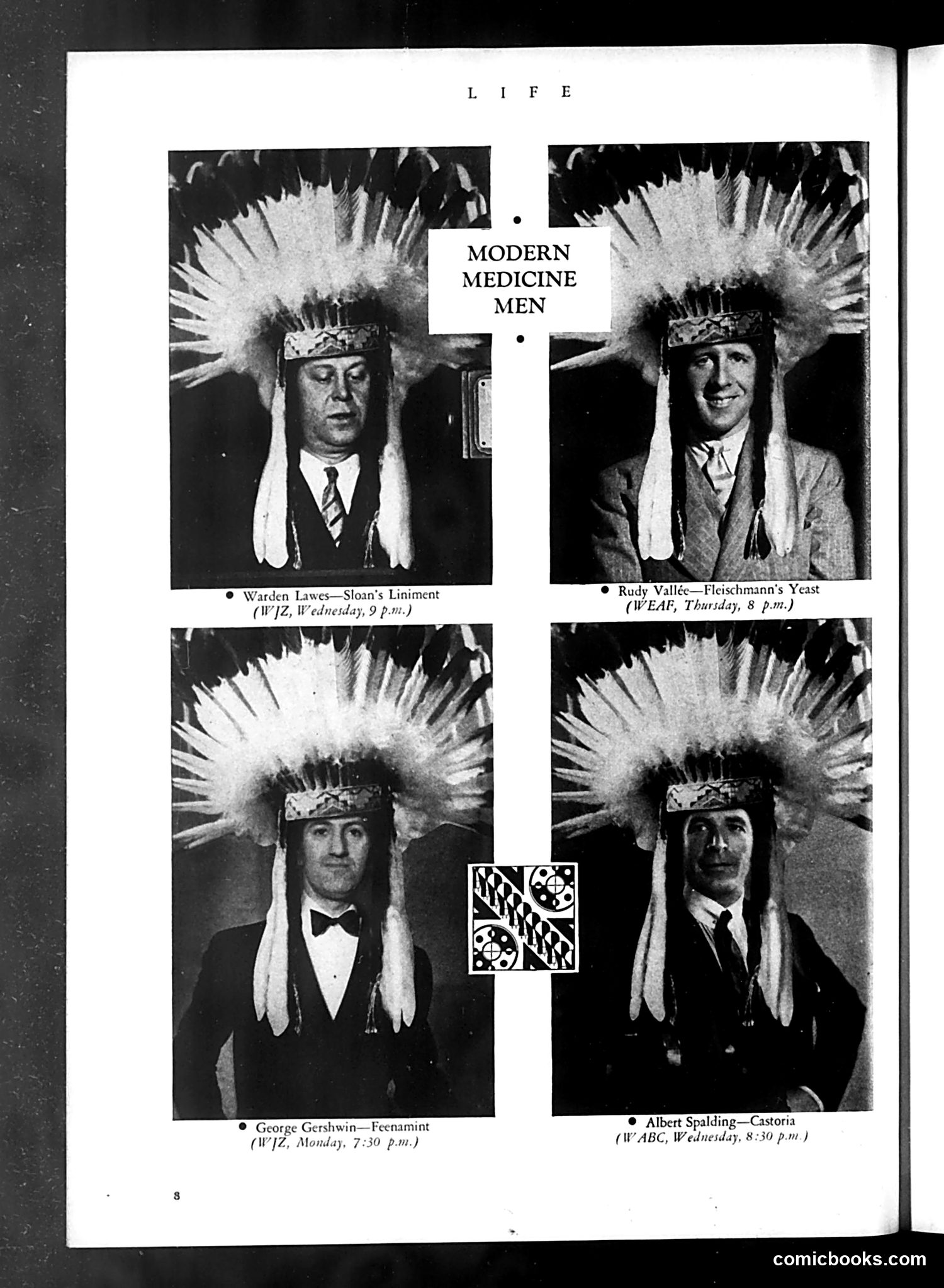
# "Modern Medicine Men" This is a satirical page from *Life* magazine mocking four prominent figures by depicting them wearing Native American headdresses—a visual gag equating them with "medicine men" (fraudsters). The four men shown are: - **Warden Lawes** (promoting Sloan's Liniment) - **Rudy Vallée** (endorsing Fleischmann's Yeast) - **George Gershwin** (promoting Fenamint) - **Albert Spalding** (advertising Castoria) The satire targets celebrity endorsements of patent medicines and commercial products, suggesting these famous figures are charlatans peddling dubious remedies—no different from stereotypical "medicine men." The headdresses visually reinforce this accusation of fraudulence, mocking both the endorsers and the products they promote.