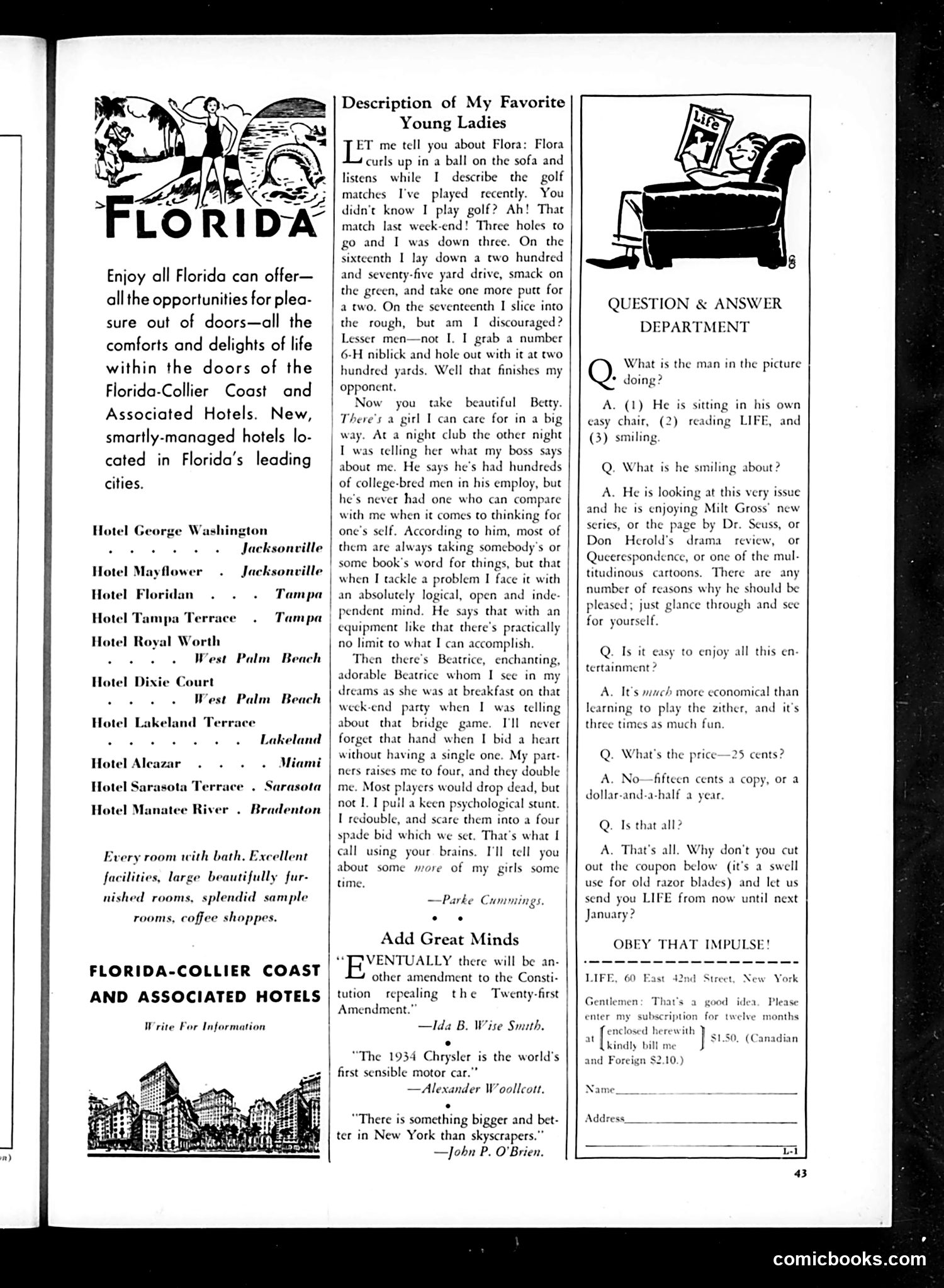
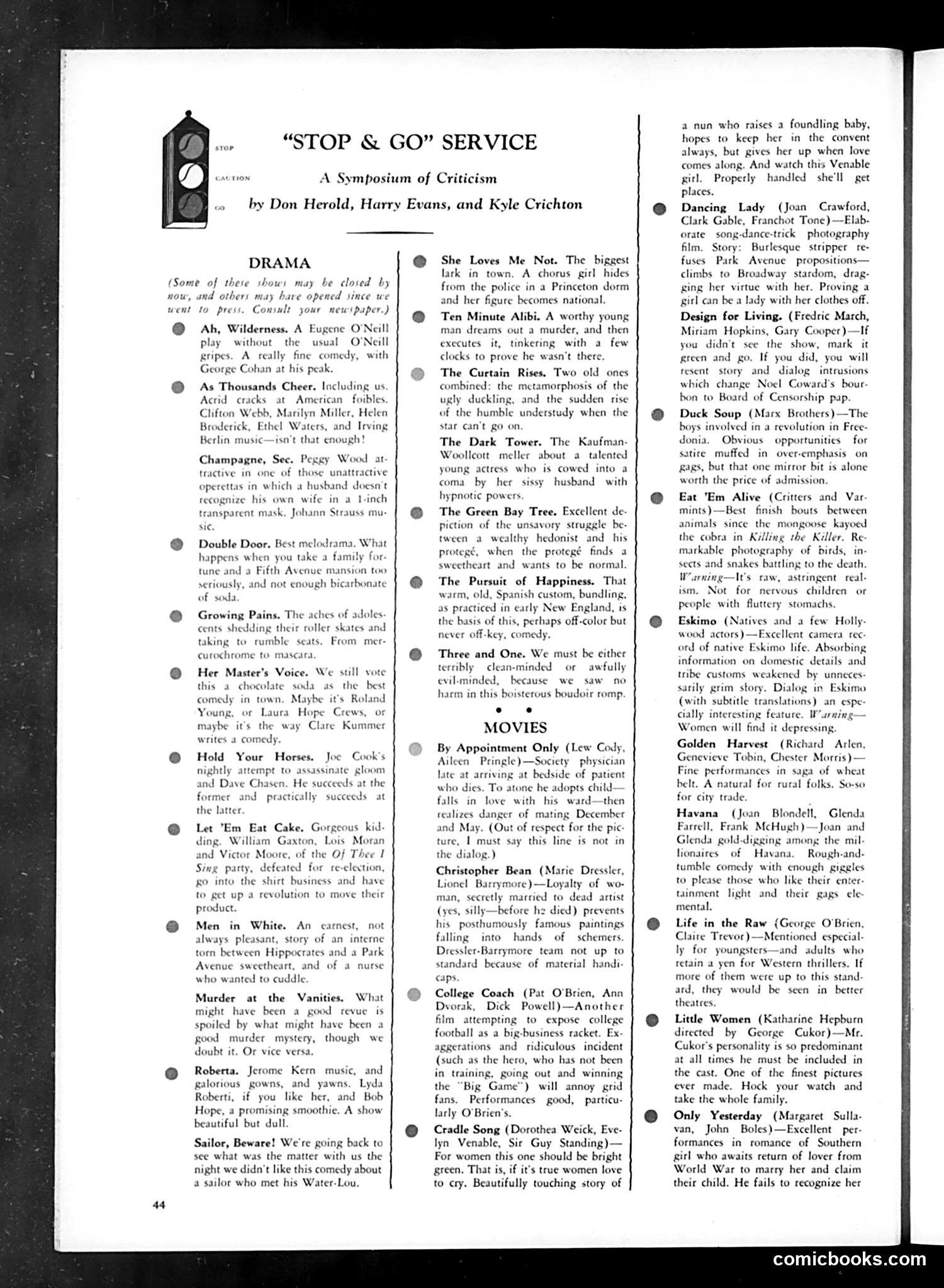
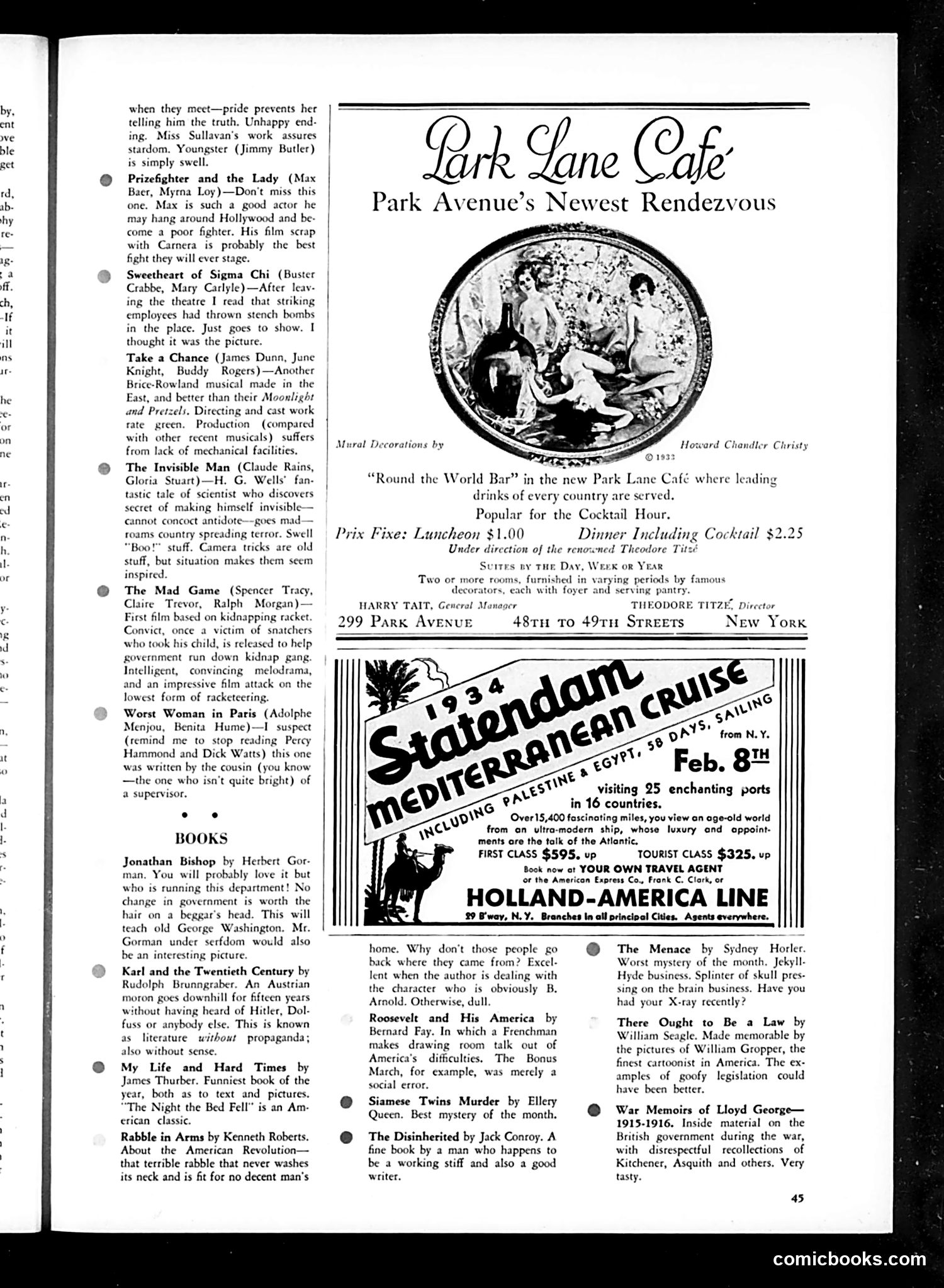
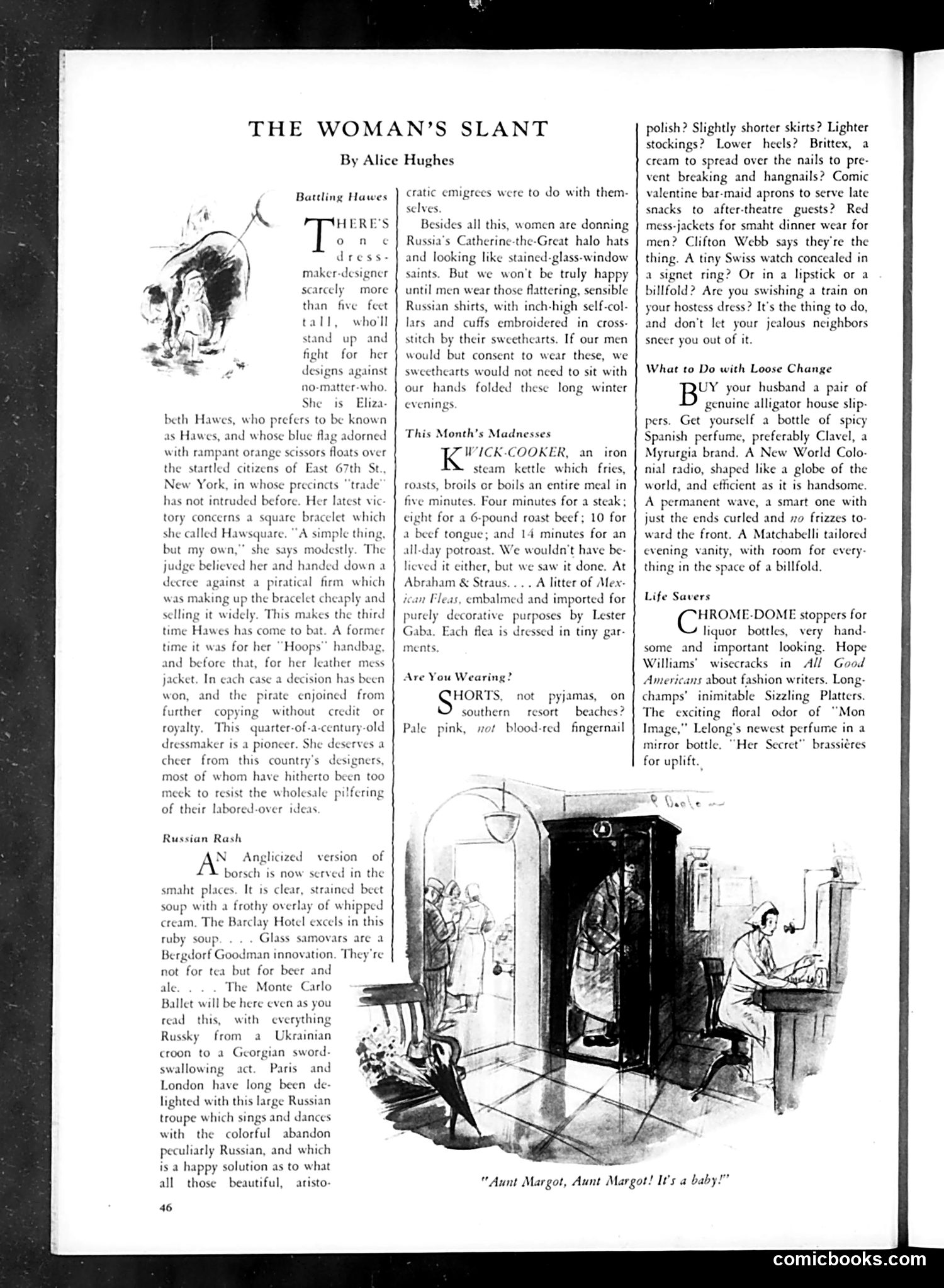
A complete issue · 50 pages · 1934
Life — January 1934
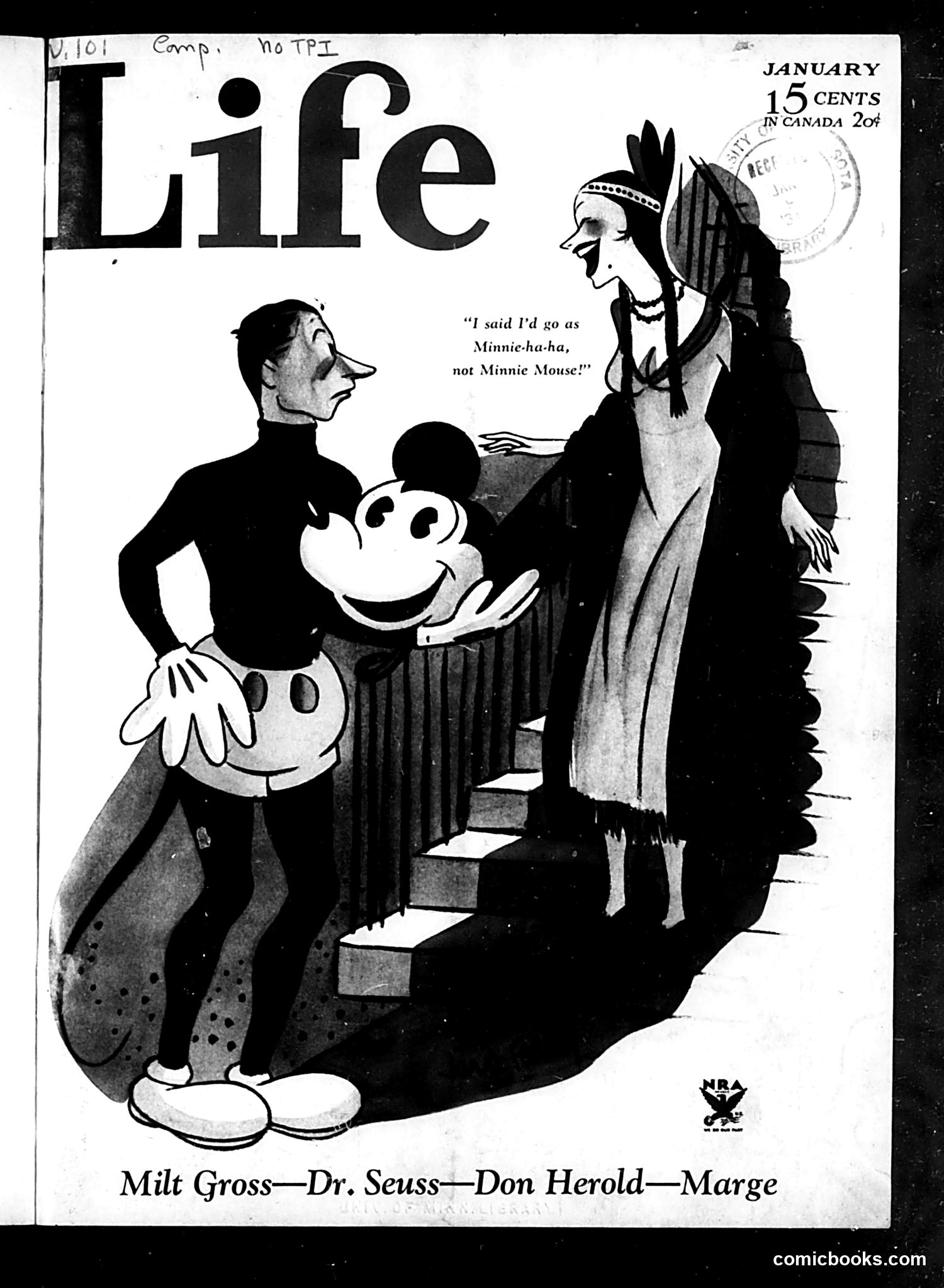
# Life Magazine Cover Analysis This January issue cover depicts a man in blackface portraying a Native American character, holding a mouse costume. The caption reads: "I said I'd go as Minnie-ha-ha, not Minnie Mouse!" The joke plays on a pun: "Minnie-ha-ha" (a stereotypical Native American name) versus "Minnie Mouse" (the Disney character). The man appears disappointed about the costume mix-up at what seems to be a costume party or masquerade event. The credits list Milt Gross, Dr. Seuss, Don Herold, and Marge as contributors. This reflects the magazine's typical satirical humor combining wordplay with visual gags. The blackface and stereotypical Native American depiction represent casual racial caricature common in early-to-mid 20th century American popular culture, now widely recognized as offensive.
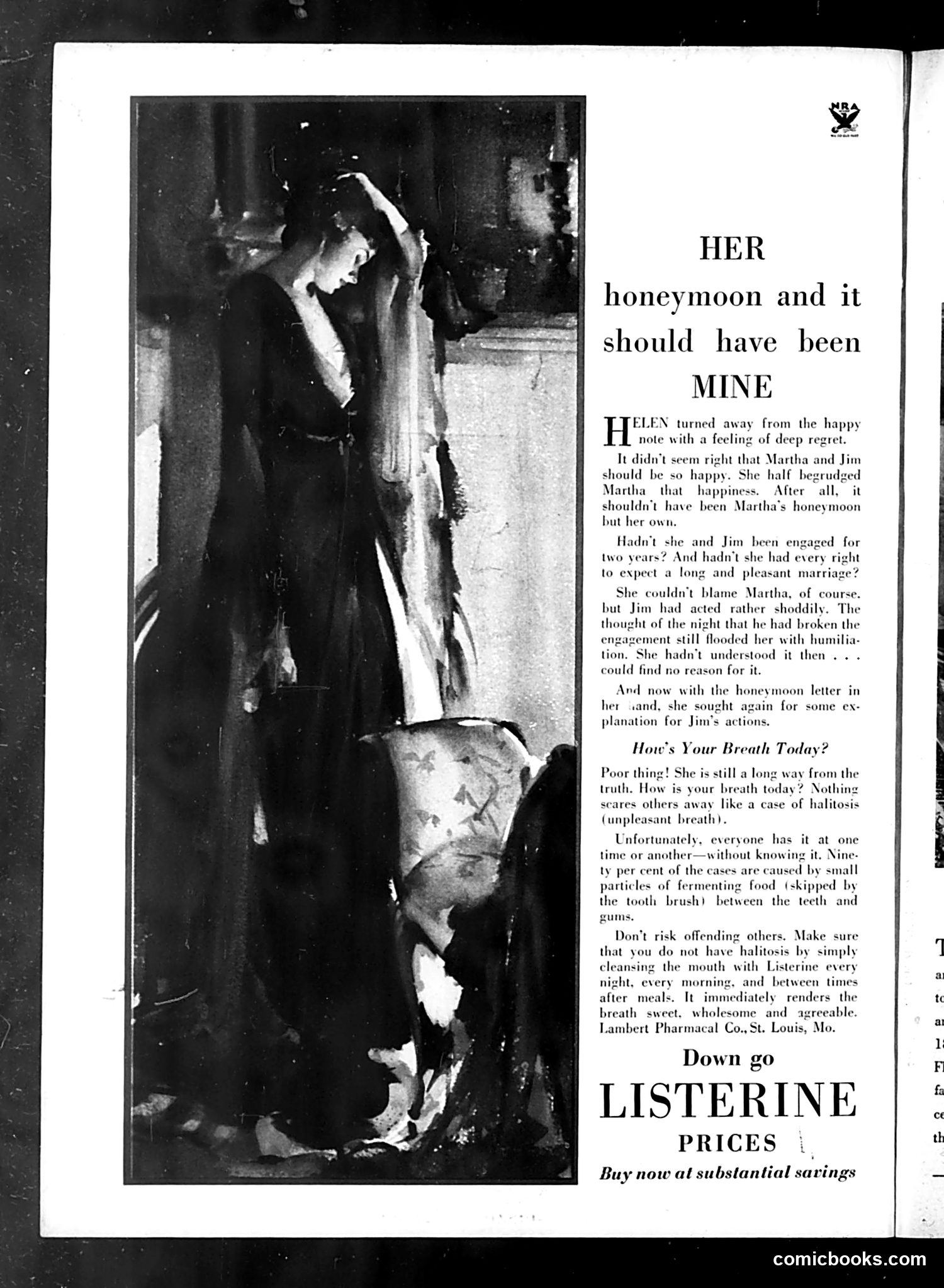
# Page Analysis This page combines fiction and advertising. The left side shows a black-and-white photograph illustrating a short story titled "HER honeymoon and it should have been MINE," about a woman named Helen who is jealous that her friend Martha is enjoying a honeymoon with Jim—a man Helen had been engaged to for two years. The right side is a **Listerine advertisement** exploiting social anxiety. It warns readers about "halitosis" (bad breath), claiming this common condition could damage relationships and social standing. The ad promotes using Listerine mouthwash as a solution, emphasizing that doing so makes breath "sweet, wholesome and agreeable." This represents typical mid-20th-century advertising strategy: create anxiety about a personal problem, then sell the product as a cure.
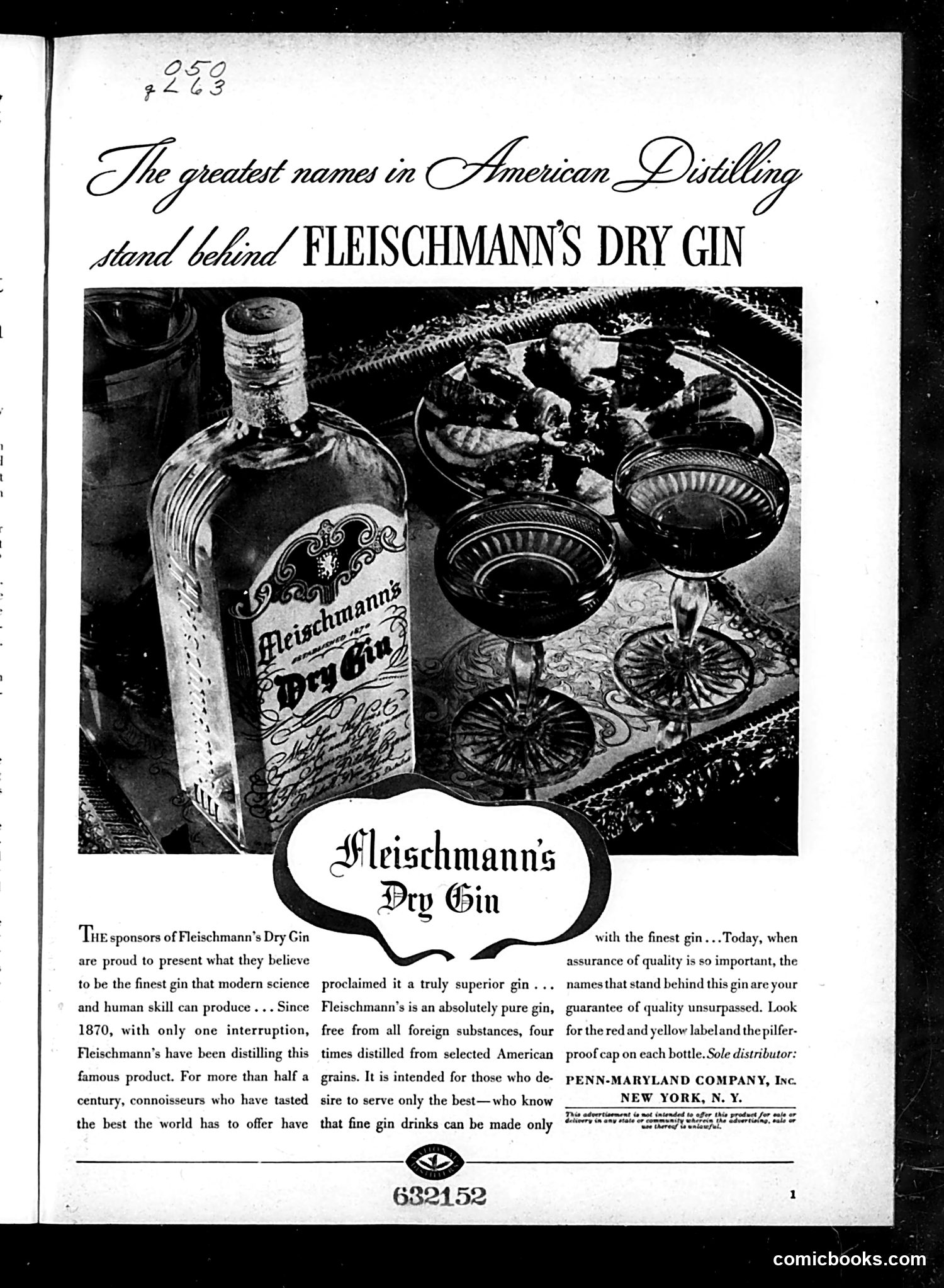
# Analysis This is not a cartoon or satire—it's a **full-page advertisement for Fleischmann's Dry Gin**. The ad features a bottle of the product alongside elegant cocktail glasses on what appears to be a decorative tray. The marketing text emphasizes that Fleischmann's has been distilling continuously since 1876 and claims to produce "the finest gin that modern science and human skill can produce." It highlights purity and quality, noting the gin is distilled from American grains and contains no foreign substances. The distributor is listed as Penn-Maryland Company, Inc. of New York. This represents typical early-to-mid 20th-century luxury alcohol advertising, positioning the product as a premium choice for discerning consumers.
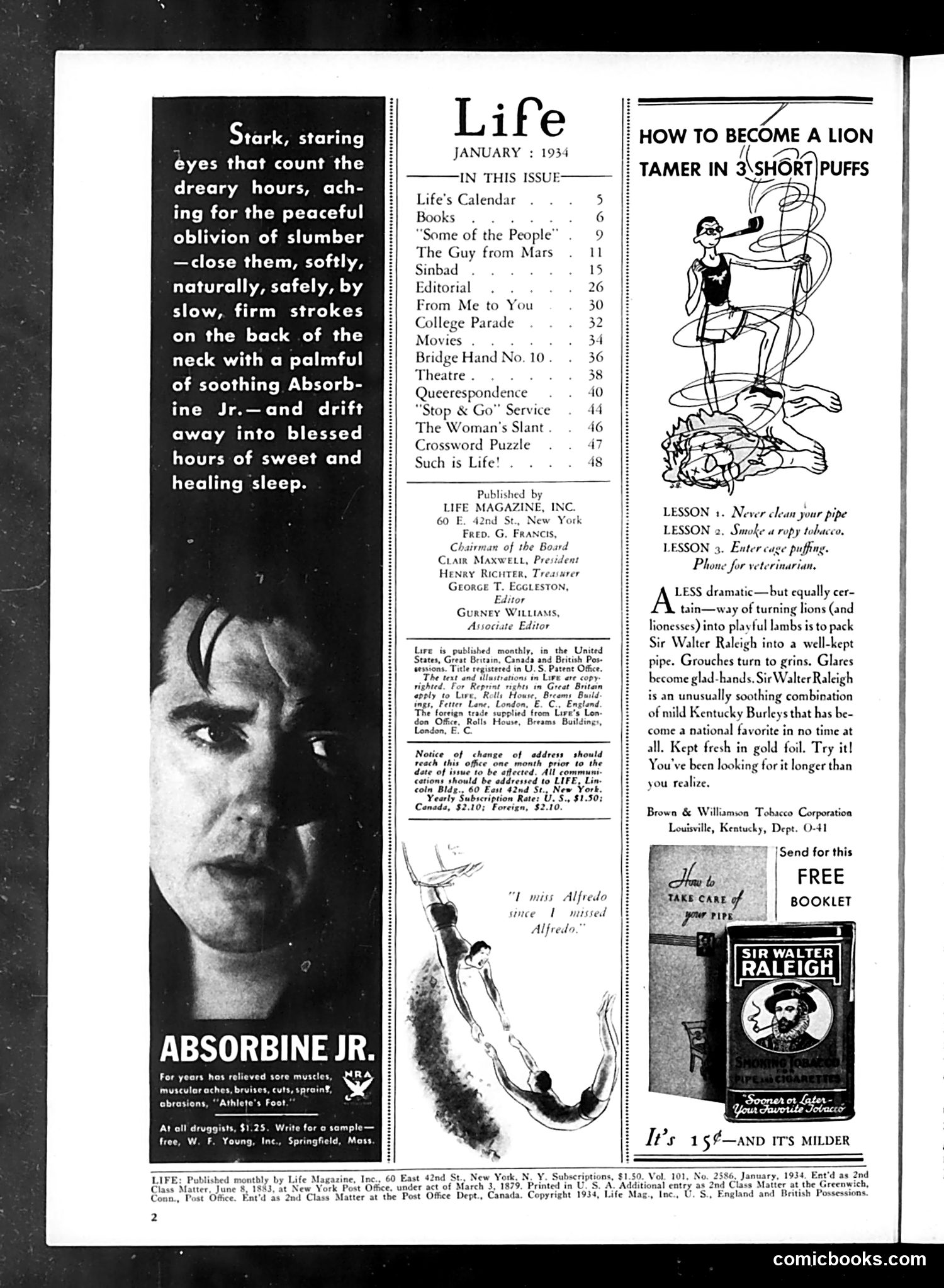
This page is primarily advertising and table of contents for Life magazine's January 1934 issue. The left column features an **Absorbine Jr. advertisement** with a close-up photograph of a man's face, promoting the liniment for "sore muscles, muscular aches, bruises, raft, sprains, abrasion, Athlete's Foot." The right side contains a humorous instructional piece titled **"How to Become a Lion Tamer in 3 Short Puffs,"** illustrated with cartoon drawings showing someone taming a lion using tobacco pipes. This appears to be satirizing both lion-taming and tobacco advertising by suggesting smoking makes one fearless enough to handle dangerous animals. The **Sir Walter Raleigh tobacco advertisement** at bottom right includes a quote and promotes a free booklet about pipe care, tying tobacco use to sophistication and leisure. The page reflects 1930s advertising conventions and consumer product promotion.
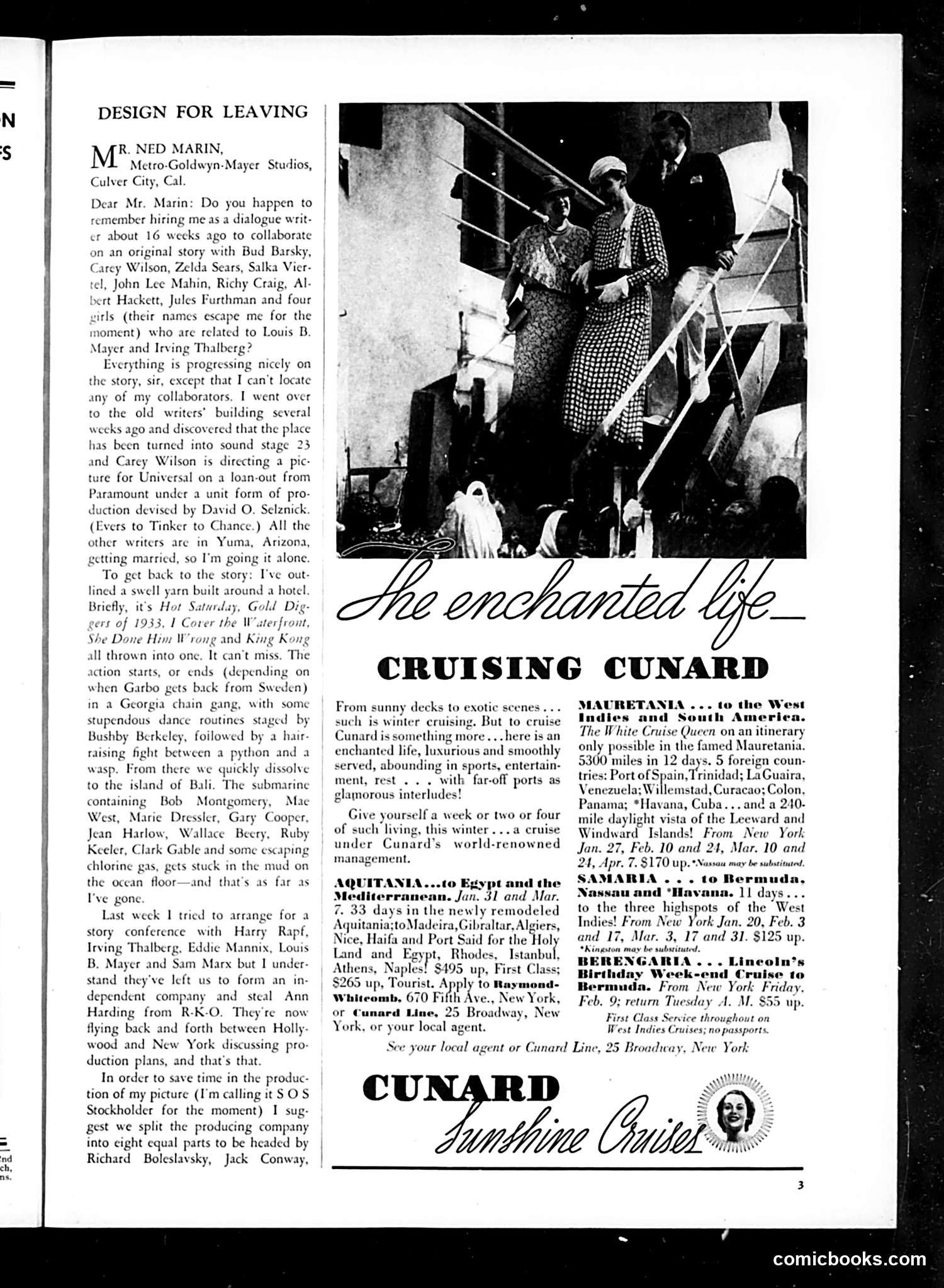
# Analysis This page is primarily **advertising and editorial content**, not political satire. The left column contains a letter from a writer (signed "M") to **Ned Marin** at Metro-Goldwyn-Mayer Studios, discussing screenplay collaboration on an original story involving multiple writers (Bud Barsky, Carey Wilson, and others listed). The writer describes production challenges, including relocating to film at a former writers' building now converted to "sound stage 23." The right side features a **Cunard cruise line advertisement** titled "The Enchanted Life: Cruising Cunard." It includes a photograph of passengers boarding a ship and promotes luxury Caribbean and Mediterranean voyages aboard the White Cruise Queen, emphasizing "sports, entertainment, and glamorous interludes." This represents typical 1930s magazine content mixing industry correspondence with aspirational travel advertising.
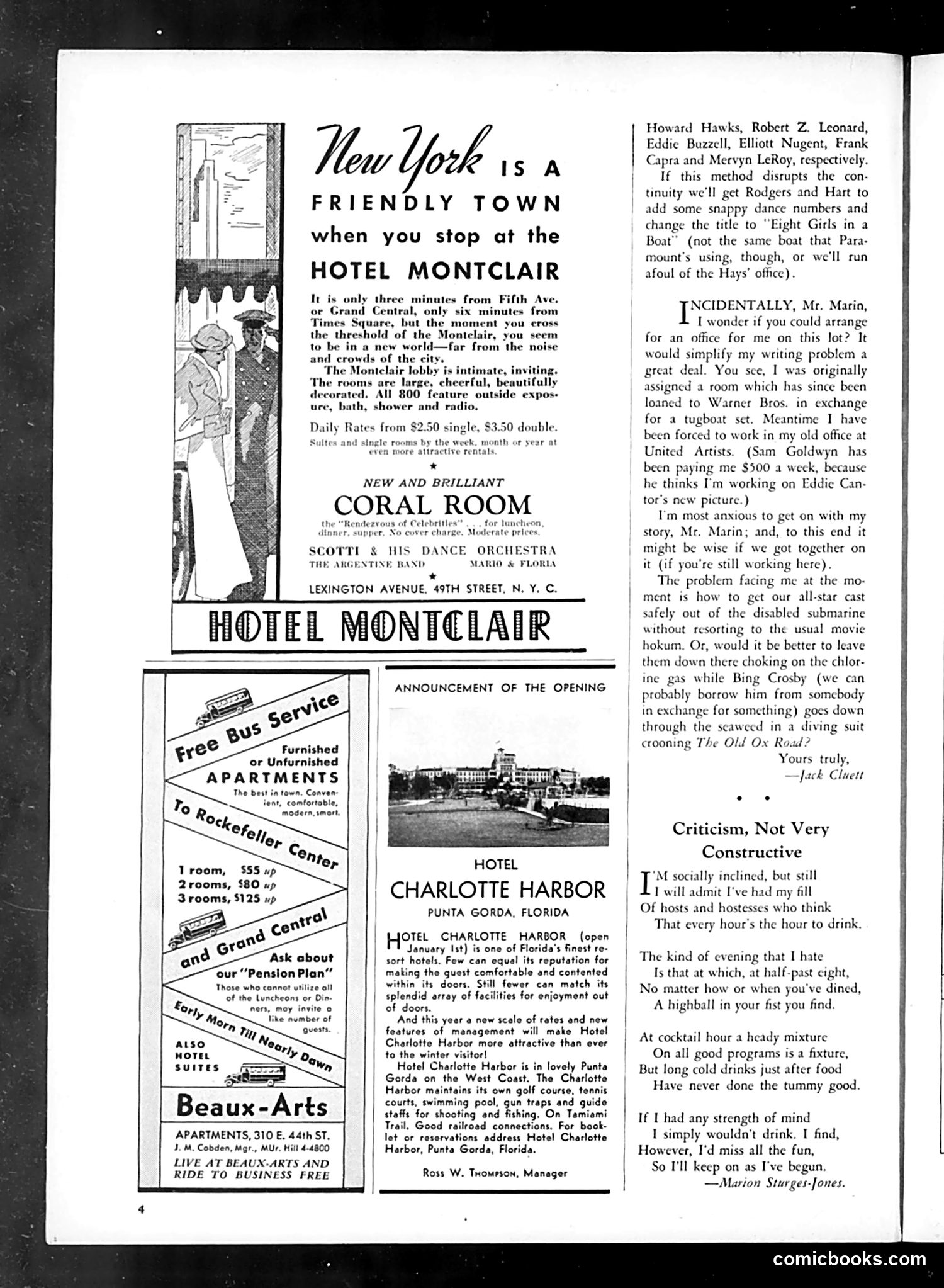
# Page Analysis This page is primarily **advertising and letters to the editor** rather than political cartoons. The advertisements promote New York hotels (Hotel Montclair, Hotel Charlotte Harbor), apartments with "free bus service" to Rockefeller Center, and the Beaux-Arts apartments building. The right column contains reader letters. One correspondent (Jack Cluett) humorously describes Hollywood production challenges, mentioning actor Bing Crosby and a comedic scenario involving a disabled submarine and "The Old Ox Road." Below that is a poem titled "Criticism, Not Very Constructive" by Marion Sturges-Jones criticizing cocktail hour culture. **This is not a satirical cartoon page**—it's a standard magazine layout mixing commercial ads with reader correspondence and light verse, typical of Life magazine's format during this era.
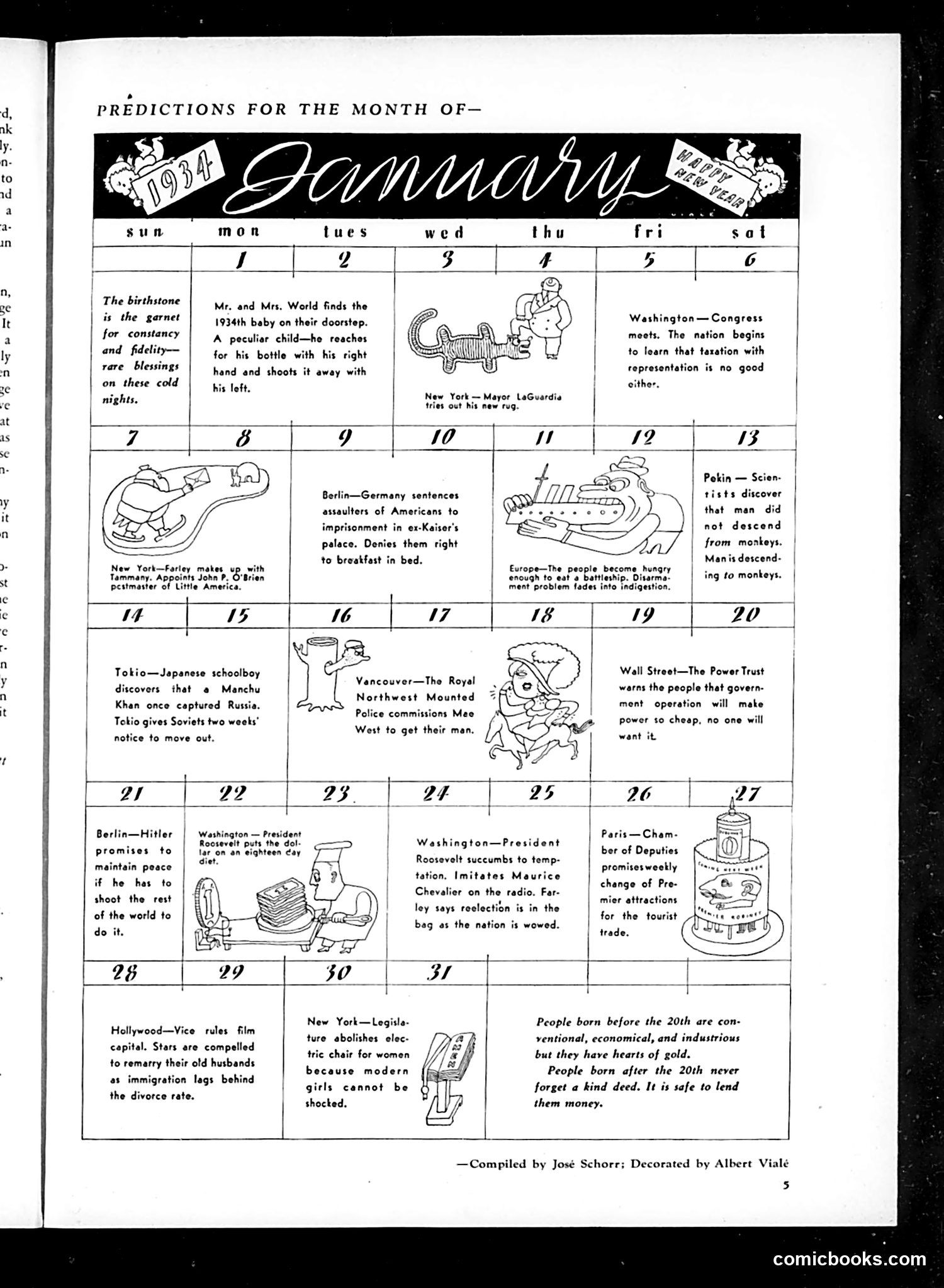
# January 1924 Predictions Calendar This satirical calendar presents humorous "predictions" for January 1924, mocking current events and public figures. Key references include: - **January 2**: "Mr. and Mrs. World" having a baby—satirizing generalized world affairs - **January 10**: Berlin–Germany mocking American demands regarding the Kaiser's palace - **January 22-25**: President Roosevelt (likely Theodore, given the 1924 date) featured in multiple predictions about peace promises and temptation - **January 30**: New York legislature abolishing electric chairs for women because "modern girls cannot be shocked"—satirizing both gender attitudes and criminal justice The cartoons use exaggeration and absurdist humor to mock political hypocrisy, gender stereotypes, and international tensions of the era. The predictions are intentionally ridiculous, presenting the opposite of likely outcomes.
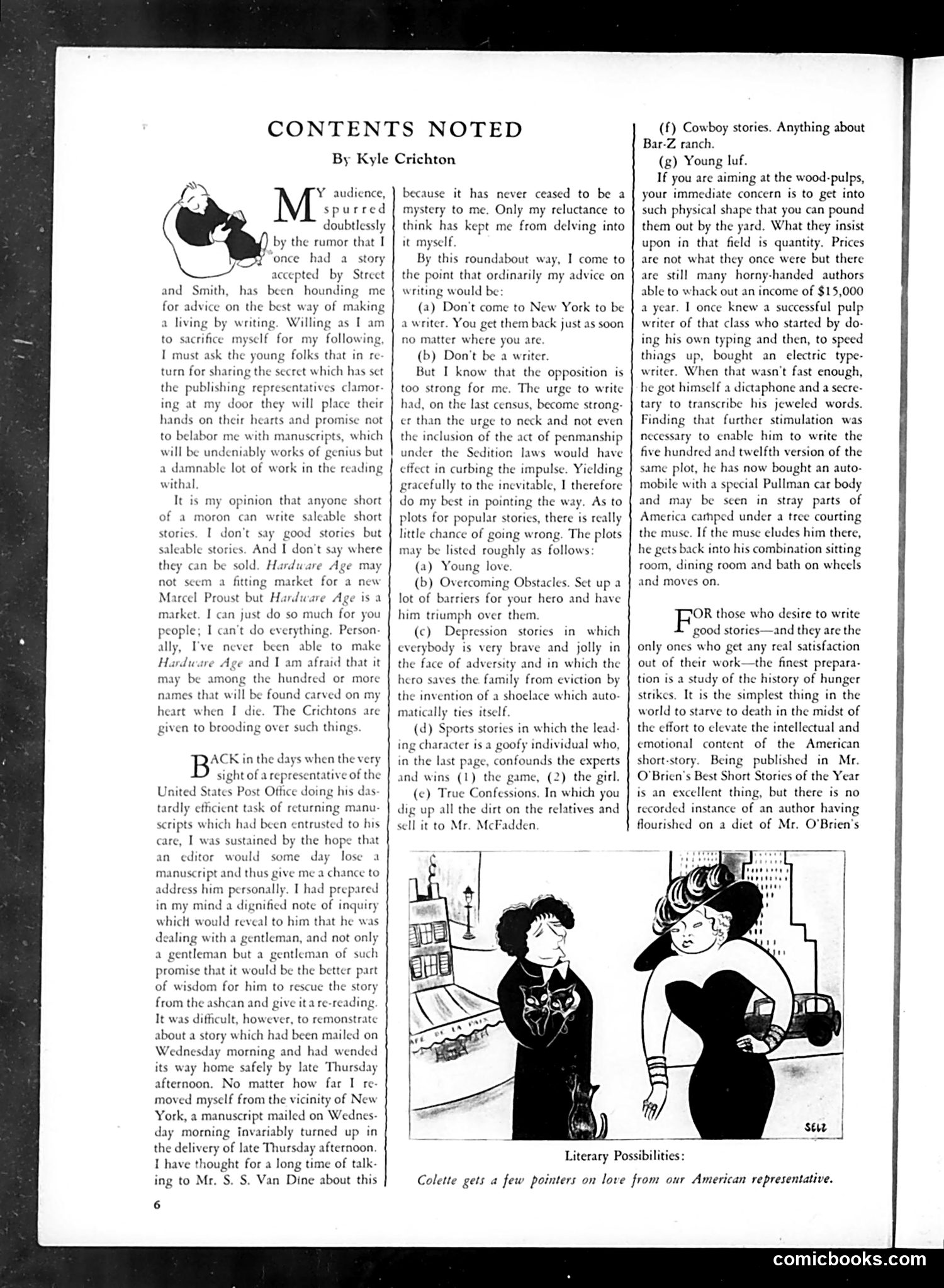
# "Contents Noted" by Kyle Crichton This page features Kyle Crichton's editorial advice on writing, particularly short stories for publication. The accompanying cartoon illustrates "Literary Possibilities: Colette gets a few pointers on love from our American representative." The cartoon depicts two women—one appears to be the French writer Colette (identifiable by the caption), receiving romantic advice from what the text calls "our American representative." The satire targets the contrast between European literary sophistication and American cultural presumption: an American woman confidently dispensing romantic guidance to an internationally celebrated French author known for her sophisticated treatment of love and desire in literature. The joke mocks American cultural attitudes of the period—the assumption that American perspectives on romance could instruct a French literary master.
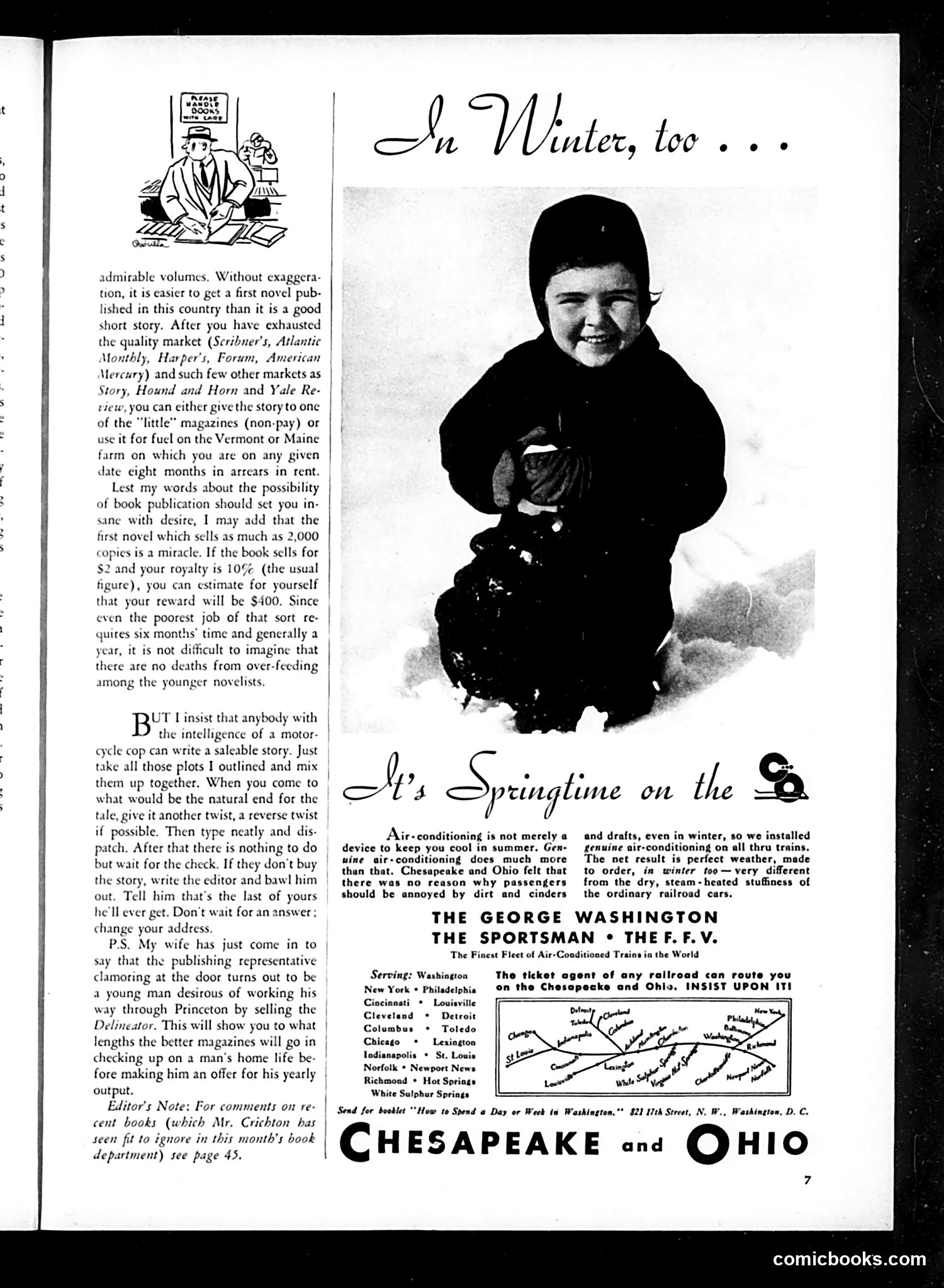
# Page Analysis This page is primarily an **advertisement for Chesapeake and Ohio Railway trains**, not a political cartoon. The large image shows a smiling child in winter clothing sitting in snow, accompanying the headline "In Winter, too... It's Springtime on the C&O." The ad's main point: the railway's trains feature air-conditioning year-round, making winter travel as comfortable as spring. The text emphasizes that air-conditioning prevents summer heat and winter drafts/cinders—problems on ordinary railroad cars. The left column contains editorial commentary about publishing opportunities for short-story writers in various magazines, unrelated to the advertisement. This is commercial advertising using a cheerful winter scene to promote modern train amenities, not satire or political commentary.
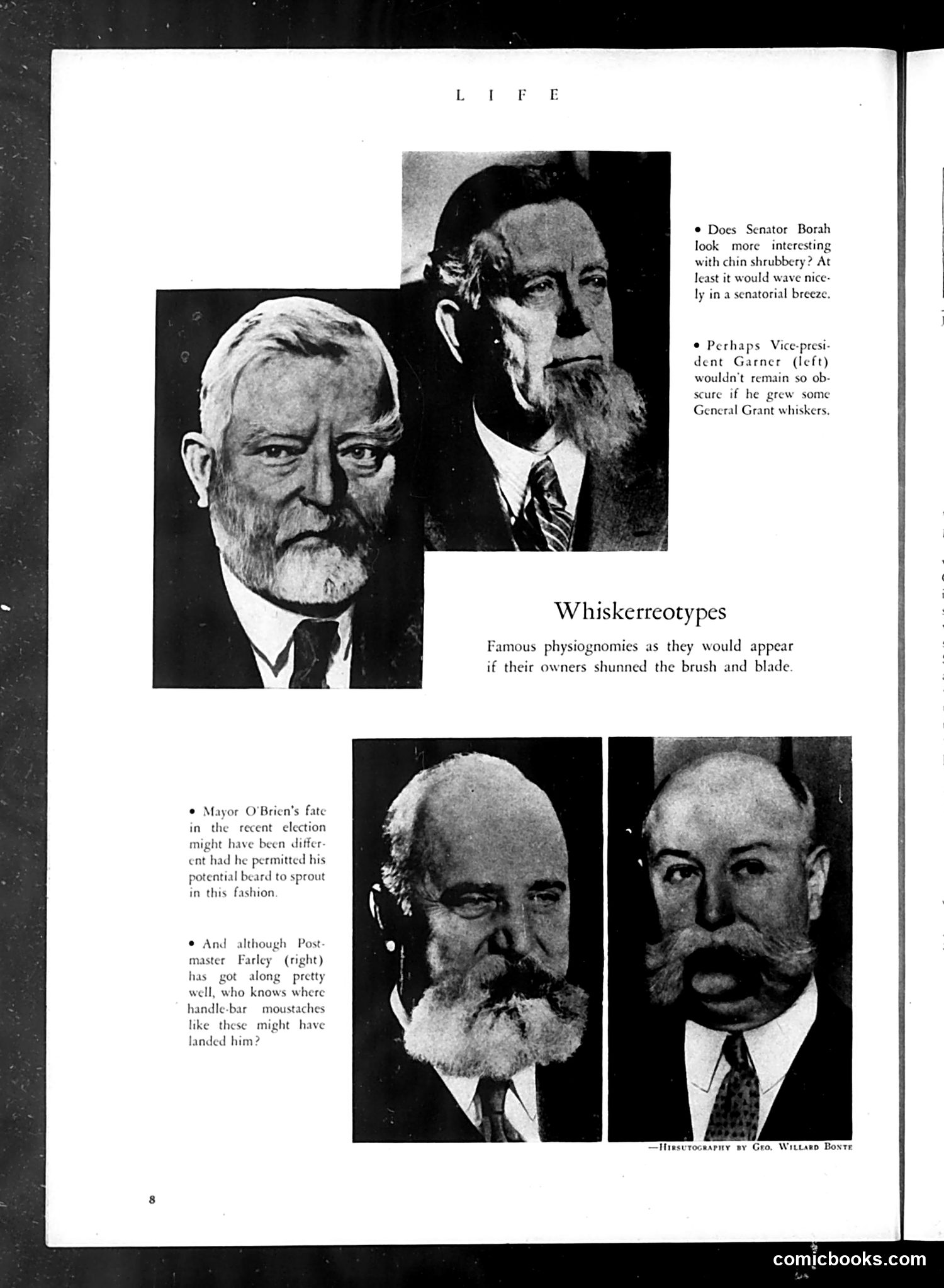
# "Whiskerreotypes" Explained This page satirizes prominent political figures of the era through their facial hair. The section titled "Whiskerreotypes" presents four men with notably distinctive beards and whiskers, captioning them with humorous observations about how their appearance might change if they adopted different grooming styles. The visible captions reference Senator Borah, Vice-President Garner, Mayor O'Brien, and Postmaster Farley, suggesting these are real politicians being lampooned. The satire playfully speculates how their public images would shift with altered facial hair—implying that appearance significantly shapes political perception and authority. This reflects early 20th-century *Life* magazine's characteristic approach: using physiognomy and grooming as vehicles for gentle political mockery rather than harsh attack.
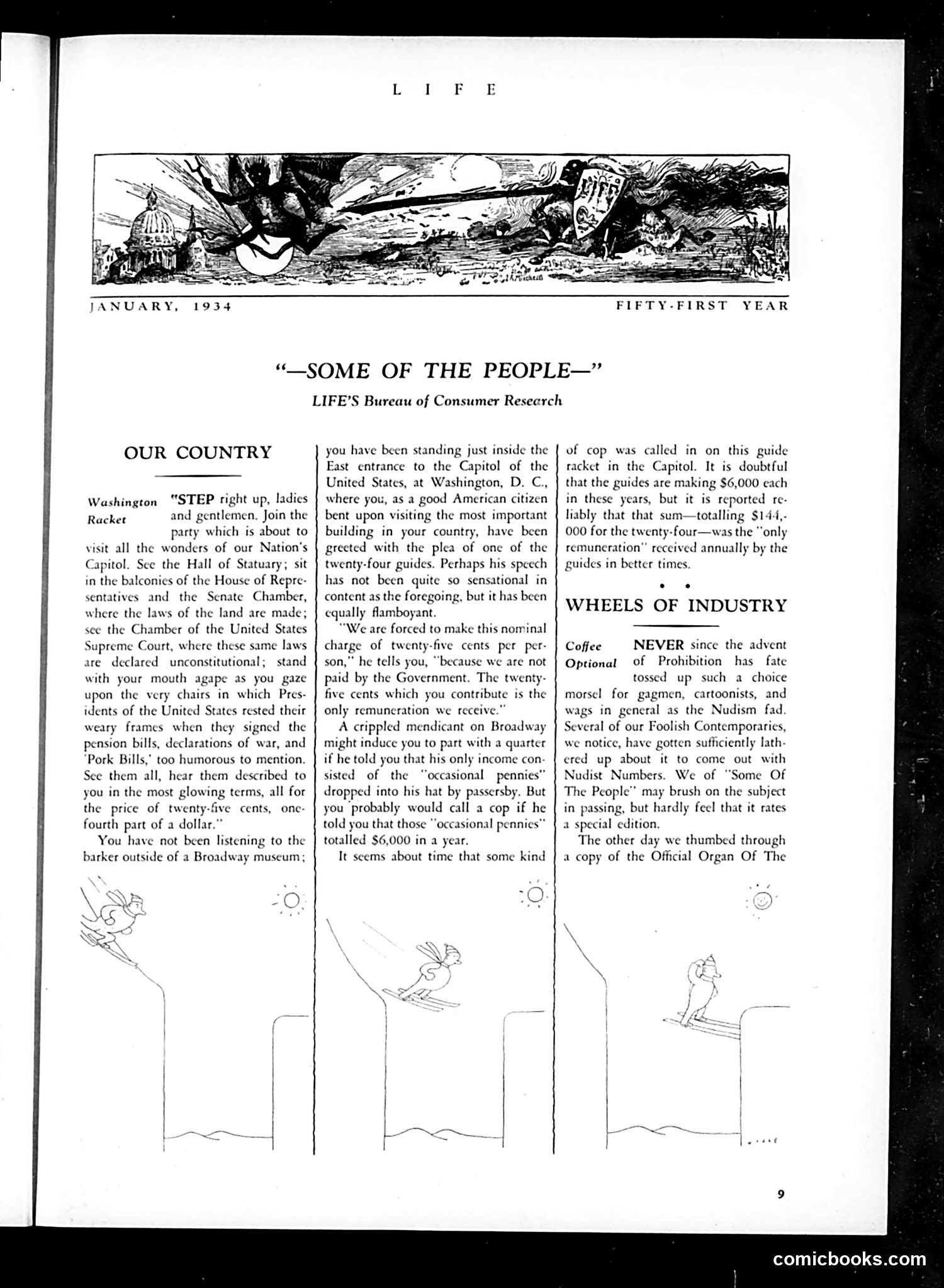
# "Some of the People" - Life Magazine, January 1934 This page contains two satirical pieces about American life during the Depression era. **"Our Country - Washington Racket"** mocks tour guides at the U.S. Capitol who charge visitors 25 cents each, claiming guides earn $6,000 annually from these "occasional pennies." The satire targets the disconnect between guides' modest visible earnings and their actual substantial income—highlighting petty corruption or dishonest income during economically hard times. **"Wheels of Industry - Coffee Dispensed"** appears to satirize Prohibition's end and its economic aftermath, referencing "Foolish Contemporaries" who engaged in illegal alcohol sales. The sketches show figures in precarious positions, likely commenting on the unstable financial situations of those involved in bootlegging or related enterprises during the transition period. Both pieces exemplify Life's satirical commentary on Depression-era American economic realities and social hypocrisy.
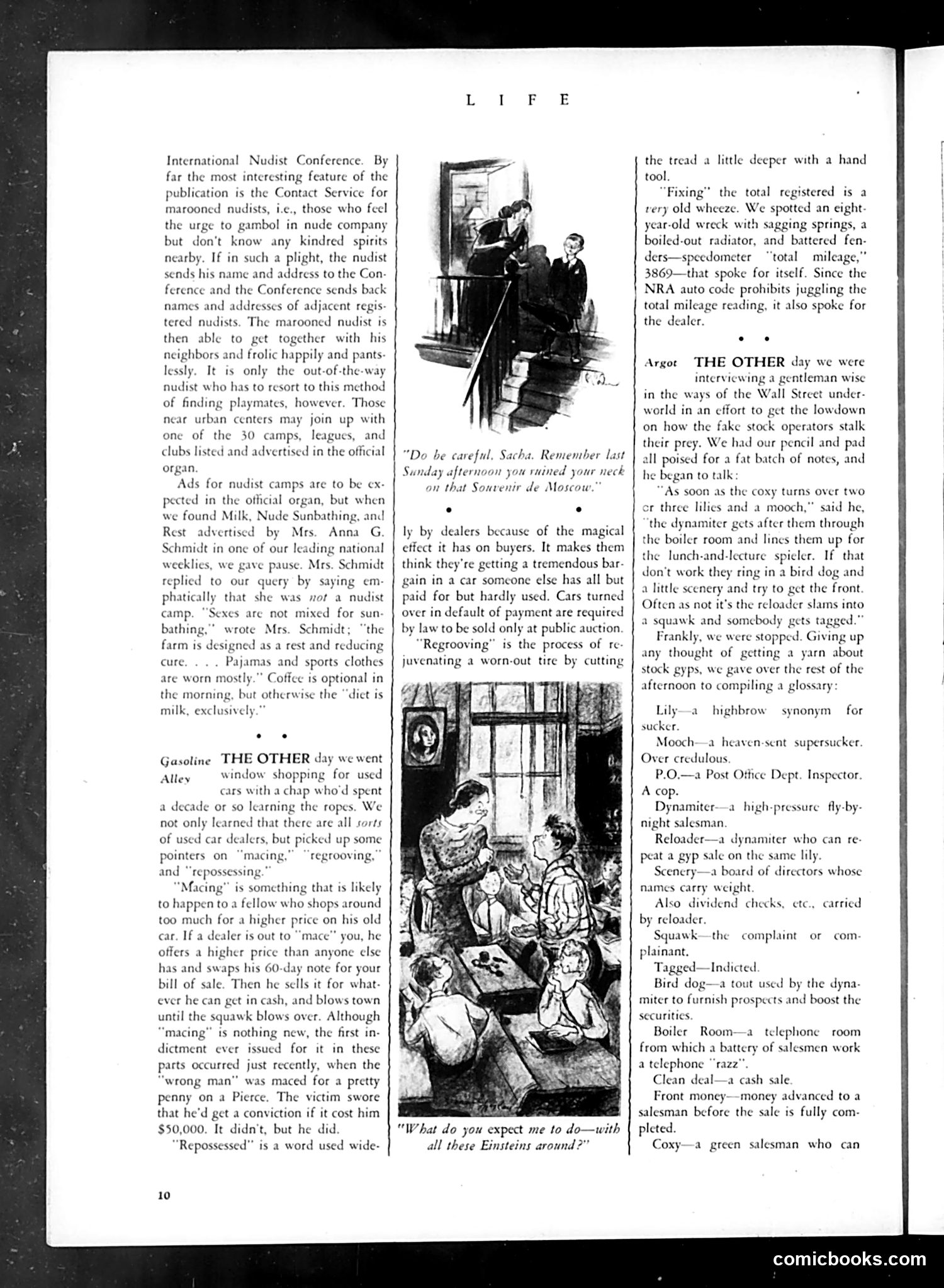
# Analysis of Life Magazine Page This page contains two illustrations with accompanying text about con artists and fraud schemes in 1920s urban America. The upper cartoon depicts a street encounter where someone warns "Do be careful, Sacha. Remember last Sunday afternoon you nearly broke your neck on that Souvenir de Moscow"—appearing to reference a scam involving counterfeit goods or alcohol (possibly referring to Prohibition-era bootlegging). The lower, larger illustration shows what appears to be a con game in progress, with multiple figures gathered around in a tenement or cramped space, captioned "What do you expect me to do—with all these Einsteins around?" The surrounding text discusses various urban fraud schemes: used car "grooming" (odometer tampering), stock manipulation on Wall Street, and con artist tactics. The page satirizes how ordinary people fall victim to these schemes and exposes the vocabulary and methods of 1920s criminal enterprises.