A complete issue · 61 pages · 1933
Life — September 1933
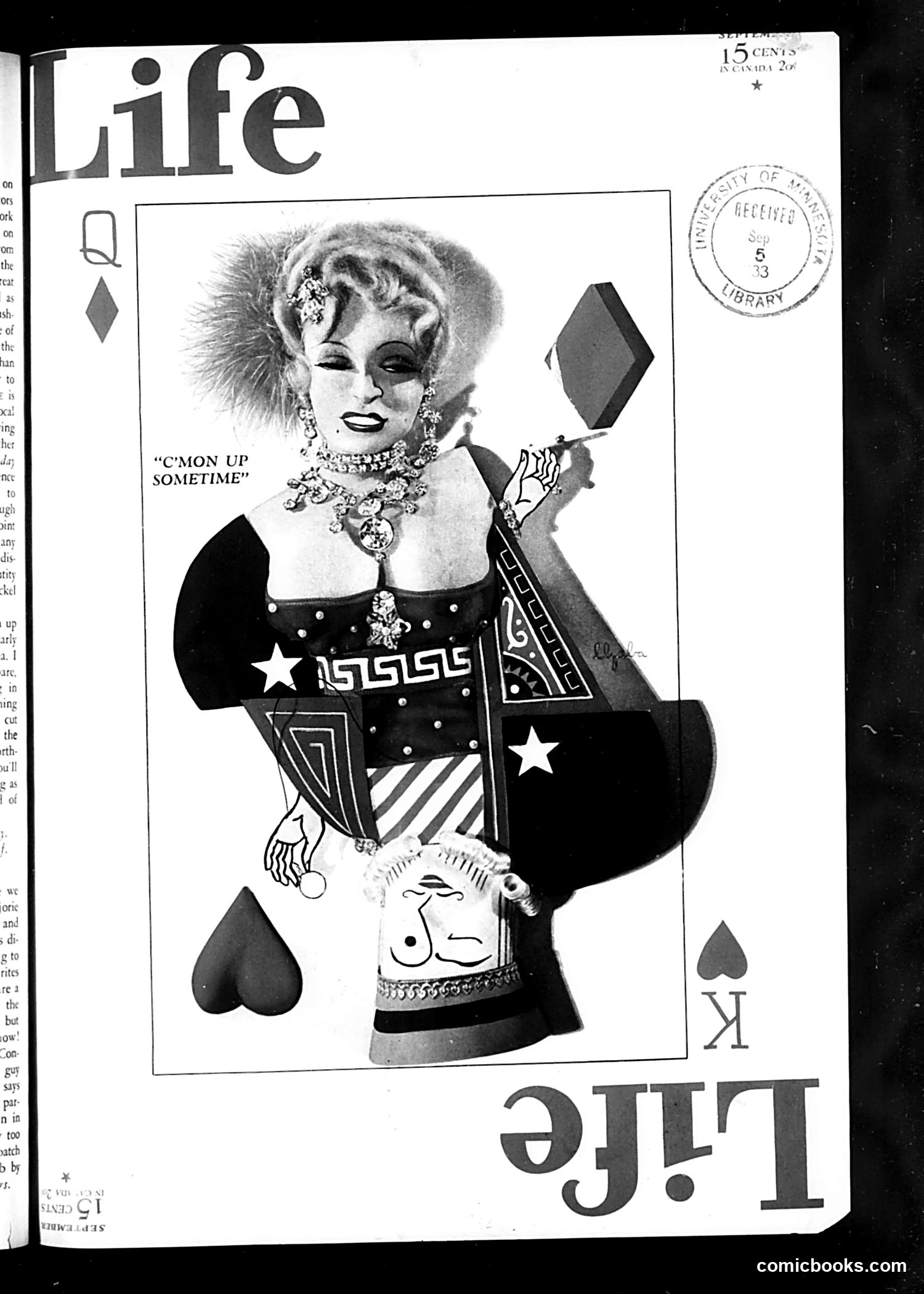
# Life Magazine Playing Card Illustration This appears to be a Life magazine cover or playing card design featuring a Queen character in glamorous, art-deco styled clothing with ornate jewelry, feathered headpiece, and decorative patterns. The phrase "C'MON UP SOMETIME" is captioned—a famous catchphrase associated with Mae West, the 1930s actress and sex symbol known for her provocative performances and double-entendre humor. The design uses playing card elements (Queen, diamonds, hearts, spades), suggesting this is either satirizing high-society entertainment or parodying West's famous persona. The illustration style and luxurious costume emphasize her reputation for glamour and sexual charisma, which was considered scandalous for the era. Life magazine frequently mocked celebrities and social figures through such theatrical caricatures.
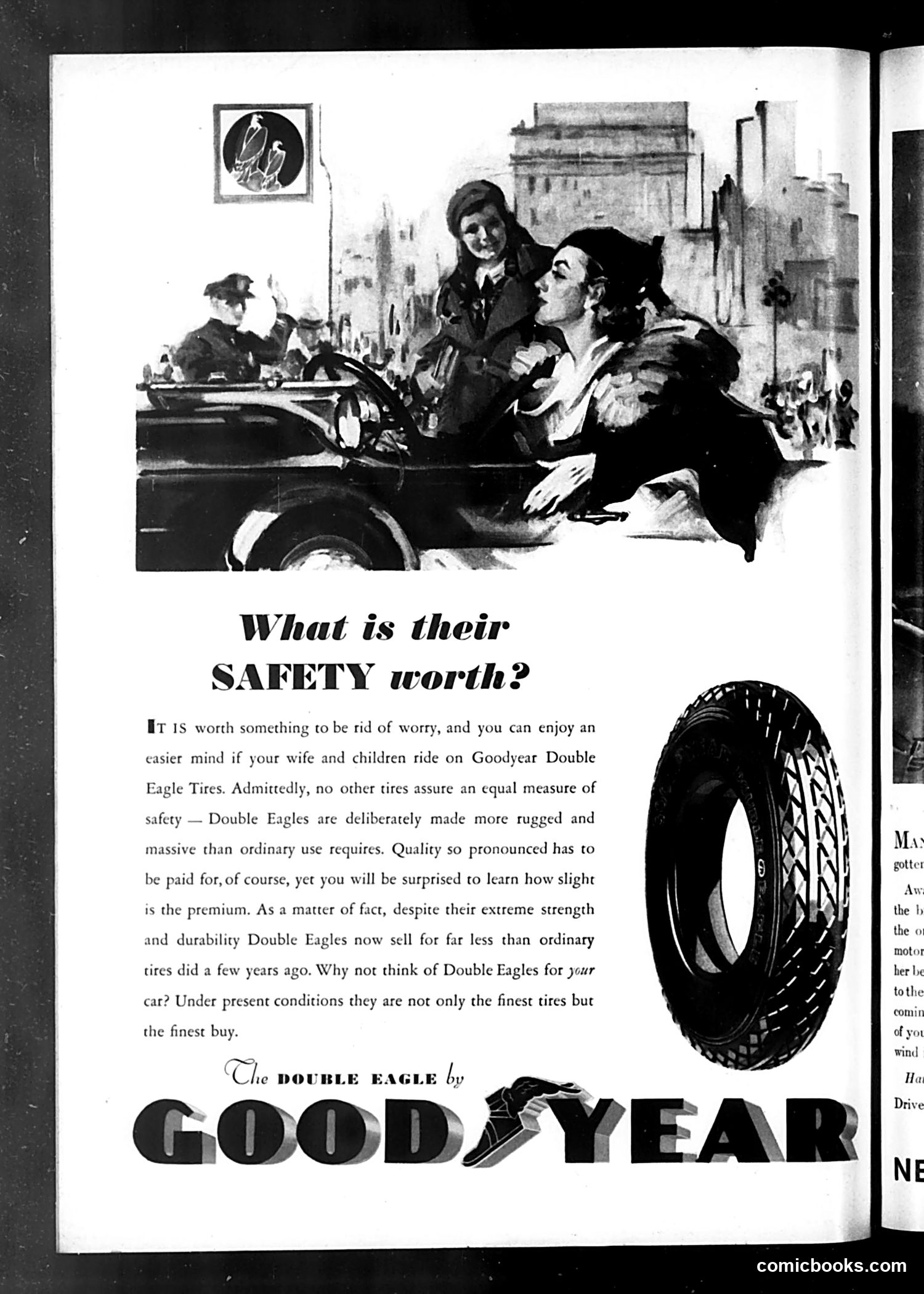
# Analysis This is **advertising content**, not editorial satire. The page promotes Goodyear's "Double Eagle" tire brand through a staged domestic scene. The image shows a family in an open car—a woman and two children—with a suited man (possibly a chauffeur or family member) at the wheel, driving through a city street. The accompanying text uses safety and family welfare as the sales pitch: parents can "enjoy an easier mind" knowing their loved ones ride on Double Eagle tires, which are marketed as exceptionally durable and strong. The appeal is explicitly emotional and gendered—targeting male breadwinners' anxieties about protecting their wives and children through product purchase. Despite claiming superior quality, the ad notes Double Eagles cost less than competitors, positioning them as both premium *and* economical. This reflects early-20th-century marketing strategies linking automobile safety to family security.
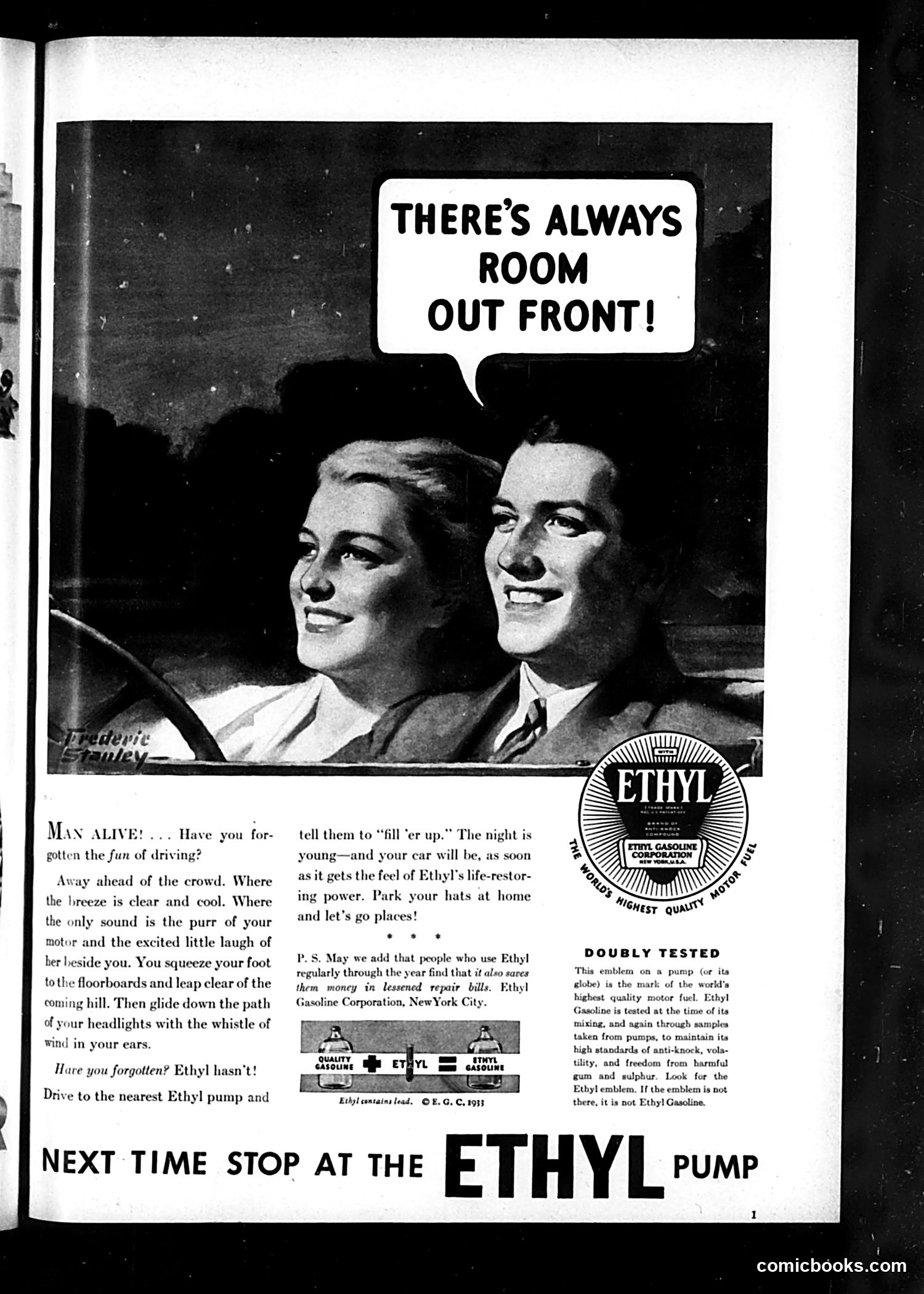
# Ethyl Gasoline Advertisement This is a **full-page advertisement** for Ethyl gasoline, not political satire. The image shows a couple in a car with the man saying "There's always room out front!"—a double entendre suggesting both spacious driving and romantic intimacy. The ad appeals to leisure and romance, inviting readers to experience "the fun of driving" with Ethyl's "life-restoring power." The text emphasizes superior engine performance and cost savings through reduced repair bills. The "Doubly Tested" seal certifies the gasoline's quality. The phrase "Next time stop at the Ethyl pump" is the sales pitch. This represents early 20th-century automotive advertising targeting affluent consumers, blending product benefits with lifestyle aspiration and gender dynamics typical of the era.
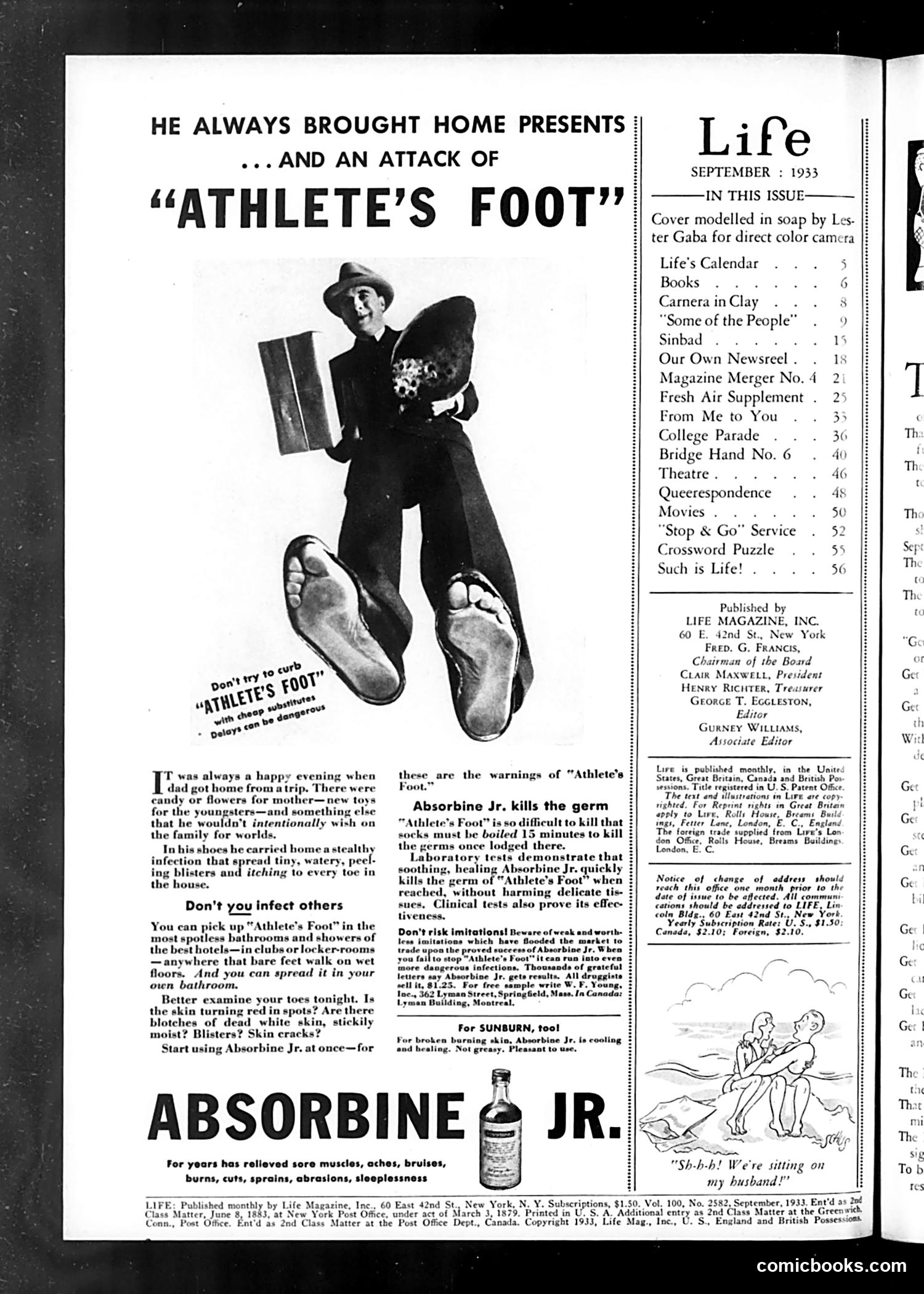
# Analysis of Life Magazine, September 1933 This page is primarily a **full-page advertisement for Absorbine Jr.**, a medicinal liniment product. The ad uses humor to sell the remedy by depicting a man bringing home gifts alongside "Athlete's Foot"—personified as an unwanted houseguest. The joke plays on the common experience of men returning from trips with both presents and minor ailments. The advertisement warns that athlete's foot is contagious and difficult to eliminate, then promotes Absorbine Jr. as the solution, claiming it "kills the germ." The right side shows Life Magazine's table of contents for September 1933. The overall approach reflects 1930s advertising strategy: combining humorous scenarios with health anxiety to drive product sales.
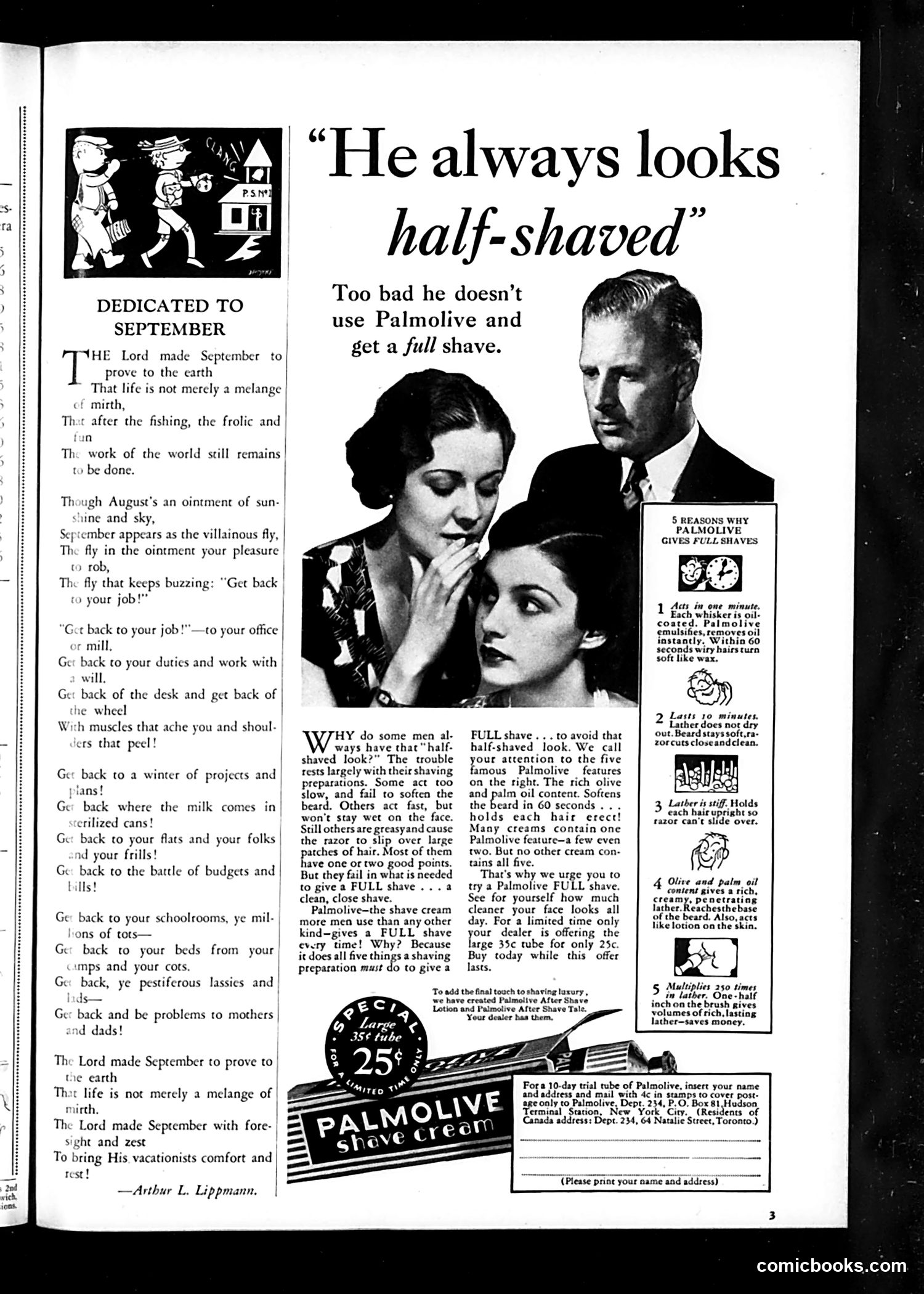
# Analysis This page is **primarily a Palmolive shaving cream advertisement** rather than satirical content. The main visual shows three people examining a man's face, with the headline claiming he "always looks half-shaved." The ad argues that most shaving creams fail to soften beards properly, leaving men with an incomplete shave. It lists "5 Reasons Why Palmolive Gives Full Shaves," emphasizing the product's superior lathering and softening abilities. The left column contains a poem "Dedicated to September" by Arthur L. Lippmann—unrelated content typical of Life magazine's format. This represents vintage advertising rhetoric: identifying a social problem (appearing unkempt) and positioning the product as its solution. The "half-shaved" appearance would have been considered unacceptable grooming for mid-20th century men. The advertisement uses mild social pressure—the scrutiny of others examining his face—to motivate purchase.
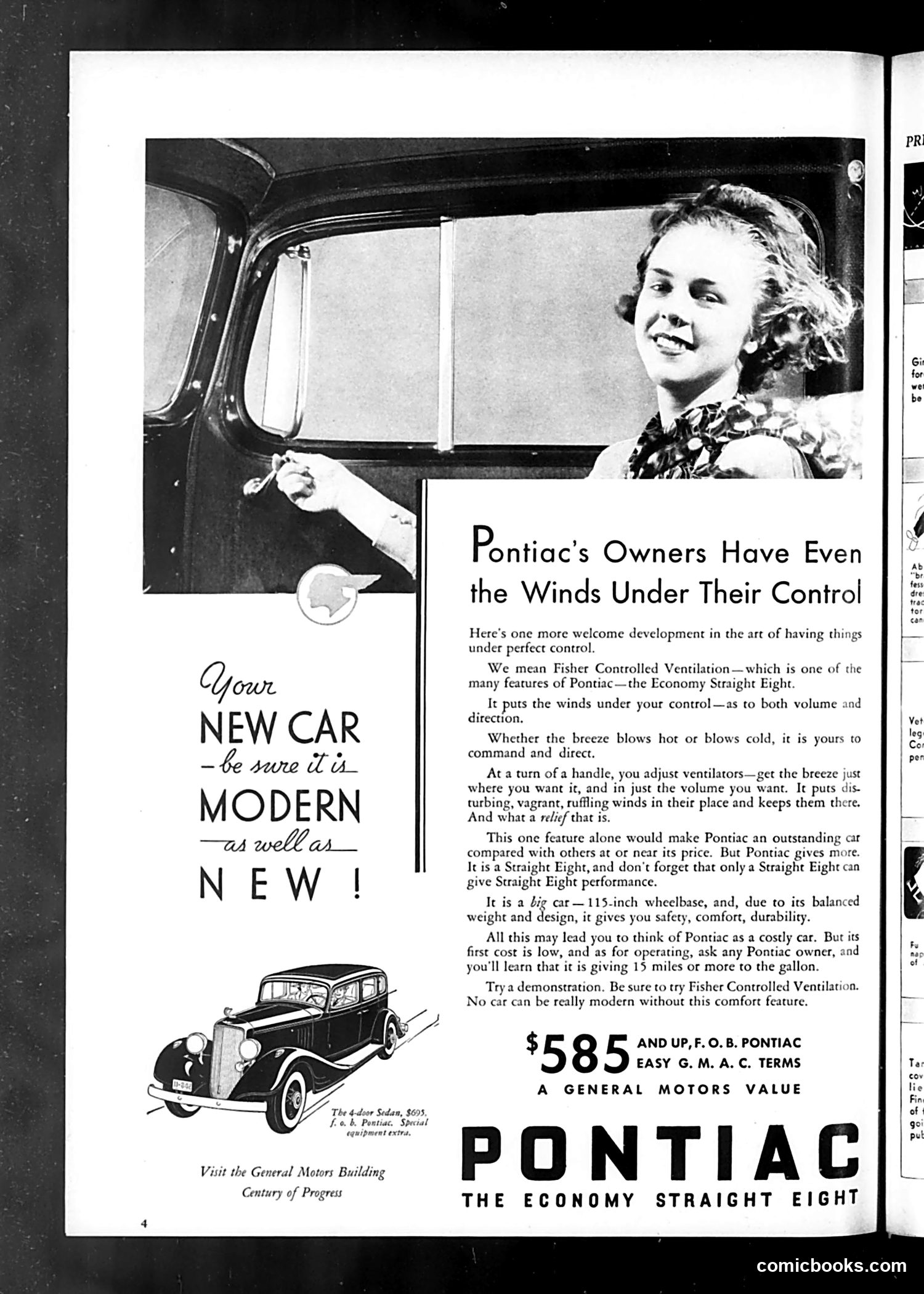
# Analysis This page is **primarily an advertisement**, not a satirical cartoon. It's a 1930s Pontiac car advertisement from *Life* magazine. The ad features a smiling woman in a car to illustrate the "Fisher Controlled Ventilation" feature—a movable vent system allowing drivers to control wind direction and volume. The accompanying text emphasizes this as a modern comfort feature. The left side declares "Your NEW CAR—be sure it is MODERN—as well as NEW!" with an illustration of a Pontiac sedan, promoting the vehicle as both contemporary and affordable at $585 (F.O.B., with financing available). The satire is subtle: the ad humorously promises complete control over "the winds" themselves—a playful exaggeration of the ventilation system's practical benefit. This is straightforward commercial messaging, not political commentary.
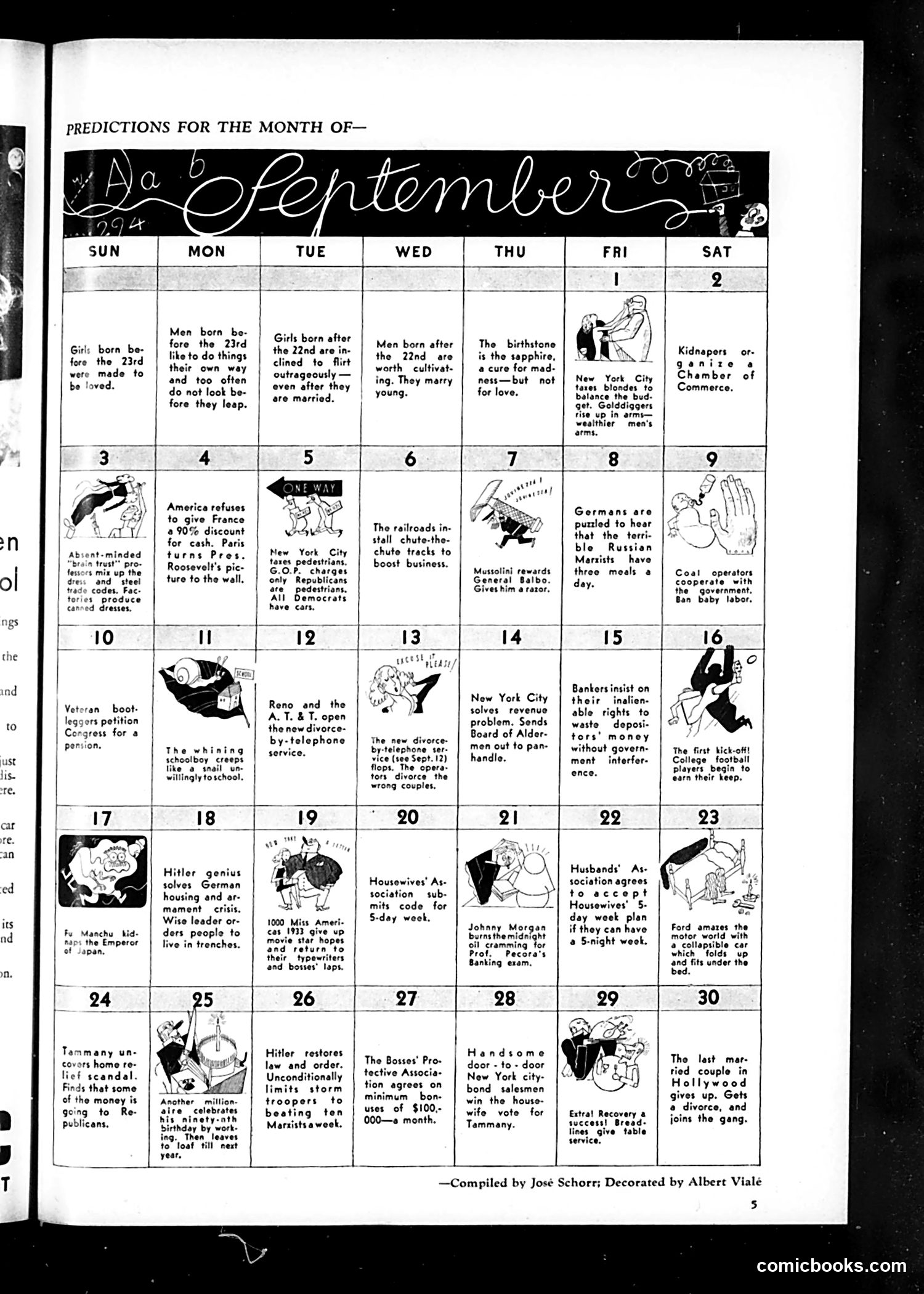
# September 1937 Predictions Calendar This is a humorous "predictions" calendar for September 1937, mixing real historical events with satirical commentary. Key entries include: - **September 3**: Reference to "brain trust" and FDR's policies, mocking New Deal programs - **September 12-13**: Divorce-related jokes about "wrong couples" - **September 18**: Hitler's housing and armament buildup (authentic Nazi policy concern) - **September 20**: Housewives' code for a 5-day work week (labor satire) - **September 26-27**: Hitler restoring "law and order" and Nazis' "protective association" (sarcastic commentary on Nazi ideology) - **September 30**: Hollywood divorce satire The calendar satirizes both domestic American politics (New Deal, labor disputes) and rising international tensions (Nazi Germany). The tone is light mockery of contemporary anxieties about economic recovery, labor rights, and fascism.
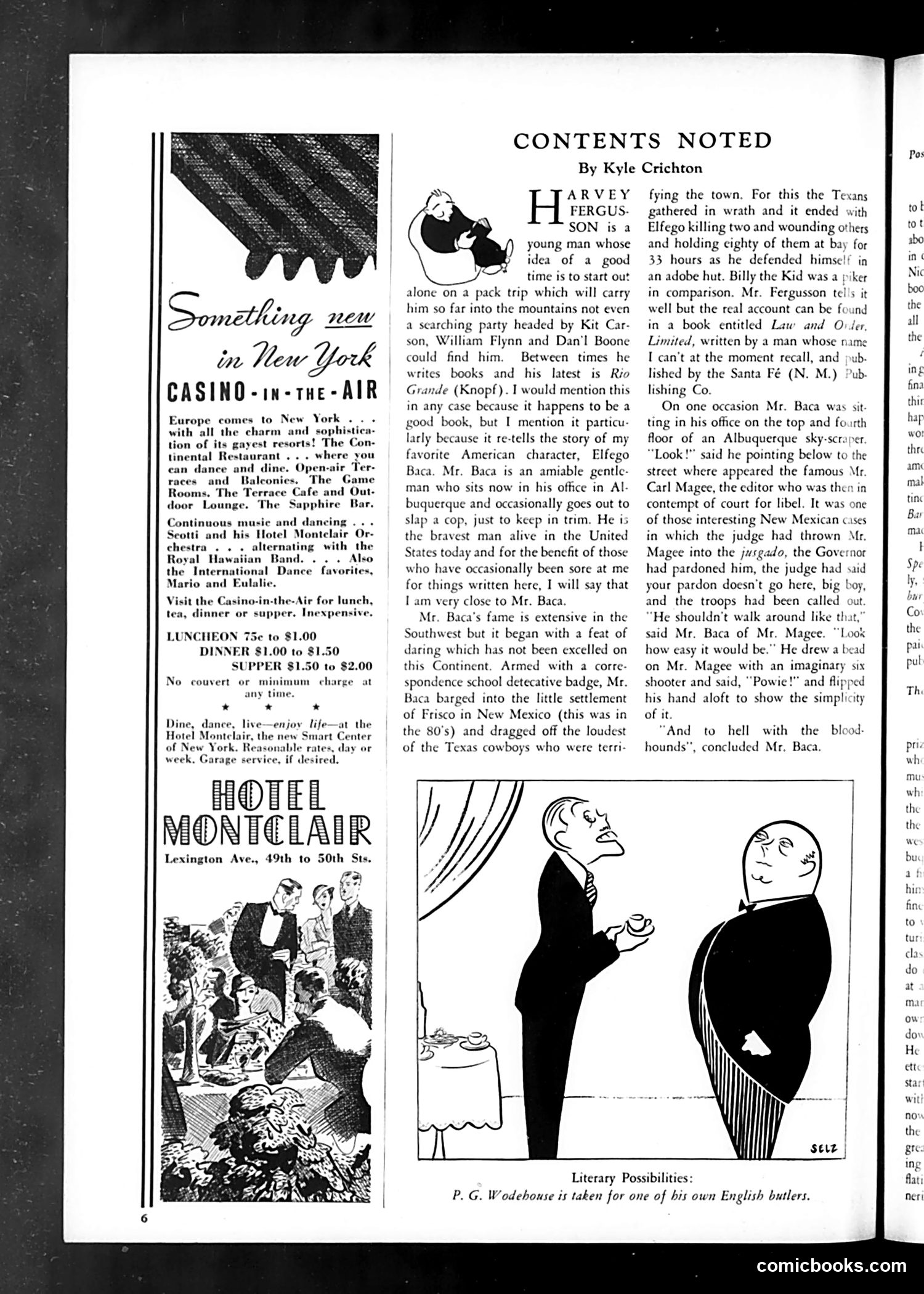
# Analysis of Page 6, Life Magazine This page is primarily **advertising and editorial content** rather than political satire. The main elements are: 1. **"Casino-in-the-Air"** advertisement for a New York hotel/restaurant featuring European sophistication and entertainment. 2. **"Contents Noted" column** by Kyle Crichton discussing Harvey Ferguson's novel *Rio Grande*, focusing on the character Elfego Baca, a historical New Mexico figure known for a famous gunfight. Crichton humorously recounts Baca's confrontation with editor Carl Magee over a libelous article. 3. **Small cartoon** at bottom captioned "Literary Possibilities: P.G. Wodehouse is taken for one of his own English butlers" — a gentle joke about the author's appearance resembling his fictional characters. The page reflects 1930s-era magazine format mixing advertisements, book reviews, and light humor rather than hard-hitting political commentary.
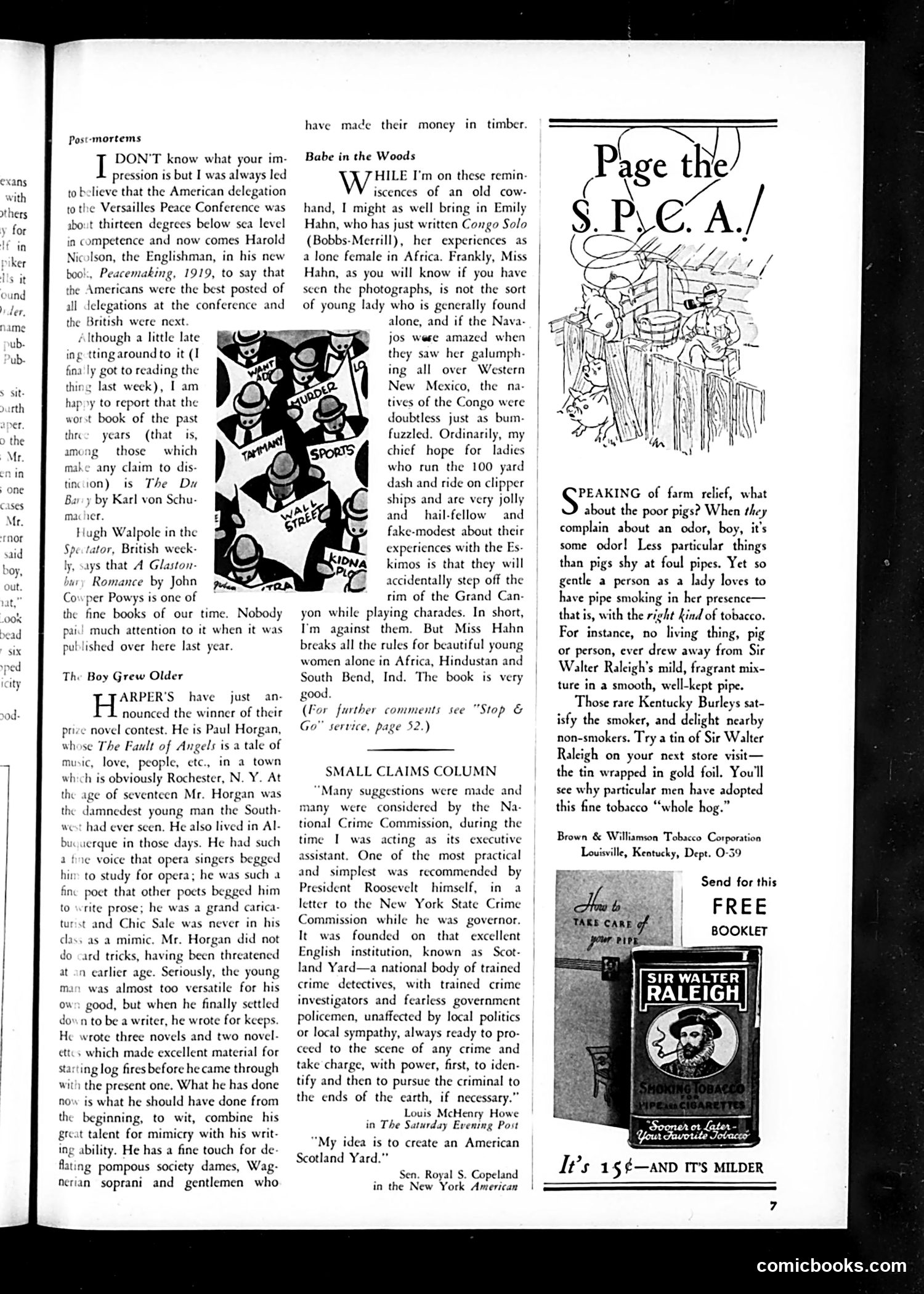
# Analysis: "Page the S.P.C.A." Cartoon This cartoon satirizes wealthy industrialists who made fortunes in timber while showing indifference to animal welfare. The illustration depicts men in formal attire (top hats, suits) amid what appears to be logging operations, with the caption suggesting these profiteers should be reported to the Society for the Prevention of Cruelty to Animals (S.P.C.A.). The satire implies these "timber barons" treat animals with the same callousness they display toward nature—the joke being they're so greedy and ruthless they deserve to be investigated like animal abusers. It's a pointed critique of Gilded Age industrialists' environmental and ethical indifference, using absurdist humor to highlight their moral failings.
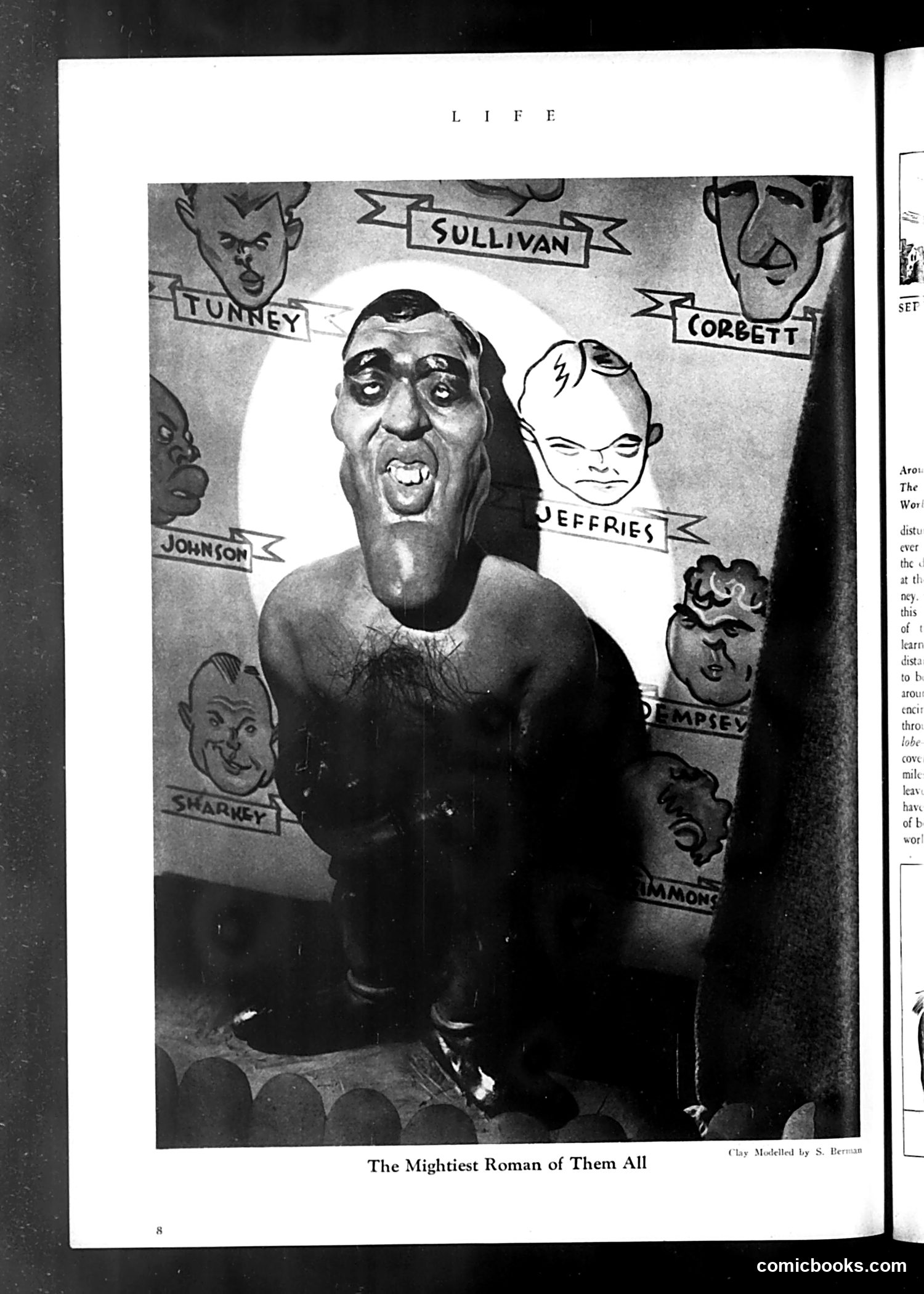
# "The Mightiest Roman of Them All" This clay sculpture depicts a central figure surrounded by caricatured heads labeled with names: Tunney, Sullivan, Corbett, Johnson, Sharkey, Jeffries, and Dempsey. These are all famous heavyweight boxing champions, referenced as "Romans" in the title. The central figure appears to represent a boxing promoter or manager—likely Tex Rickard, a prominent fight promoter of the era—who literally towers over and controls these famous boxers. The satire suggests this promoter wielded more power and influence than the celebrated fighters themselves, positioning him as the true "mightiest Roman" despite the boxers' fame. The classical "Rome" framing mocks the grandiose boxing spectacles of the 1920s-30s era.
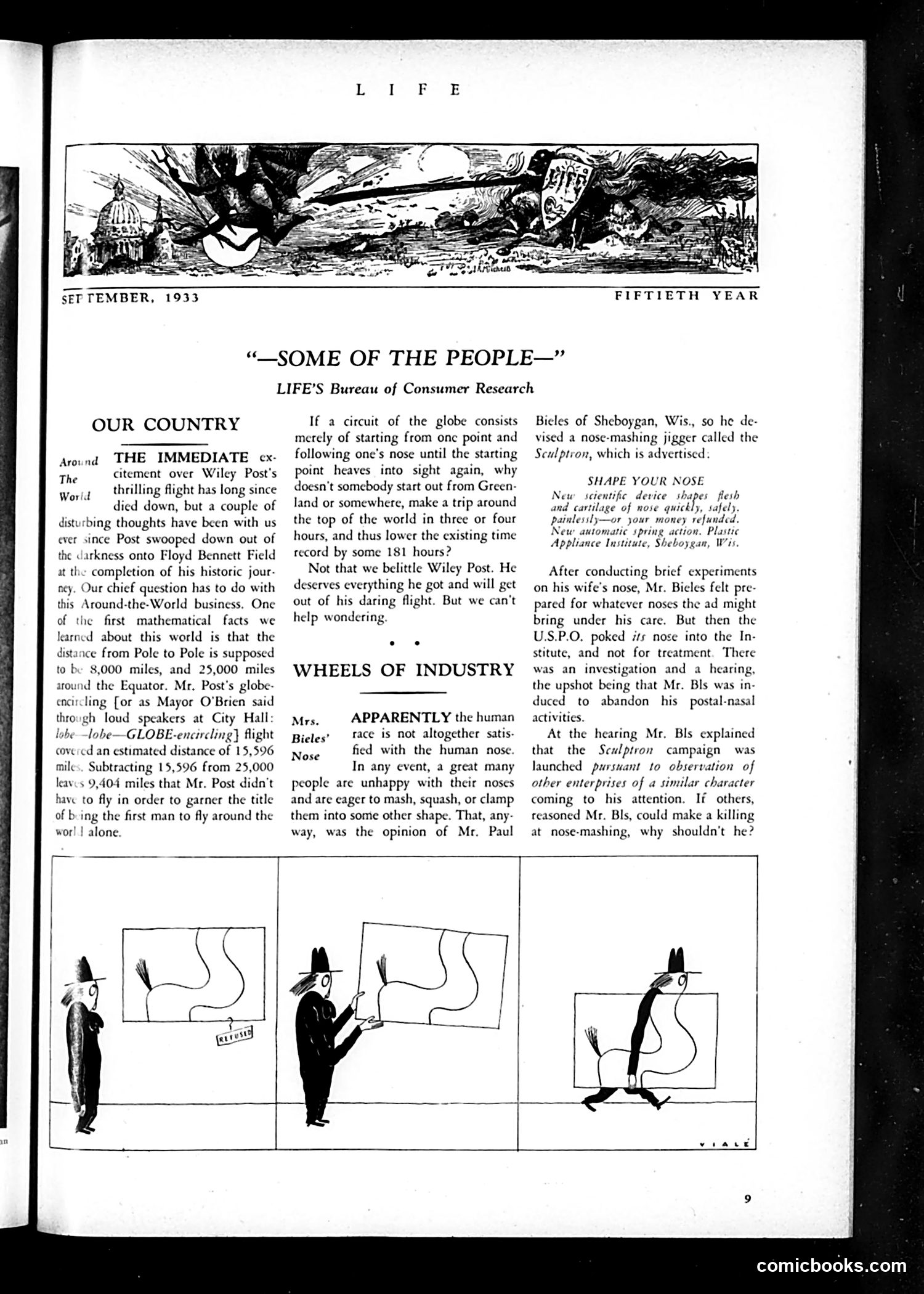
# Explanation for Modern Readers This September 1933 *Life* page satirizes Wiley Post's recent solo flight around the world. The article questions Post's achievement by noting he flew 15,596 fewer miles than the globe's actual circumference—suggesting he may not have completed a true round-the-world journey. The cartoon below shows a man repeatedly attempting to reshape his nose using a device advertised as the "Sculptex" nose-shaper. It's a parallel metaphor: just as Post's flight claims don't match reality, the man's nose-reshaping efforts appear futile. The satire mocks both Post's dubious accomplishment and consumer products making false promises. The "Wheels of Industry" section reporting on nose-shaping devices reinforces the joke—treating frivolous cosmetic products with mock-serious business coverage.
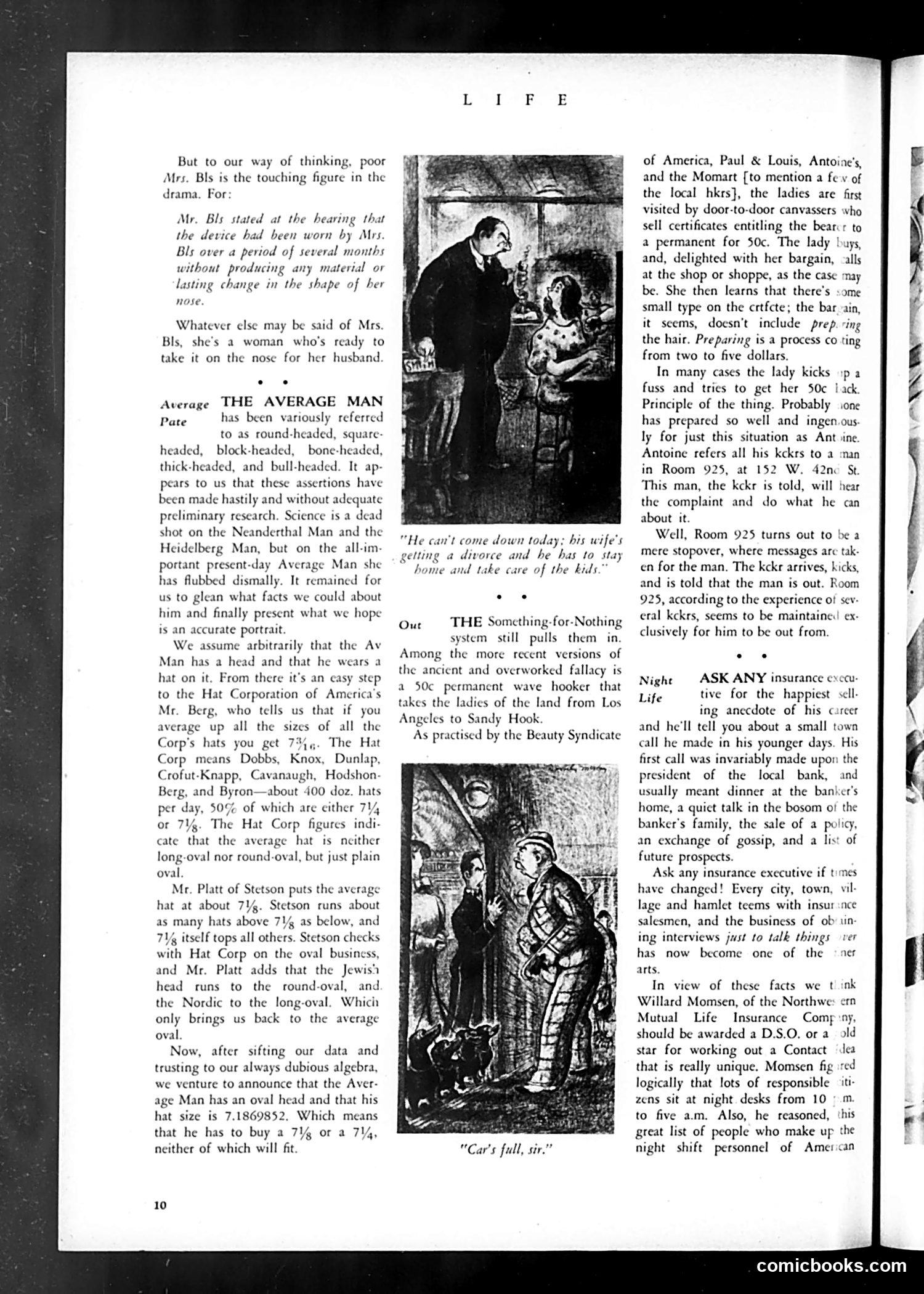
# Analysis of Life Magazine Page This page contains satirical commentary on "the Average Man" — a concept then popular in sociology and business. The text mocks how corporations and statisticians tried to reduce human complexity to standardized measurements (hat sizes, heights, weights). The two illustrations show domestic scenes: one depicting a man unable to visit home due to divorce obligations, another showing what appears to be a working-class interaction ("Car's fall, sir"). The satire targets the absurdity of treating diverse individuals as statistical averages. The page also discusses insurance salesmen and their intrusive sales tactics in everyday life — suggesting how commercialization and data-driven business practices were increasingly invading personal/domestic spheres in early 20th-century America.