A complete issue · 53 pages · 1932
Life — September 1932
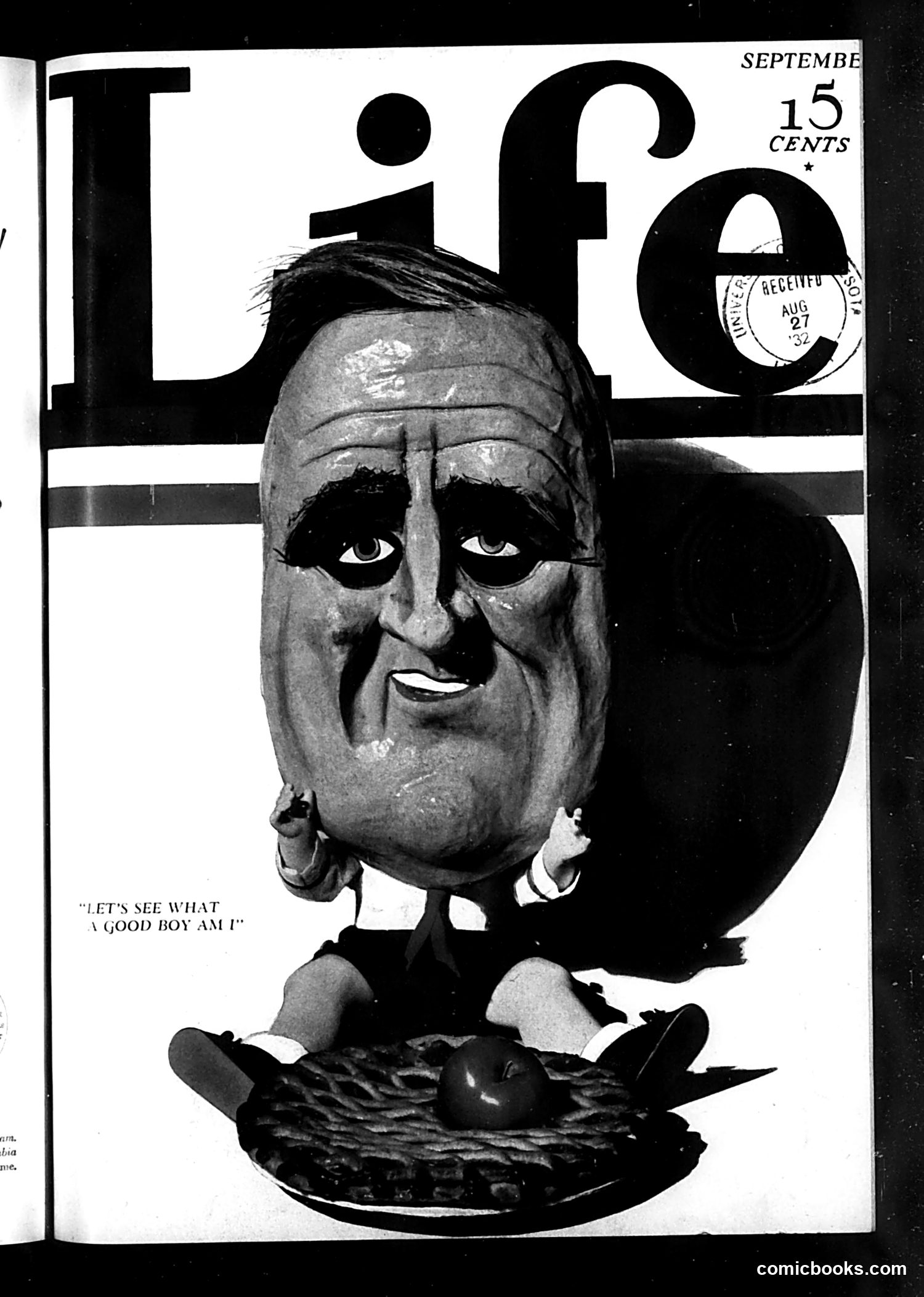
# Life Magazine Cover Analysis This September 1934 Life magazine cover features a caricatured figure wearing theatrical blackface makeup with exaggerated features, holding a banana and what appears to be a nest or basket. The caption reads: "LET'S SEE WHAT A GOOD BOY AM I." **Context:** This appears to satirize a specific public figure or entertainment performer of the era, likely someone in vaudeville or theater known for blackface performances. The grotesque exaggeration and condescending caption suggest Life was mocking both the performer and the racist entertainment conventions of 1930s American popular culture. The theatrical nature and crude caricature style were typical of Life's satirical approach, though the imagery reflects deeply offensive racial stereotyping standards of that historical period. Without additional context, the specific target remains unclear.
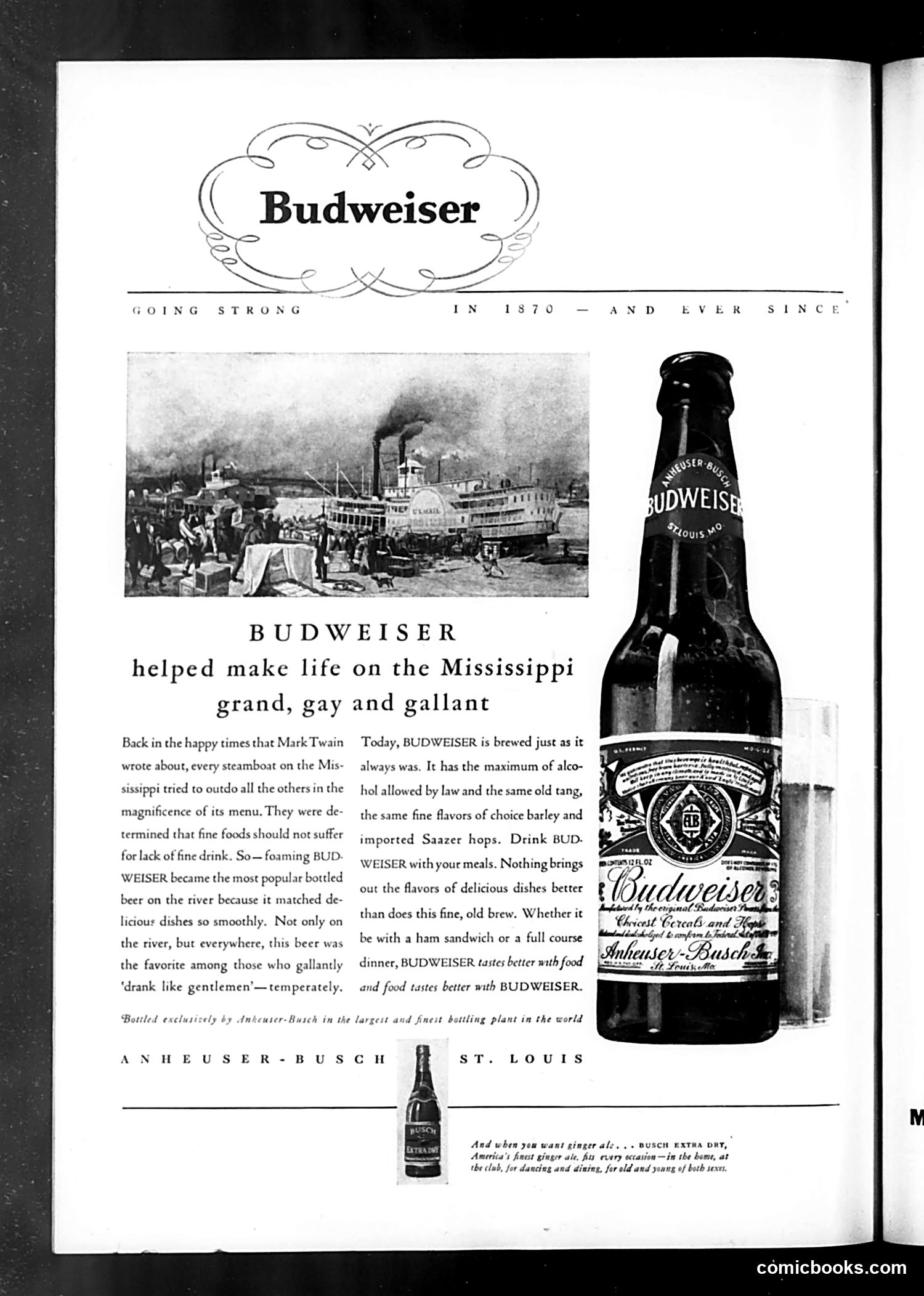
# Analysis This is a **Budweiser beer advertisement**, not political satire. The page celebrates Budweiser's association with Mississippi River steamboats during the Mark Twain era ("back in the happy times"). The ad claims Budweiser became "the most popular bottled beer on the river" because it complemented elegant dining better than competitors. The advertisement references the romanticized steamboat culture of the 19th century—a period of American nostalgia even when this ad ran. The tagline "BUDWEISER tastes better with food and food tastes better with BUDWEISER" is straightforward product marketing, not satire. The page includes a large bottle image and smaller competitor product (appears to be Busch Extra Dry) at the bottom, typical of period beer advertising comparing brands.
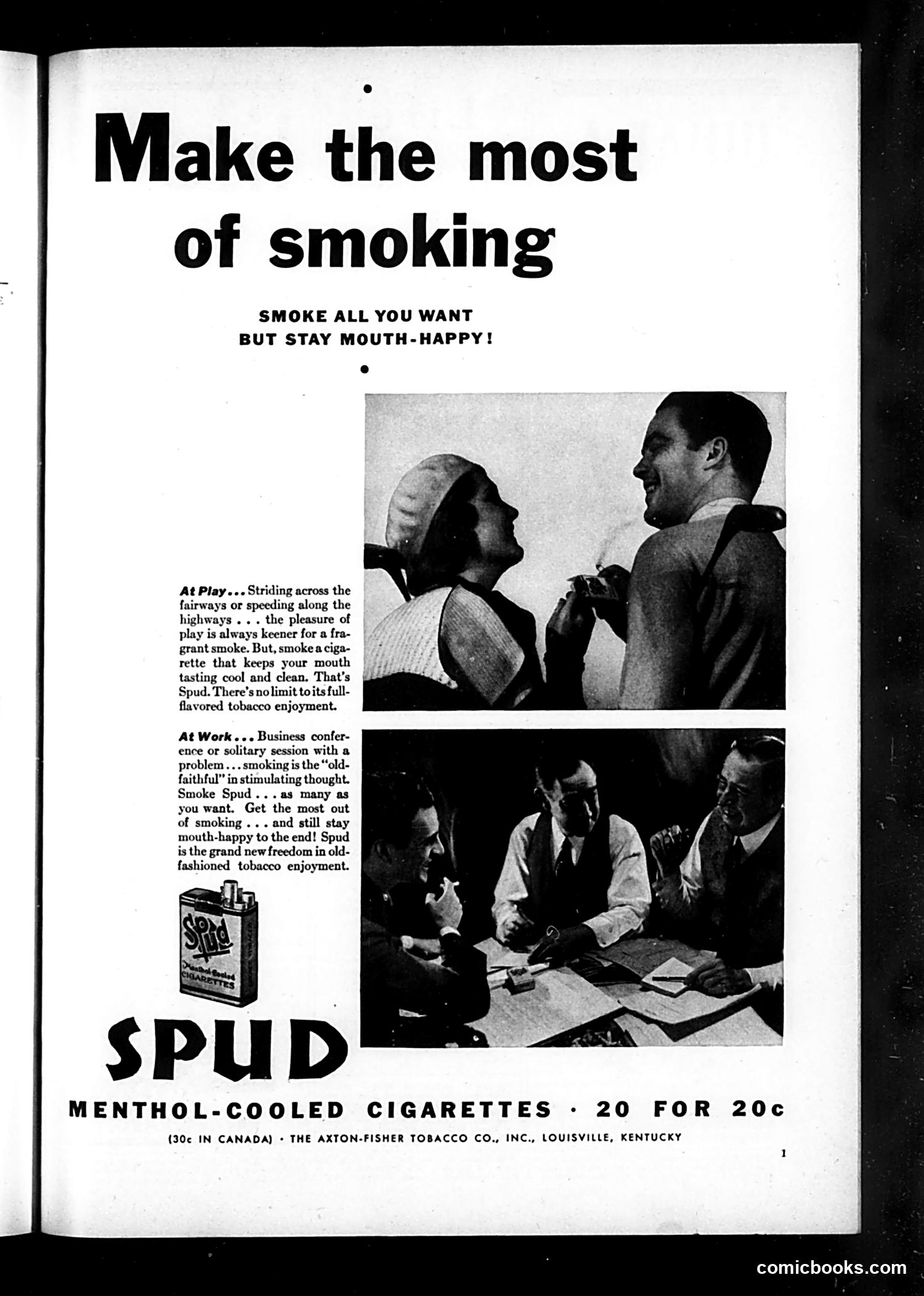
# Analysis This is a **cigarette advertisement**, not satire or political commentary. It promotes Spud brand menthol-cooled cigarettes (20 for 20¢) made by Axton-Fisher Tobacco Co. in Louisville, Kentucky. The page uses two photographs showing scenarios where smoking supposedly enhances leisure and work: 1. **"At Play"** depicts people enjoying outdoor recreation, claiming Spud cigarettes keep "your mouth tasting cool and clean" 2. **"At Work"** shows businessmen in an office meeting, suggesting cigarettes aid concentration and thought The tagline—"Smoke all you want but stay mouth-happy!"—is the core marketing claim: menthol provides oral freshness despite frequent smoking. This reflects the mid-20th-century era when cigarette advertising commonly appeared in mainstream magazines without health warnings, and smoking was socially normalized in professional and recreational settings.
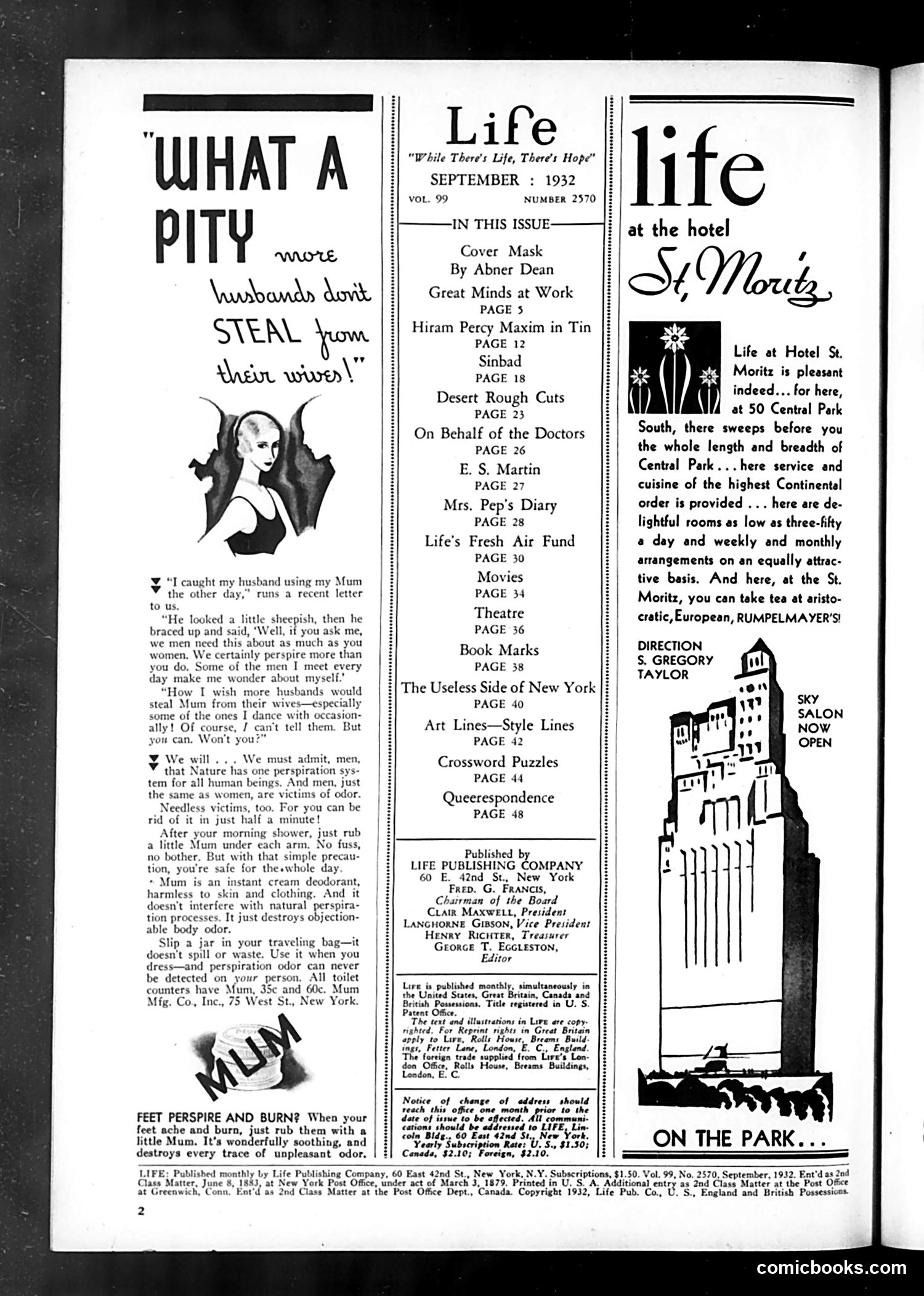
# Analysis This is primarily a **table of contents and advertisements page** from Life Magazine, September 1932. The main cartoon on the left depicts a **demonic or devilish female figure** with the caption "WHAT A PITY more husbands don't STEAL from their wives!" Below are humorous testimonials from readers about using "Mum" deodorant on their husbands without their knowledge. The satire plays on **1930s gender dynamics and marital deception**—the joke being that wives secretly apply deodorant to husbands to mask body odor, framed as a harmless "theft" of the product. It reflects period attitudes about women's domestic roles and controlling husbands' hygiene. The right side advertises **Hotel St. Moritz** and other services, typical of the magazine's mixed content format.
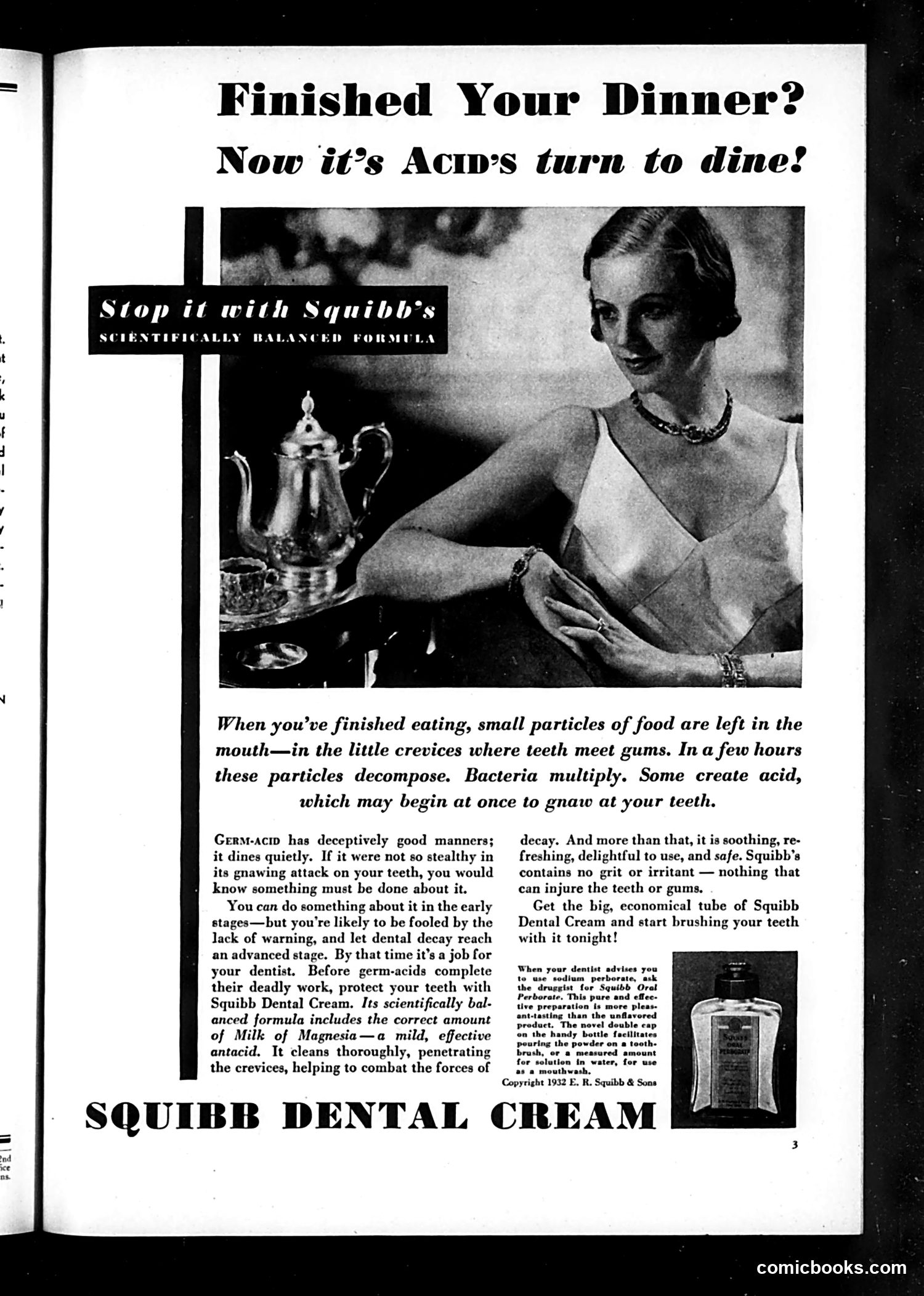
# Analysis This is a **vintage advertisement**, not satire or editorial content. It's a full-page ad for Squibb Dental Cream from 1932 (based on the copyright visible). The ad uses fear-based marketing targeting women. It depicts a woman after dinner, with text warning that food particles left in teeth allow bacteria to multiply and create acid that attacks teeth. The "germ-acid" concept was marketing language designed to create anxiety about dental hygiene. The ad's pitch: use Squibb Dental Cream—claimed to contain "Milk of Magnesia"—to neutralize acids and protect teeth. The scientific language ("scientifically balanced formula") was typical of 1930s advertising that borrowed medical authority to sell consumer products, whether the claims were fully substantiated or not. It reflects period attitudes about women's appearance and health anxiety.
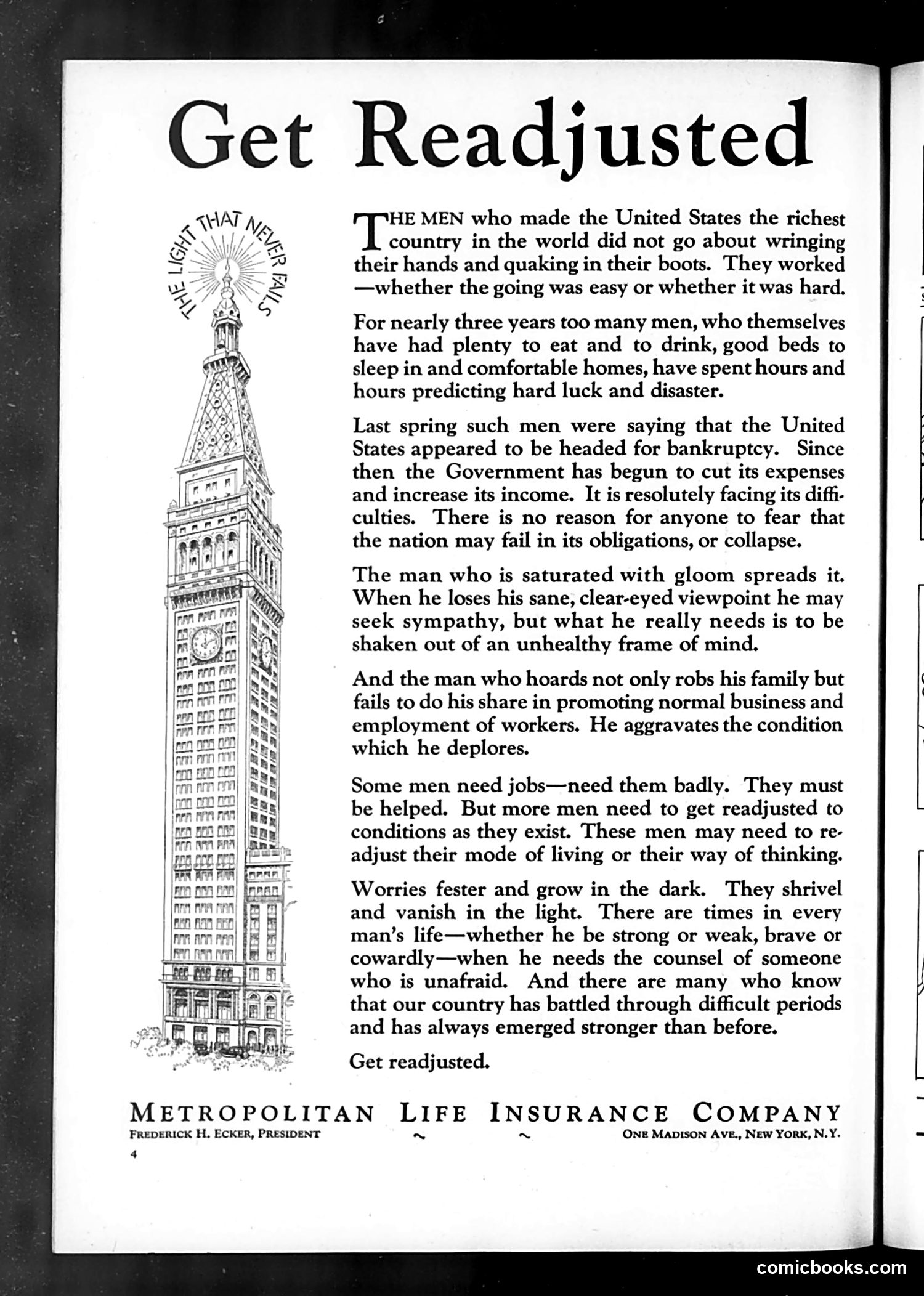
# Analysis: "Get Readjusted" — Metropolitan Life Insurance Advertisement This is a **morale-boosting advertisement**, not political satire. Published during what appears to be the **post-WWI period** (references "nearly three years" of hardship), it addresses widespread economic anxiety and pessimism. The tall building illustration symbolizes American prosperity and stability. The text argues that: 1. American builders achieved wealth through **work, not complaint** 2. Recent economic fears (possible 1921 recession) are **exaggerated** 3. Pessimism is **self-destructive** and spreads needlessly 4. Men must **mentally adjust** to conditions rather than hoard or despair 5. The nation has **historically overcome difficulties** The message: stop catastrophizing, maintain confidence, and support the economy through normal business activity. This reflects corporate attempts to restore public confidence after wartime disruption.
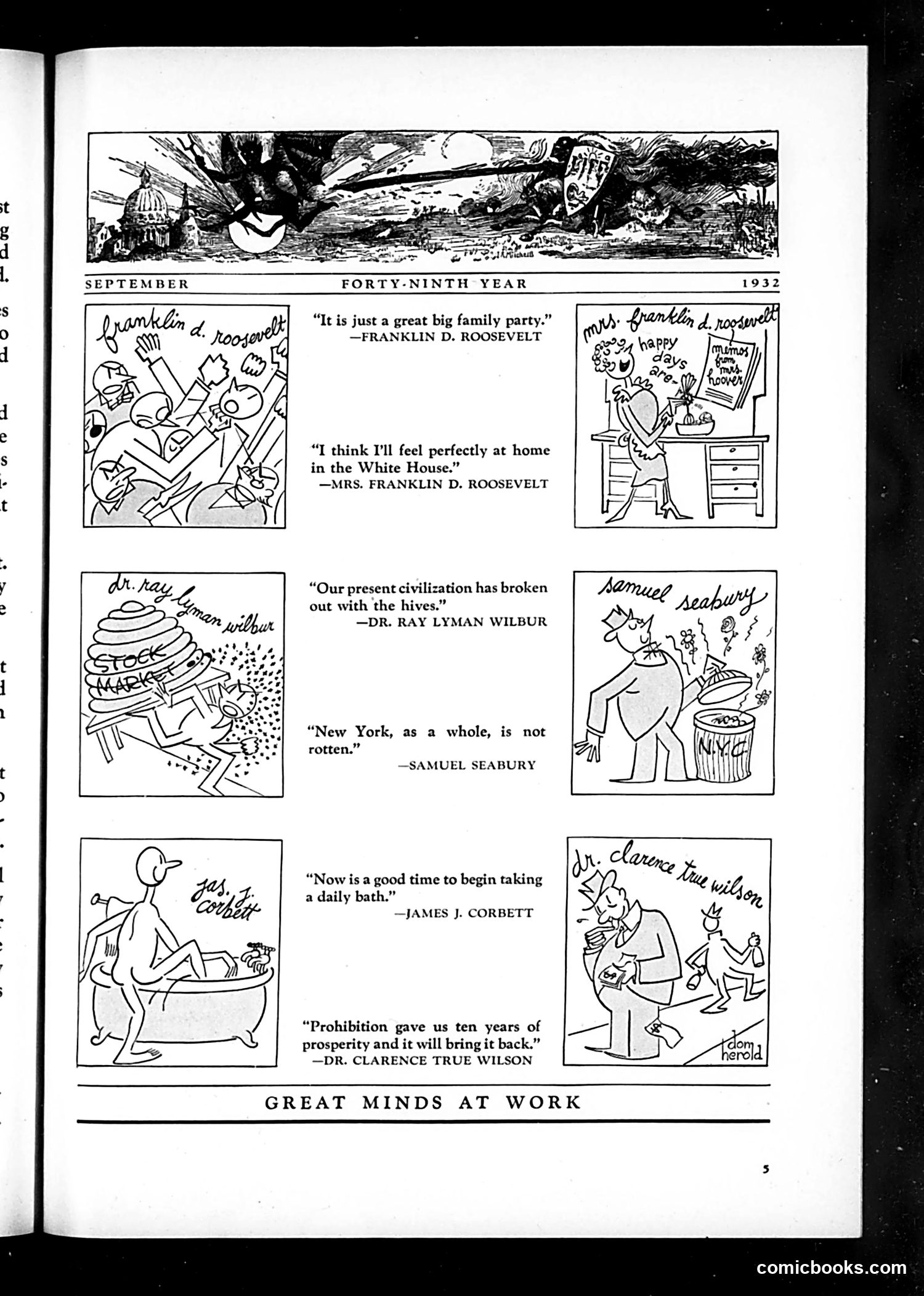
# "Great Minds at Work" — September 1932 This satirical page presents six cartoons mocking prominent figures of the era with quotes attributed to them. Each cartoon pairs a caricature with a statement, apparently meant to ridicule the speaker's views or character: - Franklin D. Roosevelt is depicted in a chaotic family scene - Mrs. Franklin D. Roosevelt shown at a desk with domestic items - Dr. Ray Lyman Wilbur commenting on civilization's decline - Samuel Seabury making a negative remark about New York - James J. Corbett discussing bathing habits - Dr. Clarence True Wilson's statement about Prohibition's economic effects The cartoons use exaggeration and visual humor to mock these public figures' statements, likely criticizing their positions on major 1932 issues including the Depression, Prohibition, and social conditions. The page's title suggests these are critiques of influential people's contemporary pronouncements.
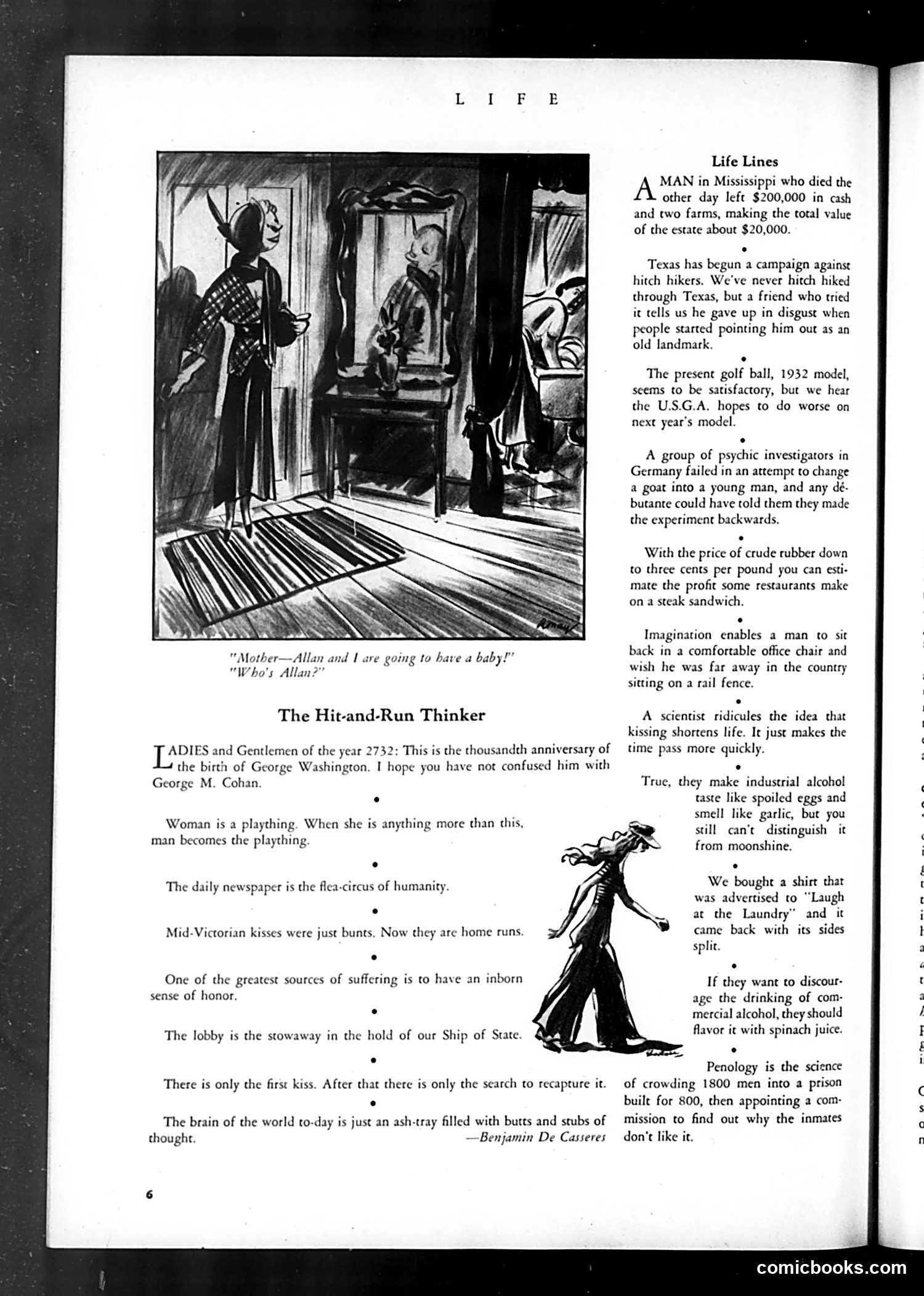
# "The Hit-and-Run Thinker" The main cartoon shows a woman in a doorway telling a man "Mother—Allah and I are going to have a baby!" to which he responds "Who's Allah?" This satirizes casual, flippant attitudes toward serious matters—likely mocking either superficial adoption of exotic religious ideas or irresponsible relationships presented as jokes. The woman's bizarre claim (naming her unborn child after Allah) plays for absurdist humor about modern frivolousness. The accompanying "Life Lines" column contains short, punchy observations on contemporary topics: hitch-hiking in Texas, golf equipment, psychic experiments, industrial alcohol quality, laundry mishaps, and prison overcrowding. This format—snappy one-liners on random subjects—defines Life magazine's characteristic satirical style, poking fun at American social trends and concerns.
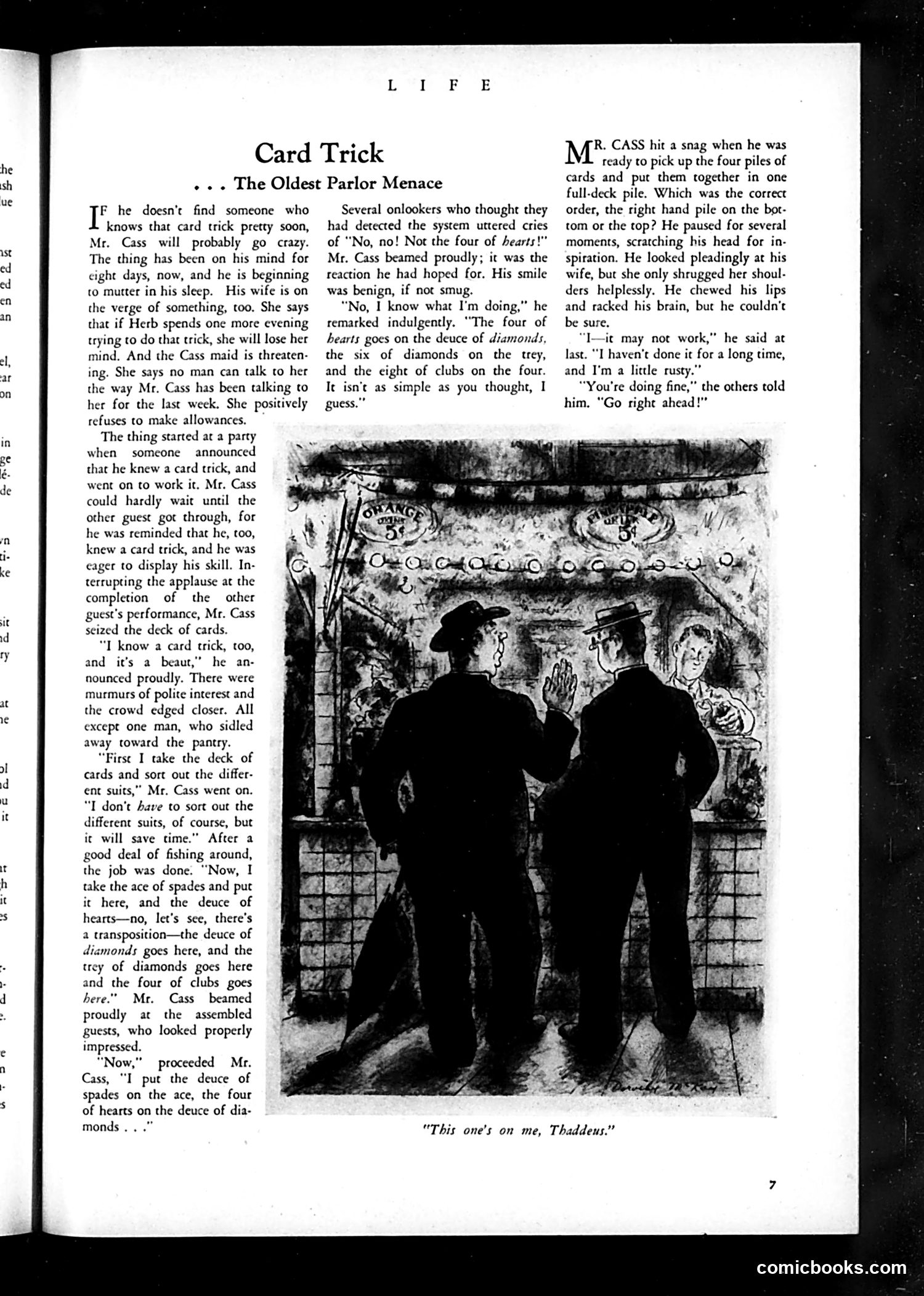
# "Card Trick—The Oldest Parlor Menace" This is a humorous short story about Mr. Cass, a man obsessed with performing card tricks. His wife finds him insufferable—he practices constantly and won't stop talking about them despite her clear disinterest. The satire targets the social annoyance of amateur magicians who monopolize gatherings with tedious trick performances. Mr. Cass represents the archetypal bore who mistakes his own enthusiasm for universal entertainment value. The illustration shows two men in what appears to be a parlor or social setting, likely depicting the moment when Mr. Cass begins his unwanted card trick demonstration. The caption "This one's on me, Thaddeus" suggests resigned acceptance of the performance. The piece gently mocks both the perpetual amateur magician and the social obligation to endure such displays politely.
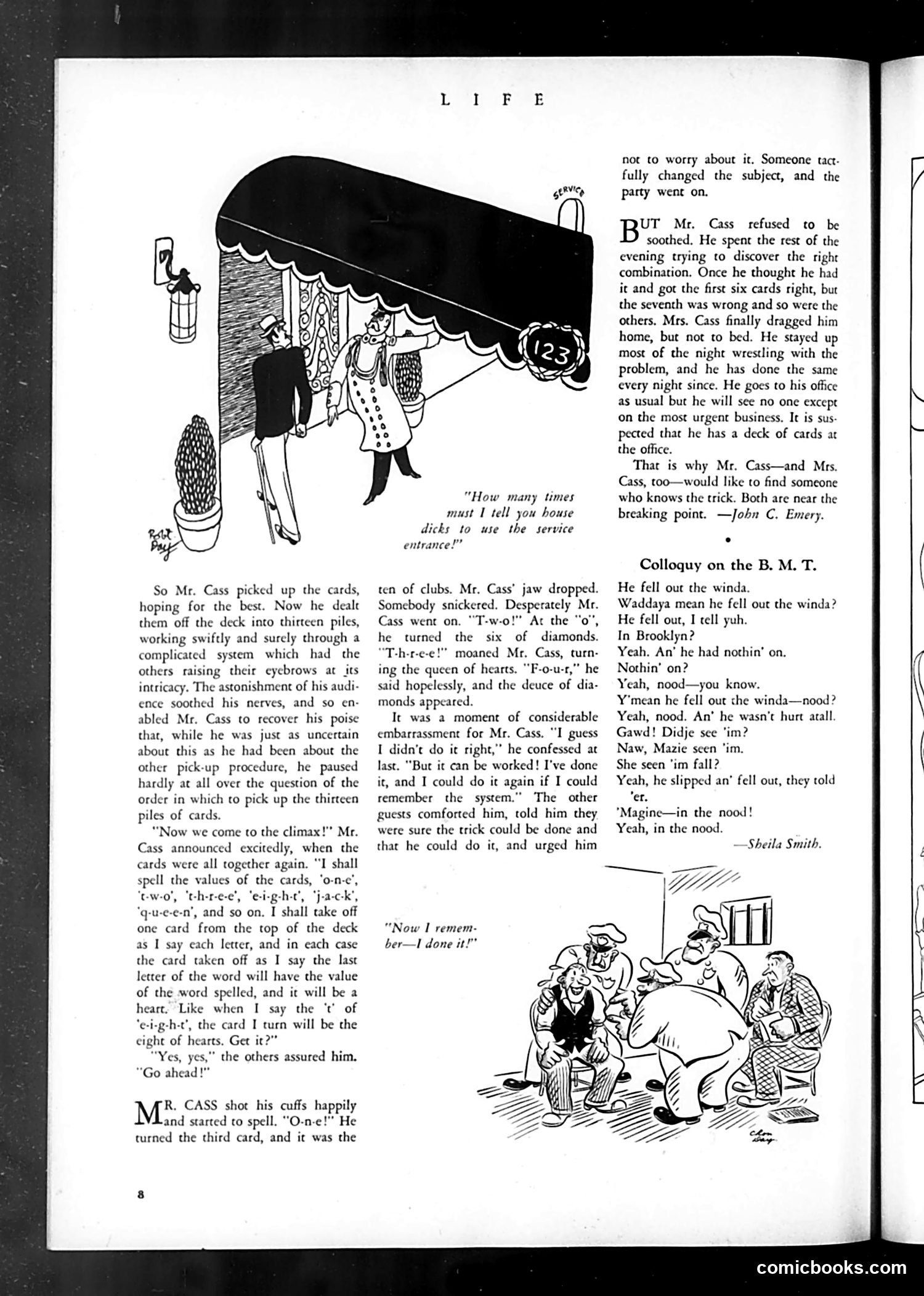
# Analysis of Life Magazine Page This page presents a humorous story about Mr. Cass, who becomes obsessed with learning a card trick. Unable to master it despite repeated attempts, he spends his evenings performing it alone rather than socializing. The narrative mocks his obsessive-compulsive behavior and social withdrawal over a relatively trivial pursuit. The accompanying illustrations show the card trick demonstration and a separate cartoon titled "Colloquy on the B.M.T." (Brooklyn-Manhattan Transit), depicting working-class New Yorkers discussing someone falling from an elevated train. The dialogue captures authentic urban speech patterns and casual attitudes toward danger—typical of Life's satirical commentary on American social life and class behavior during the early-to-mid 20th century.
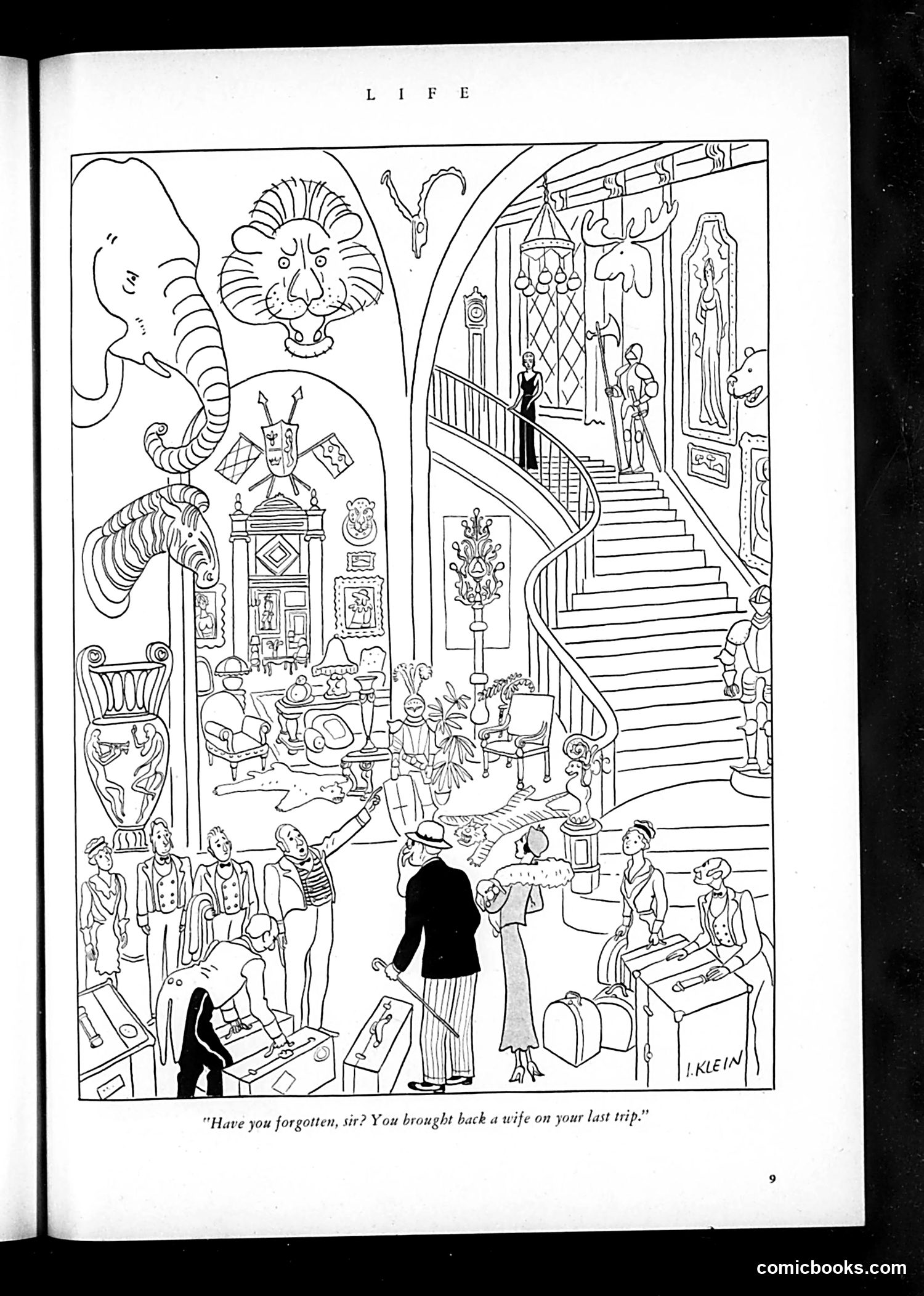
# Cartoon Analysis This single-panel cartoon by I. Klein depicts an elaborate mansion interior with a grand staircase. A man in formal attire stands amid luggage and well-dressed guests, while a woman addresses him with the caption: "Have you forgotten, sir? You brought back a wife on your last trip." The satire targets wealthy travelers—likely businessmen or aristocrats who took extended trips abroad. The joke suggests the man has returned from a journey and forgotten he previously brought back a foreign wife. The crowded, opulent setting emphasizes his wealth and social status. The humor relies on the absurdity of forgetting one's spouse, mocking both male absentmindedness and the casual nature with which wealthy men might acquire wives from abroad during the early-to-mid 20th century. The cartoon gently ridicules marital indifference among the affluent.
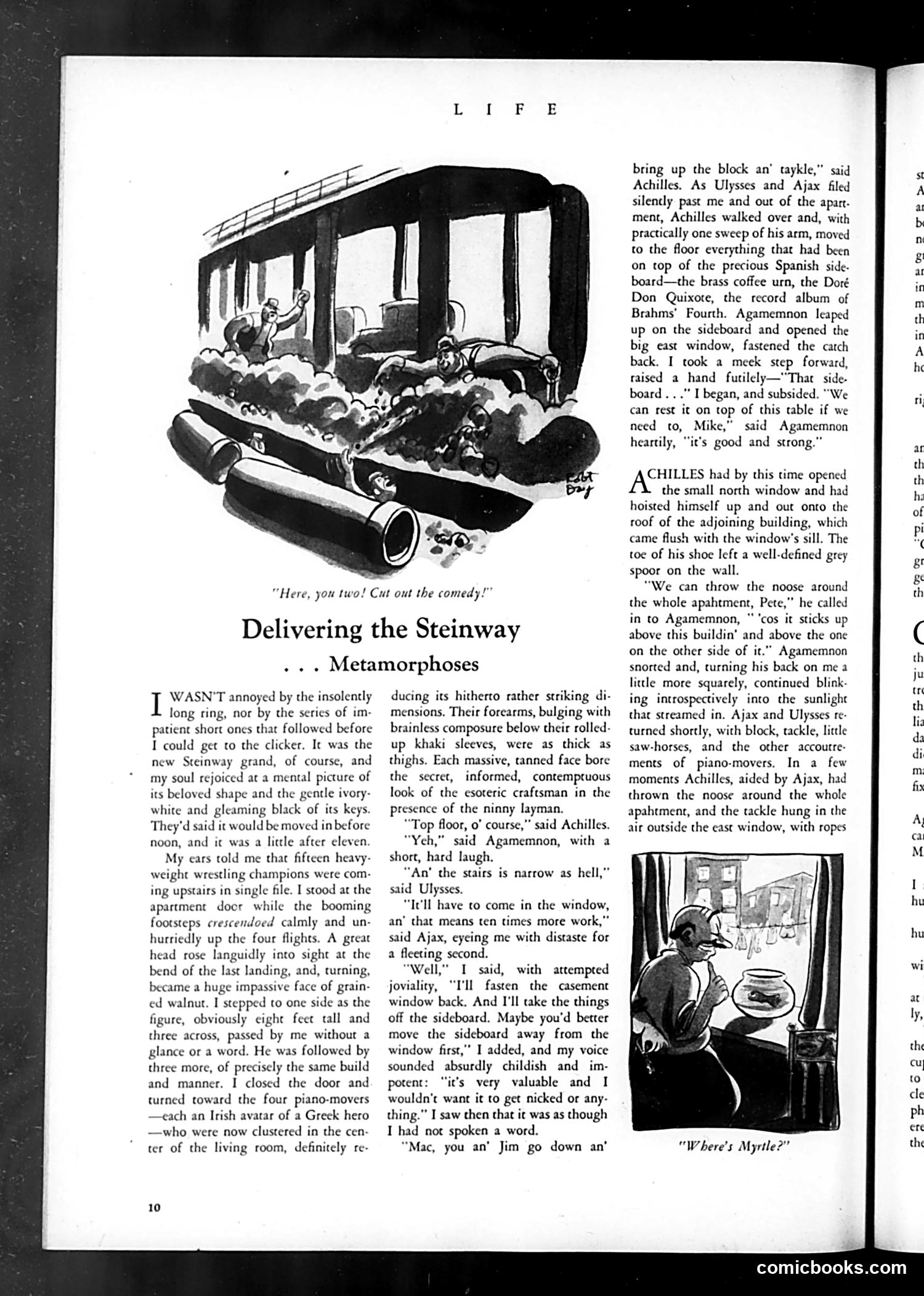
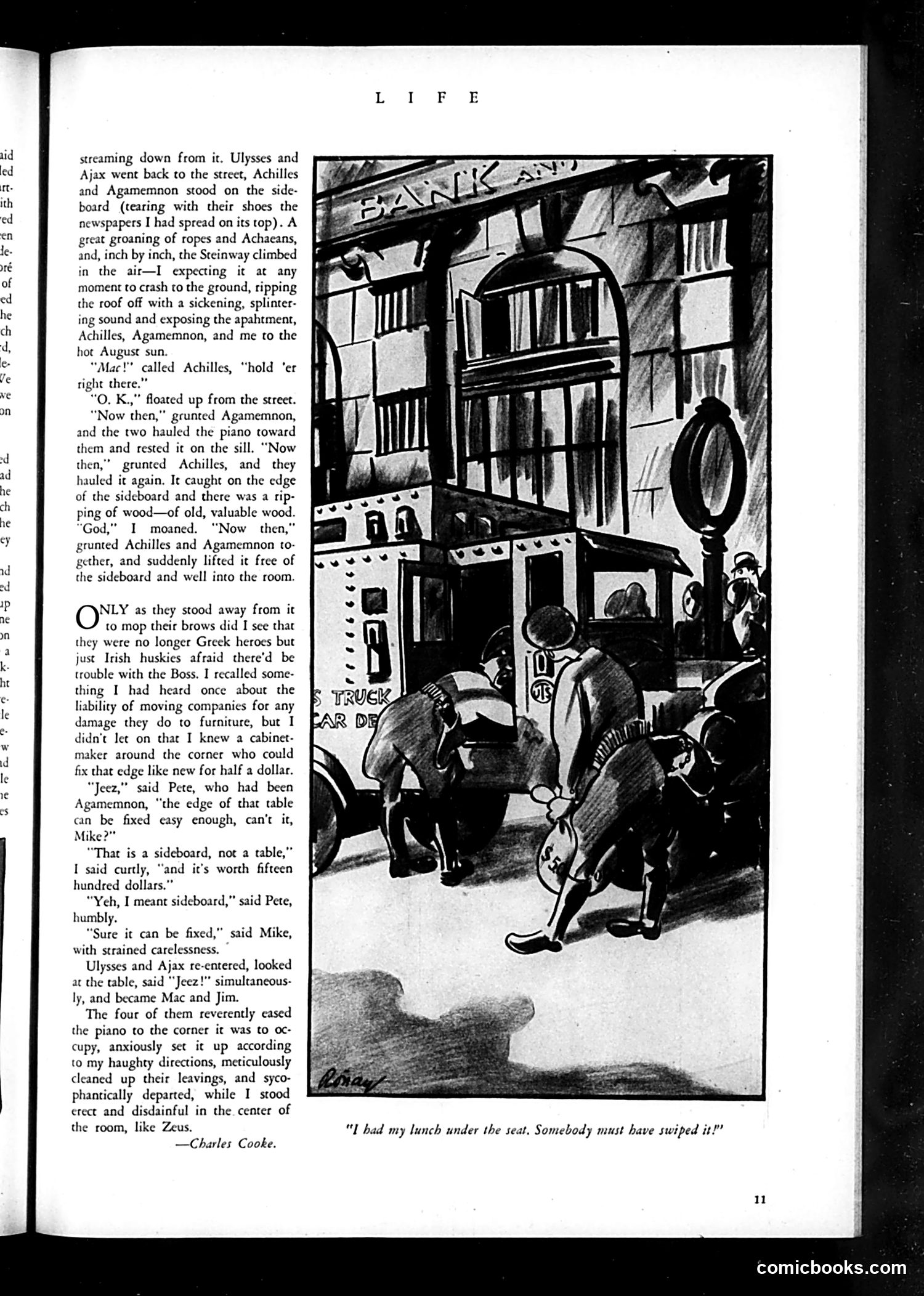
# "Delivering the Steinway: Metamorphoses" This satirical piece humorously depicts moving a grand piano (a Steinway) into an apartment. The cartoon shows the instrument being maneuvered through a window amid chaos—a common practical problem in urban living. The joke plays on the contrast between the piano's status as a refined, elegant instrument and the ungainly physical comedy of getting it into the space. Characters discuss absurd solutions (throwing a noose around it, fastening it through windows), treating the precious object roughly. The title "Metamorphoses" suggests the piano undergoes a transformation—from treasured musical instrument to unwieldy physical obstacle. This satirizes both bourgeois pretensions to cultural refinement and the messy realities of maintaining such status symbols in cramped city apartments. The humor is situational rather than explicitly political.