A complete issue · 56 pages · 1932
Life — July 1932
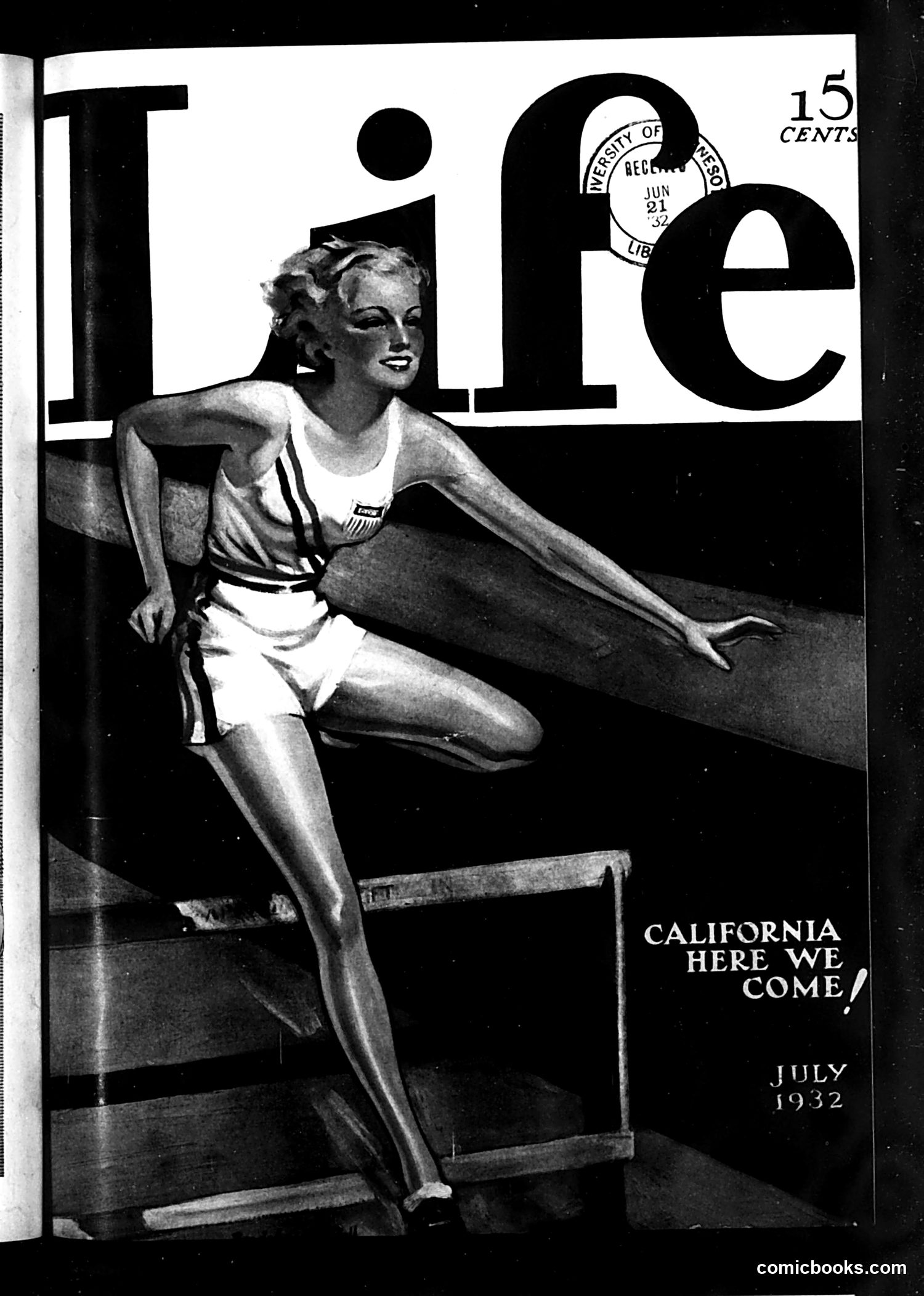
# Life Magazine Cover Analysis - July 1932 This is a **magazine cover** rather than a political cartoon. The image shows a young woman in athletic/swimwear striking a confident pose, with large stylized letters spelling "life" behind her. The text reads "CALIFORNIA HERE WE COME!" dated July 1932—during the **Great Depression**. This appears to be promotional cover art celebrating California's appeal, likely referencing the era's migration westward as people sought economic opportunity. The woman's athletic appearance and confident demeanor suggest themes of vitality, youth, and optimism—qualities Life magazine may have been promoting during economically desperate times. The cover price of 15 cents indicates this is from the early Depression era.
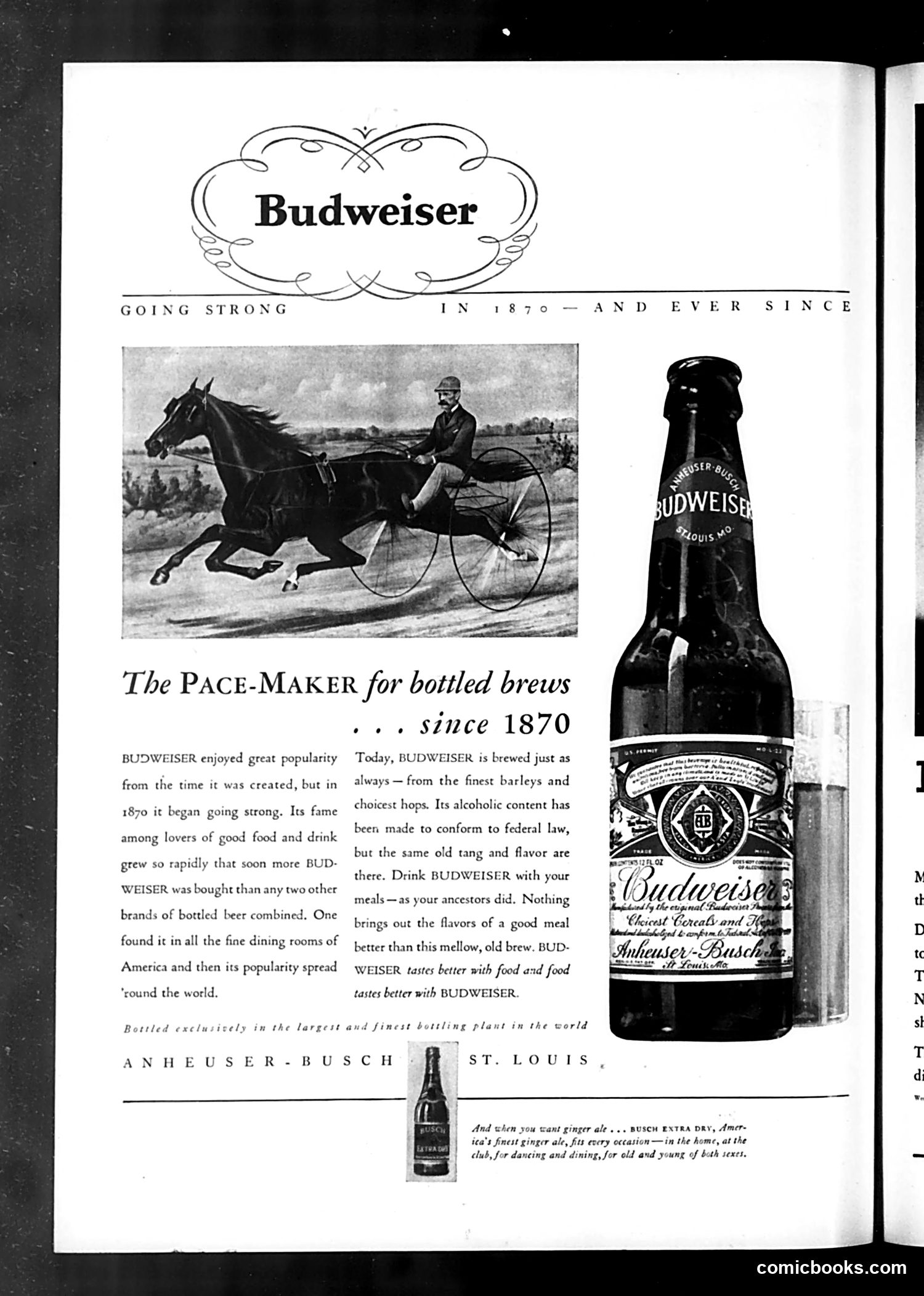
# Analysis This is a **Budweiser beer advertisement**, not political satire or a cartoon. The page features: - A decorative Budweiser logo at top - A historical image of a horse and sulky (racing cart) from 1870, labeled "The Pace-Maker for bottled brews since 1870" - A large photograph of a Budweiser bottle - Marketing copy emphasizing the beer's long history and consistent quality The "pace-maker" metaphor compares Budweiser's dominance in bottled beer to a leading racehorse setting the pace. The advertisement appeals to tradition and heritage, claiming the beer has maintained its recipe and popularity since its creation. There is no satire or political content—this is straightforward vintage advertising emphasizing brand longevity and superiority in the American market.
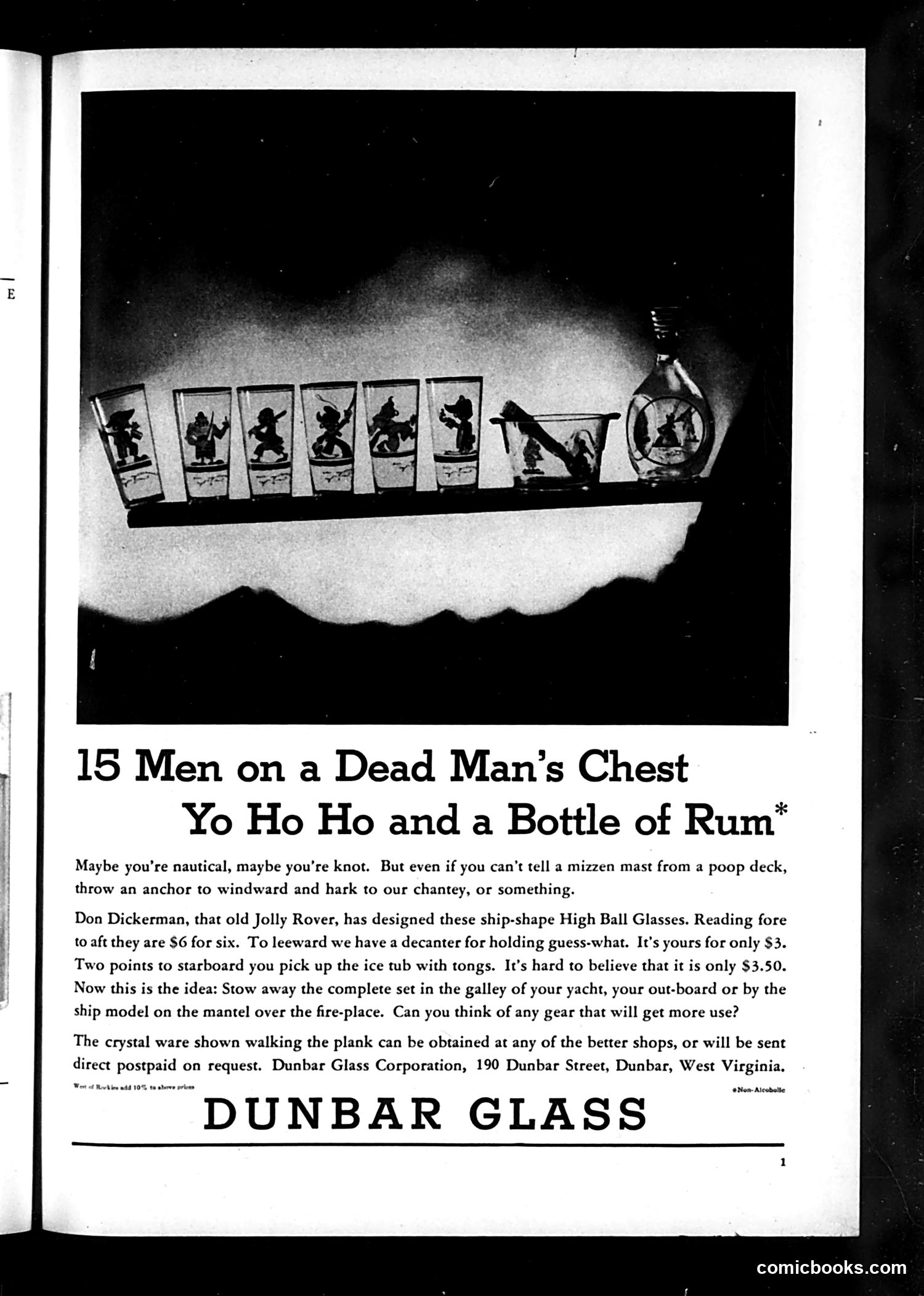
# Analysis This is primarily a **commercial advertisement** for Dunbar Glass Corporation, not a political cartoon. The page shows silhouetted ship-shaped drinking glasses designed by Don Dickerman, arranged in a line like the famous nursery rhyme "15 Men on a Dead Man's Chest, Yo Ho Ho and a Bottle of Rum." The advertisement plays on **nautical/pirate themes** popular in the era to market glassware for entertaining. It references the novelty and collectibility of the product line—appealing to yacht owners and those with nautical decor. The copy emphasizes affordability and complete sets available for purchase. The pirate reference is purely **decorative and commercial**, not political commentary—a marketing strategy leveraging adventurous imagery to sell barware.
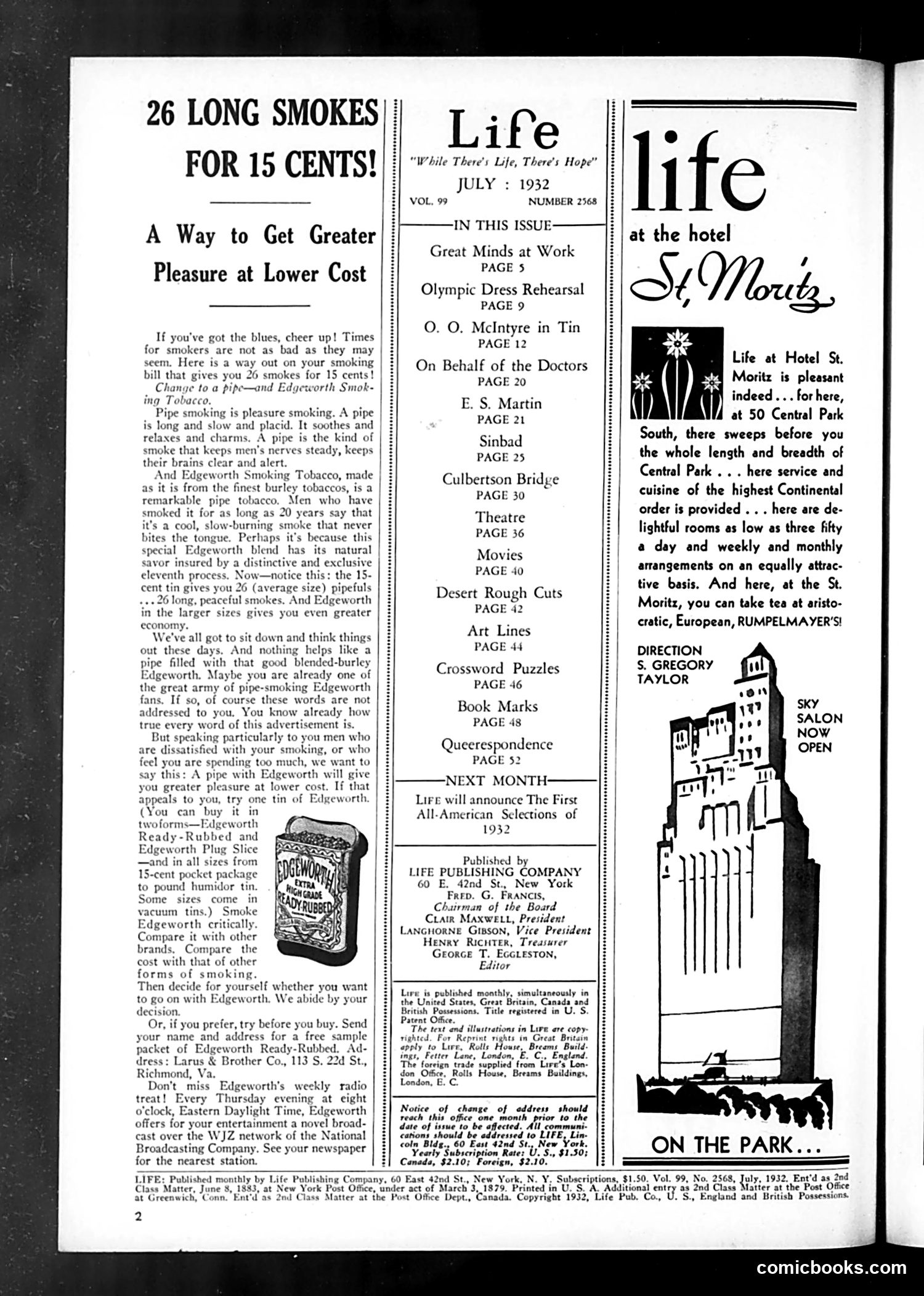
# Analysis This page is primarily advertising and table of contents for *Life* magazine (July 1932). The left side advertises Edgeworth pipe tobacco, emphasizing value ("26 long smokes for 15 cents") during the Great Depression—a key context. The ad appeals to men facing financial hardship, promising "greater pleasure at lower cost." The right side advertises the Hotel St. Moritz in New York, highlighting luxury amenities (Continental cuisine, tea service) aimed at wealthy readers. The irony is striking: the same magazine issue promotes both budget tobacco for struggling men and high-end hotel living, reflecting 1932's sharp class divisions during economic crisis. The table of contents lists articles on various topics, with no visible political cartoons on this particular page.
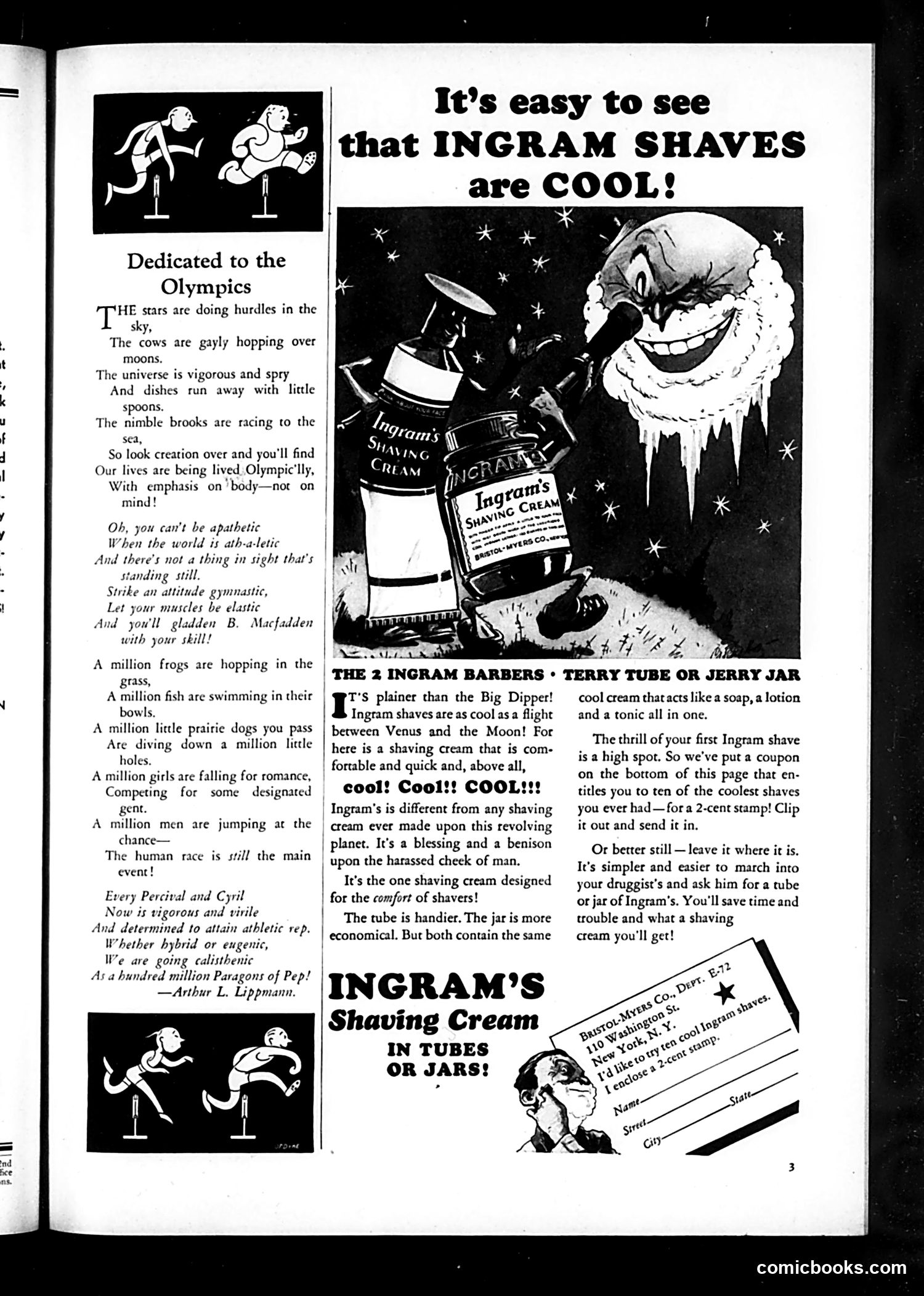
# Analysis: Ingram Shaving Cream Advertisement This is primarily a **commercial advertisement** for Ingram's Shaving Cream, using Olympic Games imagery as a hook. The page features: **Visual Content:** - Cartoon athletes performing hurdles and gymnastics (left side), illustrating the poem's Olympic theme - A large illustration of a bearded face with shaving cream, surrounded by stars and a crescent moon (center-right) - Two bottles of Ingram's shaving cream labeled "Terry Tube or Jerry Jar" **The Satire:** The advertisement uses whimsical poetry about athletic competition to frame shaving as a form of physical prowess and self-improvement. The "cool" framing positions grooming as desirable and modern. **Key Point:** This reflects early 20th-century marketing that conflated masculine self-care with Olympic ideals of bodily discipline and competitive achievement—positioning shaving cream as part of an "athletic" lifestyle.
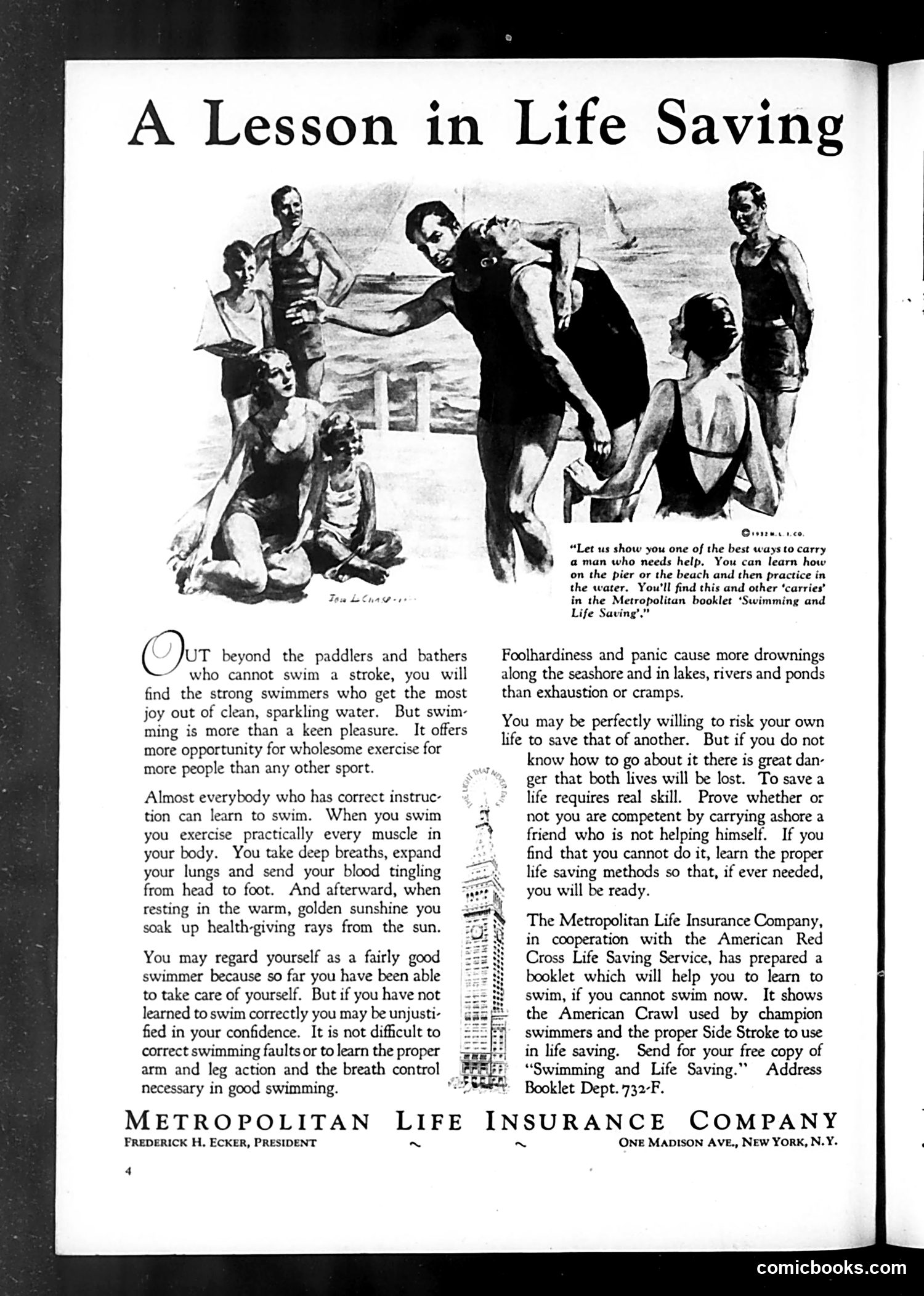
# Analysis This is primarily **an advertisement**, not satire or political commentary. The Metropolitan Life Insurance Company partnered with the American Red Cross to promote swimming skills and life-saving techniques. The illustration shows a swimming lesson at a beach or pier, depicting proper rescue technique. The accompanying text argues that good swimming ability requires correct instruction—merely being a "fairly good swimmer" doesn't qualify someone to save another's life. The ad encourages readers to learn proper life-saving methods through a Red Cross booklet titled "Swimming and Life Saving." The message is straightforward safety advocacy: foolish panic causes most drownings, and both rescuer and victim need proper training to survive. This reflects early 20th-century public health campaigns promoting swimming education and water safety.
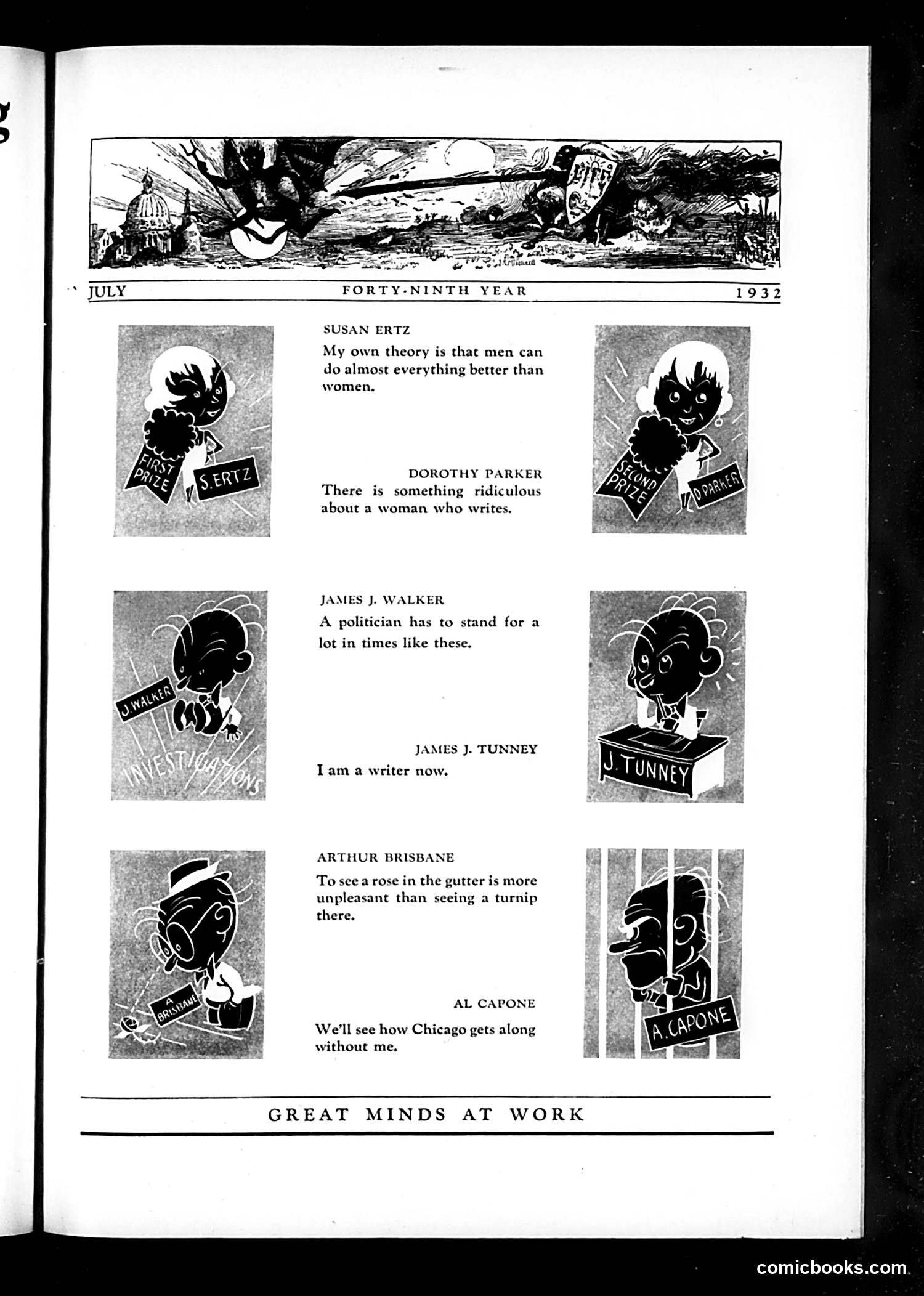
# "Great Minds at Work" — Life Magazine, July 1932 This page satirizes famous figures' ostensible views on various topics through caricatured portrait busts paired with quotations. The humor relies on witty, often contradictory or absurd statements attributed to each person: - **Susan Ertz** claims men excel at nearly everything - **Dorothy Parker** finds something ridiculous about women writers (likely self-directed wit) - **James J. Walker** (politician) insists politicians must take strong stands - **James J. Tunney** simply announces he's now a writer - **Arthur Brisbane** contrasts finding a rose versus turnip in gutters - **Al Capone** (the notorious Chicago gangster) quips about Chicago managing without him The satire works through juxtaposition: mixing legitimate writers/figures with organized crime, and pairing grandiose or banal statements with caricatured importance, mocking both the subjects and 1930s celebrity culture's obsession with famous people's opinions.
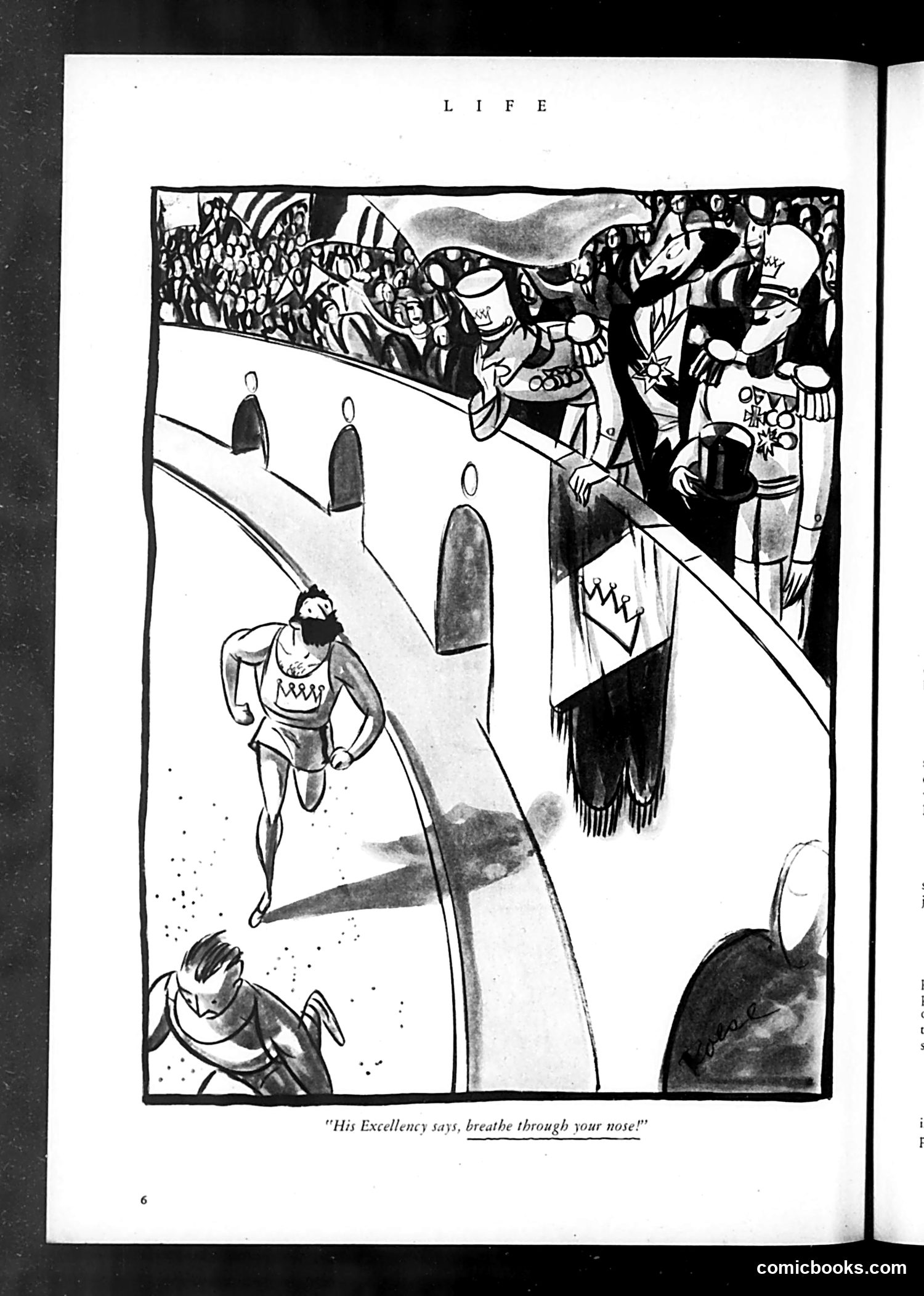
# Political Cartoon Analysis This cartoon depicts a military/athletic competition scene. A lone athlete runs on what appears to be a track while observing military officials and crowds above. The caption reads: "His Excellency says, breathe through your nose!" The satire likely mocks authoritarian military leadership—specifically a high-ranking official ("His Excellency") giving absurdly pedantic or useless instructions to subordinates during competitive performance. The humor lies in the incongruity: giving breathing advice during intense physical competition is either obvious or unhelpful, yet the official delivers it as a command. This appears to satirize rigid military hierarchy and the disconnect between those in power and practical reality—a common theme in Life magazine's social commentary. The specific "His Excellency" reference suggests a particular foreign military figure, though the exact identity remains unclear without additional context.
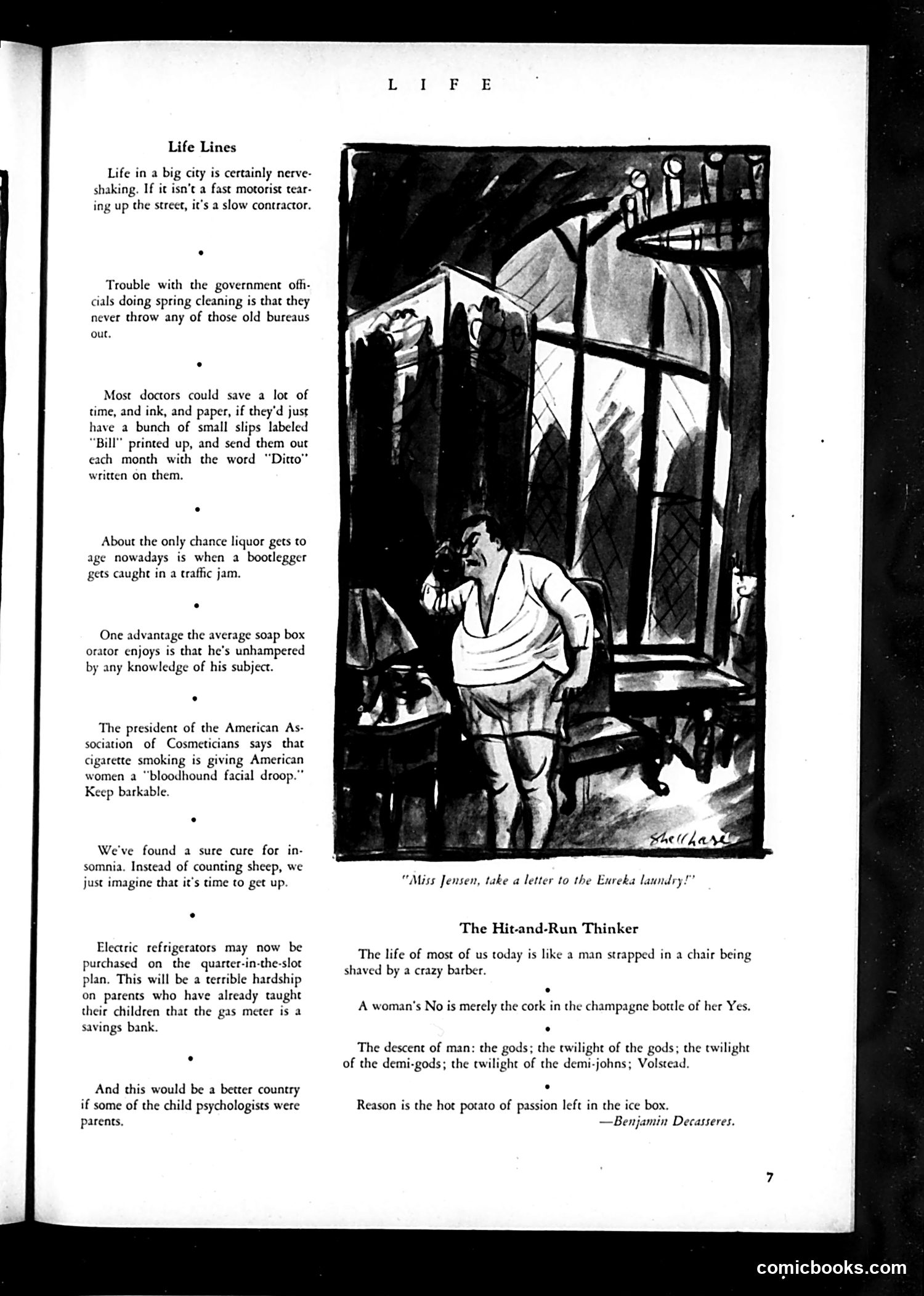
# Analysis of Life Magazine Page This page contains short satirical observations ("Life Lines") and a cartoon titled "Miss Jensen, take a letter to the Eureka Laundry!" **The cartoon**: depicts a woman in an office, appearing to dictate to a secretary. The satire appears to mock office dynamics and workplace efficiency—the woman seems to be treating laundry instructions with the formality of business correspondence, suggesting either workplace absurdity or commentary on women's domestic responsibilities intruding into professional settings. **The "Life Lines" section**: offers brief, cynical social commentary typical of Life magazine's style—mocking government inefficiency, doctors' paperwork, bootleggers, soap-box orators, and cigarette smoking's effects on women's appearance. The overall tone is characteristic of 1920s-30s American satirical humor: urbane, somewhat misogynistic, and focused on modern life's peculiarities.
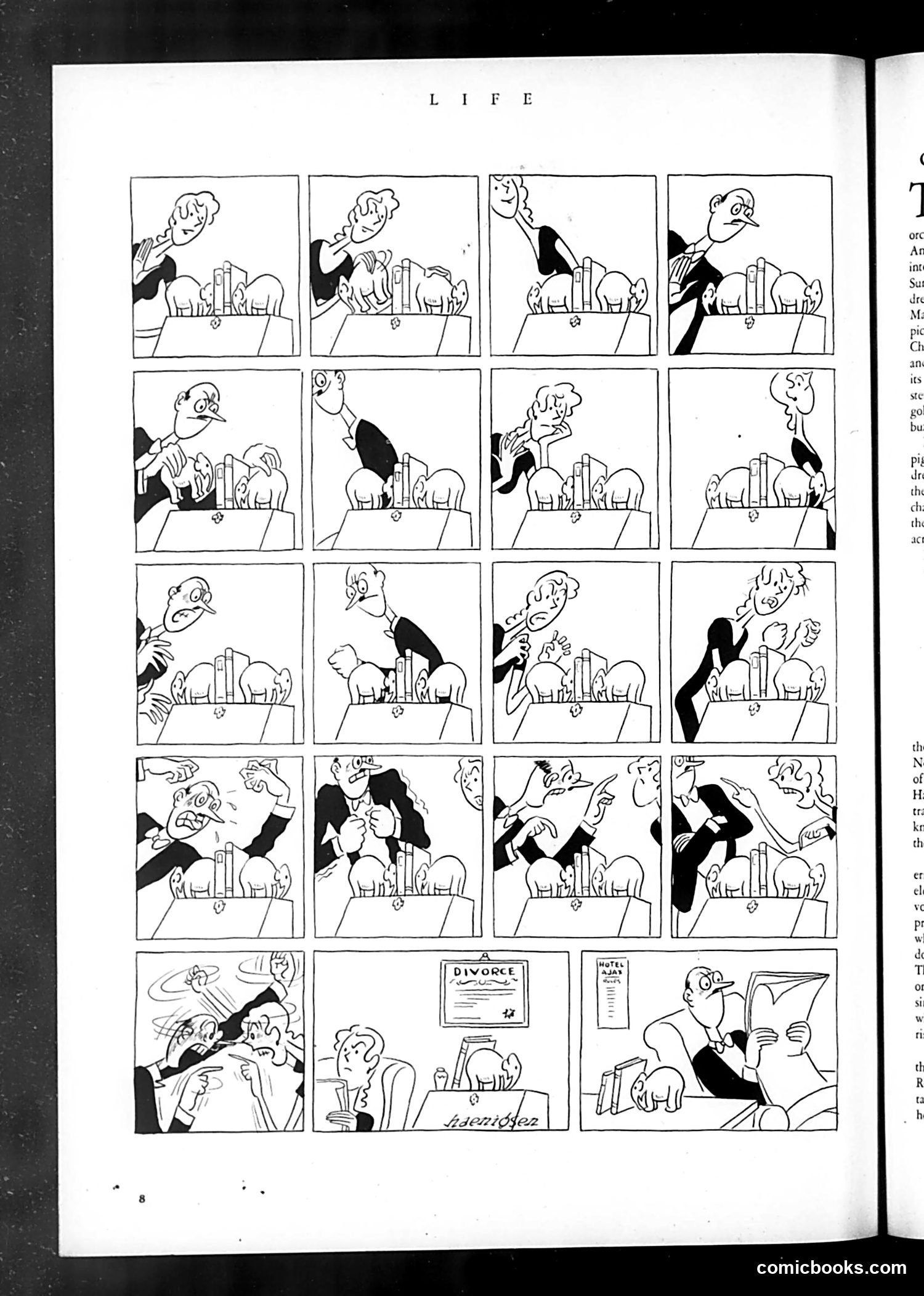
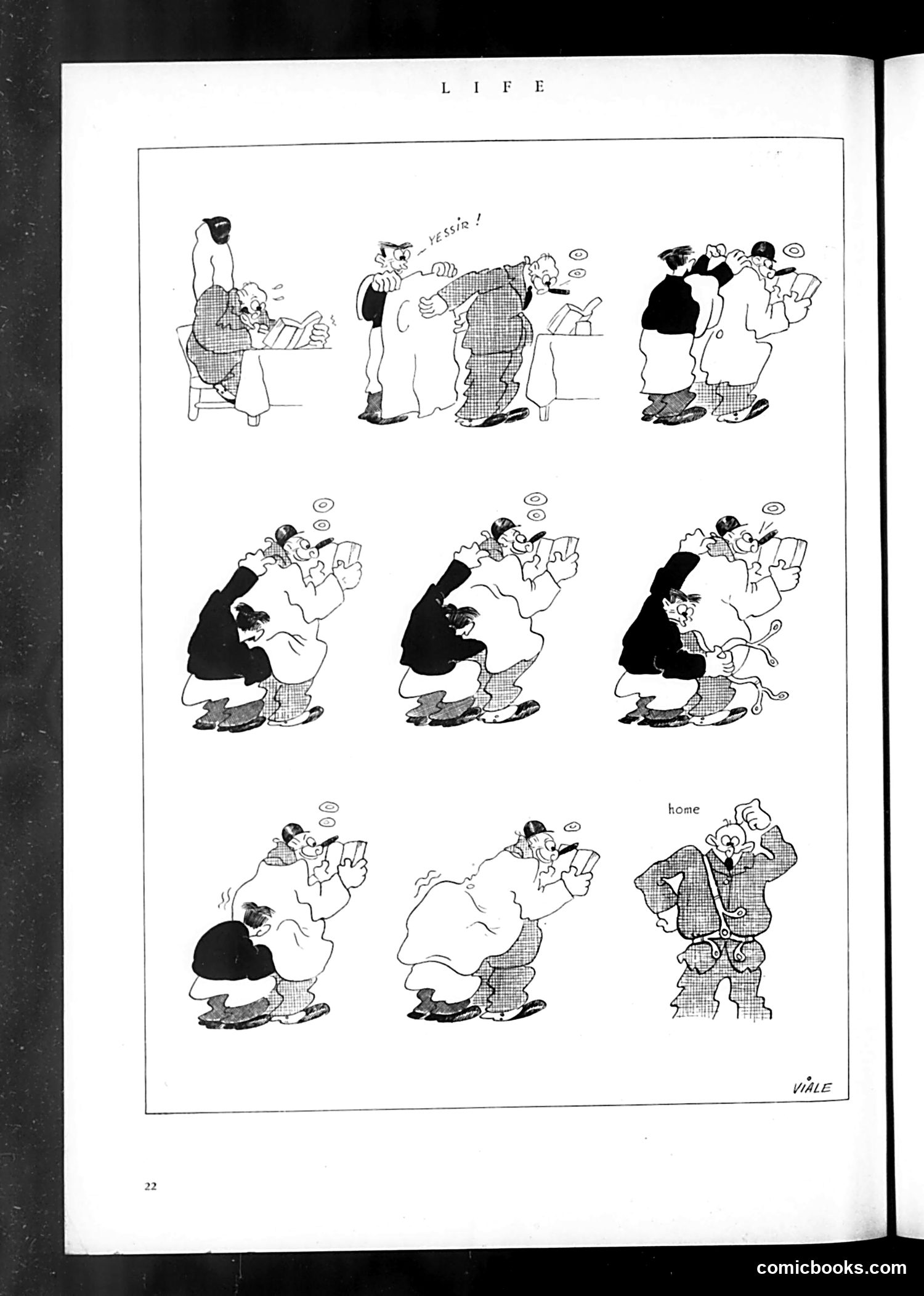
# Commentary on the Cartoon This is a multi-panel comic strip depicting a dinner party scene that deteriorates into chaos. The narrative appears to satirize marital discord and domestic conflict. The sequence begins orderly with well-dressed diners at a formal table, but progressively shows escalating arguments and physical altercation between what appears to be a husband and wife. The final panels reveal the punchline: a "DIVORCE" document and "HATE" poster, ending with one figure reading a newspaper while surrounded by children. The satire critiques marriage breakdown and its social consequences, presented through slapstick humor typical of early 20th-century American comics. The artist (signature appears to be present) uses exaggerated expressions and physical comedy to mock both marital conflict and the formality of domestic life. The specific historical context regarding divorce attitudes of the publication's era would inform the satirical intent.
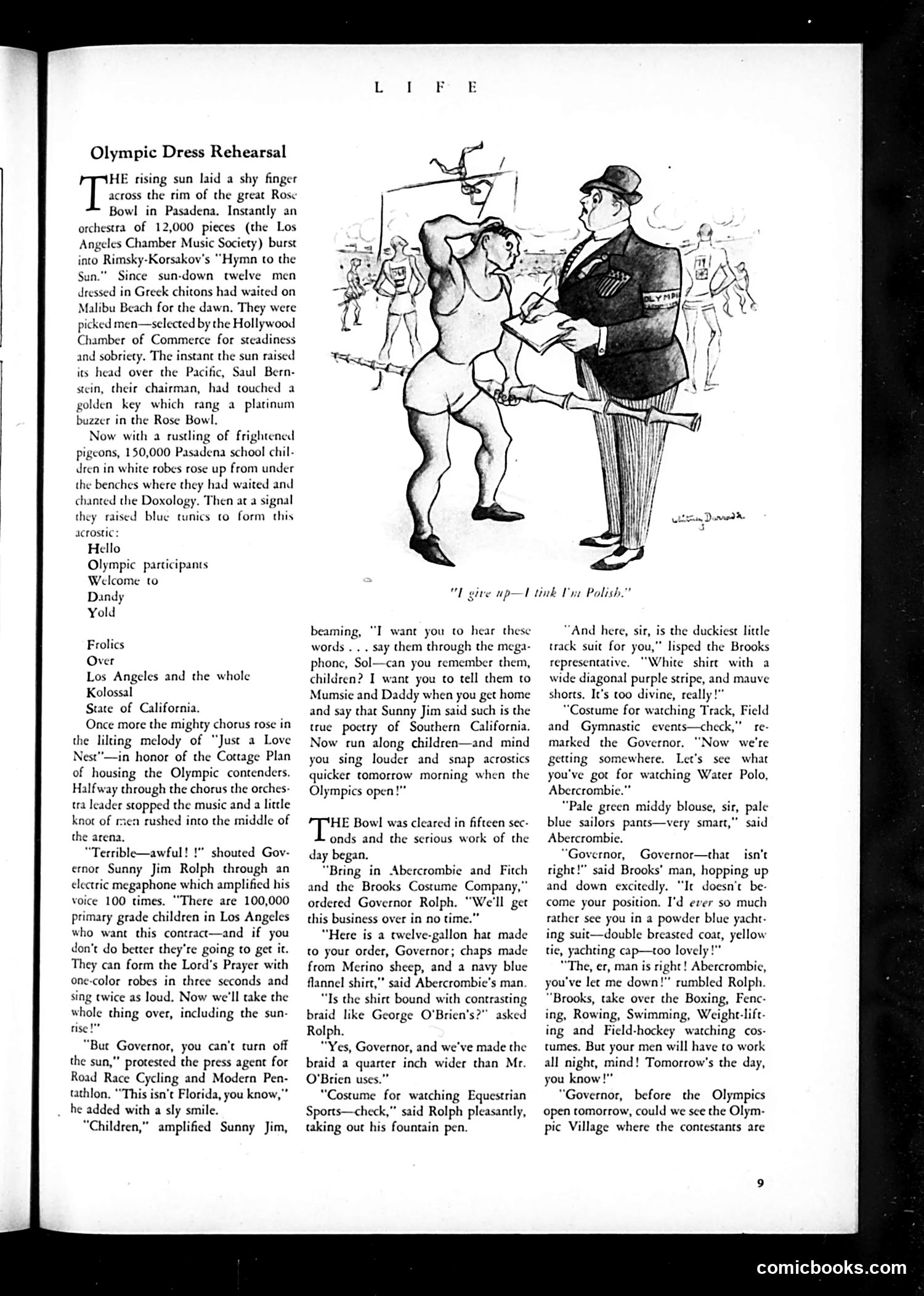
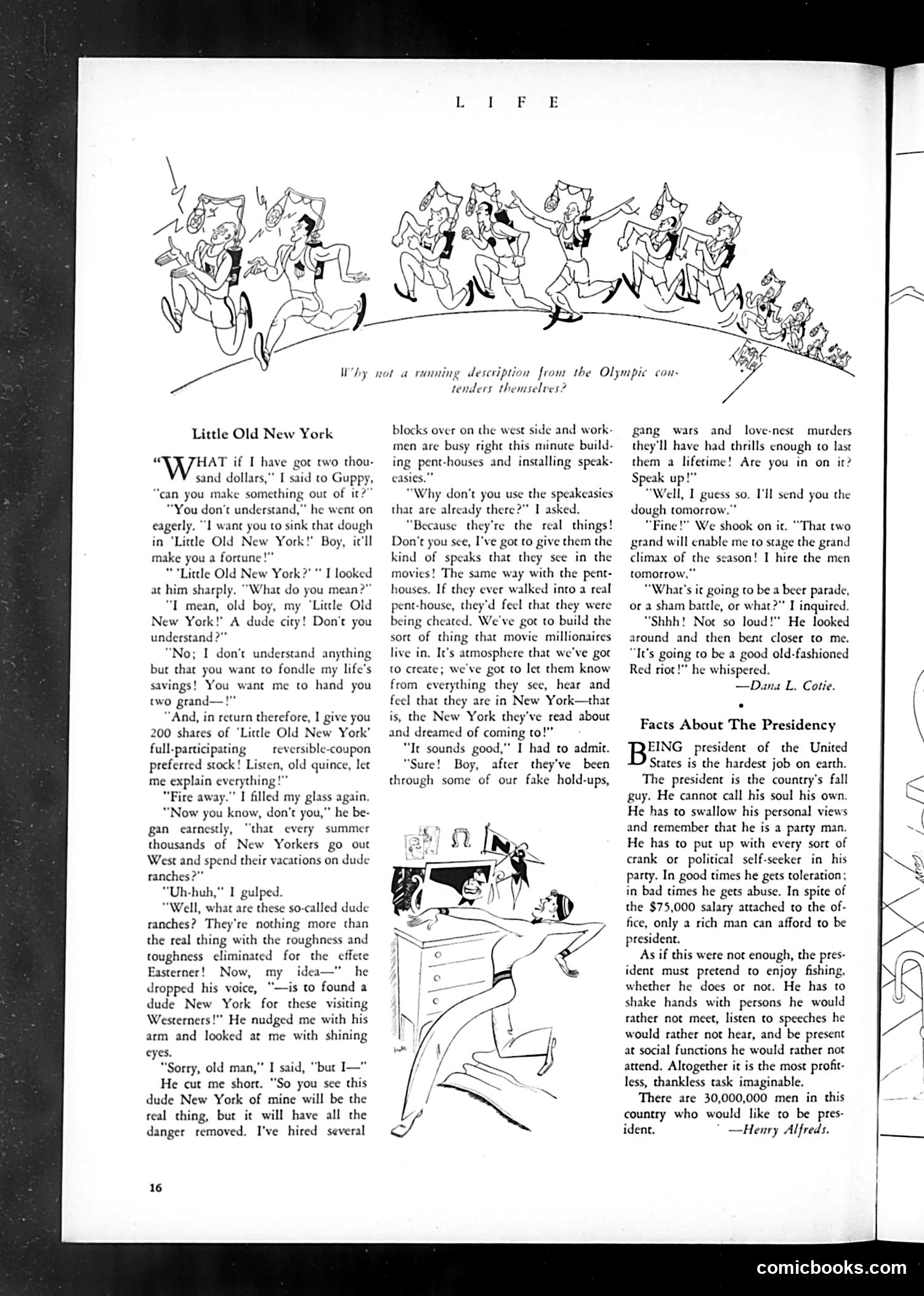
# Olympic Dress Rehearsal This satirical piece mocks the elaborate preparation for the 1932 Los Angeles Olympic Games. The cartoon depicts a muscular male athlete being fitted for Olympic costumes by officials, with the caption "I give up—I think I'm Polish." The satire targets the absurdity of organizing 150,000 schoolchildren into synchronized performances, the logistical chaos of coordinating massive crowds, and the bureaucratic micromanagement of even the athletes' appearances. References to Governor Rolph and various costume company representatives show how political and commercial interests complicated what should be athletic competition. The humor stems from the disconnect between the Games' athletic purpose and the elaborate theatrical production surrounding them—suggesting that spectacle had overshadowed sport.
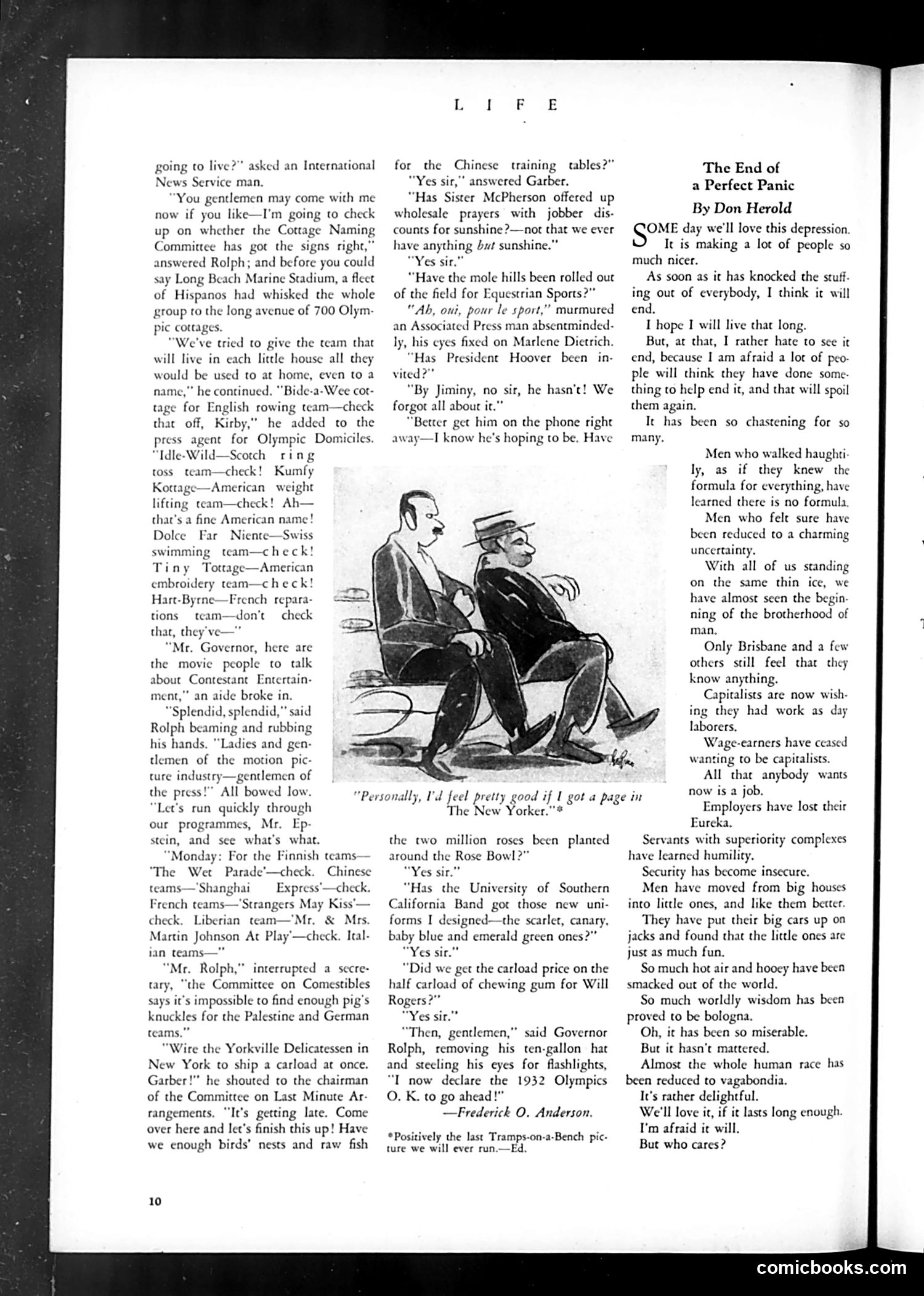
# "The End of a Perfect Panic" by Don Harold This page contains a satirical article and accompanying cartoon about the Great Depression's social upheaval. The cartoon depicts two men in conversation, likely representing different social classes or economic perspectives during the crisis. The article discusses how the depression has fundamentally altered society: capitalists now wish they were day laborers, wage-earners have stopped wanting to be capitalists, servants have lost their superiority complexes, security has become uncertain, and the wealthy have moved from mansions into smaller homes—finding them just as enjoyable. The satire suggests that widespread economic collapse has paradoxically created unexpected social equality and humility across class lines, ironically achieving a "perfect panic" where everyone's pretensions have been stripped away by shared hardship.