A complete issue · 37 pages · 1931
Life — October 23, 1931
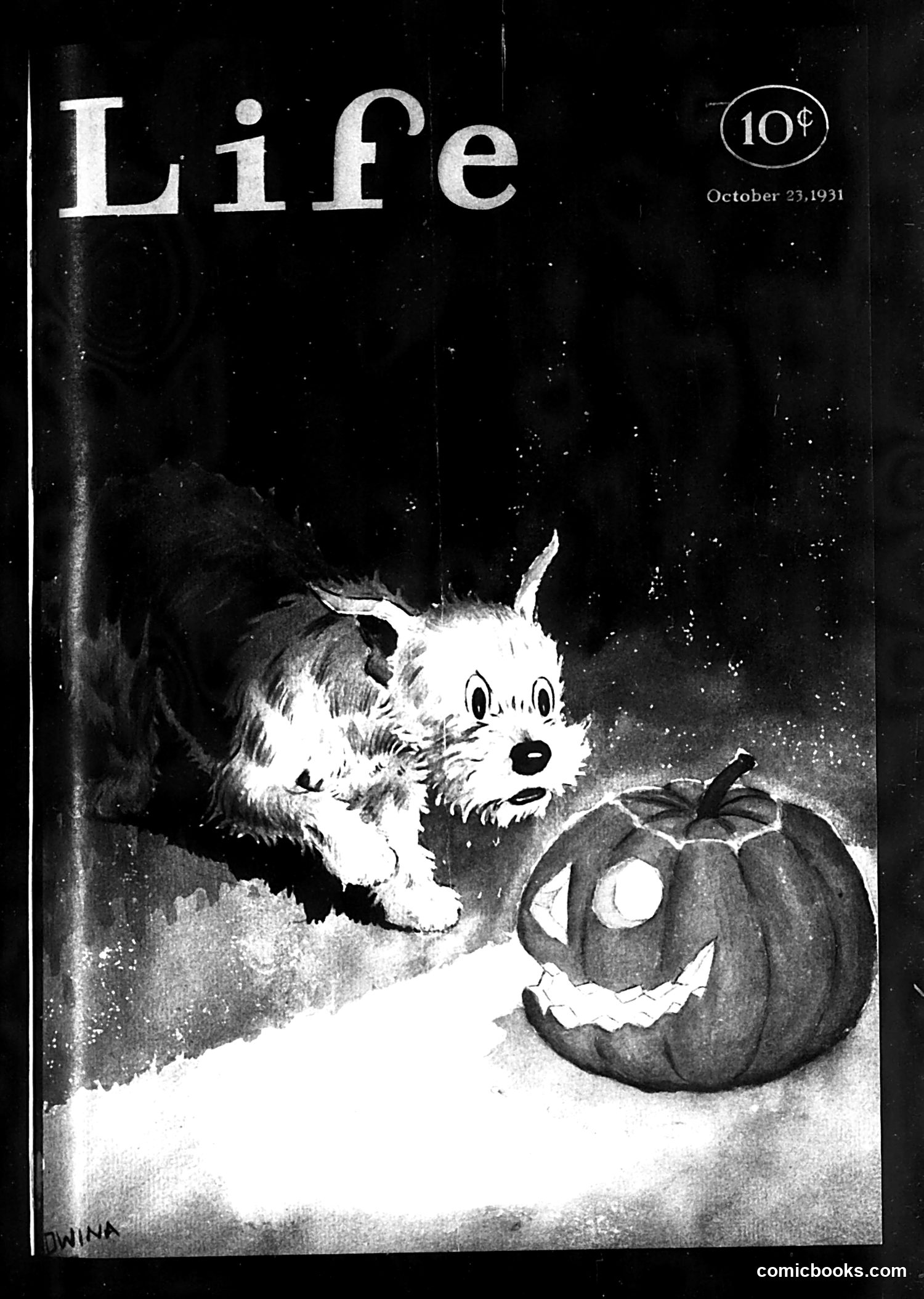
# Life Magazine Cover, October 23, 1931 This is a cover illustration (signed by the artist "IWINA") depicting a small, fluffy dog encountering a carved jack-o'-lantern pumpkin. The dog appears startled or curious, with wide eyes, while the pumpkin sports a traditional grinning face with triangular eyes and mouth. The image is a straightforward Halloween-themed illustration rather than political satire. It plays on the common comedic scenario of a pet's surprised reaction to a carved pumpkin—treating the jack-o'-lantern as if it were a real character or threat. This was a popular type of wholesome, domestic humor for *Life* magazine's audience during the early 1930s. The ten-cent price and October date confirm this as seasonal Halloween content.
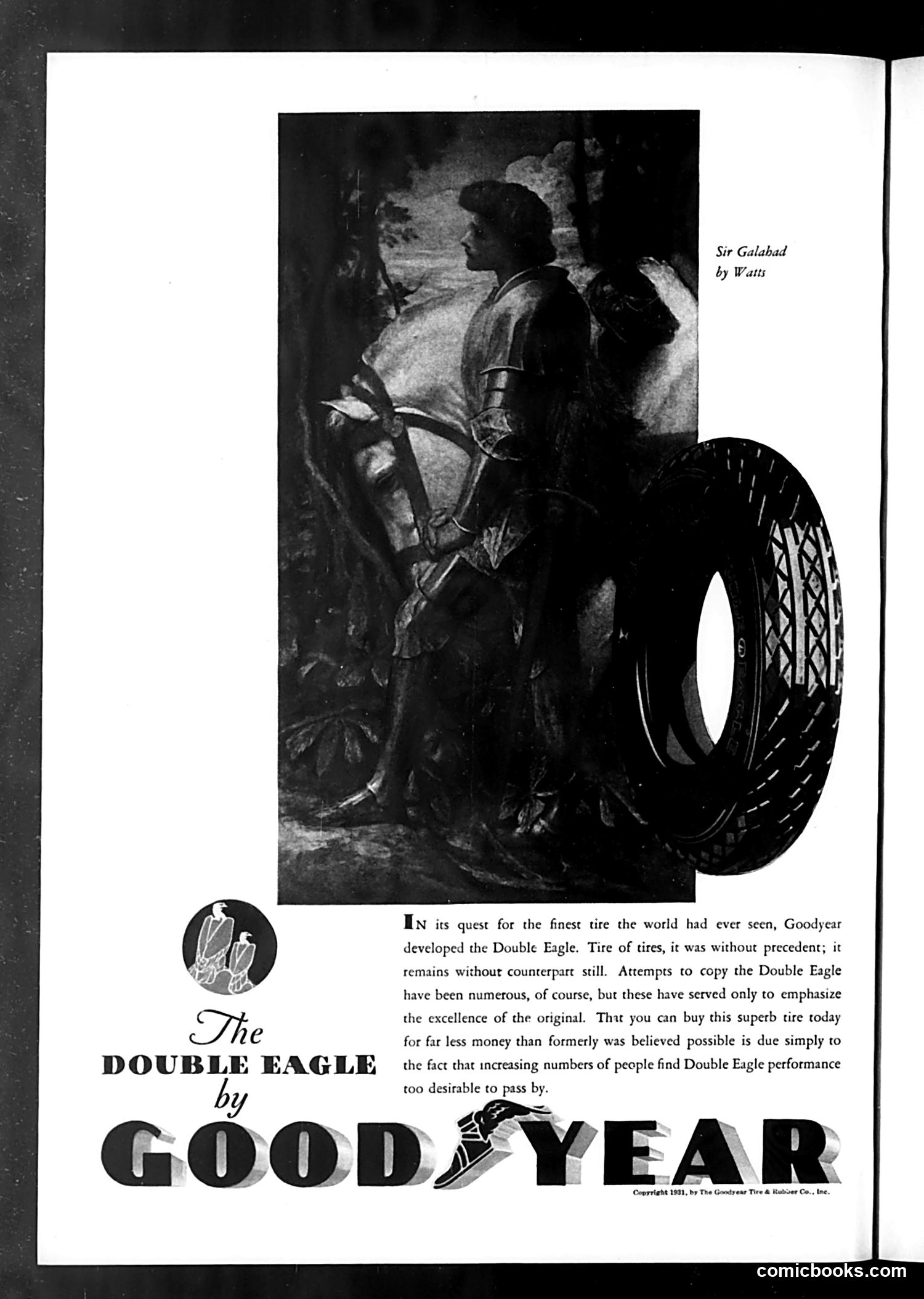
# Analysis This is a **Goodyear tire advertisement**, not political satire. The page features a classical artwork titled "Sir Galahad by Watts" showing a medieval knight on horseback, repurposed to advertise the "Double Eagle" tire. The ad's strategy links the tire to nobility and excellence: just as Sir Galahad represents the finest knight in Arthurian legend, Goodyear's Double Eagle tire represents "the finest tire the world had ever seen." The text claims competitors have tried copying it but failed, and credits the tire's affordability to increasing consumer demand. The eagle logo appears in the lower left corner. This is commercial messaging using cultural prestige rather than political commentary—a common early 20th-century advertising approach associating products with idealized imagery.
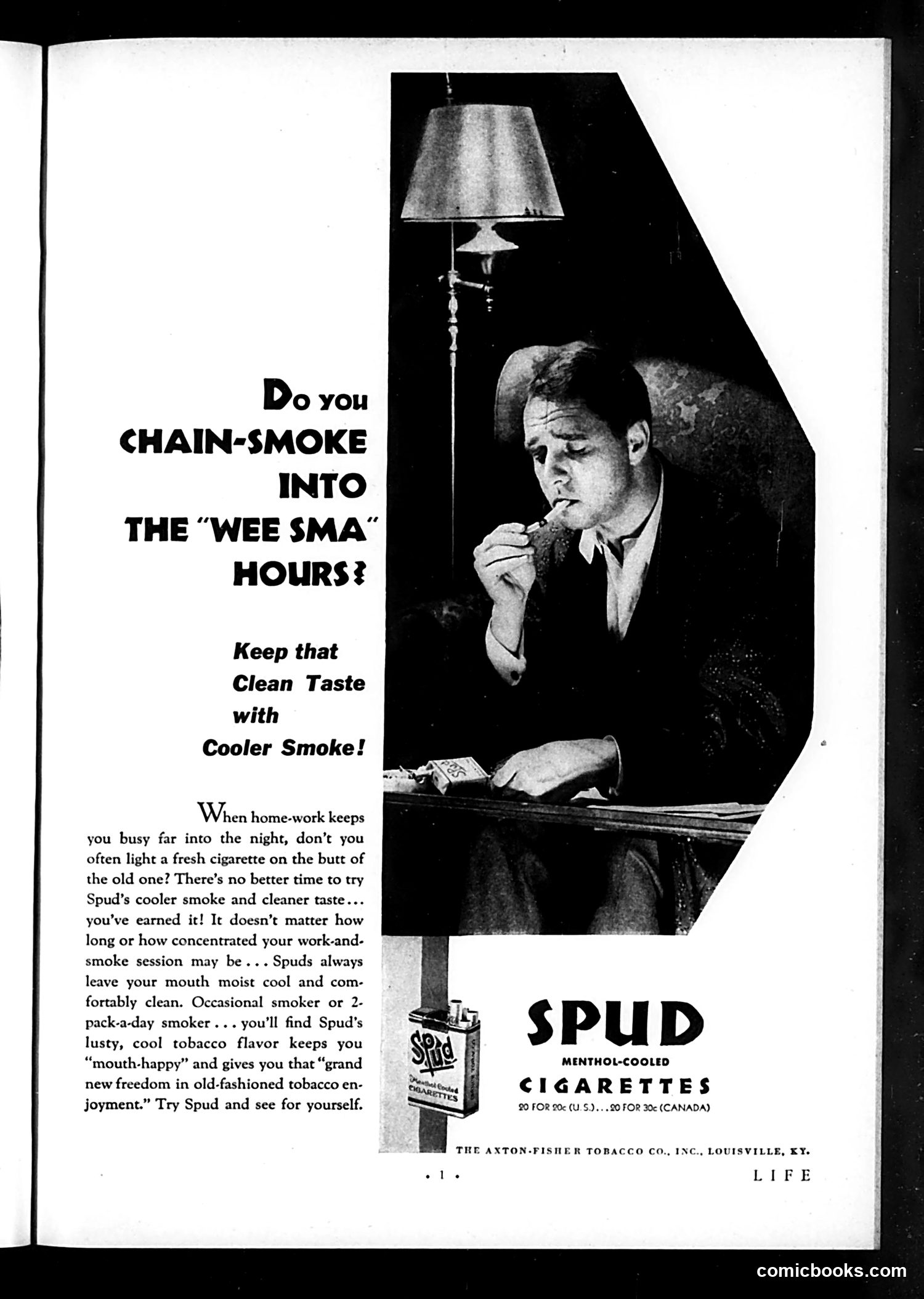
# Analysis This is a **cigarette advertisement**, not satire or political commentary. The ad promotes Spud brand menthol-cooled cigarettes manufactured by Axton-Fisher Tobacco Co. in Louisville, Kentucky. The image shows a man working late at night, chain-smoking cigarettes. The ad's pitch exploits this scenario: the headline asks if the reader chain-smokes during "wee sma" hours" (small hours of the morning), then suggests Spud cigarettes as a solution because they allegedly keep the mouth "moist cool and comfortably clean" even with heavy smoking. This reflects mid-20th century advertising that normalized chain-smoking as normal workplace behavior and explicitly marketed cigarettes as a solution to smoking's own unpleasant effects—a claim now recognized as deceptive.
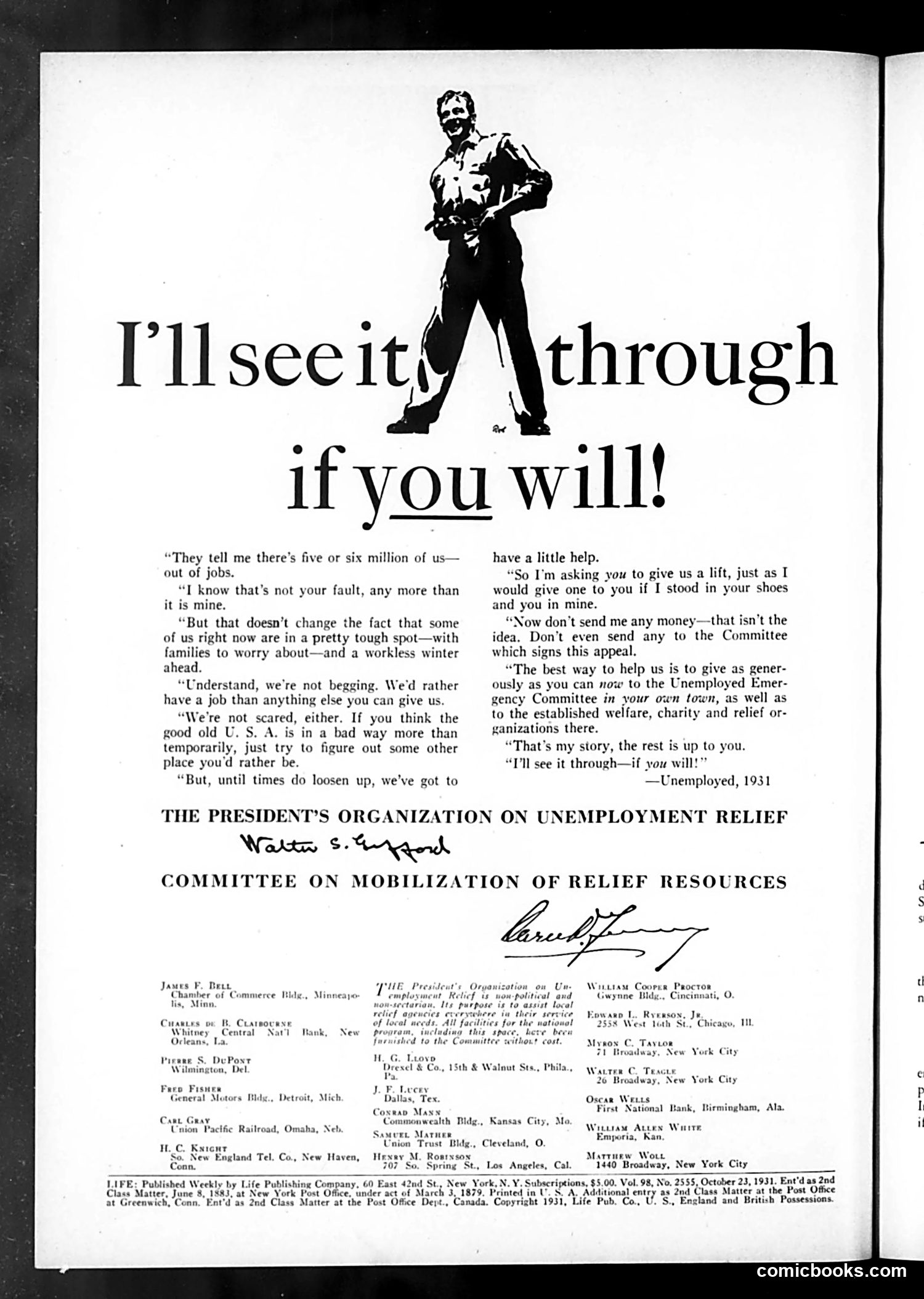
# Analysis This page from Life magazine (October 23, 1931) promotes **The President's Organization on Unemployment Relief**, a Depression-era charity initiative. The illustrated figure appears to be an unemployed man appealing directly to readers. The central message is: "I'll see it through if you will!"—a pledge that mutual effort can address mass joblessness. The text presents the man's perspective: unemployment isn't shameful, jobs are preferable to charity, and Americans shouldn't send money to national committees but rather support **local emergency relief organizations** in their own towns. This reflects Depression-era philosophy emphasizing community responsibility and self-reliance over federal intervention. The appeal targets middle-class readers to voluntarily support local relief efforts alongside the president's organization, acknowledging "five or six million" unemployed while avoiding federal welfare expansion.
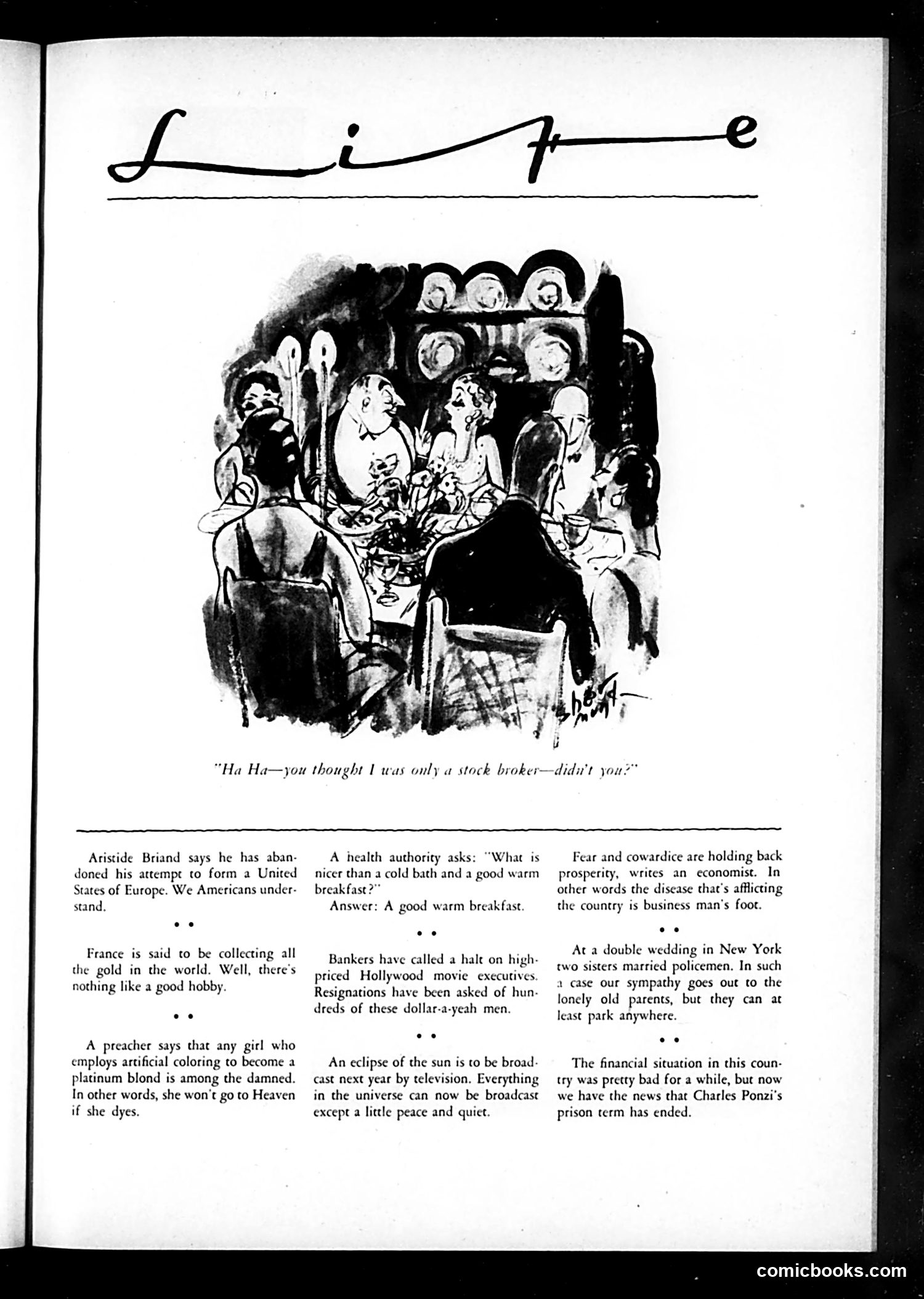
# Political Cartoon and Satire Analysis This page from *Life* magazine contains a single cartoon and several brief satirical quips. The cartoon shows a dinner party scene where one guest tells another: "Ha-Ha—you thought I was only a stock broker—didn't you?" The joke satirizes social pretension and hidden identities among the wealthy. The implication is that the stock broker possesses additional, apparently more impressive credentials or status that have been concealed. Given the dinner party setting and formal dress, this appears to mock how financially successful individuals strategically reveal accomplishments to enhance their social standing. The accompanying quips on the page address various topics—European politics, religious hypocrisy, and business concerns—typical of *Life*'s satirical commentary on contemporary American society and current events.
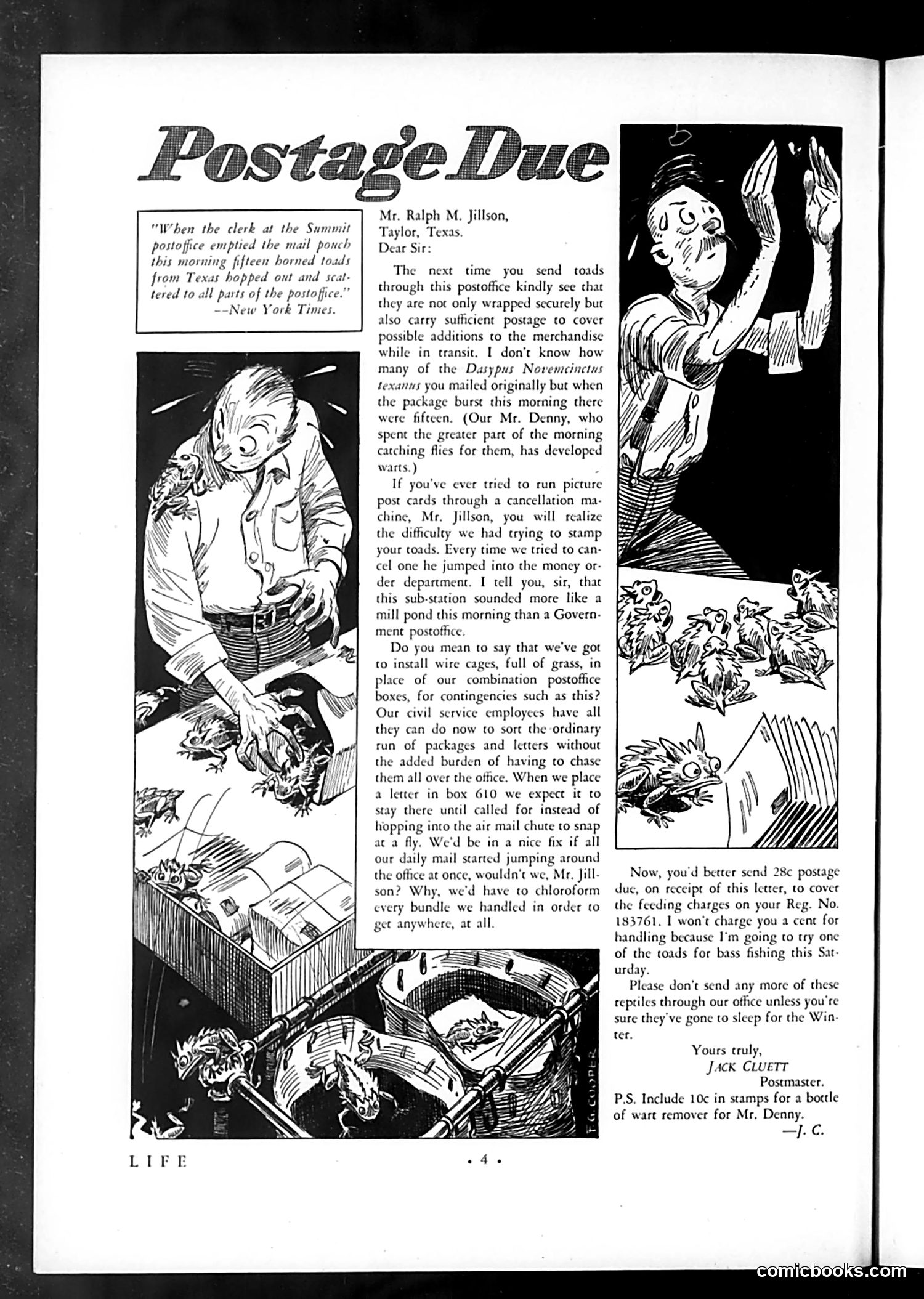
# "Postage Due" Satirical Letter This is a humorous complaint letter from "Jack Cluett, Postmaster" to Mr. Ralph M. Jillson in Taylor, Texas, who apparently mailed live toads through the U.S. mail. The satire depicts the chaos that ensued: fifteen toads escaped the package, scattered throughout the post office, and caused havoc among staff. The accompanying illustrations show a bewildered postal worker surrounded by hopping toads and mail in disarray. The joke satirizes both the absurdity of mailing live animals and the postal service's bureaucratic inflexibility. Cluett's deadpan tone—treating the toad invasion as merely a "postage due" issue requiring additional stamps—mocks how government agencies respond to ridiculous situations with procedure rather than common sense. The P.S. about "wart remover for Mr. Denny" adds to the absurdist humor.
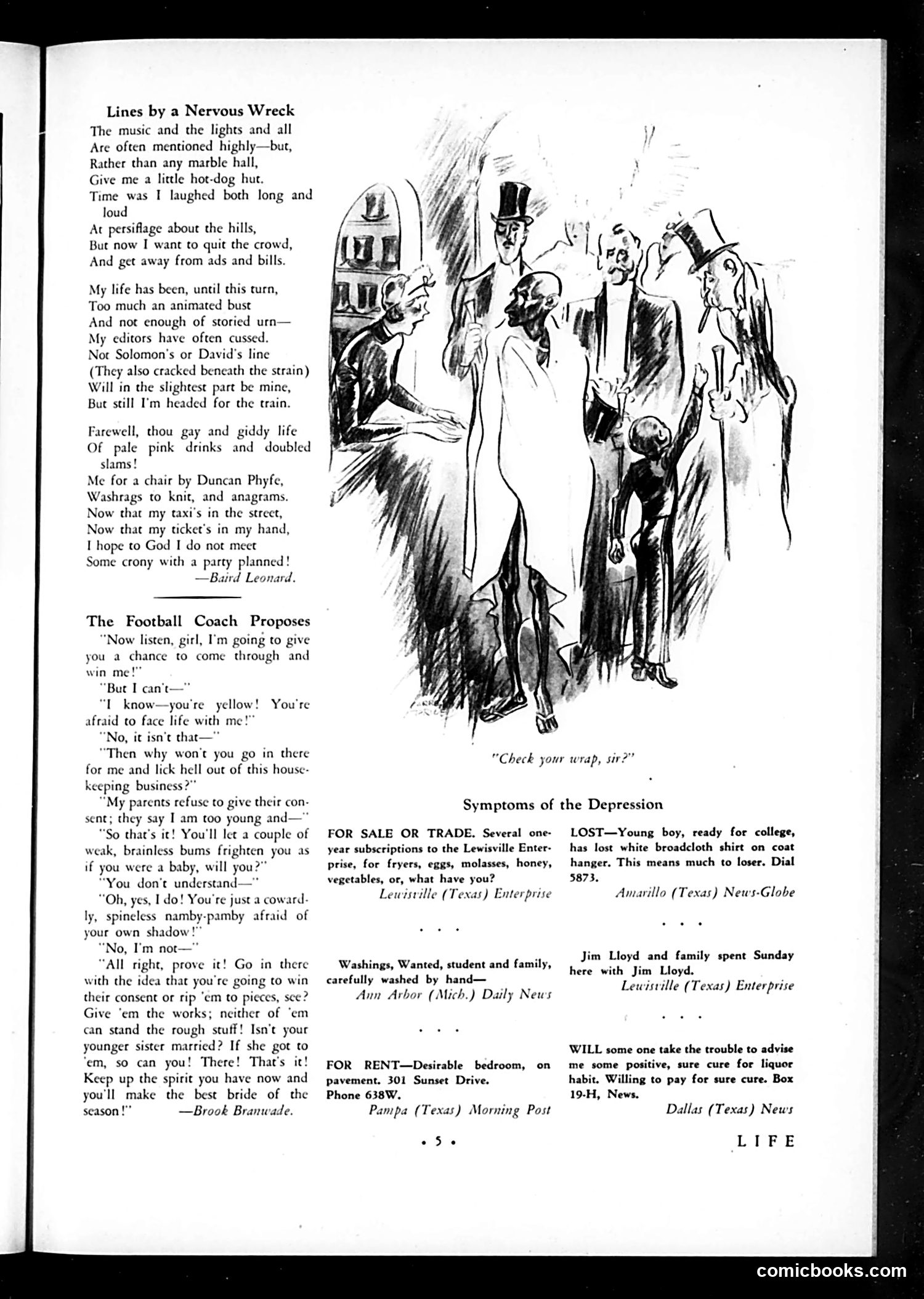
# Analysis of This Life Magazine Page This page contains literary and social commentary rather than political cartoons. The main poem, "Lines by a Nervous Wreck" by Baird Leonard, satirizes modern urban anxiety—the author laments his chaotic life ("animated bust," "too much...sordid urn") and yearns to escape to the countryside ("a little hot-dog hut"). The accompanying sketch shows well-dressed urbanites, likely depicting the sophisticated city crowd the poem critiques. Below, "The Football Coach Proposes" presents a humorous dialogue where a coach pressures a reluctant young man to prove his courage by winning a girl's consent through persistence—satirizing both aggressive coaching mentality and contemporary courtship assumptions that men should overcome female resistance. The "Symptoms of the Depression" section contains period classifieds and personal notices, reflecting economic hardship.
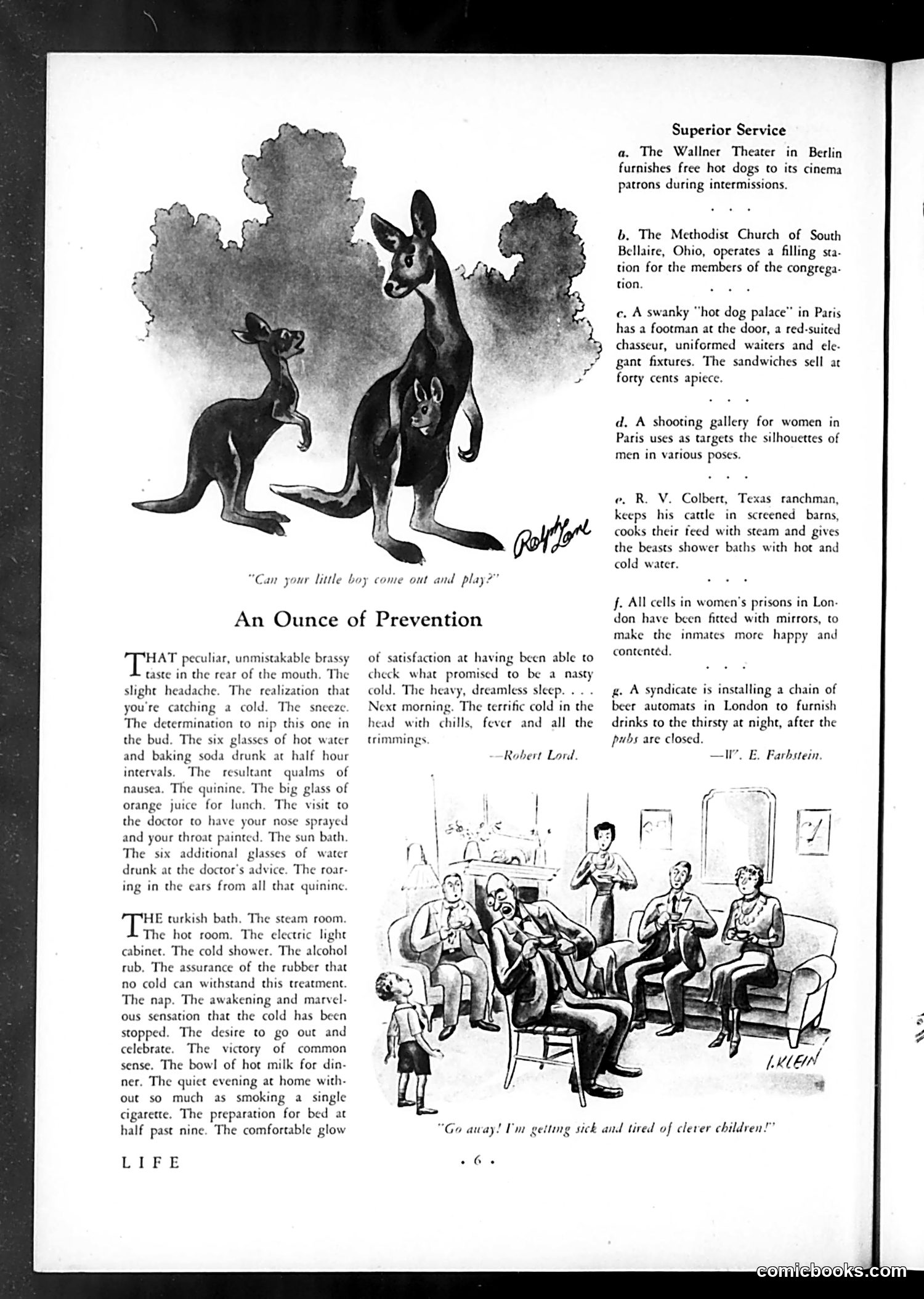
# Page Analysis: "An Ounce of Prevention" This page satirizes over-the-top cold remedies popular in the early 20th century. The article "An Ounce of Prevention" mocks the elaborate, excessive treatments prescribed for colds—hot water glasses, baking soda, quinine, orange juice, nose spraying, Turkish baths, steam rooms, electric light cabinets, cold showers, and alcohol rubs. The cartoon at top shows kangaroos asking "Can your little boy come out and play?"—likely commenting on how cold prevention keeps children indoors under constant treatment. The lower cartoon depicts an exasperated parent surrounded by children, complaining "Go away! I'm getting sick and tired of clever children!"—suggesting the irony that obsessive health protocols create more parental frustration than actual wellness. The "Superior Service" section notes various unusual amenities at establishments worldwide.
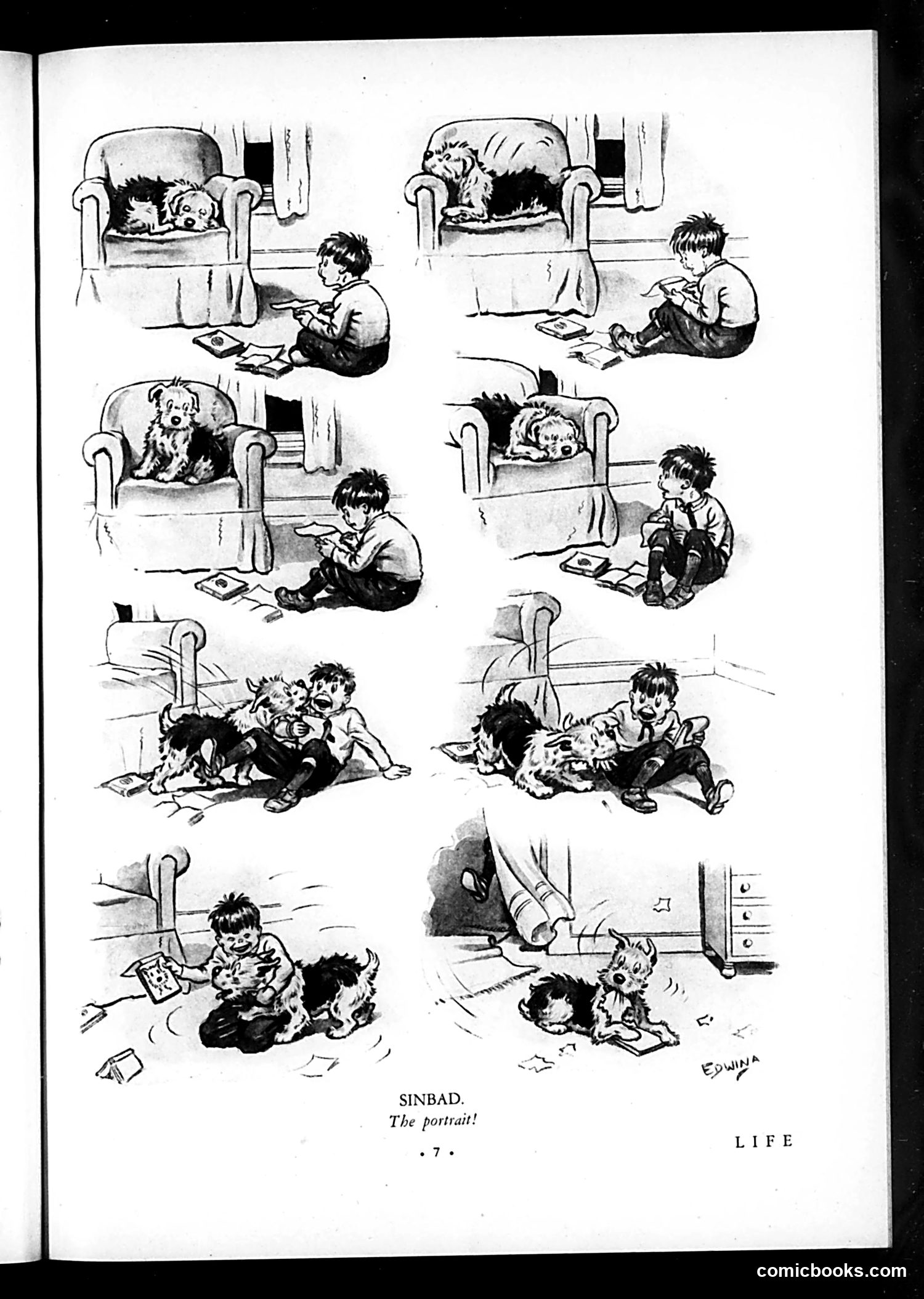
# "Sinbad: The Portrait!" — Life Magazine This is a humorous comic strip depicting a child's attempt to paint a portrait of what appears to be a dog or shaggy animal sitting in an armchair. The sequence shows the escalating chaos: the child starts calmly sketching while the animal sits still, but progressively the animal becomes more active and playful, eventually leading to complete pandemonium where child and animal are rolling around together on the floor, with art supplies scattered everywhere. The joke plays on the difficulty of getting a pet to sit still for a portrait—a relatable domestic scenario. The title "Sinbad" likely refers to the animal character. The satire gently mocks both artistic ambition and pet behavior, showing how best-laid plans collapse into cheerful disorder. It's a lighthearted commentary on everyday family life with animals.
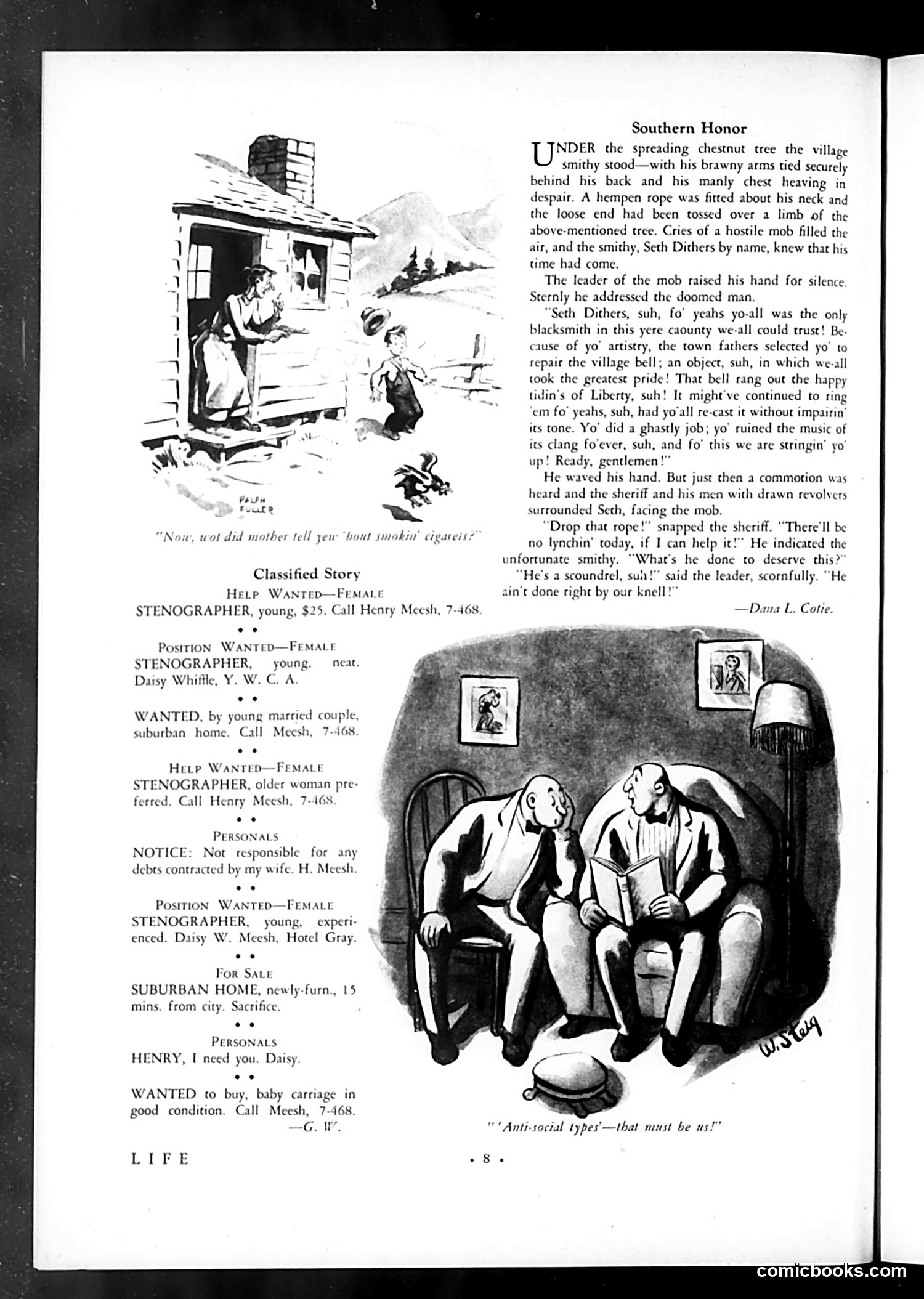
# Analysis This page contains two distinct elements: **"Southern Honor" story** (top): A narrative illustration depicting a lynch mob threatening a Black blacksmith named Seth Dithers. The sheriff intervenes to prevent lynching, with dialogue suggesting the mob's justification was that Dithers damaged a village bell. The story critiques mob violence and racial injustice in the American South, presenting the sheriff as a voice of legal order against vigilante execution. **Bottom cartoon**: Two men in an interior discuss an "Anti-social type"—likely referring to someone of unconventional beliefs or behavior. The satire appears to mock how society labels nonconformists as dangerous threats. The page juxtaposes serious social commentary about racial violence with lighter satire about social conformity, both reflecting early 20th-century American anxieties about morality and social order.
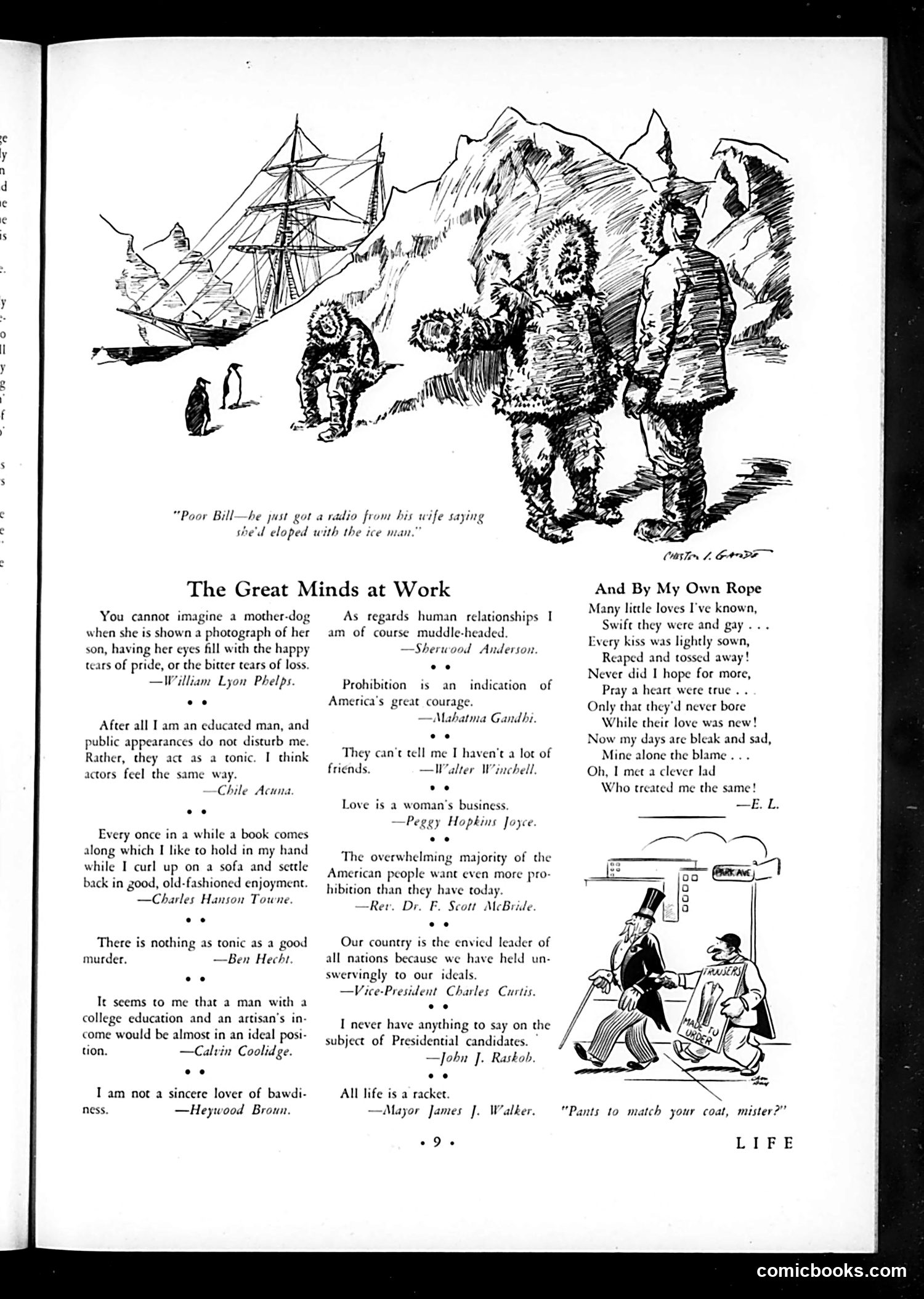
# Analysis of Life Magazine Page This page combines satirical quotes ("The Great Minds at Work") with two cartoons. The top cartoon depicts Arctic explorers and a ship, with the caption "Poor Bill—he just got a radio from his wife saying she'd eloped with the ice man." This is a joke about infidelity: the "ice man" was a common Depression-era profession (delivering ice for iceboxes), and the humor relies on the irony that Bill receives devastating news while isolated in the Arctic. The bottom cartoon shows a tailor fitting clothes to a customer, captioned "Pants to match your coat, mister?" This appears to be a straightforward retail joke, possibly suggesting mismatched fashion or economic struggles where customers cannot afford matching suits. The quotes represent various public figures commenting on serious topics like prohibition, love, and American ideals.
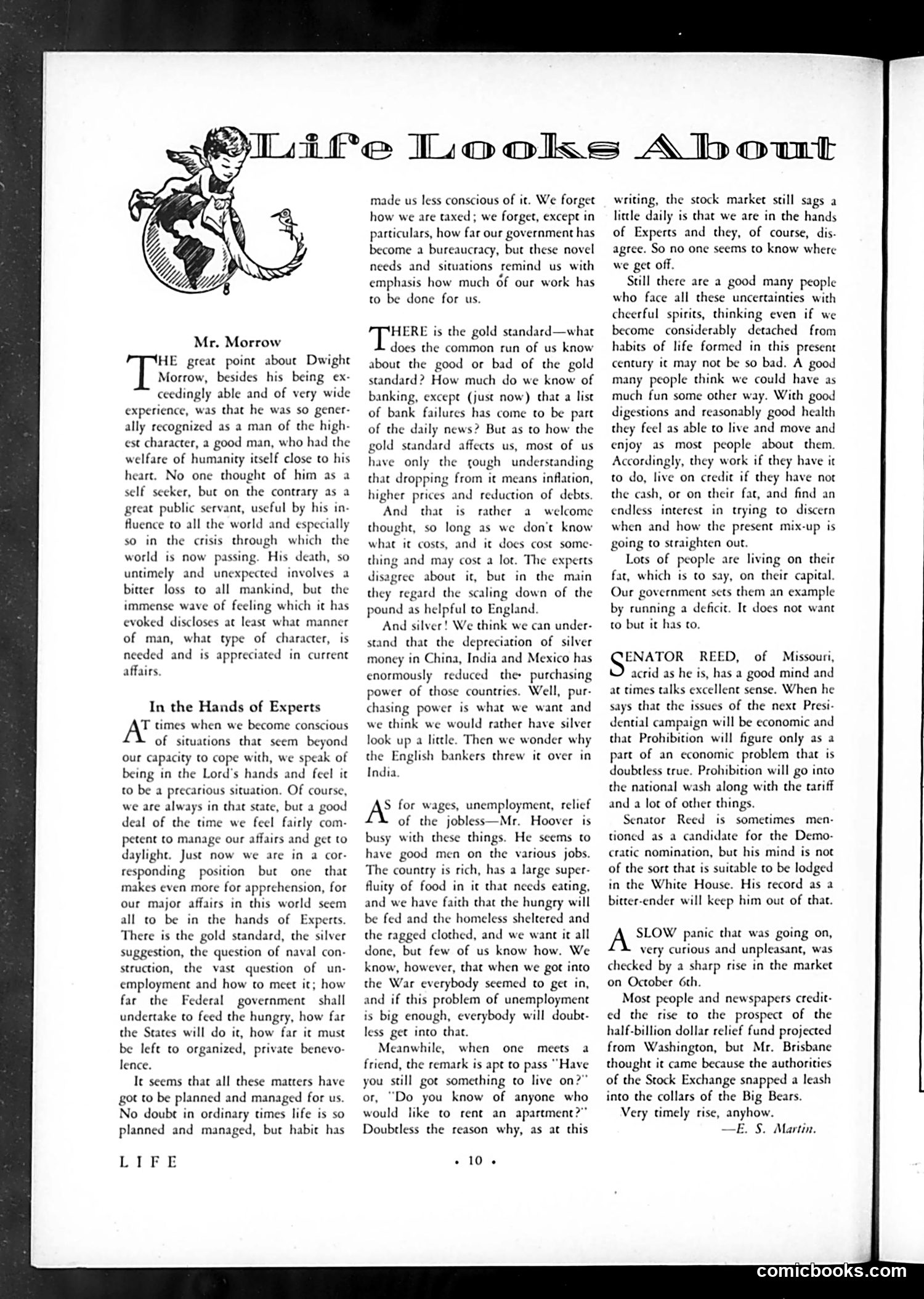
# Political Commentary on Economic Crisis The page features "Life Looks About," a satirical column discussing early 1930s economic troubles. The illustration shows a cherub or cupid figure—likely representing either naive optimism or misplaced hope—observing financial chaos. The text critiques experts and politicians managing the economic crisis, referencing the gold standard debate, banking failures, unemployment, and relief efforts. It mentions Senator Reed of Missouri and President Hoover's unemployment policies, plus a stock market panic on October 6th. The satire targets how ordinary citizens feel helpless while "experts" bungle affairs, how people anxiously discuss unemployment and housing shortages, and how politicians offer vague reassurances. The cherub's confused expression suggests the absurdity of expecting divine intervention—or expert competence—during genuine economic hardship.