A complete issue · 36 pages · 1931
Life — October 9, 1931

# Life Magazine Cover, October 9, 1931 This is a stylized Art Deco cover illustration (signed "Adler") depicting a bird in flight, likely a dove or similar species, rendered in bold black silhouettes with gray tones. The bird carries what appears to be a small house or dwelling structure in its beak or talons, while smaller birds fly in formation above. Below, bare branches and autumn foliage suggest a seasonal setting. The composition suggests themes of migration, displacement, or relocation—possibly referencing homelessness or housing during the Great Depression era (1931 timing supports this). The precise satirical target remains unclear without accompanying text, though the imagery likely comments on contemporary social or economic conditions affecting shelter and stability.
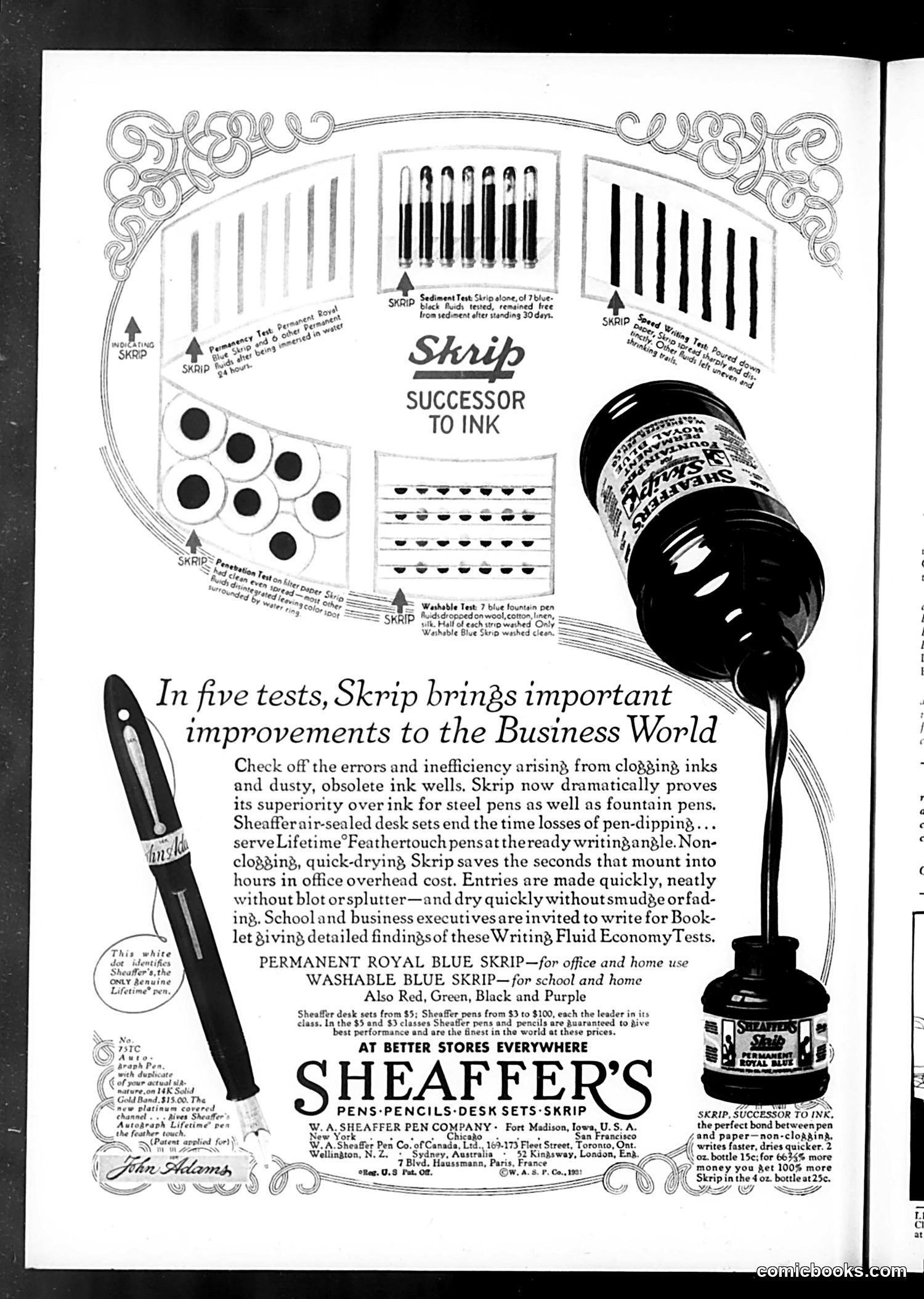
# This is an Advertisement, Not Satire This page is a **commercial advertisement** for Sheaffer's Skrip writing fluid and fountain pens, not political or social satire. The content shows product testing diagrams demonstrating Skrip's superiority over traditional ink—comparing sediment levels, washability, and performance across multiple writing instruments. The "five tests" mentioned tout improvements like non-clogging formulas and quick-drying properties. The large fountain pen illustration and ink bottle are product images. The testimonial from what appears to be a signature (possibly an endorser) adds credibility. The advertisement emphasizes business efficiency—how Skrip eliminates pen-maintenance time losses in offices—appealing to mid-20th century workplace productivity concerns. This is straightforward commercial marketing rather than editorial commentary.
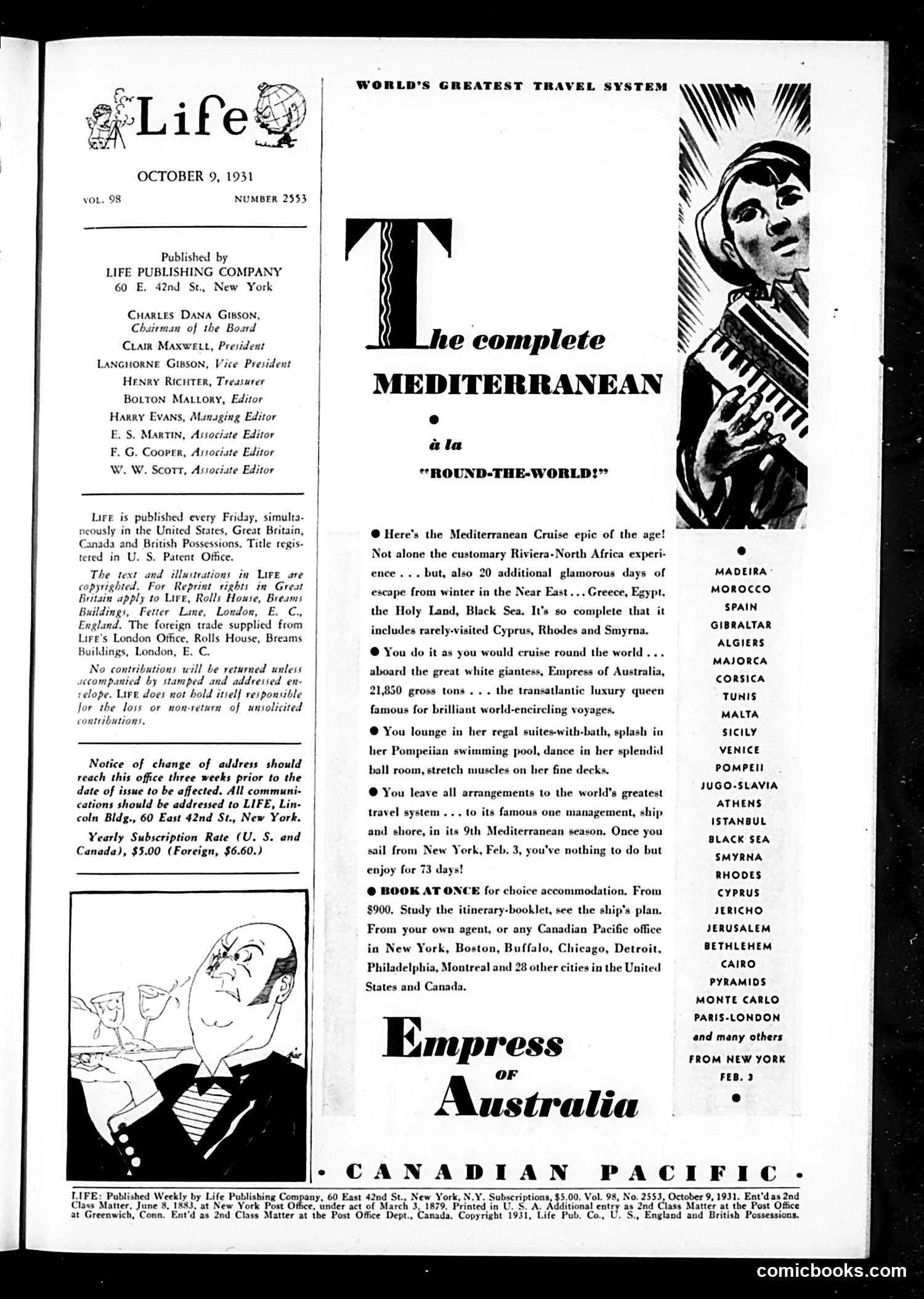
# Page Analysis: Life Magazine, October 9, 1931 This page is primarily **advertising content** for a Mediterranean cruise aboard the Empress of Australia, operated by Canadian Pacific shipping lines. The advertisement dominates the right side, listing exotic destinations (Egypt, Greece, Cyprus, Jerusalem, Cairo, etc.) and promoting luxury accommodations starting at $900. The small cartoon on the left appears to be **editorial filler** — a simple sketch of a man's face in what seems a humorous or exaggerated style, likely unrelated to the cruise advertisement. Without clearer context or caption visible, the cartoon's specific satirical point is unclear from this image alone. The page itself serves as a masthead for Life Publishing Company, with staff listings and subscription information.
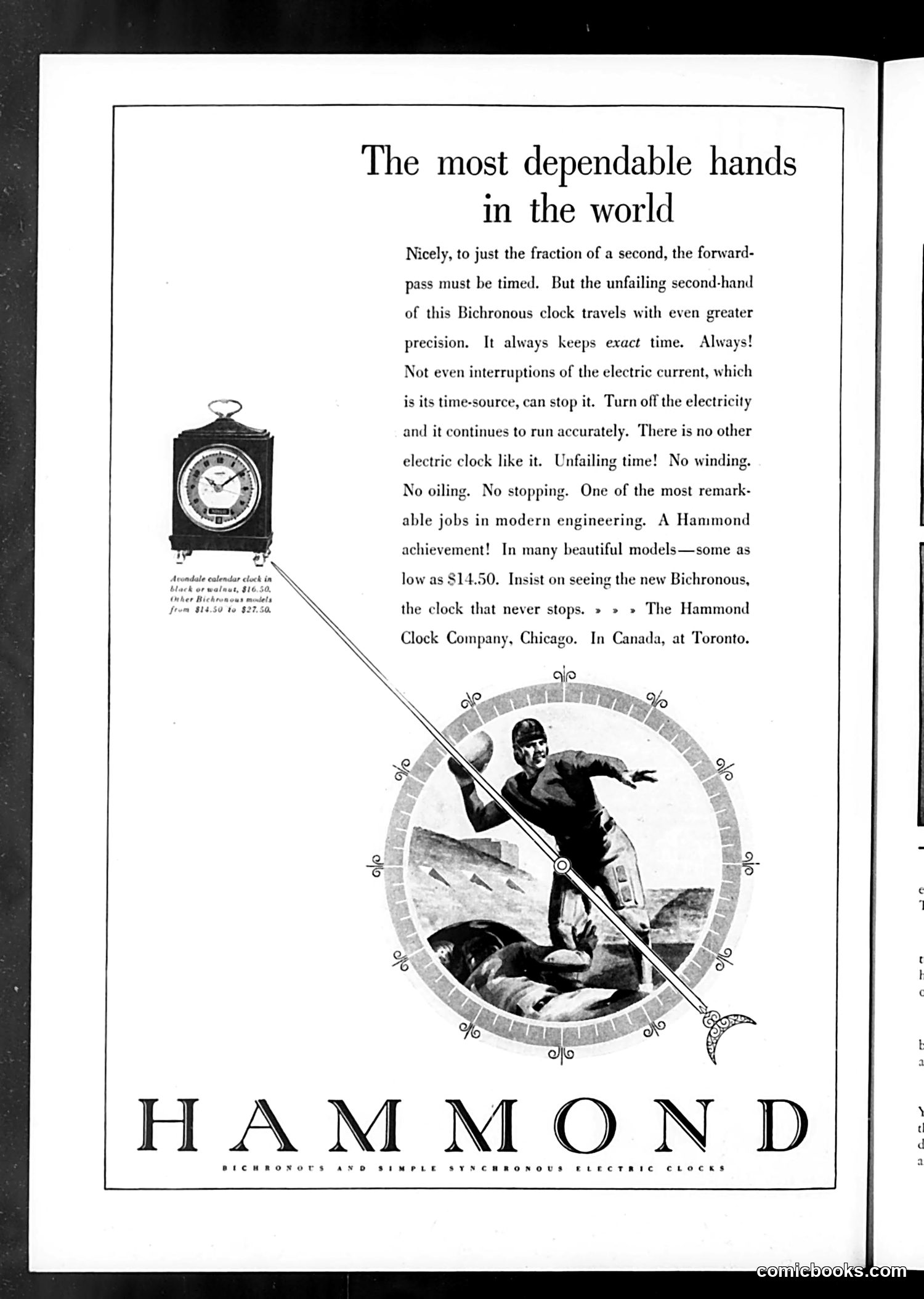
# Hammond Clock Advertisement This is a **product advertisement**, not satire or political commentary. The page promotes Hammond's Bichronous electric clocks, manufactured by the Hammond Clock Company in Chicago (with Canadian distribution in Toronto). The ad emphasizes the clock's reliability: it keeps "exact time" continuously, even if electricity is interrupted. The image shows a football player kicking a field goal, where the clock face replaces the ball—a visual metaphor suggesting the clock's precision and dependability, qualities valued in sports as in timekeeping. The ad highlights modern engineering achievement and positions the product as superior to mechanical clocks, requiring no winding or oiling. Models are advertised starting at $14.50. This reflects early 20th-century enthusiasm for electric-powered convenience in consumer goods.
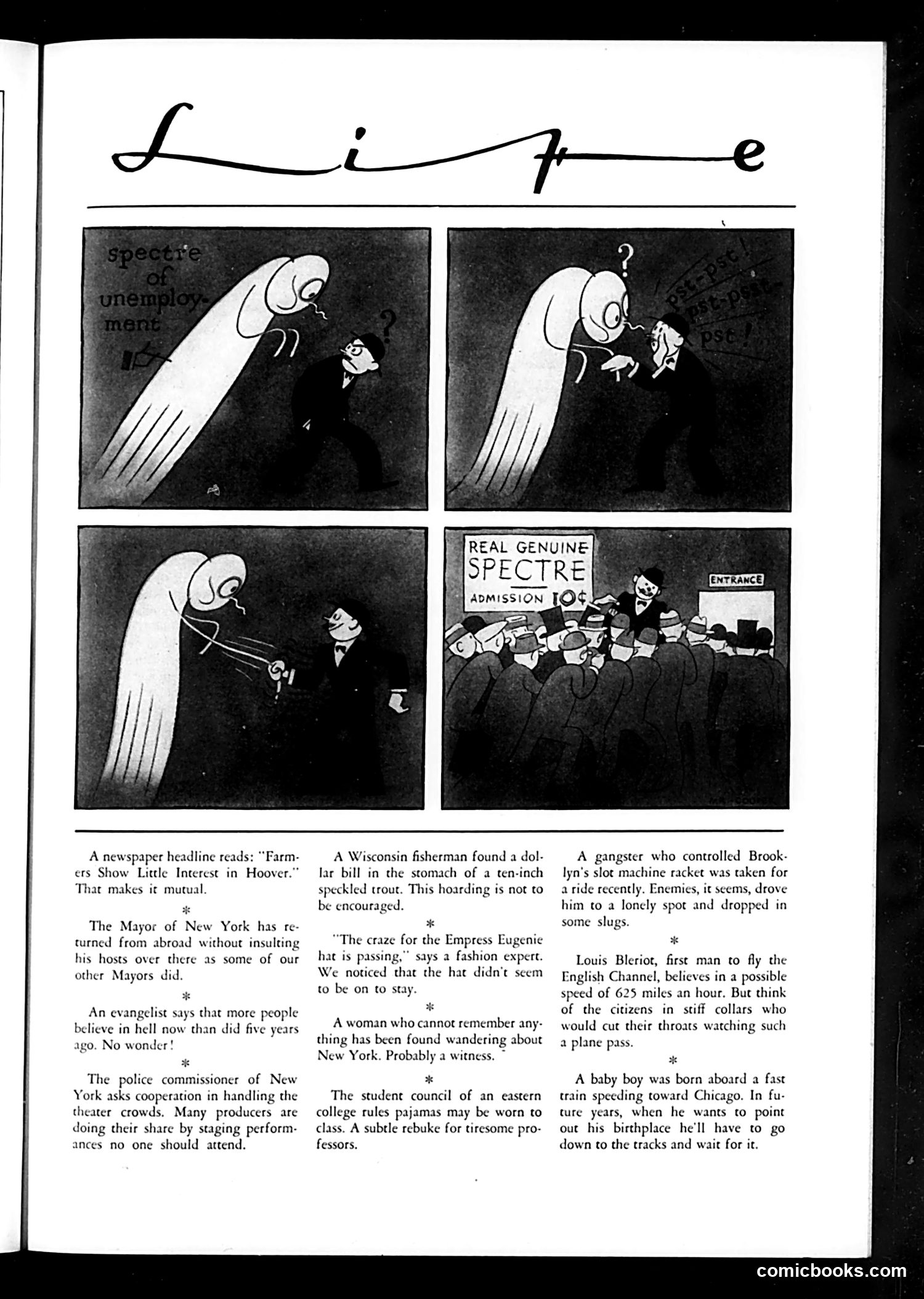
# "Life" Satirical Page Analysis This page features a four-panel comic titled "Spectre of Unemployment" depicting a ghostly specter haunting a small man in formal dress—likely representing a businessman or unemployed worker during an economic downturn (possibly the Great Depression era, given the imagery). The specter progressively menaces the figure across three panels, then transforms into a circus-like attraction in the fourth panel, where crowds pay admission to see a "Real Genuine Spectre." The satire critiques how unemployment—initially terrifying—becomes commodified entertainment. The accompanying humorous anecdotes below mock various social absurdities of the period. The overall message: societal anxieties become trivialized spectacles, and serious economic problems are reduced to amusing oddities rather than addressed seriously.
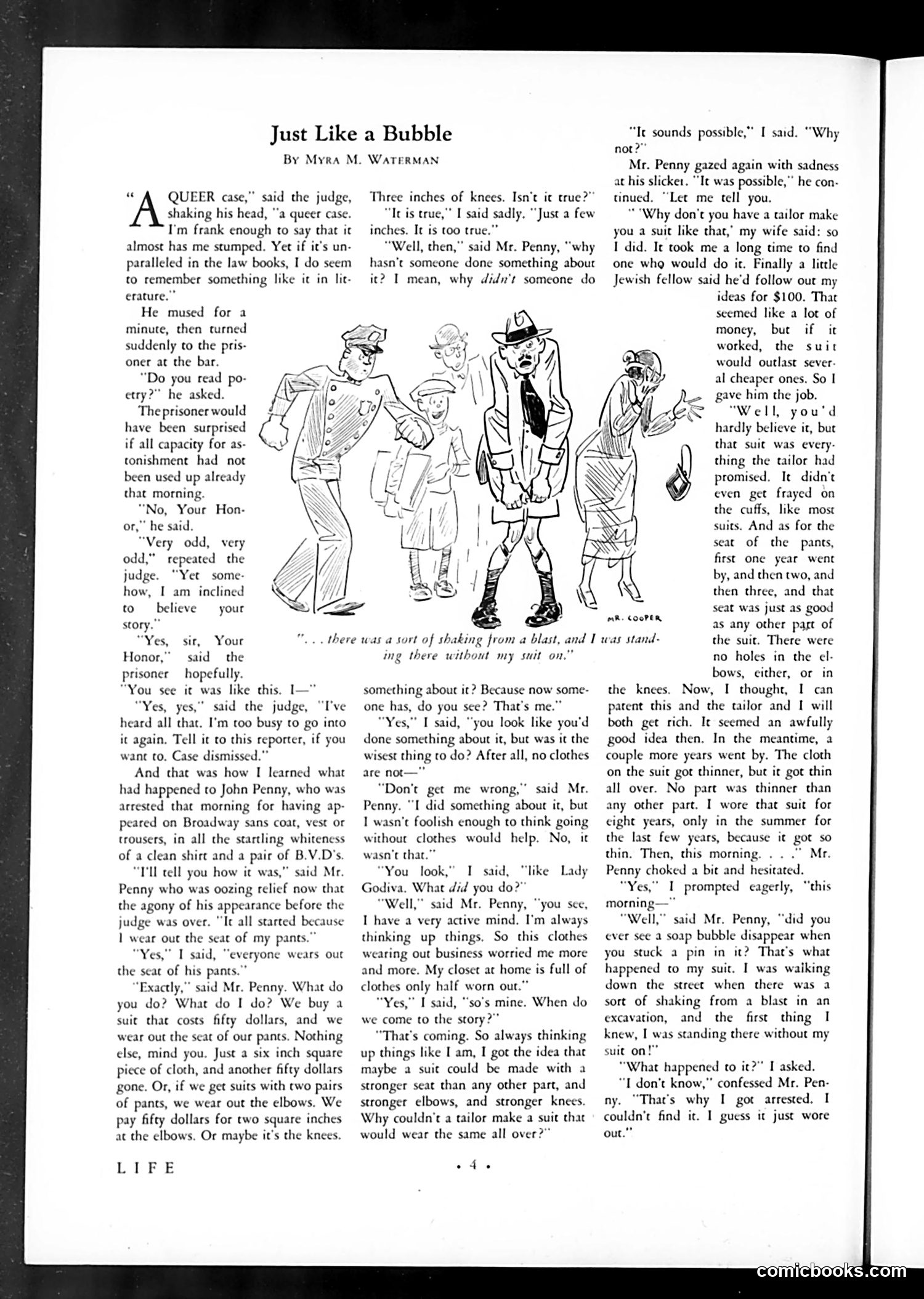
# "Just Like a Bubble" by Myra M. Waterman This satirical story concerns a man arrested for wearing an unworn suit without proper clothes underneath. A judge finds the case bizarre—the prisoner explains he bought an expensive suit ($100, a substantial sum at the time) to avoid wearing out cheaper clothes. The tailor promised durability but failed to reinforce key stress areas (knees, elbows, seat). The satire mocks both consumer anxiety about clothing costs and manufacturers' false advertising claims. The "bubble" reference suggests the suit's promises—like a soap bubble—were insubstantial and burst upon contact with reality. The illustration depicts characters discussing this absurd legal case, highlighting early 20th-century concerns about product quality and economic value.
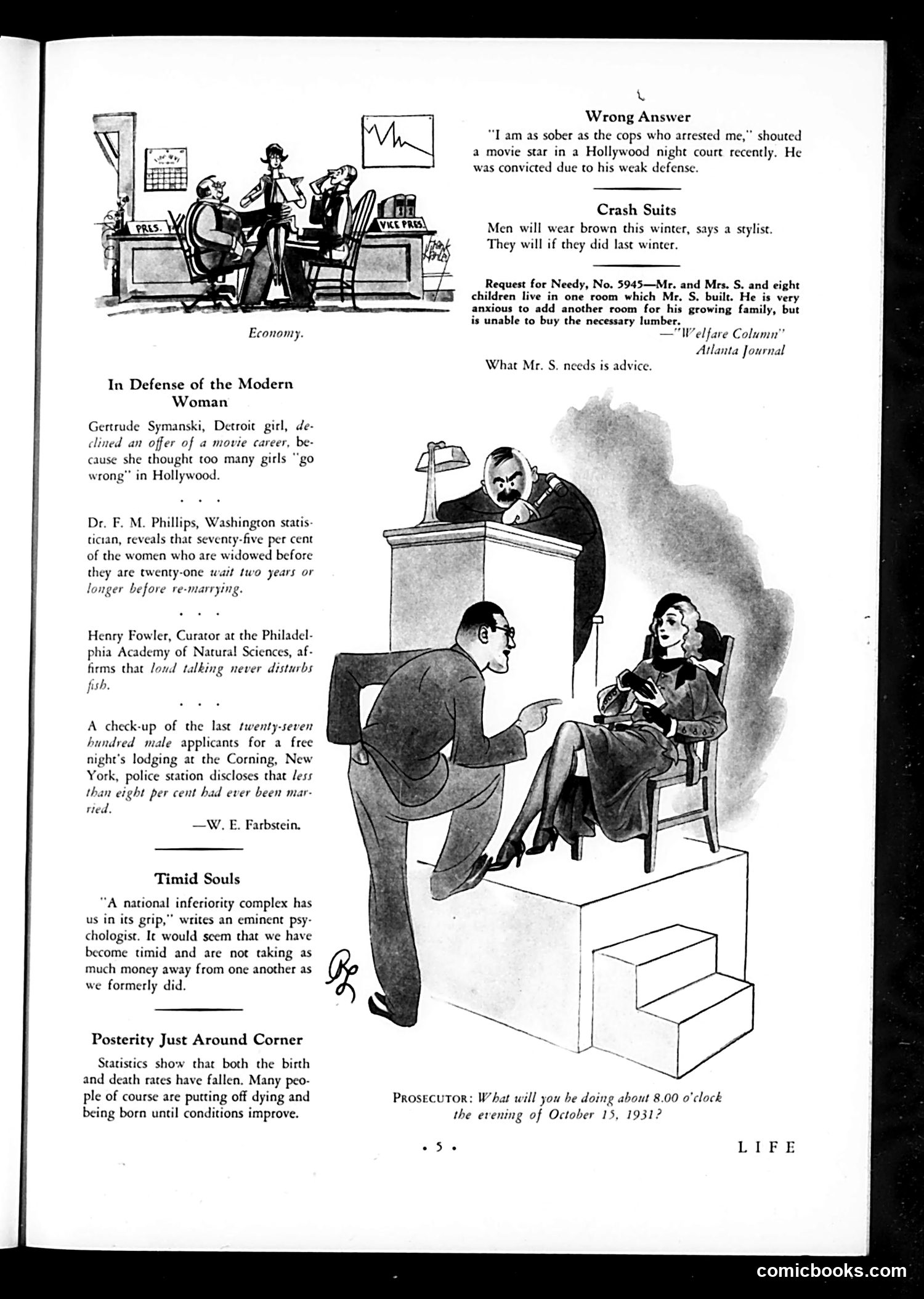
# Explanation of Life Magazine Page Content This page contains several satirical pieces about contemporary social issues: **"Wrong Answer"** mocks a movie star's weak legal defense in a conviction case. **"Crash Suits"** predicts brown suits will be fashionable winter wear, with a joking reference to last winter's trends. **Main Cartoon**: Shows a prosecutor questioning a woman about her plans for the evening of October 13, 1931. The illustration satirizes courtroom proceedings, likely referencing a prominent trial from that era (unclear which specific case without additional context). **"In Defense of the Modern Woman"** defends women against criticism about Hollywood career choices, citing statistics about widow remarriage and animal behavior to argue women are practical and rational. The other short pieces discuss statistics about birth rates, timidity in American society, and urban housing needs—typical satirical commentary on 1930s American life.
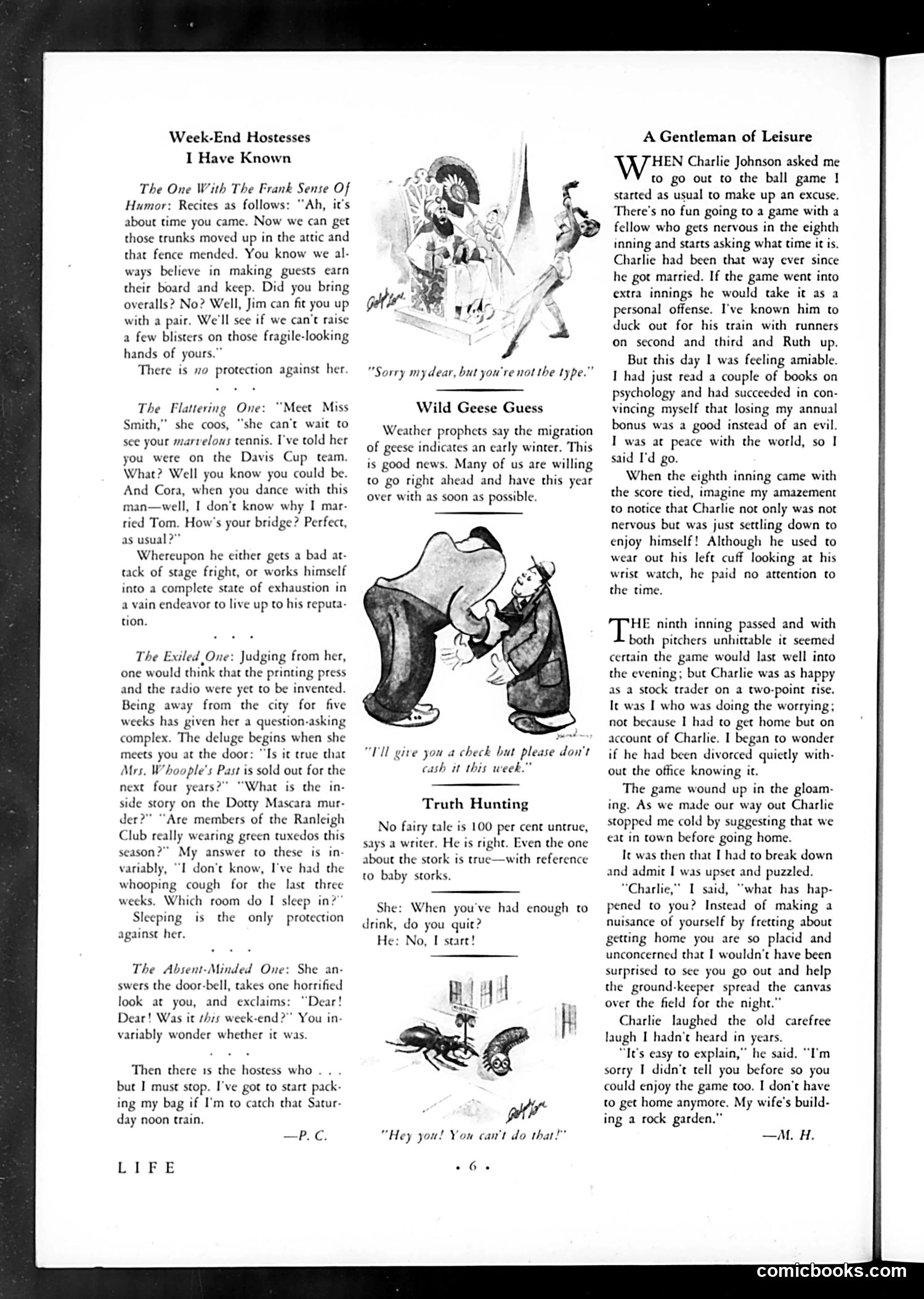
# Analysis of Life Magazine Page This page contains three humorous short pieces about social etiquette, primarily targeting upper-class or leisure-class behavior: **"Week-End Hostesses I Have Known"** satirizes various types of female hosts—from the overly blunt ("frank sense of humor") to the anxiously flattering to the exhausted. The jokes mock predictable, tiresome social behaviors. **"A Gentleman of Leisure"** features Charlie Johnson, a husband reluctant to attend a baseball game. The humor lies in his gradual mood shift from annoyance to contentment, subverting expectations. His wife mentions building a rock garden—suggesting domestic preoccupations that contrast with his leisure activities. **"Truth Hunting"** and **"Wild Geese Guess"** are brief, single-joke pieces about seasonal migration and alcohol consumption. The accompanying cartoons illustrate these social scenarios with period-appropriate drawings. Overall, the page reflects 1920s-30s satirical humor targeting middle to upper-class social conventions and gender dynamics.
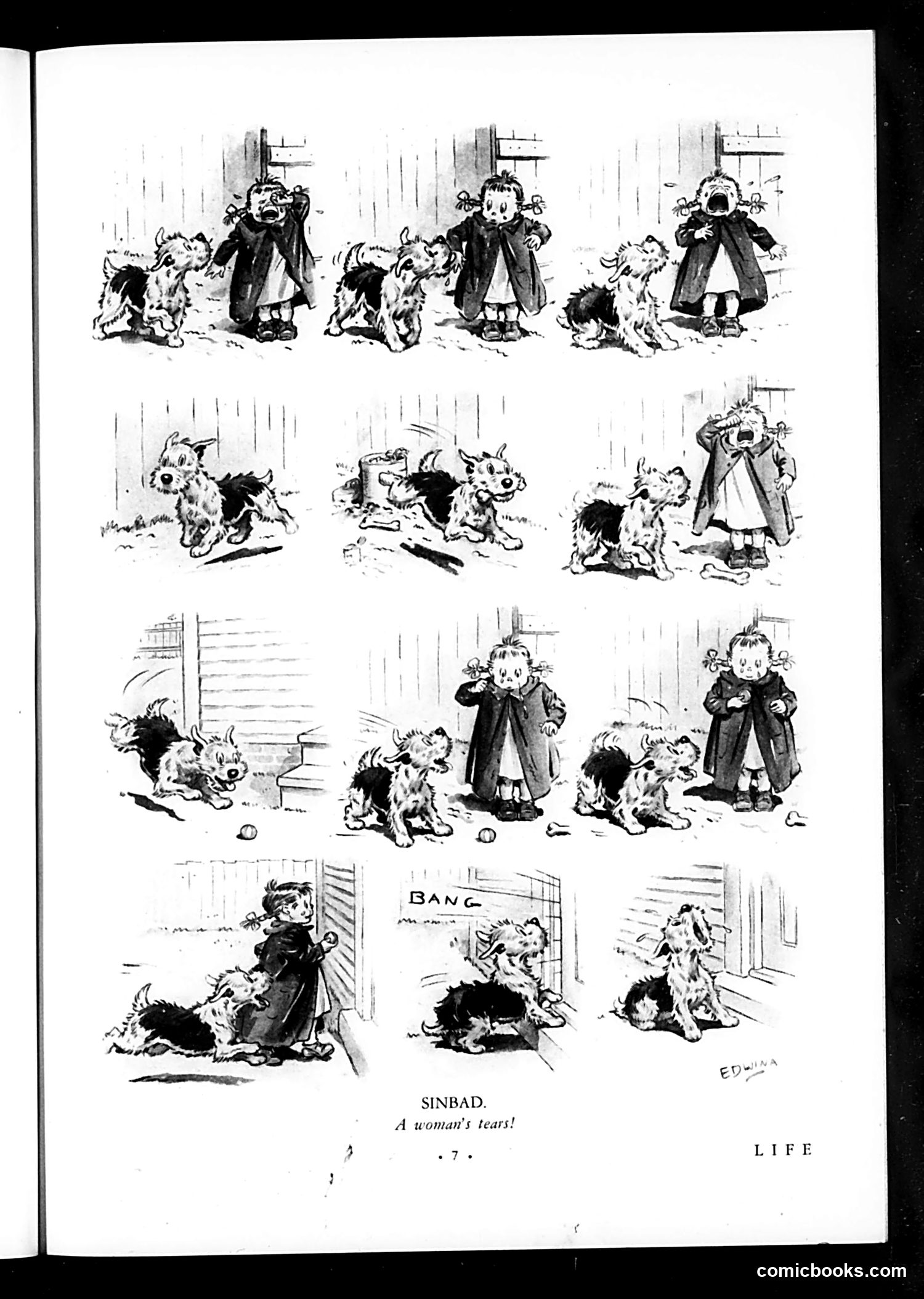
# Analysis of "Sinbad: A Woman's Tears!" This comic strip appears to depict a slapstick narrative involving a man (presumably "Sinbad") and small dogs in rainy conditions. The sequence shows: 1. **Top rows**: The man experiencing various misfortunes with the dogs—being pulled, tripped, or knocked down 2. **Bottom sequence**: A door marked "BANG" suggests physical comedy culminating in collision or impact The title "A woman's tears!" suggests the rain represents a woman's emotional distress, likely sarcastically. The joke appears to be that the man's comedic suffering—repeatedly being bested by small dogs in bad weather—is somehow connected to female sadness, playing on period stereotypes about women's emotional sensitivity and the chaos it supposedly causes others. The humor relies on exaggerated physical comedy and gendered stereotyping typical of early 20th-century satire.
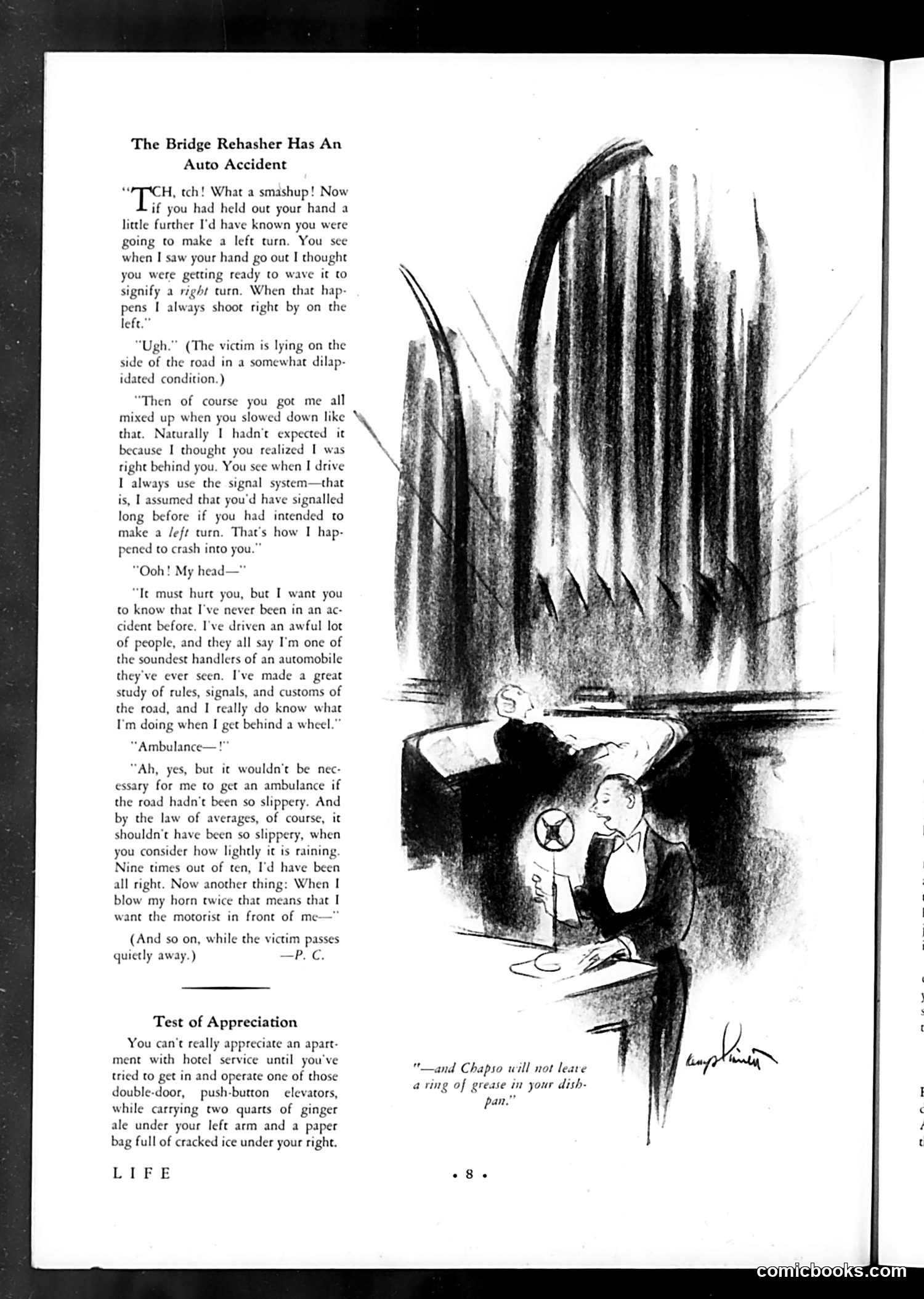
# Analysis: "The Bridge Rehasher Has An Auto Accident" This satirical piece mocks a self-important driver who causes an accident while lecturing the victim about proper driving etiquette. The "bridge rehasher" (likely a reference to someone who obsessively recounts details, particularly about bridge-playing or similar social activities) blames the victim for poor hand signals, claiming nine times out of ten he'd have been "all right." The cartoon illustrates the driver's hypocrisy: he lectures extensively about road rules and signal systems while simultaneously demonstrating reckless driving. The satire targets arrogant people who pontificate about propriety while their actions contradict their words—a common target of Life magazine's humor. The second piece, "Test of Appreciation," briefly notes difficulty appreciating apartment living until operating elevators while carrying awkward items.
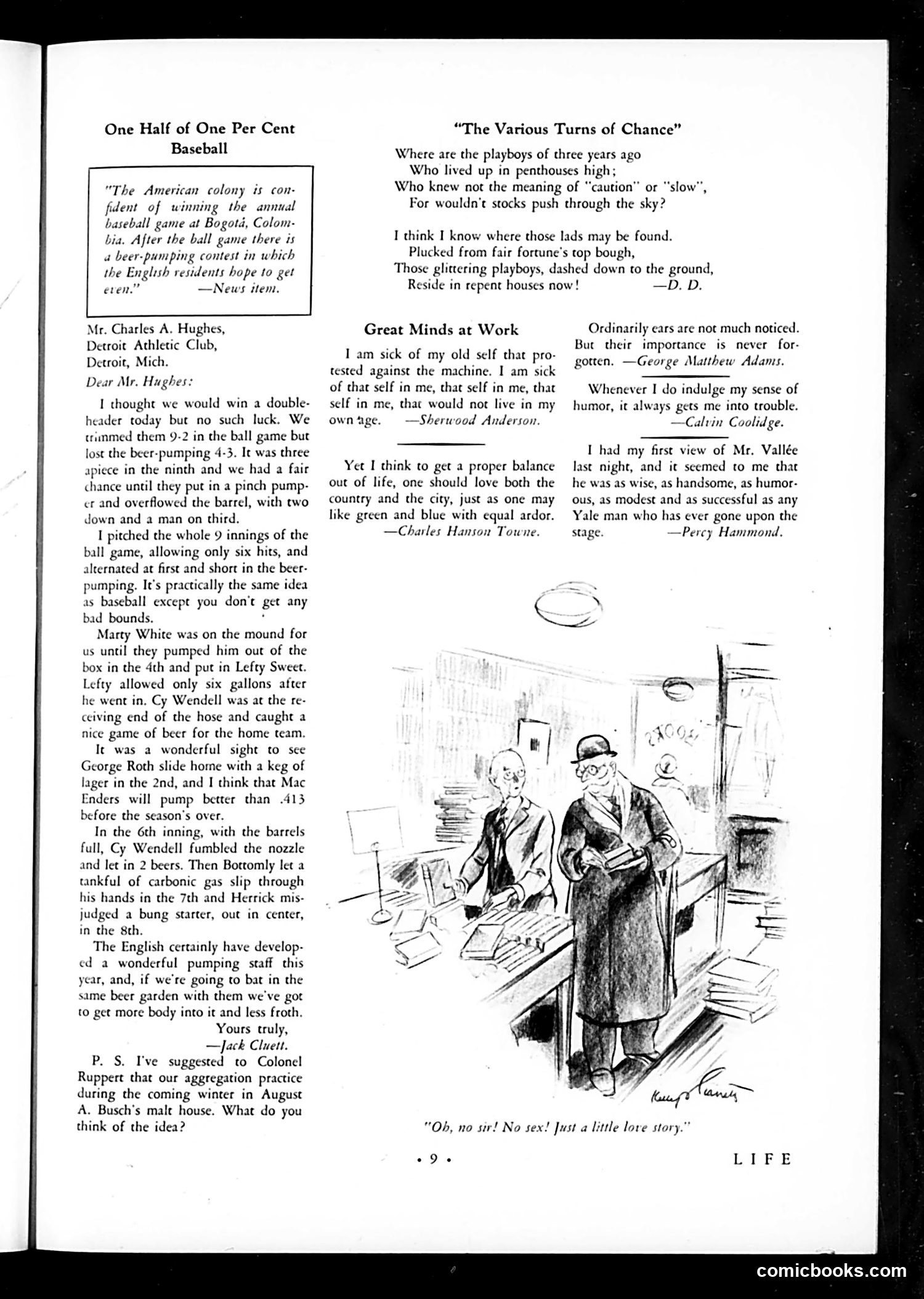
# Analysis of Life Magazine Page 9 This page contains two distinct sections: **"One Half of One Per Cent Baseball"** (left): A letter from Jack Cluett at Detroit Athletic Club describing an unusual beer-garden baseball game where players pump beer instead of playing normally. The account details absurdist modifications—pumping barrels, allowing only six gallons per inning, fumbling nozzles—creating satirical commentary on baseball's rules and competitive nature. **"The Various Turns of Chance"** (right): A poem by D.D. nostalgically asking what became of playboys from three years prior who lived carefree lives, suggesting they've "dashed down to the ground" and now live in ordinary houses. **"Great Minds at Work"** (bottom right): A sketch showing two well-dressed men at a desk with the caption "Oh, no sir! No sex! Just a little love story." This likely satirizes editorial standards or publishing conventions of the era regarding acceptable content.
# Life Magazine Page Analysis This page contains three satirical columns discussing contemporary political and social issues circa late 1920s-early 1930s. The header cartoon shows a cherub or cupid figure, introducing commentary on President Hoover's planned visit to Detroit to address the American Legion. The text notes Hoover is the leading Republican presidential candidate, while Governor Roosevelt (Franklin D. Roosevelt) is "easily the leading candidate for the Democratic nomination." The columns address marriage and divorce debates among Episcopalians in Denver, the gold standard's impact on economies (particularly post-WWI France and Britain), and Mayor Walker's European diplomatic trip. The satire targets both political uncertainty regarding the upcoming presidential election and contemporary moral/economic debates of the era.