A complete issue · 37 pages · 1931
Life — September 25, 1931
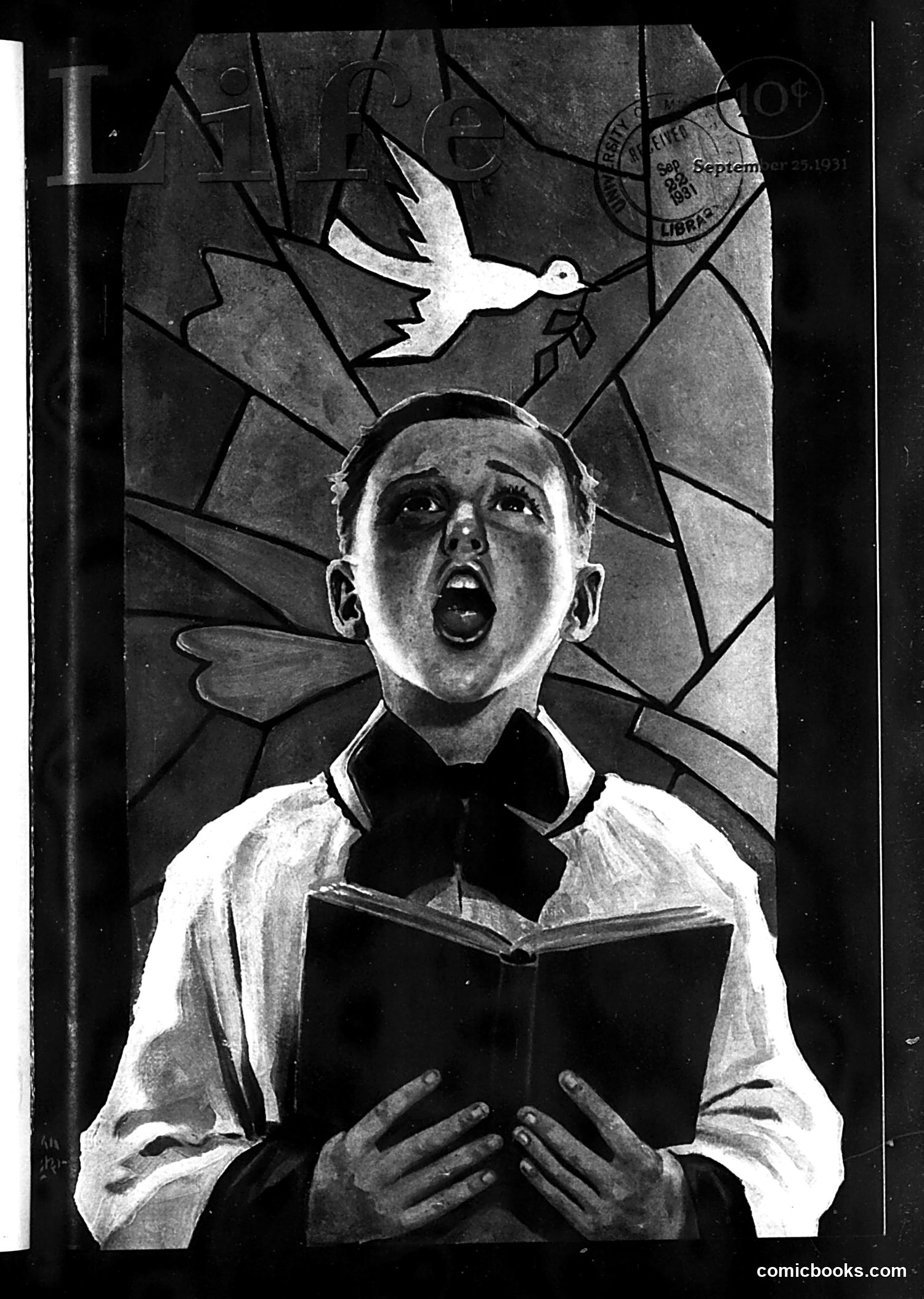
# Analysis This appears to be a religious or moral satire from Life magazine (dated September 23, 1931, visible on the stamp). The image shows a young choirboy or altar boy in white robes with a black bow tie, holding an open hymnal or prayer book, gazing upward with an expression of spiritual rapture or exaggerated piety. Above his head is a starburst or divine light pattern with a white dove—a traditional Christian symbol of the Holy Spirit. The composition satirizes either excessive religious fervor in youth, the performative nature of religious expression, or possibly hypocrisy in religious institutions. The boy's theatrical expression suggests the satire critiques overwrought religiosity rather than genuine faith. Without additional text context, the specific target of the joke remains unclear.
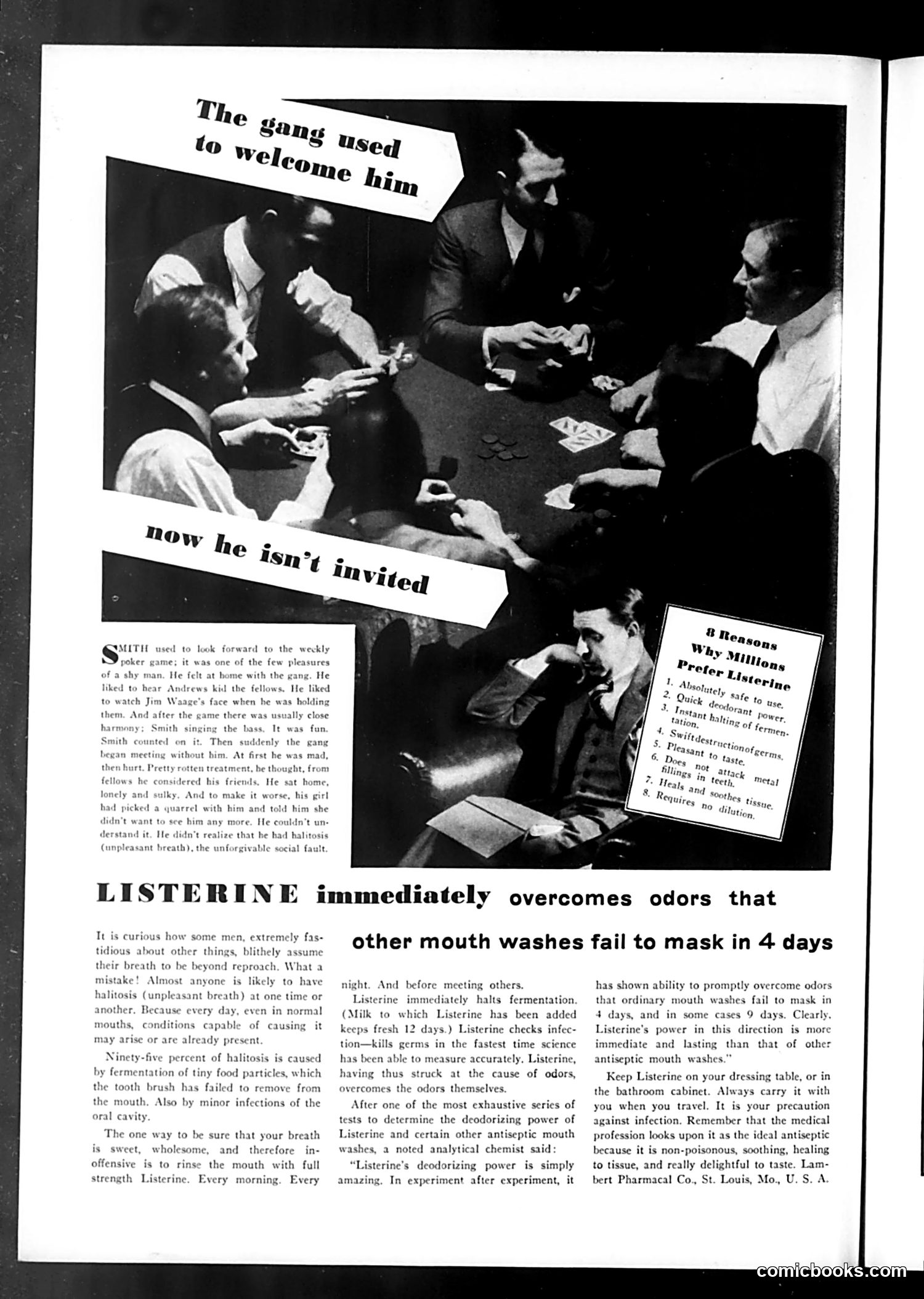
# Analysis This is a **Listerine advertisement disguised as social commentary**, not genuine satire. The top image shows men playing cards, with the caption "The gangs used to welcome him / now he isn't invited." The ad uses shame-based marketing—a common early-20th-century tactic—to suggest that poor oral hygiene causes social rejection. The accompanying text and sidebar list "8 Reasons Why Millions Prefer Listerine" (including "Absolutely safe to use" and "Swift-destroying of germs"). The "Smith" narrative describes a man excluded from social gatherings due to bad breath, positioning Listerine as the solution to social ostracism. This exploits anxiety about social standing rather than addressing genuine health concerns. The advertisement represents how companies weaponized embarrassment to drive product sales.
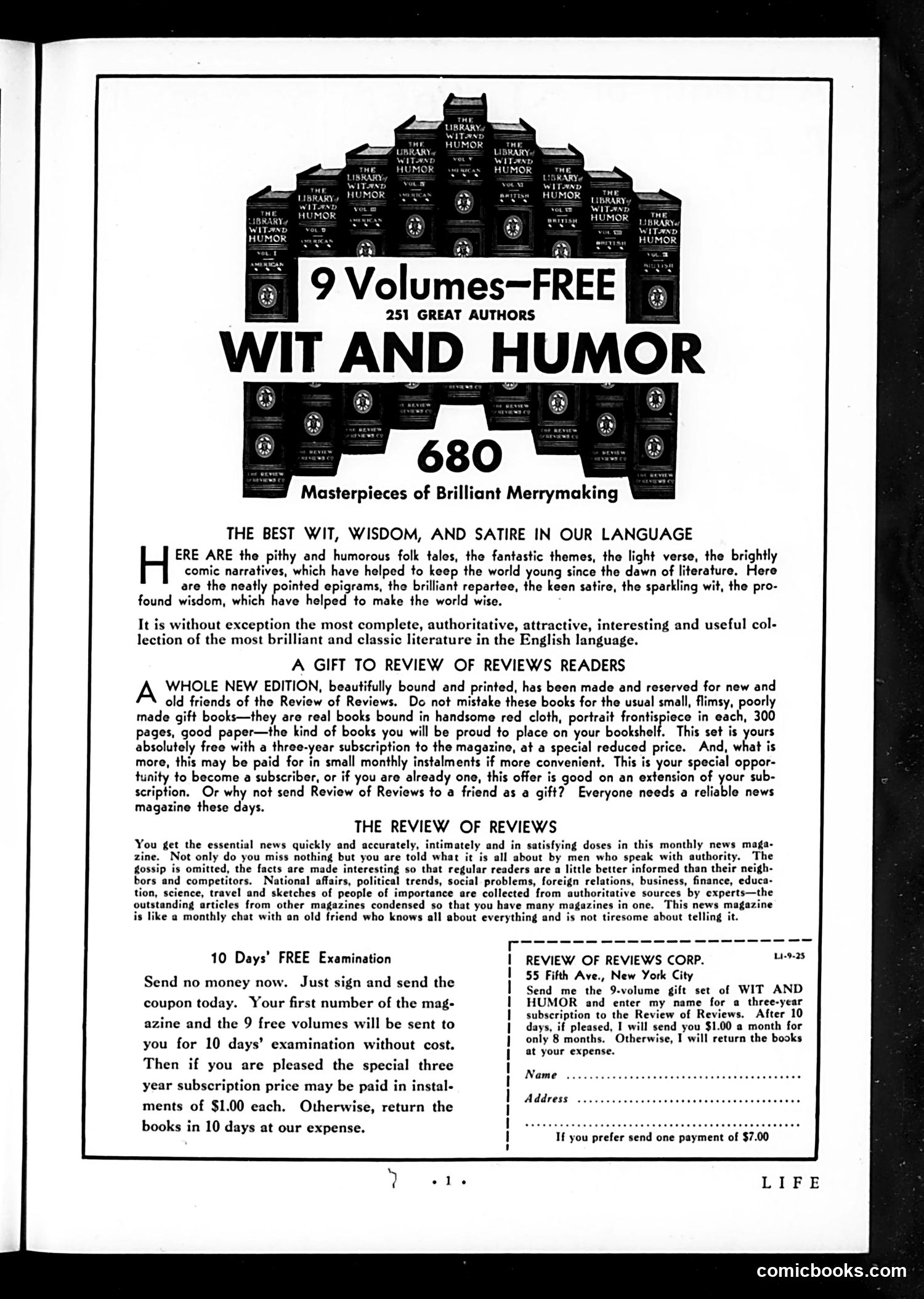
# Analysis This is primarily an **advertisement page**, not a political cartoon. It promotes a 9-volume book collection of "Wit and Humor" by 251 great authors, offering 680 pieces of humorous writing. The page emphasizes the collection's value as a comprehensive anthology of English-language wit, satire, and epigrams. The marketing pitch targets educated readers seeking literary quality and reliable information—note the emphasis on the books being "beautifully bound and printed" with "good paper." Below is a subscription offer for *Review of Reviews* magazine, promising a 10-day free examination period. The tone reflects early 20th-century direct-mail marketing: readers could examine merchandise risk-free before committing to payment. There are no political cartoons or satirical commentary here—this is straightforward period advertising.
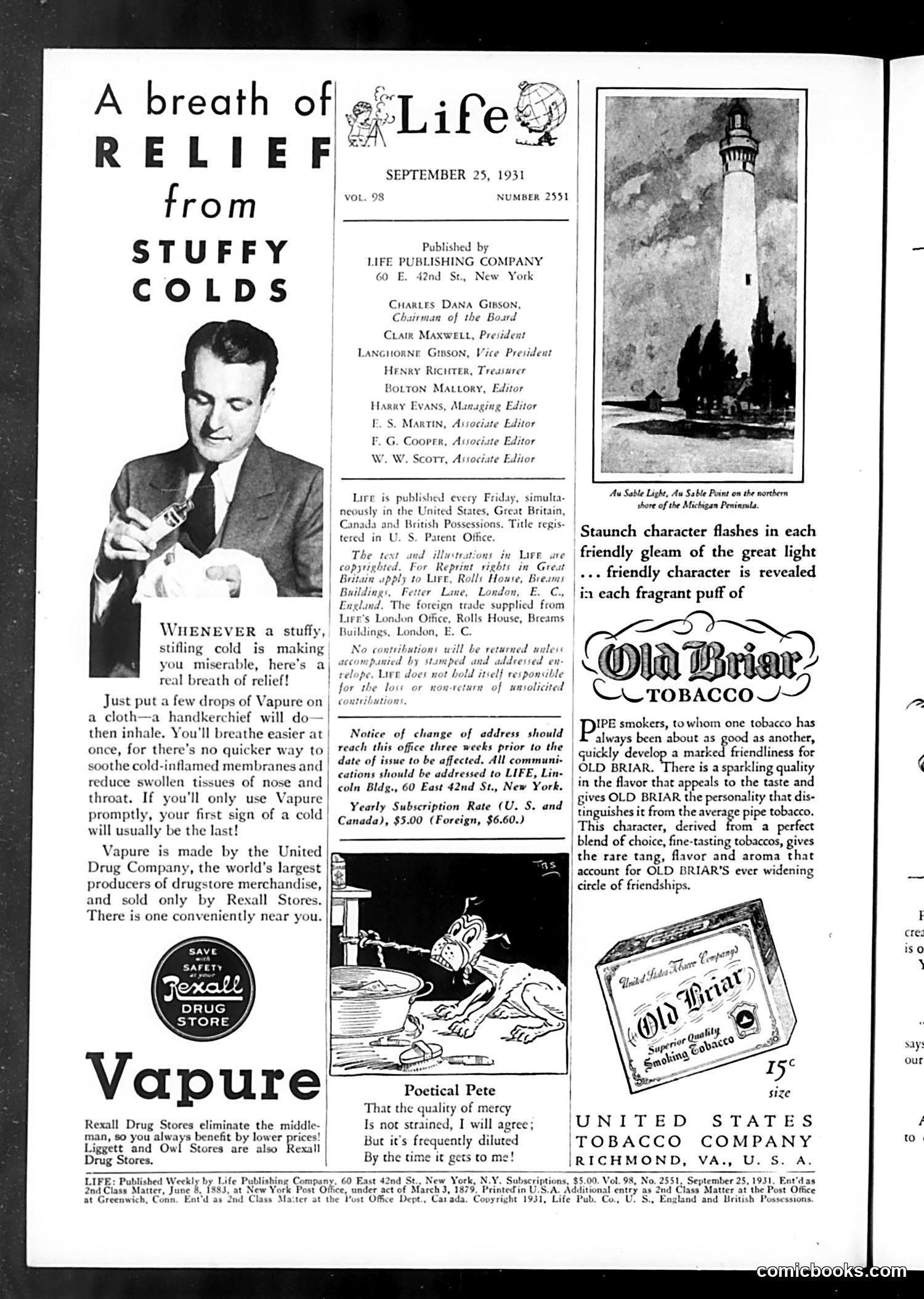
# Page Analysis This is primarily a **masthead and advertising page** from Life magazine (September 25, 1931, Vol. 98, No. 2531). The left side features an advertisement for **Vapure**, a cold remedy sold at Rexall Drug Stores, showing a man with a stuffy cold. The pitch emphasizes quick relief through inhalation. The right side contains an advertisement for **Old Briar Tobacco** (15¢), emphasizing its quality and distinctive flavor. The center includes a cartoon titled "**Poetical Pete**" depicting someone in distress—likely satirizing someone's bad poetry or melodramatic writing ("That the quality of mercy / Is not strained, I will agree; / But it's frequently diluted / By the time it gets to me!"). The magazine masthead identifies key staff including Editor Bolton Mallory and Managing Editor Harry Evans. Overall, this is a standard magazine page mixing publication information with period advertising.
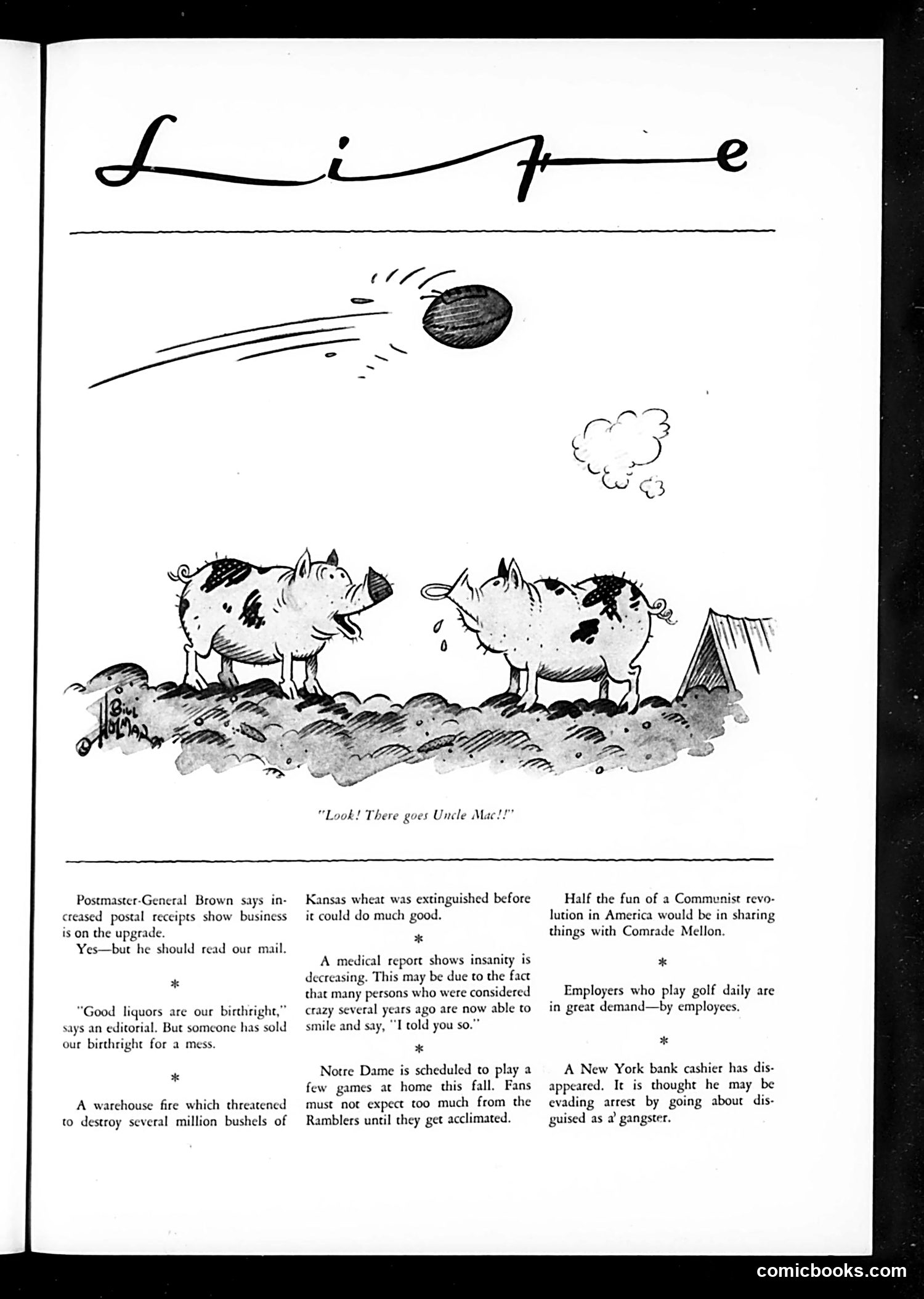
# "Life" Magazine Page Analysis The main cartoon titled "Look! There goes Uncle Mac!" depicts two pigs observing something flying overhead—likely representing a UFO or aircraft. The visual joke appears to satirize rural or unsophisticated observers mistaking an unusual sight for a famous person ("Uncle Mac"). Below, the page contains brief satirical commentary on contemporary issues: - Postmaster-General Brown's claimed business improvement - Kansas wheat shortage - Decreasing insanity rates - Comrade Mellon (likely Secretary of Treasury Andrew Mellon, mocked as communist) - Notre Dame football - A bank cashier evading arrest by disguising himself The items mock public figures, current events, and social absurdities typical of Life magazine's satirical approach during this era.
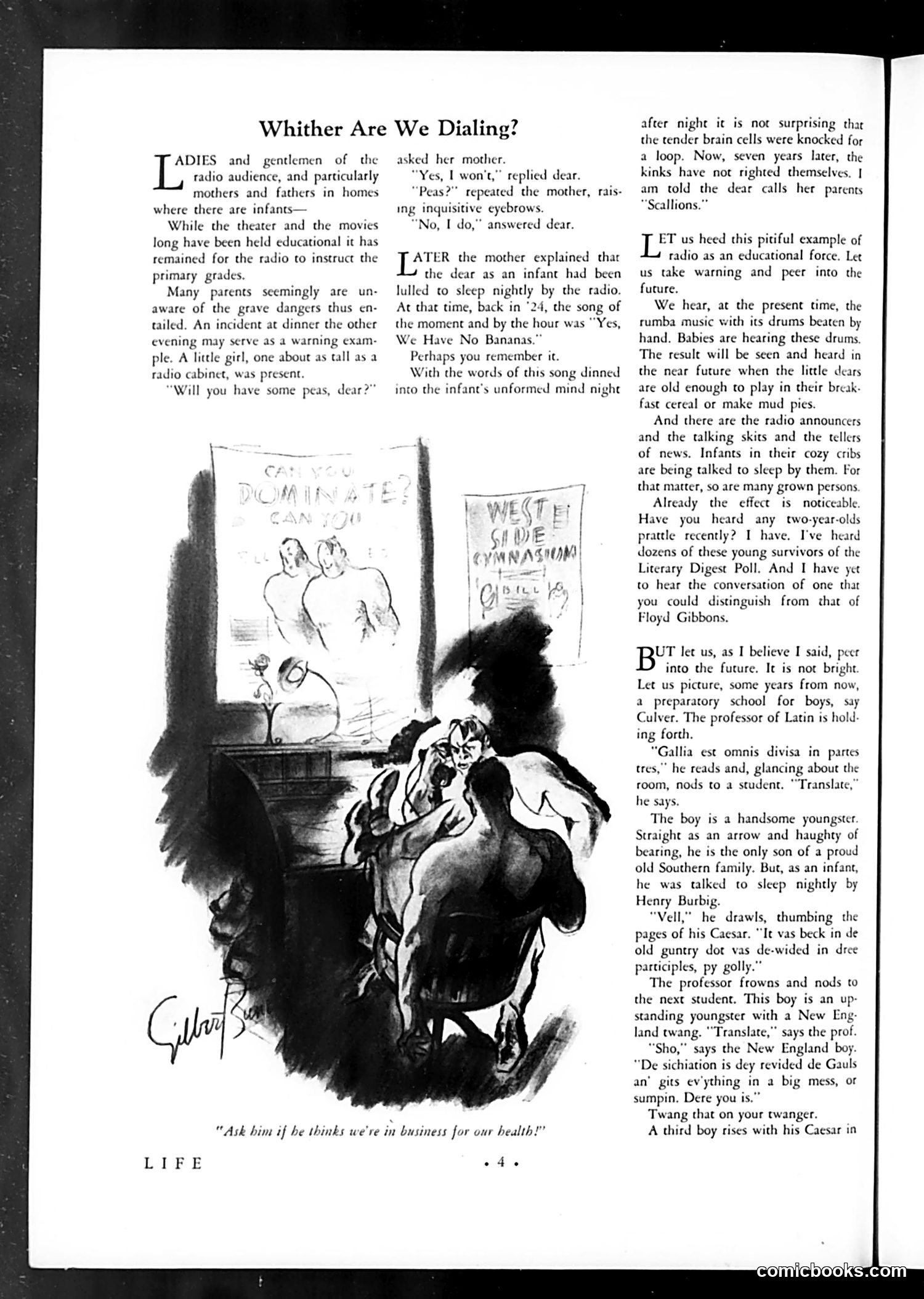
# "Whither Are We Dialing?" - Life Magazine Satire This article critiques radio's influence on children's development. The large illustration shows a grotesque figure emerging from a radio—caricaturing how radio content is warping young minds. The text warns that parents unknowingly expose infants to radio programming (rumba music, advertisements, news broadcasts) during formative years. The author sarcastically contrasts this with preparatory school Latin instruction, suggesting radio creates intellectually stunted children who speak in garbled phrases. The cartoon's exaggerated monster-like figure represents the feared outcome: children corrupted by unfiltered radio exposure rather than proper education. This reflects 1920s-30s anxiety about new media's effects on youth—a predecessor to later concerns about television, video games, and internet content.
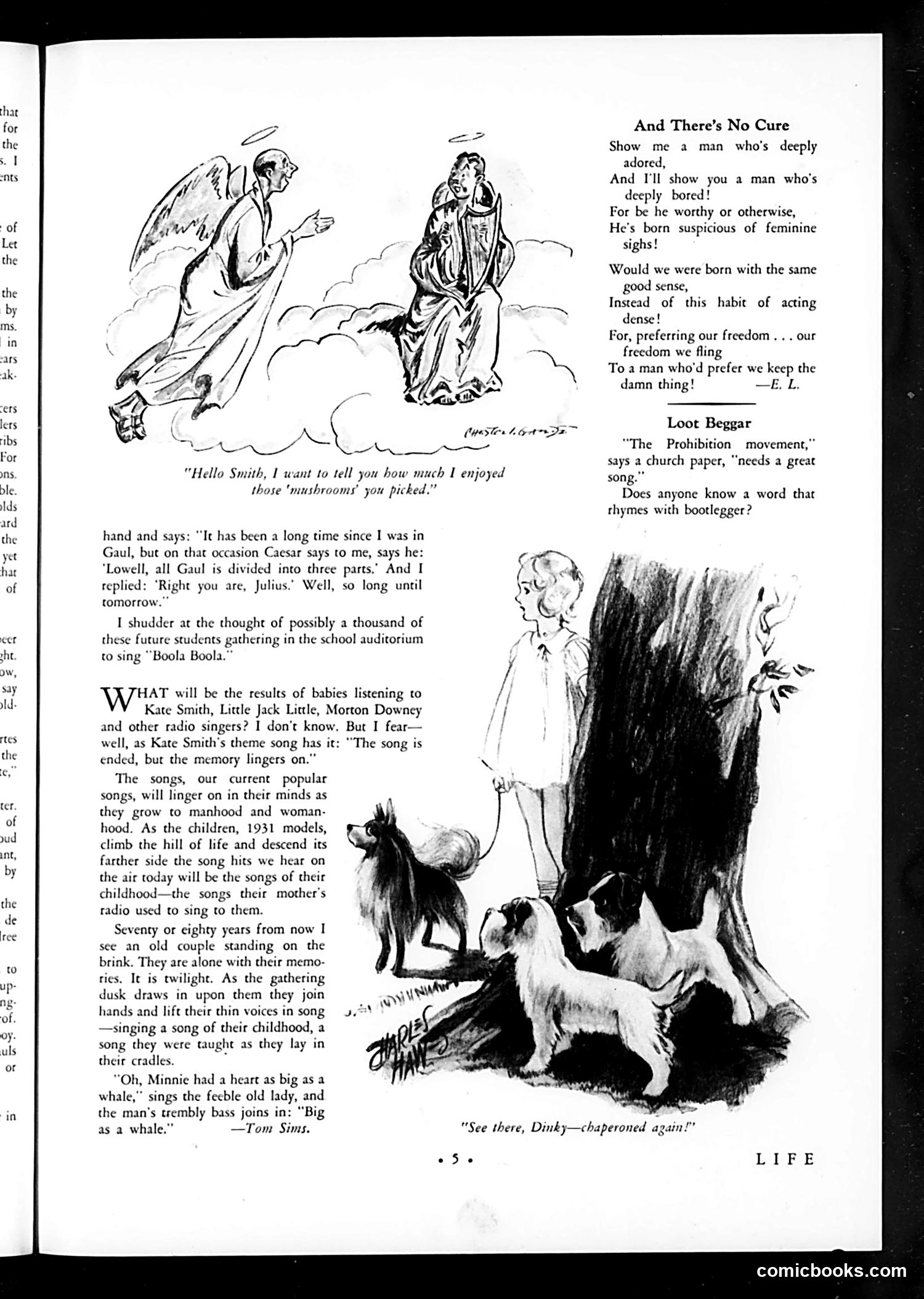
# Analysis of This Life Magazine Page This page critiques gender relations through two cartoons and accompanying satirical text. The **top cartoon** shows an angel speaking to a woman in heaven, joking that he wants to tell her "how much I enjoyed those 'mushroom' you picked"—likely a double entendre about something the woman served or did during life. The **bottom cartoon** depicts a woman being "chaperoned again" by two dogs while walking—satirizing strict social conventions requiring women to have chaperones in public to maintain respectability. The accompanying text titled "And There's No Cure" argues that men and women are fundamentally incompatible due to inherent personality differences. The author expresses frustration with both genders' fixed characteristics, suggesting the incompatibility is incurable. Overall, the page satirizes 1930s gender relations, courtship restrictions, and the perceived impossibility of genuine male-female compatibility.
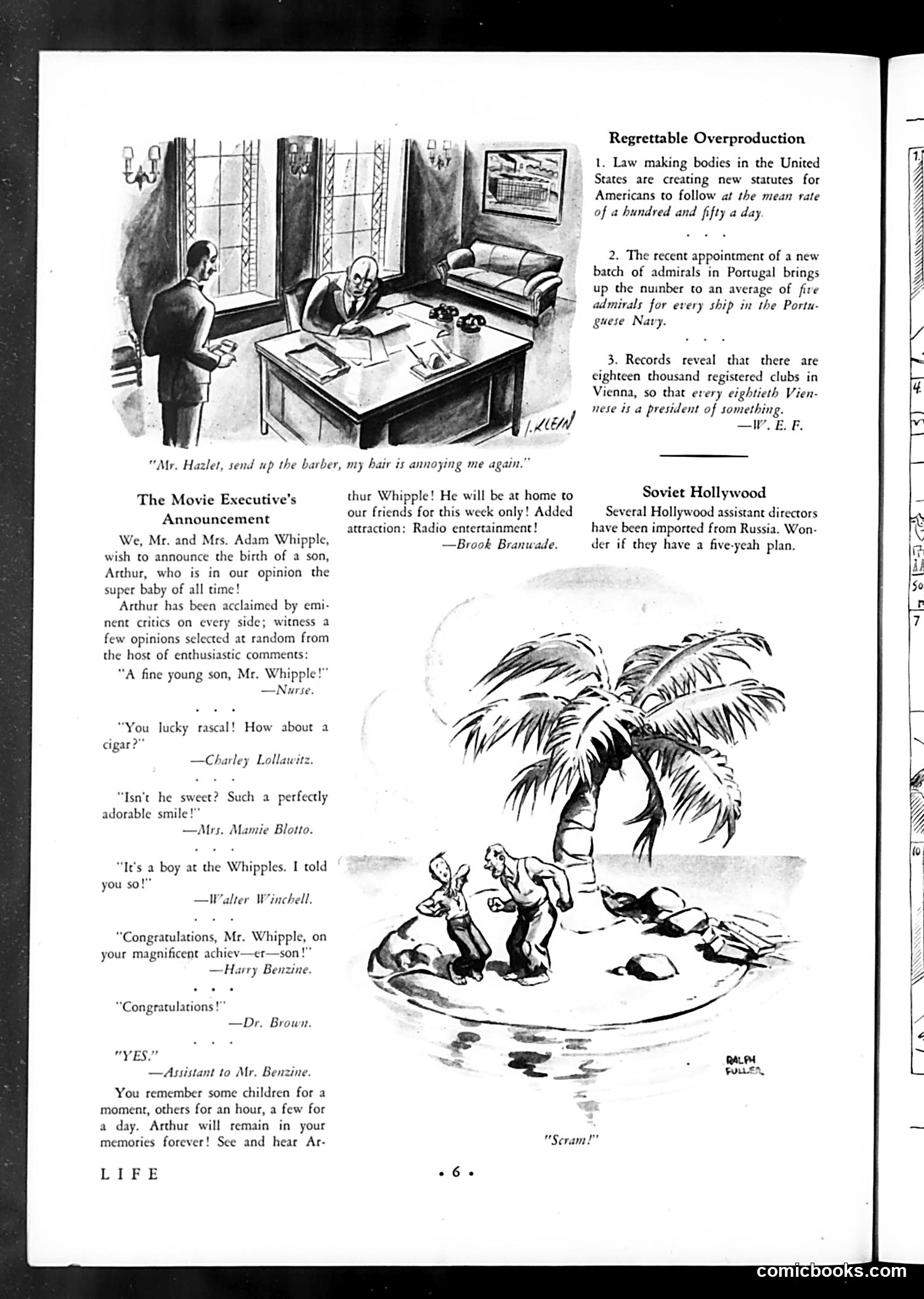
# Page Analysis This page contains a humorous office cartoon titled "Mr. Hazlet, send up the barber, my hair is annoying me again." It depicts an executive at his desk, apparently so busy or stressed that he wants the barber brought to his office rather than leaving work. Below is "The Movie Executive's Announcement"—a satirical birth announcement for a character named Arthur Whipple, with mock congratulations from Hollywood figures (Norma Talmadge, Charley Chaplin, etc.). The humor lies in treating a fictional child like a major industry event. The page also includes a cartoon titled "Scram!" showing people fleeing under a palm tree, and a section on "Soviet Hollywood" about Russian film directors. The satire targets Hollywood's self-importance and the excesses of busy executives.
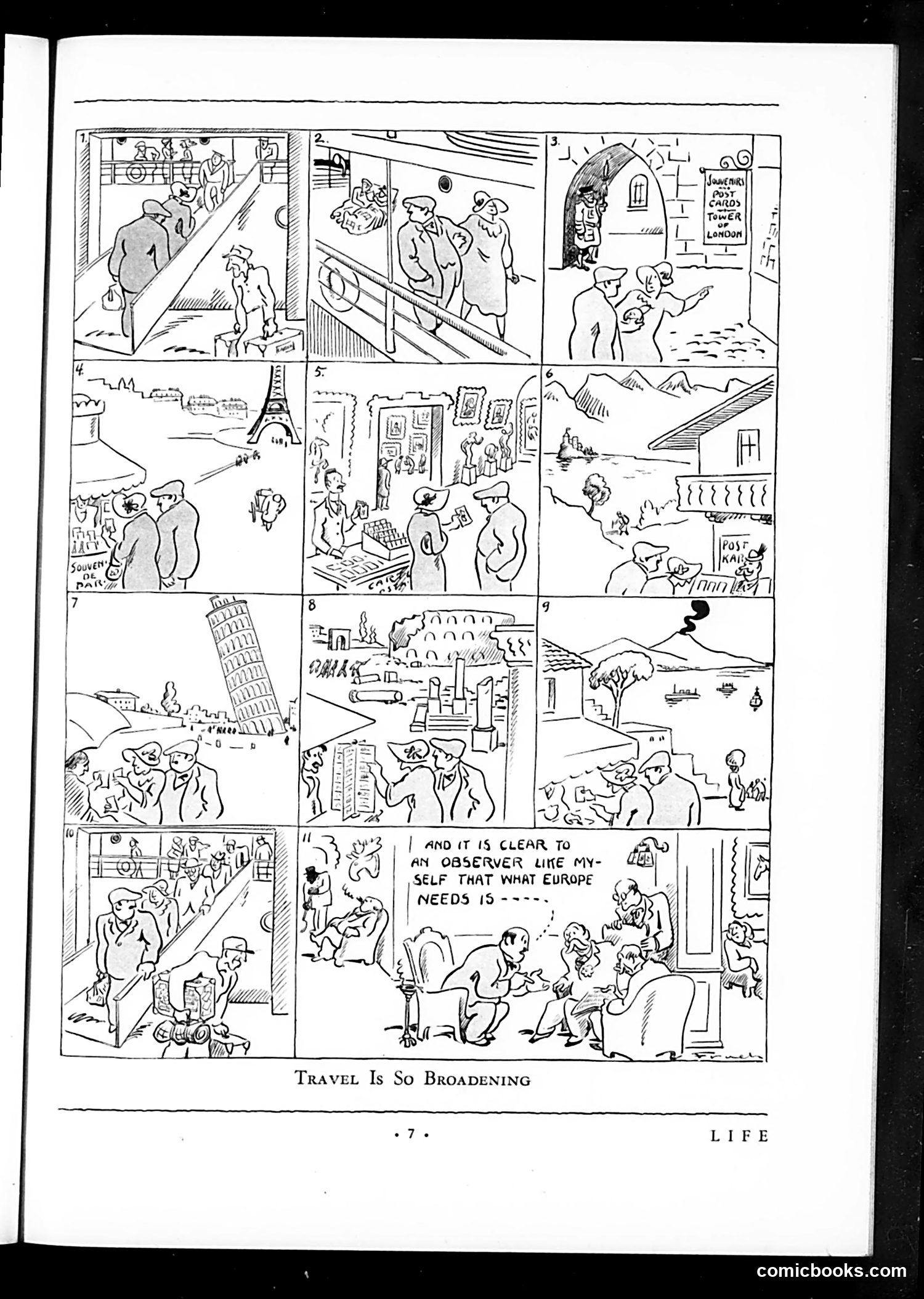
# "Travel Is So Broadening" This comic strip satirizes European tourism in the interwar period. The narrative follows a traveler visiting iconic landmarks—London (panel 3), Paris (panel 4), and Pisa (panel 7)—purchasing souvenirs and sightseeing. The final panels reveal the satire's point: despite visiting multiple countries and cultures, the tourist concludes Europe's need is unclear, while surrounded by children and ordinary people. The joke suggests that superficial tourism—collecting postcards and visiting monuments—doesn't actually broaden one's understanding of Europe's real social conditions or needs. This reflects 1920s-30s skepticism about whether leisure travel genuinely educated travelers or merely provided escapist entertainment while ignoring deeper social and economic realities abroad.
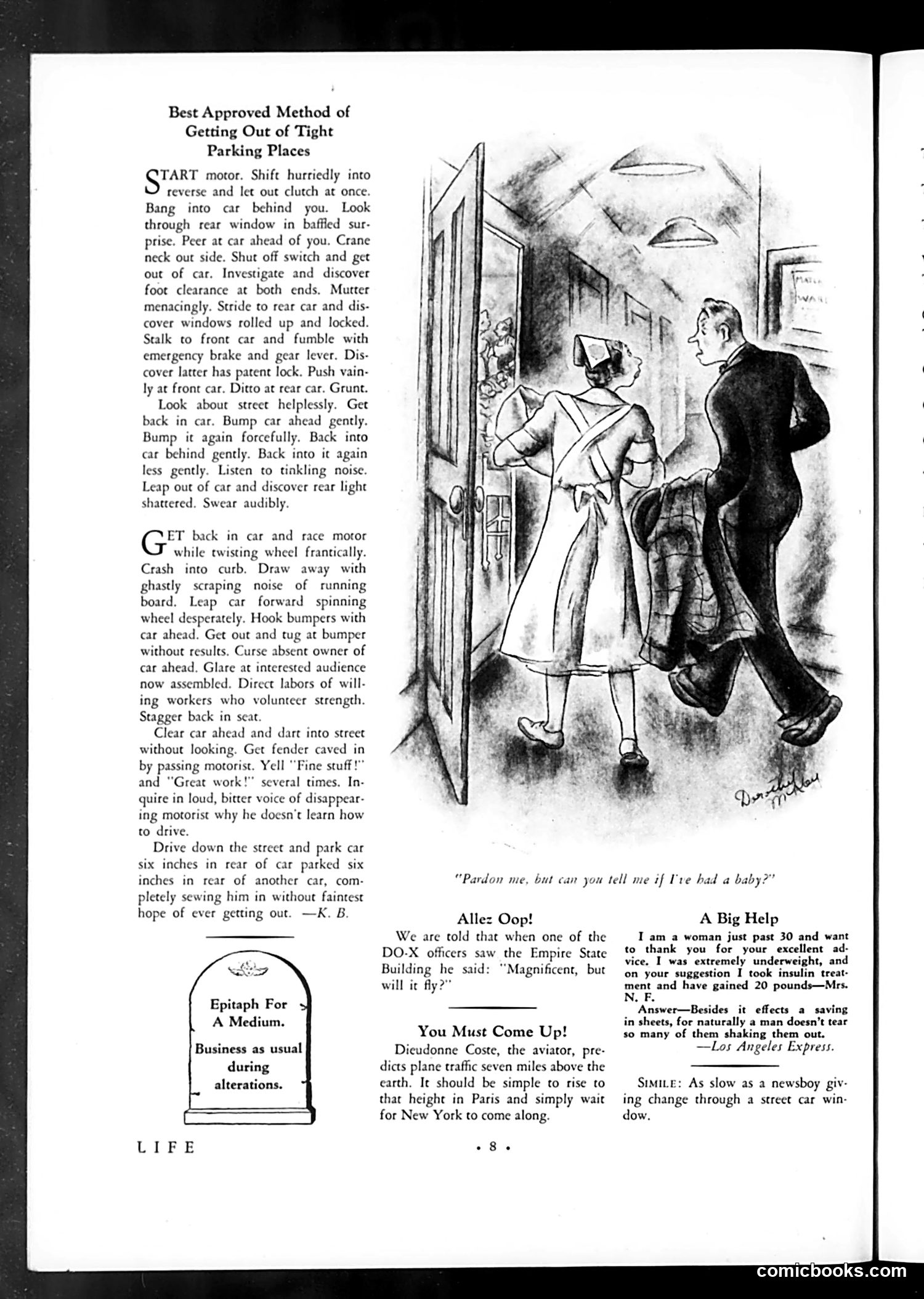
# Explanation for Modern Readers This page satirizes the frustration of parallel parking in tight urban spaces—a common 1920s-30s problem. The main article, "Best Approved Method of Getting Out of Tight Parking Places," humorously presents increasingly chaotic and destructive "solutions": hitting nearby cars, scraping curbs, damaging bumpers, and recruiting bystanders to push. The detailed instructions are mock-serious, exaggerating the aggressive behavior drivers resort to when trapped. The cartoon depicts a woman observing a man emerging disheveled from such an ordeal, with the caption "Pardon me, but can you tell me if I've had a baby?"—implying the effort has left him as exhausted as childbirth. The side humor includes brief jokes about aviation and weight gain, typical of the magazine's miscellaneous satirical content.
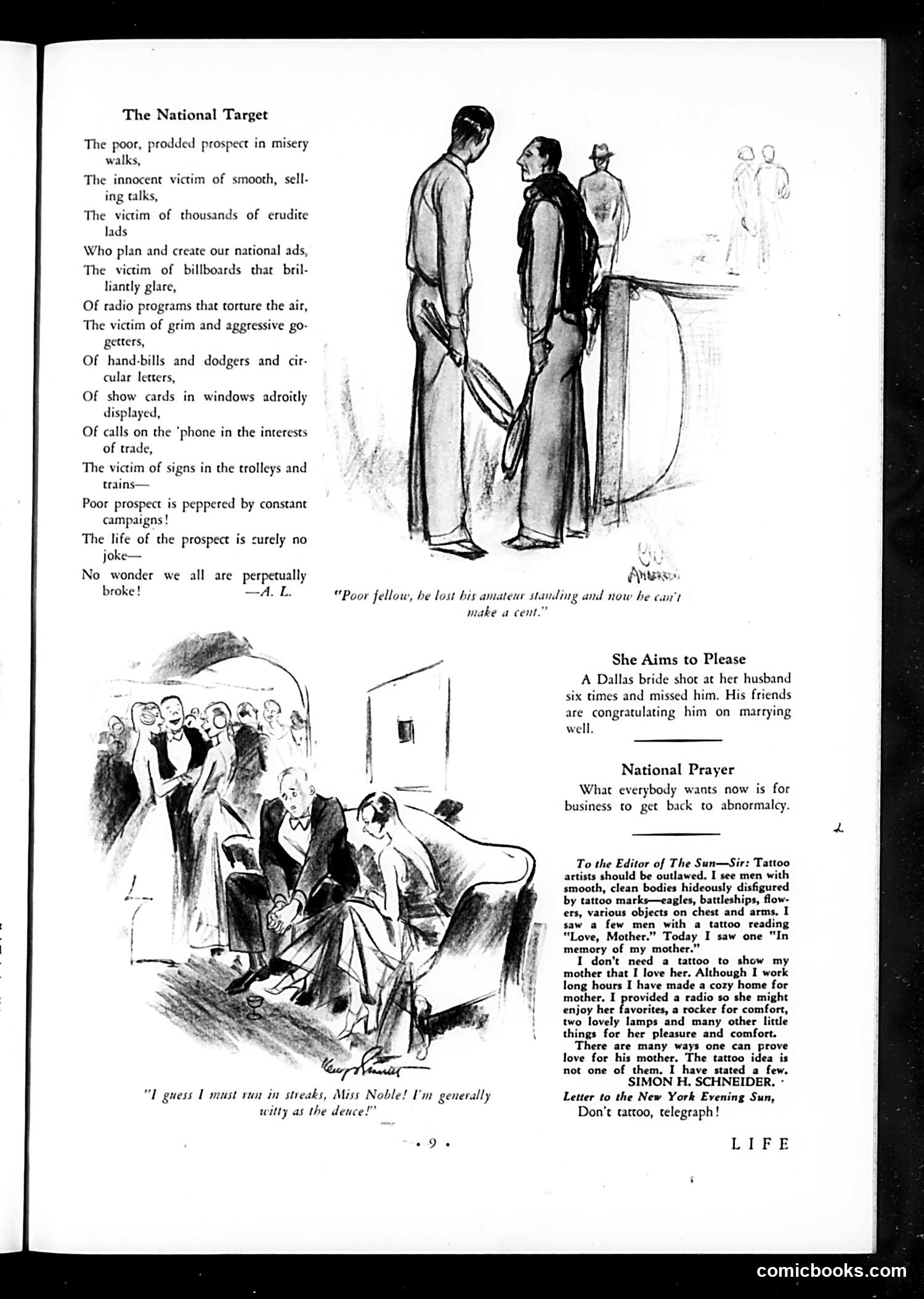
# Analysis of Life Magazine Page This page contains three satirical pieces targeting advertising and commercial culture: **"The National Target"** (poem by A.L.) critiques how ordinary people are relentlessly targeted by advertising—billboards, radio programs, handbills, phone calls, and street signs. The accompanying cartoon shows a man being literally "hit" by advertising, suggesting consumers are helpless victims of commercial bombardment. **"She Aims to Please"** jokes about a Dallas bride shooting her husband, with friends congratulating the marriage—dark humor about matrimonial discord. **Letters to the Editor** debate tattoos as expressions of love (one writer defends them; another opposes), and another letter advocates for business normalization. The overall theme critiques the invasiveness of 1920s-30s commercial culture and its inescapable presence in American life.
# "Life Looks About" - Political Commentary Page This satirical commentary page criticizes Latin American governance and international politics. The masthead illustration shows a cherub-like figure, likely representing "Life" magazine's editorial voice. The main article "Wanted: Government for Latin Peoples" argues that Latin American nations, particularly Cuba under Señor Machado, are governed "purely by force" through military control. The piece criticizes the proposed union of nations voted down by the World Court, suggesting Latin countries need stable democratic government rather than military dictatorships. Subsequent sections mock Mayor Walker's popularity in France, satirize Representative Wood's military appropriations concerns, and comment on currency devaluation and international economic instability. The overall tone suggests frustration with authoritarian Latin American rule and its global repercussions.