A complete issue · 37 pages · 1931
Life — June 12, 1931
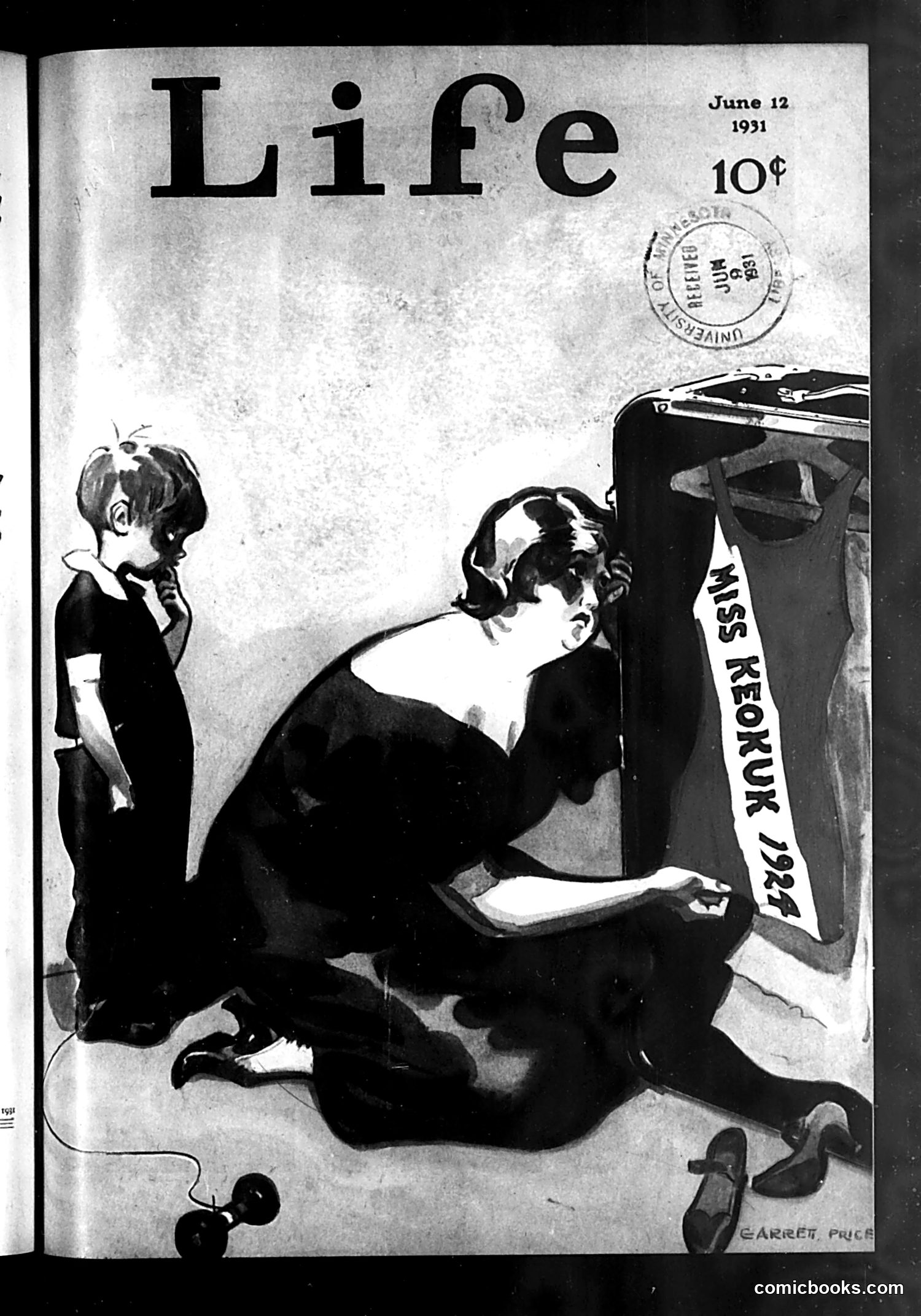
# Life Magazine Cover, June 12, 1931 This cover illustration by Earle Price depicts a woman kneeling before a trash can labeled "MISS KROKUK PARK" (or similar text), appearing to discard or retrieve something. A young child stands watching nearby. The image likely satirizes social attitudes toward public spaces or parenting practices of the era. The specific reference "MISS KROKUK PARK" is unclear—it may reference a person, place, or contemporary social issue from 1931. Without additional context, the exact satirical point remains uncertain, though the juxtaposition of an adult woman with a trash receptacle and observing child suggests commentary on public behavior, sanitation, or social propriety during the Depression era.
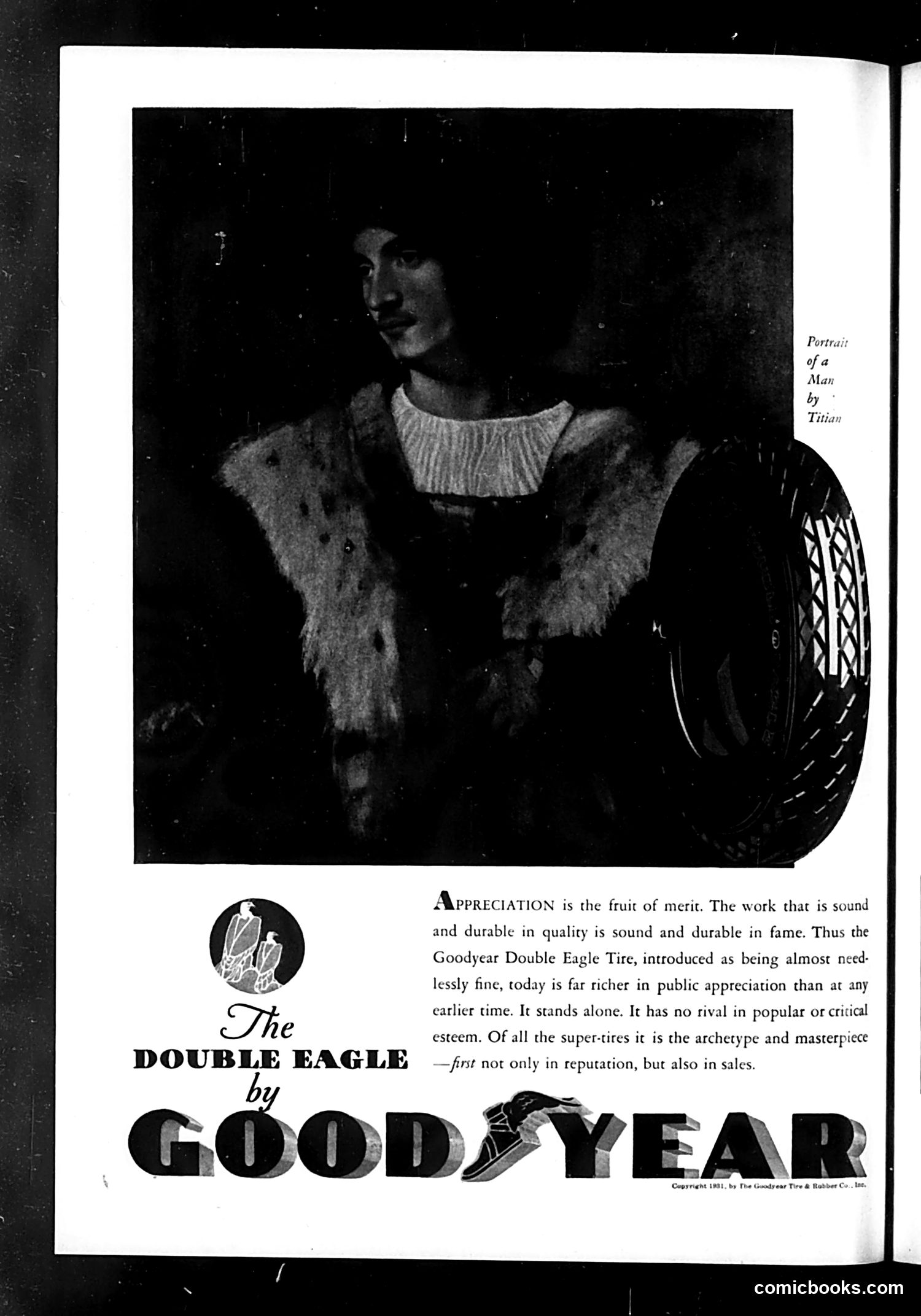
# Analysis This is a **Goodyear tire advertisement**, not political satire. The page features a classical portrait painting labeled "Portrait of a Man by Titian" (the Renaissance artist) at the top, with the painting's subject wearing period clothing with fur-trimmed shoulders and a decorative collar. Below, the ad copy claims that "appreciation is the fruit of merit" and argues that the Goodyear Double Eagle Tire has achieved lasting acclaim through quality—standing "alone" with "no rival in popular or critical esteem" among "super-tires." The ad strategically associates the tire brand with timeless artistic mastery by juxtaposing it with a famous old master painting, implying that like great art, quality tires earn enduring appreciation and reputation.
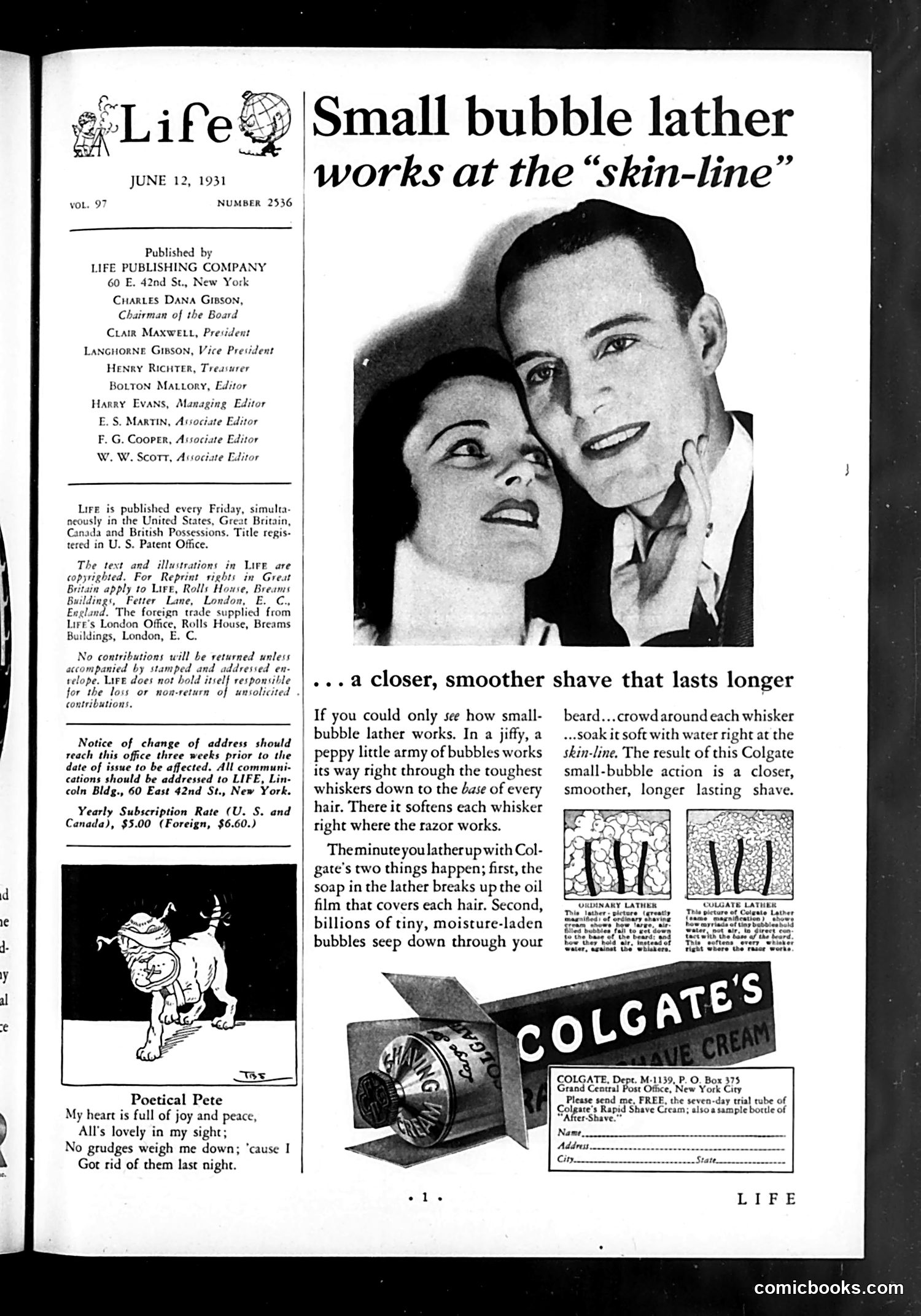
# Analysis This page is primarily a **Colgate's Rapid Shave Cream advertisement**, not political satire. The main content features a photograph of a young couple with the headline "Small bubble lather works at the 'skin-line.'" The advertisement explains the product's supposed superiority: tiny bubbles penetrate close to whisker bases, softening them for a "closer, smoother shave that lasts longer." The only cartoon element is "Poetical Pete" in the bottom left—a small, seemingly unrelated comic featuring a dog with the verse "My heart is full of joy and peace. / All's lovely in my sight; / No grudges weigh me down; 'cause I / Got rid of them last night." This appears to be filler humor rather than political commentary, typical of 1930s magazine layout.
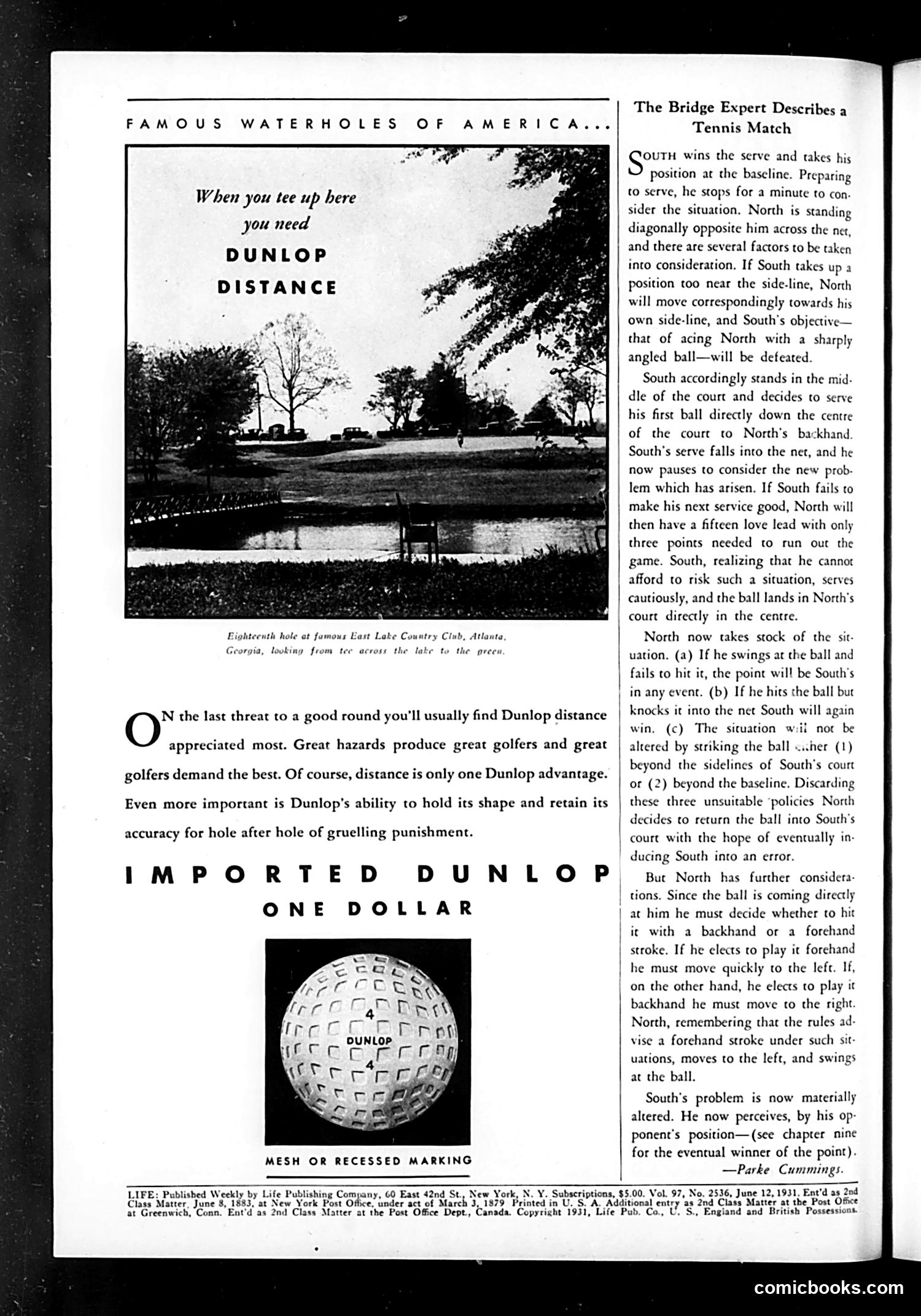
# Analysis This page contains **advertising and instructional content**, not political satire. The left side features a Dunlop golf ball advertisement, showing the Eighteenth hole at East Lake Country Club in Atlanta. The copy emphasizes that Dunlop balls maintain accuracy and shape through repeated use—a practical sales pitch for golfers. The right side presents "The Bridge Expert Describes a Tennis Match"—apparently an instructional comparison using tennis strategy to explain bridge card game tactics. The piece walks through a detailed tennis scenario (serves, court positioning, strategy) to illustrate bridge decision-making. There is **no political cartoon or satire** on this page. It's a straightforward mix of golf equipment advertising and recreational sports/game instruction typical of early 20th-century *Life* magazine content.
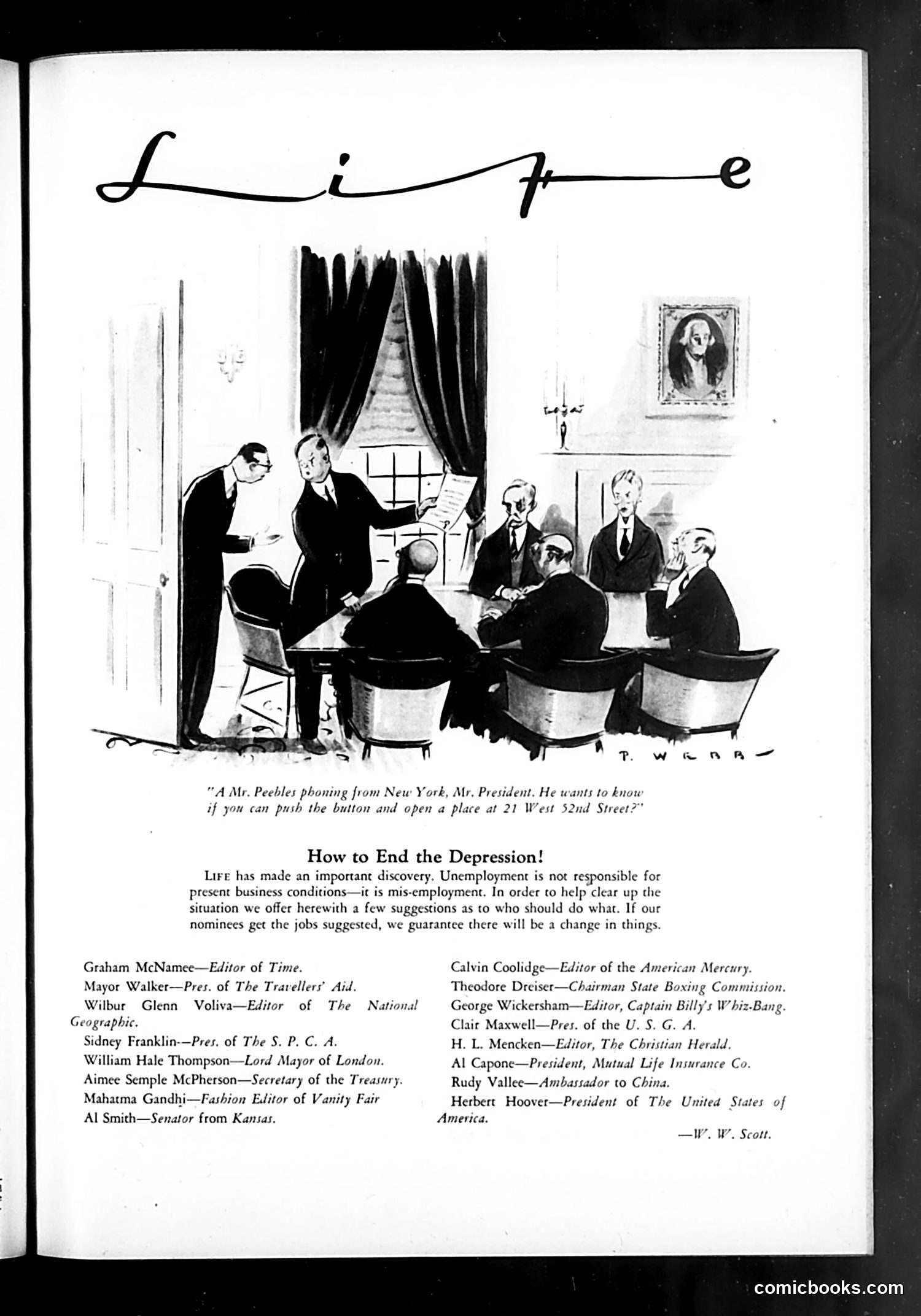
# Explanation for Modern Readers This satirical cartoon mocks Depression-era solutions proposed by prominent figures. The scene shows men in an office receiving a ridiculous suggestion: a Mr. Peebles from New York wants President Hoover to "push the button and open a place at 21 West 32nd Street"—likely a speakeasy reference, since Prohibition was still in effect. The cartoon's irony is that these distinguished leaders (listed below, including editors, mayors, and Herbert Hoover himself) are being asked to endorse such absurd schemes to "end the Depression." The satire suggests that even well-intentioned prominent people were grasping at straws with impractical solutions. The piece mocks both the desperation of the economic crisis and the disconnection of elites from real remedies.
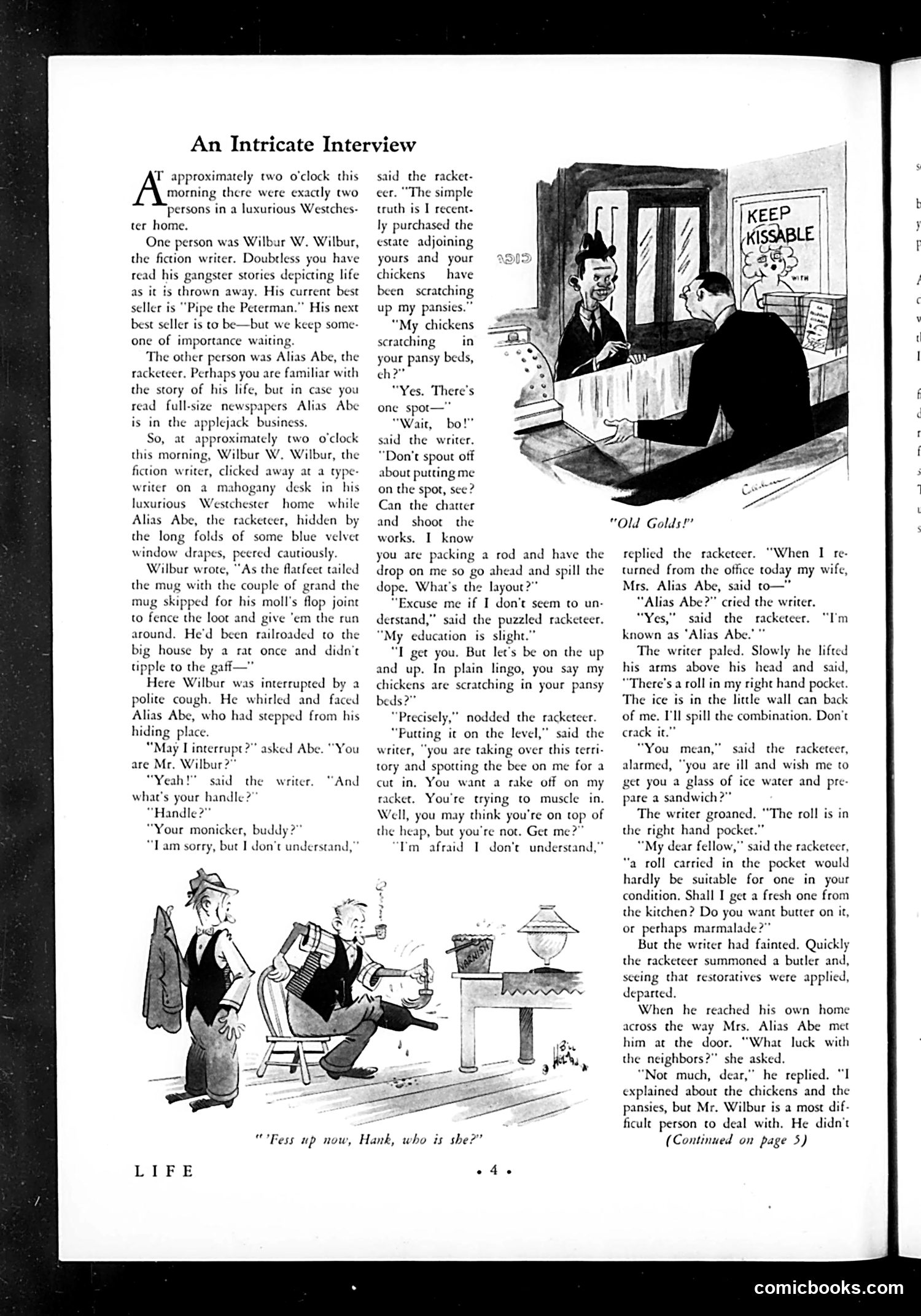
# "An Intricate Interview" This satirical piece mocks fiction writer **Wilbur W. Wilbur** (likely a fictitious name suggesting mediocrity). The story describes a visit between Wilbur and a racketer—a gangster or organized crime figure—who complains that Wilbur's chickens are scratching up his pansy beds. The humor derives from the absurd collision of two worlds: a professional criminal reduced to petty complaints about garden damage, while the writer attempts to negotiate like he's discussing serious matters. The racketer's threats and the writer's anxious responses create comedy through this incongruity. The accompanying cartoons illustrate the slapstick encounter. The satire likely pokes fun at both the pretensions of pulp fiction writers and the popular stereotype of gangsters as brutal but ultimately mundane figures concerned with ordinary grievances.
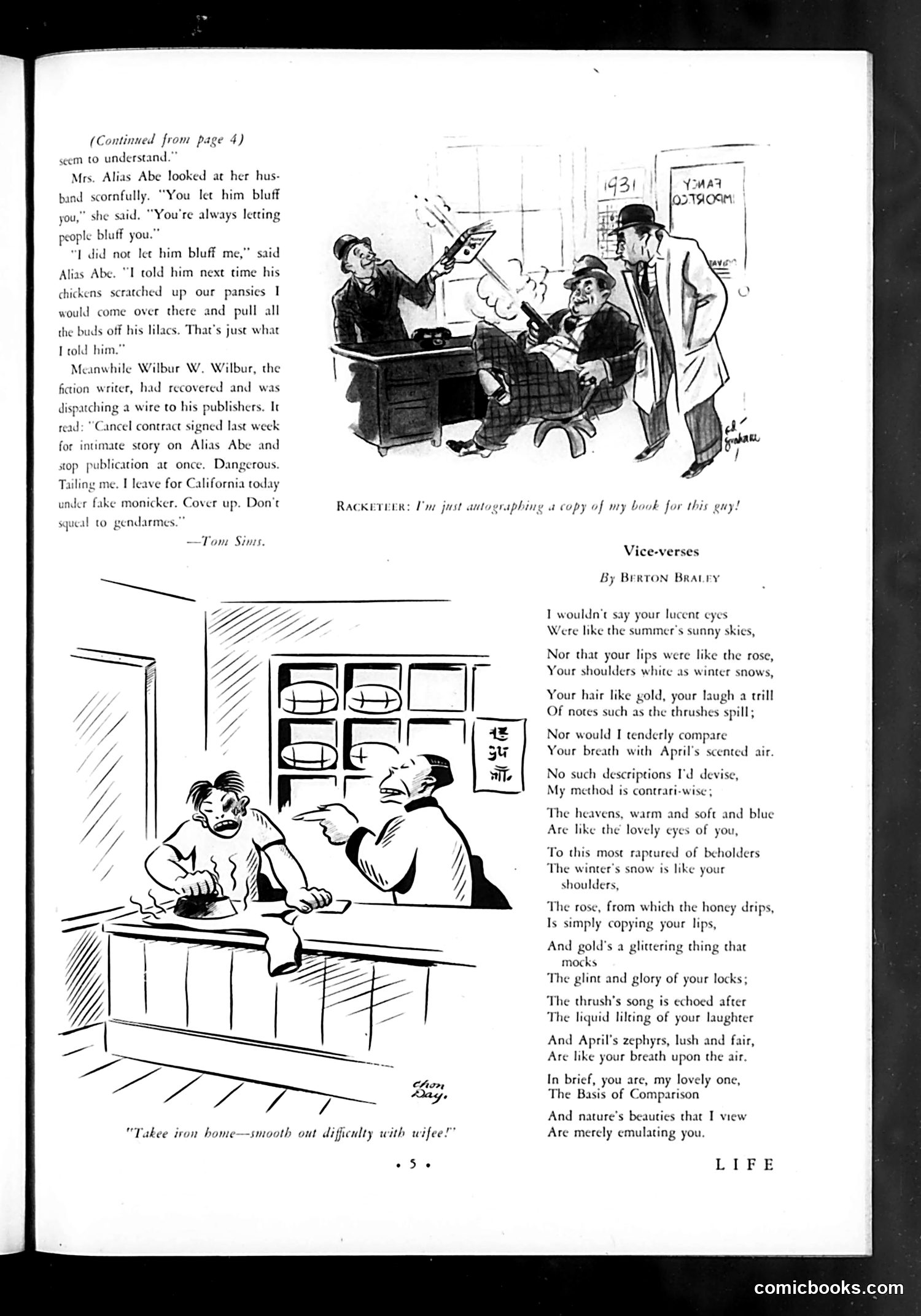
# Analysis of Life Magazine Page This page contains two distinct pieces: **Top cartoon**: A satirical scene showing a book publisher (at desk) with what appears to be an author or agent. The caption references "Racketeering" and autographing a book. The cartoon satirizes the publishing industry, likely mocking sensationalism or questionable business practices in book promotion during this era. **Bottom cartoon**: Shows two people in what appears to be a Chinese restaurant or laundry (visible Chinese characters on wall). The caption "Take iron home—smooth out difficulty with wifey!" satirizes stereotypical Asian business services and plays on marital humor common to the period. **Right side**: A poem titled "Vice-verses" by Burton Braley offering humorous counter-comparisons to romantic love poetry—a literary satire mocking sentimental verse. The overall tone reflects early-to-mid 20th century American humor, with period-typical ethnic stereotyping.
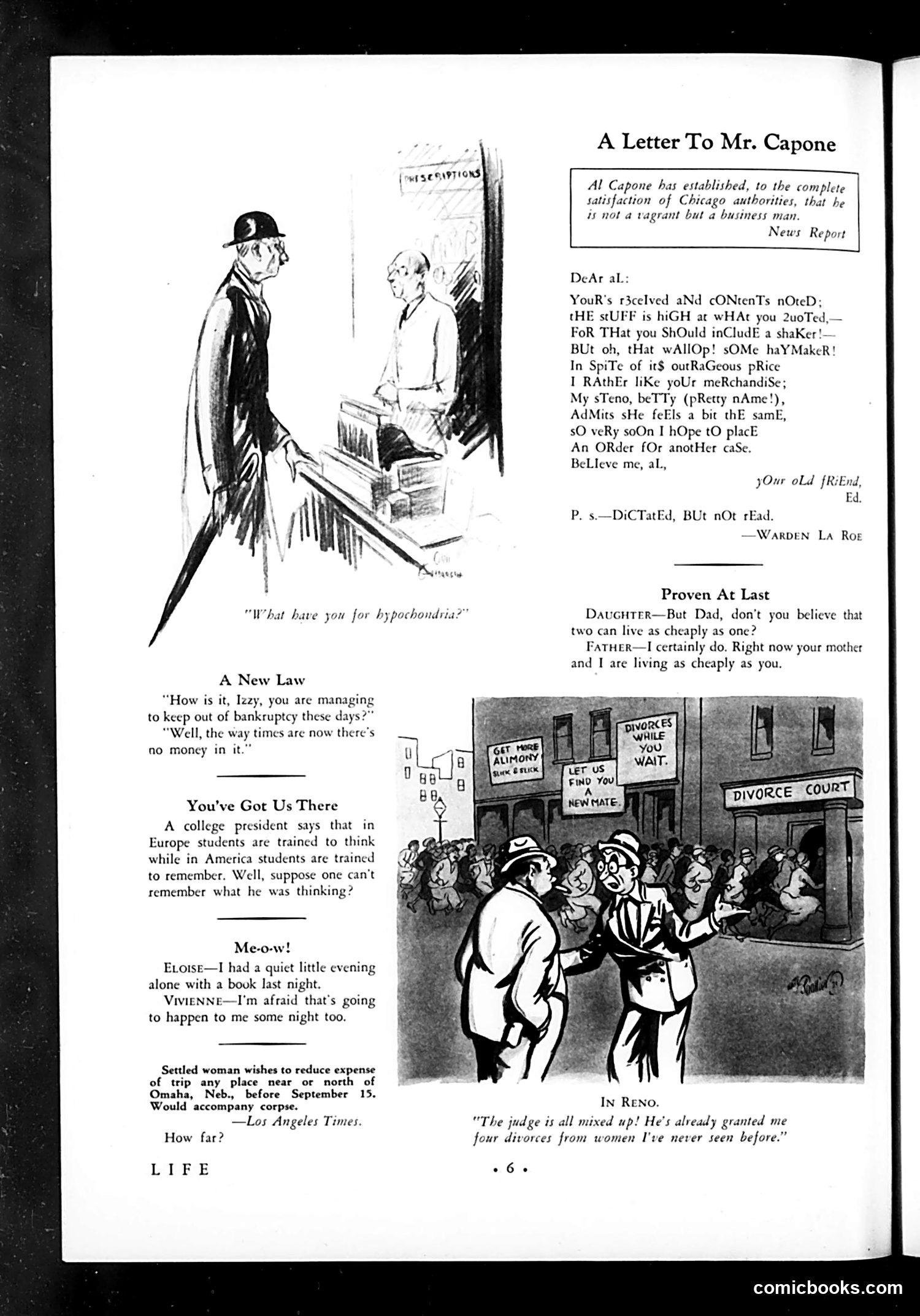
# Explanation for Modern Readers This page from *Life* magazine contains several satirical pieces about contemporary social issues: **"A Letter to Mr. Capone"** is a mock-serious letter (with intentionally garbled text) addressing Al Capone, the famous Chicago mobster. The opening news quote establishes he's merely a "businessman," not a criminal—satirizing the authorities' public relations attempts during Prohibition era organized crime. **"In Reno"** cartoon satirizes Nevada's divorce courts, then famous for quick divorces. The crowded scene and judge's comment about granting "four divorces from women I've never seen before" jokes about how casually and frequently divorces were processed there—reflecting 1920s anxieties about marriage dissolution. The other brief jokes concern everyday concerns: managing household bankruptcy, memory, and loneliness.
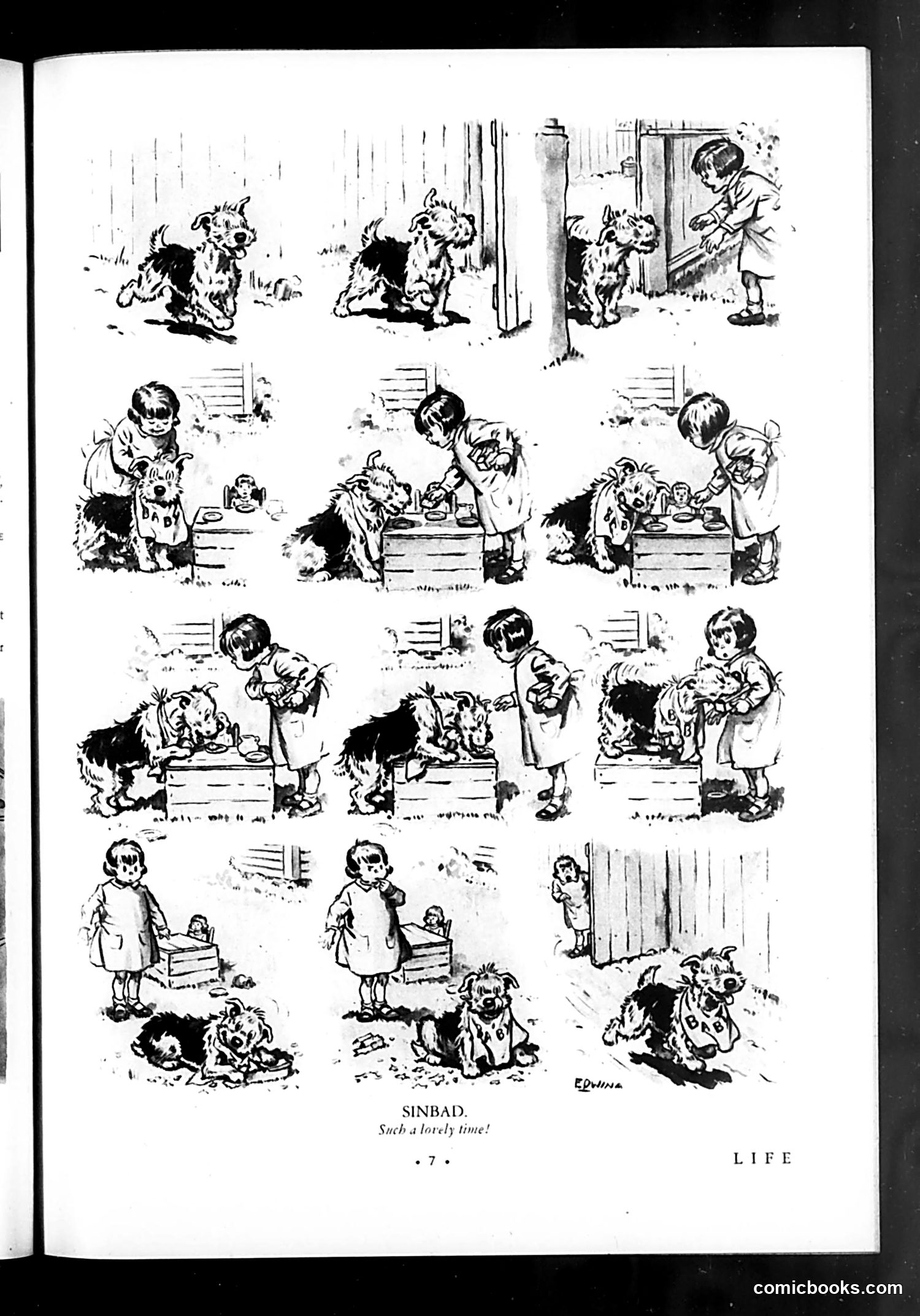
# "Sinbad: Such a Lovely Time!" This is a comic strip sequence depicting a child's interactions with a shaggy dog named Sinbad. The narrative shows a domestic scene: the child initially plays with the dog outdoors, then attempts to feed and care for it indoors at a table. The subsequent panels show escalating chaos—the dog becomes increasingly messy and unruly during mealtime, creating disorder. The humor derives from the contrast between the child's earnest attempt at civilized interaction (feeding the dog "properly" at a table) and the dog's instinctive, chaotic behavior. The title's sarcastic subtitle—"Such a lovely time!"—underscores the irony: what should be orderly domestic activity devolves into mess and mayhem. This represents typical early 20th-century gentle humor about pet ownership's realities versus expectations.
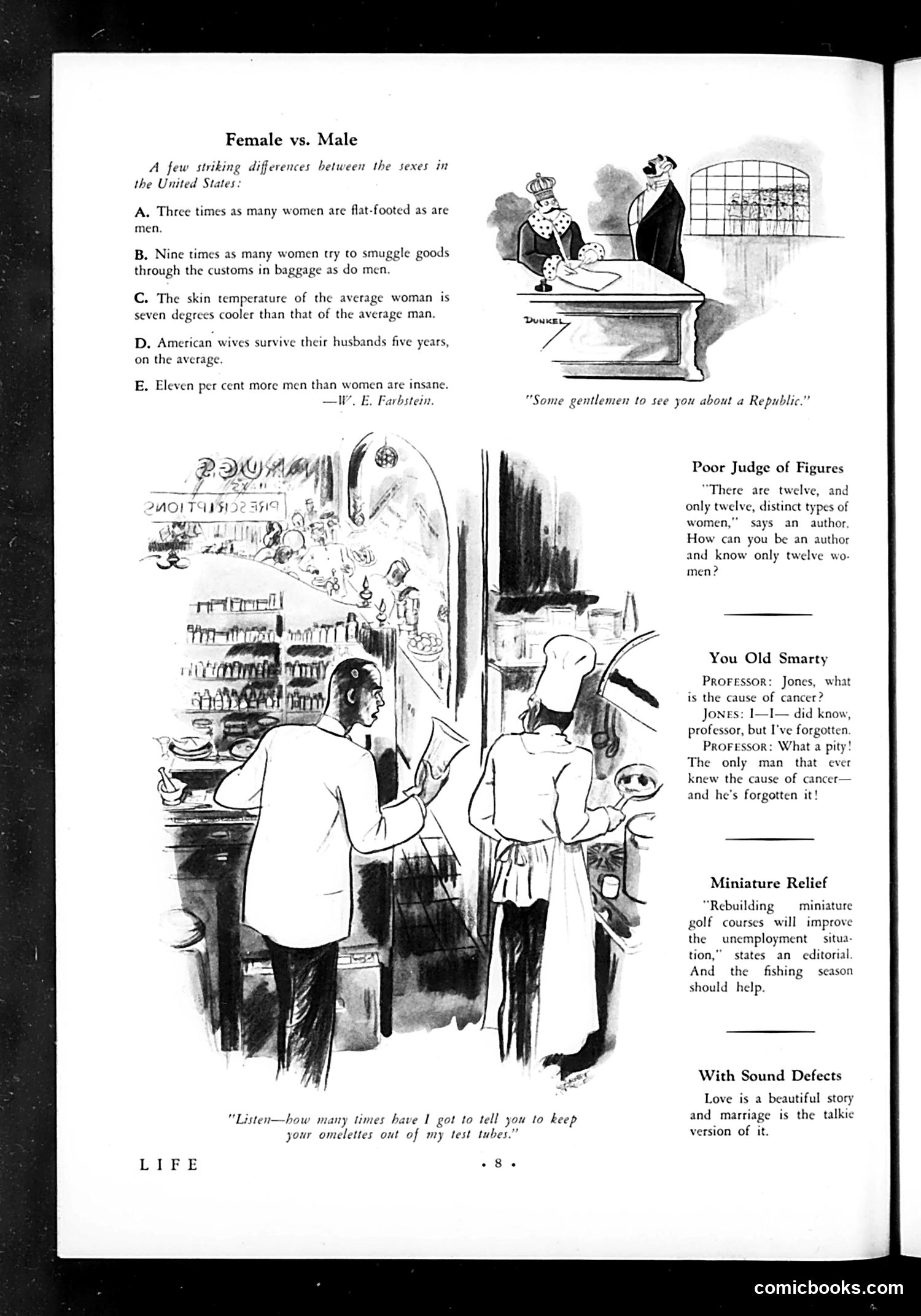
# Analysis of Life Magazine Page This page contains satirical commentary on gender differences and several humorous anecdotes. **"Female vs. Male"** section lists exaggerated claims about sex differences (flat feet, smuggling goods, skin temperature, longevity, mental illness rates), attributed to "W. E. Eberstein." **Main cartoon** shows a woman at a customs counter telling an official about repeatedly being instructed to keep her "omelette out of my test tubes"—likely satirizing women in professional/scientific fields and the absurdity of mixing domestic and professional concerns. **Additional jokes** mock academic pretension ("Poor Judge of Figures," "You Old Smarty") and offer brief commentary on unemployment solutions and marriage. The page reflects early-20th-century satirical humor about women's evolving social roles, portraying gender confusion and professional aspirations as comedic fodder.
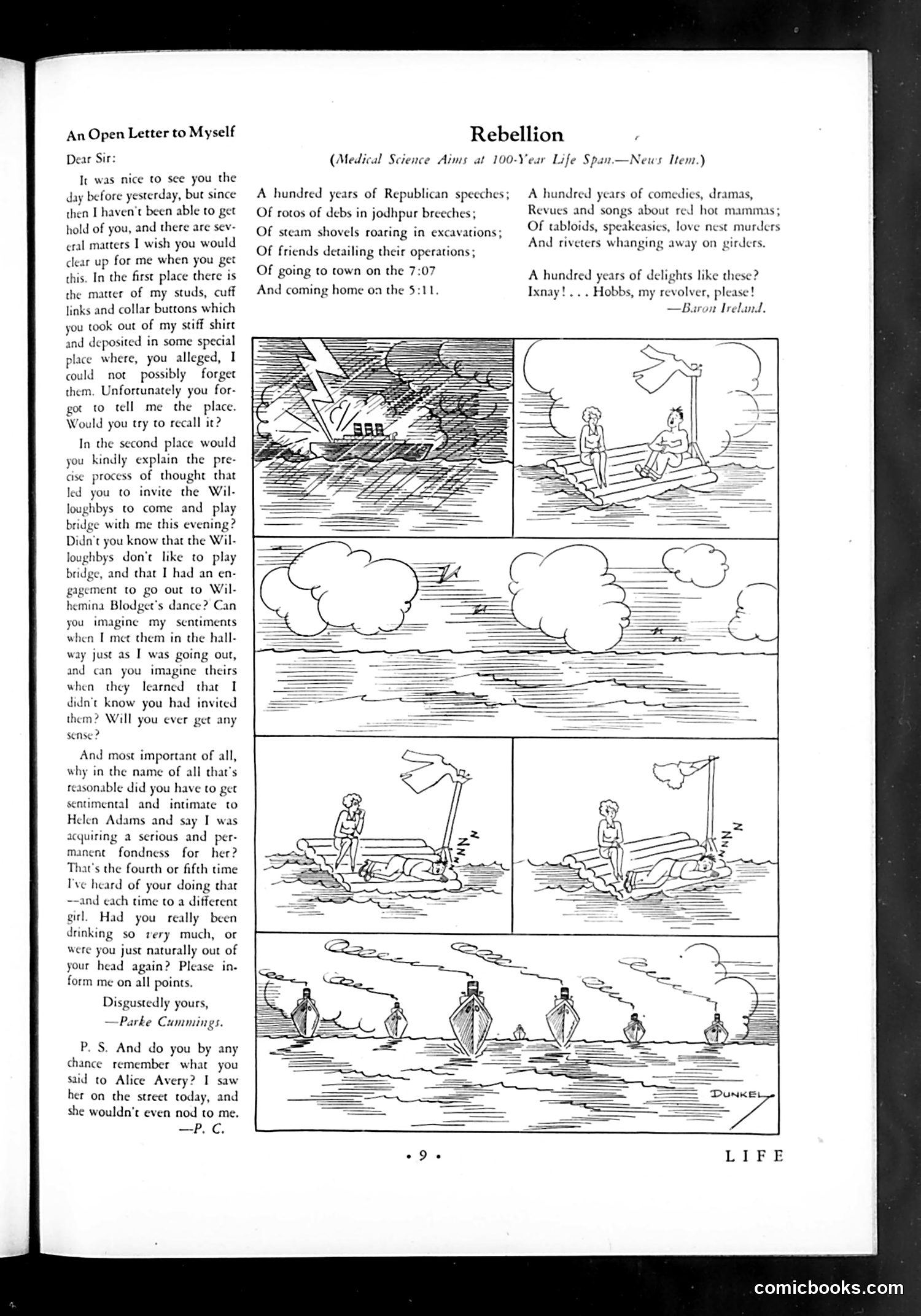
# Analysis of "Rebellion" Page from Life Magazine This page contains two distinct pieces: **"An Open Letter to Myself"** (left column) is a humorous complaint from "Parke Cummings" to himself about social embarrassments—losing a shirt's cufflinks and studs, failing to remember where, and inviting the Willoughbys to an event they apparently dislike. The writer satirizes his own absentmindedness and social missteps in an exaggerated, self-deprecating tone. **"Rebellion"** (right side) is a visual satire about medical science's 100-year progress. It contrasts future aspirations (speeches, excavations, operations, songs, tableaux, and plays) with present reality. The comic strip shows people attempting various activities—working, resting, boating—that humorously fail or backfire, suggesting that despite scientific advancement, human endeavor remains fundamentally chaotic and unsuccessful. The satire mocks optimism about progress.
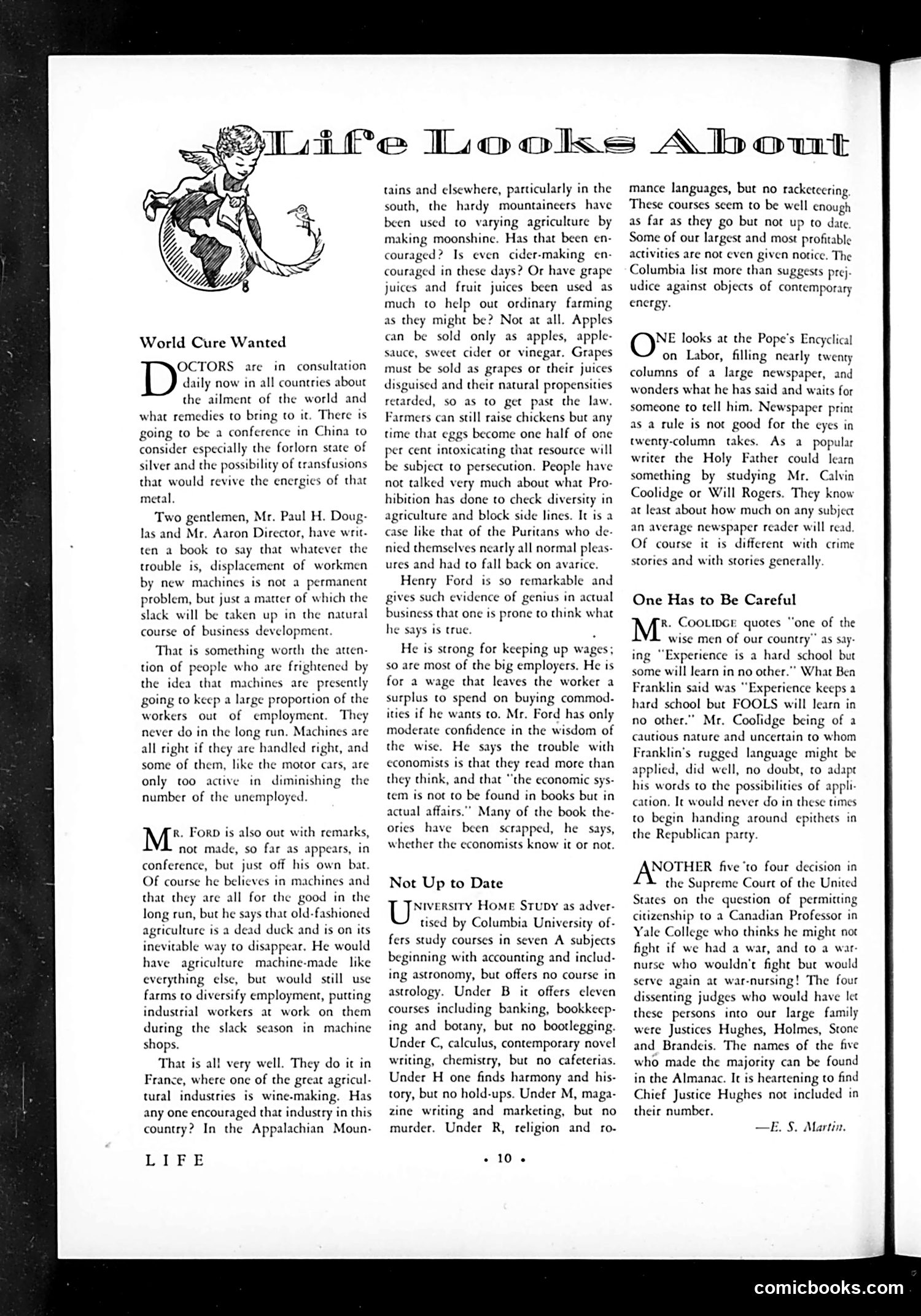
# Analysis of "Life Looks About" - Page 10 This page contains three editorial essays rather than political cartoons. The header illustration shows a cherub or cupid figure, decorative rather than satirical. The essays discuss: 1. **"World Cure Wanted"** - Commentary on labor displacement caused by new machinery, referencing Henry Ford's industrial methods and wage policies 2. **"Not Up to Date"** - Critique of Columbia University's home study courses, which lack modern subjects like bookkeeping and contemporary novel writing 3. **"One Has to Be Careful"** - Discussion of newspaper editorializing, quoting Mrs. Coolidge (wife of President Calvin Coolidge) and Benjamin Franklin on experience versus foolishness The final piece mentions a Supreme Court decision regarding Canadian citizenship and Yale College, with Chief Justice Hughes notably absent from the decision. These are satirical commentaries on contemporary American institutions and social issues of the 1920s era.